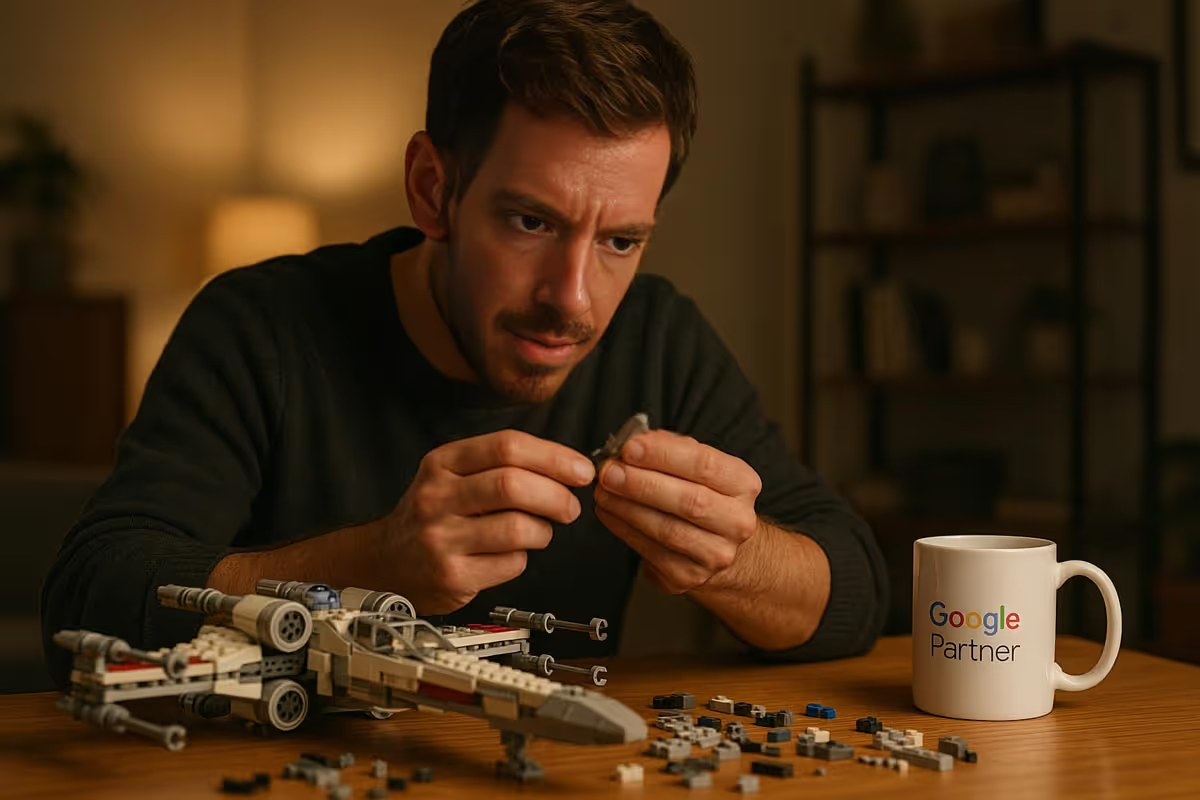
What Is SEO Content? Quality, Intent & Media SEO (2026)

SEO Content — 2026 Guide
Helpful content, built to be found
SEO content is content created to be found in search that is also genuinely useful — it targets a clear search intent, carries clean on-page signals, and is wired into a topic cluster. Google judges it by quality and helpfulness, not by whether a human or an AI produced it, and not by word count.
US search demand (Ahrefs, 2026): seo content 3,600/mo · search intent 2,200 · image seo 1,800 · video seo 1,400 · topical authority 1,400 · content clusters 400 · the real quality line is scaled content abuse (Google, Mar 5, 2024), not “human vs AI.”
What Is SEO Content in 2026?
SEO content is content created to be found in search that is also genuinely useful. It targets a clear search intent, carries clean on-page signals (title, headers, internal links), and is connected into a topic cluster — helpfulness first, discoverability second. The term describes ordinary useful content built for discovery, not a separate genre of keyword-stuffed filler. What ranks in 2026 is what a human actually wants to read, structured so search engines and AI answer engines can understand it.
The honest one-line answer is this: SEO content is helpful, well-structured content built around a clear search intent and connected into a topic cluster — and quality is judged by the reader’s experience, not by who or what drafted it and not by how many words it runs. That framing matters because most confusion about “SEO content” comes from treating it as a formula (a word count, a keyword density, a hidden checklist) rather than as useful content with clean signals wrapped around it.
This guide answers the whole sub-cluster in one place: how Google judges SEO content quality and helpfulness; the pillar-and-cluster model behind topical authority; how to match content type to the four search intents; the on-page elements that carry a page; and the two formats businesses most often get wrong — image SEO and video SEO. Table 1 maps the five building blocks and where each one is covered below. MB Adv Agency runs the paid campaigns — Google Ads and PPC — that complement the organic content program, so the point of view here stays qualitative and vendor-neutral: every number is a named external source or a dash.
| Building block | What it is | Where it lives on the page | Covered under |
|---|---|---|---|
| Content quality & helpfulness | Original, complete, people-first coverage — judged by the reader’s experience, not by who or what produced it | The whole body Google reads and rates | “Content quality” |
| Search intent | The job the searcher wants done — informational, navigational, commercial, or transactional | The content type and format you choose | “Writing for search intent” |
| Topic-cluster structure | One broad pillar page plus interlinked cluster pages, wired with internal links → topical authority | Internal links across the site | “Content clusters” |
| On-page signals | Title, headers, body copy, internal links, URL, and structured data | The page’s HTML | “On-page content elements” |
| Media SEO (image & video) | Optimized images (filenames, alt text, next-gen formats) and video (VideoObject, transcripts, thumbnails) | The media embedded in the content | “Image SEO” / “Video SEO” |
Sources: Google, “Creating helpful, reliable, people-first content” (people-first content, no word-count factor); Semrush, “Search Intent” (the four search intents); HubSpot, “Topic Clusters” (the pillar-and-cluster model). Not mbadv client data.
Content Quality & Helpfulness — Judged Regardless of How It’s Produced
Google’s bar for content is helpfulness, and it is spelled out in the self-assessment questions of “Creating helpful, reliable, people-first content”: original information or analysis, substantial and complete coverage, demonstrated experience and expertise, trustworthiness, and content made for people rather than to game search engines. Table 2 lists the signals in the exact terms Google uses.
Two of those signals are the most misunderstood in SEO. First, E-E-A-T — Experience, Expertise, Authoritativeness, Trustworthiness, with Trust the central member — is a concept in the Search Quality Rater Guidelines, not a direct ranking factor. There is no “E-E-A-T score” the algorithm assigns to a page; raters evaluate whether Google’s systems surface trustworthy results, and their aggregate feedback trains those systems over time. Second, production method is not the test: content is judged by quality and helpfulness whether a human, an AI, or a hybrid produced it.
The line that actually gets pages demoted is scaled content abuse, introduced on March 5, 2024 (it replaced the older “spammy auto-generated content” policy). Google defines it as producing content at scale primarily to boost search rankings, and it applies “whether automation, humans, or a combination are involved.” The March 2024 core update also folded the standalone Helpful Content system into core ranking, so helpfulness is now assessed by multiple core systems rather than one separate classifier. For how that connects to the broader update history, see Google algorithm updates; for how AI search fits in, see how AI is changing SEO.
| Signal / self-assessment question | What it means |
|---|---|
| Original information, reporting, or analysis | The page adds something — it does not just rehash what already ranks |
| Substantial, complete coverage | Depth over thin or padded filler; it answers the whole question |
| Experience & expertise (E-E-A-T) | First-hand experience plus subject expertise, with Trust the central member — a Quality Rater Guidelines concept, not a ranking score |
| Trustworthiness | Accurate, sourced, transparent about who wrote it and why |
| Made for people, not for search engines | Would a reader be satisfied? Would you cite or bookmark it? |
| Production method is not the test | Judged by quality and helpfulness whether a human, an AI, or a hybrid produced it |
| The real line: scaled content abuse | Mass-producing pages to manipulate rankings is the violation (Google, Mar 5, 2024) — regardless of automation, humans, or a combination |
Sources: Google, “Creating helpful, reliable, people-first content”; Google, “March 2024 core update & spam policies” (scaled content abuse; Helpful Content folded into core, Mar 5, 2024); Google, “E-E-A-T” (E-E-A-T is a rater concept, not a score). Not mbadv client data.
The practical read: write for the person, cover the intent completely, cite your sources, and make the authorship and purpose clear. Do that, and the tool you used to draft it is not the question Google is asking.
What People Search: The SEO Content Head Terms
The head term for this topic, “seo content,” runs 3,600 US searches a month at a keyword difficulty of 48 (Ahrefs Keywords Explorer, US, 2026-07-01) — and each of the four subtopics carries its own demand: search intent 2,200, image seo 1,800, video seo 1,400, topical authority 1,400, and content clusters 400. Video SEO has the lowest difficulty of the set (KD 39), and content clusters the lowest competition (KD 28). Table 3 lists the demand this pillar consolidates.
This page is an upgrade-in-place of an existing cluster. Across the whole set of source URLs — the pillar plus the four sub-pages it absorbs — Search Console recorded 0 clicks and 0 impressions in the 90-day window, a near-total-zombie cluster with no impression toehold to defend. The strategy is therefore not to protect existing rankings but to concentrate a fragmented topic into one deep, well-linked pillar that can build topical authority. Four thin sibling pages — on content clusters, search intent, image SEO, and video SEO — are folded into the matching sections below with permanent redirects, so their signals consolidate here instead of competing with each other.
| Keyword | US monthly volume | KD | Note |
|---|---|---|---|
| seo content | 3,600 | 48 | Head term and the exact slug for this pillar |
| search intent | 2,200 | 76 | Served under the “writing for search intent” section |
| image seo | 1,800 | 65 | Served under the image-SEO section |
| video seo | 1,400 | 39 | Lowest KD of the set — the most winnable subtopic |
| topical authority | 1,400 | 44 | The authority framing of the content-clusters section |
| content clusters | 400 | 28 | Lowest-competition term in the set |
Source: Ahrefs Keywords Explorer + SEO statistics (US 12-month average volume, 2026-07-01), plus the pillar GSC export (90-day window 2026-04-02–2026-07-01). Not mbadv client data.
The demand shape is the reason this guide leads with the plain-English definition and then goes deep on each subtopic in turn: a reader searching “seo content” wants the concept; a reader searching “video seo” or “image seo” wants the specifics. One pillar can serve both when it answers the head term above the fold and the subtopics in full below it.
Content Clusters & Topical Authority: The Pillar-and-Cluster Model
The pillar-and-cluster model was popularized by HubSpot in 2017: one broad pillar page that covers a topic comprehensively, plus interlinked cluster pages that each cover a subtopic in depth. Every cluster links up to the pillar, and the pillar links down to each cluster, so the whole set reads to a search engine as one authoritative body of work rather than a scatter of unrelated posts. Table 4 lays out the roles and the linking pattern.
The benefit of this structure has a name — topical authority — and a mechanism: the pillar-and-cluster wiring concentrates topical relevance and distributes internal link equity across the pages that cover a subject, and it signals depth of coverage rather than a single shallow answer. HubSpot reported that more interlinking correlated with better placement. That is the honest, qualitative claim. The frequently repeated “43% traffic lift from topic clusters” statistic has no living primary source, so it is deliberately excluded here; topic clusters win on structure and depth, not on a headline number.
Topic clusters also win on structure, not word count. One pillar plus a handful of genuinely useful cluster pages, tightly interlinked, out-performs a pile of overlapping articles that cannibalize each other for the same query. The internal links are the load-bearing part: they are how relevance and authority flow between the pages, and they are the same asset that link building works to earn from other sites. For teams structuring content programs for complex, considered purchases, our B2B PPC work pairs naturally with a strong topical-authority foundation on the organic side.
| Element | Role | Internal-linking pattern | Example |
|---|---|---|---|
| Pillar page | Broad, comprehensive overview of the whole topic | Links down to every cluster page; each cluster links back up | “What Is SEO Content” (this page) |
| Cluster page | Deep coverage of one subtopic | Links up to the pillar and laterally to related clusters | “How to write for search intent” |
| Internal links | The wiring that turns a set of pages into a cluster | Consistent, descriptive anchor text between pillar and clusters | — |
Source: HubSpot, “Topic Clusters” (2017 pillar-and-cluster model; more interlinking correlated with better placement). The benefit is stated qualitatively; the widely circulated “43% traffic lift” figure has no living primary source and is not published here. Not mbadv client data.
Writing for Search Intent: Match the Content Type to the Intent
Search intent is the job a searcher wants done, and Semrush’s widely used framework sorts it into four types: informational (learn), navigational (reach a specific site or page), commercial or investigation (compare before buying), and transactional (do or buy now). SEO content works when the content type and format match the intent behind the query. Table 5 maps the aligned formats to each intent, with an example query.
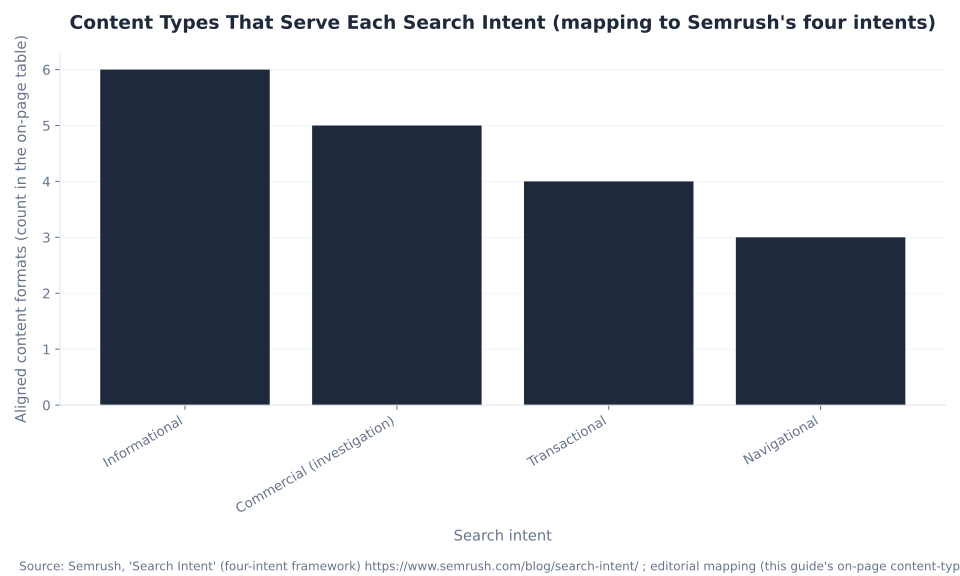
The core move is alignment. An informational query wants a how-to, a tutorial, a glossary entry, or an ultimate guide; a commercial query wants a comparison, a “best” roundup, a review, or a buyer’s guide; a transactional query wants a product, category, or pricing page; a navigational query wants the specific page the searcher already has in mind. Informational and commercial intents accommodate the widest range of formats, which is why the context chart shows six aligned formats for informational and five for commercial, versus four for transactional and three for navigational.
The failure mode is the mismatch: publishing a product page for an informational query, or a thin how-to for a transactional one, fails no matter how well written it is, because it answers a different question than the searcher asked. Intent research is the step that precedes drafting — it is inseparable from keyword research, because the keyword and its intent are two views of the same thing. For software and platform businesses whose buyers move from informational to commercial queries as they evaluate, our SaaS PPC campaigns mirror that same intent ladder on the paid side.
| Search intent | What the searcher wants | Content formats that serve it | Example query |
|---|---|---|---|
| Informational | To learn or understand something | How-to guide, tutorial, glossary or definition, explainer or ultimate guide, FAQ page, listicle (6) | “what is seo content” |
| Commercial (investigation) | To compare options before buying | Comparison (“X vs Y”), “best” listicle, product review, buyer’s guide, case study (5) | “best seo content tools” |
| Transactional | To do or buy something now | Product page, category or collection page, pricing page, signup or demo landing page (4) | “buy seo content service” |
| Navigational | To reach a specific site or page | Homepage, branded product or landing page, login or pricing page (3) | “hubspot topic clusters” |
Source: Semrush, “Search Intent” (the four-intent framework). The parenthetical counts are the number of formats this guide maps to each intent — an editorial mapping, not a third-party statistic. Not mbadv client data.
On-Page Content Elements: Title, Headers, Body & Internal Links
On-page content is the set of signals that live in the page’s own HTML: the title tag, headers, body copy, internal links, URL, images, and structured data. These sit alongside off-page signals (backlinks, brand mentions) and technical signals (crawling, speed, HTTPS) in the standard three-pillar taxonomy — and on-page is the half a content writer controls directly. Table 6 lists each element, its role, and the current best-practice note.
Two of these carry the most common myths. The title tag is still the primary source Google uses for the title link, but Google rewrites it often: the named Zyppy study of more than 80,000 titles found Google rewrote 61.6% of them at least partially, with length the number-one trigger, so a clear title sized to display is worth more than a keyword-stuffed one. The meta description is not a ranking factor at all — it influences click-through only, and Google rewrites the majority of descriptions anyway, so it is a place for a compelling summary, not a keyword dump.
The body is where helpfulness is judged, and the internal links are where relevance and authority flow between pages — the same wiring that makes a topic cluster a cluster. For the full split between the signals on your own page and the ones that come from other sites, see on-page vs off-page SEO. Ecommerce content has an extra on-page layer — the structured product data in a feed — covered in the Merchant Center guides on optimizing product feeds; the paid complement for stores is our ecommerce PPC work.
| Element | Role | Best-practice note |
|---|---|---|
| Title tag | Primary relevance and click-through signal | Google rewrites 61.6% of titles at least partially (length is the #1 trigger) — write clear, correctly sized titles |
| Meta description | CTR only — not a ranking factor | Google rewrites the majority of them; do not stuff keywords, write a compelling summary |
| H1 & headers | Structure, context, and accessibility | One H1 is best practice; map subtopics to H2/H3 the way a reader would scan them |
| Body content | The substance Google judges for helpfulness | Cover the intent completely with original analysis; depth beats padding |
| Internal links | Distribute relevance and link equity; the cluster wiring | Use descriptive anchor text that says where the link goes |
| Images (with alt) | Content, accessibility, and image-search visibility | See the image-SEO checklist below |
| URL & structured data | Clarity plus rich-result eligibility | Clean, readable URLs; JSON-LD where the type still renders |
Sources: Zyppy / Cyrus Shepard title-rewrite study (title rewrites 61.6%; length the #1 trigger); Google Search Central (people-first body content). Not mbadv client data.
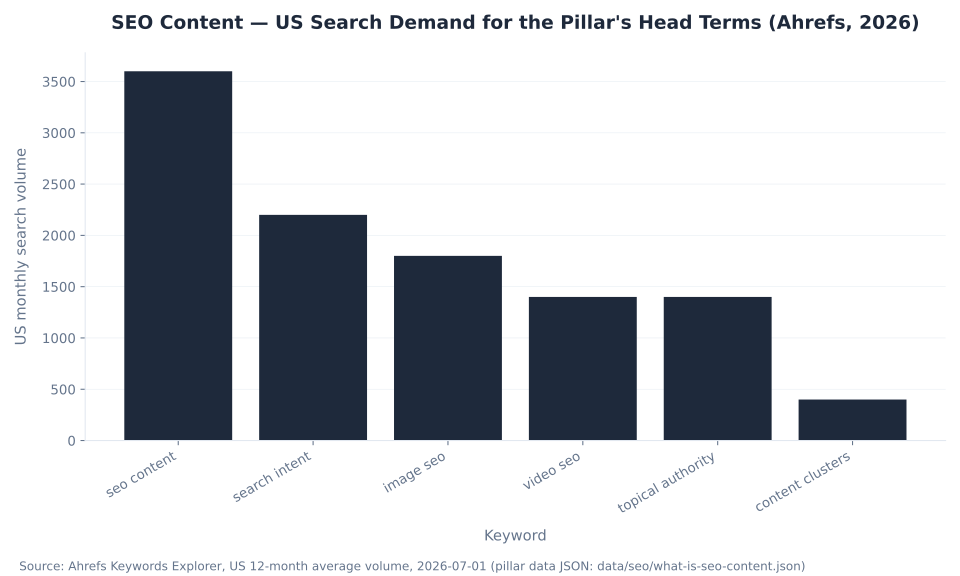
Image SEO: Alt Text, Filenames, Compression, Next-Gen Formats & Image Sitemaps
Images are where stale advice does the most damage, because the levers that matter are documented by Google and rarely followed in full. Google’s Image SEO guidance is specific: descriptive, hyphen-separated filenames; purposeful alt text that conveys an image’s purpose and context; supported formats including WebP and AVIF; compression and responsive delivery; lazy-loading; image sitemaps; and placing images near the relevant text. Table 7 is the checklist.
The single most misused element is alt text. Its job is to convey the image’s purpose and context — for a screen-reader user and for Google’s image understanding alike — and it is not a place to stuff keywords. Stuffing alt text is a spam signal and it degrades the experience for the people who rely on it; purely decorative images should carry an empty alt="" so assistive technology skips them. The second most common miss is format: the biggest single image win is serving next-gen WebP or AVIF, which run 25–35%+ smaller than JPEG at equal quality and double as technical SEO and Core Web Vitals work.
Image SEO carries the most weight in visual, product-heavy categories. For image-driven ecommerce, the product image is a ranking and conversion asset on both the organic page and the shopping feed — see the Merchant Center guide on what a product feed is for the structured-data side. Fashion is the canonical example of a category where image quality and image SEO drive discovery; our fashion PPC work runs the paid layer on the same visual catalog.
| Lever | What to do | Why it matters |
|---|---|---|
| Descriptive filename | Name files by subject with hyphens, e.g. blue-running-shoes-side-view.jpg | Gives Google clues about the image subject |
| Alt text | Convey the image’s purpose and context; use empty alt="" for purely decorative images | Accessibility plus image understanding — it is not a keyword field |
| Modern formats | Serve WebP or AVIF, with a fallback via <picture> | 25–35%+ smaller than JPEG at equal quality |
| Compression + responsive | Compress, and deliver with srcset/sizes and <picture> | Faster loads and better Core Web Vitals (LCP) |
| Lazy-loading | Defer off-screen images | Prioritizes the above-the-fold render |
| Image sitemap | List images, including ones that are hard to discover | A discovery aid for Google Images |
| Placement | Put images next to the relevant text | Surrounding text helps Google understand the image |
Source: Google, “Image SEO best practices”. Alt text conveys purpose and context, not keywords — stuffing it is a spam signal and hurts screen-reader users. Not mbadv client data.
Next-Gen Formats: WebP, AVIF & Web-Wide Adoption
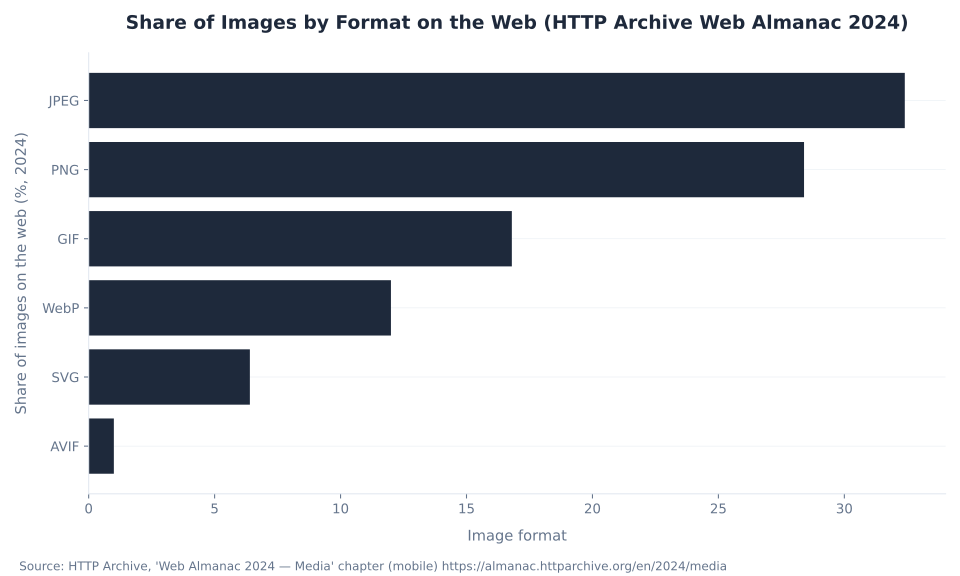
The format opportunity is larger than most teams realize, because the web is still overwhelmingly legacy. HTTP Archive’s Web Almanac 2024 (Media chapter, mobile) puts JPEG at 32.4% of images, PNG at 28.4%, and GIF at 16.8% — legacy formats together account for roughly 78% of all images. Next-gen WebP sits at 12.0% and AVIF at just 1.0%. Table 8 shows the full split.
Two facts make this actionable. First, Google supports both WebP and AVIF, and both are 25–35%+ smaller than JPEG at equal visual quality, so converting a page’s images is one of the cleanest Core Web Vitals wins available — it lowers Largest Contentful Paint (LCP) without touching the design. Second, the next-gen formats are the fastest climbers on the web: WebP is up 34% relative since 2022 and AVIF has roughly quadrupled in two years, so adopting them now is skating to where the puck is going. JPEG, by contrast, fell from about 40% of images in 2022 to 32.4% in 2024.
The pattern is a familiar one across the whole SEO program: a documented, low-controversy improvement that most sites have not shipped yet, which is exactly why it is worth shipping. Convert the images, keep a JPEG or PNG fallback in the <picture> element for old browsers, and the same asset gets smaller, faster, and easier for Google Images to serve.
| Format | Share of images (2024) | Trend |
|---|---|---|
| JPEG | 32.4% | Falling — was about 40% in 2022 |
| PNG | 28.4% | Roughly flat; often replaceable by WebP |
| GIF | 16.8% | Roughly flat; mostly replaceable |
| WebP | 12.0% | Mainstream now — +34% relative since 2022 |
| SVG | 6.4% | Icons and logos; +36% relative since 2022 |
| AVIF | 1.0% | Climbing fast — about 4× in two years |
Source: HTTP Archive, “Web Almanac 2024 — Media” (Media chapter, mobile). Legacy JPEG/PNG/GIF still make up about 78% of images, so adopting WebP/AVIF is a real, under-exploited win. Not mbadv client data.
Video SEO: VideoObject Schema, Transcripts, Thumbnails & YouTube vs Self-Hosting
Video is the second format where stale advice does real damage, and the headline correction is precise: unlike FAQ and HowTo rich results — which Google deprecated for ordinary sites in 2023 — Video (VideoObject) structured data still renders video features in Google Search in 2026. Adding it is one of the few structured-data investments that still earns a visible result for a typical site. Table 9 is the checklist Google documents.
The mechanics are documented and stable. Add VideoObject in JSON-LD with the required properties — name, description, thumbnailUrl, and uploadDate, plus contentUrl or duration — and provide a valid thumbnail at a stable URL, because the thumbnail is a prerequisite for the video features. Publish an accurate transcript and captions (accessibility plus indexable text), submit a video sitemap with per-video metadata, and mark key moments with SeekToAction or Clip so Search can deep-link viewers to the right segment. Embed one primary video prominently rather than burying it.
Structured data drives rich-result eligibility, not a direct ranking boost — but for video, that eligibility is real and still live, which is what makes it worth the effort. The remaining decision is where the video actually lives, which is the hosting question covered next.
| Lever | What to do | Why it matters |
|---|---|---|
| VideoObject schema (JSON-LD) | Add VideoObject with name, description, thumbnailUrl, uploadDate (plus contentUrl/duration) | Video rich results still render in 2026 — unlike FAQ and HowTo |
| Stable thumbnail URL | Provide a valid thumbnail at a stable, crawlable URL | A prerequisite for video features in Search |
| Transcripts / captions | Publish an accurate transcript and captions | Accessibility plus indexable, searchable text |
| Video sitemap | Submit a video sitemap with per-video metadata | A discovery aid for video results |
| Key moments | Mark segments with SeekToAction or Clip | Deep-links viewers to the right part of the video |
| Hosting decision | Choose YouTube vs self-host deliberately | See the hosting-decision table below |
Sources: Google, “Video SEO best practices” and Google, “Video (VideoObject, Clip, BroadcastEvent) structured data”. Note: FAQ and HowTo rich results were deprecated for ordinary sites in 2023, but Video (VideoObject) still renders in Google Search. Not mbadv client data.
YouTube vs Self-Hosting: Where to Put Your Video
Both hosting choices are valid, and the right one depends on the goal — not on a single “correct” answer. YouTube gives you reach and discovery: it is the #2 search property, and a video there can be found by people who will never visit your site. Self-hosting gives you on-page dwell time, full brand and player control, and cleaner VideoObject eligibility on your own URL — at the cost of hosting and bandwidth. Table 10 lays the trade-offs side by side.
The clarifying frame is what each choice does to the VideoObject decision above. When the video lives on youtube.com, earning a video rich result on your own page is harder, because the canonical video is on Google’s property; when you self-host and embed, the VideoObject sits cleanly on your URL. Reach-first content — brand awareness, tutorials meant to be found broadly — leans YouTube; conversion-first content that has to keep the viewer on your page and earn the on-page video feature leans self-hosting. Many programs do both: publish to YouTube for reach and embed a self-hosted or primary version on the money page.
| Dimension | YouTube | Self-hosted embed |
|---|---|---|
| Discovery / reach | Huge — YouTube is the #2 search property | Limited to your own site’s traffic |
| On-page dwell & brand | Sends some attention to YouTube | Keeps attention and branding on your page |
| VideoObject on your URL | Harder — the video lives on youtube.com | Cleaner — VideoObject on your own page |
| Bandwidth / cost | Free hosting and delivery | You pay for hosting and delivery |
| Control | YouTube’s player, ads, and suggested videos | Full control of the player and the experience |
Source: Google Video SEO docs plus practitioner consensus (Ahrefs / Backlinko). Qualitative — no fabricated numbers. Not mbadv client data.
Measuring Content Performance: Which Content Actually Ranks
Content performance is measured where the searches happen. Google Search Console reports the four metrics that matter for a content page: clicks (visits from Search), impressions (times a page was shown), CTR (clicks divided by impressions), and average position. Those four tell you which content earns visibility and which ranks but does not get clicked — the raw material for deciding what to improve, consolidate, or retire.
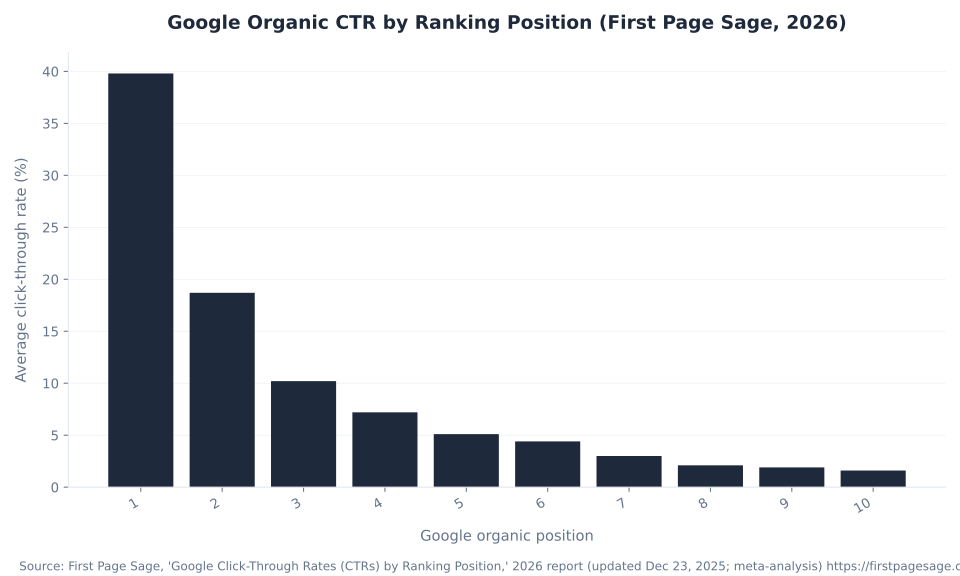
Position is not a vanity metric, because click-through collapses as you move down the page. First Page Sage’s 2026 report (updated December 23, 2025; a meta-analysis) puts position 1 at 39.8% of clicks, position 2 at 18.7%, and position 3 at 10.2% — the top three together capture about 68.7% of clicks, and by position 10 the CTR is 1.6%. Table 11 shows the full curve. This is the payoff argument for intent-matched, genuinely helpful content: ranking in the top three is worth many times more traffic than ranking at the bottom of page one, so covering an intent well enough to earn a top placement is where the return is.
Search Console is the measurement layer for that work — see how to track SEO performance with Google Search Console and, for the report itself, the Search Console guide to the performance report and search analytics. The numbers here are one named source; a second study, Backlinko’s, reports position 1 at 27.6%, so the two are never mixed in one chart — there is no single “true” position-one CTR, and both are valid by method.
| Position | Average CTR | Note |
|---|---|---|
| 1 | 39.8% | The top position captures the largest share of clicks |
| 2 | 18.7% | Roughly half of position 1 |
| 3 | 10.2% | Top 3 together capture about 68.7% of clicks |
| 4 | 7.2% | The drop-off steepens below the top 3 |
| 5 | 5.1% | Still on page 1, far below the top |
| 6 | 4.4% | — |
| 7 | 3.0% | — |
| 8 | 2.1% | — |
| 9 | 1.9% | — |
| 10 | 1.6% | Bottom of page 1 — a fraction of position 1 |
Source: First Page Sage, “Google CTR by Ranking Position” (2026 report, updated Dec 23, 2025; meta-analysis). Single-source — not mixed with Backlinko’s study, which reports #1 = 27.6%. Not mbadv client data.
Organic Content, Paid Acceleration
Great SEO content earns the click — paid search earns the pipeline
MB Adv Agency runs the paid campaigns — Google Ads and PPC — that complement your organic SEO content, so the intent you win organically also converts on the paid side. Talk to our team about the paid layer that sits on top of your content program.
Talk to our team →AI Content & the Scaled-Content-Abuse Line
The most persistent misconception in content SEO is that AI-written content is automatically penalized. It is not. Google judges content by quality and helpfulness regardless of how it is produced — human, AI, or hybrid — and that policy is unchanged in 2026. A helpful, reviewed, AI-assisted article is fine; the tool used to draft it is not the test.
The line that actually matters is scaled content abuse. Introduced on March 5, 2024, it targets “producing content at scale to boost search rankings,” and Google is explicit that it applies “whether automation, humans, or a combination are involved.” In other words, the violation is mass-producing thin pages to game rankings — and a human content farm crosses that line exactly the same way an unreviewed AI content farm does. The distinction is helpful-versus-mass-produced, not human-versus-AI. Judging content by its author instead of its helpfulness gets the policy backwards.
This matters more, not less, as AI answer engines grow. Google’s AI Overviews and AI Mode summarize and cite sources, and the content that earns those citations is the same content that earns top organic placements: original, well-structured, trustworthy pages that answer the intent completely. The right response to AI in search is to write genuinely useful content and structure it cleanly — the topic-cluster and on-page discipline in this guide — not to chase volume. For the fuller picture of how answer engines change the work, see how AI is changing SEO; for the policy history behind it, understanding Google algorithm updates (referencing Google’s March 2024 core update & spam policies).
‘SEO Content’ Is Not a Genre — It’s Useful Content Built for Discovery
It is worth stating the through-line plainly: “SEO content” is not a special category of writing. It is ordinary useful content — the content a human actually wants to read — built so that search engines and AI answer engines can find and understand it. The quality is the product; the “SEO” is the intent research, the topic-cluster structure, the internal linking, and the clean on-page signals wrapped around it.
The second misconception this corrects is that more and longer content always wins. It does not. There is no word-count ranking factor, and Google warns against both thin content and padded content. Length correlates with rankings only because covering an intent thoroughly tends to require more words — not because length is rewarded on its own. Publishing more and longer pages to chase rankings tips toward the scaled-content-abuse line; the discipline is to match the depth the intent needs, then stop. Per Google’s own people-first content guidance, the test is whether a reader is satisfied, not how many words the page runs.
So the practical program is short to state and hard to do well: research the intent, choose the content type that serves it, cover it completely with original analysis, wire it into a topic cluster with descriptive internal links, and optimize the images and any video with the current documented levers. That is the whole of SEO content — useful content, discoverable by design. The content itself is the linkable asset that link building then works to amplify. MB Adv Agency’s honest angle is narrow and clear: we do not sell SEO services or invent a client dataset — we run the paid search that complements a strong organic content program, and everything above is sourced to named authorities, not to us.
Frequently Asked Questions
Turn Organic Intent Into Pipeline
The keywords you win organically are the ones worth bidding on
Once your content ranks for a high-intent query, paid search captures the demand it does not yet own. Our team runs the campaigns that sit on top of a strong content program.
PPC services →Ecommerce PPCMethodology & Sources
Every hard number in this guide is either a named external source or a dash. Search-demand figures come from Ahrefs Keywords Explorer (US 12-month average volume, 2026-07-01) and the pillar’s Search Console export. The content-quality, image-SEO, and video-SEO mechanics are sourced to Google’s own documentation — “Creating helpful, reliable, people-first content”, “Image SEO best practices”, and “Video structured data”. The pillar-and-cluster model is HubSpot (2017); the four search intents are Semrush; the title-rewrite figure (61.6%) is the named Zyppy / Cyrus Shepard study; the image-format shares are HTTP Archive’s Web Almanac 2024 (Media chapter, mobile); and the click-through curve is First Page Sage’s 2026 report.
Two figures are deliberately excluded. The widely repeated “43% traffic lift from topic clusters” has no living primary source, so the topical-authority benefit is stated qualitatively rather than with a number. And no WordStream or LocaliQ figure appears anywhere, because those publish paid-search cost data that is irrelevant to organic SEO. A precision note that many guides get wrong: FAQ and HowTo rich results were deprecated for ordinary sites in 2023, but Video (VideoObject) still renders — this guide says so exactly.
MB Adv Agency has no SEO or content-marketing service page and no SEO client-benchmark dataset, so the point of view here stays qualitative throughout: our team, and the paid Google Ads and PPC campaigns we run that complement an organic content program. No mbadv client metric appears anywhere in this guide. Last updated 2026-07-01. To discuss the paid search that sits alongside your SEO content, talk to our team.
Search Engine Optimization (SEO) content refers to any type of content created with the aim of attracting search engine traffic. This includes various formats like blog posts, articles, videos, infographics, and even social media content that is designed to rank effectively in search engine results pages (SERPs). The overarching goal is to improve visibility in search engines, thus driving more organic traffic to a website.
Definition and Importance
SEO content is more than just a collection of keywords stuffed into a piece of text. It is strategically crafted material intended to provide valuable information to readers while also increasing visibility for specific search terms. By understanding user intent and offering relevant solutions, content creators can gain a competitive edge in the overcrowded digital landscape.

The importance of SEO content is multi-faceted. Firstly, it enhances the likelihood of a website appearing in top search results, leading to increased traffic. Secondly, high-quality SEO content establishes credibility and authority within a specific niche. This not only aids in converting visitors into customers but also fosters brand loyalty over time.
In addition, SEO content plays a vital role in building backlinks. Quality content is often shared by other websites and influencers in the same field, further increasing a site’s authority and reach. In an era where digital presence can make or break a business, investing in SEO content is no longer optional but essential. Furthermore, as search engines evolve, they increasingly prioritize user experience, making it imperative for businesses to create content that is not only optimized for search engines but also engaging and informative for users. This dual focus can significantly enhance the overall effectiveness of a digital marketing strategy.
Key Elements of SEO Content
When creating SEO content, several key elements should be taken into consideration to enhance effectiveness:
- Keyword Research: Identifying keywords that your target audience is searching for is fundamental. This involves using tools to analyze search volume and competition.
- Content Quality: Search engines have algorithms that prioritize high-quality content. Well-researched, original, and informative material is more likely to rank well.
- User Experience: Content should be easily digestible, utilizing headers, bullet points, and images to enhance readability.
Moreover, the integration of multimedia elements such as videos, infographics, and podcasts can significantly enrich the user experience. These elements not only break up text but also cater to different learning styles, making the content more accessible and engaging. Additionally, optimizing these multimedia components with appropriate alt text and descriptions can further improve SEO performance. As competition intensifies, embracing a holistic approach to SEO content creation that includes diverse formats can set a brand apart and attract a wider audience.
Another critical aspect is the importance of regular updates to existing content. Search engines favor fresh and relevant information, so revisiting older posts to refresh data, add new insights, or incorporate updated keywords can help maintain or improve rankings. This practice not only signals to search engines that the content is current but also provides returning visitors with the most accurate and useful information available, thereby enhancing user satisfaction and engagement.
How to Create High-Quality SEO Content
Creating high-quality SEO content requires a strategic approach that combines research, creativity, and technical skills. The process begins with thorough keyword research to identify topics that resonate with your audience. Tools like Google Keyword Planner, SEMrush, or Ahrefs can help you uncover relevant keywords and phrases that not only have high search volumes but also align with user intent. Understanding the nuances of these keywords is essential, as it allows you to create content that meets the specific needs and questions of your audience, ultimately driving more organic traffic to your site.
Once you have outlined your topics, the next step is to craft engaging content. Use a conversational tone and clear language that speaks directly to your target audience. It’s also beneficial to incorporate storytelling elements that can captivate readers and make your content more relatable. Meta descriptions and title tags should also be optimized, as they are the first impression a potential visitor has of your content in search results. A compelling title can significantly increase your click-through rates, so investing time in crafting an enticing headline is crucial.
Furthermore, incorporating visuals and internal links can significantly enhance your content's quality. Photos, charts, and infographics provide additional context, while internal links guide readers to other valuable pages on your site, boosting potential engagement and time on site. Additionally, consider using video content, as it can improve user engagement and dwell time, further signaling to search engines that your content is valuable. The combination of various media types can create a richer user experience and cater to different learning styles.
Editing and Optimization
The editing phase is crucial for high-quality SEO content. It is wise to proofread for grammatical errors and ensure the content flows logically. Various tools are available to optimize content, including checking for keyword density and readability. Tools like Grammarly or Hemingway can assist in refining your writing, ensuring that it is not only error-free but also accessible to a broader audience. Remember, the goal is to communicate effectively while maintaining the reader's interest throughout the article.
After finalizing the content, monitoring performance becomes essential. Use analytics tools to track page views, bounce rates, and keyword rankings. This data is invaluable for understanding what works and what may require adjustments in future content pieces. Additionally, consider gathering feedback from your audience through comments or surveys, as this can provide insights into their preferences and areas where your content may need improvement. Engaging with your audience post-publication can foster a sense of community and loyalty, encouraging repeat visits and shares of your content.
Examples of Effective Strategies
Several brands excel in their use of SEO content, employing diverse strategies to engage their audiences. Here are a few examples:

- HubSpot: This marketing software company leverages SEO content by providing extensive resources in the form of blogs, ebooks, and guides. Their thorough research and practical advice ensure high ranking and trust from their audience.
- Neil Patel: A renowned digital marketing expert, Neil creates deeply informative articles that are both educational and practical. His use of SEO techniques has positioned him as a leading voice in the industry.
- Backlinko: Run by Brian Dean, Backlinko focuses on in-depth case studies and strategies that are well-optimized for search engines. Their content maintains high engagement levels, leading to significant traffic.
These examples showcase the importance of providing value and maintaining authority within the niche. By consistently producing high-quality SEO content, these brands have solidified their online presence and trust within their communities. Additionally, they often utilize data analytics to track user engagement and adjust their strategies accordingly. This data-driven approach not only enhances their content but also ensures they remain relevant in an ever-evolving digital landscape.
Moreover, these brands often engage in community building through social media platforms, where they share their content and interact with their audience. This two-way communication fosters a sense of belonging among users, encouraging them to return for more insights and information. By creating a loyal following, these companies can amplify their reach, as satisfied customers are likely to share valuable content with their networks, further enhancing organic traffic and brand visibility.
Lessons Learned
From these effective strategies, multiple lessons can be drawn. Firstly, understanding your audience's needs and creating content that addresses them directly is imperative. Secondly, maintaining a consistent publishing schedule aids in retaining audience interest and trust. Finally, adapting to ever-changing SEO algorithms and trends is vital for long-term success.
In addition to these key takeaways, it is essential to recognize the role of keyword research in shaping content strategies. By identifying the specific terms and phrases that potential customers are searching for, brands can tailor their content to meet those queries, thereby increasing their chances of ranking higher in search results. Furthermore, integrating multimedia elements such as videos, infographics, and podcasts can enhance user engagement and cater to diverse learning preferences, making the content more accessible and appealing to a broader audience.
Ultimately, the continuous refinement of SEO practices, along with a commitment to delivering exceptional value, will empower brands to thrive in a competitive digital environment.

As a Google Ads expert, I bring proven expertise in optimizing advertising campaigns to maximize ROI.
I specialize in sharing advanced strategies and targeted tips to refine Google Ads campaign management.
Committed to staying ahead of the latest trends and algorithms, I ensure that my clients receive cutting-edge solutions.
My passion for digital marketing and my ability to interpret data for strategic insights enable me to offer high-level consulting that aims to exceed expectations.
Google Partner Agency
We're a certified Google Partner Agency, which means we don’t guess — we optimize withGoogle’s full toolkit and insider support.
Your campaigns get pro-level execution, backed by real expertise (not theory).

4.9 out of 5 from 670+ reviews on Fiverr.
That’s not luck, that’s performance.
Highly recommend Matteo to set up your server side tracking. He has a deep understanding of e-commerce tracking and will go above and beyond to make sure everything is set up correctly and working 100%. If you are scaling your store this set up is non-negotiable in my opinion and there isn't many people who have this much knowledge or put the effort in to get it right. Thanks again!

avorodesign.com
I can only recommend Matteo! He was very patient, professional and very knowledgeable about GA4, Consent Mode v2, and GDPR compliance. Communication was clear, and the setup was done professionally and efficiently. Highly recommend him for anyone needing reliable tracking implementation.

www.natureiki.life
Matteo shines in the realm of online professionals. His work is not only deep in data but also complemented by his proactive communication and cooperation, setting a new standard for freelancers. If you want someone who truly exceeds expectations, look no further. Highly recommended!

www.omanbeverlysmyth.com
Exceptional Service Beyond Expectations - Outstanding Service Impeccable depth, flawless delivery, and exceptional language fluency—this service exceeded all expectations. Highly recommended. Matteo truly ROCKS!!!

ium-paris.com
Top-notch, always highly value working with Matteo. An absolute Google Ads Genius. This is approximately the 8th time I have hired him and he's helped us get 6-7 ROAS. We are excited in continuing to improve our lead flow. Hire this guy if you need Google Ads help. Thanks Matteo!

www.dleeventgroup.com
I finally found the guy who can setup server side tracking and all the ecosystem properly. I definitely recommend Matteo. He is very responsive, kind and wants to dig into things. He configured GA4, Meta, Google Ads, Outbrain and google consent v2 with Cookiebot. Thanks Matteo.

inomega.fr
MB Adv delivered exceptional work with outstanding professionalism and lots of patience, taking time to see effects of changes made and not just do the work and submit it. The proactive communication and video summaries of the work completed made working with Matteo a pleasure, as he consistently went above and beyond. Highly recommended for web analytics projects! We are already working on another project.

www.withnellsensors.co.uk
Working with Matteo on my Google Ads was a game-changer. He's not just a strategist, he's a true partner. He understood my goals and tailored a campaign that perfectly reached my target audience. I'm grateful for his expertise and dedication.

dccargo.com
Click-driven mind
with plastic-brick obsession.
We build Google Ads campaigns with the same mindset we use to build tiny brick worlds: strategy, patience, and zero tolerance for wasted pieces.
Data is our blueprint. Growth is the only acceptable outcome.