What Is Apple Ads (Apple Search Ads) in 2026?

App Store Reach & Intent — 2026
850 million+
people visit the App Store every week, 70% of them use search to discover apps, and almost 65% of downloads happen directly after a search — which is why Apple cites conversion rates over 60% for ads at the top of search results. Apple Ads is how you buy that intent.
Source: Apple, Ads on the App Store (verified June 2026)
Apple Search Ads Is Now Apple Ads — and the Rename Changed the Product
The single most important thing to know before opening anything: Apple Search Ads is now Apple Ads. On April 14, 2025, Apple renamed the product, and the rename was a correction, not a coat of paint. Search Engine Land put it plainly — “If you’re still calling it Apple Search Ads, you’re already behind” (Search Engine Land). If your mental model of this platform is more than a year old, start here, because the product underneath the name changed too.
The old name described what the product used to be: a single top-of-search ad slot. By 2025 it had outgrown that. Apple Ads now spans four App Store surfaces — the Today tab, the Search tab, Search results, and product pages — it joined SKAdNetwork for the first time, it added view-through attribution, and it is expanding into Apple News, Stocks, and (rolling out summer 2026) Apple Maps inventory. So “search ads” or “search results” now names one placement type under the Apple Ads umbrella, not the whole product (Apple Ads News, April 14, 2025).
Stripped to essentials, Apple Ads is Apple’s first-party advertising system for app marketers. It is not web-search advertising and not a feed-social platform: it is the App Store’s native ad network, and the unit of everything is the tap. You build campaigns in the Apple Ads console at ads.apple.com (the legacy searchads.apple.com still routes there), choose which placements to run, and on the Advanced tier you pay cost-per-tap (CPT) — charged only when your ad is selected and tapped, never per impression (CPM billing was retired July 19, 2022). The auction is second-price: your max CPT bid is a ceiling, and the price you actually pay is set by the next competitor’s bid, about a cent above it (Apple, How Pricing Works). The placement-by-placement mechanics live in Apple Ads placements and ad types; the bid and budget math is in how much Apple Ads cost.
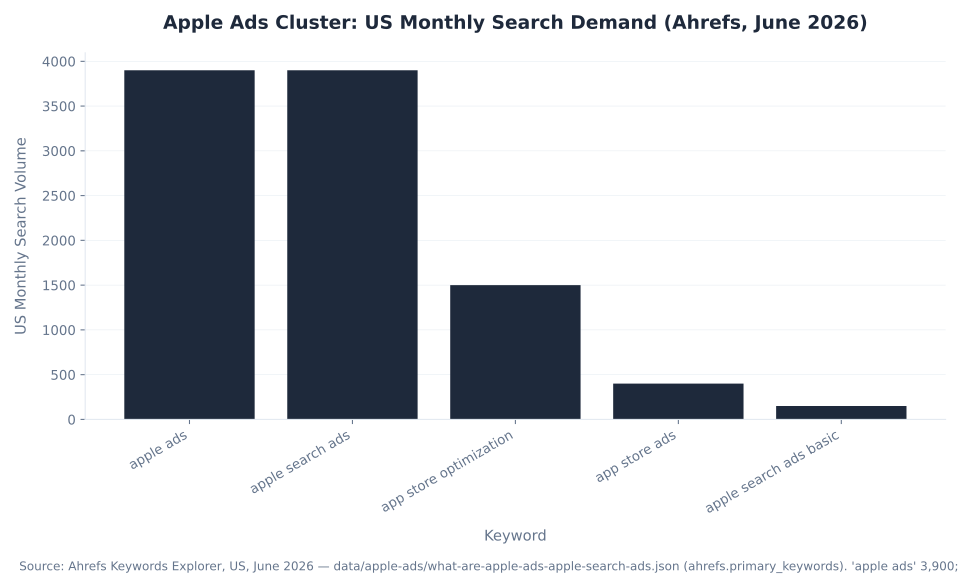
The MB Adv Agency framing we give every app advertiser is one sentence: the App Store is the storefront and the ad network, so the distance between “saw the ad” and “installed the app” is a single tap inside one surface — a structurally shorter funnel than web search or social, and the reason the conversion math below looks the way it does. Search demand shows the rename is still mid-flight: “apple ads” and “apple search ads” each register 3,900 monthly US searches (Ahrefs, June 2026), a textbook rebrand split where the legacy name stays in heavy rotation while traffic migrates to the new one. The MB Adv read: a marketer who repeats “Apple Search Ads” in a 2026 pitch is signaling a playbook that predates the four-placement, SKAN-participating, CPT-auction product that exists today.
Apple Ads Cluster: US Monthly Search Demand (Ahrefs, June 2026)
Key Takeaways
- Apple Search Ads was renamed Apple Ads on April 14, 2025 — and the product expanded with the name. It now runs four App Store placements, joined SKAdNetwork, and added view-through attribution. “Search ads” describes one placement type, not the platform.
- Apple Ads is bought in one console. Everything is built at ads.apple.com, billed per tap (CPT) on the Advanced tier through a second-price auction, and run across the Today tab, Search tab, Search results, and product pages.
- Both tiers are live — the “Basic was discontinued” rumor is false. Apple Ads Basic is automated, cost-per-install, capped at $10,000 per app per month with a $100 starter credit; Apple Ads Advanced is the full-control, keyword-driven CPT product.
- The case is intent, in Apple’s own numbers. Apple reports 850 million+ weekly App Store visitors, 70% who use search to discover apps, almost 65% of downloads after a search, and conversion over 60% at the top of search results.
- Small developers win on relevance, not budget. Basic caps the risk, the second-price auction rewards intent fit over spend, and the real barrier is a tight keyword theme and a matching product page — not an enterprise user-acquisition budget.
Two Live Tiers: Apple Ads Basic and Apple Ads Advanced
Here is the second-most-common stale claim, stated plainly so it stops circulating: Apple Ads Basic was not discontinued. Both tiers are live in 2026, and Apple’s own compare page lists them side by side (Apple, Compare Apple Ads Solutions). Which one fits changes the answer to “is this for me,” so it is worth getting right.
| Feature | Apple Ads Basic | Apple Ads Advanced |
|---|---|---|
| Built for | Individual developers | Developers, advertisers, agencies |
| Budget | Up to $10,000 per app per month | Unlimited |
| Billing unit | Cost-per-install (CPI) | Cost-per-tap (CPT), second-price auction |
| Targeting and bidding | Automated — Apple manages it | Full keyword and audience control |
| Starter credit / APIs | $100 credit for new accounts; no API | No starter credit; full API access |
Source: Apple, Compare Apple Ads Solutions (verified June 2026). Both tiers are active; Basic is automated and pay-per-install, Advanced is the keyword-driven CPT product.
Apple Ads Basic is the automated, low-effort on-ramp for individual developers: set a monthly budget up to $10,000 per app, pick a country, and Apple handles targeting and bidding on a cost-per-install (CPI) basis — you pay per download, not per tap — with a $100 starter credit for new accounts. Apple Ads Advanced is the keyword and auction product for developers, advertisers, and agencies: unlimited budget, the CPT second-price auction, full keyword and audience control, and API access. The “Basic was sunset” claim confuses it with genuine Apple retirements — iAd, Creative Sets, and lifetime budgets are all gone — but Basic is not among them.
The MB Adv read: this is good news for the indie developer, because there is a near-zero-effort, capped-spend on-ramp and a full-control product to graduate into. Treating “Basic vs Advanced” as a deprecated either/or is a reliable tell that a guide is out of date. Most of this glossary describes Advanced — the keyword-driven product — and the console walkthrough lives in the Apple Ads console and campaign setup guide. For teams that want the build and ongoing optimization handled, our SaaS & software PPC services run the closest playbook to App Store user acquisition.
Why the App Store Converts — and the Honest Case for Small Developers
The reason to advertise on the App Store is not reach for its own sake — it is intent, and Apple’s own published numbers make the case better than any vendor estimate. The people seeing a Search-results ad are, by definition, already hunting for an app like yours.
| Metric | Figure | Source |
|---|---|---|
| Weekly App Store visitors | Over 850 million | Apple |
| Visitors who use search to discover apps | 70% | Apple |
| Downloads that happen directly after a search | Almost 65% | Apple |
| Downloads within one minute of an ad tap | 95% | Apple |
| Conversion at the top of Search results | Over 60% | Apple |
| Search-results conversion rate (global median) | 56–57% | AppTweak, Oct 2025 |
Sources: Apple, Ads on the App Store (reach and intent figures, attributed to Apple); AppTweak, Apple Ads Benchmarks (Oct 2025, global median). Not mbadv data.
Those figures explain the payoff. Apple cites industry-leading conversion rates over 60% for ads at the top of search results; third-party data puts the global Search-results median near 56–57% (AppTweak, October 2025) — still extraordinary by any web-advertising standard, where a 5% landing-page conversion is a strong result. The App Store funnel is short because the ad, the decision, and the install all happen on the same surface.
For the small developer asking “can I actually win here,” the honest answer is yes, with conditions. Basic caps the downside, the second-price auction means you are not outbid on every term by deep pockets, and conversion intent does much of the work. The real barrier is not budget — it is relevance and creative: a tight keyword theme, a product page that matches the search, and an app worth installing. The MB Adv view: Apple Ads rewards intent fit over raw spend, which is exactly why it can be one of the most efficient channels a small app runs — and why “I don’t have a big user-acquisition budget” is the wrong reason to skip it. The cost ranges and the CPT, CPA-cap, and budget mechanics live in how much Apple Ads cost; the same auction discipline runs across the rest of your paid media in our PPC services.
The Four App Store Placements
A beginner’s most common error is treating Apple Ads as “boost my app in search.” It is four placements, and they target and bill differently. This section names them; Apple Ads placements and ad types explains when to use each.
| Placement | Where it appears | Targeting |
|---|---|---|
| Today tab | The App Store front page | Awareness; no keywords; runs a Custom Product Page creative |
| Search tab | Suggested apps, before the user types a query | A single bid; no keywords |
| Search results | Within results after a query — the high-intent placement | Keyword-targeted, plus optional Search Match |
| Product pages | The suggested-apps list on other apps’ product pages | Category-targeted; no keywords (not in mainland China) |
Source: Apple, Ad Placement Options (verified June 2026). All four are auction-based, self-serve, and CPT-billed.
Only Search results campaigns use the keyword and ad-group structure most marketers picture: a campaign sets budget and countries, and ad groups hold keywords, bids, and creative. The Search tab is a single bid with no keywords; product pages are category-targeted; the Today tab runs a Custom Product Page creative. Every one of the four is auction-based, self-serve, and CPT-billed — there are no reserved or managed buys inside App Store Apple Ads. How you reach the right searcher — broad and exact match, Search Match automation, audience refinements, and competitor conquest — is the subject of Apple Ads targeting and keywords (there is no phrase match in Apple Ads).

App Store & PPC Strategy
Thinking About Adding Apple Ads to Your Mix?
MB Adv Agency helps advertisers fit Apple Ads alongside Google App campaigns and the rest of their paid acquisition — the same auction discipline, applied to the App Store’s own intent. Talk to our team before you spend your first dollar.
Talk to our team →The Apple Ads Ecosystem: What to Learn Next
Apple Ads is a full platform, and the fastest way to get lost is to treat it as a single dial. Inside the console you make five sets of decisions, and each is its own pillar in this glossary.
Targeting on Search results offers two keyword match types — broad and exact, with no phrase match — plus Search Match automation, audience refinements, and competitor conquest (targeting and keywords). Cost and bidding run on CPT, max-bid ceilings, the renamed CPA cap, and daily budgets (how much Apple Ads cost). Attribution and privacy use Apple’s first-party AdServices and Apple Ads Attribution API, SKAdNetwork (versions 1 through 3, since April 2025), and AdAttributionKit — and Apple-Ads attribution works whether or not a user accepts App Tracking Transparency (attribution and privacy; the measurement plumbing is squarely server-side tracking territory).
Creative now runs on Custom Product Pages, which power ad variations — Creative Sets are retired (creative and ad policies). And one relationship worth naming: Apple Ads and App Store Optimization (ASO) reinforce each other. There is no direct ranking boost, but paid installs on relevant keywords lift download velocity, which Apple’s organic algorithm weighs, and the high-converting terms you discover in Apple Ads feed straight into your ASO metadata (Apple Ads and ASO). Choosing between Apple Ads, Google App campaigns, and Meta is the subject of Apple Ads vs other app advertising platforms.
The MB Adv approach is to start narrow — one placement, a tight keyword theme, a product page that matches it — and expand from what proves out. Setting up and running those campaigns is ongoing work, and our PPC campaign management covers it for teams that would rather operate than tend the console. Use this page to get oriented, then follow the link into the pillar that answers your next question.
Three Corrections That Signal Stale Apple Ads Knowledge
Most Apple Ads content a reader finds is out of date, and three corrections separate current guidance from stale guidance. Each one is a citation magnet, because the wrong version is still everywhere.
1. “It’s still called Apple Search Ads.” Not since April 14, 2025. The product is Apple Ads; “Apple Search Ads” is the legacy name, and “search results” is one placement type under it. The old name in current content is a reliable signal that the rest of the advice is stale too — pre-SKAdNetwork, pre-CPT-only, pre-Custom-Product-Page.
2. “Basic was discontinued — it’s Advanced-only now.” False. Both Apple Ads Basic (automated, cost-per-install, capped spend) and Apple Ads Advanced (full control, CPT auction) are live in 2026, listed side by side on Apple’s compare page. For a small developer, that is the difference between “I can’t afford to start” and “there is a capped, pay-per-install on-ramp built for me.”
3. “You need the App Tracking Transparency prompt for Apple Ads to work.” No. Apple Ads’ own attribution — through the first-party AdServices framework and the Apple Ads Attribution API — works deterministically regardless of ATT consent. Consent only upgrades the AdServices payload from Standard to Detailed (it adds an engagement timestamp); it does not gate whether Apple Ads attributes an install at all. The full mechanics are in attribution and privacy (Apple, Ad attribution overview).
Frequently Asked Questions: Apple Ads (Apple Search Ads)
Next in the Apple Ads series
Placements & Ad Types
You know the four App Store surfaces by name — now see what each one does and when to use it. The placements guide breaks down the Today tab, Search tab, Search results, and product pages, with the targeting and creative each one takes.
Read the placements guide →Methodology & Sources
This pillar is the orientation anchor for the Apple Ads cluster; the depth lives in the linked siblings. The rebrand date and product structure are from Apple Ads News and Apple’s Compare Apple Ads Solutions page. The reach and intent figures — 850 million weekly visitors, 70% who use search, almost 65% of downloads after a search, 95% within a minute of an ad tap, and over 60% conversion at the top of search results — are Apple-published, from Ads on the App Store, and attributed to Apple throughout. Billing and auction mechanics are from Apple’s How Pricing Works; the four placements from Ad Placement Options; attribution from Apple’s Ad attribution overview. The 56–57% Search-results conversion median is AppTweak (October 2025). Search-demand figures are Ahrefs, June 2026. No Apple Ads revenue figure is cited, because no authoritative primary-Apple number exists. No MB Adv client metrics appear in this article; the agency perspective is qualitative. Reviewed by MB Adv Agency, June 2026.
Apple Ads, also known as Apple Search Ads, are a powerful advertising platform developed by Apple Inc. This platform allows app developers to promote their applications directly within the App Store search results. By leveraging targeted keywords, advertisers can ensure their apps are seen by potential users at the moment they are searching for relevant applications. This strategic placement can significantly increase visibility and downloads, making it an essential tool for any app marketing strategy.
Overview of Apple Ads
Apple Search Ads operates within a pay-per-tap model, where advertisers pay only when a user taps on their ad. This model helps businesses manage their advertising costs effectively, ensuring that they only spend money when users show genuine interest. The platform also utilizes a sophisticated algorithm that takes into account user engagement, relevancy, and the overall quality of the app, ensuring that the ads are displayed to a targeted audience.

There are two main tiers to Apple Search Ads: Basic and Advanced. The Basic tier offers a simplified setup, making it accessible for app developers who may have limited experience with digital advertising. On the other hand, the Advanced tier provides a comprehensive set of tools for experienced marketers to create more customized and targeted ad campaigns.
Apple Search Ads Basic
Apple Search Ads Basic is designed to automate much of the advertising process. Developers simply need to provide the app's metadata, set a budget, and select a target audience, and the system will manage the rest. This tier helps brands focus more on their app’s development and user experience rather than the complexities of ad management.
With this tier, advertisers can also gauge the effectiveness of their ads through straightforward analytics presented by Apple. Although it offers less control over bidding and keyword selection, it’s an ideal option for those entering the app marketing realm. The simplicity of the Basic tier allows new developers to quickly learn the ropes of advertising, as they can easily monitor performance metrics such as impressions, taps, and downloads without getting overwhelmed by intricate details.
Apple Search Ads Advanced
The Advanced tier provides advertisers with full control over various aspects of their campaigns, including keyword targeting, audience segmentation, and detailed analytics. Advertisers can manually set bids for specific keywords and tailor their ads to target specific demographics, locations, and user behaviors.
This flexibility allows more seasoned marketers to craft sophisticated campaigns that align closely with their broader marketing goals. Additionally, the Advanced tier includes features such as ad customizations, A/B testing, and the ability to track conversions directly, offering deeper insights into campaign performance. Marketers can experiment with different ad creatives and messaging to determine what resonates best with their audience, optimizing their strategies in real-time. Furthermore, the integration with Apple’s ecosystem means that advertisers can leverage user data from other Apple services, enhancing the precision of their targeting and ensuring that their ads reach the most relevant users.
Importance for app marketing
In an ever-expanding digital landscape, an effective app marketing strategy is crucial for standing out in the crowded App Store. Apple Ads provide developers with the tools necessary to enhance visibility and reach potential users when they are most engaged. With millions of apps available for download, having the right advertising strategy in place can make a substantial difference in the success of an app.

The importance of Apple Ads lies in their capacity to connect app developers with targeted users who are actively searching for applications similar to theirs. This tailored approach not only increases the likelihood of downloads but also improves the overall user acquisition cost (UAC), making advertising more efficient and effective.
App Store Visibility
Visibility is key in the App Store ecosystem, and Apple Search Ads help developers secure a prominent position. By placing ads at the top of search results, developers can significantly increase their app's reach. Furthermore, this increased visibility not only drives downloads but can also enhance organic search rankings, leading to sustained user growth.
Moreover, the direct correlation between ad performance and download metrics ensures that apps achieving high engagement receive even more visibility within the platform—a positive feedback loop that benefits advertisers immensely. As apps gain traction, they can leverage user reviews and ratings to further bolster their standing in the App Store, creating a virtuous cycle of visibility and credibility that is essential for long-term success.
User Intent
Another critical advantage of using Apple Search Ads is the alignment with user intent. When potential users search for apps, they are often in an active decision-making phase, meaning they are more likely to download an app they see in the search results. By capturing this intent, Apple Ads enable advertisers to convert interest into actual downloads, optimizing marketing efforts toward high-quality leads.
This proactively targeted approach allows marketers to minimize wasted ad spend and focus on users who demonstrate the highest potential for engagement with their app. Additionally, the ability to analyze user behavior and preferences through Apple Ads provides developers with invaluable insights that can inform future updates and marketing strategies. By understanding what resonates with their audience, developers can refine their app features and promotional tactics, ultimately leading to a more tailored user experience that fosters loyalty and encourages word-of-mouth referrals.
Key benefits for advertisers
Apple Search Ads deliver several unique benefits to advertisers, facilitating a more productive and efficient app marketing experience. Understanding these benefits is essential for app developers considering this advertising avenue.
Targeted Advertising
One of the primary benefits of Apple Search Ads is the ability to target specific keywords and user demographics. Advertisers can select keywords relevant to their app’s functionality and likely user search behaviors. This level of targeting ensures that ads are shown to users who are genuinely interested in the product being offered.
Additionally, advertisers can segment audiences based on age, location, and device type, leading to even more precise targeting. This finely-tuned approach helps in maximizing the chances of engagement and conversion. For instance, a fitness app may choose to target younger demographics in urban areas, where fitness trends are more prevalent, thereby increasing the likelihood of attracting users who are more likely to download and engage with the app.
Performance Tracking
Apple Search Ads offers robust performance tracking and reporting features that empower advertisers to make data-driven decisions. Advertisers can monitor various metrics, including impressions, taps, downloads, and cost-per-acquisition, giving them clear visibility into campaign performance.
By analyzing these metrics, marketers can identify high-performing strategies and optimize their campaigns accordingly. Regular insights allow for the reallocation of budgets toward the most effective keywords and audience segments. Furthermore, the ability to conduct A/B testing on different ad creatives and messaging can reveal what resonates best with potential users, enhancing overall campaign effectiveness and ensuring that each advertising dollar is spent wisely.
Increased ROI
The ultimate goal of any advertising initiative is to achieve a high return on investment (ROI). By strategically employing Apple Search Ads, marketers can significantly enhance their ROI due to the efficient targeting and high-intent nature of users engaging with the ads. As a result, the cost associated with acquiring new users effectively diminishes over time.
With the ability to adjust campaigns based on performance analytics and market trends, advertisers can continuously refine their strategies, ensuring their marketing efforts yield optimal results in the competitive app ecosystem. This adaptability is crucial, especially in an ever-evolving digital landscape where user preferences and behaviors can shift rapidly. Moreover, the integration of Apple Search Ads with other marketing channels allows for a cohesive strategy that can amplify overall brand presence and user acquisition efforts.
Furthermore, the platform’s unique auction-based system ensures that advertisers can compete effectively, even with limited budgets, by focusing on the most relevant keywords and optimizing bids accordingly. This democratization of advertising opportunities enables smaller developers to gain visibility alongside larger competitors, leveling the playing field and fostering innovation within the app marketplace.

As a Google Ads expert, I bring proven expertise in optimizing advertising campaigns to maximize ROI.
I specialize in sharing advanced strategies and targeted tips to refine Google Ads campaign management.
Committed to staying ahead of the latest trends and algorithms, I ensure that my clients receive cutting-edge solutions.
My passion for digital marketing and my ability to interpret data for strategic insights enable me to offer high-level consulting that aims to exceed expectations.
Google Partner Agency
We're a certified Google Partner Agency, which means we don’t guess — we optimize withGoogle’s full toolkit and insider support.
Your campaigns get pro-level execution, backed by real expertise (not theory).

4.9 out of 5 from 670+ reviews on Fiverr.
That’s not luck, that’s performance.
Highly recommend Matteo to set up your server side tracking. He has a deep understanding of e-commerce tracking and will go above and beyond to make sure everything is set up correctly and working 100%. If you are scaling your store this set up is non-negotiable in my opinion and there isn't many people who have this much knowledge or put the effort in to get it right. Thanks again!
avorodesign.com
I can only recommend Matteo! He was very patient, professional and very knowledgeable about GA4, Consent Mode v2, and GDPR compliance. Communication was clear, and the setup was done professionally and efficiently. Highly recommend him for anyone needing reliable tracking implementation.

www.natureiki.life
Matteo shines in the realm of online professionals. His work is not only deep in data but also complemented by his proactive communication and cooperation, setting a new standard for freelancers. If you want someone who truly exceeds expectations, look no further. Highly recommended!

www.omanbeverlysmyth.com
Exceptional Service Beyond Expectations - Outstanding Service Impeccable depth, flawless delivery, and exceptional language fluency—this service exceeded all expectations. Highly recommended. Matteo truly ROCKS!!!

ium-paris.com
Top-notch, always highly value working with Matteo. An absolute Google Ads Genius. This is approximately the 8th time I have hired him and he's helped us get 6-7 ROAS. We are excited in continuing to improve our lead flow. Hire this guy if you need Google Ads help. Thanks Matteo!
www.dleeventgroup.com
I finally found the guy who can setup server side tracking and all the ecosystem properly. I definitely recommend Matteo. He is very responsive, kind and wants to dig into things. He configured GA4, Meta, Google Ads, Outbrain and google consent v2 with Cookiebot. Thanks Matteo.

inomega.fr
MB Adv delivered exceptional work with outstanding professionalism and lots of patience, taking time to see effects of changes made and not just do the work and submit it. The proactive communication and video summaries of the work completed made working with Matteo a pleasure, as he consistently went above and beyond. Highly recommended for web analytics projects! We are already working on another project.

www.withnellsensors.co.uk
Working with Matteo on my Google Ads was a game-changer. He's not just a strategist, he's a true partner. He understood my goals and tailored a campaign that perfectly reached my target audience. I'm grateful for his expertise and dedication.
dccargo.com
Click-driven mind
with plastic-brick obsession.
We build Google Ads campaigns with the same mindset we use to build tiny brick worlds: strategy, patience, and zero tolerance for wasted pieces.
Data is our blueprint. Growth is the only acceptable outcome.