

Start
$590$990/month
- Ad spend
- up to $3,000
- New creatives
- on Google + Meta plans4 a month
Google has now shared fresh U.S. data on how people are using AI Mode, and the signal for advertisers is hard to ignore. AI Mode has already passed 1 billion monthly active users globally, while query volume has more than doubled every quarter since launch. That scale matters on its own. What matters more for Google Ads is the shape of the behavior behind it.
The average AI Mode query is now three times longer than a traditional search query. Follow-up queries in the U.S. are growing by more than 40% per month on average. Searches beginning with “which” are growing 40% faster than overall AI Mode volume, and planning-related queries are growing 80% faster. More than one in six AI Mode searches is now multimodal, with image-input searches rising more than 40% month over month.
None of this suggests that search intent is weakening. If anything, Google Search is collecting more intent per interaction. Users are not becoming less specific. They are becoming more explicit, more comparative, and more iterative.
For years, paid search strategy could be framed as a question of coverage: which keywords to target, how tightly to group them, and how aggressively to control matching. That logic does not disappear in AI Mode, but it becomes less complete.
Longer, more contextual queries push Google Ads further toward semantic interpretation. A user no longer searches only for “running shoes women.” They may ask which running shoes are best for flat feet, marathon training, rainy weather, and a budget under a certain threshold. That is not just a longer query. It is a denser one.
This is exactly where broad match, audience signals, and Smart Bidding become more important, not because control no longer matters, but because the system has to interpret layered intent rather than string-match isolated terms. At the same time, search term review and negative keyword strategy become more valuable, not less. When matching expands semantically, the cost of bad interpretation rises with it.
One of the more important implications is how shopping research appears to be evolving. Users often begin in traditional Search, then move into AI Mode to compare options, narrow criteria, and investigate trade-offs. That creates a less linear path from discovery to purchase.
For ecommerce advertisers, this changes the role of product data. Feed quality is no longer mainly about writing stronger titles and descriptions. If users are asking comparative and planning-oriented questions, then structured attributes become the real substrate of visibility: price, availability, brand, color, size, material, compatibility, and location. If that data is incomplete or inaccurate, Google has less to work with when it tries to place a product into a conversational research flow.
This is especially relevant in categories where the user is not just choosing a product, but evaluating fit. Apparel, home goods, electronics accessories, replacement parts, and seasonal purchases all depend on attributes that help Google understand context, not just inventory.

The growth in follow-up behavior also matters for local campaigns. Store-related searches increasingly include “near me,” “in stock,” financing questions, and replacement-part queries after the initial search. That means local and inventory data are not just operational inputs. They are strategic assets.
A campaign can only capitalize on this if merchant feeds, local inventory ads, store data, and business information are accurate enough to support those follow-up moments. If a user begins broadly and refines through AI Mode, the advertiser who wins may not be the one with the most obvious keyword coverage, but the one with the cleanest and most complete underlying data.
The measurement challenge is not that AI Mode breaks intent. It is that it stretches the path through which intent becomes commercially visible. Discovery, comparison, and decision-making are more intertwined, and they may happen across multiple query reformulations rather than a single high-intent search.
That makes simplistic readouts less useful. If campaigns are evaluated only on the last obvious commercial query, advertisers may undervalue the earlier interactions that shaped the decision. This does not mean attribution suddenly becomes solved by a new model. It means analysts need to be more careful about interpreting performance in a journey that is increasingly iterative and conversational.
One important caveat: Google’s Trends figures here reflect relative growth within sampled U.S. AI Mode searches, not absolute query volumes. So the takeaway is not that every category is already being transformed at the same pace. The takeaway is that the direction of travel is now much clearer.
The practical implication for Google Ads is straightforward. Search is not moving away from intent. It is absorbing more of it, in more formats, across more steps. The challenge for PPC is no longer only matching a keyword. It is giving Google enough accurate data, enough structured product information, and enough conversion feedback to interpret complex intent well. In that environment, campaign structure still matters, but data quality matters more.
$590$990/month
$790$1,290/month
$1,140$1,940/month
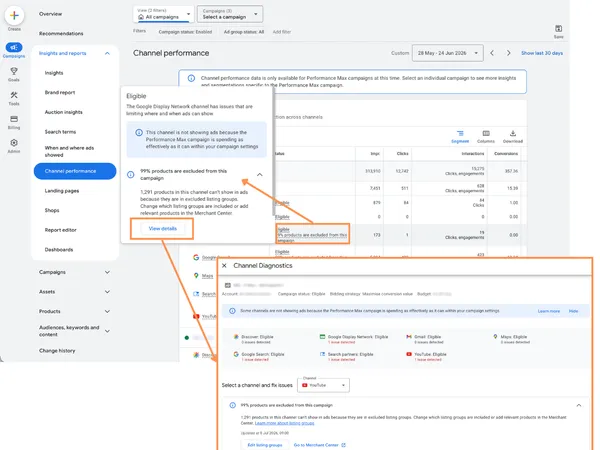 Google Ads PMax Channel Diagnostics: a better way to audit Performance Max assets
 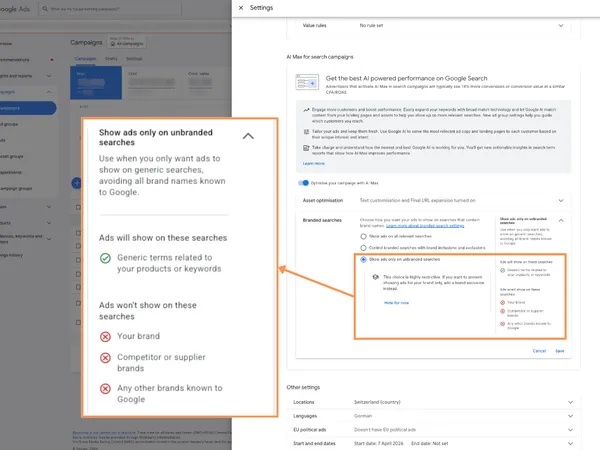 Google Ads AI Max now adds branded searches control for better brand and non-brand campaign management
 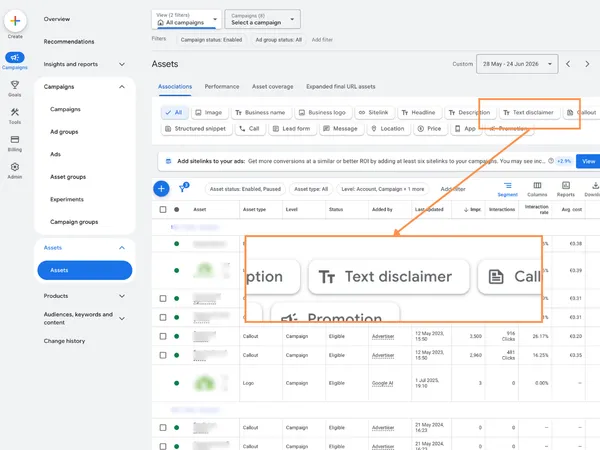 Google Ads Text Disclaimer assets: why this small Search update matters for compliant advertising
 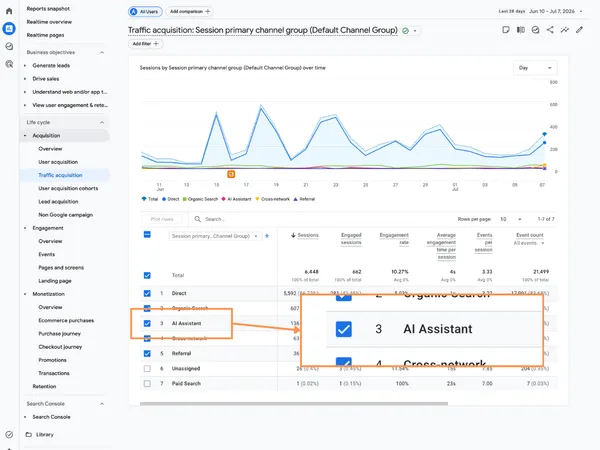 GA4 adds AI Assistant as a Default Channel Group: what it means for SEO, PPC, and attribution
 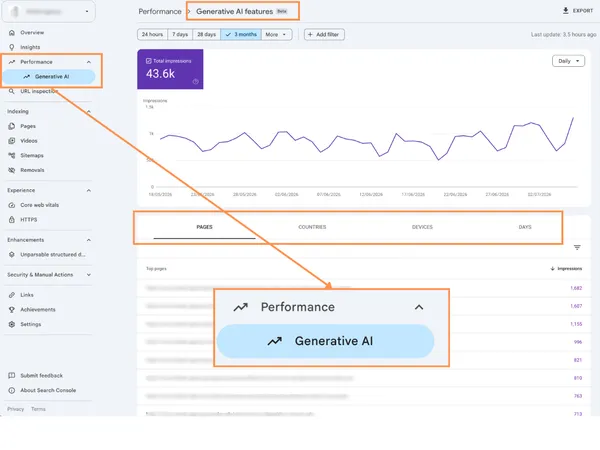 Google Search Console introduces dedicated AI visibility reporting for SEO and search performance
 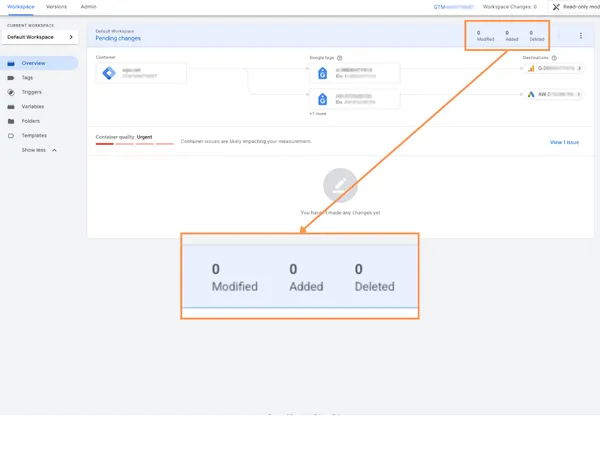 Google Tag Manager visual event builder for Google Ads purchase conversions improves tracking setup
 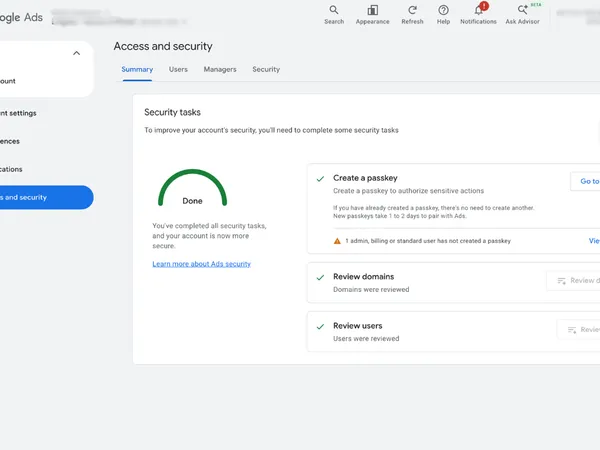 Google Ads adds Security Tasks in Access and security: why the new Summary tab matters
 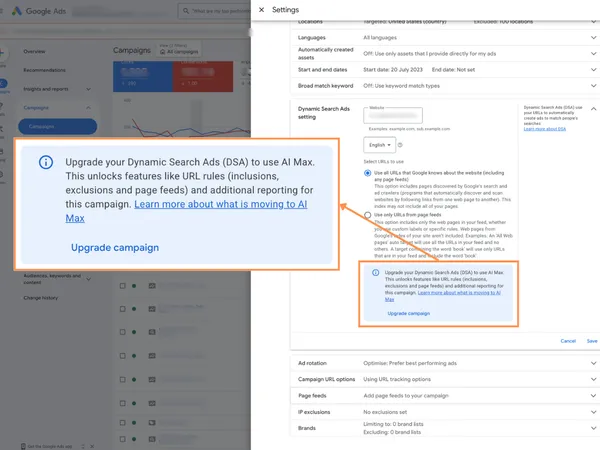 Google Ads delays DSA to AI Max auto-migration until February 2027: what advertisers need to know
 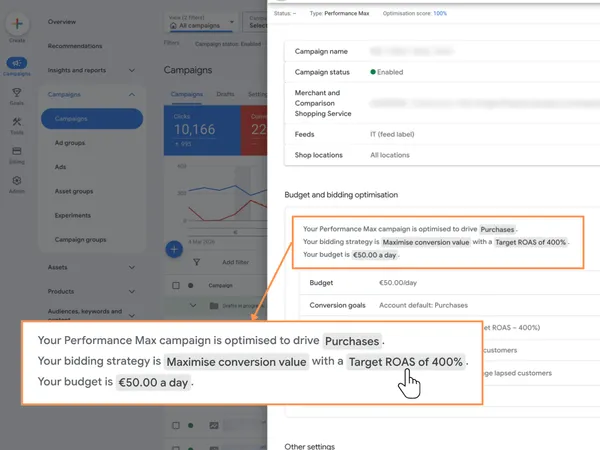 Google ads adds clickable budget and bidding summary in campaign settings to speed up audits and reduce errors
 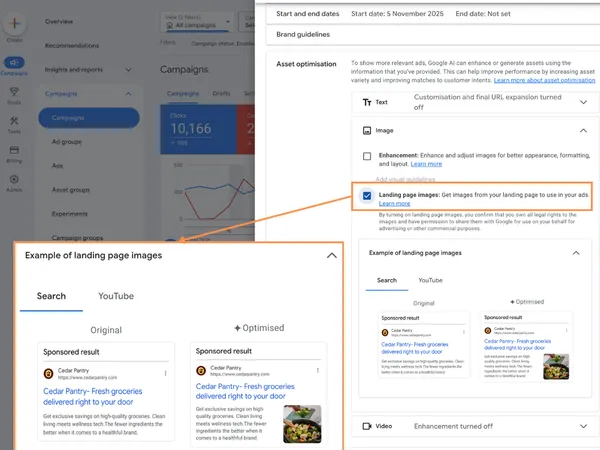 how to optimize performance max landing page images: turn your website into a high-performing creative engine
 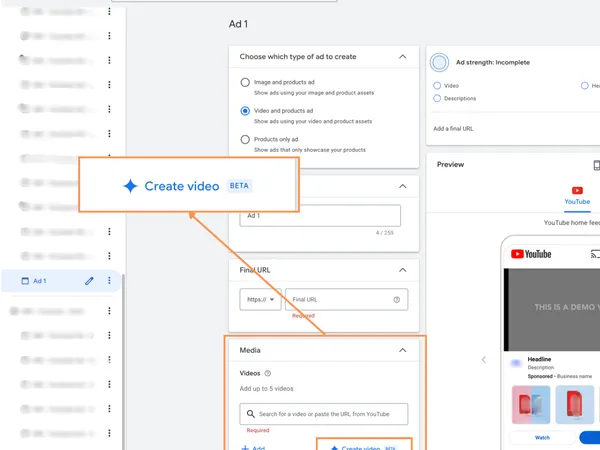 Google ads demand gen: how granular asset optimization controls give you more power over ai-generated creatives
 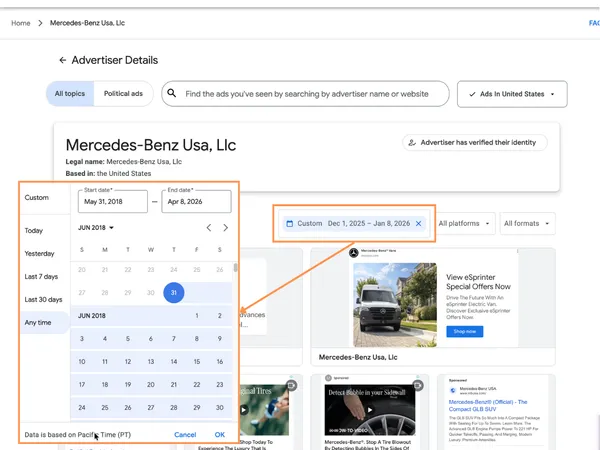 How the new Google Ads Transparency Center custom date ranges transform competitor research and seasonal campaign strategy
Matteo Braghetta founded MB Adv and runs its Google Ads accounts. He takes the first call with every new client, reads the accounts every week and writes the agency’s guides.
The other half of his job is measurement: GA4, Consent Mode and server-side tracking, so the platforms learn from real sales.
MB Adv is a Google Partner agency managing about $4.4M a year in ad spend for clients in the US, the UK and Europe.
Managed on numbers you can check.
Plans for the US