Google Search Console introduces dedicated AI visibility reporting for SEO and search performance
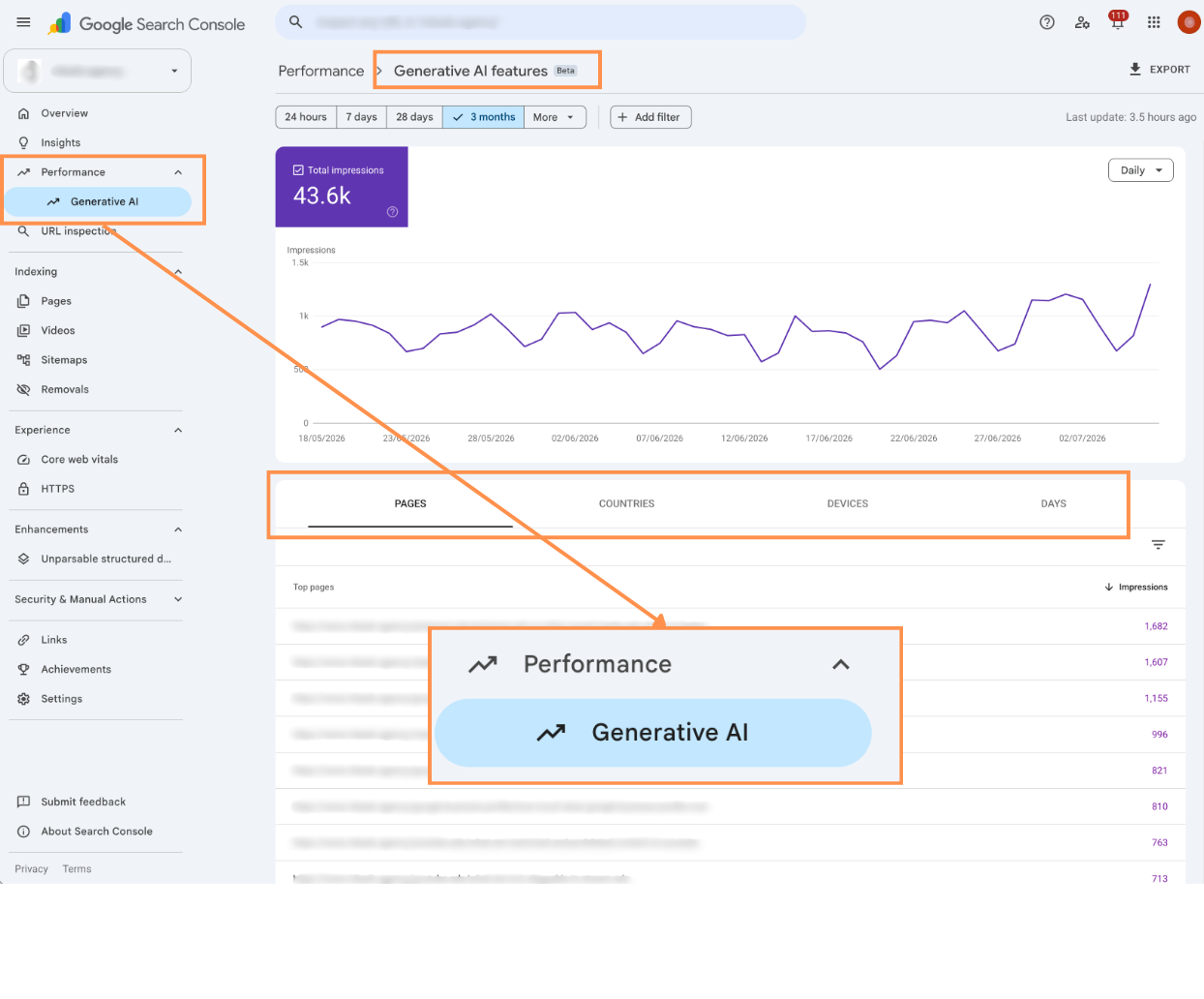
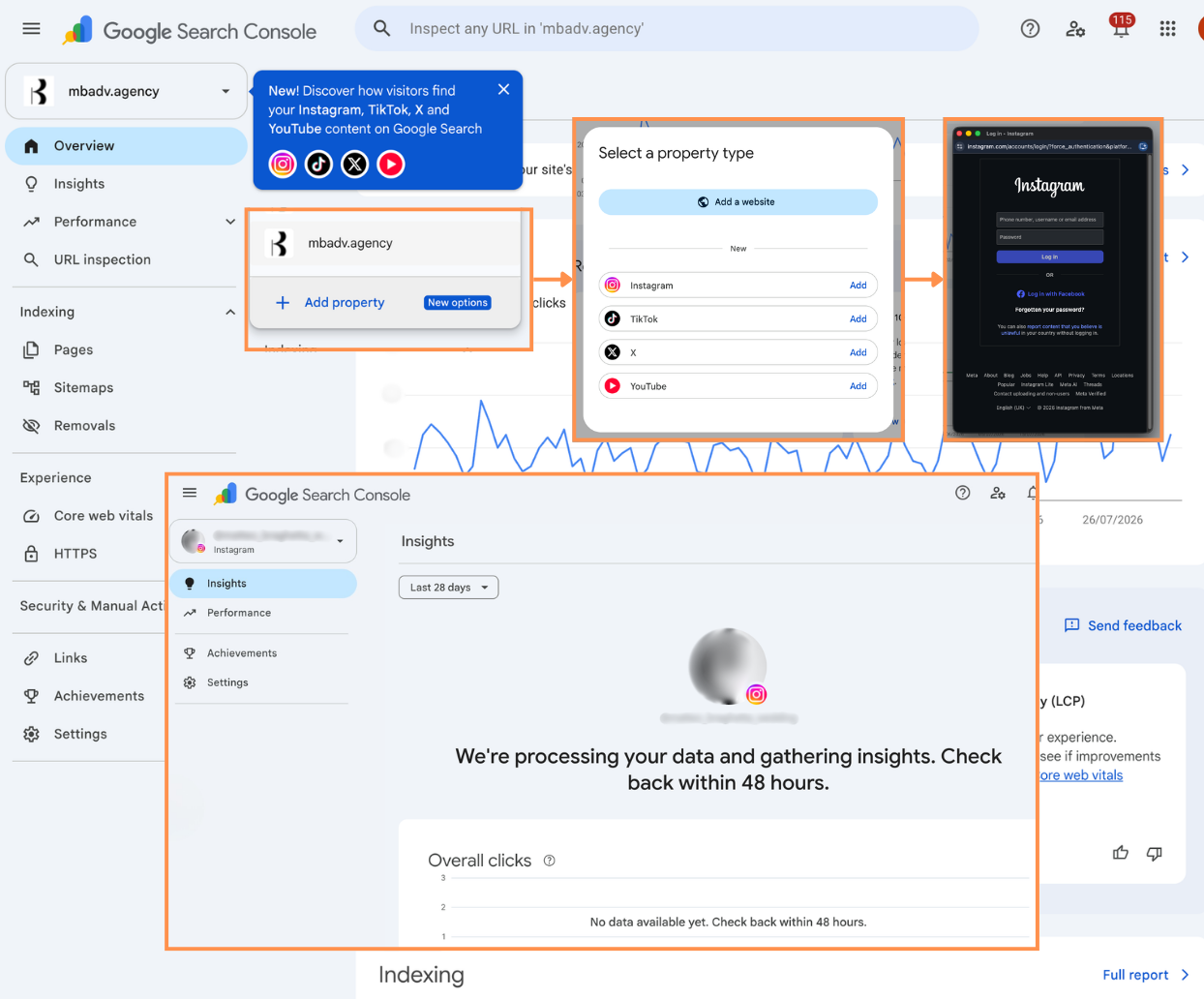
Google has started rolling out a new layer in Search Console that isolates visibility in generative AI search experiences from traditional organic reporting. For anyone working across Google Ads, SEO, and performance analysis, this is a meaningful change. It does not suddenly solve attribution, and it does not yet offer click data, but it does introduce something the market has been missing: a cleaner way to measure how often a site is surfaced inside AI-generated search results.
Until now, one of the biggest problems in evaluating AI search exposure has been the lack of separation. Standard Search Console reporting was built for classic search behavior: impressions, clicks, average position, and query-page relationships tied to conventional results pages. That framework becomes less useful when search experiences are increasingly mediated by AI Overviews and AI Mode, where visibility can happen before a user ever sees a traditional blue link.
This new reporting layer matters because it acknowledges that AI visibility is not the same thing as organic ranking in the old sense. It is adjacent to SEO, but not identical to it. And for paid search professionals, that distinction is important because the search journey is becoming more blended. A user may discover a brand, product category, or informational answer through AI-generated search elements, then return later through a branded paid search click, a Shopping ad, or a non-brand query. Without a dedicated reporting view, that early visibility remains largely invisible.
A better measurement framework for AI search exposure
The most useful aspect of the update is not simply that Google is adding another report. It is that the report separates generative AI performance data from standard search performance. That separation improves measurement accuracy.
When AI visibility is mixed into broader search reporting, interpretation becomes messy. A rise in impressions could reflect stronger traditional rankings, increased presence in AI Overviews, or both. Those are not equivalent outcomes. They involve different user behaviors, different click dynamics, and potentially different content formats. By isolating impressions tied to AI-driven experiences, Search Console gives marketers a more reliable baseline for analysis.
The ability to see which URLs are appearing in AI answers is especially valuable. In many accounts, the pages that perform well in AI-generated responses will not perfectly overlap with the pages that drive the most organic clicks. Informational category pages, product comparison content, help documentation, and high-trust editorial assets may surface more often in AI contexts than transactional landing pages. That difference can influence both content prioritization and paid media strategy.
For PPC teams, this creates a more realistic view of upper-funnel search visibility. Google Ads reporting is strong at measuring paid interactions, but it has never been designed to explain how a brand is represented inside emerging AI search layers. Search Console’s new generative AI reporting begins to fill that gap, even if only partially.
Why this matters beyond SEO reporting
Marketers who work primarily in Google Ads should not dismiss this as an SEO-only update. AI visibility is increasingly part of the same demand ecosystem that paid search depends on.
If AI Overviews reduce clicks on some informational queries, that has implications for query value, landing page strategy, and the role of paid search in recapturing demand later in the journey. If certain URLs are consistently surfaced in AI Mode, those pages may be shaping brand perception before a user enters a conversion-focused path. That matters for message consistency, content architecture, and audience qualification.
There is also a practical planning benefit. If a site owner can segment AI visibility data by country and device, they can start identifying where AI search exposure is strongest or weakest. That can inform market-level decisions. For example, if a brand sees strong AI visibility on mobile in one geography but limited visibility on desktop in another, that may point to differences in content relevance, search behavior, or rollout maturity rather than a simple ranking issue.
The addition of hourly, daily, weekly, and monthly granularity is another subtle but important improvement. AI search experiences are still evolving rapidly, and volatility is likely. Trend analysis at different time intervals makes it easier to spot rollout effects, content shifts, or sudden changes in URL exposure. For teams used to monitoring impression share, CPC trends, and auction dynamics in Google Ads, this kind of temporal flexibility will feel familiar and useful.
The current limitations are just as important as the new visibility
The rollout appears limited for now, and the absence of click data is a major constraint. That means this report is currently more useful for visibility analysis than for traffic attribution or conversion analysis.
That limitation should shape how teams use the data. It would be a mistake to treat AI impressions as a proxy for business impact without supporting evidence from analytics, branded search trends, assisted conversion patterns, or downstream engagement signals. Visibility is not the same as value. A URL can be frequently cited in AI-generated results and still contribute little measurable traffic in the short term.
At the same time, the lack of clicks does not make the report unimportant. It simply means the interpretation has to be more strategic. The right question is not “How many visits did AI Overviews generate?” but “Which content assets are becoming part of Google’s AI-mediated answer layer, and what does that tell us about our search presence?”
That is a more nuanced but ultimately more useful question for long-term planning.
A shift in how content performance should be evaluated
One likely outcome of this update is that content teams will need to expand how they define performance. Historically, SEO success has often been judged through rankings, clicks, and conversions. Those metrics still matter, but AI search introduces another layer: citation-like visibility inside generated answers.
That may reward content with strong topical clarity, trustworthy structure, and concise answerability, even when it is not the page generating the highest direct traffic. For advertisers and search marketers, that creates an interesting trade-off. Some pages may become strategically important because they strengthen brand presence in AI search, even if their last-click performance looks modest.
Google Search Console’s dedicated AI visibility reporting does not answer every measurement challenge created by generative search. But it is a meaningful step toward a more realistic reporting model. As AI Overviews and AI Mode continue to reshape search behavior, separating AI exposure from traditional organic data is no longer a nice-to-have. It is becoming necessary for anyone trying to understand how search visibility actually works now.

As a Google Ads expert, I bring proven expertise in optimizing advertising campaigns to maximize ROI.
I specialize in sharing advanced strategies and targeted tips to refine Google Ads campaign management.
Committed to staying ahead of the latest trends and algorithms, I ensure that my clients receive cutting-edge solutions.
My passion for digital marketing and my ability to interpret data for strategic insights enable me to offer high-level consulting that aims to exceed expectations.
Google Partner Agency
We're a certified Google Partner Agency, which means we don’t guess — we optimize withGoogle’s full toolkit and insider support.
Your campaigns get pro-level execution, backed by real expertise (not theory).

4.9 out of 5 from 670+ reviews on Fiverr.
That’s not luck, that’s performance.
Highly recommend Matteo to set up your server side tracking. He has a deep understanding of e-commerce tracking and will go above and beyond to make sure everything is set up correctly and working 100%. If you are scaling your store this set up is non-negotiable in my opinion and there isn't many people who have this much knowledge or put the effort in to get it right. Thanks again!
avorodesign.com
I can only recommend Matteo! He was very patient, professional and very knowledgeable about GA4, Consent Mode v2, and GDPR compliance. Communication was clear, and the setup was done professionally and efficiently. Highly recommend him for anyone needing reliable tracking implementation.

www.natureiki.life
Matteo shines in the realm of online professionals. His work is not only deep in data but also complemented by his proactive communication and cooperation, setting a new standard for freelancers. If you want someone who truly exceeds expectations, look no further. Highly recommended!

www.omanbeverlysmyth.com
Exceptional Service Beyond Expectations - Outstanding Service Impeccable depth, flawless delivery, and exceptional language fluency—this service exceeded all expectations. Highly recommended. Matteo truly ROCKS!!!
ium-paris.com
Top-notch, always highly value working with Matteo. An absolute Google Ads Genius. This is approximately the 8th time I have hired him and he's helped us get 6-7 ROAS. We are excited in continuing to improve our lead flow. Hire this guy if you need Google Ads help. Thanks Matteo!
www.dleeventgroup.com
I finally found the guy who can setup server side tracking and all the ecosystem properly. I definitely recommend Matteo. He is very responsive, kind and wants to dig into things. He configured GA4, Meta, Google Ads, Outbrain and google consent v2 with Cookiebot. Thanks Matteo.
inomega.fr
MB Adv delivered exceptional work with outstanding professionalism and lots of patience, taking time to see effects of changes made and not just do the work and submit it. The proactive communication and video summaries of the work completed made working with Matteo a pleasure, as he consistently went above and beyond. Highly recommended for web analytics projects! We are already working on another project.

www.withnellsensors.co.uk
Working with Matteo on my Google Ads was a game-changer. He's not just a strategist, he's a true partner. He understood my goals and tailored a campaign that perfectly reached my target audience. I'm grateful for his expertise and dedication.

dccargo.com
Click-driven mind
with plastic-brick obsession.
We build Google Ads campaigns with the same mindset we use to build tiny brick worlds: strategy, patience, and zero tolerance for wasted pieces.
Data is our blueprint. Growth is the only acceptable outcome.