Google Ads delays DSA to AI Max auto-migration until February 2027: what advertisers need to know

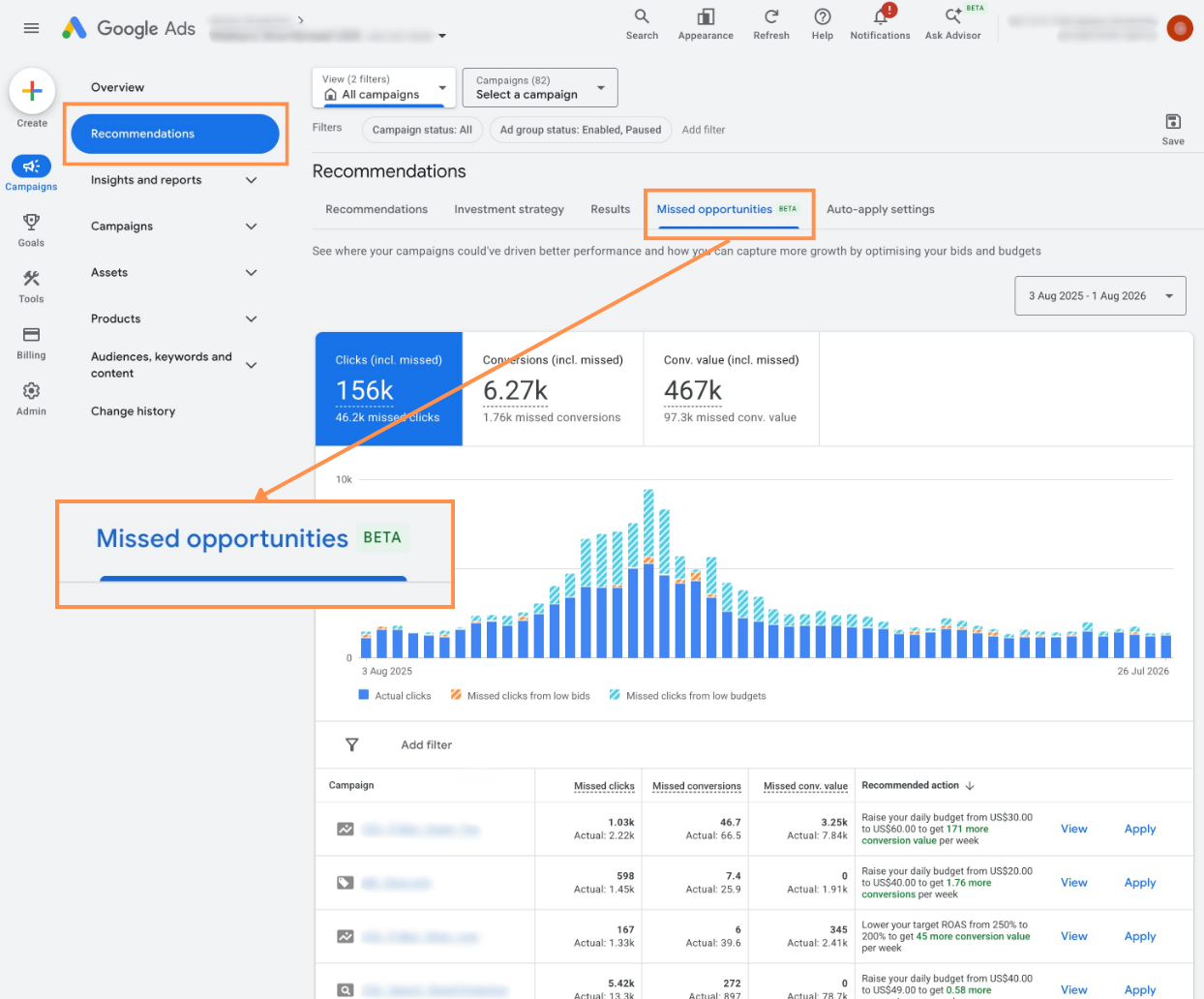
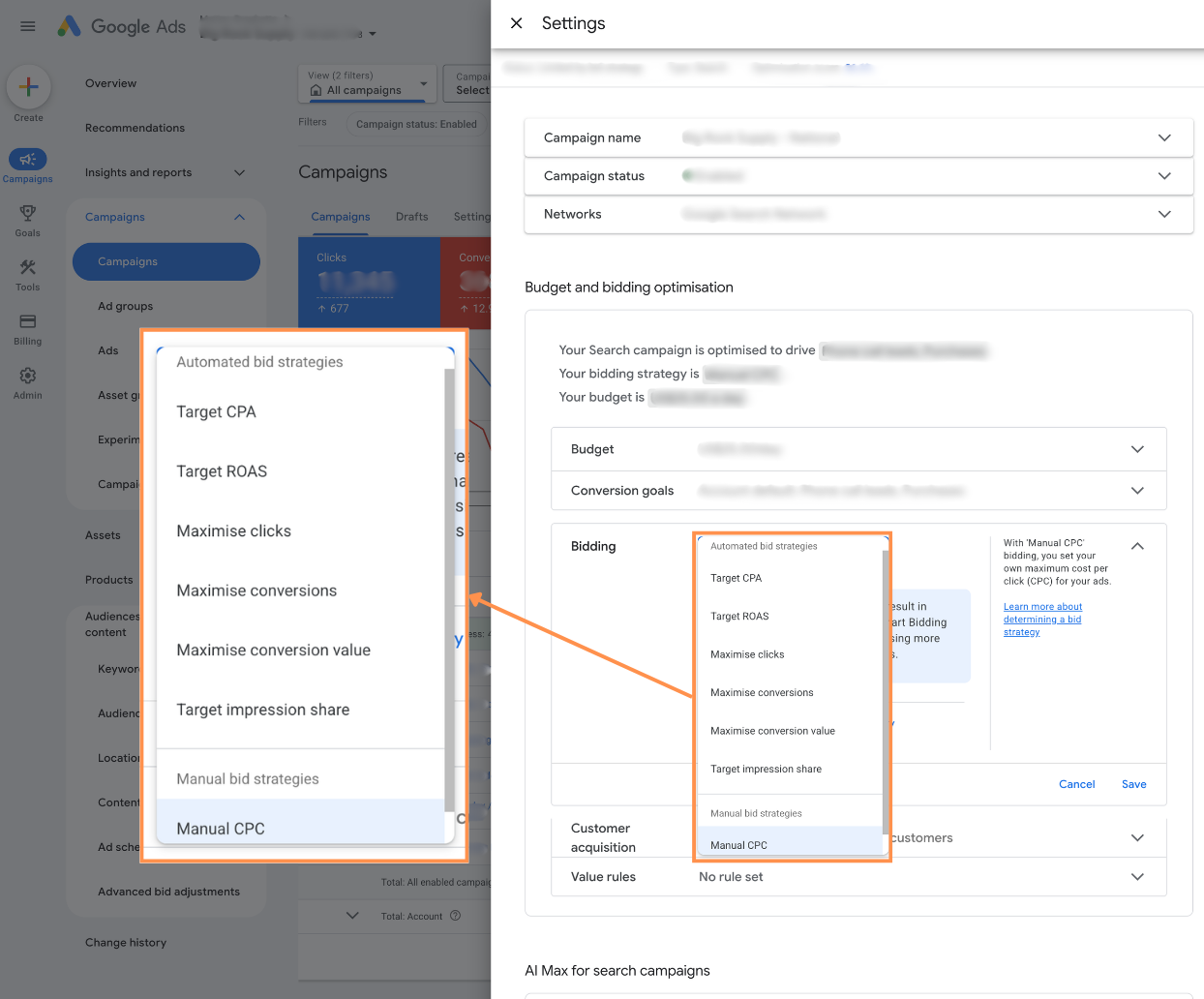
Google has pushed back the automatic migration of Dynamic Search Ads to AI Max campaigns. Instead of forcing the transition in September 2026, Google will now wait until February 2027, allowing existing DSA campaigns to continue through Q4 2026.
On the surface, this looks like a simple timeline adjustment. In practice, it is a meaningful decision for advertisers who rely on stable search coverage during the most commercially sensitive period of the year. For accounts with heavy seasonal dependence, delaying structural change until after Black Friday is not just convenient. It reduces the chance of introducing avoidable volatility when revenue concentration is at its highest.
A sensible delay in the Google Ads rollout calendar
The original migration schedule raised an obvious operational concern. Moving DSA campaigns into AI Max in September would have placed a major automation shift directly ahead of Black Friday, Cyber Monday, and the broader Q4 peak. That timing would have forced many advertisers to either accept the transition during a critical sales window or rush through account reviews and restructuring under pressure.
By moving the DSA to AI Max auto-migration to February 2027, Google is effectively acknowledging a reality that most PPC teams already understand: campaign architecture changes are rarely neutral during peak season. Even when automation improvements are directionally positive, timing matters. Search coverage, landing page matching, query intent alignment, and budget pacing all become more sensitive when traffic volume spikes.
For experienced Google Ads practitioners, this delay is less about postponing innovation and more about preserving control when it matters most.
Why DSA accounts need careful handling before AI Max migration
Dynamic Search Ads have long played a specific role in many account structures. They are often used to capture long-tail demand, fill keyword gaps, support large inventories, or maintain coverage across fast-changing websites where manual keyword expansion is inefficient. In some accounts, DSA is a legacy layer. In others, it is still a strategically useful mechanism.
That is why the migration to AI Max is not just a format update. It potentially changes how advertisers think about automation readiness, query mapping, and campaign segmentation.
A forced migration from DSA to AI Max would naturally raise several questions for performance teams. Does the current DSA campaign bring incremental value, or is it overlapping with existing keyword-based search campaigns? Are landing pages sufficiently clean and structured for broader AI-led interpretation? Is the account already disciplined enough in terms of exclusions, feed quality, and conversion signals to support more automated decision-making?
These are not theoretical concerns. In mature Google Ads accounts, the success of automation often depends less on the automation itself and more on the quality of the underlying account inputs.
The real value of keeping DSA live through Q4 2026
Allowing existing DSA campaigns to continue running through the end of 2026 gives advertisers something more valuable than extra time: it gives them a safer decision window.
Q4 is typically not the right moment to test foundational campaign changes unless there is a compelling performance reason to do so. During Black Friday season, even small disruptions in query coverage or landing page matching can have outsized commercial impact. If a DSA campaign has historically performed as a reliable catch-all for high-intent traffic, replacing or restructuring it just before peak demand introduces unnecessary risk.
The February 2027 timeline creates a more rational planning cycle. Teams can now use the remainder of 2026 to evaluate whether their DSA campaigns are still strategically useful, where AI Max might improve efficiency, and how to redesign campaign structures without the pressure of holiday performance targets.
This is particularly relevant for retailers, travel brands, lead generation accounts with year-end demand spikes, and any advertiser whose reporting calendar is heavily shaped by Q4 outcomes.
What this signals about Google Ads automation strategy
The delay also says something broader about the current Google Ads ecosystem. Google continues to move campaign management toward more automated, AI-driven systems, but it also appears increasingly aware that forced adoption has to be balanced against advertiser risk tolerance.
AI Max is part of a larger pattern: more automation, broader matching logic, stronger dependence on first-party signals, and less granular manual control over how search intent is captured and routed. For some accounts, that direction will improve scale and efficiency. For others, especially those with complex segmentation or strict internal governance, the trade-off is less straightforward.
Postponing the DSA migration does not change the strategic direction. Google is still moving toward AI Max. But it does give advertisers a clearer message that the transition should happen outside a period where campaign instability would be most damaging.
In that sense, the timing change is pragmatic rather than philosophical.
A better window for account review and structural decisions
From an account management perspective, the extra months matter because migration readiness is usually not about clicking a button. It is about understanding how existing search coverage is built and where automation can either strengthen or dilute it.
Some advertisers will use this period to audit DSA query contribution against keyword campaigns. Others will review website architecture, content quality, and page indexing logic to ensure AI-driven systems have cleaner signals to work with. In some cases, the right conclusion may be that DSA is already underperforming and should be replaced before February 2027. In others, the conclusion may be that DSA still serves a useful role and should remain untouched until the migration actually occurs.
The key advantage of the revised timeline is that these decisions can now be made deliberately. Budget allocation, testing plans, and campaign restructuring no longer need to compete with holiday execution priorities.
That is especially important for larger teams and agencies managing multiple accounts. Migration planning is rarely isolated to one campaign type. It affects reporting continuity, forecasting assumptions, stakeholder communication, and internal resource allocation.
The trade-off: more time, but not a permanent reprieve
Advertisers should not mistake the delay for a reversal. Google has not abandoned the DSA to AI Max migration. It has simply moved it to a less disruptive moment.
That distinction matters. The additional runway should be treated as planning time, not as a reason to defer analysis indefinitely. Accounts that depend on legacy DSA structures without understanding their actual contribution may find themselves unprepared when February 2027 arrives.
The more useful interpretation is this: Google has given the market a better transition window, and smart advertisers will use it to reduce uncertainty before automation is applied.
Final perspective
The decision to delay the DSA to AI Max auto-migration until February 2027 is a practical improvement for Google Ads advertisers, particularly those exposed to Q4 seasonality. It protects peak-season stability while creating space for more thoughtful account review, testing, and structural planning.
In a platform increasingly shaped by automation, timing is one of the few variables that still meaningfully affects advertiser control. In this case, Google has chosen a timeline that better reflects how real accounts are managed.

As a Google Ads expert, I bring proven expertise in optimizing advertising campaigns to maximize ROI.
I specialize in sharing advanced strategies and targeted tips to refine Google Ads campaign management.
Committed to staying ahead of the latest trends and algorithms, I ensure that my clients receive cutting-edge solutions.
My passion for digital marketing and my ability to interpret data for strategic insights enable me to offer high-level consulting that aims to exceed expectations.
Google Partner Agency
We're a certified Google Partner Agency, which means we don’t guess — we optimize withGoogle’s full toolkit and insider support.
Your campaigns get pro-level execution, backed by real expertise (not theory).

4.9 out of 5 from 670+ reviews on Fiverr.
That’s not luck, that’s performance.
Highly recommend Matteo to set up your server side tracking. He has a deep understanding of e-commerce tracking and will go above and beyond to make sure everything is set up correctly and working 100%. If you are scaling your store this set up is non-negotiable in my opinion and there isn't many people who have this much knowledge or put the effort in to get it right. Thanks again!
avorodesign.com
I can only recommend Matteo! He was very patient, professional and very knowledgeable about GA4, Consent Mode v2, and GDPR compliance. Communication was clear, and the setup was done professionally and efficiently. Highly recommend him for anyone needing reliable tracking implementation.

www.natureiki.life
Matteo shines in the realm of online professionals. His work is not only deep in data but also complemented by his proactive communication and cooperation, setting a new standard for freelancers. If you want someone who truly exceeds expectations, look no further. Highly recommended!

www.omanbeverlysmyth.com
Exceptional Service Beyond Expectations - Outstanding Service Impeccable depth, flawless delivery, and exceptional language fluency—this service exceeded all expectations. Highly recommended. Matteo truly ROCKS!!!
ium-paris.com
Top-notch, always highly value working with Matteo. An absolute Google Ads Genius. This is approximately the 8th time I have hired him and he's helped us get 6-7 ROAS. We are excited in continuing to improve our lead flow. Hire this guy if you need Google Ads help. Thanks Matteo!
www.dleeventgroup.com
I finally found the guy who can setup server side tracking and all the ecosystem properly. I definitely recommend Matteo. He is very responsive, kind and wants to dig into things. He configured GA4, Meta, Google Ads, Outbrain and google consent v2 with Cookiebot. Thanks Matteo.
inomega.fr
MB Adv delivered exceptional work with outstanding professionalism and lots of patience, taking time to see effects of changes made and not just do the work and submit it. The proactive communication and video summaries of the work completed made working with Matteo a pleasure, as he consistently went above and beyond. Highly recommended for web analytics projects! We are already working on another project.

www.withnellsensors.co.uk
Working with Matteo on my Google Ads was a game-changer. He's not just a strategist, he's a true partner. He understood my goals and tailored a campaign that perfectly reached my target audience. I'm grateful for his expertise and dedication.
dccargo.com
Click-driven mind
with plastic-brick obsession.
We build Google Ads campaigns with the same mindset we use to build tiny brick worlds: strategy, patience, and zero tolerance for wasted pieces.
Data is our blueprint. Growth is the only acceptable outcome.