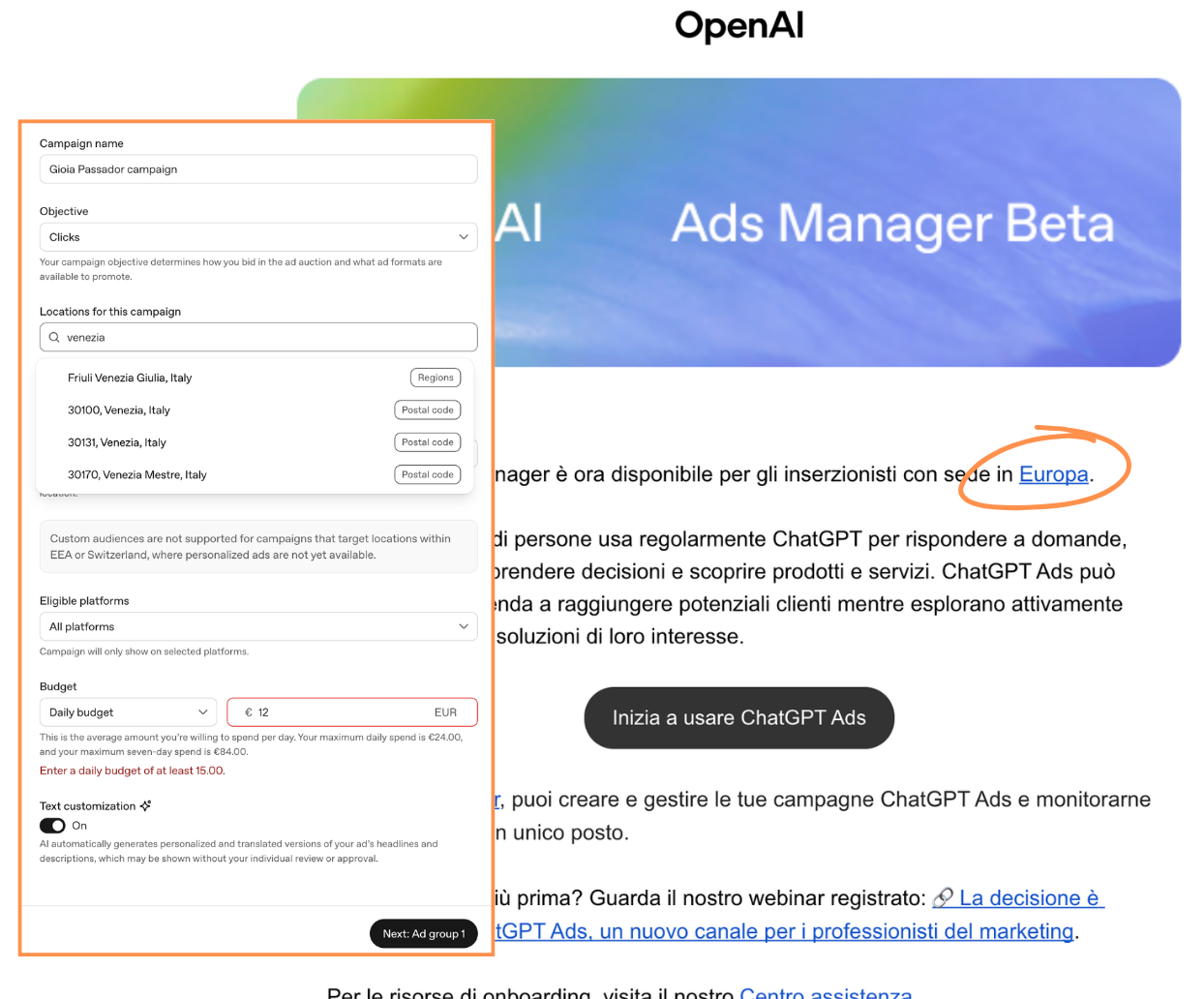
GA4 adds AI Assistant as a Default Channel Group: what it means for SEO, PPC, and attribution

Google Analytics 4 has introduced a new Default Channel Group called AI Assistant, giving eligible traffic from AI platforms its own classification instead of forcing it into broader buckets like Referral or, in some cases, Direct. For teams working across Google Ads, SEO, and attribution, this is a small update with larger strategic implications.
At a technical level, the change is straightforward. When GA4 detects supported referral traffic from AI assistant platforms, it can assign the session medium the value `ai-assistant`, map the session into the AI Assistant Default Channel Group, and in some cases apply the reserved campaign value `ai-assistant`. In practical terms, visits from platforms such as ChatGPT, Gemini, Claude, Copilot, Grok, and similar tools may now appear as a distinct acquisition source inside GA4.
This matters because AI-driven discovery has been growing faster than most reporting frameworks have adapted to it. For months, many teams have been trying to understand whether visits originating from generative AI tools were being buried inside Referral traffic, misread as Direct, or simply overlooked in channel-level reporting. GA4’s new classification does not solve every attribution problem, but it does acknowledge that AI assistants now represent a meaningful layer in the discovery journey.
A reporting change with broader implications
The most immediate benefit is cleaner attribution. When AI assistant traffic is grouped separately, analysts can stop treating it as noise inside referral reports. That makes it easier to evaluate whether these visits behave like classic referral users, branded search users, or something else entirely.
In many accounts, AI-originated sessions sit somewhere between referral discovery and assisted intent. A user may encounter a brand, product, or piece of content through an AI-generated answer, then click through with relatively light brand familiarity. That is not the same behavioral pattern as a user arriving from a publisher mention, an affiliate link, or a partner site. Giving that traffic its own channel creates a more useful analytical distinction.
For Google Ads practitioners, this is especially relevant when looking at the relationship between paid media and non-paid discovery. If AI assistants increasingly surface brand recommendations, comparison content, or informational pages, then some of the demand your campaigns later capture may have been influenced upstream by AI exposure. That does not mean AI Assistant traffic should be credited with conversion value by default. It means it deserves to be visible enough to test whether it contributes to engagement, assisted conversions, or incremental revenue.
Why this will matter most in mixed-channel analysis
The update is unlikely to transform reporting for teams that rely only on last-click acquisition summaries. Its value becomes clearer in broader path analysis.
Consider a common pattern in performance marketing: paid search captures users at the moment of intent, while organic content, YouTube, email, social, and referrals all shape the path before conversion. AI assistants are increasingly entering that upper and mid-funnel space. A user might ask ChatGPT for software recommendations, click through to a comparison page, leave, return later via branded search, and convert through a Google Ads campaign. Previously, that first session may have been swallowed by Referral or missed entirely if referrer data was weak. Now, at least some of that journey becomes easier to isolate.
This does not suddenly make GA4 a perfect source of truth for AI attribution. But it does improve the granularity of traffic source analysis, which is often where smarter media decisions begin. If you see AI Assistant traffic generating strong engagement but weak immediate conversion rates, that may indicate an assistive role rather than a closing role. If it shows high bounce and low depth, the issue may be landing page mismatch rather than channel quality. Either way, the channel becomes measurable in a more decision-useful way.
The limitations are just as important as the update itself
The biggest caveat is that this classification depends on valid referrer data. If a visit comes from an AI app environment that strips or fails to pass the referrer, GA4 may still classify that session as Direct. That means the new channel improves visibility, but only for the subset of AI-originated traffic that arrives with enough technical context to be recognized.
This is why some marketers may notice only a modest change at first. The existence of an AI Assistant channel does not mean all AI-driven discovery is suddenly visible. It simply means GA4 now has a better destination for the traffic it can identify.
Another important nuance is that AI Overviews and AI Mode traffic are not classified under AI Assistant. They remain part of Organic Search. That distinction matters because it separates traffic from external AI assistant platforms from AI-mediated experiences inside Google’s own search ecosystem. Strategically, those are related but not identical phenomena. One is a referral source from an assistant interface; the other is still part of search behavior, even if the search experience is increasingly AI-shaped.
For SEO and paid search teams, this means analysis should avoid lumping all “AI traffic” into one narrative. Traffic from ChatGPT and Claude is not the same as traffic from Google’s AI-enhanced search results. The user expectations, click context, and downstream conversion dynamics may differ substantially.
What experienced marketers should watch next
The most useful place to look for impact is not headline session volume but changes in channel mix interpretation. If your Direct traffic has been unusually inflated, or if Referral has contained a growing cluster of hard-to-explain visits, this new channel may help clarify part of that picture.
It may also sharpen conversations between SEO and PPC teams. If AI assistants are sending qualified traffic to informational or commercial investigation pages, content strategy becomes more tightly connected to paid search performance. Not because AI Assistant traffic replaces Google Ads, but because it may influence who eventually enters paid search funnels and how informed they are when they do.
Over time, this could push more advertisers to evaluate landing pages not only for search intent matching, but also for AI citation and recommendation potential. That is less about chasing a trend and more about adapting to a discovery environment where users increasingly outsource early research to AI interfaces.
GA4’s new AI Assistant Default Channel Group is a sensible reporting update. It does not overstate the role of AI traffic, and it does not eliminate attribution blind spots. What it does is create a cleaner analytical category for a traffic source that has clearly outgrown the old habit of being buried in Referral or Direct. For marketers trying to understand how discovery is evolving before the click turns into a conversion, that is a meaningful improvement.

As a Google Ads expert, I bring proven expertise in optimizing advertising campaigns to maximize ROI.
I specialize in sharing advanced strategies and targeted tips to refine Google Ads campaign management.
Committed to staying ahead of the latest trends and algorithms, I ensure that my clients receive cutting-edge solutions.
My passion for digital marketing and my ability to interpret data for strategic insights enable me to offer high-level consulting that aims to exceed expectations.
Google Partner Agency
We're a certified Google Partner Agency, which means we don’t guess — we optimize withGoogle’s full toolkit and insider support.
Your campaigns get pro-level execution, backed by real expertise (not theory).

4.9 out of 5 from 670+ reviews on Fiverr.
That’s not luck, that’s performance.
Highly recommend Matteo to set up your server side tracking. He has a deep understanding of e-commerce tracking and will go above and beyond to make sure everything is set up correctly and working 100%. If you are scaling your store this set up is non-negotiable in my opinion and there isn't many people who have this much knowledge or put the effort in to get it right. Thanks again!
avorodesign.com
I can only recommend Matteo! He was very patient, professional and very knowledgeable about GA4, Consent Mode v2, and GDPR compliance. Communication was clear, and the setup was done professionally and efficiently. Highly recommend him for anyone needing reliable tracking implementation.

www.natureiki.life
Matteo shines in the realm of online professionals. His work is not only deep in data but also complemented by his proactive communication and cooperation, setting a new standard for freelancers. If you want someone who truly exceeds expectations, look no further. Highly recommended!

www.omanbeverlysmyth.com
Exceptional Service Beyond Expectations - Outstanding Service Impeccable depth, flawless delivery, and exceptional language fluency—this service exceeded all expectations. Highly recommended. Matteo truly ROCKS!!!
ium-paris.com
Top-notch, always highly value working with Matteo. An absolute Google Ads Genius. This is approximately the 8th time I have hired him and he's helped us get 6-7 ROAS. We are excited in continuing to improve our lead flow. Hire this guy if you need Google Ads help. Thanks Matteo!

www.dleeventgroup.com
I finally found the guy who can setup server side tracking and all the ecosystem properly. I definitely recommend Matteo. He is very responsive, kind and wants to dig into things. He configured GA4, Meta, Google Ads, Outbrain and google consent v2 with Cookiebot. Thanks Matteo.
inomega.fr
MB Adv delivered exceptional work with outstanding professionalism and lots of patience, taking time to see effects of changes made and not just do the work and submit it. The proactive communication and video summaries of the work completed made working with Matteo a pleasure, as he consistently went above and beyond. Highly recommended for web analytics projects! We are already working on another project.

www.withnellsensors.co.uk
Working with Matteo on my Google Ads was a game-changer. He's not just a strategist, he's a true partner. He understood my goals and tailored a campaign that perfectly reached my target audience. I'm grateful for his expertise and dedication.

dccargo.com
Click-driven mind
with plastic-brick obsession.
We build Google Ads campaigns with the same mindset we use to build tiny brick worlds: strategy, patience, and zero tolerance for wasted pieces.
Data is our blueprint. Growth is the only acceptable outcome.