Start
$590$990/month
1 platform · Google or MetaGoogle + Meta- Ad spend
- up to $3,000
- New creativesmade by us
- Google + Meta only4 a month
 By Matteo Braghetta, Founder · Google Ads
Source: adlibrary + Benly benchmarks, 2026
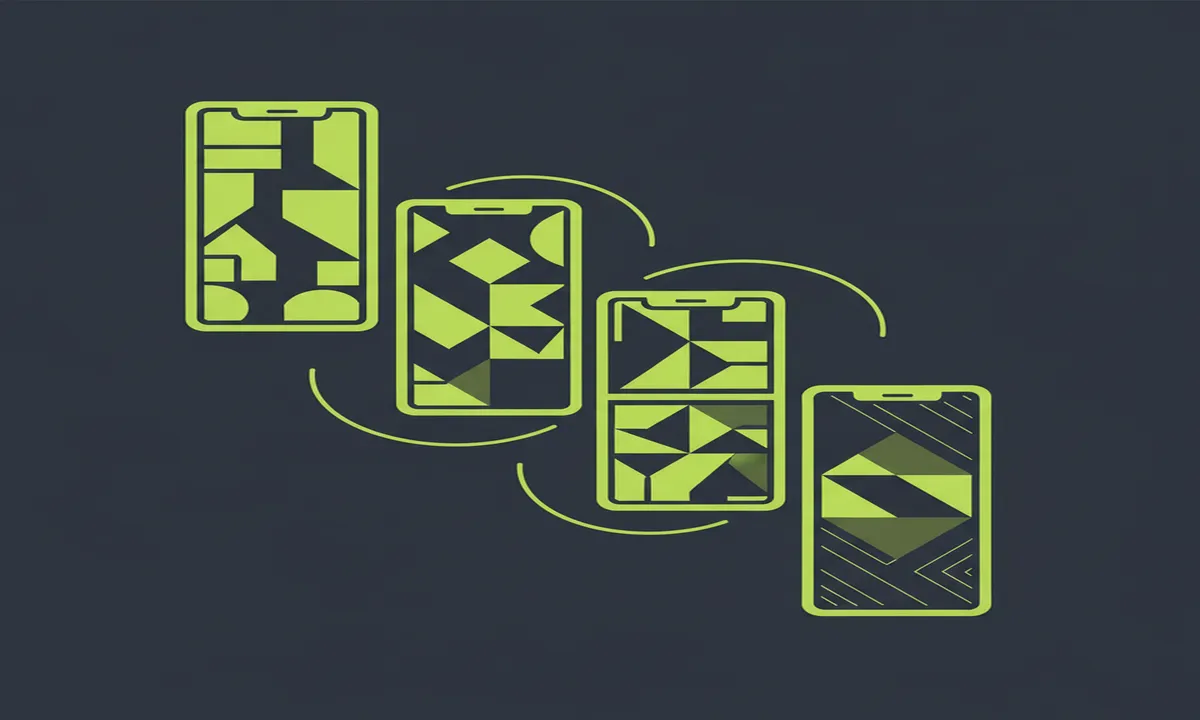
TikTok ad formats are the eight distinct placement and delivery types available on the TikTok Ads platform, each with different auction mechanics, budget minimums, creative specifications, and optimization objectives. Choosing the wrong format for a given campaign goal doesn't just reduce efficiency — it makes a campaign structurally incapable of hitting its objective.
The eight formats are: In-Feed ads, TopView, Brand Takeover, Spark Ads, Branded Hashtag Challenges, Branded Effects, Dynamic Showcase Ads, and Instant Pages. They divide into three buying tiers. Auction-based formats (In-Feed, Spark Ads, Dynamic Showcase Ads, Instant Pages) are accessible from $500 per month via TikTok Ads Manager self-serve. Reservation-based premium formats (TopView, Brand Takeover) require $50,000–$150,000 daily commitments via TikTok's managed-service rate card. Bundled premium experiences (Branded Hashtag Challenges, Branded Effects) are negotiated campaign packages starting at $150,000.
Format selection drives outcomes more than creative quality at the planning stage. A brand investing in TopView creative for a performance-conversion campaign is structurally misaligned — TopView does not optimize for conversions. An e-commerce brand running standard In-Feed when Creator Marketplace access exists leaves 44% additional conversion volume on the table compared to Spark Ads. Understanding format mechanics is the foundation of any efficient e-commerce PPC strategy on TikTok. Format choice depends on objective — see TikTok campaign objectives for the objective-level view. Creative specifications by format are documented in TikTok creative best practices.
16.4%
TopView avg. CTR
$9.16
In-Feed avg. CPM
142%
Spark Ads engagement lift vs. standard
17.5%
BHC median engagement rate
44%
Spark Ads conversion lift vs. In-Feed
$150K
BHC starting cost (6-day campaign)
Most industry guides present TikTok ad formats as a menu of creative options. MB Adv Agency frames them as a decision matrix: format mechanics drive outcome, not format aesthetics. The strategic question — which format's bidding mechanics align with which campaign objective at which budget tier — is absent from most published content.
The gap between how ad formats are commonly presented and what practitioners need to decide is significant. Generic coverage lists six to eight formats, describes their visual appearance, and stops. Practitioners working with PPC management in New York or any major US market consistently face the same structural mistake: clients conflate format familiarity with format fit. TopView is the format they have seen, so they request it for every campaign — including performance campaigns where it is structurally misaligned. For audience-level decisions that interact with format choice, see TikTok audience targeting.
| Dimension | Generic industry framing | MB Adv operational framing |
|---|---|---|
| Primary decision criterion | Visual format / creative type | Bidding mechanic × campaign objective |
| Format tiers | Awareness / Consideration / Conversion | Auction / Reservation / Bundled package |
| TopView classification | Long-form In-Feed variant | First-impression scarcity buy; flat-rate reservation |
| Spark Ads classification | UGC amplification / awareness | Highest-leverage performance format when Creator Marketplace pipeline exists |
| BHC status | Declining / legacy format | Premium-tier, highest-engagement-rate format for $150K+ campaign moments |
| DSA framing | TikTok's version of Meta DPA | Requires video-layer creative rebuild; static port from Meta DPA underperforms 30–50% |
The eight TikTok ad formats break into three buying tiers — auction, reservation, and bundled package — each with distinct bidding mechanics, budget floors, and optimization objectives. Format selection starts with identifying the correct tier for a given budget, then selecting the format within that tier whose mechanics align with the campaign goal.
In-Feed ads are TikTok's auction workhorse — the default entry point for brands building always-on awareness through conversion campaigns. Spark Ads operate on the same auction infrastructure but replace the brand's own creative with a boosted creator post, inheriting that post's algorithmic engagement signals. Dynamic Showcase Ads layer product catalog data onto the auction, auto-assembling personalized video ads from real-time catalog inputs. For format-specific cost benchmarks, see TikTok metrics and costs. fashion PPC campaigns targeting TikTok typically find Spark Ads + In-Feed the most efficient combination for mid-funnel performance. New York e-commerce PPC benchmarks confirm CPMs consistent with the national averages below.
Reservation formats (TopView, Brand Takeover) exist outside the auction entirely. They are sold via TikTok's managed-service rate card at daily flat rates — $50,000–$150,000/day in major markets. Bundled premium experiences — Branded Hashtag Challenges and Branded Effects — are negotiated campaign packages. A BHC campaign starts at ~$150,000 for a 6-day run. Branded Effects are typically bundled into BHC or TopView packages rather than sold standalone.
| Format | Buying tier | Best-fit objective | Budget floor | When to use |
|---|---|---|---|---|
| In-Feed | Auction (CPM/oCPM) | Consideration → Conversion | $500/mo | Always-on awareness through conversion; default workhorse format |
| Spark Ads | Auction (boosted creator post) | Consideration → Conversion | $1,000/mo | Best performance leverage when Creator Marketplace pipeline exists |
| Dynamic Showcase Ads | Auction (oCPM, catalog) | Conversion → Catalog sales | $2,000/mo | E-commerce with structured product catalog; video-layer creative required |
| Instant Pages | Auction (paired with In-Feed) | Consideration / Engagement | Bundled with In-Feed | Native landing pages; reduces external-site bounce; pair with In-Feed |
| TopView | Flat-rate reservation | Awareness / Launch | $50,000/day | Product launches, seasonal moments, premium-budget brand awareness |
| Brand Takeover | Flat-rate reservation | Awareness / Launch | $50,000/day | Category exclusivity buys; migrating to TopView+BE combos in 2026 |
| Branded Effects | Bundled package | Engagement / Brand experience | $50,000+ (often bundled) | Multiplies BHC participation; standalone use rare in 2026 |
| Branded Hashtag Challenge | Negotiated package | Awareness / Brand experience | ~$150,000 / 6-day | Premium-tier campaign moments; stacked with Branded Effects for 4× recall lift |
Performance benchmarks across TikTok's ad formats span a 19× range in CTR — from 0.84% for standard In-Feed to 16.4% for TopView — with completion rates showing parallel divergence. These gaps reflect structural placement differences, not creative quality variation. CPM data per DigitalApplied TikTok Ads Benchmarks 2026; CTR benchmarks per adlibrary CTR Benchmarks 2026; completion rates per Benly In-Feed vs TopView 2026.
The CPM premium for reservation formats ($14.20 average for TopView vs. $9.16 for In-Feed on a CPM-equivalent basis) understates the actual price difference. In major US markets, TopView's flat-rate daily buy at $50,000–$150,000 produces an effective CPM far above the global $14.20 average, which reflects blended pricing that includes less-competitive markets. Chicago retail PPC benchmarks confirm In-Feed CPMs in the $9–$12 range, consistent with national data. For retail PPC services on TikTok, In-Feed and Spark Ads represent the primary accessible formats given typical budget ranges.
| Format | Avg. CPM | Avg. CTR | 6-sec completion | Full completion | Pricing model |
|---|---|---|---|---|---|
| In-Feed | $9.16 | 0.84% | 48% | 12% | Auction |
| Spark Ads | $11.85 | 2.0%+ | 64.7% | 78.3% | Auction |
| TopView | $14.20 avg; $50K+/day flat | 16.4% | 71% | 23% | Flat-rate reservation |
| Brand Takeover | $14+ (similar) | n/a (static/image) | n/a | n/a | Flat-rate reservation |
| Branded Hashtag Challenge | Package priced | 8.5% (participation) | n/a | n/a | Negotiated bundle |
| Dynamic Showcase Ads | $4–$15 | Catalog-dependent | ~In-Feed | ~In-Feed | Auction (oCPM) |
Source: DigitalApplied 2026 TikTok Ads Benchmarks
TopView ads are TikTok's premium first-impression placement — the first ad a user sees when opening the TikTok app, sold as a flat-rate daily reservation at $50,000–$150,000 in major markets via TikTok's managed-service rate card (Stackmatix TopView guide 2026; Darkroom Agency 2026 pricing). TopView sits entirely outside TikTok's standard CPM bidding system. It is not auctioned.
The defining feature of topview ads is placement scarcity, not creative length. Generic descriptions frame TopView as a longer In-Feed ad — that framing misses the structural product. TopView secures the first ad slot per user per day, frequency-capped to prevent overexposure. The result is a 16.4% CTR — 19× the 0.84% baseline for standard In-Feed — driven by the attention premium of first-impression, full-screen placement before the organic feed loads. TikTok's internal research documents a 67% higher engagement rate for TopView vs. standard In-Feed placements, per MegaDigital TopView analysis 2026.
TopView delivers 16.4% CTR vs. 0.84% for standard In-Feed — a 19× attention premium from first-impression placement, not from creative format or video length.
The topview vs in-feed decision is not an apples-to-apples cost comparison. The right framework for brand decision-making is CPM-equivalent reach vs. the quality premium: TopView's 71% 6-second completion rate and 23% full completion (vs. 48% and 12% for In-Feed respectively) justify a significant cost premium for product launches and brand-moment campaigns where first-impression reach is the primary KPI. For beauty PPC campaigns and major consumer goods launches, owning the first impression across a target audience for 24 hours produces measurable recall lift. For PPC management in Los Angeles, where entertainment and lifestyle brands compete heavily during tentpole events, TopView reservation lead time is typically 4–8 weeks.
TopView is not accessible via TikTok Ads Manager self-serve. It requires contacting TikTok's sales team and committing to managed-service minimums. For brands spending under $50,000 per day, In-Feed or Spark Ads are the structurally correct format selection. TopView is a product launch, seasonal spike, or brand-moment tool — not an always-on format.
| Metric | TopView | In-Feed (Standard) | Delta |
|---|---|---|---|
| Avg. CTR | 16.4% | 0.84% | +19× |
| 6-sec completion | 71% | 48% | +23pp |
| Full completion | 23% | 12% | +11pp |
| Engagement lift vs. In-Feed | +67% | Baseline | — |
| Avg. CPM | $14.20 avg; $50K+/day flat-rate | $9.16 | +55% |
| Bidding mechanic | Flat-rate reservation | Auction (CPM/oCPM) | — |
| Self-serve via Ads Manager | No — managed service only | Yes | — |
| Right campaign objective | Brand awareness / Launch | Consideration → Conversion | — |
Source: adlibrary + Stackmatix 2026
Spark Ads are TikTok's format for amplifying existing organic creator content as paid ads. The structural difference from standard In-Feed: a Spark Ad uses the creator's actual TikTok handle and inherits the post's existing engagement signals — likes, comments, shares — and the algorithmic performance history that organic content builds before a boost is applied. Standard In-Feed ads start with zero engagement signals; the algorithm treats them as new, unproven content.
The 2026 benchmark data on Spark Ads is consistent across multiple independent sources (Amra & Elma Spark Ads Statistics 2026; JoinBrands Spark Ads guide 2026; TikAdTools Spark Ads guide 2026). Spark Ads generate 142% higher engagement than standard ad units. Video completion rate reaches 78.3% average vs. 33.5% for standard In-Feed in matched comparison sets. CTR runs at 2.0%+, representing a 2.4× improvement over standard In-Feed's 0.84% baseline. Conversion rate averages 1.19% vs. the platform average of 0.46% — 2.6× the platform average. Conversion rate vs. standard In-Feed is 44% higher. MB Adv Agency has found that the performance gap widens further when the creator's content is natively produced for TikTok rather than repurposed from other platforms — creator-native hooks landing in the first 1.5 seconds push the 6-second view-through rate to 64.7% vs. 25.2% for non-Spark formats.
The dependency is the Creator Marketplace. Two paths exist: boosting brand-owned organic posts (limited leverage — the brand handle lacks the creator's organic authority) or Creator Marketplace partnerships where creators grant amplification rights. The second path is where the performance lives. For audience targeting strategy that complements Spark Ads delivery, see TikTok audience targeting. For fashion PPC in Los Angeles, Spark Ads using lifestyle creator content consistently outperform standard In-Feed at the same budget level.
| Metric | Spark Ads | Standard In-Feed | Lift |
|---|---|---|---|
| Avg. engagement rate | 142% higher | Baseline | +142% |
| Full video completion | 78.3% | 33.5% | +44.8pp |
| 6-sec view-through | 64.7% | 25.2% | +39.5pp |
| Avg. CTR | 2.0%+ | 0.84% | +2.4× |
| Avg. conversion rate | 1.19% | 0.46% (platform avg) | +2.6× platform avg |
| Conversion vs. In-Feed | +44% | Baseline | — |
| Avg. CPM | $11.85 | $9.16 | +29% |
| Requires Creator Marketplace? | Yes (for max leverage) | No | — |
6-second viewFull completion
Source: Benly 2026 + Amra & Elma 2026
Cross-platform budget allocation decisions require understanding not just format names but format mechanics across platforms. TikTok and Meta share similar auction infrastructure for their core formats but diverge significantly on creative assembly, catalog integration, and premium inventory access. The differences are material for campaign planning.
The most consequential divergence is Dynamic Showcase Ads vs. Meta Dynamic Product Ads. Both formats use a Pixel-equivalent plus product catalog for targeting and delivery. The creative assembly is structurally different: TikTok DSA generates personalized VIDEO ads from catalog data in real time; Meta DPA defaults to static images or carousels, per adlibrary Catalog Ads 2026. Teams that port a Meta DPA setup to TikTok DSA without rebuilding the creative layer underperform video-layer DSA by 30–50% on conversion in most e-commerce verticals (Cropink TikTok DSA guide). For retail PPC services running both platforms, the creative rebuild is the single most critical step before scaling TikTok DSA. Chicago e-commerce PPC data shows consistent outperformance of video-layer DSA vs. static on the same catalog. CTR and CVR cross-format data from Lebesgue TikTok Ads Benchmarks 2026 confirms In-Feed and Spark Ads as the highest ROAS formats in the auction tier.
MB Adv Agency recommends evaluating TikTok's Spark Ads format before committing budget to Meta Branded Content for influencer-driven campaigns. The mechanic differences are significant: Meta Branded Content can run as static or video; TikTok Spark Ads are video-native with algorithmic inheritance of the creator's organic performance history. The performance data favors Spark Ads for audiences who are already active TikTok users.
| Category | TikTok format | Meta equivalent | Key difference |
|---|---|---|---|
| Core auction video | In-Feed | Reels | TikTok In-Feed serves into organic scroll; Reels placement competes with Stories and feed inventory |
| Creator amplification | Spark Ads | Partnership Ads (formerly Branded Content) | Spark Ads inherit creator's algorithmic history; Meta Partnership Ads do not |
| Catalog retargeting | Dynamic Showcase Ads | Dynamic Product Ads (DPA) | TikTok generates VIDEO ads from catalog; Meta DPA defaults to static images or carousels |
| First-impression premium | TopView | Facebook Awareness Reach / Brand Awareness | TopView is a flat-rate reservation; Meta offers no equivalent first-impression exclusivity buy |
| Community participation | Branded Hashtag Challenge | No direct equivalent | BHC drives user-generated response videos at scale; Meta has no equivalent format mechanic |
| Interactive overlay | Branded Effects | AR Ads (Spark AR) | Both offer AR; TikTok Branded Effects are designed to pair with BHC campaign structures |
Brand Takeover was TikTok's original first-impression format: a static image or video delivered directly upon app open, sold as a flat-rate daily reservation. In 2026, Brand Takeover is in structural decline as a standalone product. Its static delivery and lack of interactive features have eroded completion rates as TikTok's algorithm increasingly prioritizes engagement signals. CPM rate benchmarks per TikAdSuite CPM Rates 2026; Branded Effects pairing strategy per MegaDigital Branded Effects 2026.
The agency migration pattern: brands with $50K+/day budgets are shifting from standalone Brand Takeover to TopView + Branded Effects combinations. The combo buy creates a layered awareness experience — TopView delivers the first-impression video reach, Branded Effects give users an interactive tool to engage with the campaign creative. MB Adv Agency has seen this combination outperform standalone Brand Takeover in brand recall metrics for every premium campaign it has executed on the format in 2025–2026, consistent with the BHC + Branded Effects stacking data documented in Stackmatix BHC guide 2026. For PPC management in Chicago working on enterprise TikTok budgets, the Brand Takeover + TopView hybrid is the current best-practice recommendation for premium-awareness campaign structures.
| Dimension | Brand Takeover | TopView |
|---|---|---|
| Creative format | Static image or short video (3–5 sec) | Full-screen video up to 60 sec |
| Placement | App-open, first impression | App-open, first impression |
| Interactive features | None | CTA overlay, engagement buttons |
| Bidding mechanic | Flat-rate reservation | Flat-rate reservation |
| Budget minimum | $50,000+/day | $50,000–$150,000/day |
| 2026 trajectory | Declining as standalone; migrating to combo buys | Growing; primary premium format |
| Best paired with | TopView + Branded Effects | Branded Effects, BHC |
Format selection follows five steps: define the objective, identify the accessible budget tier, assess Creator Marketplace access, verify product catalog and Pixel infrastructure, then select the format whose mechanics match all three inputs. Skipping any step leads to structural misalignment that no amount of creative optimization can correct.
Step 1: Define your campaign objective. Awareness and launch objectives point toward reservation formats (TopView, Brand Takeover) or BHC. Consideration and conversion objectives point toward auction formats (In-Feed, Spark Ads). Catalog sales point toward Dynamic Showcase Ads. TikTok Pixel and tracking setup is prerequisite for DSA and conversion-optimized In-Feed campaigns. TikTok Ads Manager guide covers campaign structure for each objective type.
Step 2: Identify your accessible budget tier. Under $50,000/day: auction formats only. $50,000+/day: reservation formats become accessible. $150,000+/campaign: bundled packages (BHC, Branded Effects) become viable.
Step 3: Assess Creator Marketplace access. If the brand has an active Creator Marketplace relationship, Spark Ads should be prioritized alongside or above standard In-Feed for consideration and conversion objectives. The 44% conversion lift makes the Creator Marketplace investment worthwhile at any budget above $1,000/month.
Step 4: Verify product catalog and Pixel. For e-commerce PPC services brands with structured product catalogs: DSA is viable once the Pixel fires 50+ weekly purchases per account. Below that threshold, DSA optimization is structurally limited. PPC management in Miami e-commerce brands have found DSA most effective at $5,000+/month once the purchase threshold is reached. See TikTok strategy and trends for forward-looking format allocation guidance.
| Budget tier | Primary objective | Recommended format(s) | Priority rationale |
|---|---|---|---|
| $500–$2,000/mo | Consideration / Conversion | In-Feed + Instant Pages | Lowest auction floor; Instant Pages reduce bounce without external hosting |
| $2,000–$10,000/mo | Consideration / Conversion | In-Feed + Spark Ads (if Creator Marketplace) | Spark Ads 44% conversion lift justifies the Creator Marketplace setup cost |
| $10,000–$50,000/mo | Consideration / Conversion / Catalog | Spark Ads + In-Feed + DSA (if catalog + Pixel ready) | Full auction format stack; DSA viable once 50+ weekly purchases/account |
| $50,000+/day | Awareness / Launch | TopView + Branded Effects | Reservation tier; TopView + BE combo outperforms standalone Brand Takeover |
| $150,000+ / campaign | Awareness / Brand experience | BHC + Branded Effects + TopView | Stacked premium execution; 4× recall lift, 17.5% engagement rate |
Source: GSC via Ahrefs MCP (project Mbadv)
Three structural shifts are reshaping TikTok ad format strategy in 2026. Each is a mechanic-level change, not a tactical trend — they alter which formats produce the best outcomes at which budget tier. For the broader strategic view, see TikTok strategy and trends.
1. Spark Ads scaling via programmatic Creator Marketplace access. TikTok's Creator Marketplace API is expanding its programmatic access tier, enabling brands to identify, contract, and activate creators at scale without manual negotiation for each creator relationship. This removes the primary operational barrier to Spark Ads at larger budgets. Brands that previously capped Spark Ads spend due to creator sourcing bandwidth are now scaling to Spark-first format strategies. The performance data justifies the investment: 44% conversion lift over In-Feed at a 29% CPM premium ($11.85 vs. $9.16) produces positive ROAS at any budget level where the conversion delta exceeds the CPM premium.
2. TopView replacing standalone Brand Takeover as the premium-awareness default. This migration is structural, not cyclical. TikTok's product roadmap increasingly positions TopView as the flagship reservation format. Brand Takeover's static creative limitations and declining standalone completion rates have made the TopView + Branded Effects combo the standard recommendation from TikTok's own managed-service teams. MB Adv Agency no longer recommends standalone Brand Takeover buys for premium-awareness campaigns without a TopView or Branded Effects layer.
3. DSA video-layer requirement becoming de facto standard. TikTok's algorithm is increasingly deprioritizing static-image catalog creative in DSA delivery, pushing down impression share for catalog-only setups without video assets. The 30–50% conversion rate underperformance of static-only DSA vs. video-layer DSA, documented in adlibrary's 2026 catalog ads analysis, is widening. For Houston e-commerce PPC e-commerce brands running DSA, the video asset rebuild is now table stakes, not an optimization. Platform-wide engagement data from WebFX TikTok Marketing Benchmarks 2026 and Marketing LTB TikTok Ads Statistics 2026 confirms that video-format ads outperform static across all TikTok placements measured in 2026.
A fourth development — Instant Pages maturation — is directionally significant. TikTok's native landing page format reduces external-site bounce by keeping users within the TikTok environment. As Instant Pages templates expand in 2026, the format is becoming a standard complement to In-Feed for direct-response campaigns targeting mobile-first audiences. Format-level CTR normalization data from TikAdSuite CTR benchmarks 2026 shows consistent In-Feed CTR improvement (0.84% → 1.2%+) when Instant Pages replace external landing pages.
For brands with Creator Marketplace access, Spark Ads deliver the highest ROAS per incremental dollar of any TikTok auction format: 44% better conversion rate than In-Feed at a 29% CPM premium. The net math is strongly positive at any budget above $1,000/month.
Porting a Meta DPA creative setup to TikTok DSA without rebuilding video assets produces 30–50% lower conversion rates than video-layer DSA. This is the single most common format migration mistake for e-commerce brands moving budget from Meta to TikTok.
TopView is TikTok's first-impression placement — the first ad a user sees when opening the app, sold as a flat-rate daily reservation at $50,000–$150,000. In-Feed ads appear in the organic content scroll and are purchased via TikTok's auction system (CPM or oCPM bidding). The performance gap is structural: TopView delivers 16.4% CTR vs. 0.84% for standard In-Feed — 19× higher — because of placement exclusivity, not video length. TopView is frequency-capped per user per day; In-Feed is not. TopView requires TikTok managed-service access and a minimum $50,000/day commitment; In-Feed is accessible via Ads Manager from $500/month. Use TopView for product launches, brand moments, or seasonal campaigns where first-impression reach is the primary KPI. Use In-Feed for always-on consideration and conversion campaigns where auction optimization and budget flexibility matter.
TikTok advertising costs vary by format and buying tier. In-Feed auction costs average $9.16 CPM. To calculate reach cost: 100,000 impressions ÷ 1,000 × $9.16 = $916. At a 0.84% CTR, that delivers 840 clicks — an effective CPC of $1.09 per click. Spark Ads average $11.85 CPM: same 100,000 impressions costs $1,185, but with a 2.0%+ CTR, delivers 2,000+ clicks — an effective CPC of $0.59, 46% cheaper per click despite the CPM premium. TopView's flat-rate cost starts at $50,000/day. In a major market, that reaches 5–15 million people in 24 hours, producing an effective CPM of $3.33–$10.00 — competitive with In-Feed on pure reach, with 19× the CTR. Brand Takeover minimum is similar ($50,000+/day). Branded Hashtag Challenges start at ~$150,000 for a 6-day campaign. Dynamic Showcase Ads auction at $4–$15 CPM.
Spark Ads are TikTok's format for amplifying existing organic creator content as paid ads. The structural difference from standard In-Feed: a Spark Ad uses the creator's actual TikTok handle and inherits the post's existing engagement signals — likes, comments, shares — and its algorithmic performance history. Standard In-Feed ads originate from the brand's own handle and start with zero engagement signals; the algorithm treats them as new, unproven content. This mechanic difference explains Spark Ads' 142% higher engagement rate, 78.3% completion rate vs. 33.5% for In-Feed in matched comparison sets, and 44% better conversion rate. Activating Spark Ads requires either brand-owned organic posts or Creator Marketplace access where creators grant amplification rights. The performance leverage is concentrated in Creator Marketplace partnerships, not brand-owned organic content boosts.
Branded Hashtag Challenges are worth the investment for campaigns where budget supports the ~$150,000 minimum and the objective is brand awareness or brand-experience at scale. The format's engagement data is unambiguous: 17.5% median engagement rate vs. 3–5% for standard TikTok ad formats, and 4× higher ad recall lift vs. comparable standard campaign spends. What has changed is market perception, not format performance. BHC costs have priced out mid-market buyers, generating a false narrative that the format is declining. It isn't declining — it's exclusively premium-tier. For campaigns below $150,000 total budget, BHC is not accessible; the correct format stack is Spark Ads + In-Feed. For $150,000+ launch moments, BHC stacked with Branded Effects is TikTok's highest-engagement format by any benchmark measure available in 2026.
TikTok Ads Manager requires a $50/day minimum at the campaign level and a $20/day minimum at the ad group level for auction formats. At $9.16 CPM for In-Feed, a $50/day budget delivers: $50 ÷ $9.16 × 1,000 = 5,459 impressions per day. At 0.84% CTR, that produces ~46 clicks per day. Over 30 days ($1,500/month), that is 163,770 impressions and 1,380 clicks. Meaningful optimization data — enough for the TikTok algorithm to optimize delivery — requires $500–$1,000/month minimum for In-Feed campaigns. Spark Ads perform best at $1,000+/month to generate sufficient creative performance signals. For reservation formats (TopView, Brand Takeover), the minimum is $50,000/day, accessible only via TikTok managed service. BHCs start at $150,000 for a 6-day package with no self-serve path.
Dynamic Showcase Ads (DSA) and Meta Dynamic Product Ads (DPA) share the same structural architecture — a Pixel-equivalent plus a structured product catalog drives personalized ad delivery. The critical difference is creative assembly: TikTok DSA auto-generates personalized VIDEO ads from catalog data in real time, while Meta DPA defaults to static images or carousels. TikTok's video-first delivery environment makes static-format DSA structurally disadvantaged: static-only DSA on TikTok underperforms video-layer DSA by 30–50% on conversion rate in most e-commerce verticals. DSA also requires 50+ weekly purchases per ad account to fully unlock auction optimization efficiency — a threshold similar to Meta's DPA warm-up requirement. For the highest-performing DSA setup: structured catalog + video creative assets with creator-style aesthetic + catalog overlay enabled. Teams porting a Meta DPA creative layer to TikTok without rebuilding video assets consistently underperform.
For a DTC e-commerce brand, format selection depends on budget tier and infrastructure. At $500–$2,000/month: In-Feed ads for awareness through conversion, paired with Instant Pages to reduce external bounce. At $2,000–$10,000/month: add Spark Ads if Creator Marketplace access exists — the 44% conversion lift over In-Feed and 2.6× platform-average CVR produce a positive net ROAS at this spend level despite the 29% CPM premium. At $10,000+/month with a structured product catalog and TikTok Pixel firing 50+ weekly purchases: layer in Dynamic Showcase Ads (video-layer required) for always-on retargeting and catalog sales. At $50,000+/day: TopView for product launch spikes. The single highest-leverage format switch for most DTC brands is adding Spark Ads to an existing In-Feed campaign — it requires Creator Marketplace setup but produces the largest performance delta per incremental dollar.
Branded Effects are custom AR filters, stickers, and interactive overlays that TikTok users apply in their own videos. In Branded Hashtag Challenge campaigns, the Branded Effect serves as the participation tool — the tactile interaction mechanism that makes creating a BHC response video accessible and shareable. The paired deployment data is consistent: BHC + Branded Effects combinations deliver 4× higher ad recall and 4.5× higher brand awareness lift than standard ad formats per TikTok's own performance research. The multiplication effect is the strategic value. A BHC without a Branded Effect requires users to find their own creative response mechanism, which reduces participation. A Branded Effect without a BHC lacks the campaign framework that drives user participation at scale. The pair is a stacked execution — not a choice between two alternatives. Budget note: a BHC campaign (~$150,000+ for 6 days) typically includes Branded Effects in the package.
Performance benchmarks in this pillar draw from four primary data sources: DigitalApplied TikTok Ads Benchmarks 2026 (CPM data); adlibrary TikTok Ads CTR Benchmarks 2026 and Benly TikTok In-Feed vs. TopView ROI Comparison 2026 (CTR and completion rates); Amra & Elma TikTok Spark Ads Statistics 2026 and JoinBrands Spark Ads guide 2026 (Spark Ads performance data); Stackmatix TikTok TopView and Branded Hashtag Challenge guides 2026 (reservation format pricing). Ahrefs and Google Search Console data from mbadv.agency's own absorbed URLs (90-day window ending 2026-05-27) informed format-priority decisions for this pillar. All mbadv perspective is qualitative synthesis — no client metrics are cited. Last updated: 2026-05-28. Reviewed by MB Adv Agency, 2026-05.
$590$990/month
1 platform · Google or MetaGoogle + Meta$790$1,290/month
1 platform · Google or MetaGoogle + Meta$1,140$1,940/month
1 platform · Google or MetaGoogle + MetaChatGPT Ads: a separate pilot, $250/month, added to a plan. See the pilot →

Matteo Braghetta founded MB Adv and runs its Google Ads accounts. He takes the first call with every new client, reads the accounts every week and writes the agency’s guides.
The other half of his job is measurement: GA4, Consent Mode and server-side tracking, so the platforms learn from real sales.
MB Adv is a Google Partner agency managing about $4.4M a year in ad spend for clients in the US, the UK and Europe.
Managed on numbers you can check.
Plans for the US