
Start
$590$990/month
1 platform · Google or MetaGoogle + Meta- Ad spend
- up to $3,000
- New creativesmade by us
- Google + Meta only4 a month
 By Matteo Braghetta, Founder · Google Ads

Creating, verifying, and managing a Google Business Profile is free. You create it in Google Search, the Maps app, or Business Profile Manager — then verify with the method Google auto-assigns.
Video recording is the 2026 default method · reviewed up to 5 business days · renamed from Google My Business (GMB) on Nov 4, 2021 · the GMB app was discontinued in 2022You create a Google Business Profile for free by signing in at Google Search or the Google Maps app (or business.google.com), then either claiming the listing Google already shows for your business or adding a new one. You enter the exact real-world name, set your location type, choose the most specific primary category, complete your contact details and hours, and request verification. That is the literal answer to “how to create a Google Business Profile” and “how to set up a Google Business Profile.” “Google My Business (GMB)” is the legacy name: the product has been Google Business Profile (GBP) since Nov 4, 2021.
Most local businesses are not starting from a blank slate. Google often auto-creates an unclaimed listing from public data, so the real task is usually to claim that listing rather than create one. Either way the sequence below is the same, and each step pairs the action with the guideline watch-out that prevents a rejection or suspension later. The businesses MB Adv Agency works with move fastest when they get the name, address type, and primary category right the first time, because those are the fields Google is strictest about.
| Step | What to do | Watch-out (avoid a rejection/suspension) |
|---|---|---|
| 1. Sign in and search for your business | Sign in with the Google account that should own the profile, then search your business name in Google Search or the Maps app (or go to business.google.com). | Use a durable business Google account, not a personal one you can lose access to. |
| 2. Claim an existing listing or add a new one | If Google already shows your business, choose “Claim this business” / “Own this business?”; if not, add the business. | Do not create a second profile if one already exists — duplicate listings are a suspension trigger. Claim or merge instead. |
| 3. Enter the exact business name | Use the real-world business name exactly as it appears on your signage and branding. | No keywords, locations, taglines, phone numbers, or URLs in the name — name-stuffing is a top suspension cause. |
| 4. Set your location type | Storefront: enter the address customers visit. Service-area business (SAB): set your service areas instead of showing an address. | Storefronts need permanent signage plus staffing during stated hours; SABs get one profile and must hide the address. No PO boxes or virtual offices. |
| 5. Choose the most specific primary category | Pick the single most accurate primary category; add tightly relevant additional categories (up to 9 more, 10 total). | Primary category is the #1 relevance signal (Whitespark 2023) — the wrong one caps your visibility. Do not over-add categories. |
| 6. Add contact and complete the profile | Add a consistent phone and website, then hours, description, photos, and services or products. | Keep NAP consistent with your website and citations (see the accuracy section); a complete profile is eligible to show and rank. |
| 7. Request verification | Submit for verification; Google auto-assigns the method (usually video recording — see the verification section). | You cannot pick the method. Complete it promptly — an unverified profile shows a public “Claim this business” prompt. |
Sources: Google, “Create a Business Profile” (creating and managing a profile is free; claim vs add flow); Google, “Guidelines for representing your business” (name accuracy, address eligibility, SAB address hiding); Whitespark “2023 Local Search Ranking Factors” (primary category = #1 GBP local-pack factor); shared verified facts §1, §5, §12. Not MB Adv Agency data.
Once the profile is created and verified, the highest-leverage next step is your category and profile content — see optimizing business categories for better visibility. New to the platform entirely? Start with what a Google Business Profile is.
“How to create a google business profile” (700 US searches/month, KD 82) and “google business profile verification” (700/month, KD 10) tie for demand, but the verification queries are far less competitive. That gap is the opportunity this upgrade defends: the verification cluster is winnable, and it is where the best-ranked absorbed page in the whole cluster (position 8.9) already earns impressions.
| Keyword | US monthly vol. | Global vol. | KD | Notes |
|---|---|---|---|---|
| how to create a google business profile | 700 | 1,400 | 82 | Head-term slug; the exact URL this pillar upgrades in place |
| google business profile verification | 700 | 1,100 | 10 | Verification-intent driver — low difficulty, high demand |
| verify google business profile | 200 | 350 | 13 | Verification-intent variant; low difficulty |
| google business profile video verification | 200 | 300 | 5 | The current default method — lowest difficulty in the set |
Source: Ahrefs Keywords Explorer, US + global, 2026-07-01. The absorbed verifying-your-google-business-profile URL carries 25 GSC impressions across 15 keywords at avg position 8.9 in the 90-day window (2026-04-02 → 2026-07-01) — the best position in the entire get-started cluster. Not MB Adv Agency data.
The two mental models that waste the most setup time are both out of date. The first is “download the Google My Business app” — that app was discontinued in 2022, so there is nothing to download. The second is “business.google.com is dead” — it is not; it hosts Business Profile Manager for multi-location and bulk management. Correcting these two ideas skips the most common dead ends before you start.
You create and manage a profile in three live surfaces: Google Search, the Google Maps app, and Business Profile Manager at business.google.com. Do not reference the retired free business.site website builder as a live step — those sites were shut down in 2024.
| Surface | How it works | Who it is for |
|---|---|---|
| Google Search | Sign in and search your business name or “my business” — the profile-edit panel appears directly in the results. | Single-location owners; the fastest day-to-day edit surface. |
| Google Maps app | Open your business listing in the Maps app and edit from there. | Owners managing on mobile; on-the-go hours, photos, and posts. |
| Business Profile Manager (business.google.com) | The dashboard at business.google.com / business.google.com/locations for bulk and multi-location management. | Multi-location brands and agencies; single-location owners are routed to the Search-based dashboard. |
| Google My Business app (RETIRED) | The standalone mobile app — discontinued in 2022. There is nothing to download. | No one. Any guide that says “open the GMB app” points at software that no longer exists. |
Sources: Google, “Create a Business Profile”; Search Engine Land (Nov 4, 2021 — the GMB → GBP rebrand and 2022 standalone-app discontinuation); shared verified facts §1. Not MB Adv Agency data.
Verification is free, and it has one rule that surprises almost everyone: you do not pick the method — Google does. Google auto-assigns the available method based on your business type, the public information about you, your region, and your hours. For most new profiles, new owners, and address or service-area changes in 2026, the assigned method is video recording: you record one unedited clip that shows the location, the business’s real-world existence, and your management access, then upload it for review of up to 5 business days.
The other methods still exist — live video call, phone/SMS, email, the now-rare postcard, discretionary instant verification via Search Console, and bulk verification for chains — but which one you see is Google’s call, not yours. The local businesses MB Adv Agency works with routinely expect a menu and get a single assigned method instead; knowing that in advance removes the panic.
| Method | How it works | Typical timeline | Who Google typically assigns it to |
|---|---|---|---|
| Video recording ★ (the default/dominant method) | Record and upload one unedited clip showing the location (exterior + signage), the business’s real-world existence (interior, equipment, stock), and your management access (till / back office / booking system). Video Previews (added Apr 22, 2025) let you review before submitting. | Review up to 5 business days | Most new profiles, new owners, and address/service-area changes. Default since ~July 2022, mainstream by 2023. |
| Live video call | A real-time call with a Google representative, conducted from the location on a device, during business hours. | Real-time (during the call) | Offered situationally — not available for all businesses. |
| Phone / SMS (text) | Google sends a code by call or text to the profile phone number; you enter it to verify. | Near-instant | When offered by business type/region. IVR / automated phone systems cannot receive the code. |
| Google emails a code to a business email address it recognizes; you enter it to verify. | Near-instant | When you can access the specific email address Google shows (not any address you supply). | |
| Postcard / mail (increasingly rare) | Google mails a postcard with a code to the business address; you enter the code to verify. | Arrives in ~14 days; code expires after 30 days | Not available for all businesses — no longer the default; offered only in select cases. |
| Instant verification (via Search Console) | Automatic when your profile’s website is already a verified Google Search Console property under the same Google account. | Instant (when it applies) | Discretionary — not something you can request or rely on. |
| Bulk verification | A single verification request covering many locations of the same business at once, via Business Profile Manager. | Varies (Google review) | Chains with 10+ brick-and-mortar locations of the same business. Service-area businesses do not qualify. |
Sources: Google, “Verify your Business Profile” (verification is free and Google assigns the available method by business type / public info / region / hours; the user cannot freely choose); Google, “Verify with video recording” (review up to 5 business days; Video Previews added Apr 22, 2025); Google, “Bulk verification” (10+ locations of the same business); shared verified facts §2. GBP verification is FREE — there is no cost/CPC on this page. Not MB Adv Agency data.
If your business is a service-area business or a chain, verification and management differ — see how to manage multiple locations in GBP for bulk verification and Business Profile Manager.
Google began pushing video recording as the default verification path around July 2022, made it mainstream by 2023, and in April 2025 added Video Previews so you can review the clip before submitting. Because video is now the method most new profiles actually get, treating it as the exception — and waiting for a postcard that never comes — is the single most common setup mistake.
A passing clip is one continuous, unedited recording that proves three things in a single take:
Record it once, without cuts, then use Video Previews to confirm all three are visible before you submit. Google reviews the recording within up to 5 business days. If the clip is cut, misses one of the three proofs, or the address is ineligible, the attempt is rejected — the troubleshooting section below covers each rejection reason and its fix. For the current step-by-step from Google, see Google’s “Verify with video recording” help page.
Source: Ahrefs Keywords Explorer, US, 2026-07-01 — data/google-business-profile/how-to-create-a-google-business-profile.json
Accurate NAP — Name, Address, Phone — is a setup requirement, not a polish step. It gates three things at once: whether the profile is eligible to show, how well it ranks, and whether Google suspends it. These are the fields Google’s guidelines are strictest about, so getting them right on day one is what makes the profile work.
Accuracy also feeds the algorithm. Google documents three local ranking factors — relevance, distance, and prominence — and the primary category is the strongest relevance signal, while address accuracy feeds distance. In Whitespark’s 2026 expert-survey estimate (not Google’s algorithm), “GBP signals” account for about 32% of local-pack influence and proximity/distance about 55%. Consistent NAP across your site and citations supports prominence. See how GBP impacts local rankings for the full picture.
| Field | What “accurate” means | Why it matters |
|---|---|---|
| Name (the “N” in NAP) | The exact real-world business name — no location keywords, service descriptors, taglines, phone numbers, URLs, or all-caps. | Name-stuffing is a top suspension cause; a consistent name across the web supports prominence and trust. |
| Address (the “A”) | A genuinely eligible, verifiable address (storefront with signage + staffing) — or a hidden address for a service-area business. | An ineligible address (PO box, virtual office, unstaffed) is a suspension trigger; address accuracy feeds Google’s “distance” ranking factor. |
| Phone (the “P”) | A reachable business phone (ideally a local number) consistent with your website and citations. | Used for phone/SMS verification and customer contact; inconsistent numbers across the web weaken trust. |
| Website | The correct, live site that matches the profile; ideally a Search Console-verified property under the same account. | Can enable instant/GSC verification; a matching site reinforces legitimacy and relevance. |
| Primary category | The single most specific category that describes the core business. | The #1 GBP relevance/local-pack ranking signal (Whitespark 2023) — accuracy here directly caps or unlocks visibility. |
| Hours (regular + special) | Correct regular hours plus special hours for holidays and events; keep them current. | Powers “open now” filtering and customer trust; wrong hours are a top user-suggested-edit correction. |
Sources: Google, “Guidelines for representing your business” (name accuracy, address eligibility, SAB address hiding); Google, “How Google’s local search results work” (relevance / distance / prominence); Whitespark “2026 Local Search Ranking Factors” (expert-survey estimate, not Google’s algorithm); shared verified facts §3, §5, §12. Not MB Adv Agency data.
Source: Google, 'Verify your Business Profile' (support.google.com/business/answer/7107242) and 'Verify with video recording' (support.google.com/business/answer/14271705); verified 2026-07-01
When information on your profile is wrong, the real question is who can change it — because owners are not the only editors. A verified owner edits the profile directly, but two other forces also change your data: Google itself can apply “Google-updated” edits from other sources, and the public can submit changes through the “Suggest an edit” link on your live profile. Owner edits usually take precedence, but user-suggested edits can go live and must be watched and reverted.
The honest workflow is: claim and verify the profile so you are the authoritative editor, keep it complete and accurate so there is less for others to “correct,” and monitor for Google or user-suggested changes — especially damaging ones like an erroneous “permanently closed” flag. Remember that material owner edits can themselves re-trigger verification.
| Editor | How it happens | What it can change | What to do |
|---|---|---|---|
| Verified owner edits | You edit the profile directly in Google Search, the Maps app, or Business Profile Manager. | Takes precedence and is authoritative — but material edits to name/address/category/phone/website can re-trigger verification. | Claim and verify so you are the authoritative editor; make material changes deliberately. |
| Google-applied (“Google-updated”) edits | Google updates fields from its algorithms, third-party data, or other public sources. | Can change hours, category, or attributes without your action. | Keep the profile complete and accurate so there is less for Google to “correct”; review Google-updated changes. |
| User-suggested edits (“Suggest an edit”) | The public submits proposed changes via the “Suggest an edit” link on your live profile. | Proposed edits to hours, address, category — even a “permanently closed” flag — can go live. | Monitor for unwanted changes and revert them fast, especially an erroneous “permanently closed.” |
Sources: Google, “Guidelines for representing your business” and Google, “Verify your Business Profile” (owner edits, edit re-verification triggers); shared verified facts §2, §12. Not MB Adv Agency data.
Source: Whitespark, '2026 Local Search Ranking Factors' (Darren Shaw, Nov 6, 2025; expert survey of ~47 local SEOs) https://whitespark.ca/local-search-ranking-factors/ ; Google, 'How Google's local search results work' (support.google.com/business/answer/7091)
Re-verification is not a bug — it is an anti-hijacking feature, and it fires on exactly the edits owners make most. Once you are verified, Google can force re-verification when you edit high-trust fields: business name, address, primary category, phone, or website — especially when those edits are clustered soon after you first verify (a pattern Google tightened around September 2024). Address or service-area changes, ownership transfers, and any suspension-then-reinstatement also trigger it.
The practitioner best practice — qualitative, not a Google rule — is to space material edits about a week apart after verifying rather than overhauling the profile in one sitting. Finish setup, verify, then make changes deliberately over time.
| Trigger | Why it triggers re-verification | Best practice (practitioner, not a Google rule) |
|---|---|---|
| Editing the business name | Name is a high-trust field; changes are a classic listing-hijacking vector. | Get the exact real-world name right at setup so you never need to edit it. |
| Editing the address | Location is the core of a local listing; changes (especially soon after verifying — tightened ~Sept 2024) re-confirm real-world presence. | Only change the address for a genuine move; expect video re-verification when you do. |
| Changing the primary category | Category shifts the business’s classification and eligibility for features. | Choose the most specific primary at setup; refine additional categories rather than swapping the primary. |
| Editing phone or website | Contact fields feed verification and trust signals; rapid edits look suspicious. | Enter final phone and website at setup; avoid clustering contact edits with other changes. |
| Address / service-area change | Moving the pin or redrawing service areas changes who sees the profile and where. | Plan the change deliberately; have proof-of-location ready for a likely video re-verification. |
| Ownership transfer | A new owner or manager account changes who controls the listing. | Transfer ownership through the profile’s access settings, not by re-creating the listing. |
| Suspension → reinstatement | A reinstated profile must re-establish that it is legitimate. | Fix the underlying guideline issue first so reinstatement and re-verification stick. |
| ★ Too many rapid edits at once | Bulk edits to core fields shortly after verifying pattern-match to hijacking and spam. | Space material edits ~a week apart after verifying rather than overhauling in one session. |
Sources: Google, “Verify your Business Profile” plus edit/anti-abuse guidance; shared verified facts §2 (re-verification triggers; address-edit tightening ~Sept 2024). The “~week apart” spacing is a practitioner heuristic, not a Google rule. Not MB Adv Agency data.
When a verification attempt fails, the reason is usually one of a handful of fixable problems — and each has a concrete next step. The table below pairs the most common rejection reasons with what went wrong and how to fix it, including the 2025 “No more ways to verify” document-appeal path for the owner whose video keeps failing.
| Reason | What went wrong | How to fix it |
|---|---|---|
| Video did not show the required proof | The clip missed the exterior/signage, interior/real-world existence, or management-access proof — or was edited/cut. | Re-record one continuous, unedited clip covering all three; use Video Previews (Apr 2025) to check before submitting. |
| Ineligible address | PO box, virtual office, coworking desk, or premises unstaffed during stated hours. | Use a real, staffed address — or convert to a service-area business with a hidden address. |
| Name contains keywords / extras | Location/service keywords, taglines, phone, or URL added to the business name. | Edit to the exact real-world name only; then request verification again. |
| SAB showing its address | A service-area business left a visible street address instead of hiding it. | Hide the address and define service areas; SABs get one profile, no public address. |
| Duplicate listing | A second profile for a business that already has one. | Do not create duplicates — claim or merge the existing listing instead. |
| ★ Multiple failed video attempts → “No more ways to verify” | The 2025 flow caps failed video attempts and routes you to a support/document path. | Submit business documents (registration, license, utility bill) with name + address matching the profile. |
| High-abuse vertical scrutiny | Locksmiths, garage-door, and rehab businesses face tighter verification review. | Have documentation ready up front; expect extra proof-of-legitimacy steps. |
Sources: Google, “Verify your Business Profile” and Google, “Guidelines for representing your business”; Search Engine Land (2025-11-28 — the 2025 “No more ways to verify” document-appeal flow); Sterling Sky (high-abuse-vertical scrutiny); shared verified facts §2, §12. Not MB Adv Agency data.
A keyword-stuffed name or an ineligible address is the fastest way to fail verification — and later, to get suspended. The GBP content guidelines cover the name-accuracy and address-eligibility rules a clean setup has to respect from day one.
Most local businesses already have a listing to claim, not a blank one to create. Google auto-generates unclaimed listings from public data, so before you add a new profile, search your business first: if it already exists, choose “Claim this business” and verify ownership rather than creating a duplicate (duplicates are a suspension trigger).
Once the profile is created, verified, and accurate, the free organic side is handled. The paid complement — Google Ads and Local Services Ads — is where MB Adv Agency’s work sits. A verified, accurate profile is the foundation those campaigns run on top of. If your cost question is about the profile itself, the answer is $0; for the paid side, see how much a Google Business Profile costs and our Google Ads audit. Home-services and local-professional businesses in particular live and die by local visibility — see how paid search complements a verified profile in our HVAC PPC services, dental PPC services, plumbing PPC services, and legal PPC services. For a city-level example, see our HVAC PPC in Flagstaff, AZ guide.
Source: Ahrefs Keywords Explorer, global, 2026-07-01 — data/google-business-profile/how-to-create-a-google-business-profile.json
The verification experience owners remember is out of date. Google shifted the default from postcard to video recording around July 2022, made video mainstream by 2023, and has kept tightening the flow since. The secondary chart on this page shows the practical result: video recording is reviewed up to 5 business days, postcard takes about 14 days to arrive (and is now rare), and phone/SMS, email, and live video call verify in real time.
Two 2025 changes matter for anyone verifying now. First, Video Previews (April 22, 2025) let you review the clip before submitting, which cuts the most common rejection cause. Second, the “No more ways to verify” flow caps failed video attempts and routes you to a document-appeal path — so an owner whose video keeps failing has a real next step (submit business registration, a license, or a utility bill with matching name and address). Google adjusts assignment logic and timelines often, so confirm the current method against Google’s help pages when you set up.
Enforcement scale is why this rigor exists. In its 2024 Maps report Google removed 240M+ policy-violating reviews, reversed 70M listing edits, took down 12M fake Business Profiles, and restricted 900K+ accounts — the context that makes video verification and accurate NAP a gate rather than a formality.
A clean setup is a sequence: claim before you create, get the strict fields right, verify with the assigned method, then make changes deliberately. Work in this order.
Sign in with the Google account that should own the business, search your business name in Google Search or the Maps app (or go to business.google.com), then claim the existing listing or add a new one. Enter the exact real-world name, set your location type (storefront address or hidden service-area), choose the most specific primary category, add a consistent phone and website, complete your hours, description, and photos, and request verification. Creating and managing a profile is free.
You request verification and Google auto-assigns the method — you do not choose it. For most new profiles in 2026 that method is video recording: you upload one unedited clip showing the location, the business’s real-world existence, and your management access, reviewed for up to 5 business days. Other assigned methods can include live video call, phone/SMS, email, the now-rare postcard, or instant verification via Search Console.
No — not anymore. Video recording is the default and dominant method in 2026; postcard is increasingly rare and is not available for all businesses. You also cannot pick your method — Google assigns it based on your business type, public info, region, and hours.
The timeline is set by the assigned method: video recording is reviewed up to 5 business days; phone/SMS and email codes are near-instant; a live video call verifies during the call; a postcard takes about 14 days to arrive and its code expires after 30 days.
Editing high-trust fields — name, address, primary category, phone, or website — can trigger re-verification, especially when those edits happen soon after you first verified (tightened around September 2024). Address or service-area changes, ownership transfers, and suspension-reinstatement also trigger it. It is anti-hijacking behavior; make material edits deliberately, spacing them about a week apart.
As the verified owner, edit the profile directly in Google Search, the Maps app, or Business Profile Manager (material edits can re-trigger verification). Be aware that Google can apply its own “Google-updated” edits, and the public can submit “Suggest an edit” changes that go live — so claim and verify your profile, keep it complete and accurate, and monitor for unwanted changes, especially an erroneous “permanently closed” flag.
Yes — “Google My Business (GMB)” was renamed “Google Business Profile (GBP)” on Nov 4, 2021. It is the same product, now managed directly in Search and Maps (plus Business Profile Manager for multi-location). The standalone Google My Business app was discontinued in 2022; “Google My Business” survives only in developer and API surfaces.
This pillar is an upgrade-in-place of the existing how-to-create-a-google-business-profile URL, which absorbs three sibling pages via 301 redirect — including verifying-your-google-business-profile, the best-ranked page in the cluster (25 GSC impressions across 15 keywords at average position 8.9 in the 90-day window ending 2026-07-01). Every mechanic is drawn from Google’s official Business Profile documentation or a named source, verified 2026-07-01: Google, “Create a Business Profile” (creating and managing a profile is free); Google, “Verify your Business Profile” (verification is free; Google auto-assigns the method); Google, “Verify with video recording” (review up to 5 business days; Video Previews Apr 22, 2025); Google, “Bulk verification” (10+ locations of the same business); Google, “Guidelines for representing your business” (name accuracy, address eligibility, SAB address hiding); Google, “How Google’s local search results work” (relevance, distance, prominence); Whitespark, “2026 Local Search Ranking Factors” (Darren Shaw, Nov 6, 2025; expert survey — an estimate, NOT Google’s algorithm; verify exact figures against the primary report). Search demand from Ahrefs Keywords Explorer (US and global, 2026-07-01). Google Business Profile is a free tool — there is no cost or CPC on this page, and WordStream/LocaliQ have zero GBP coverage, so no Search CPC figure appears here. No MB Adv Agency client metrics appear anywhere in this pillar; the agency point of view is qualitative. Reviewed by MB Adv Agency, July 2026.
Creating a Google Business Profile is essential for any business looking to enhance its online presence. This free tool not only improves your visibility on Google Search and Maps but also helps potential customers find valuable information about your business quickly. This article will guide you through the process step-by-step, share tips for a successful setup, and highlight common mistakes you should avoid.
The process of creating your Google Business Profile is straightforward. Follow these steps to ensure that you complete your profile accurately:

Once these steps are completed, your Google Business Profile will be ready for potential customers to find you. Make sure to keep it updated regularly to reflect any changes to your business information. A well-maintained profile not only attracts customers but also builds trust, as it shows that you are active and engaged with your audience.
In addition to the basic setup, consider leveraging the various features that Google My Business offers. For instance, you can utilize the Q&A section to address common inquiries that potential customers may have. This proactive approach not only saves time but also enhances customer satisfaction by providing immediate answers. Furthermore, adding attributes such as 'wheelchair accessible' or 'free Wi-Fi' can help customers make informed decisions when choosing your business over competitors.
To elaborate further, let’s break down the process into more detailed steps:
By following this detailed guide, you ensure that you’ve set up your Google Business Profile effectively, providing potential customers with all the information they need. Additionally, consider using the insights gathered to refine your marketing strategies. Understanding which aspects of your profile attract the most attention can inform your future promotional efforts, allowing you to focus on what resonates best with your audience.
Setting up your Google Business Profile is just the beginning. Once your profile is live, you can employ these tips to ensure its success:
By following these tips, you can maximize the effectiveness of your Google Business Profile and ensure continued engagement from potential customers. Furthermore, consider integrating your Google Business Profile with your overall marketing strategy. Use social media platforms to direct traffic to your profile, and encourage followers to check out your Google listing for the latest updates and offers. This multi-channel approach can significantly enhance your visibility and attract a broader audience.
While creating your Google Business Profile, there are some pitfalls to avoid that can hinder your online presence:

By staying vigilant against these common mistakes, you can maintain an effective online presence and promote your business more successfully.
Another common oversight is failing to utilize the features provided by Google Business Profile. For instance, many businesses overlook the importance of posting updates or special offers. Regularly sharing news about promotions, events, or new products can engage your audience and keep your profile dynamic. This not only informs potential customers about what’s happening but also signals to Google that your business is active, which can positively influence your search rankings.
Additionally, businesses often underestimate the power of insights provided by Google. By analyzing the data on how customers interact with your profile—such as how they found you, what actions they took, and where they are located—you can gain valuable insights into your target audience. This information can guide your marketing strategies and help tailor your offerings to better meet the needs of your customers, ultimately leading to increased engagement and sales.
$590$990/month
1 platform · Google or MetaGoogle + Meta$790$1,290/month
1 platform · Google or MetaGoogle + Meta$1,140$1,940/month
1 platform · Google or MetaGoogle + MetaChatGPT Ads: a separate pilot, $250/month, added to a plan. See the pilot →
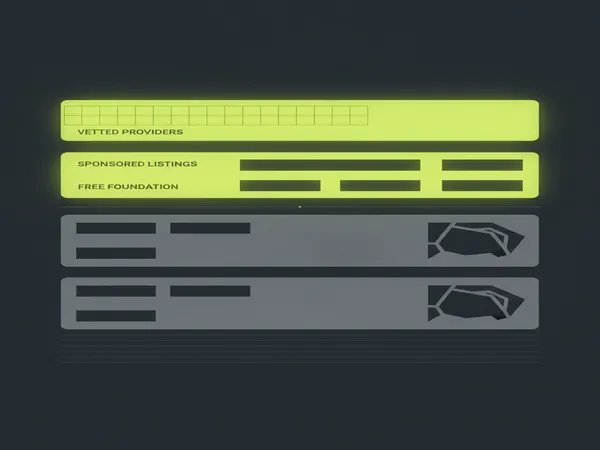 Google Business Profile vs Google Ads: Key Differences (2026)
 How Google Business Profile Impacts Local Rankings (2026)
 How Much Does Google Business Profile Cost? Is GBP Free? (2026)
 How to Manage Multiple Locations in Google Business Profile (2026)
 The Importance of Customer Reviews for Local SEO (GBP, 2026)
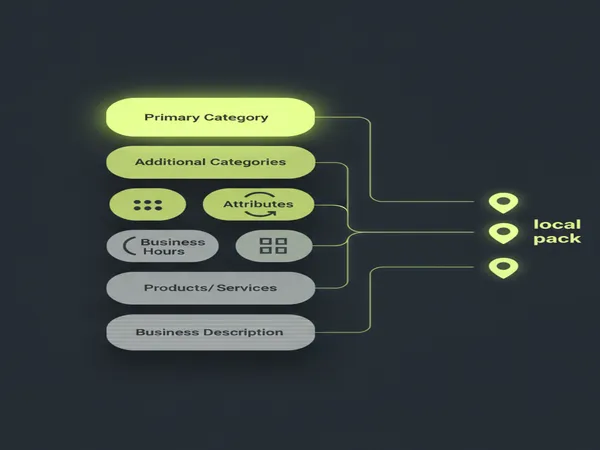 Optimizing Google Business Profile Categories & Every Profile Field for Local Visibility (2026)
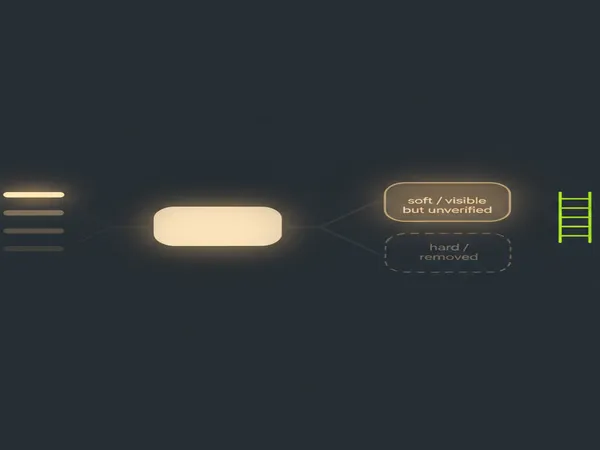 Overview of GBP Content Guidelines: Policies, Suspensions & Appeals (2026)
 Understanding GBP Performance Reports: Insights → Performance (2026)
 Using Messaging in Google Business Profile (2026)
 What Are Google Posts, and How to Use Them Effectively (2026)
 What Is Google Business Profile (GBP)? (2026)

Matteo Braghetta founded MB Adv and runs its Google Ads accounts. He takes the first call with every new client, reads the accounts every week and writes the agency’s guides.
The other half of his job is measurement: GA4, Consent Mode and server-side tracking, so the platforms learn from real sales.
MB Adv is a Google Partner agency managing about $4.4M a year in ad spend for clients in the US, the UK and Europe.
Managed on numbers you can check.
Plans for the US