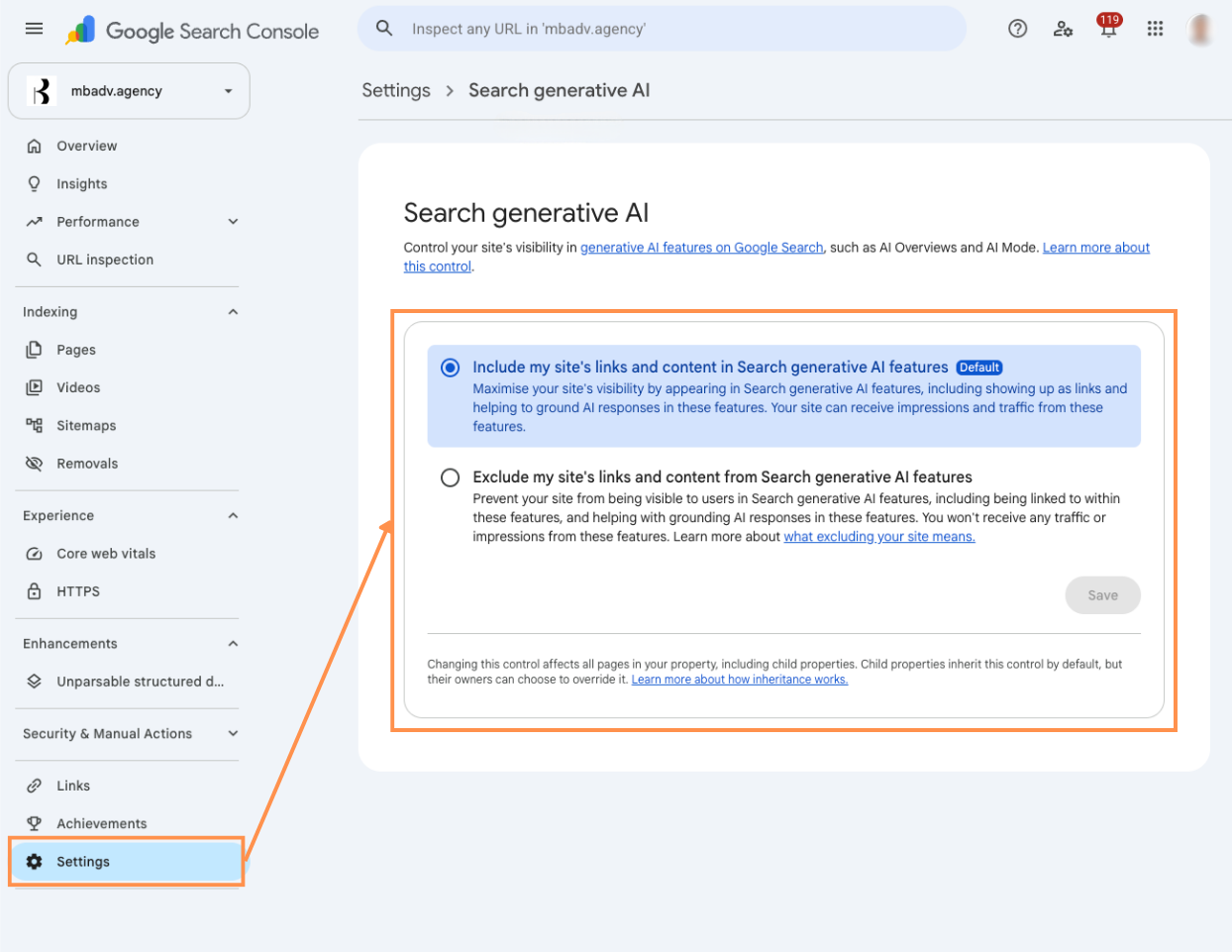
New google ads pmax update: how to use social video upload (beta) for better ppc performance
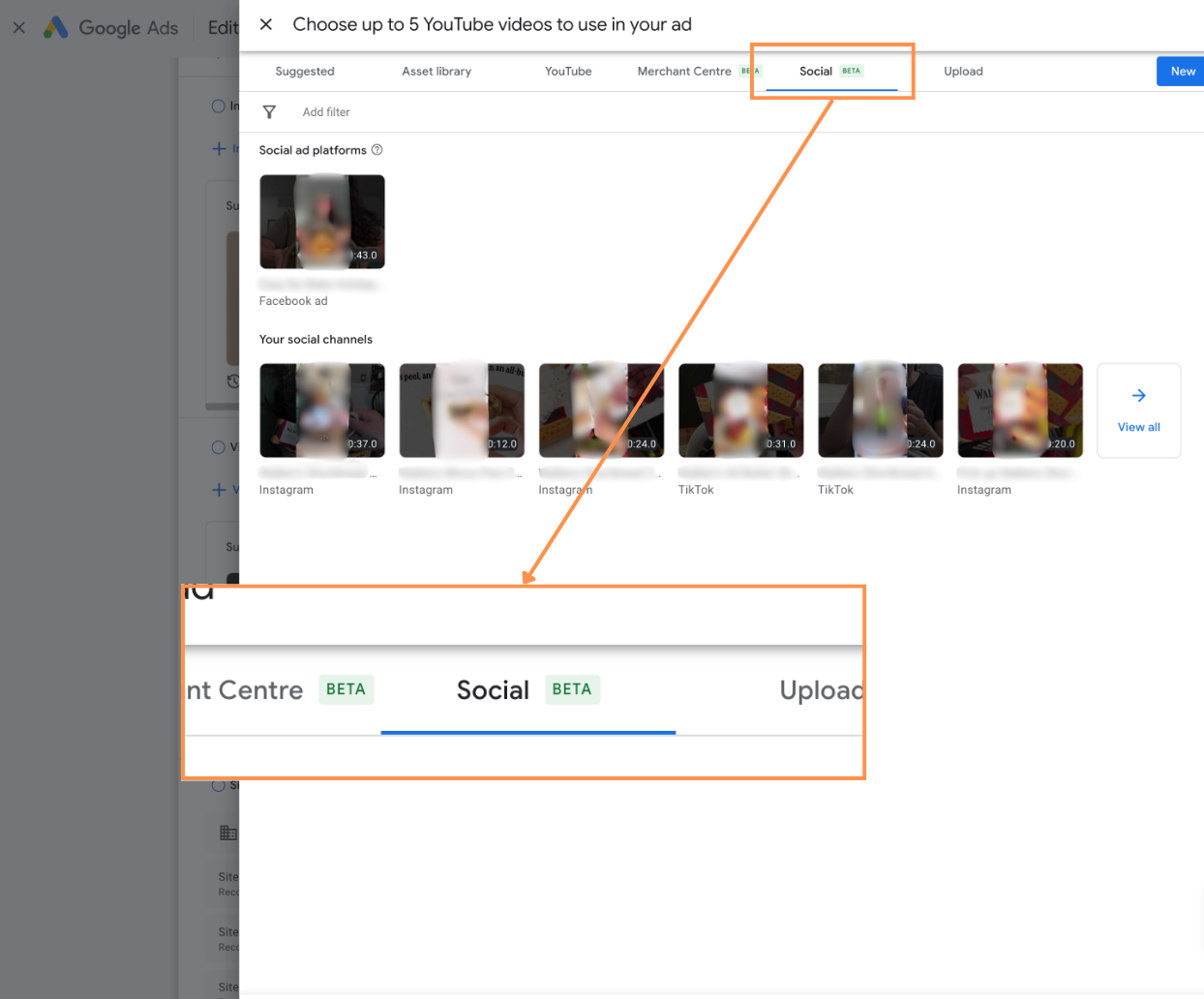
Google quietly rolled out a “Social Video Upload” beta inside Performance Max, and it’s more interesting than it looks at first glance. On paper, it’s a small UX improvement: you can now upload social-style videos directly into PMax instead of routing everything through YouTube. In practice, it says a lot about where Google wants to take creative, formats, and the broader Performance Max ecosystem.
This isn’t just a workflow tweak. It’s another step in Google’s attempt to close the creative gap with Meta, TikTok, and other social platforms – and to make short-form video the default language of its ad inventory.
From “YouTube-first” to “short-form-first”
Until now, video in Performance Max was effectively YouTube-first. If you wanted to use your social assets, you had to:
- Upload them to YouTube
- Wait for processing
- Then attach them inside PMax
That friction sounds minor, but at scale it matters. It nudged teams to either skip video, lean on auto-generated assets, or repurpose whatever was already in YouTube rather than systematically testing social-style creatives.
With Social Video Upload in PMax, you can push up to five “social videos” straight into the campaign. No YouTube detour, no channel dependency. That does two things:
1. It lowers the barrier to adding short-form creative into PMax.
2. It decouples PMax video from the YouTube content strategy.
That second point is subtle but important. Google is effectively saying: “We don’t care if this lives on your channel. We care that you give our system raw, vertical, social-native assets so we can run them across our surfaces.”
For anyone managing both Google Ads and paid social, this is the first time those worlds start to feel more structurally aligned on the creative side.
Google’s quiet convergence with social ad platforms
The move is clearly competitive. Meta and TikTok built their ad products around native, social-first video. Google built its around search intent and YouTube. Performance Max has been the bridge between those worlds, but it always felt slightly out of sync with how social teams work.
Social Video Upload is Google inching closer to the social ads paradigm:
- Short-form, feed-native assets instead of only “polished” YouTube creative
- Faster asset turnover, more aligned with how brands iterate on Meta and TikTok
- Less emphasis on channel as a creative constraint, more on format and machine learning
For performance marketers, this means the creative discipline you’ve developed on Meta – hooks, pacing, thumb-stopping intros, UGC-style framing – is now directly transferable into PMax without an extra layer of operational friction.
It also means Google is signaling pretty clearly: if you want to win in Performance Max, start thinking in short-form-first terms, not “display banners + a couple of YouTube videos.”
What changes in real campaign logic
On a tactical level, the immediate benefits are obvious: less time wasted on YouTube uploads, easier handoff between social and search teams, and fewer excuses for running PMax without proper video assets.
But the more interesting impact is on how you structure and evaluate creative inside PMax.
First, the creative mix inside an asset group becomes more fluid. Many advertisers were running PMax with:
- A handful of static images
- A few generic headlines and descriptions
- Maybe one or two YouTube videos, often brand or explainer style
Now, it’s much easier to mirror your social creative library in PMax: multiple short videos, each with different angles, hooks, and offers. That changes how the system can learn and how you can reason about performance, even if you never get perfect asset-level transparency.
Second, this accelerates creative fatigue dynamics. Social-style videos burn out faster than evergreen YouTube assets. If you start feeding PMax with that type of creative, your asset refresh cadence inevitably tightens. That’s a shift in operational rhythm: PMax becomes less “set and optimize” and more “continuously feed the machine with new creative variants.”
Third, it subtly changes the control conversation. If PMax is now leveraging short-form video heavily across YouTube, Discover, Shorts and beyond, your brand and messaging risk profile changes. Social-style content is often more casual, more experimental. Dropping that into a relatively opaque system like PMax demands tighter internal alignment on what is and isn’t acceptable to run everywhere.
Advantages, with strings attached
The upside is clear: better alignment between your Google Ads and social creative strategies, more flexibility, and a more realistic way to treat PMax as a full-funnel system rather than just a search extension.
But there are trade-offs worth acknowledging.
You gain speed and flexibility at the cost of even more complexity in attribution and diagnosis. When PMax mixes search, Shopping, YouTube, Discover and now social-style video, separating the impact of creative format from audience or intent becomes even harder. If your ROAS moves, is it:
- The short-form video doing heavy lifting?
- Shopping inventory changes?
- Search query mix shifting?
- Or just PMax reallocating budget across surfaces?
You also risk importing bad habits from social. On Meta or TikTok, it’s easy to chase click-through and engagement at the expense of qualified intent. PMax still lives in a fundamentally different ecosystem: a lot of its value comes from high-intent inventory. If your new video assets over-index on pattern interruption and under-index on clarity of offer, you may see noisy engagement without proportional conversion lift.
The other limitation is data. Unless Google meaningfully improves creative reporting, you’re still optimizing with a lot of inference. You’ll know at the campaign and asset group level what’s happening, but you won’t get TikTok-level granularity on which specific short video is carrying performance. That makes creative iteration more heuristic than scientific.
How to think about Social Video Upload strategically
Rather than treating this as “nice, less friction,” it’s more useful to see it as a directional signal:
- Performance Max is becoming more creative-sensitive, not less.
- Google wants advertisers to treat video as a default, not an add-on.
- The boundary between “search marketer” and “social creative strategist” is eroding.
For teams already deep in Google Ads, the practical response is not to rush and dump every TikTok into PMax. It’s to deliberately decide which social concepts translate into Google’s ecosystem: assets that communicate value quickly, respect the user’s context, and don’t rely on sound or platform-specific trends to make sense.
Over time, if Google continues down this path, we can expect more convergence: creative workflows that cut across platforms, asset libraries that are format-first rather than channel-first, and a Google Ads environment where the winners are not just the best at structure and bidding, but the best at feeding the algorithm with a steady stream of strong, short-form creative.
Social Video Upload in PMax is a small feature, but it points in that direction. The platforms are converging. The question is whether our internal teams, processes, and mental models will converge with them.

As a Google Ads expert, I bring proven expertise in optimizing advertising campaigns to maximize ROI.
I specialize in sharing advanced strategies and targeted tips to refine Google Ads campaign management.
Committed to staying ahead of the latest trends and algorithms, I ensure that my clients receive cutting-edge solutions.
My passion for digital marketing and my ability to interpret data for strategic insights enable me to offer high-level consulting that aims to exceed expectations.
Google Partner Agency
We're a certified Google Partner Agency, which means we don’t guess — we optimize withGoogle’s full toolkit and insider support.
Your campaigns get pro-level execution, backed by real expertise (not theory).

4.9 out of 5 from 670+ reviews on Fiverr.
That’s not luck, that’s performance.
Highly recommend Matteo to set up your server side tracking. He has a deep understanding of e-commerce tracking and will go above and beyond to make sure everything is set up correctly and working 100%. If you are scaling your store this set up is non-negotiable in my opinion and there isn't many people who have this much knowledge or put the effort in to get it right. Thanks again!
avorodesign.com
I can only recommend Matteo! He was very patient, professional and very knowledgeable about GA4, Consent Mode v2, and GDPR compliance. Communication was clear, and the setup was done professionally and efficiently. Highly recommend him for anyone needing reliable tracking implementation.

www.natureiki.life
Matteo shines in the realm of online professionals. His work is not only deep in data but also complemented by his proactive communication and cooperation, setting a new standard for freelancers. If you want someone who truly exceeds expectations, look no further. Highly recommended!

www.omanbeverlysmyth.com
Exceptional Service Beyond Expectations - Outstanding Service Impeccable depth, flawless delivery, and exceptional language fluency—this service exceeded all expectations. Highly recommended. Matteo truly ROCKS!!!
ium-paris.com
Top-notch, always highly value working with Matteo. An absolute Google Ads Genius. This is approximately the 8th time I have hired him and he's helped us get 6-7 ROAS. We are excited in continuing to improve our lead flow. Hire this guy if you need Google Ads help. Thanks Matteo!

www.dleeventgroup.com
I finally found the guy who can setup server side tracking and all the ecosystem properly. I definitely recommend Matteo. He is very responsive, kind and wants to dig into things. He configured GA4, Meta, Google Ads, Outbrain and google consent v2 with Cookiebot. Thanks Matteo.

inomega.fr
MB Adv delivered exceptional work with outstanding professionalism and lots of patience, taking time to see effects of changes made and not just do the work and submit it. The proactive communication and video summaries of the work completed made working with Matteo a pleasure, as he consistently went above and beyond. Highly recommended for web analytics projects! We are already working on another project.

www.withnellsensors.co.uk
Working with Matteo on my Google Ads was a game-changer. He's not just a strategist, he's a true partner. He understood my goals and tailored a campaign that perfectly reached my target audience. I'm grateful for his expertise and dedication.

dccargo.com
Click-driven mind
with plastic-brick obsession.
We build Google Ads campaigns with the same mindset we use to build tiny brick worlds: strategy, patience, and zero tolerance for wasted pieces.
Data is our blueprint. Growth is the only acceptable outcome.