Automotive PPC Fort Worth, TX
Fort Worth is a car city by any measure — 72.9% of residents drive alone to work, the average household owns two vehicles, and rising used-car values since 2021 have pushed owners to maintain older cars rather than replace them, increasing per-vehicle repair spend across the board. With 600–900 independent auto repair shops competing against Firestone, Meineke, Christian Brothers Automotive, and dealership service centers, the independent shop that wins on Google Ads isn't the one that out-bids the chains — it's the one that out-positions them on trust, transparency, and the niches the chains can't credibly own. <!-- stats-article-link --> <p><em>See how this city's Automotive PPC costs compare nationally in our <a href="https://www.mbadv.agency/ppc-industry-statistics/automotive-ppc-statistics">Automotive PPC Statistics</a> report, featuring data from 40+ US cities.</em></p>
Chain Competition and the "Honest Mechanic" Problem
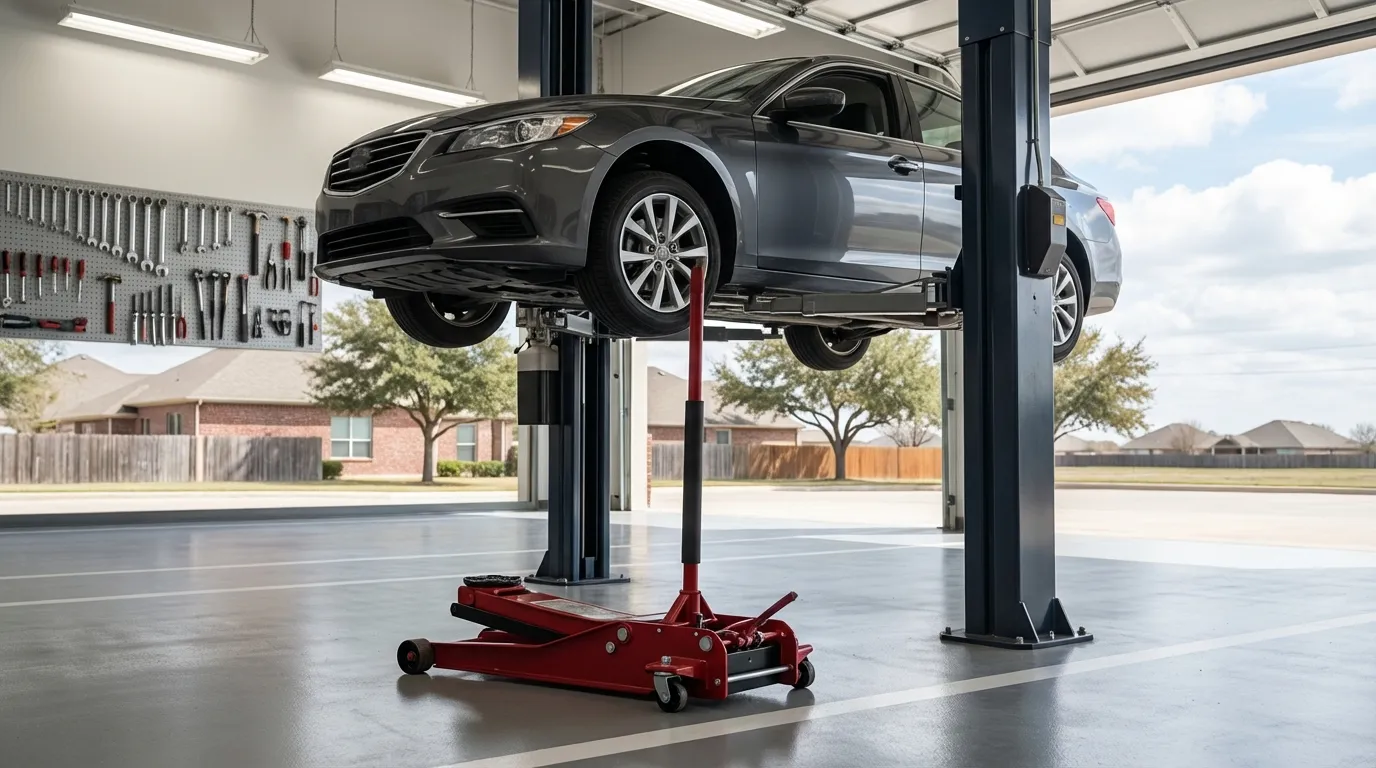
Fort Worth's auto repair PPC market is dominated by national chain advertising in the generic maintenance categories. Firestone Complete Auto Care, Meineke, Pep Boys, Christian Brothers Automotive (major DFW franchise presence), and Jiffy Lube all run sustained Google Ads campaigns on the highest-volume automotive keywords — "oil change Fort Worth," "brake repair Fort Worth TX," "auto repair near me Fort Worth." These chains have national ad buying power, large Quality Score history, and brand recognition that independent shops cannot match dollar-for-dollar on generic terms.
Named local independents with active PPC presence include Fort Worth Import (European specialist, active Google Ads), Texas Star Automotive (general repair, Google Ads active), Allied Auto Works (northwest Fort Worth), and Westside Auto (west side area). These shops compete on something the chains structurally cannot deliver: the perception of the honest, local, non-upsell mechanic. Fort Worth drivers cite "found a mechanic I can trust" as the primary motivator behind switching from a chain to an independent shop — and this emotional driver is the foundation of every high-performing independent automotive PPC campaign in the market.
The Price Transparency Imperative
Auto repair customers in Fort Worth are highly price-sensitive and actively comparison-shopping before they commit to a service appointment. This behavioral reality has a direct implication for PPC: ads that include specific pricing ("Oil Change from $39.99," "Brake Pads from $89/axle") dramatically outperform ads with generic "quality service" copy in both CTR and conversion rate. The chain competitors have understood this for years — Jiffy Lube and Firestone run promotional pricing in their ad copy as standard practice. Independent shops that copy this approach immediately compete on equal footing in the one area where chains have dominated.
The pricing transparency dynamic extends to the landing page. A Fort Worth auto repair shop landing page with a specific service price list (oil change, brake service, tire rotation, AC recharge — with dollar amounts, not "call for pricing") converts significantly higher than a generic "we service all makes and models" page. Fort Worth drivers who see pricing on the ad and confirm it on the landing page have reduced their primary friction point — they know what they're walking into — and conversion to booked appointment increases 30–40% compared to pricing-vague landing pages on the same traffic.
Geographic Radius: The Proximity Decision
Auto repair is one of the most proximity-driven local service categories in Fort Worth PPC. Maintenance customers in particular — oil changes, tire rotations, brake inspections — choose the shop closest to their home or commute route, not the shop with the best reviews or lowest price if proximity is insufficient. A campaign running a 15-mile geographic radius around a shop in west Fort Worth pays for clicks from east Fort Worth and Hurst-Euless-Bedford drivers who realistically won't cross town for an oil change when three competitors are within 2 miles of their location.
The correct radius for general auto maintenance PPC in Fort Worth is 5 miles — tight enough to capture the genuine addressable customer pool, broad enough to cover neighboring zip codes with drive-time overlap. For specialty repair (European vehicles, transmission, diesel, EV service), the radius can extend to 10–15 miles because specialty customers will travel further when their specific vehicle type or service need isn't served locally. Running a single radius campaign for both maintenance and specialty work creates a blended radius that's wrong for both — maintenance customers are over-targeted geographically, specialty customers are under-targeted.
The mobile-first search behavior of Fort Worth auto customers adds urgency to the proximity issue. 70%+ of Fort Worth automotive searches happen on mobile — often from a parking lot, driveway, or roadside where the driver has just discovered a problem. These searches are happening in real-time location context: the person searching "mechanic near me Fort Worth" from a mobile device is within minutes of their intended destination. A 5-mile radius campaign captures this intent perfectly. A 20-mile campaign captures it wastefully, serving impressions to drivers who won't convert because the shop is too far away in a moment of urgency.
Hail Season Auto Glass: The Storm-Adjacent Niche
Fort Worth's hail frequency creates a recurring auto repair demand spike that mirrors the roofing market: post-hail events, windshield and window replacement searches surge as drivers discover damage from overnight or commute-time storms. Auto glass shops and general repair shops offering glass replacement face the same storm-surge dynamic as roofing contractors — CPCs spike briefly, demand is concentrated in a 3–5 week window, and shops with standing campaign variants activated within 24 hours of a verified hail event capture the first-mover surge before reactive advertisers can build and quality-score new campaigns. This storm-adjacent niche produces some of the most efficient CPL in auto repair PPC when executed with pre-built campaign readiness.
Campaign Segmentation: Maintenance vs. Specialty
Fort Worth auto repair PPC performs best when maintenance services and specialty services run in separate campaigns with different geographic radii, different bidding strategies, and different landing pages. Maintenance campaigns (oil change, brakes, tires, AC service) run at 5-mile radius with call-only mobile ads and specific pricing in copy. Specialty campaigns (transmission, European vehicles, EV service, diesel) run at 10–15 mile radius with landing pages that establish technical expertise and specific vehicle-type experience.
LSA is a valuable complement for automotive PPC in Fort Worth — the "Google Guaranteed" badge is an "honest mechanic" signal that independent shops can leverage as a trust differentiator against chain competitors. Setting up LSA alongside Search typically reduces blended CPL by 15–20% for shops that qualify and complete the background verification process.
Keyword Strategy: From Oil Change to EV Service
- Maintenance keywords — "oil change Fort Worth TX," "brake repair Fort Worth," "tire rotation Fort Worth," "car AC repair Fort Worth TX" — CPC range: $12–$30
- General auto repair — "auto repair Fort Worth TX," "mechanic near me Fort Worth," "check engine light Fort Worth," "car repair near me Fort Worth" — CPC range: $18–$40
- Specialty repair — "transmission repair Fort Worth TX," "European auto repair Fort Worth," "BMW mechanic Fort Worth," "Mercedes repair Fort Worth TX" — CPC range: $25–$55
- Emerging / uncontested niches — "EV repair Fort Worth TX," "Tesla maintenance Fort Worth," "electric car service Fort Worth," "hybrid repair Fort Worth TX" — CPC range: $10–$22
- Storm-adjacent auto glass — "windshield replacement Fort Worth TX," "hail damage windshield Fort Worth," "auto glass repair Fort Worth," "cracked windshield Fort Worth" — CPC range: $15–$28
The EV service niche warrants specific investment for any Fort Worth shop certified for electric vehicle work. Fort Worth's EV adoption is accelerating, and EV-qualified independent shops running Google Ads on EV terms currently face almost no competition. A shop investing $400–$600/month in EV-specific keywords — "EV repair Fort Worth," "Tesla service Fort Worth," "electric vehicle maintenance Fort Worth TX" — can establish dominant presence in a keyword category that will grow significantly as EV adoption accelerates in the DFW metro. The early Quality Score and review history built in this niche today will compound into a durable competitive moat as more EV-qualified shops eventually recognize the opportunity.
Negative keyword exclusions for automotive: "auto mechanic school Fort Worth," "auto parts Fort Worth" (unless also a parts retailer), "auto auction Fort Worth," "car dealership Fort Worth," "auto loan Fort Worth," "car insurance Fort Worth." These exclusions prevent substantial non-repair traffic from consuming maintenance and repair campaign budgets.
Google Partner Agency
We're a certified Google Partner Agency, which means we don’t guess — we optimize withGoogle’s full toolkit and insider support.
Your campaigns get pro-level execution, backed by real expertise (not theory).

Fort Worth's Car Dependency Creates Structural Demand
Fort Worth's 72.9% drive-alone commute rate and average two-vehicle household create an automotive services market that is structurally more resilient than most. Fort Worth drivers don't have the alternative transportation options that compress auto repair demand in higher-density cities — no meaningful public transit, limited rideshare substitution for regular commutes, and suburban geography that makes car ownership functionally mandatory. When a vehicle needs service in Fort Worth, it gets serviced. The only variable is where.
The rising used-vehicle value trend compounds this structural demand. Since 2021, used car values have remained significantly elevated above pre-pandemic levels — the average used vehicle in the Fort Worth market costs substantially more than it did in 2019, which means owners are making a rational economic decision to maintain older vehicles rather than absorb the cost of replacement. Deferred maintenance that would have been skipped on a vehicle headed for trade-in is now being completed because the vehicle is being kept longer. This translates to higher per-customer revenue for Fort Worth auto shops and a larger addressable market for repair PPC than the vehicle count alone would suggest.
The Tax Refund and Summer Service Surge Patterns
Key insight: Fort Worth's auto repair market has two predictable demand surges that reward pre-planned campaign scaling. The first is tax refund season (February–April) — Fort Worth's lower-income demographic distribution means a meaningful portion of the population receives significant refunds that often get applied to deferred vehicle maintenance. Shops that increase bids on brake repair, transmission service, and major repair keywords during February–April capture customers authorizing repairs they've been deferring for months. CPL for higher-ticket repairs drops measurably during this window because customer readiness — having the funds — is at its annual high point.
- Summer AC service spike: June–August — car AC repair searches surge as Fort Worth heat hits 100°F+
- Tax refund repair window: February–April — deferred major repairs authorized at peak rate
- Post-hail auto glass: March–October (storm season) — windshield/glass replacement demand surges post-event
- Battery failure season: July–August (heat) and November–December (cold) — two annual battery replacement demand spikes
The second is Fort Worth's summer vehicle AC service surge. When temperatures reach 100°F+ in July and August, vehicle AC failures that were tolerable in spring become urgent. "Car AC not working Fort Worth" and "auto AC recharge Fort Worth TX" see sharp volume increases from June through August. Shops with AC service capacity that increase bids on this keyword group during summer — without reducing their baseline maintenance campaign bids — capture the seasonal surge without sacrificing year-round performance. Shops that run flat budgets year-round either overpay in off-peak periods or leave demand unmet during the surge windows when conversion intent is at its highest.
Fort Worth auto repair PPC rewards precision — tight geographic radius, honest mechanic messaging, transparent pricing, and specialty niche development — over broad reach and generic copy. The independent shops consistently outperforming the chains in Fort Worth do it by making every element of their PPC campaign the opposite of what Firestone and Meineke run: specific pricing instead of vague offers, actual shop photos instead of stock images, real review counts instead of brand trust alone, and 5-mile radius targeting instead of city-wide coverage that pays for clicks that will never drive across town for an oil change.
MB Adv Agency manages auto repair campaigns built around Fort Worth's specific automotive market dynamics: maintenance campaigns with 5-mile radius and mobile-first call structure; specialty campaigns with extended radius and vehicle-type specific landing pages; EV service campaigns for certified shops entering the uncontested electric vehicle niche; and storm-adjacent glass campaigns with pre-built activation readiness for hail events. We track seasonal patterns — summer AC surge, tax refund repair season, fall battery service — and scale bids proactively rather than reactively.
Our PPC management service is built for Fort Worth shops that want to compete against the national chains without matching their budgets. See our pricing tiers and book a strategy call to map the right campaign structure for your shop's service mix and location.
Frequently Asked Questions
How does a Fort Worth independent auto shop compete with national chains in Google Ads?
The answer is not to bid higher — it's to position differently. National chains like Firestone and Christian Brothers Automotive have structural advantages in generic maintenance keyword auctions: large budgets, high Quality Scores from years of campaign history, and brand recognition. Trying to beat them at their own game on "oil change Fort Worth" with an equal budget is an unwinnable contest for most independent shops.
The winning strategy is positioning around trust and transparency where chains are structurally weak. "Honest Estimates — Fort Worth's Independent Auto Shop Since 2009" beats "National Chain — Quality Service Guaranteed" in CTR among the 40–50% of Fort Worth drivers who are actively seeking an alternative to chains specifically because they've had upsell experiences they didn't trust. This is a meaningful segment of the market — and they're searchable: these customers often include "honest" or "trustworthy" in their search queries, or they search specifically for "independent mechanic Fort Worth" to avoid the chain experience.
Transparent pricing in ad copy is the second chain-beater. Most national chain ads don't include specific pricing because their pricing varies by location and promotion cycle. An independent shop that runs "Oil Change from $39.99 — No Upsells" in their headline immediately differentiates on the dimension that the chain cannot match authentically. The combination of honest mechanic positioning and transparent pricing creates a click-through and conversion environment that outperforms chain-competitive generic ads even at lower bids — because the audience self-selects toward shops that speak directly to their primary concern.
What is the realistic ROI timeline for auto repair PPC in Fort Worth?
Auto repair is the fastest-optimizing local PPC category in Fort Worth — faster than legal, real estate, or even HVAC. The reasons are structural: high search volume across all maintenance categories, immediate intent (the car is broken now, not in 60 days), and a purchase decision that closes the same day in most cases. This means campaign optimization data accumulates faster, and the feedback loop between spend and revenue is shorter than almost any other local service.
The realistic timeline: first service bookings within 5–7 days for maintenance campaigns targeting emergency and same-day intent keywords. Campaign efficiency — CPL hitting target range, negative keyword list refined, bid adjustments by hour and device calibrated — by day 30. Positive ROI (revenue from acquired customers exceeding ad spend) by day 30–45 for most Fort Worth auto shops with efficient campaign structure and fast online booking.
The long-term ROI story is customer LTV. A Fort Worth driver acquired through PPC for a $50 oil change has an estimated $300–$800 annual value if they return for maintenance across their vehicles — and a 3-year LTV of $900–$2,400. This means a $60 CPL for a maintenance customer pays back in the first year, and compounds in years two and three without additional ad spend. The PPC investment is acquiring customer relationships, not just single transactions — and the shop with the fastest, most transparent experience retains those customers at the highest rates after the initial PPC acquisition.