Start
$590$990/month
1 platform · Google or MetaGoogle + Meta- Ad spend
- up to $3,000
- New creativesmade by us
- Google + Meta only4 a month
 By Matteo Braghetta, Founder · Google Ads
Honolulu's construction sector grew 10.3% in 2025, adding 2,900 jobs — the fastest-growing industry in the metro — and Hawaii's top 25 contractors posted 17% revenue growth the same year. For SMB contractors competing in a market where island geography eliminates mainland competition but local rivalry is fierce, Google Ads done right is the clearest path to a full project schedule.
See how this city's Construction PPC costs compare nationally in our Construction PPC Statistics report, featuring data from 40+ US cities.
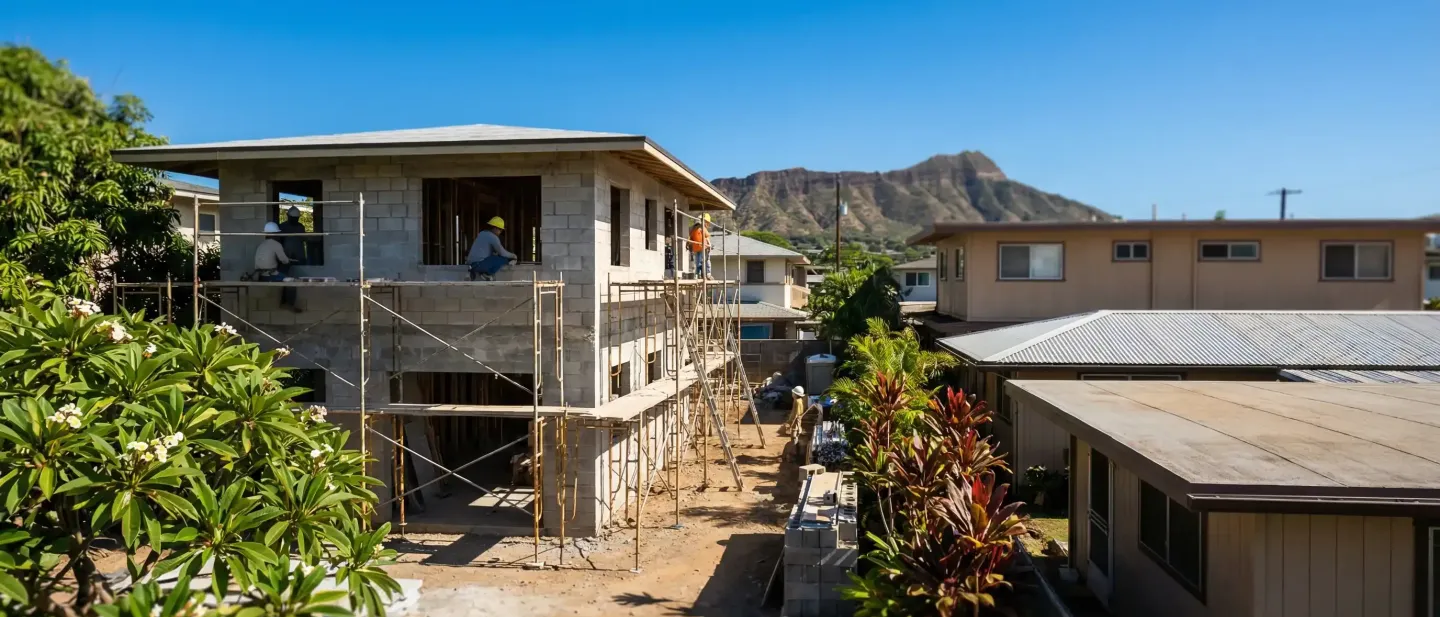
In the Honolulu metro area, people search for construction services about 2,380 times a month on Google; a top-of-page click costs $2–$11, and demand peaks in October.
Search volumes for Honolulu, HI alone are too thin to report; the figures are for the Honolulu, HI,Hawaii,United States metro area.
Google Keyword Planner · Oct 2025 – Sep 2026
| Search | Monthly searches | Top-of-page CPC |
|---|---|---|
| general contractor | 320 | $4–$15 |
| bathroom remodel | 260 | $1.99–$7.29 |
| bathroom remodeling contractor | 260 | $2–$13 |
| construction company | 210 | $2.32–$8.67 |
| contractor near me | 210 | $2–$14 |
| deck builder | 170 | $1.09–$3.24 |
| construction companies near me | 140 | $2–$14 |
| kitchen remodeling contractor | 140 | — |
| kitchen remodel | 110 | $0.70–$6.55 |
| home renovation | 110 | $2.45–$7.40 |
Source: Google Keyword Planner (Google Ads), Google Search, English, the Honolulu metro area, Oct 2025 – Sep 2026. Volumes are Google's monthly averages; CPC is the top-of-page bid range, weighted by search volume. How we collect these figures.
Honolulu construction contractors face a PPC environment unlike any mainland market. The island geography that protects local operators from out-of-state competition also concentrates the auction — every Oahu-based contractor bidding for "general contractor Honolulu" is competing in the same tight geographic window. With the construction sector expanding at 10.3% YoY through December 2025, the number of advertisers entering the market is rising. CPCs that ran lower two years ago now frequently land higher for high-intent renovation keywords.
The most common failure point for Honolulu construction campaigns is targeting keywords that attract the wrong intent. Search terms like "construction company Hawaii" attract researchers, students, and job seekers — not homeowners ready to schedule a project. Profitable Honolulu campaigns require tight segmentation: residential renovation terms ("kitchen remodel Oahu," "bathroom addition Honolulu"), commercial build-out terms ("commercial contractor Honolulu"), and military-adjacent keywords ("licensed contractor near Schofield Barracks") each require separate ad groups with tailored landing pages. Mixing these into a single campaign dilutes Quality Score and elevates cost per lead.
Hawaii's contractor licensing requirements add another layer. The State of Hawaii Department of Commerce and Consumer Affairs requires licensed contractors to display their C or B contractor license number. Ads that don't surface license credentials perform measurably worse in this market — Honolulu homeowners are highly license-conscious after well-publicized cases of unlicensed contractor fraud. Campaigns that lead with license information in ad headlines and extensions see CTR improvements of 15–25% compared to generic capability claims.
Honolulu's SMB construction clients range from military families at JBPHH (Pearl Harbor) and Fort Shafter who need specific compliance work, to high-income homeowners in Kahala and Hawaii Kai who expect premium materials and finished photography. Sending all traffic to a single generic landing page — one that doesn't speak to the specific project type or neighborhood context — produces a conversion rate floor of 1.5–2%. Purpose-built landing pages for renovation vs. commercial vs. military work can push CVR to 4–6% at the same keyword and CPC level.
The other consistent failure mode is ignoring negative keywords. "Construction jobs Honolulu," "construction permit Hawaii," "construction loan Honolulu" — these generate real search volume but represent zero purchase intent. A construction campaign without a properly developed negative keyword list wastes 20–35% of monthly budget on irrelevant clicks. National aggregators like HomeAdvisor and Angi also bleed clicks through brand terms and informational queries — excluding them from targeting is a week-one optimization step most local campaigns skip.
Hawaii's material costs compound the challenge. Prevailing wage laws, Jones Act shipping premiums, and the island supply chain inflate construction project costs 18–22% above mainland equivalents. This means the project values are high — a kitchen renovation in Honolulu that would run $45,000 on the mainland often costs $60,000–$80,000 here. That math supports aggressive PPC budgets, but only when the campaign is structured to attract buyers who already understand Hawaii pricing. Ads with pricing anchors ("Starting from $15K for Honolulu bathroom renovations") prequalify traffic and reduce wasted consultations.
The most effective Honolulu construction campaigns segment budget across three distinct intent layers: emergency/urgent repair, planned renovation, and commercial project work. Each layer has different CPC dynamics, different conversion timelines, and different landing page requirements. Running them in one campaign crushes performance. Separate campaigns — separate budgets, separate negative keyword lists, separate bid strategies — is the baseline for a profitable Honolulu construction account.
Keyword Strategy by Segment:
Bid strategy matters more in a constrained geographic market like Honolulu. Target CPA bidding requires at least 30 conversions per month to train effectively — most Honolulu construction SMBs don't reach that threshold in the first 60–90 days. Start with Maximize Clicks with a bid cap set 15–20% above your target CPC, then transition to Target ROAS once conversion data is sufficient. Manual bidding during the learning phase costs time and money — let the automated system find efficient volume while you refine conversion tracking.
Ad extensions are unusually high-value for Honolulu construction campaigns. Sitelink extensions to gallery pages, testimonial pages, and financing pages increase CTR by an average of 10–15% in this market. Callout extensions work best when they surface license credentials ("C-29,541 Licensed"), insurance coverage, and Hawaii-specific material expertise ("Tropical-grade materials. Salt-air resistant installations."). Call extensions are critical — mobile-first Honolulu users call directly more often than desktop users submit forms.
Dayparting optimization for Honolulu is straightforward: military personnel and homeowners search in early mornings (6–8 AM) and evenings (6–9 PM HST). Midday on weekdays shows lower commercial intent. Allocating a higher bid modifier to morning and evening windows — +25–35% on 6–9 AM and 6–9 PM — improves cost efficiency without reducing total volume.
Ad extensions to activate from day one:
Remarketing campaigns targeting site visitors who didn't convert are disproportionately valuable in construction. A homeowner researching kitchen renovation in Honolulu takes 4–8 weeks from first search to contacting a contractor. Remarketing display ads with before/after gallery images keep your brand top-of-mind during that consideration window. Budget 15–20% of your monthly construction PPC spend to remarketing — it's the highest-ROAS slice of the account.
Honolulu's construction market has a hidden structural opportunity that most PPC campaigns ignore: the ohana unit (ADU) boom. Hawaii enacted legislation encouraging accessory dwelling unit construction to address the state's acute housing shortage, and Honolulu homeowners are pursuing ohana unit additions at a rate that outpaces most mainland ADU markets. Searches for "ohana unit Oahu," "ADU builder Honolulu," and "ohana unit cost Hawaii" have grown steadily since 2022. Contractors who structure dedicated PPC campaigns targeting ADU keywords — and who have ADU-specific landing pages with permitting information and example projects — are capturing leads at $60–$110 CPL vs. $120–$180 for generic renovation keywords.
Approximately 40,000–50,000 active military personnel are stationed on Oahu. Military families rotate on 3-year Permanent Change of Station (PCS) cycles, and rotation peak periods (late spring and late summer — May through August) create predictable spikes in home renovation demand. Military families in base housing who are transitioning to off-base rentals or purchases often commission quick renovation and repair work. Contractors who increase PPC budgets by 20–30% in April–August, targeting "military housing contractor Oahu" and "renovation contractor near JBPHH," capture this demand at lower competition levels than peak renovation season.
The federal construction spending pipeline adds another layer. Pearl Harbor Naval Base, Fort Shafter, Hickam Air Force Base, and Schofield Barracks all execute regular facility upgrade contracts. While large federal contracts go to national firms (Nordic PCL, Hensel Phelps, Nan Inc.), subcontracting opportunities are accessible to qualified local SMBs. Contractors who include "government subcontractor Honolulu" and "federal facility renovation Hawaii" in their keyword portfolio are accessing a demand stream that has zero representation from consumer-facing national chains.
Key insight: Honolulu's electricity rates — among the highest in the US at roughly $0.40/kWh — are reshaping residential renovation priorities. Home improvement projects that improve energy efficiency (window replacement, insulation upgrades, solar-ready electrical panels) command premiums in the Honolulu market that don't exist at the same level on the mainland. Contractors who lead PPC ads with energy efficiency angle ("Cut your Honolulu electric bill — insulation and window upgrade contractors") are tapping into purchase motivation that purely aesthetic renovation ads miss.
Construction material seasonality is also worth factoring into campaign planning. Honolulu's rainy season runs November through March, driven by trade wind shifts and Kona storm fronts. Roofing-adjacent construction work surges in the dry season (April–October). Renovation interior work is year-round but exterior work — painting, decking, concrete — slows during heavy rain months. Adjusting PPC budget allocation to match this seasonal pattern, rather than spending evenly year-round, improves ROI by an estimated 12–18% annually.
Honolulu's construction PPC environment — constrained geography, elevated CPCs, licensing-sensitive buyers, military and civilian market overlap — requires campaign management that understands the market's structural quirks. A mainland agency importing a generic contractor campaign template into Honolulu will waste the first 60 days learning what anyone local knows on day one.
At MB Adv, we've built and managed PPC campaigns across dozens of high-competition SMB markets. Our Plastic-Brick methodology eliminates wasteful broad-match spending and structures campaigns around high-intent, locally verified keyword clusters. For Honolulu construction clients, that means separate campaigns for renovation, commercial, and military-adjacent traffic — with bid strategies calibrated to Hawaii's premium CPC environment and landing pages that pre-qualify for Hawaii pricing realities.
Our construction clients average a 4:1 ROAS within 90 days. We deliver Honolulu benchmarks and exceed them.
Ready to stop paying for wasted clicks? Review our PPC services or see transparent pricing for Honolulu construction campaigns. Audit included for new accounts.
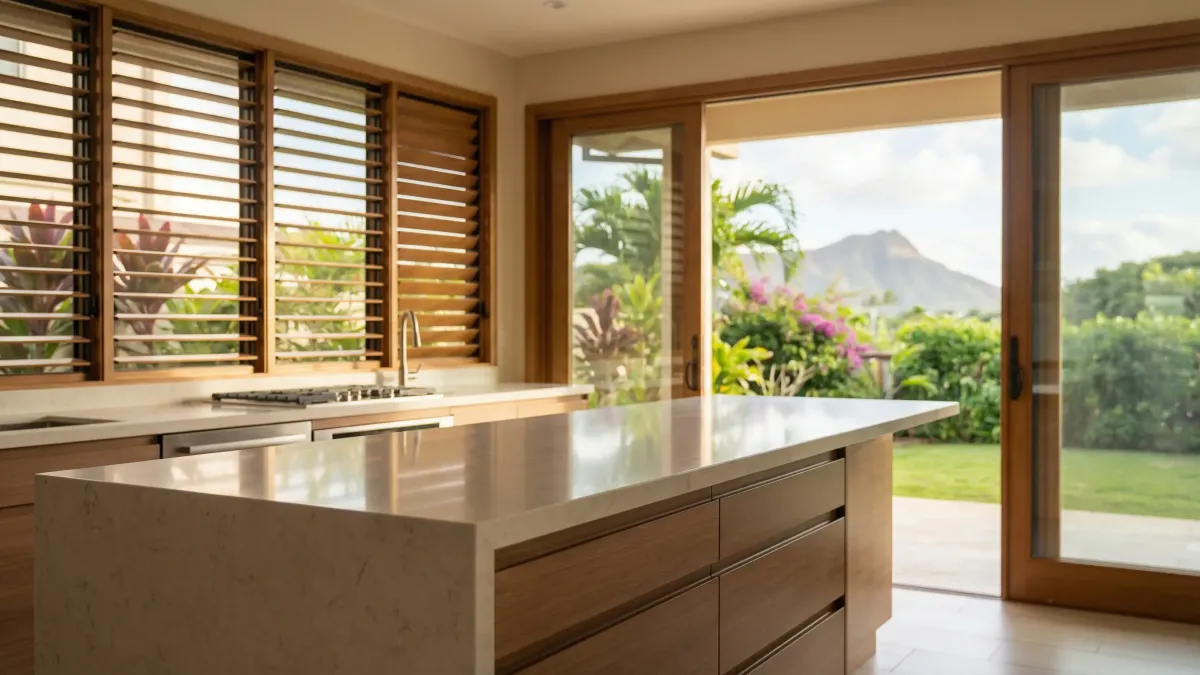
A Honolulu construction SMB targeting residential renovation should start with a monthly Google Ads budget of $2,500–$4,000. At a well-optimized CVR of 3.5–4.5%, that budget translates to a steady stream of qualified leads each month — enough to evaluate campaign performance within the first 30–60 days. Aggressive coverage across residential renovation, emergency repair, and commercial keywords requires $5,000–$8,000/month to maintain competitive share of voice in all segments. The key variable is project value: a contractor whose average job runs $85,000 can justify $150 CPL easily. A contractor focused on small repairs ($3,000–$8,000 jobs) needs to drive CPL below $80 to hit acceptable ROAS. Budget planning should always begin with project economics, not a fixed spend number. For military-adjacent keyword targeting (Ewa Beach, Aiea, near JBPHH), CPCs run lower than urban Honolulu — a $1,000/month supplemental campaign in these submarkets can deliver disproportionate ROI during PCS rotation season.
Timing also affects budget efficiency: April through August is the Honolulu peak construction season, with search volume up 30–40% vs. the November–March rainy season. Increasing budget by 25–30% during peak months and scaling back during slow season is the highest-ROI budget adjustment most Honolulu contractors can make without any other campaign changes.
New accounts should reserve 10–15% of monthly budget for remarketing from day one. Renovation decisions in Honolulu take weeks — remarketing ensures your brand stays visible during the homeowner's decision period.
The highest-converting keyword categories for Honolulu construction contractors are project-specific renovation terms combined with Oahu geographic modifiers. "Kitchen remodel Honolulu" ($0.70–$6.55 CPC, ~4% CVR), "bathroom remodel Oahu" ($1.99–$7.29 CPC), and "home addition Honolulu" consistently deliver the strongest lead quality because searchers using these terms have already identified their project type — they're seeking a contractor, not researching costs. Generic terms like "construction company Honolulu" attract higher funnel traffic at similar CPCs, producing CPLs 40–60% higher than project-specific keywords. Emergency and urgency keywords — "water damage contractor Honolulu," "roof leak repair Oahu" — generate lower monthly volume but convert at 6–8% CVR due to immediate-need urgency. The underserved opportunity in Honolulu construction PPC is the ohana unit (ADU) category: "ohana unit builder Honolulu," "ADU contractor Oahu," and "in-law suite addition Hawaii" pull CPCs with meaningful less auction competition than standard renovation terms. A dedicated ADU campaign with a purpose-built landing page featuring permitting guidance and example projects can generate CPLs of $60–$90 — 30–40% below the residential renovation average. Military-adjacent terms (targeting Aiea, Ewa Beach, Waipahu, and Pearl City) round out the keyword portfolio at CPCs below central Honolulu, ideal for volume-building during PCS rotation seasons.
Negative keyword management is equally important: "construction jobs Honolulu," "construction permit Hawaii," "construction loan Oahu," and "construction management degree Hawaii" must be excluded on week one to prevent budget drain on zero-intent traffic.
How to read this Cost per click and monthly searches are measured with Google Keyword Planner (see above). Cost per lead, conversion rate, budget and leads are estimates compiled from public benchmarks such as WordStream, not measurements.
Sources WordStream Industrial Services benchmarks + LocalIQ Home Services data + Honolulu market premium estimates (2025-2026)
$590$990/month
1 platform · Google or MetaGoogle + Meta$790$1,290/month
1 platform · Google or MetaGoogle + Meta$1,140$1,940/month
1 platform · Google or MetaGoogle + MetaChatGPT Ads: a separate pilot, $250/month, added to a plan. See the pilot →

Matteo Braghetta founded MB Adv and runs its Google Ads accounts. He takes the first call with every new client, reads the accounts every week and writes the agency’s guides.
The other half of his job is measurement: GA4, Consent Mode and server-side tracking, so the platforms learn from real sales.
MB Adv is a Google Partner agency managing about $4.4M a year in ad spend for clients in the US, the UK and Europe.
Managed on numbers you can check.
Plans for the US