Healthcare PPC Fayetteville, AR
Fayetteville's healthcare market employs 8,092 workers and supports 180–280 independent practices and SMB-scale clinics — but the real story is access. Washington Regional and Mercy dominate capacity, yet both systems routinely run 3–6 week waits for new patient appointments. Independent practices that advertise availability win the most motivated patients at CPLs as low as $20–$45 for urgent care and $40–$90 for mental health — and those patients return for years. <!-- stats-article-link --> <p><em>See how this city's Healthcare PPC costs compare nationally in our <a href="https://www.mbadv.agency/ppc-industry-statistics/healthcare-ppc-statistics">Healthcare PPC Statistics</a> report, featuring data from 40+ US cities.</em></p>
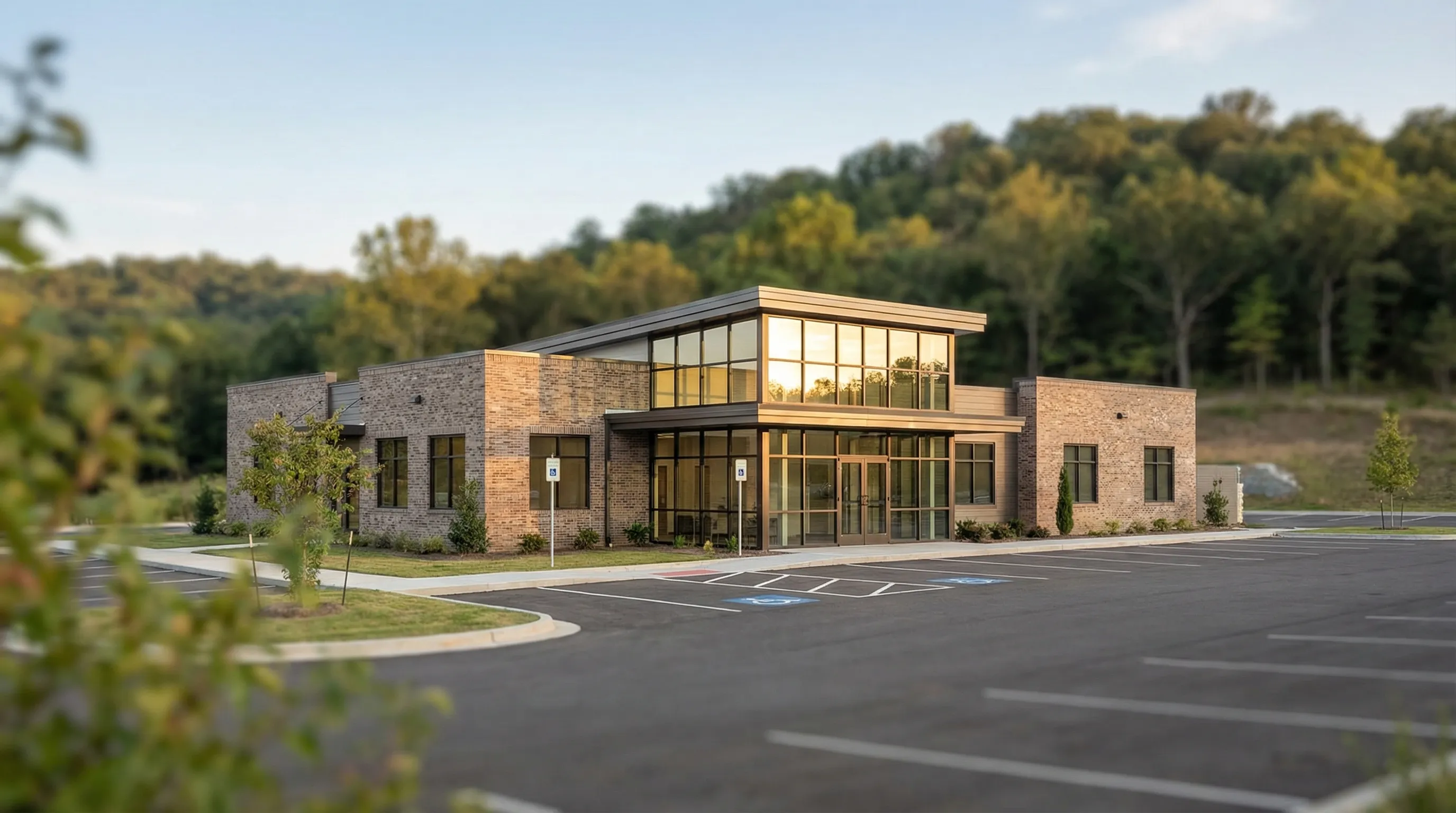
Independent healthcare practices in Fayetteville face a challenge that no PPC campaign solves alone: competing in a market where two large health systems — Washington Regional Medical Center and Mercy Clinic Northwest Arkansas — dominate insurance network relationships and carry decades of brand recognition. In primary care and urgent care, a Google search for "doctor Fayetteville AR" returns results populated by health system satellites, national urgent care brands like GoHealth and NextCare, and a handful of independent practices scrambling for visibility.
The Health System Access Gap
Here's what that competitive picture misses: Washington Regional and Mercy are not the enemy — they're the opportunity. Both systems operate with appointment backlogs that frequently run 3–6 weeks for new patients. A professional moving to Fayetteville for a Walmart vendor role doesn't want to wait six weeks to establish primary care. A graduate student dealing with anxiety doesn't want a 45-day wait for a campus counseling appointment. The defining PPC opportunity for Fayetteville healthcare is advertising availability, not affordability. Practices that run copy anchored in "accepting new patients — same-day and next-day appointments available" immediately differentiate from health system advertising, which never leads with access.
Urgent care faces a different variant of this challenge. GoHealth and NextCare run programmatic Google Ads nationally and in NW Arkansas. Their campaigns activate based on national templates — standardized ad copy, consistent bids, minimal local customization. An independent urgent care in Fayetteville running a localized campaign — "walk-in clinic open until 9 PM, Fayetteville AR" with accurate hours, specific zip code targeting, and a click-to-call CTA — outperforms the national brands at the local intent level because searchers are choosing *right now*, and specificity wins in real-time decisions.
The Specialty Underrepresentation Problem
The second challenge is structural: most Fayetteville healthcare PPC spending concentrates on urgent care and primary care, where CPCs are highest ($3.50–$10.00/click) and competition is most intense. Meanwhile, the specialty categories most directly relevant to Fayetteville's demographic — mental health, physical therapy, medical weight loss — are dramatically underinvested in advertising. These categories generate CPLs of $40–$95 in a market where patient LTV runs $2,400–$18,000 over a care relationship. The math is exceptional. The competitive field is thin.
Mental health is the clearest example. The University of Arkansas's student counseling services routinely operates at or near capacity; documented wait lists exist. Over 61,000 people affiliate with the university as students, faculty, or staff. Independent therapists and counseling practices within the Fayetteville market have a large, identifiable, underserved demand pool — but most are not running Google Ads at all, or are running generic campaigns that target "therapist near me" without the specificity that converts a campus-adjacent search into a booked consultation.
Physical therapy and sports medicine present a parallel gap. Fayetteville's active outdoor culture — trail running on the Razorback Greenway, cycling, rock climbing at Horseshoe Canyon Ranch, University of Arkansas athletics — generates above-average sports injury volume. Most physical therapy PPC in Fayetteville doesn't acknowledge this. A campaign built around "physical therapist for runners Fayetteville AR," "trail running injury PT NW Arkansas," and "sports rehabilitation Fayetteville" reaches a high-intent, high-motivated patient who converted before they picked up the phone.
The compounding factor for all Fayetteville healthcare practices is Fayetteville's growth trajectory. The metro grew 24.2% from 2010–2020, and in-migration continues — primarily the professional class from Dallas, Chicago, and Kansas City. Each arriving household needs healthcare providers. A practice that has built Google Ads visibility before this wave of new residents searches captures first-mover patient relationships with high LTV. The practices that wait build their patient base the slow way.
A Fayetteville healthcare PPC campaign must be segmented by specialty and patient intent — because "healthcare" is not one campaign. Urgent care, mental health, physical therapy, and medical weight loss require separate ad groups, landing pages, and bid strategies. Merging them into a single campaign produces mediocre results for each. Separating them allows each specialty to optimize toward its own CPL target and conversion path.
Keyword Architecture by Specialty
- Urgent care / walk-in keywords ($3.50–$9.00 CPC): "urgent care Fayetteville AR," "walk-in clinic Fayetteville," "urgent care open now NW Arkansas," "urgent care near me Fayetteville" — highest volume, fastest conversion. Paired with click-to-call extensions and location extensions. Emergency intent converts within the hour; landing page should have phone number above the fold, hours, and a map embed.
- Primary care keywords ($4.00–$10.00 CPC): "primary care doctor Fayetteville AR," "new patient primary care NW Arkansas," "family doctor accepting new patients Fayetteville," "direct primary care Fayetteville AR" — longer decision cycle; landing page needs to address insurance, availability, and booking process explicitly. Include "same-day and next-day appointments" prominently.
- Mental health keywords ($5.00–$14.00 CPC): "therapist Fayetteville AR," "mental health counseling Fayetteville," "anxiety therapist NW Arkansas," "counseling Fayetteville AR," "ADHD therapist Fayetteville" — privacy-sensitive searches; Google Search only (not Facebook); no retargeting. Landing pages must feel private, not clinical.
- Physical therapy keywords ($4.00–$11.00 CPC): "physical therapy Fayetteville AR," "sports medicine clinic Fayetteville," "knee pain physical therapist NW Arkansas," "trail running injury PT Fayetteville" — action-sports specific terms outperform generic PT terms in Fayetteville; include Ozarks activity keywords.
- Medical weight loss keywords ($6.00–$16.00 CPC): "medical weight loss Fayetteville AR," "GLP-1 weight loss Fayetteville," "weight loss doctor Fayetteville AR," "Ozempic prescription Fayetteville" — fastest-growing search category nationally and locally; capture now before saturation.
Platform and Bid Strategy
Google Search is the primary channel for all acute and appointment-driven healthcare searches. For urgent care and physical therapy, Google Local Services Ads (LSA) are non-negotiable — the "Google Screened" badge generates a trust signal that no standard search ad matches, and LSA placements appear above standard ads on mobile. For medical weight loss and cosmetic dermatology, Facebook and Instagram augment search with before/after visual content that drives consultation inquiries at lower CPCs than search alone.
Geo-targeting precision matters here. For urgent care: ZIP codes 72701, 72703, 72704 at full bids; expand to Springdale and Rogers at –15%. For mental health: target 72701 heavily (campus-adjacent ZIP) and add a 3-mile radius around the University of Arkansas for therapy practices specifically serving students and faculty. For weight loss and cosmetic dermatology: target Bentonville (72712) and Rogers Pinnacle Hills (72758) with +20% bid modifiers — the highest-income ZIP codes in the metro.
Negative keywords prevent budget waste: "free clinic Fayetteville" (assistance-program intent), "hospital emergency room" (different care setting), "medical school Fayetteville" (academic intent), "WebMD symptoms" (research, not appointment). These consume budget at scale in generically structured healthcare campaigns.
Seasonality drives the budget calendar: +30–40% November–January for urgent care (flu season surge); +25–35% August–September for mental health and primary care (university re-open and new residents); +40–60% January–February for medical weight loss (resolution season). In Ozarks outdoor recreation months (June–September), physical therapy budgets should hold steady or increase slightly — sports injuries don't take summer off.
Google Partner Agency
We're a certified Google Partner Agency, which means we don’t guess — we optimize withGoogle’s full toolkit and insider support.
Your campaigns get pro-level execution, backed by real expertise (not theory).

The most important market insight for Fayetteville healthcare PPC is one that doesn't show up in any CPC benchmark table: the University of Arkansas mental health gap is a documented, local, measurable opportunity. Campus counseling services at U of A consistently operates at capacity; peer-reviewed studies and local reporting confirm wait times of 4–8 weeks for initial appointments at the student health center. The university enrolls 32,000+ students; faculty and staff add another 10,000+. Independent therapists within Fayetteville who position themselves as campus-adjacent — same ZIP code, evening hours, telehealth options for campus residents — are not just competing for a generic "mental health" search. They are absorbing demand from an institution that cannot meet it.
The GLP-1 Search Wave
Medical weight loss is the second defining opportunity of Fayetteville's healthcare PPC landscape in 2025–2026. The national GLP-1 medication surge (Ozempic, Wegovy, Zepbound) has created a search category that barely existed in 2021 — "GLP-1 prescription Fayetteville," "Ozempic doctor near me," "medical weight loss program NW Arkansas" — and most local healthcare practices have not yet built campaigns targeting it. Search volume for GLP-1-related queries grew 600–800% nationally between 2022 and 2024. Fayetteville's professional class demographic — educated, insured, income above $85K median household — is exactly the profile driving this demand. A medical practice offering supervised GLP-1 programs in Fayetteville that launches a dedicated campaign now enters a search category with high volume, low local competition, and CPCs that haven't yet been bid up to their full market equilibrium.
The window is real and time-limited. Once 3–4 Fayetteville practices are running aggressive GLP-1 campaigns, CPCs will normalize to national levels ($12–$20/click for weight loss keywords). Practices that enter now at $6–$10/click and build review velocity capture this opportunity at its most efficient point. Patient LTV for a medically supervised weight loss program runs $3,600–$8,400 annually at standard program pricing — a 12-month ROAS of 15x or higher from a $3,500/month campaign budget.
The New Resident Opportunity
NW Arkansas's in-migration rate provides a third structural advantage for well-positioned healthcare practices. Every year, thousands of households relocate to the metro from Dallas, Chicago, Kansas City, and Houston. These are not patients gradually drifting between providers — they are patients who need new providers immediately: new primary care, new specialists for managed conditions, new therapists, new physical therapy networks. They search for these services within 60–90 days of arriving. A practice that maintains consistent PPC visibility year-round captures these newly-arrived, high-intent, professionally-employed patients before the health system paperwork delays convert them into health system regulars.
Seasonal peaks amplify these structural advantages. Key budget windows for Fayetteville healthcare:
- November–January (+30–40%): Flu season urgent care surge; peak new patient primary care acquisition before deductible resets
- August–September (+25–35%): University semester opens; mental health, primary care, and student health demand spike
- January–February (+40–60%): Medical weight loss resolution season; highest GLP-1 inquiry volume of the year
- June–September (maintain): Ozarks outdoor season; sports medicine and physical therapy demand remains strong
The actionable data point: Washington County added approximately 13,200 new residents per year from 2020–2024 based on metro growth rate extrapolation. Each household represents 2.2 potential new patients. At a conservative 5% Google Ads capture rate, a well-run campaign captures 1,452 new patient inquiries per year from this single demand source alone — before counting the existing resident demand for urgent care, specialty services, and mental health.
Fayetteville's healthcare PPC market rewards campaigns built on local knowledge — not just keyword lists. The timing of U of A semester starts, the insurance behavior of the Walmart executive class, the outdoor culture that generates physical therapy demand in summer, the January resolution wave that makes medical weight loss the fastest-growing search category in Q1 — these are variables that a national campaign template doesn't account for and a Fayetteville-specific campaign must.
At MB Adv Agency, we build healthcare PPC campaigns around the specific demographic and seasonal realities of your market. That means segmented campaigns by specialty (not a single "healthcare" campaign), bid calendars tied to the NW Arkansas academic and seasonal calendar, and landing pages tested for the patient intent signals specific to your practice type. Our clients don't compete with health system budget — they compete with local availability, and they win.
If you're running a healthcare practice in Fayetteville and relying on referrals and organic search alone, you're leaving new patient acquisition on the table. See our pricing and service tiers or contact us directly to discuss what a healthcare PPC campaign looks like for your specialty and growth goals.

Frequently Asked Questions
How much does healthcare PPC cost per lead in Fayetteville, and is it worth it?
Cost per lead in Fayetteville healthcare varies significantly by specialty. Urgent care CPL runs $20–$45 — the lowest in the sector, driven by high search volume and fast conversion (same-day appointments). Primary care CPL runs $40–$80. Mental health and physical therapy CPL runs $40–$95. Medical weight loss, the highest-CPC specialty, runs $65–$150 CPL but is justified by LTV: a weight loss program patient paying $700/month for 6+ months generates $4,200+ in revenue from a single $100–$150 lead.
The more meaningful question is ROAS. An urgent care campaign at $2,500/month generating 80 new visits at an average revenue of $175/visit produces $14,000 in gross revenue — a 5.6x ROAS in the first month, before counting repeat visits from established patients. Primary care is more powerful on a 12-month view: a new patient acquired at $60 CPL who visits 3 times annually at $220/visit generates $660 in year-one revenue, then $660 annually for years. Over 5 years, a $60 PPC lead produces $3,300 in revenue — a 55x return on the acquisition cost.
Seasonality also improves the ROI math for Fayetteville healthcare. Running campaigns hardest during flu season (November–January), university open season (August–September), and resolution season (January–February) maximizes budget against periods of peak patient demand. Off-peak months at reduced budgets maintain brand visibility at lower cost, creating a full-year presence without full-year peak spending. The net result: lower annualized CPL and better ROAS than a flat-budget year-round campaign produces.
Should healthcare practices in Fayetteville use Google, Facebook, or Local Services Ads?
The platform choice depends on the care type and patient intent. Google Search Ads are non-negotiable for any appointment-driven healthcare category — urgent care, primary care, mental health, physical therapy, medical weight loss. These are high-intent searches where the patient has already decided they need care; the only question is who they'll call. Google Search captures this demand at the moment of decision, which is why CVRs for Fayetteville healthcare searches run 7–11% — more than double the national healthcare average of 3.36%.
Google Local Services Ads (LSA) are mandatory for urgent care, physical therapy, and any category where the "Google Screened" or "Google Guaranteed" badge significantly influences trust. LSA placements appear above standard search ads on mobile and generate 30–50% lower CPL than search-only campaigns for qualifying categories. For urgent care in particular — where a patient is deciding on their phone in under 30 seconds — the LSA badge is the difference between the first call and the third call.
Facebook and Instagram are effective for medical weight loss and cosmetic dermatology, where visual before/after content drives consultation inquiries and patients are in an exploration-and-motivation phase rather than a search-intent phase. For mental health, Facebook should be avoided — privacy-sensitive patients do not want their therapy search reflected in social media ad targeting. Google Search (no retargeting) is the only appropriate channel for mental health practices, both ethically and strategically, because self-selected search intent converts more cleanly than interest-based social targeting for sensitive health categories.