HVAC PPC Anchorage, AK
In Anchorage, a furnace failure at -15°F isn't an inconvenience — it's an emergency, and homeowners call the first company that answers. With 55,000+ owner-occupied homes, many running furnaces built in the 1970s and 1980s, the HVAC market here rewards the advertiser who shows up first, not the one who bids cheapest. <!-- stats-article-link --> <p><em>See how this city's HVAC PPC costs compare nationally in our <a href="/resources/hvac-ppc-statistics">HVAC PPC Statistics</a> report, featuring data from 40+ US cities.</em></p>
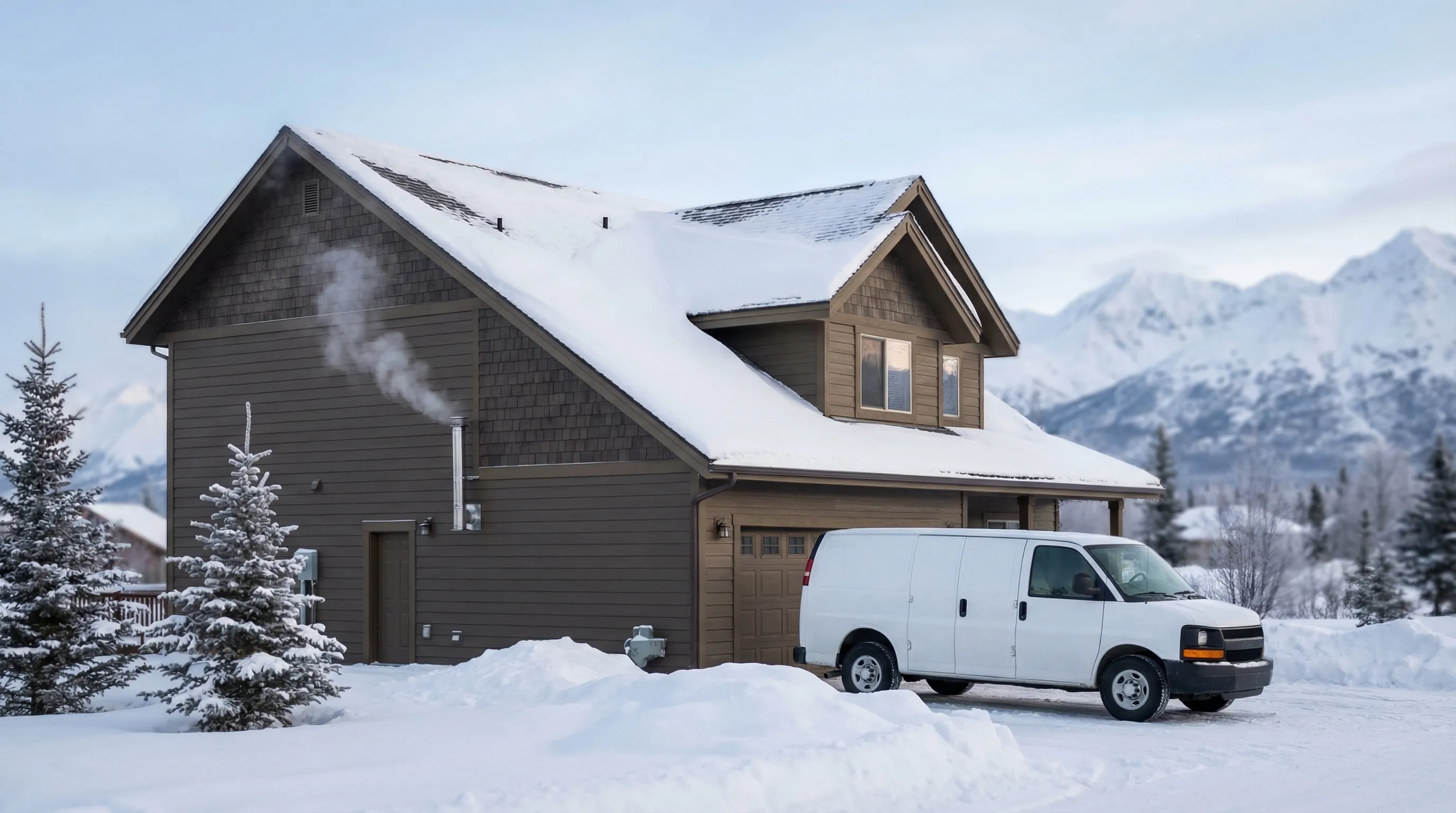
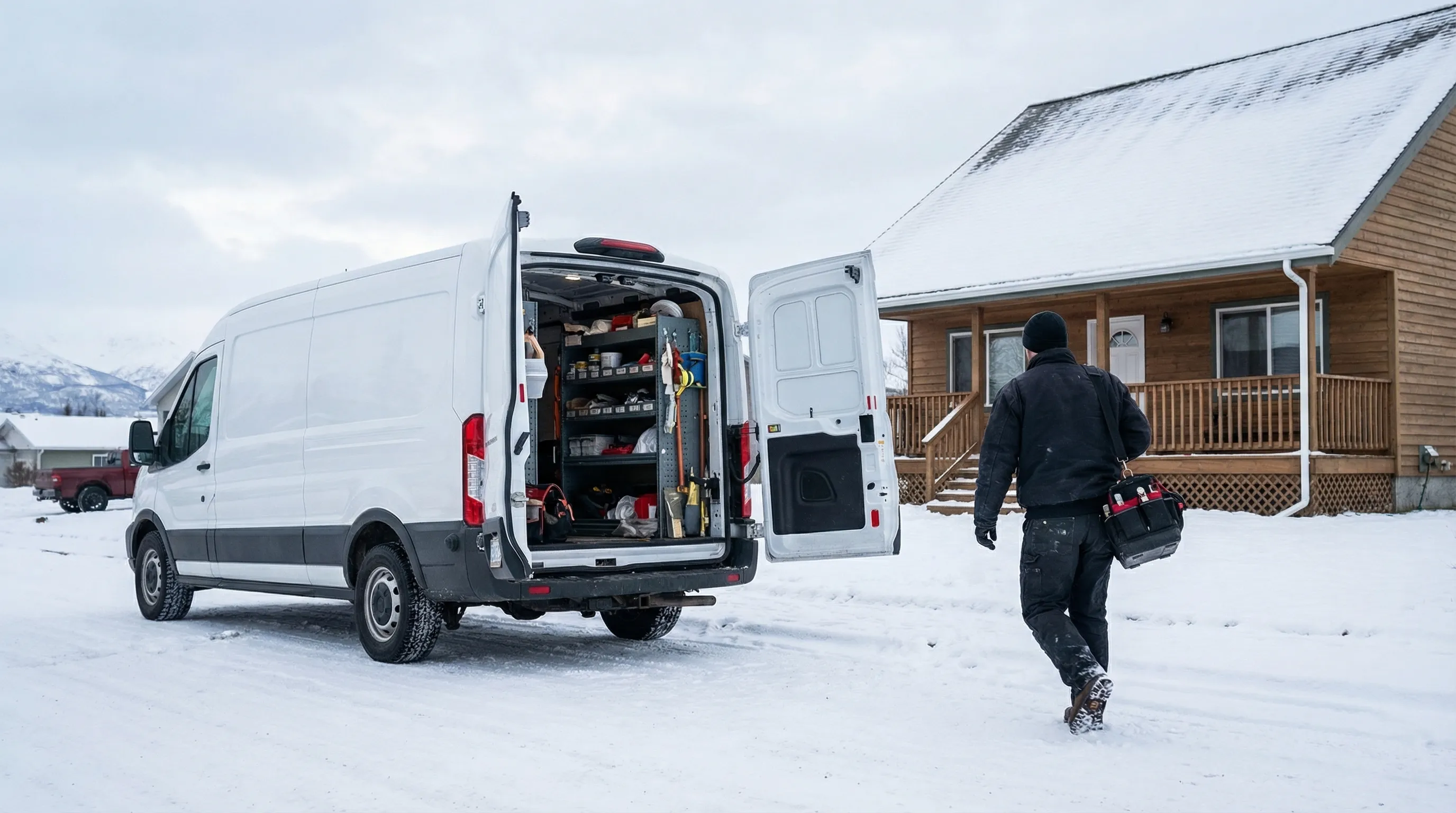
Anchorage's HVAC market operates on a different logic than most American cities. When temperatures drop below -10°F — a routine occurrence from November through March — furnace failure becomes a life-safety issue. Homeowners don't comparison shop during a no-heat emergency at 11 PM in January. They search, they find, they call. That dynamic reshapes the entire competitive landscape: the company that wins the first click wins the job.
Why Standard PPC Campaigns Fail Here
Most HVAC companies running Google Ads in Anchorage make the same structural mistake: they use campaigns designed for Sun Belt markets, where heating is convenience and A/C is survival. In Anchorage, that logic is inverted. Campaigns without aggressive bid adjustments for evening hours in January and February miss the highest-intent traffic. Ads that lead with "affordable pricing" miss homeowners who will pay anything to restore heat before midnight.
A second failure point is keyword structure. Mixing emergency repair keywords ("furnace repair Anchorage tonight") with planned replacement keywords ("high-efficiency furnace installation Anchorage") in the same campaign destroys Quality Score, inflates CPC, and produces landing pages that serve neither searcher. Emergency buyers want a phone number. Replacement buyers want education. Treating them identically bleeds budget.
The city's geography compounds the challenge. Anchorage services not just the city proper but functions as the HVAC hub for Mat-Su Valley, Eagle River, and Kenai Peninsula communities — areas where local HVAC supply is often exhausted. Campaigns that don't geo-target these outlying zip codes leave significant job volume on the table, while campaigns that target them without proper service-radius controls send technicians on 90-minute drives for low-margin jobs.
The Competitor Landscape
Expertise.com lists 81 reviewed HVAC companies in Anchorage, with 55 curated and 18 top picks. The top competitors — Always On Call Mountain Mechanical, McCann Plumbing and Heating (42+ years, Master Plumber certified), and Living Waters Plumbing & Mechanical — all run multi-service operations covering HVAC plus plumbing. This creates a bidding dynamic where HVAC keywords compete against plumbing keywords for the same budget pool. A focused HVAC-only advertiser can outmaneuver these generalists on search relevance and Quality Score.
The most critical competitive window is September through October — the pre-freeze period when homeowners book furnace tune-ups and contractors schedule replacement projects before the ground freezes. Companies that establish dominance in September's planned-service searches build the customer base that generates emergency referrals all winter. Those who wait until the first hard freeze to advertise are paying peak CPCs for already-committed buyers.
JBER adds a layer most local competitors underserve. The 13,000+ active duty personnel and 7,000+ civilians at Joint Base Elmendorf-Richardson have the same heating needs as civilian homeowners — and military families on PCS rotation often need HVAC inspections and certifications on tight timelines. Ad copy mentioning military discounts and VA-friendly financing, geo-targeted to JBER zip codes (99505, 99506), can capture this high-value segment at lower CPC than the city-wide competition.
A winning Anchorage HVAC campaign requires three structurally separate campaigns — each with distinct keywords, bid strategies, ad copy, and landing pages. Collapsing them into one campaign is the most common mistake local advertisers make, and it costs $500–$1,500/month in wasted spend.
Campaign 1: Emergency Repair (Priority Bidding)
Emergency repair is the highest-value campaign in any Anchorage HVAC account. Target these keyword groups:
- No-heat emergencies: "furnace repair Anchorage," "no heat Anchorage," "emergency furnace repair," "furnace not working Anchorage" — $15–$22 CPC
- Specific failure searches: "furnace blowing cold air Anchorage," "furnace making noise Anchorage," "heat pump not working Anchorage" — $12–$18 CPC
- After-hours and weekend modifiers: "HVAC repair Anchorage 24/7," "emergency heating repair Anchorage" — $16–$22 CPC
Bid strategy: Target CPA at $160–$200 with a bid cap of $25. Run call-only ads during evening hours (5 PM–11 PM) November–March. Use automated rules to increase bids by 40% when AccuWeather API temperature drops below 15°F — a tactic that captures the highest-intent moments at scale. Landing page: single phone number, single CTA, load time under 2 seconds (users on mobile in cold cars don't wait).
Campaign 2: Planned Replacement (Lead Nurture)
Replacement campaigns require patience — the sales cycle runs 1–4 weeks. Target homeowners with aging systems:
- System replacement: "furnace replacement Anchorage," "new furnace installation Anchorage," "high-efficiency furnace Anchorage" — $11–$17 CPC
- Rebate and efficiency searches: "Efficiency Alaska rebate HVAC," "energy efficient heating Anchorage," "heat pump installation Anchorage" — $10–$15 CPC
- Age-triggered queries: "furnace over 15 years old," "old furnace replacement," "boiler replacement Anchorage" — $11–$16 CPC
Efficiency Alaska rebates (up to $2,000 for qualifying high-efficiency furnace upgrades) and potential federal energy tax credits reduce the homeowner's net cost significantly — lead with this in ad copy and landing pages. "Upgrade to 96% AFUE with available rebates" converts replacement-stage searchers more effectively than any price-based angle.
Campaign 3: Pre-Season Maintenance (Volume Building)
Maintenance campaigns run September–October with a lower bid ceiling. Target "furnace tune-up Anchorage," "furnace maintenance Anchorage," "HVAC maintenance before winter" at $9–$13 CPC. The goal is not immediate ROI — it's building a customer list before winter. Every maintenance customer who converts is a pre-committed emergency call when their furnace eventually fails. Run on budget of $500–$800/month during the pre-season window only.
Google Partner Agency
We're a certified Google Partner Agency, which means we don’t guess — we optimize withGoogle’s full toolkit and insider support.
Your campaigns get pro-level execution, backed by real expertise (not theory).

Anchorage's HVAC market hides an insight that most local companies miss: the summer cooling window is larger than it appears, and almost no one is advertising for it.
The Underserved A/C Market
Anchorage averages 21 days per year above 65°F, with a July high of 65°F and occasional warm spells reaching 75–80°F. By national standards, this is minimal. But in a city where homes are built for extreme cold — tight insulation, minimal window ventilation, southern-exposure design — a 75°F day creates genuine indoor discomfort. The penetration rate for residential A/C in Anchorage is dramatically lower than any comparable Northern city, which means the market is underdeveloped, not non-existent.
Searches for "air conditioning installation Anchorage" and "ductless mini-split Anchorage" spike sharply each June and July, with CPC at $11–$16 — moderate, because few HVAC companies bother advertising for this. A company willing to run summer A/C campaigns faces almost no PPC competition during the exact window when homeowners are writing checks for cooling systems. Mini-split systems (which provide both heating and cooling) are ideal for the Anchorage market — one campaign angles both summer and winter demand.
The Aging Housing Stock Replacement Wave
Anchorage's median home age is significant: the 1964 earthquake destroyed much of the pre-war housing stock, and the city rebuilt heavily through the 1970s and 1980s. This means a substantial portion of Anchorage's housing stock is now 40–55 years old. Forced-air furnaces from that era have long exceeded their 15–20 year lifespan. The city is entering a replacement wave — not a slow trickle of individual failures, but a structural increase in replacement demand as an entire generation of systems ages out simultaneously.
Key insight: Neighborhood targeting can make replacement campaigns dramatically more efficient. Mountain View, Fairview, Spenard, and Sand Lake contain the highest concentration of 1960s–1980s housing stock. Geo-bid adjustments for these zip codes (+30–50%) on replacement keywords reduce wasted impressions from newer developments in South Anchorage and Midtown where systems are younger.
The Kenai Peninsula connection matters too. Anchorage-based HVAC companies routinely service Kenai, Soldotna, and Homer — a 2.5–3 hour drive south. These homeowners search for Anchorage companies specifically because local Kenai Peninsula HVAC supply is thin. Including "Kenai Peninsula HVAC," "Soldotna furnace repair," and "Homer heating" in a separate geo-targeted campaign at slightly lower bids captures this demand without blending it into city-wide CPL calculations.
Anchorage's HVAC market doesn't forgive generic campaigns. The emergency demand structure, compressed seasonal windows, military base demand segment, and multi-service competitor landscape all require local intelligence that out-of-state agencies simply don't have. MB Adv Agency builds HVAC campaigns designed for Anchorage's climate realities — not templates ported from Phoenix or Houston.
We structure every Anchorage HVAC account with the three-campaign architecture outlined above: emergency repair with temperature-triggered bidding, planned replacement with rebate-focused landing pages, and pre-season maintenance for customer base growth. We geo-target JBER zip codes separately. We daypart emergency campaigns for the evening hours that matter. We track call conversions down to the keyword that generated the call — so you know whether "furnace repair Anchorage 24/7" or "emergency heating Anchorage" is producing the $200 CPL and which is producing the $80 CPL.
Every account we manage includes conversion tracking from the first day, monthly reporting on cost-per-lead by campaign and keyword, and proactive bid adjustments when Anchorage weather patterns shift. When the first hard freeze arrives in October, your emergency campaign is already optimized — not scrambling to catch up. That preparation gap is what separates HVAC companies that dominate winter from those that spend money chasing leads everyone else already captured.
Our PPC management services are built for home services businesses that need leads — not impressions, not clicks, not "brand awareness." View our pricing plans and contact us for a free Anchorage HVAC campaign audit.
Frequently Asked Questions
How much does HVAC PPC cost in Anchorage, and what ROI should I expect?
Anchorage HVAC advertisers typically spend $2,500–$8,000 per month depending on campaign scope. Emergency-focused accounts can run effectively at the lower end; full-funnel accounts covering emergency repair, planned replacement, and pre-season maintenance run at the higher end. Here's what those budgets produce:
At $2,500/month with an average CPC of $14 and a 7% conversion rate, you're generating roughly 12–15 leads per month. Emergency furnace calls in January close at 85%+ — homeowners have no alternative. Planned replacement leads close at 25–40% after a 1–3 week sales cycle. At an average job value of $5,000 (mix of repairs and replacements), a 12-lead month produces $15,000–$25,000 in revenue at a 3:1–5:1 ROAS.
The seasonal structure matters for ROI calculation. December through February produces the highest CPL ($180–$250) but also the highest close rate. October and November produce the lowest CPL ($90–$140) for planned-service campaigns. Budget allocation should reflect this: weight spend toward the pre-winter maintenance campaigns in September–October, then shift to emergency bidding through the winter peak. Don't go dark in the summer — the underserved A/C market delivers leads at $100–$140 CPL with almost no competition. Year-round presence also signals to Google's algorithm that your account is active and relevant, improving Quality Scores that reduce CPC even during peak winter competition.
What keywords should an Anchorage HVAC company prioritize in Google Ads?
Anchorage HVAC keyword strategy differs from national playbooks because emergency intent dominates here. The highest-value keyword groups, in priority order:
- Emergency repair: "furnace repair Anchorage," "no heat Anchorage," "emergency furnace repair Anchorage," "HVAC repair Anchorage 24/7" — $15–$22 CPC, highest intent, target CPA $150–$200
- System replacement: "furnace replacement Anchorage," "new furnace installation Anchorage," "high-efficiency furnace Anchorage" — $11–$17 CPC, 2–4 week sales cycle
- Military / JBER targeting: "military HVAC discount Anchorage," "HVAC service near JBER" — $9–$14 CPC, narrow but high-converting segment
- Maintenance / pre-season: "furnace tune-up Anchorage," "furnace inspection before winter," "HVAC maintenance Anchorage" — $9–$13 CPC, customer acquisition for long-term value
- Kenai Peninsula expansion: "furnace repair Kenai," "HVAC Soldotna," "heating repair Homer AK" — $8–$14 CPC, low competition, steady volume from underserved communities
Negative keywords are equally important. Exclude "DIY furnace repair," "furnace parts," "furnace filter," and all brand names of manufacturers (people searching "Carrier furnace manual" are not buyers). Also exclude "HVAC jobs Anchorage" and "HVAC training" — these waste budget on employment seekers. A well-structured negative keyword list typically reduces wasted spend by 18–25% in the first 60 days of a new campaign.
Match type strategy matters in Anchorage's thin market. Broad match on emergency terms captures natural language variations ("my heat isn't working in Anchorage") that exact match misses — but requires active search term monitoring weekly to catch irrelevant expansions. Phrase match is the safest default for most keyword groups. Exact match is best reserved for your highest-converting, proven emergency terms once you've confirmed their CPL performance over 30+ days of data.