HVAC PPC Clarksville, TN
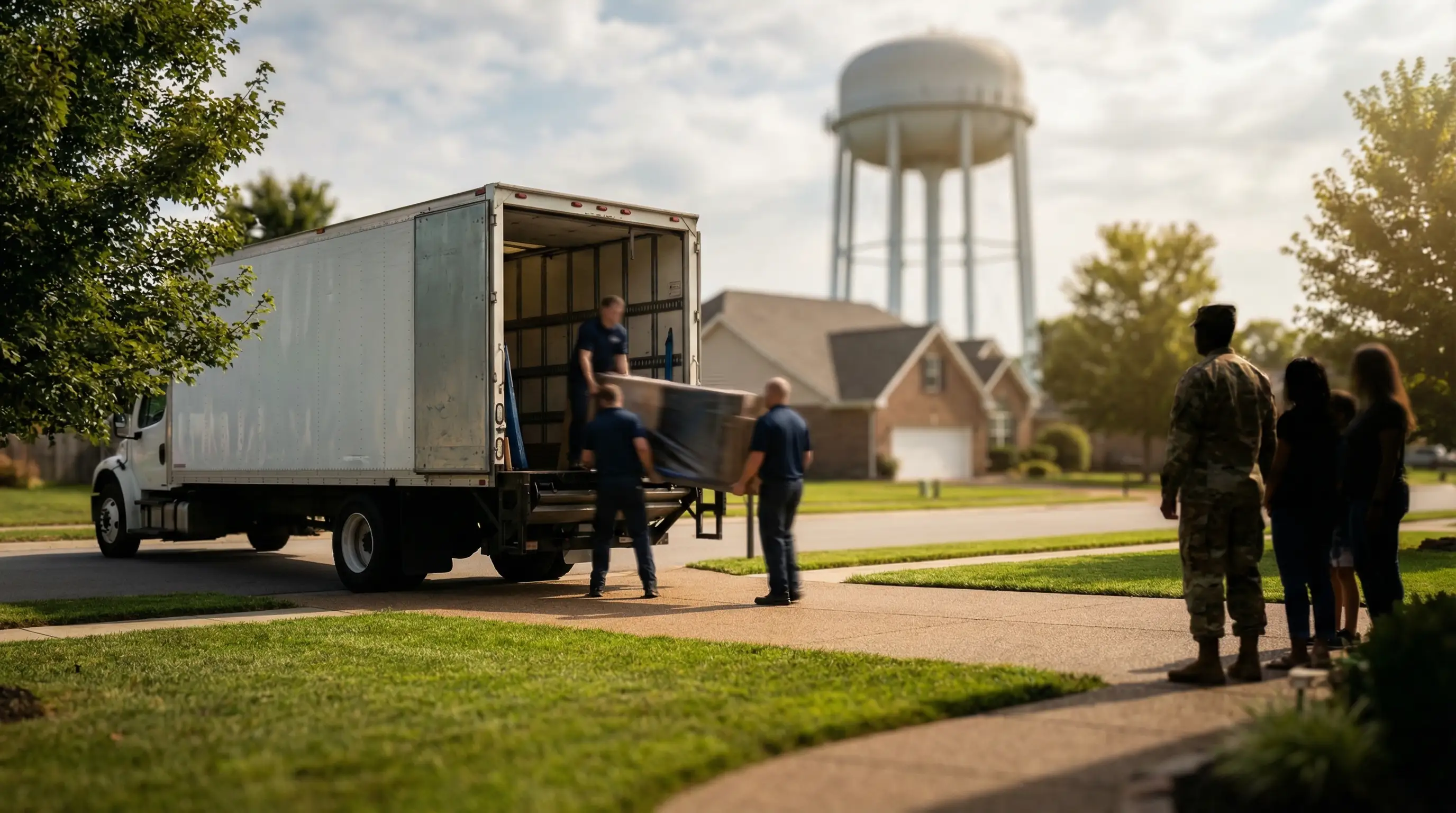
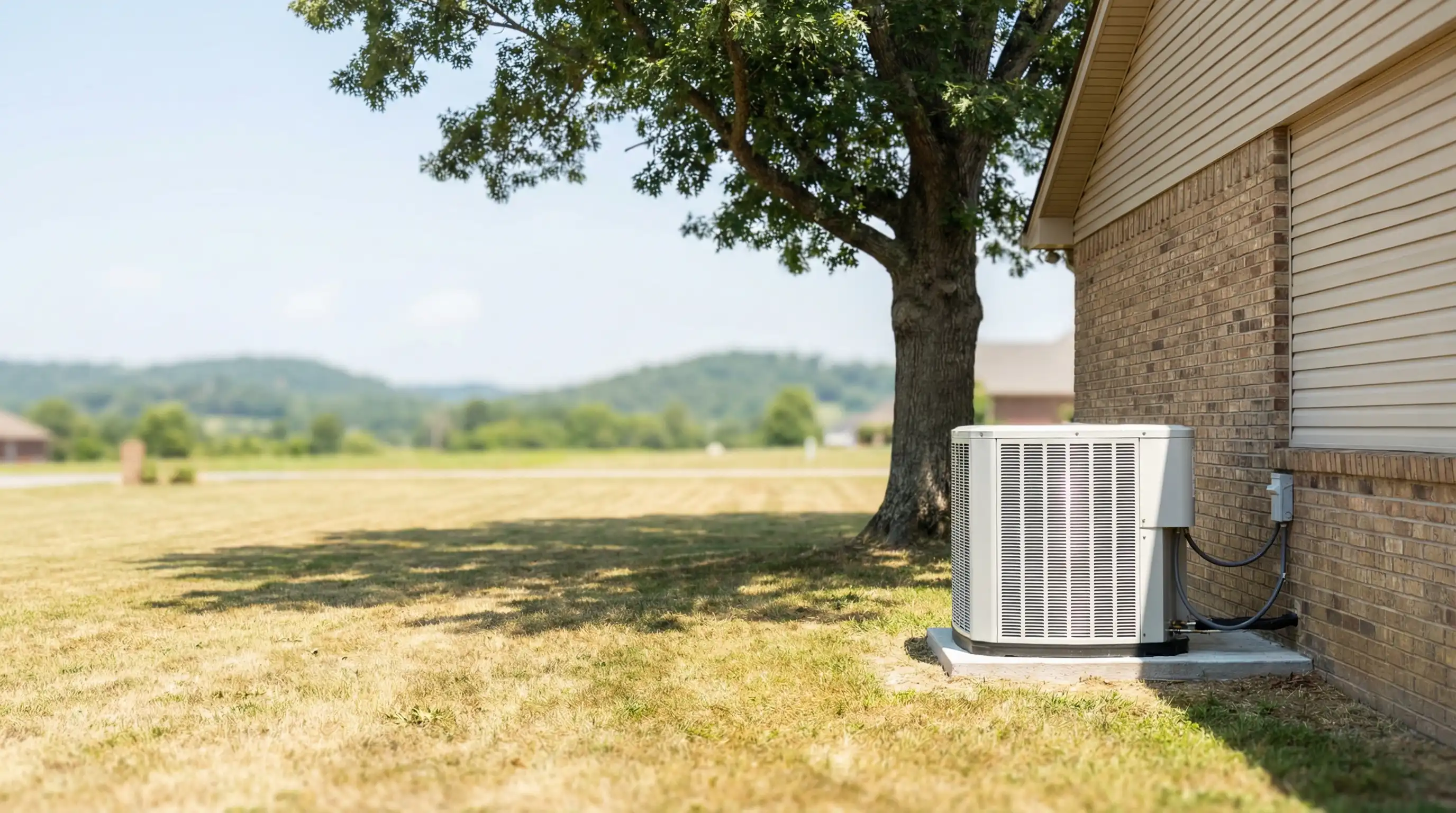
Clarksville HVAC businesses operate in a market shaped by two forces no other mid-sized Tennessee city faces simultaneously: Fort Campbell's year-round military relocation cycles and a humid subtropical climate that pushes heat indexes past 100°F every July. That combination means the demand curve never really flattens — and the companies that own Google Ads in this market own the phone.
Why Do HVAC PPC Campaigns Fail in Clarksville?
Most HVAC companies in Clarksville launch Google Ads with the same template their Nashville counterparts use — and then wonder why cost-per-lead climbs to $200 before they shut the campaign down. The problem isn't the platform. It's a strategy built for a different market.
Clarksville's HVAC market has structural quirks that generic PPC setups don't account for. Fort Campbell's PCS (Permanent Change of Station) cycle creates two annual demand surges — June/July and December/January — that behave nothing like civilian seasonal patterns. An HVAC campaign designed around a standard Southern summer peak misses the entire winter PCS window, where incoming military families discovering Tennessee winters for the first time generate legitimate emergency furnace calls in January.
The Lee Company Problem
Every independent HVAC operator in Clarksville competes against Lee Company — a family-owned regional firm operating since 1944 from 1836 Memorial Drive with a multi-service offering covering HVAC, plumbing, and electrical. Lee Company's brand recognition is genuine and earned over 80 years. When a Clarksville homeowner searches "HVAC company Clarksville TN," Lee Company's presence in every channel — search, LSA, organic, trucks on every major road — creates a default trust that smaller operators fight uphill. Campaigns that don't directly address Lee Company's size advantage in their ad copy and landing pages will always lose on brand perception, regardless of bid levels.
Beyond Lee Company, the competitive field includes One Hour Heating & Air Conditioning, Baggett Heating & Cooling (30+ years, BBB accredited), Action Air Conditioning Service (established 1979, NATE-certified), H&H Heating Air Conditioning & Refrigeration (since 1989), and Ike's HVAC — a veteran-owned operator building credibility in the Fort Campbell community. Expertise.com reviewed 41 active HVAC companies in the Clarksville market and selected 14 top picks. That volume — over 40 competitors reviewed in a metro of 328,000 — is comparable to cities twice Clarksville's size. The auction is more competitive than the market's absolute size suggests.
The Keyword Mismatch That Burns Budget
The most common HVAC PPC failure in Clarksville is bidding on broad maintenance terms year-round instead of rotating budget toward emergency-intent keywords during peak seasons. "AC tune-up Clarksville" at $6–$13/click looks cheap until you realize it converts at 3–4% while "AC not working Clarksville" at $18–$35/click converts at 12–14%. The cheaper keyword costs more per actual customer acquired.
There's also a geographic blind spot in how most campaigns are structured. Clarksville's demand doesn't stop at the city limits. Fort Campbell itself sits 10 miles north in Kentucky, and the surrounding service zone — Robertson County to the south, Dickson County to the southwest, Christian County KY across the state line — represents real households calling for real HVAC service that Clarksville operators routinely miss because their campaigns are ZIP-locked to 37040. Adding "HVAC repair near Fort Campbell" and "HVAC contractor Montgomery County TN" keyword groups without inflating CPC targets the geographic reality of how this market actually works.
The Austin Peay State University rental corridor — dense with property managers responsible for multi-unit residential — generates a consistent stream of emergency HVAC calls that standard residential campaigns ignore entirely. Property managers who go directly to Google when a tenant calls at 9pm need to find your phone number, not a landing page optimized for homeowner replacement research.
- Emergency terms ($18–$35 CPC): convert at 10–14%; highest ROI keyword group
- Replacement research ($14–$28 CPC): longer cycle, higher ticket ($5,000–$12,000 job); worth the patience
- Maintenance terms ($6–$13 CPC): volume campaigns only; don't dominate budget during peak months
- Military-adjacent terms ($12–$26 CPC): undercompeted; "HVAC repair Fort Campbell area" reaches a high-value audience most competitors ignore
Without a Clarksville-specific strategy that accounts for these dynamics — Lee Company's dominance, the dual PCS demand calendar, the geographic service zone, and the keyword intent hierarchy — HVAC companies in this market predictably spend $2,500/month getting 8 leads. The same budget, structured correctly, produces 18–30.
HVAC PPC Strategies That Win in Clarksville
The right HVAC PPC structure for Clarksville runs four distinct keyword campaigns simultaneously, each with its own budget allocation, bid strategy, and landing page. Collapsing everything into one campaign is the single most common setup error — it lets Google average bids toward cheaper, lower-intent clicks and away from the emergency searches that actually generate revenue.
Campaign 1: Emergency & Urgency (40% of budget)
This campaign captures homeowners whose AC stopped working in the middle of a 95°F July afternoon or whose furnace failed during a January cold snap. These users convert within minutes. Target maximized bidding on the highest-intent terms, schedule 24/7 with mobile bid adjustments of +35%, and route all clicks to a landing page that leads with a phone number and "Same-day service available."
- Emergency keywords: "AC not working Clarksville TN," "AC repair emergency Clarksville," "furnace won't turn on Clarksville" — $18–$38 CPC
- After-hours modifiers: "24 hour HVAC Clarksville TN," "HVAC repair near me" (geo-restricted) — $14–$30 CPC
- Military-adjacent: "emergency AC repair Fort Campbell area," "HVAC repair near Fort Campbell gate" — $12–$26 CPC
Campaign 2: Replacement Research (30% of budget)
System replacements are $5,000–$12,000 jobs. Users searching for replacement have a purchase intent higher than nearly any other home services category, but a 3–7 day decision cycle. Use target CPA bidding, serve to homeowners (household income layering), and route to a landing page featuring financing options and brand comparisons. This is where Trane, Carrier, and Lennox brand partnerships pay off in ad copy — homeowners researching replacement respond to manufacturer trust signals.
- Replacement terms: "HVAC replacement Clarksville TN," "new AC unit installed Clarksville," "HVAC system cost Clarksville TN" — $14–$30 CPC
- Brand + install: "Trane AC installation Clarksville," "heat pump replacement Montgomery County TN" — $16–$28 CPC
- Fort Campbell PCS angle: "HVAC inspection for home sale Clarksville," "HVAC system assessment PCS move-out" — $10–$22 CPC
Campaign 3: Maintenance & Seasonal Prep (20% of budget)
Spring AC tune-up campaigns (March–May) and fall furnace check campaigns (September–November) run at lower CPCs with acceptable conversion when timed correctly. Run these campaigns on a strict schedule: activate April 1, pause June 1; activate September 15, pause November 30. Year-round maintenance bidding wastes budget during emergency peak months when those dollars would generate far more revenue in Campaign 1.
- Spring: "AC tune-up Clarksville TN," "spring HVAC maintenance Clarksville," "air conditioner check-up near me" — $6–$13 CPC
- Fall: "furnace inspection Clarksville TN," "furnace tune-up before winter," "heating system check-up Clarksville" — $7–$14 CPC
Campaign 4: Brand Defense & Competitor Conquest (10% of budget)
If you're not bidding on your own brand name, Lee Company or Action Air is. Brand defense costs $4–$8/click and protects the highest-converting traffic you'll ever get. Competitor conquest — bidding on Lee Company, Baggett, and One Hour branded terms — captures users who are comparing options. These are not steal-the-customer plays; they're interception plays for users already in the decision phase.
Bid adjustments that matter in this market: +20–30% for mobile (emergency searches happen on phones, not desktops); +15% for ZIP codes 37040–37043 (core Montgomery County population concentration); +25% during June–July (PCS surge doubles demand without proportionally increasing supply of HVAC technicians). Dayparting should ensure maximum impression share during 8am–8pm daily, with emergency campaigns running 24/7 on reduced budgets overnight.
Landing pages are where most Clarksville HVAC campaigns lose money they never recover in the auction. A landing page that talks about "quality service and fair prices" converts at 3%. A landing page that opens with "Clarksville's humidity-driven AC emergencies require same-day response — call now for a technician today" converts at 9–12%. The page must mirror the intent of the keyword group that sent the visitor there. Emergency clicks go to emergency pages. Replacement research clicks go to financing-and-specs pages. Maintenance clicks go to seasonal deal pages. One generic page for all three destroys campaign ROI.
Google Partner Agency
We're a certified Google Partner Agency, which means we don’t guess — we optimize withGoogle’s full toolkit and insider support.
Your campaigns get pro-level execution, backed by real expertise (not theory).

What Market Trends Should Clarksville HVAC Businesses Know?
The data point that reframes Clarksville's HVAC market is this: Fort Campbell processes approximately 10,000–15,000 household PCS moves annually. Every single one of those incoming families — often arriving from bases in California, Washington state, or Hawaii — encounters Middle Tennessee's humid subtropical climate as if it were a new phenomenon. Heat index regularly exceeds 100°F July through early August in Clarksville's Cumberland River basin. The HVAC demand this creates is not optional-discretionary; it's survival-level necessity for people who have never experienced this particular combination of heat and humidity.
The Two-Surge Calendar That Civilian Markets Don't Have
Standard HVAC markets have one seasonal peak: summer. Clarksville has two peaks anchored to the military calendar, and the second one — December/January — is invisible to most outside operators. The Army issues PCS orders on a fiscal year calendar that concentrates winter transfers in January. Incoming families discovering furnace issues in Montgomery County in January represent demand that doesn't appear in any national HVAC seasonality model. Clarksville HVAC companies that run aggressive emergency campaigns in January capture leads their competitors are ignoring entirely, at CPCs that are 30–40% lower than the June–July peak because auction competition hasn't caught up to the reality of winter PCS demand.
The spring storm season adds a separate demand layer. Middle Tennessee sits at the southern edge of Dixie Alley — the tornado and hail corridor tracking through the region March through May. Power surges from lightning strikes and severe weather events damage HVAC control boards, capacitors, and compressors. A severe thunderstorm event in Clarksville generates HVAC service search spikes within 2–4 hours as homeowners discover storm-damaged systems. Campaigns that maintain impression share through storm season — even at reduced maintenance budgets — capture a demand spike that purely winter/summer-focused schedules miss.
Homeownership + Aging Stock = Replacement Cycle Acceleration
Clarksville's 55.6% homeownership rate combined with median property values rising 11.6% year-over-year creates a specific HVAC market dynamic: homeowners with appreciating assets are more willing to invest in system replacement when the alternative is a degraded home-sale outcome. HVAC systems installed during Clarksville's 2005–2015 construction boom are now 10–20 years old — squarely in the replacement window. This isn't uniform market demand; it's a replacement cycle hitting a cohort of homes simultaneously, creating above-baseline replacement volume that will persist through 2028–2030 as the 2008–2018 construction inventory ages into the same window.
The Austin Peay State University corridor — approximately 11,000 students in downtown Clarksville and surrounding rental neighborhoods — generates property manager demand with a different profile than homeowner calls. Property managers who handle multiple units call for HVAC service more frequently, have less price sensitivity on emergency calls (because tenant comfort is a lease-compliance issue), and respond strongly to accounts with commercial invoicing and priority scheduling. HVAC companies that build a property manager client segment through PPC earn recurring revenue that survives beyond a single homeowner's ownership cycle.
One more Clarksville-specific pattern: the Sango Road and Rossview corridors in the northwest quadrant of Montgomery County are among the fastest-growing residential areas in Tennessee. Newer homes in these subdivisions have systems installed in the 2018–2024 window — too new for replacement, but entering the first maintenance contract window. Targeting these ZIP codes (37043) with maintenance and tune-up campaigns at lower CPCs builds the customer relationship before the inevitable replacement conversation in 2030–2035. The CPC investment now costs a fraction of acquisition during the replacement surge.
Running HVAC PPC in Clarksville Requires a Specialist, Not a Template
A Fort Campbell PCS surge looks nothing like a Nashville summer peak. A Clarksville competitor landscape anchored by Lee Company's 80-year brand requires a different positioning strategy than markets where no single operator has that kind of entrenchment. Property manager emergency calls from the Austin Peay rental corridor convert on different criteria than homeowner replacement research. Generic HVAC PPC templates — even well-designed ones built for comparable Southern cities — leave money on the table in Clarksville because they can't account for the specific mechanics of a military-garrison market.
MB Adv Agency works with home services companies in military-adjacent markets and understands how PCS calendar dynamics, USAA insurance concentration, and Fort Campbell community networks affect the conversion path. We build Clarksville HVAC campaigns around four distinct campaign structures, seasonal budget rotation tied to the military calendar, and landing pages that speak to both the urgency of a Tennessee summer emergency and the deliberate research process of a homeowner planning a $9,000 system replacement.
The Clarksville HVAC companies currently spending $2,000/month and getting 10 leads aren't in a bad market — they're running a bad setup. The market is active, the demand is real, and the window to capture share before larger operators build more presence is right now. See our pricing or learn how we structure HVAC campaigns for operators ready to take the lead in their market.
Frequently Asked Questions
How much should an HVAC company in Clarksville budget for Google Ads?
HVAC companies entering Clarksville PPC typically see their best results starting at $1,800–$2,800/month on Google Search, which generates 18–30 leads per month at a blended cost-per-lead of $65–$145. The wide CPL range reflects the keyword mix: emergency-intent clicks at $18–$35 CPC convert at 10–14% and produce leads at $130–$180 each; maintenance searches at $6–$13 CPC convert at 4–6% and produce leads at $100–$325 each. Emergency campaigns are more expensive per click but cheaper per lead. Starting budgets below $1,500/month in a market with 40+ active HVAC competitors create impression-share problems — Google doesn't allocate enough frequency to your ads to build the consistent visibility that emergency-intent searches require. The goal isn't to appear occasionally; it's to be the first result every time a Clarksville homeowner's AC stops working on a July afternoon.
Budget seasonality matters more in Clarksville than in most markets. Allocate +35–45% above baseline during June–August (Tennessee summer peak plus Fort Campbell summer PCS surge) and +15–20% during December–January (winter PCS window and cold-snap furnace emergencies). February–May and September–November are appropriate for maintenance-focused campaigns at reduced spend. An annual budget of $24,000–$32,000 deployed with this seasonal weighting will produce substantially better results than the same amount spread flat across 12 months, because it concentrates spend during the periods when intent is highest and your competitors are most likely to outbid you if you're absent.
Local Services Ads (LSA) add $400–$800/month but provide the Google-screened badge that builds trust in high-value replacement searches. HVAC companies that run both Search Ads and LSA simultaneously capture two separate positions on the results page — the LSA box and the standard search ad — and increase overall market presence beyond what either format provides alone.
What makes Clarksville's HVAC PPC market different from other Tennessee cities?
Two factors make Clarksville structurally distinct from Nashville, Knoxville, or Chattanooga in ways that materially affect how HVAC PPC campaigns should be built. First, Fort Campbell's Permanent Change of Station cycle creates year-round HVAC demand anchored to the military calendar, not just the weather calendar. Incoming military families need HVAC system assessments year-round — in June because they're arriving into a Tennessee summer they've never experienced, and in January because they're arriving from warmer duty stations to discover what a Middle Tennessee winter feels like. Standard seasonal models don't capture this. Second, Clarksville's CPC environment trades at roughly 1.4–2.0x national home services baselines rather than the 2.5–4x premium typical of Nashville, which means HVAC operators in this market can achieve competitive impression share at starter budgets that would be insufficient in the state capital.
The veteran-owned business angle is also uniquely potent in Clarksville. Operators like Ike's HVAC have demonstrated that authentic military community credibility — veteran discounts, PCS-specific service packages, familiarity with base housing requirements — resonates strongly in Fort Campbell-adjacent neighborhoods. Ad copy that speaks specifically to military families (PCS move-in HVAC inspection, system documentation for home sales, rapid assessment before the report date) performs measurably better in ZIP codes 37042 and 37043 than the same generic copy deployed across the full metro area. The specificity is the strategy: Clarksville rewards campaigns that acknowledge the market's unique character rather than treating it as a generic Southern city of 180,000.
Finally, Lee Company's multi-service dominance creates an unusual competitive structure. Because Lee Company handles HVAC, plumbing, and electrical, their dispatchers are prioritizing across three service types simultaneously. During peak periods, their HVAC response time creates gaps that smaller operators with dedicated HVAC technicians can consistently outperform — and ad copy that leans into same-day response windows captures the homeowner who can't wait three days for Lee Company's next available slot.