HVAC PPC Rockford, IL
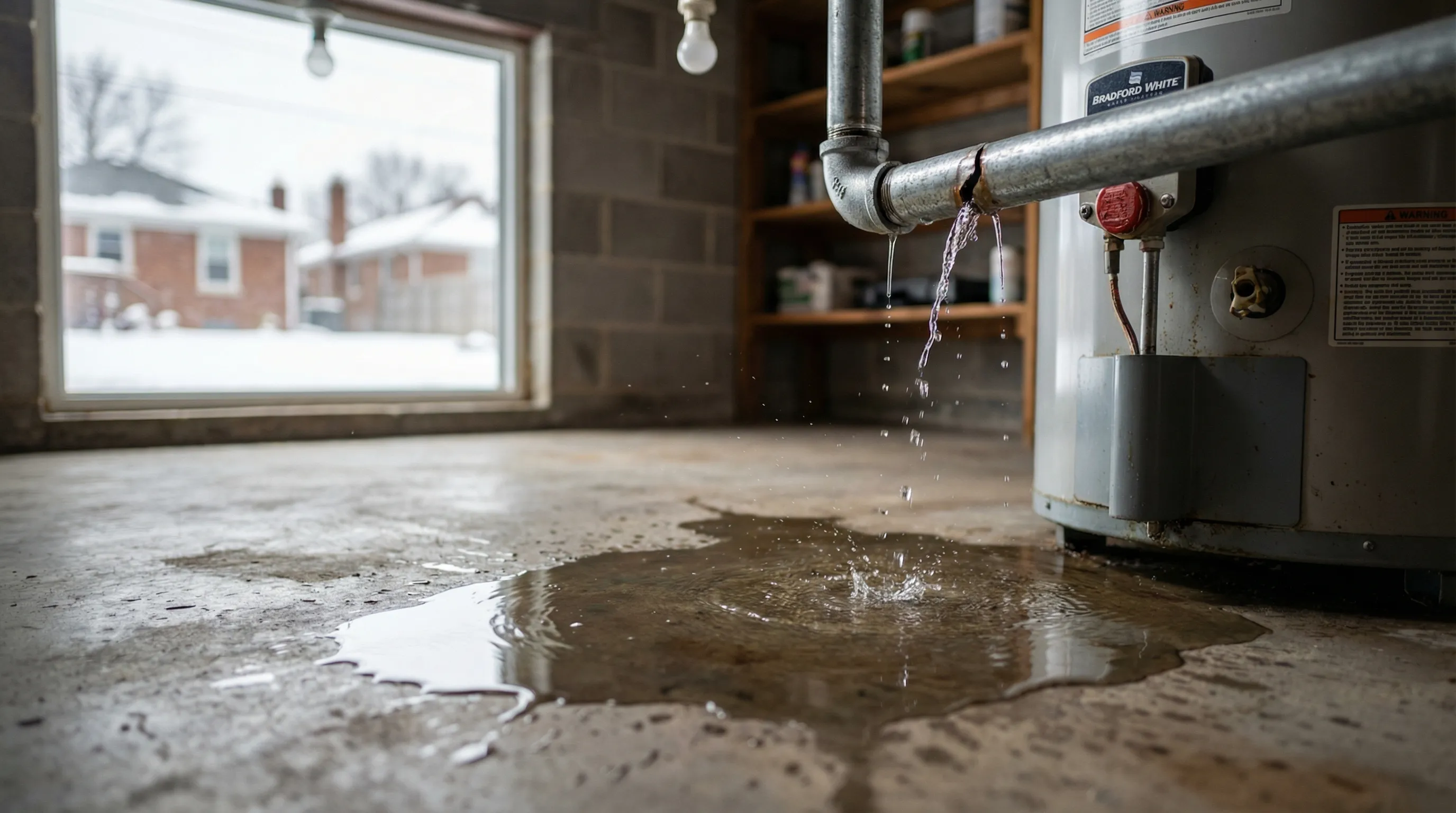
Rockford averages 28 inches of snow per year, January lows near 13°F, and polar vortex intrusions that drive wind chills to -30°F — conditions that turn furnace emergencies into the highest-converting PPC events in the local home services market. With no dominant single advertiser in Rockford's HVAC paid search landscape, a $1,500–$2,500 monthly budget can realistically own the top of results at a time when homeowners are calling the first number they see.
Why Do HVAC PPC Campaigns Fail in Rockford, IL?
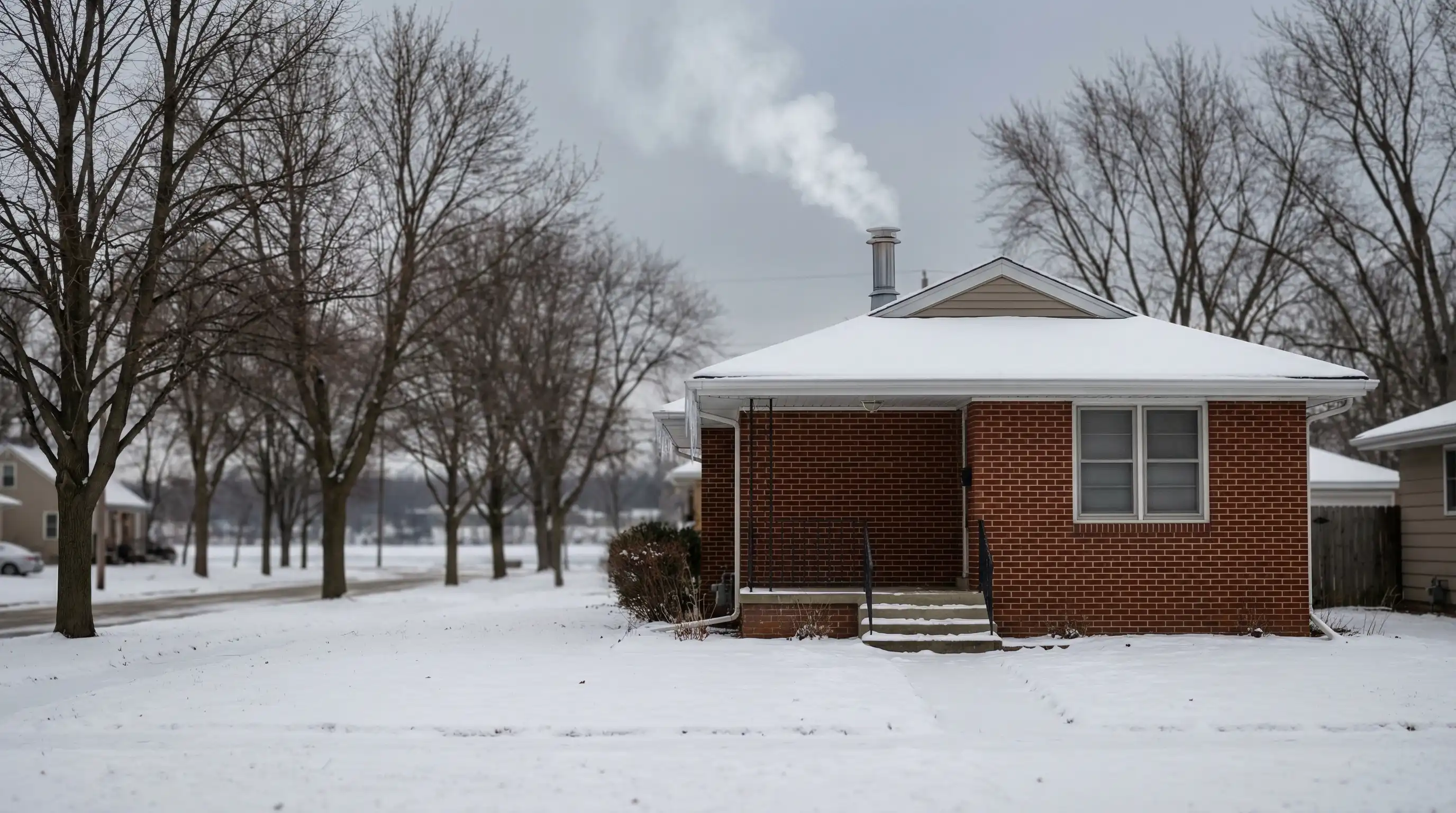
Rockford is a city of two emergency seasons. January and February bring furnace crises — polar vortex events push wind chills to -30°F to -40°F, and the city's aging housing stock (median property value: $129,000) is loaded with furnace systems 15–25 years old. July and August bring AC emergencies, when heat index values climb past 100°F in the Rock River valley's humid air. Between those two peaks sits a tight 90-day replacement window — May through September — when every HVAC contractor in the market competes for the same install jobs.
Most Rockford HVAC contractors run the same campaign, every month, with the same bids and the same ad copy. That approach misreads the market entirely. A flat-budget, always-on campaign that treats a January polar vortex like a September tune-up call wastes money when conversion rates are at their lowest and bleeds budget when they're at their highest.
The Seasonal Split Problem
The challenge isn't that Rockford is a small market — it's that the market behaves like two completely different markets depending on the season. Emergency searches in January convert at 14–20%; planned replacement searches in June convert at 5–8%. An undifferentiated campaign flattens that gap and charges you the same bid for a high-urgency pipe-freezing emergency as for a casual "HVAC maintenance Rockford" browser. Campaigns that separate emergency intent from planned intent — and budget accordingly — see CPL reductions of 30–40% on emergency leads.
The second failure point is geography. Rockford's HVAC market doesn't stop at city limits. Loves Park (pop. ~23,000), Machesney Park (~23,000), and Belvidere (~25,000) together represent a homeowner base nearly as large as Rockford's own. Contractors who geo-fence to 61101–61109 only are writing off nearly half the metro's high-intent homeowners. Suburban homeownership rates in Machesney Park and Loves Park exceed city averages, meaning higher-value replacement jobs cluster in the suburbs most advertisers skip.
The National Chain Displacement Effect
National brands — One Hour Heating & Air, Home Depot Home Services, Angi/HomeAdvisor — occupy paid search real estate without closing the work locally. They collect the click, aggregate the lead, and farm it to a regional dispatcher. In a market like Rockford, that means a homeowner who clicked on a national ad may wait 6–8 hours for a call-back while local contractors with 1–2 hour response capacity sit a few positions below in the auction. Local HVAC operators who make response time the explicit message — "Rockford furnace repair — we arrive within 2 hours" — don't just convert better; they displace national aggregators on the metric that matters most during emergencies.
There's also the Hispanic market gap. Rockford's population is 21.6% Hispanic, concentrated in the Near South and Southeast Side zip codes 61101, 61102, and 61104. Spanish-language HVAC PPC in Rockford is essentially nonexistent. No local contractor appears to be running Spanish-language emergency campaigns. During a furnace failure, a Spanish-speaking homeowner searches and finds nothing targeted to them — they call whoever shows up in English, often a less-qualified result. This is an open acquisition channel at CPCs 30–50% below English-language terms.
The final recurring failure: no Google LSA activation. Plumbing and HVAC are the two highest-trust LSA categories. The Google Guarantee badge tells homeowners the contractor is licensed, insured, and background-checked. In a medium-competition market like Rockford, where no single HVAC operator has built a dominant review moat, the LSA badge creates an outsized trust signal at $500–$1,500/month — a fraction of standard search spend.
HVAC PPC Strategy Built for Rockford's Climate
The structural foundation of a Rockford HVAC PPC campaign is campaign separation: emergency campaigns and planned campaigns are distinct units with different bids, different budgets, and different messaging. They do not share a budget. When a polar vortex hits in January and furnace failure searches spike 200–400%, the emergency campaign has headroom to scale. When it's a quiet October and organic tune-up searches are moderate, the planned campaign runs at baseline spend without cannibalizing emergency capacity.
Emergency campaign targeting focuses on high-urgency, high-CVR keyword clusters:
- Furnace emergency cluster: "furnace repair Rockford IL," "emergency heating repair Rockford," "furnace not working Rockford," "furnace stopped working Rockford" — CPC $8–$16; CVR 14–20%
- AC emergency cluster: "AC repair Rockford IL," "air conditioning not working Rockford," "emergency AC service Rockford" — CPC $8–$15; CVR 14–18%
- Replacement cluster: "furnace replacement Rockford," "HVAC replacement Rockford Illinois" — CPC $7–$12; CVR 6–9%
- Broad local intent: "HVAC companies Rockford Illinois," "heating and cooling Rockford" — CPC $6–$11; CVR 5–8%
- Spanish-language: "reparación calefacción Rockford," "HVAC Rockford español" — CPC $3–$7; CVR 12–18% (no meaningful competition)
Planned-service campaigns run at lower bids and focus on replacement and installation terms. These are desktop-weighted campaigns — homeowners researching system replacements are not usually doing it from their phone while standing in 10°F weather. Landing pages for planned-service clicks should lead with financing options, system comparison guides, and estimated replacement timelines, not 24/7 emergency phone numbers.
Google LSA as the Trust Anchor
Google Local Services Ads are not a supplemental channel for Rockford HVAC — they are the highest-ROI unit in the campaign mix. The Google Guarantee badge reduces CPL by 30–50% versus standard search in medium-competition markets, because it occupies the #0 position above all standard paid results and carries a trust signal no ad copy can replicate. LSA budget of $500–$1,500/month in Rockford delivers an estimated 8–20 verified leads per month at $45–$75 per lead — well below the $60–$100 CPL target for standard search.
Geographic targeting for all campaigns covers: all Rockford zip codes (61101–61109), Loves Park (61111), Machesney Park (61115), Belvidere (61008), Rockton (61072), Roscoe (61073), and Winnebago (61088). A 20-mile radius from Rockford city center captures outlying homeowners who prefer local contractors over distant regional services. Spanish-language campaigns target 61101, 61102, 61104 specifically — the highest-density Hispanic homeowner concentration in the metro.
Budget allocation: 60% Search (split between emergency and planned campaigns); 25% LSA (Google Guarantee anchor); 15% Remarketing (website visitors who didn't call — valuable for replacement leads who are still in research phase). During polar vortex events, emergency campaign budget scales dynamically — this is not a set-and-forget campaign; it requires active budget management during weather emergencies.
Landing pages need four elements above the fold: a click-to-call phone number (largest element on mobile), "Same-day service" or "24/7 emergency available" confirmation, a Google Reviews rating display showing 4.4+ stars, and a service area list confirming Rockford and named suburbs. Financing information for system replacements belongs below the fold but must be present — many Rockford homeowners facing a $3,000–$5,000 furnace replacement need financing options to convert.
Google Partner Agency
We're a certified Google Partner Agency, which means we don’t guess — we optimize withGoogle’s full toolkit and insider support.
Your campaigns get pro-level execution, backed by real expertise (not theory).

What Market Trends Should Rockford HVAC Businesses Know?
Rockford's HVAC market has a structural advantage that most local contractors underestimate: it has no dominant advertiser. Chicago's HVAC market is owned by Four Seasons Heating — they have built a PPC moat over two decades that is effectively unassailable for new entrants. Rockford has no equivalent. No single Rockford HVAC company has consolidated the market through paid search. Northern Illinois Heating/Cooling, WE Company of Rockford, Allen Heating & Cooling, and Total Plumbing & Heating are all established but none runs a sophisticated, full-coverage campaign with LSA, emergency event scaling, and suburb-specific landing pages. The market is genuinely winnable.
The IRA Tax Credit Demand Spike
The Inflation Reduction Act's residential energy efficiency credits (extended and expanded in 2022) created a consumer demand wave for heat pump and mini-split systems that Rockford's HVAC market has barely acknowledged in its advertising. Homeowners can claim 30% federal tax credits on qualifying heat pump installations — on a $5,000 heat pump system, that's a $1,500 credit. Very few Rockford HVAC advertisers have built campaigns targeting "heat pump installation Rockford" or "mini-split Rockford IRA rebate." The CPC for these terms is low because the competition is near-zero locally, and the conversion value is high — these are $4,000–$8,000 installation jobs.
The broader market context matters here: Rockford's median property value of $129,000 reflects a housing stock that is aging but still occupied by long-tenure homeowners. Production workers and manufacturing employees — 12.6% of the local workforce, more than double the national rate — tend to own their homes and stay in them. They're not flipping; they're maintaining. A furnace that fails in a 1960s bungalow in the Near North Side isn't being replaced with the homeowner moving — it's being replaced by someone who plans to be in that house for another 20 years. That makes replacement customers highly valuable beyond the initial job: they'll need the replacement serviced, and they'll call the same contractor for the next emergency.
The Commercial HVAC Gap
Rockford's industrial corridor — small manufacturers, precision machining shops, aerospace suppliers along Auburn Street and Kishwaukee Street — represents a commercial HVAC opportunity that essentially no local SMB advertiser targets with dedicated PPC. Commercial HVAC maintenance contracts at small manufacturing facilities are high-value recurring revenue: a 5,000 sq ft manufacturing floor might need 2–4 HVAC service visits per year at $300–$600 per visit. A single commercial client relationship generates more annual revenue than 3–4 residential emergency calls. Yet searches for "commercial HVAC Rockford" and "HVAC maintenance contract Rockford industrial" have near-zero paid competition. This is a campaign that could run at $200–$400/month and return 5–8 commercial inquiries per month.
The seasonal revenue breakdown illustrates why commercial targeting is a stabilizing strategy:
- December–February: Residential emergency peak — highest CVR, highest CPCs; emergency campaigns at full budget
- May–September: Replacement and install window — planned campaigns, IRA heat pump demand; commercial installs
- October–November / March–April: Shoulder seasons — tune-up campaigns, commercial maintenance contract renewals, lower CPCs
- Year-round commercial: Small manufacturer HVAC maintenance contracts — $1,500–$2,400/year per client, weather-independent revenue
The seasonal rhythm reinforces this opportunity: Rockford's HVAC market has a compressed operating window from May–September for new installs and replacements. Contractors who fill that window with commercial maintenance work — which doesn't have the same weather-dependency as residential emergency calls — stabilize revenue through the shoulder seasons when residential lead volume drops. The $1,500–$2,500/month starter budget for residential campaigns, combined with a $200–$400/month commercial targeting campaign, covers both market opportunities within a manageable spend.
Why Rockford HVAC Companies Need a Local PPC Partner
Running effective HVAC PPC in Rockford means knowing when to scale, not just how to bid. During a January polar vortex — when furnace emergency searches spike 200–400% in 48 hours — a campaign managed by a national agency that isn't watching the Rockford forecast loses the peak conversion window. The same is true in reverse: a campaign that doesn't pull back bids after the cold snap passes burns budget at elevated CPCs against declining search intent.
MB Adv Agency manages HVAC PPC campaigns with active weather-triggered budget management — monitoring Rockford's forecast data and adjusting emergency campaign bids and budgets before peak demand hits, not after. That preparation is the difference between a $60 CPL during a polar vortex and a $110 CPL from a campaign that arrived late to the auction.
For Rockford HVAC contractors ready to own their market, the starting point is understanding where the gaps are — and there are clear ones: Google LSA is unclaimed, Spanish-language campaigns are empty, and the IRA heat pump opportunity is untouched. Those three channels alone represent a meaningful share of unconverted demand in this market.
See what an optimized Rockford HVAC campaign looks like at mbadv.agency/ppc-pricing, or explore our lead generation approach for home services contractors.

Frequently Asked Questions
How much should a Rockford HVAC company spend on Google Ads?
A Rockford HVAC company running a properly structured campaign needs a minimum of $1,500–$2,500 per month in ad spend to cover the core metro and key suburbs (Loves Park, Machesney Park, Belvidere). At that spend level, a well-optimized campaign targeting both emergency and planned-service searches generates 15–25 qualified leads per month at a CPL of $60–$100 — well below the national Home & Home Improvement benchmark of $90.92 (WordStream 2025). The budget splits as follows: 60% to Search campaigns (emergency + planned), 25% to Google Local Services Ads (LSA), and 15% to remarketing. The LSA allocation is non-negotiable in this market — it delivers the lowest CPL of any channel ($45–$75 per verified lead) while the Google Guarantee badge creates trust signals no ad copy can replicate. During January–February polar vortex events and July–August heat emergencies, emergency campaign budgets should scale up dynamically — these are the highest-CVR windows in the HVAC calendar, with emergency searches converting at 14–20% versus the 5–8% baseline for planned-service queries. Scaling into those windows with pre-built campaigns, rather than reacting to them, is the single highest-ROI tactic available to Rockford HVAC advertisers.
For context: at $1,500/month in ad spend, a campaign generating 15 leads at $100 CPL needs to close 1 furnace replacement ($3,000–$5,000 job) to break even on the month. Most HVAC contractors close 20–35% of qualified leads — meaning 3–5 jobs per month from a properly run $1,500 campaign. Scaling to $2,500/month improves lead volume without proportionally increasing CPL, because Google's machine learning algorithms optimize more effectively with higher data volume.
Contractors who should consider spending above $2,500/month: those adding commercial HVAC targeting (additional $200–$400), Spanish-language campaigns (additional $300–$500), or mini-split/heat pump campaigns targeting IRA tax credit demand (additional $200–$400).
When is the best time to run HVAC PPC campaigns in Rockford?
HVAC PPC in Rockford runs year-round, but the budget allocation shifts dramatically by season. The two highest-conversion windows are December–February (furnace emergency peak, when polar vortex events drive search spikes of 200–400%) and July–August (AC emergency peak, when heat index values exceed 100°F). During these windows, emergency campaigns should run at full budget with elevated bids — CVR reaches 14–20%, making every click significantly more valuable than at other times of year. The second tier of activity is the shoulder seasons: October–November for pre-winter furnace tune-up campaigns and pre-season furnace replacement messaging, and May–June for pre-summer AC installation and heat pump campaigns. Budget during shoulder seasons can drop to $1,000–$1,500/month while still maintaining qualified lead flow at lower CPL. The one mistake Rockford HVAC contractors make is pausing all campaigns in shoulder seasons — September is actually a low-competition, high-ROI window where fall maintenance messaging converts well against a thinner competitive field.
Two additional seasonal tactics specific to Rockford: first, build storm contingency campaigns before spring (April–May). While HVAC storm damage is less common than roofing, high-wind and severe storm events do damage outdoor AC condensers and HVAC intake components. A pre-built "storm damage HVAC repair Rockford" campaign activates within hours of a weather event. Second, activate heat pump and mini-split campaigns in April, before installation season begins. IRA tax credit awareness peaks in spring when homeowners are planning renovation projects — capturing these leads before the summer emergency rush begins delivers lower CPCs and higher-quality planned-install leads.