HVAC PPC Stamford, CT
Stamford's housing stock — 33% built in the 1940s and 1960s, median home value $773,803 — is one of the most reliable HVAC replacement pipelines in Connecticut. Aging systems in high-value homes, a climate that alternates between 18°F January lows and 85°F July highs, and 11 active competitors curated by Expertise.com from a field of 40 create a market where the HVAC contractor with the best PPC campaign owns the highest-urgency, highest-ticket repair and replacement calls before organic rankings have time to matter.
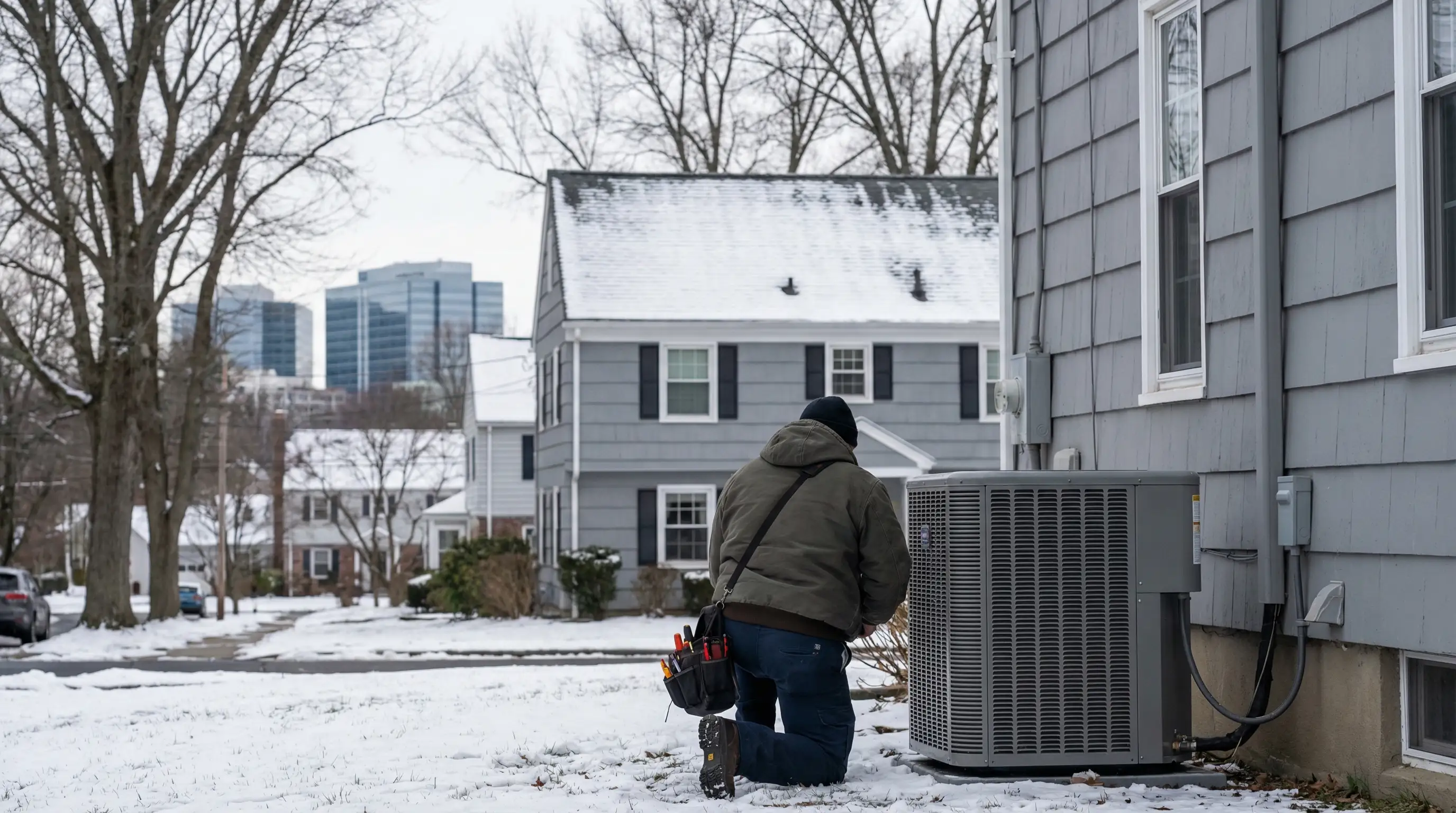
Why Do HVAC PPC Campaigns Fail to Capture Stamford's Emergency and Replacement Market?
HVAC PPC failure in Stamford follows a predictable pattern: campaigns built for moderate competition markets that encounter a 10°F January night and collapse under the urgency they weren't structured to capture. The core problem is campaign architecture — specifically, the failure to separate emergency repair intent from planned replacement intent. These are different searches, different buyer states, and different conversion timelines. A homeowner typing "furnace broke Stamford CT" at 11 PM needs a same-day call response and an ad that says "Emergency HVAC — Same-Day Stamford." A homeowner typing "new furnace installation Stamford CT" in October is comparing quotes and wants credential and warranty information. The same ad creative cannot convert both — and campaigns that run a single HVAC campaign for all search types produce mediocre CPLs across both intent categories.
The competitive field in Stamford is well-established. Expertise.com curated 11 top picks from 40 reviewed HVAC contractors (April 2026) — a moderately generous selection ratio signaling that the market has depth and brand recognition at the top tier. Key operators include SolvIt (Norwalk), the largest multi-service provider in Fairfield County; Rozmus Plumbing and Heating (40+ years, Stamford); JNR Plumbing (120 combined years of experience); and Air Solutions Inc. (55+ employees, 20 years, Stamford). These are multi-decade operations with review volume, referral networks, and brand name recognition that new or PPC-inactive operators cannot match organically.
The Equipment Aging Problem and the Replacement Window
Stamford's 33.58% housing stock from the 1940s–1960s represents the primary HVAC replacement cohort. These homes originally installed boilers, steam radiators, and early forced-air furnaces that have been replaced once or twice since — and the second or third replacement generation is now aging out. A furnace installed in 1998 in a 1955 Stamford colonial is 28 years old in 2026 — well past the 15–20 year recommended replacement lifespan for gas furnaces. This demographic reality creates a predictable pipeline of replacement-intent searches from homeowners who know they're on borrowed time before the next winter emergency. The homeowner searching "furnace age 20 years Stamford" or "should I repair or replace furnace Stamford CT" is in the pre-replacement consideration window — a high-value prospect who hasn't yet become an emergency call but will within one or two more winters.
Emergency repair campaigns face a specific CPC challenge: they are the most time-valuable queries in home services and the most competitively bid. "Furnace repair Stamford CT" runs $12–$18 CPC — the highest-cost HVAC keyword tier — because every HVAC operator knows that emergency searchers convert near-instantly and the ticket value ($500–$2,000 repair, $8,000–$15,000 replacement if repair triggers a replacement recommendation) justifies aggressive bidding. A contractor who shows up in position 1 on a 10°F emergency repair search captures a call that converts to revenue within hours. Position 3 or lower may never receive the call — the homeowner calls the first number they see when the heat is out.
The Multi-Service Competitor Advantage and How to Counter It
The dominant competitive threat in Stamford HVAC PPC is not a pure-play HVAC company — it is the multi-service home services operator. SolvIt bundles HVAC with plumbing, electrical, and insulation. JNR Plumbing wraps HVAC inside a plumbing-forward brand. Allstate Mechanical covers both residential and commercial. These multi-service brands run significant PPC budgets across all service categories, and HVAC campaigns benefit from the brand halo of established home services identity. A pure-play HVAC SMB competing against SolvIt's budget and brand has one effective counter: hyper-specialization. "Stamford's HVAC Specialist — We Do Nothing Else" is credible positioning against a company that does everything. The specialist frame implies depth of expertise that a multi-service generalist structurally cannot claim on HVAC specifically — and in a $8,000 boiler replacement decision, expertise depth matters more than brand familiarity.
Geographic targeting is the second counter. Several top 11 HVAC competitors are based in Norwalk, not Stamford. A Stamford-native HVAC company exploits the local credibility gap: "Stamford's HVAC Company — Local, Not a Norwalk Operator" resonates with homeowners who prefer proximity for emergency service and follow-up maintenance visits. The combination of specialist positioning and geographic authenticity creates a defensible PPC identity that multi-service, multi-market operators cannot replicate with generic campaign creative.
HVAC PPC Strategy for Stamford's Emergency and Replacement Dual Market
Effective HVAC PPC in Stamford requires two parallel campaigns with completely separate keyword strategies, ad copy, and landing pages — one optimized for emergency repair conversion speed, one optimized for planned replacement consideration depth.
Emergency Repair Campaign — Keyword Groups
- "Furnace repair Stamford CT" — $12–$18 CPC. Highest-urgency query. Ad copy must include same-day availability and phone number in headline. Landing page: 24/7 emergency call CTA, direct phone number above the fold.
- "Boiler repair Stamford CT" — $10–$15 CPC. Stamford-specific. The 1940s–1960s housing stock has a high proportion of steam and hydronic boiler systems. Specialist boiler repair copy carries a credibility premium.
- "Emergency HVAC Stamford" — $11–$16 CPC. Direct emergency intent. Ad extension showing "Available Now" or "Open 24/7" dramatically improves CTR on after-hours impressions.
- "AC not working Stamford CT" — $9–$13 CPC. Summer emergency. Peak in July–August. Ad copy: "AC Repair Stamford — Same-Day Service."
- "HVAC repair Stamford CT" — $11–$16 CPC. Broad emergency repair intent. Captures A/C and boiler repair searches under one umbrella.
Replacement and Installation Campaign — Keyword Groups
- "Furnace replacement Stamford CT" — $10–$14 CPC. High-ticket replacement intent. Landing page must include brand names (Carrier, Lennox, Trane), warranty information, and financing options.
- "New boiler installation Stamford" — $9–$13 CPC. Premium replacement query. Hydronic and steam boiler expertise in ad copy captures the aging housing stock cohort.
- "Heat pump installation Fairfield County" — $10–$14 CPC. Growing category driven by CT energy rebate programs. Mitsubishi and Carrier heat pump certification in ad copy signals product access.
- "Should I repair or replace furnace Stamford" — $8–$12 CPC. Pre-decision query. Lower volume, high conversion quality — this searcher is actively evaluating replacement. Ad copy: "Free Assessment — Repair vs. Replace Your Stamford Furnace."
- "HVAC company Stamford CT" — $10–$15 CPC. General category query. Use as a third campaign targeting broader HVAC awareness with landing page routing by search intent.
Campaign Structure, Bidding, and Seasonal Budget Management
Run campaigns on two separate budgets: emergency repair receives 60% of monthly allocation, replacement receives 40%. This ratio reflects the conversion velocity difference — emergency searches convert within hours; replacement searches take 1–3 weeks from first click to signed quote. The emergency campaign runs 24/7 bid scheduling with 1.4–1.6x bid multipliers between 6 PM and 8 AM (after-hours emergency window) and on weekends, when emergency searches have lower competition but high conversion probability.
Starting budget: $2,500/month. Seasonal budget adjustments are mandatory: pre-load Q1 (January–February) budgets by December 15 — Connecticut's peak furnace emergency month generates query volume spikes that require pre-positioned campaign budgets, not reactive increases after the spike begins. Similarly, pre-load Q3 A/C repair budgets by May 25 for summer emergency coverage.
Landing pages must match search intent precisely. Emergency repair searches land on a page with a phone number in the first viewport, a "Same-Day Service Available" headline, and a single CTA. No pricing, no equipment comparison, no educational content. The emergency searcher doesn't want a guide — they want a number to call. Replacement searches land on a page with manufacturer partnership badges, system comparison content, financing information, and a "Free In-Home Assessment" form. Mixing these landing pages — or using the homepage for all HVAC traffic — produces below-average conversion rates on both intent types simultaneously.
Google Partner Agency
We're a certified Google Partner Agency, which means we don’t guess — we optimize withGoogle’s full toolkit and insider support.
Your campaigns get pro-level execution, backed by real expertise (not theory).

What Market Trends Should Stamford HVAC Contractors Know Before Running PPC?
Stamford's HVAC market in 2026 has structural demand drivers that create reliable PPC ROI across both the emergency and planned replacement segments — but the contractors capturing that ROI are the ones who understand the seasonal architecture of Stamford's specific climate and housing profile.
The Connecticut Climate Creates a Four-Event Demand Calendar
HVAC demand in Stamford spikes sharply around four seasonal events that every PPC-active contractor should treat as budget pre-load opportunities. Event 1: October–November pre-winter furnace prep. Homeowners who noticed performance issues last winter and deferred through summer suddenly face a deadline as temperatures drop. "Furnace tune-up Stamford CT" and "furnace not heating properly Stamford" spike in October and stay elevated through the first hard freeze. Event 2: January–February peak emergency furnace season. Connecticut's average low of 18°F in January is not unusual weather — it arrives every year. Emergency furnace repair search volume in Stamford peaks January–February with CPCs at annual highs and conversion rates at annual peaks. A contractor not bidding aggressively in this 6-week window is leaving their highest-ticket emergency revenue on the table. Event 3: May–June A/C prep season. The spring tune-up market, lower urgency but high volume. Event 4: July–August peak A/C emergency season. Connecticut summers averaging 85°F+ create the same urgency dynamic as winter furnaces — when A/C fails in August, the call happens within hours of system failure.
The replacement pipeline is driven by a structural reality: the 33% of Stamford homes built in the 1940s–1960s contain HVAC equipment that is either already past replacement age or approaching it. At an annual replacement cohort of 1–2% of aging housing stock per year, this represents hundreds of Stamford homeowners annually who transition from "scheduled maintenance" to "emergency replacement" without warning. The contractor with a maintained PPC presence in the planned-replacement keyword tier captures the customer 30–60 days before the emergency happens — at lower CPLs and higher consideration depth than the emergency search generates.
The Financing Message Unlocks the Premium Replacement Segment
Stamford homeowners replacing a 25-year-old furnace in a $773,803 median-value home are not making a budget decision — they are making a quality decision. A Carrier or Lennox system at $8,000–$12,000 is the expected choice, not an upgrade. The conversion barrier is not price — it is payment timing. A homeowner who wants a $10,000 Lennox system but prefers to spread the cost over 24 months at 0% interest converts immediately when "Financing Available — 0% for 24 Months" appears in the ad headline. Financing messaging in HVAC PPC — in ad copy and prominently on landing pages — reduces the consideration-to-decision window and improves conversion rate on replacement searches by an estimated 20–30% in high-income markets like Stamford.
Commercial HVAC Is a Parallel Market with Lower Competition
Stamford's eight Fortune 500 headquarters and dense office park infrastructure create a substantial commercial HVAC market. Office buildings, medical facilities, and commercial retail require maintenance contracts, equipment replacement, and emergency service. Commercial HVAC terms — "commercial HVAC Stamford CT," "HVAC service contract Stamford," "office building HVAC Fairfield County" — run $8–$13 CPC with significantly lower competitive density than residential terms, because fewer local operators actively bid commercial queries. Commercial HVAC relationships generate predictable recurring revenue from maintenance contracts that dwarf individual residential tickets over a multi-year relationship, and the ticket values on commercial system replacements regularly exceed $20,000–$50,000 for larger installations.
Why Stamford HVAC PPC Requires Emergency-First, Market-Specific Campaign Management
Generic home services campaign templates — a single HVAC campaign, flat monthly budget, one landing page — do not capture the full revenue opportunity in Stamford's dual emergency-replacement market. The two highest-value HVAC searches in Stamford — emergency furnace repair in January and planned boiler replacement in October — require different campaign structures, different ad copy, different landing pages, and different bid strategies to convert efficiently. Running them as one campaign is like using the same sales pitch for a customer whose furnace failed at midnight and a customer comparing quotes in October. The message that converts one loses the other.
At MB Adv Agency, we build HVAC campaigns around Stamford's specific climate calendar — pre-loading budgets before the seasonal demand spikes, structuring emergency and replacement campaigns separately, and deploying financing-message creative for the premium replacement segment that drives Stamford's high-ticket installation revenue. Our home services lead generation approach accounts for the urgency architecture of HVAC search behavior — because a missed emergency call at $10–$18 CPC is not just a wasted click, it is a $5,000–$12,000 replacement ticket lost to the competitor who answered.
Starting at $2,500/month via our Aggressive Push tier, we build a Stamford HVAC campaign that captures emergency repair volume during the January–February peak and pre-positions for the fall replacement surge. Visit our Stamford services page or full PPC services overview to see how we structure seasonal home services campaigns for contractors who cannot afford to miss their highest-volume month.
Frequently Asked Questions
How Much Does HVAC PPC Cost Per Lead in Stamford, CT?
HVAC Google Ads in Stamford generates qualified service calls and replacement quote requests at $85–$150 per lead — above the national Home Services CPL benchmark of $66.02 (WordStream 2025), but justified by Stamford's premium CPC environment and high average ticket values. Emergency repair keywords run $12–$18 CPC, installation and replacement terms run $8–$14 CPC. At conversion rates of 7–10% for emergency queries (which convert near-immediately because the need is urgent and the decision window is minutes, not days), a $2,500/month starting budget generates 15–22 qualified calls and replacement inquiries monthly. Against an average replacement ticket of $5,000–$12,000 for a Stamford furnace or boiler system, a $130 CPL delivers a 38–90:1 gross revenue ROI on replacement calls alone — before accounting for maintenance contract revenue from the customer relationship established through the initial repair or replacement job. Emergency repair calls at $500–$2,000 per ticket produce lower per-call ROI but higher volume, creating a reliable base of new customer relationships that convert to replacement quotes when the repaired system eventually fails.
CPL varies significantly by season in Stamford HVAC PPC. January–February emergency campaigns produce the highest CPCs but also the fastest conversion cycles. A $145 CPL in January from a same-day furnace repair call that leads to a $9,000 boiler replacement recommendation is the most capital-efficient acquisition scenario in home services PPC. May–June pre-summer A/C tune-up campaigns produce lower CPLs ($85–$110) with longer consideration cycles — these are scheduled service calls, not emergency conversions, but they establish customer relationships before the August emergency season begins.
Conversion tracking configuration matters more in HVAC than in most categories. Emergency HVAC leads are 80%+ phone-call driven — homeowners don't fill out forms when their furnace is broken at 9 PM. Campaigns without call tracking tied to keyword-level data are flying blind on their most valuable conversion event. At $10–$18 CPC in the emergency tier, accurate CPL measurement requires call tracking from day one of campaign launch. Without it, budget allocation decisions are made on incomplete data and optimization slows by 30–60 days compared to correctly instrumented campaigns.
What Results Can Stamford HVAC Contractors Expect From Google Ads in the First 90 Days?
Stamford HVAC PPC campaigns produce first service calls within 48–72 hours of launch for emergency repair terms — the conversion cycle is among the shortest in home services because emergency need creates immediate action. By day 30, a well-structured emergency campaign has generated 8–12 service calls and accumulated enough keyword-level conversion data to identify the highest-performing emergency terms. By day 60, the replacement campaign has produced 4–8 qualified quote requests — longer consideration cycles mean slower data accumulation, but these leads are higher-ticket and represent the most profitable conversion events. By day 90, both campaigns are operating with normalized CPLs and sufficient data for performance-based bid strategy activation. The 90-day window in Stamford HVAC PPC is heavily influenced by launch timing: a campaign launched in October before the winter emergency season accumulates conversion data 3–4x faster than a campaign launched in April, when the seasonal demand curve is at its lowest point.
Specific 90-day milestones: Week 1 — first emergency calls arrive; negative keyword list refinement begins (exclude "jobs," "DIY," "manual," "diagram," "training"); bid adjustments applied by device (mobile-heavy for emergency searches). Month 2 — replacement campaign landing page optimization; financing messaging A/B test begins. Month 3 — full campaign efficiency picture established; seasonal budget pre-load strategy defined for Q3 (summer A/C) or Q4/Q1 (winter furnace), depending on launch timing. A campaign launched in August with a correctly pre-loaded Q4 budget produces the highest first-year ROI of any launch timing — capturing the October pre-winter tune-up surge and the January–February emergency peak in its first four months of operation.
Contractor reputation management runs in parallel with PPC. A Stamford homeowner who clicks an emergency HVAC ad will immediately check Google Maps for reviews before calling. A practice with fewer than 50 Google reviews or reviews older than 6 months will see 25–35% of PPC-driven traffic leave before converting. HVAC contractors launching PPC should simultaneously run a review acquisition campaign — a simple post-service SMS or email requesting a Google review — to ensure paid traffic lands on a credentialed profile that completes the conversion. Every Google review acquired during the first 90 days compounds the PPC conversion rate going forward.