Pest Control PPC Chandler, AZ
Chandler's Sonoran Desert ecosystem makes pest control a non-optional home service — bark scorpions, subterranean termites, and monsoon-season roach invasions generate year-round search demand that converts at high rates, and Google Ads is the most direct channel for capturing homeowners at the moment they decide to stop tolerating the problem. <!-- stats-article-link --> <p><em>See how this city's Pest Control PPC costs compare nationally in our <a href="https://www.mbadv.agency/ppc-industry-statistics/pest-control-ppc-statistics">Pest Control PPC Statistics</a> report, featuring data from 40+ US cities.</em></p>
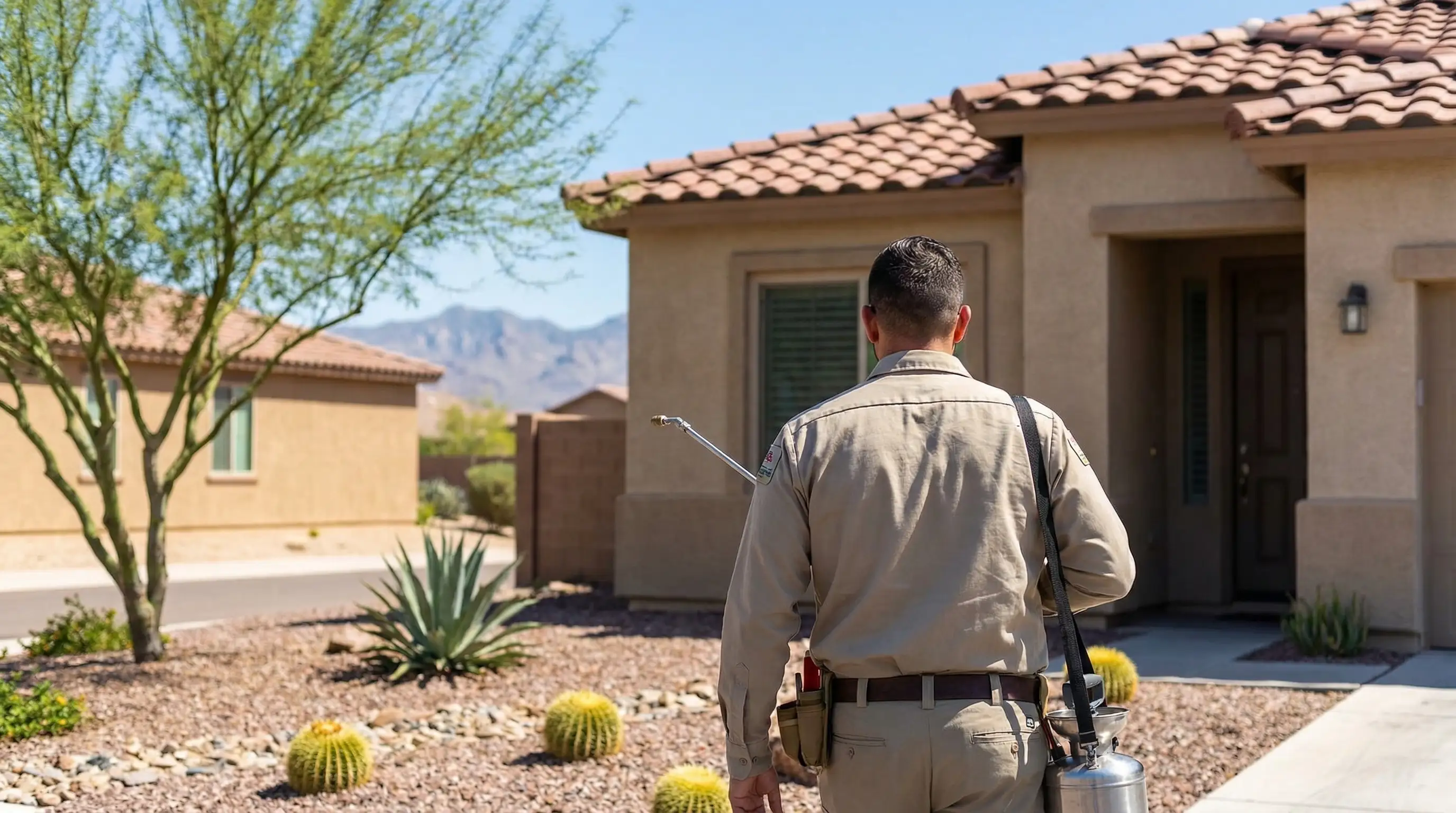
Pest control PPC in Chandler differs from most home service categories in a fundamental way: the purchase urgency is driven not by inconvenience, but by safety. A homeowner who finds a bark scorpion in their child's bedroom is not comparison-shopping — they are making an emergency call within minutes. This acute urgency produces some of the highest CVRs in local service PPC, but it also creates a structural challenge: the emergency search window is narrow, and campaigns that aren't organized to capture it at the precise moment of need lose the lead to the first competitor with a visible ad and a working phone number.
The National Chain Dominance Problem
Chandler's pest control market is anchored by large national operators: Orkin, Terminix, Western Exterminator (90+ years in the Phoenix area), and Truly Nolen (Arizona-based regional chain). These companies run national Google Ads campaigns with locally targeted ad groups, benefit from massive brand recognition, and maintain review profiles built over decades of operation. Against this backdrop, independent Chandler pest control companies — even excellent operators like Green Home Pest Control (30+ years, 10,000+ clients), Green Mango Pest Control (scorpion specialists), and KC Pest Control (owner-operated, Chandler-based) — are competing against ad accounts with dramatically more history, data, and budget.
The competitive counter-strategy for independent Chandler operators is specificity and trust-signal density that national chains can't replicate at the local level. An Orkin ad says "pest control services." An effective independent Chandler ad says "Bark scorpion treatment — Chandler family-owned, pet-safe products, 24-hour response." The differentiation on local presence, family safety messaging, and Arizona-specific pest expertise is something national chains write generic copy about and local operators can own authentically. Specificity in ad copy isn't just marketing best practice — in a safety-driven category like pest control, it's the primary conversion driver.
The Subscription Lead Challenge
Like pool service, pest control in Chandler is a recurring subscription business. Monthly or bi-monthly treatment plans at $49–$99/month are the standard revenue model — not one-time treatments. The challenge in PPC is that most pest control searches are triggered by an active sighting event ("scorpion in house Chandler," "cockroaches in kitchen," "termite damage") — high urgency, high CVR, but often with a one-time-job intent rather than subscription intent. Campaigns that optimize purely for emergency call volume acquire customers who get one treatment and don't return. The highest-LTV campaigns treat the emergency call as the entry point and convert the first-visit customer into a monthly protection plan — which requires specific landing page architecture and follow-up messaging, not just Google Ads management.
Keyword match type management is critical in pest control. The word "pest" fires broad-match triggers for "pest control school," "pest control products wholesale," "pest control supplies DIY," and "pest management degree" — none of which will ever produce a service call. A Chandler pest control account running unmanaged broad match keywords will routinely see 25–40% of spend consumed by non-service traffic. Tight phrase and exact match, combined with 30–50 negative keywords added before launch, is foundational — not advanced optimization.
The highest-performing Chandler pest control campaigns segment by pest type and urgency level — not generic "pest control services." Homeowners searching for scorpion treatment have different urgency, different safety concerns, and different conversion triggers than homeowners searching for termite inspection. Campaigns that acknowledge these differences in ad copy and landing page messaging convert at measurably higher rates.
Campaign Structure by Pest Type and Urgency
- Scorpion control (emergency + subscription): "scorpion control Chandler," "bark scorpion treatment," "scorpion exterminator near me" — CPCs $6–$14. Highest safety urgency in the Chandler market. Ad copy leads with child/family safety: "Bark scorpions found in your Chandler home? Monthly treatment — pet-safe, child-safe." Landing page must communicate same-day or next-day availability and include the monthly plan pricing and what it covers.
- Termite inspection and treatment: "termite inspection Chandler," "termite treatment AZ," "termite damage Chandler home" — CPCs $8–$18. Lower volume but higher ticket ($800–$3,000+ for treatment). Leads best captured with a free inspection offer — removes the barrier to first contact and generates high-quality qualified leads who have a specific concern, not just curiosity.
- General pest / roach / spider: "pest control Chandler AZ," "cockroach exterminator," "spider control Chandler" — CPCs $5–$12. Broadest keyword category. Best run on monthly subscription messaging rather than one-time service offers. Post-monsoon (August–September) is the peak conversion window for cockroach and general pest queries — time budget increases here.
- Eco-friendly / pet-safe messaging: "pet-safe pest control Chandler," "eco-friendly exterminator," "child-safe pest treatment" — CPCs $5–$10. Lower competition, but high resonance with Chandler's family demographic (34.4% households with children). This is a differentiation play against national chains that can't credibly own the "pet-safe, family-owned" position.
Seasonal budget strategy is essential in Chandler pest control. The campaign calendar that wins here:
- March–May (pre-season): Scorpions emerge as temperatures rise above 60°F in spring. This is the prime subscription acquisition window — homeowners who experienced scorpions last year are actively seeking coverage before the season starts. Increase budgets 20–30% in April.
- July–September (monsoon and peak pest activity): Scorpion activity surges after rain. Cockroaches invade homes. Fire ant colonies relocate. This is the single highest-urgency window of the year — the top new customer acquisition period for Chandler pest control. Budget should spike 40–60% above baseline in August–September.
- October–November (maintenance acquisition): Homeowners who didn't address pest control in spring are now motivated by cooler weather bringing scorpions and roaches indoors. A secondary acquisition push with subscription-focused messaging.
- December–February (baseline maintenance): Lowest urgency. Reduce spend 20–30% and maintain visibility on termite inspection queries only — termite damage discovery often happens during holiday home preparations or winter renovation projects.
Google Partner Agency
We're a certified Google Partner Agency, which means we don’t guess — we optimize withGoogle’s full toolkit and insider support.
Your campaigns get pro-level execution, backed by real expertise (not theory).

The most powerful targeting insight in Chandler pest control PPC is the geographic distribution of bark scorpion risk within the city. Bark scorpions are not uniformly distributed across Chandler — they concentrate in areas adjacent to desert preserve, dry washes, and native desert landscaping. Neighborhoods like Dobson Ranch (older development near canals), Sun Groves (adjacent to open desert), and areas near the San Tan Mountains have significantly higher scorpion encounter rates than newer, fully urbanized developments in central Chandler. Pest control companies that know this geography can run neighborhood-specific campaigns with elevated bids and Arizona-specific copy in the highest-risk zip codes — and convert at higher rates because the problem is more acute for that audience.
The Family Safety Conversion Trigger
Chandler's family demographic creates the strongest conversion trigger in pest control PPC: child safety. Bark scorpion stings are medically significant for children under 5 — and Chandler households with children under 18 represent 34.4% of the total base, with a substantial portion having children in the highest-risk age group. An ad that says "Bark scorpions found in your home? Protect your kids — monthly Chandler treatment, child-safe products" speaks directly to the decision that is most likely to result in a call within hours, not days. This isn't manipulative — it's accurate. The medical reality of bark scorpion stings makes pest control a genuine safety investment for families in the Sonoran Desert, and campaigns that frame it as such outperform generic "pest control services" copy in every test.
The Intel and tech-corridor demographics add a secondary insight: Chandler's professional workforce, with its above-average household incomes and well-maintained properties, skews toward premium pet-safe and eco-friendly formulations over standard pesticides. Green Home Pest Control built a 10,000+ client base in the Phoenix metro on exactly this positioning — eco-friendly, pet-safe treatments at a slight price premium over conventional operators. For an independent Chandler pest control company, the eco-friendly/pet-safe positioning is not just marketing language — it's a defensible market segment that the national chains (Orkin, Terminix) struggle to own credibly because their brand equity is built on conventional chemistry, not natural alternatives.
The Termite Market Opportunity
Arizona has significant subterranean termite pressure — desert subterranean and arid-land subterranean termite species are endemic to the Sonoran Desert region. Chandler's aging housing stock (significant builds from 1985–2005) has entered the 20–40 year range where wood-frame construction begins showing termite susceptibility. Combined with Chandler's clay soils and residential irrigation patterns that maintain soil moisture, termite inspection demand is structurally elevated compared to national averages. The free termite inspection offer is one of the most efficient lead capture strategies in Chandler pest control PPC — low-barrier entry, high conversion to treatment contracts, and a strong lifetime value customer who requires annual retreatment and monitoring.
Post-monsoon termite inspection demand specifically — homeowners who discover what appears to be termite frass or damaged wood after the heavy August storms disturb foundation soil — creates a secondary late-summer search spike that most pest control PPC accounts don't budget for. Scheduling a 20% budget increase for termite inspection keywords in August–September captures this intent at a moment when the homeowner's concern is freshly activated.
Chandler's pest control market is defined by the Sonoran Desert ecosystem — bark scorpions, subterranean termites, monsoon-driven roach invasions — and the campaigns that capture this market need to speak to those realities, not generic "pest control services" messaging that could be running in Portland or Pittsburgh. Local specificity in ad copy isn't a nice-to-have in this vertical — it's the primary differentiator that separates an independent Chandler operator from a national chain running boilerplate text.
At MB Adv Agency, we build Google Ads campaigns for home service businesses that operate in markets with specific, local demand drivers. We know how Chandler's pest control seasonality works — when to spike budgets for scorpion season, how to structure termite inspection campaigns, and how to convert a monsoon-emergency call into a monthly subscription customer. We don't run national templates and adjust the city name.
Our Google Ads management for pest control clients tracks subscription contract acquisitions alongside emergency calls, manages seasonal budget adjustments proactively, and delivers monthly reporting that shows new contracts added to the route — not just click volume. We work with operators at the $2,000–$5,000/month budget level.
See our pricing plans or request a free account audit. If your pest control campaigns are generating clicks without adding route contracts, the segmentation is wrong — and it's fixable.
Frequently Asked Questions
How much should a Chandler pest control company spend on Google Ads?
The realistic starter range for an independent Chandler pest control company: $2,000–$4,000/month. In this category's moderately competitive market, that budget generates 15–30 qualified leads per month at a CPL of $75–$130. At a 50% close rate on inbound calls and an average subscription contract value of $720–$1,188/year ($60–$99/month), a single month at $2,500 in ad spend that produces 10 new monthly contracts generates $7,200–$11,880 in annualized recurring revenue — a 3x–5x first-year return on ad investment before accounting for multi-year retention.
The seasonal allocation strategy materially affects annual ROI. The highest-return months for Chandler pest control PPC are April (scorpion pre-season), August, and September (monsoon surge). These three calendar windows represent the highest new customer acquisition opportunity of the year — when pest urgency is most acute and homeowners are most motivated to act immediately. Allocating 40–50% of your annual pest control ad budget to these four months and reducing spend during December–February produces meaningfully better annual returns than a flat monthly budget.
A common mistake: pest control companies that launch PPC campaigns in January (when urgency is lowest, CPCs are moderate, but CVR is poor) evaluate performance for 60 days, see mediocre results, and pause the account — right before the spring season activation that would have produced the year's strongest returns. Timing the launch for March–April, with a full annual strategy that maps budget to scorpion season, monsoon, and termite inspection windows, produces first-year results that look very different from a January launch at flat spend.
What makes pest control Google Ads work in Chandler specifically?
Three factors make Chandler pest control PPC perform differently than generic pest control campaigns: bark scorpion urgency, monsoon seasonality, and the family safety conversion trigger. Bark scorpion stings are medically significant — they're not just unpleasant, they're a genuine safety risk for households with young children and elderly residents. Campaigns that acknowledge this reality in ad copy ("bark scorpion in your home? Same-day treatment — child-safe and pet-safe") convert at significantly higher rates than campaigns that say "pest control services." The urgency is real, the audience is scared, and the ad copy needs to meet them at that emotional level — not talk them through a service brochure.
Monsoon seasonality is the second factor that sets Chandler apart from national pest control PPC averages. The July–September monsoon season reliably drives a 40–60% spike in scorpion, cockroach, and general pest search volume as storm activity disrupts desert habitats and drives pests toward residential structures. This is not unpredictable variance — it's a calendared event that allows for precise budget pre-allocation. Campaigns that don't have the August–September budget increase scheduled in advance in Chandler run out of daily budget during the highest-intent search window of the year.
The family safety conversion trigger is the third Chandler-specific factor. 34.4% of Chandler households have children under 18 — one of the highest family densities of any Phoenix metro suburb — and the bark scorpion's particular danger to young children makes pest control a non-optional safety purchase for a significant portion of this demographic. Ad copy, landing pages, and service positioning that explicitly address child safety outperform generic pest control messaging with this audience by a margin that is consistent across every market where the family-safety angle is tested. In Chandler, it's not just a best practice — it's the most accurate description of why people are calling.