Pest Control PPC Columbus, GA
Georgia's humid subtropical climate creates year-round pest pressure — Columbus homeowners don't get a winter break from termites, cockroaches, or mosquitoes the way northern markets do, and that biological reality translates directly into consistent, year-round search demand that a well-run PPC campaign can capture at some of the lowest CPLs in the home services category. <!-- stats-article-link --> <p><em>See how this city's Pest Control PPC costs compare nationally in our <a href="https://www.mbadv.agency/ppc-industry-statistics/pest-control-ppc-statistics">Pest Control PPC Statistics</a> report, featuring data from 40+ US cities.</em></p>
Why Do Pest Control PPC Campaigns Fail in Columbus, GA?
Columbus pest control PPC has an unusual failure mode: the campaigns look fine until you examine the conversion data. CPCs of $5.50–$7.00 are among the lowest in home services, and impression volume is high year-round. But most Columbus pest control advertisers are capturing one-time service leads when the business model demands recurring customers — and their campaigns are optimized for the wrong conversion event. A homeowner who clicks on "exterminator Columbus GA" after seeing a cockroach wants an immediate problem solved. The business that captures that homeowner and converts them to a $45–$65/month recurring protection plan generates 10–15x the revenue of a business that runs one visit and moves on. The campaign infrastructure that serves both goals is entirely different from a simple lead capture setup.
The Recurring Revenue Misalignment
Most Columbus pest control Google Ads campaigns are built around a single conversion goal: phone call or form submission. They don't distinguish between a homeowner calling about a one-time ant problem and a homeowner calling because they've had three cockroach sightings and want year-round protection. Both look identical in the conversion data, but the second caller is worth 10–20x more in lifetime value. Campaigns that don't separate these intent signals — through dedicated keyword groups, landing pages, and conversion tracking for plan sign-ups versus one-time visits — end up optimizing for volume rather than value.
The competitor landscape makes this worse. G.W. Exterminating Co and Knox Pest Control are established Columbus operators with strong local recognition. Orkin, Terminix, and Rentokil run national brand campaigns that dominate brand-aware searches. Competing with nationals on branded terms is expensive and rarely profitable for local operators. The winning strategy is specificity: own the hyper-local, pest-specific, and military-segment terms that nationals don't prioritize. "Termite treatment Columbus GA" is a more valuable term than generic "exterminator" because termite customers — facing structural damage risk — are almost always recurring plan customers, not one-visit buyers.
The Year-Round Demand Misunderstanding
Many Columbus pest control businesses run heavier PPC in spring and summer — the mosquito and ant season — and pull back in fall and winter. This is a strategic error. Georgia's humid subtropical climate means pest activity never reaches zero. Cockroaches reproduce year-round indoors. Termites swarm in spring (March–May) but remain active and damaging throughout the year. Rodents enter older Columbus homes as temperatures drop in October–November. Businesses that pause winter campaigns lose this demand to competitors who stay active, and they pay higher CPCs when they re-enter in spring because their Quality Scores have decayed during the pause. Year-round coverage at modest budgets outperforms seasonal bursts in total ROI for Columbus pest control.
Columbus's Fort Benning adjacency also creates a pest control demand pattern unique to the market. Military families arriving in Columbus — often from Northern or Midwestern states — frequently encounter their first Georgia pest experience (palmetto bugs, fire ants, termite swarms) and search urgently. These are high-conversion leads because they have immediate, unfamiliar problems and no established local provider relationship. Campaigns that don't include military-relevant targeting miss this segment entirely.
Building a Recurring-Revenue Pest Control Campaign in Columbus
A Columbus pest control PPC strategy built for LTV — not just lead volume — requires pest-specific keyword segmentation, conversion tracking that distinguishes recurring plan sign-ups from one-time visits, and dedicated landing pages for each major pest type. The keyword architecture:
- Termite keywords: "termite treatment Columbus GA," "termite inspection Columbus Georgia," "subterranean termite control Columbus" — $6.50–$7.00 CPC. Highest LTV pest category. Termite customers almost always purchase ongoing protection plans ($30–$60/month). Landing page must address structural damage risk and inspection process explicitly.
- General pest / recurring plan keywords: "pest control Columbus GA," "exterminator Columbus Georgia," "year-round pest protection Columbus" — $5.50–$6.50 CPC. Highest volume. Messaging should lead with recurring plan benefits and pricing versus one-time visit framing.
- Mosquito control keywords: "mosquito control Columbus GA," "mosquito treatment Columbus," "mosquito spray Columbus Georgia" — $5.00–$6.00 CPC. Seasonal April–October; peak June–August. Family and backyard-focused messaging. Monthly treatment plans are the primary conversion goal.
- Military and relocation keywords: "pest control near Fort Benning," "exterminator Columbus military housing," "new to Columbus pest control" — $4.50–$5.50 CPC. Low competition. High conversion rate. Military families facing first-encounter pests convert on trust signals: local Columbus identity, flexible plan transfers for future PCS moves.
- Rodent and wildlife keywords: "mouse exterminator Columbus GA," "rodent control Columbus Georgia" — $5.50–$6.50 CPC. Seasonal (October–February). Older Columbus housing stock is particularly vulnerable to rodent entry through foundation gaps and aging trim.
Conversion tracking should be set up with two separate conversion actions: (1) calls and form submissions for any pest problem (general lead), and (2) plan sign-up form completions or calls that result in recurring service enrollment. The second conversion action requires additional setup — a dedicated landing page with plan pricing and a plan-specific contact form — but it enables campaign optimization for high-LTV customers rather than raw lead volume.
Geographic targeting for Columbus pest control should include the Fort Benning southside corridor (highest military density), the pre-1970 north Columbus neighborhoods (highest termite risk), and the Midland/Fortson areas (expansion market). Phenix City, AL is adjacent and serviced by Columbus operators — include it with a slightly reduced bid to account for the cross-state targeting complexity.
Google Partner Agency
We're a certified Google Partner Agency, which means we don’t guess — we optimize withGoogle’s full toolkit and insider support.
Your campaigns get pro-level execution, backed by real expertise (not theory).

What Market Trends Should Columbus Pest Control Businesses Know?
Columbus's pest control market has a structural advantage that most advertisers don't fully capitalize on: the market creates recurring-plan customers naturally. Georgia's climate doesn't allow for seasonal pest control — the biology won't permit it. Cockroaches reproduce indoors year-round. Termites remain active in the soil through every season. Fire ants in Columbus's southern flat-terrain neighborhoods are endemic. Homeowners who try one-time treatments consistently find that problems return within 60–90 days, driving them back to search for a recurring solution. The business that captures that second search — with the right messaging about why year-round plans work and one-time visits don't — wins the customer for years, not months.
The Termite Risk Profile
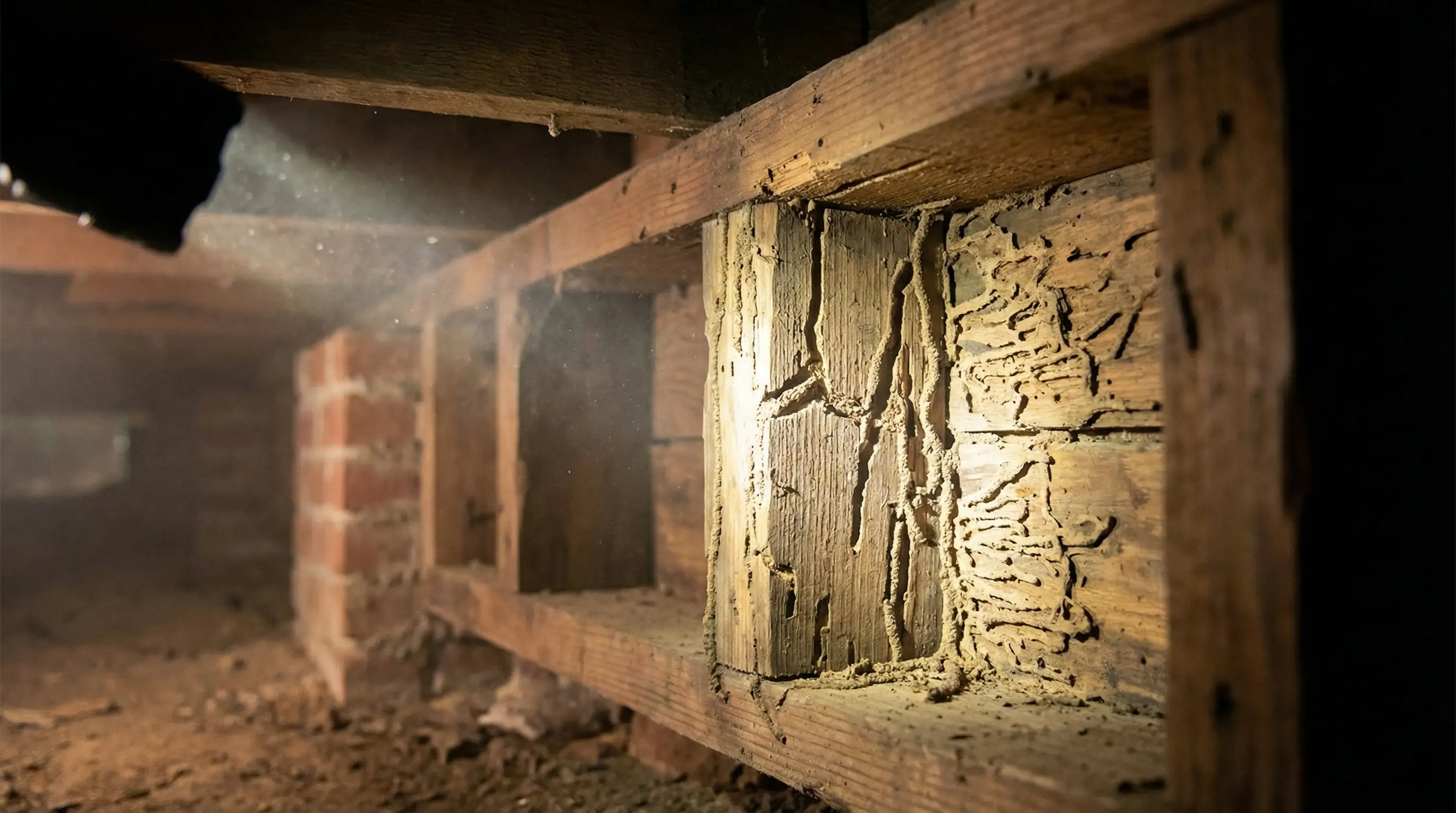
Columbus's termite exposure is particularly high by national standards. Georgia ranks in the top 5 states nationally for termite activity, and Columbus's Fall Line geography — where Piedmont clay soil meets coastal plain sandy soil — creates conditions that Eastern subterranean termites exploit aggressively. The older housing stock compounds the risk: pre-1960 wood-frame construction in Columbus's historic neighborhoods (Wynnton, Peacock Woods, Georgetown) was often built without the modern borate-treated lumber or physical barriers that slow termite entry. One in three homes in the greater Columbus area shows detectable termite activity by inspection. This creates a market where termite inspections — which can be offered as a free conversion hook in PPC — generate high-value plan sign-ups at minimal cost-per-acquisition.
- Termite swarm season: March–May (peak search volume for termite PPC)
- Year-round active damage: Termites eat continuously — spring swarm is the visible signal, not the only damage window
- Free inspection hook: Converts at 15–25% to paid treatment plans in the Columbus market
- Average treatment plan value: $350–$600 first year (treatment + warranty), $150–$300/year ongoing
The Military Family Segment
Fort Benning's 8,000–12,000 annual PCS movements create a continuous influx of families unfamiliar with Georgia's pest environment. Military families typically arrive in June–August (peak PCS season) — the same period when mosquitoes, fire ants, and cockroaches are at maximum activity. First encounters with palmetto bugs (American cockroaches reaching 1.5–2 inches) produce high-urgency search behavior that converts at exceptional rates. These families also value plan flexibility: a Columbus pest control provider that explicitly offers transferable or cancellable plans for PCS moves wins military customers who might otherwise avoid long-term contracts. Ads that reference "Fort Benning," "military families welcome," or "flexible pest control plans" on military-targeted keyword groups increase CTR by 20–35% compared to generic copy.
Property managers are the third underserved Columbus pest control segment. Columbus's rental market — approximately 49.2% of households renting — means thousands of units requiring regular pest management. Multi-unit accounts generate recurring revenue at scale. A single property manager account managing 20–50 units represents $800–$3,000/month in recurring pest control revenue. Campaigns targeting "property management pest control Columbus" or "apartment pest control Columbus GA" capture this segment at low competition and high LTV.
Columbus Pest Control PPC That Builds Recurring Revenue
Generic pest control PPC captures one-time leads. Columbus-specific pest control PPC — built with knowledge of Georgia's termite risk profile, Fort Benning's relocation calendar, and the local competitor landscape — builds recurring customer pipelines that compound in revenue over time.
MB Adv Agency builds Columbus pest control campaigns around the recurring-plan conversion event, not just the initial lead. This means separate keyword groups for termites, mosquitoes, general pests, and military families — each with dedicated landing pages and conversion tracking. A Columbus pest control campaign running at $5.50–$7.00 CPC delivers leads at $38–$50 CPL, making it one of the most cost-efficient home service categories available.
The Columbus pest control market's math is compelling: 30–60 qualified leads per month at $38–$50 CPL. If 20% convert to recurring protection plans at $55/month average, that's 6–12 new recurring customers added monthly — each generating $660/year in recurring revenue. A campaign running for 12 months at this conversion rate builds a recurring revenue base worth $7,920–$15,840 annually on top of one-time treatment revenue. That's the compounding effect of a campaign optimized for LTV rather than raw lead count — and it's what separates Columbus pest control market leaders from average performers.
See how our lead generation campaigns work or review Columbus PPC pricing to get started.
Frequently Asked Questions
How Much Does Pest Control PPC Cost in Columbus, GA?
Pest control PPC in Columbus, GA costs $5.50–$7.00 per click on most target keywords, with a cost per lead of $38–$50 for well-structured campaigns targeting the Columbus market. A recommended starter budget is $1,500–$2,500 per month, generating approximately 30–60 qualified leads monthly depending on campaign focus and season. These figures make pest control one of the most cost-efficient home service PPC categories in Columbus — significantly below HVAC ($95–$115 CPL) and roofing ($175–$210 CPL). The low CPL reflects pest control's high search intent and relatively moderate advertiser competition in Columbus: while national brands (Orkin, Terminix) maintain a presence, they bid primarily on branded terms and leave significant search volume available for local operators on service-specific and pest-specific keywords. Termite keywords run slightly higher at $6.50–$7.00 CPC because of the high-value recurring treatment plans these leads generate, but the LTV justification is strong — a termite customer on a $300/year renewal plan delivers $1,500+ in 5-year revenue from a single $50 lead acquisition cost.
Mosquito control campaigns run $5.00–$6.00 CPC and perform best April through October. Military-targeted keywords run $4.50–$5.50 CPC with lower competition and high conversion rates among newly arrived Fort Benning families experiencing Georgia pests for the first time.
Total investment including management fees typically runs $2,000–$3,500/month for a full Columbus pest control campaign covering all major pest categories and the military segment. Businesses starting with a single pest focus (termites only, or mosquitoes only) can begin at $1,000–$1,500/month and expand as campaigns prove out.
Which Pest Control Keywords Perform Best in Columbus, GA?
Termite and recurring pest control keywords consistently outperform general exterminator terms in Columbus, GA when measured by lead quality and lifetime value, not just conversion volume. "Termite treatment Columbus GA" and "termite inspection Columbus Georgia" generate leads that convert to annual protection plans at 15–25% rates — the highest plan conversion rate of any Columbus pest category. "Pest control Columbus GA" and "exterminator Columbus GA" generate the highest raw lead volume at $5.50–$6.50 CPC but require messaging that steers homeowners toward recurring plan enrollment rather than one-time visits. Mosquito control keywords ("mosquito control Columbus GA," "mosquito spray Columbus") perform best April–October with CPCs of $5.00–$6.00 and strong family-segment conversion rates during the Chattahoochee River corridor's active mosquito season. Military-specific terms — "pest control near Fort Benning," "Columbus GA pest control military" — offer the lowest CPCs ($4.50–$5.50) and among the highest conversion rates because arriving military families have immediate, unfamiliar pest problems and no established provider relationship.
Negative keyword management is critical for Columbus pest control PPC. Exclude: "how to," "DIY," "pest control jobs," product names (Raid, Ortho), and city names outside the service radius. Columbus pest campaigns without negative keyword discipline routinely spend 15–25% of budget on non-converting research and employment searches.
The highest-ROI Columbus pest control campaign structure runs 4 parallel campaigns: (1) termite + structural, (2) general pest + recurring plans, (3) mosquito seasonal, (4) military/relocation. Each campaign has its own landing page, conversion tracking, and bid strategy — this prevents the best-performing keywords from subsidizing the worst and enables campaign-level ROI reporting that drives smarter budget decisions over time.