Pest Control PPC Dallas, TX
Dallas is a year-round pest market — its subtropical climate, mild winters, and hot summers create ideal conditions for termites, fire ants, mosquitoes, and cockroaches that never fully retreat. Expertise.com reviewed 314 Dallas pest control providers, making it one of the most competitive home services categories in the city. The companies winning in Dallas pest control PPC have learned to separate termite season surge from year-round maintenance demand, and to target recurring service plans in a way that makes the customer LTV math work even at the market's most competitive CPCs. <!-- stats-article-link --> <p><em>See how this city's Pest Control PPC costs compare nationally in our <a href="https://www.mbadv.agency/ppc-industry-statistics/pest-control-ppc-statistics">Pest Control PPC Statistics</a> report, featuring data from 40+ US cities.</em></p>
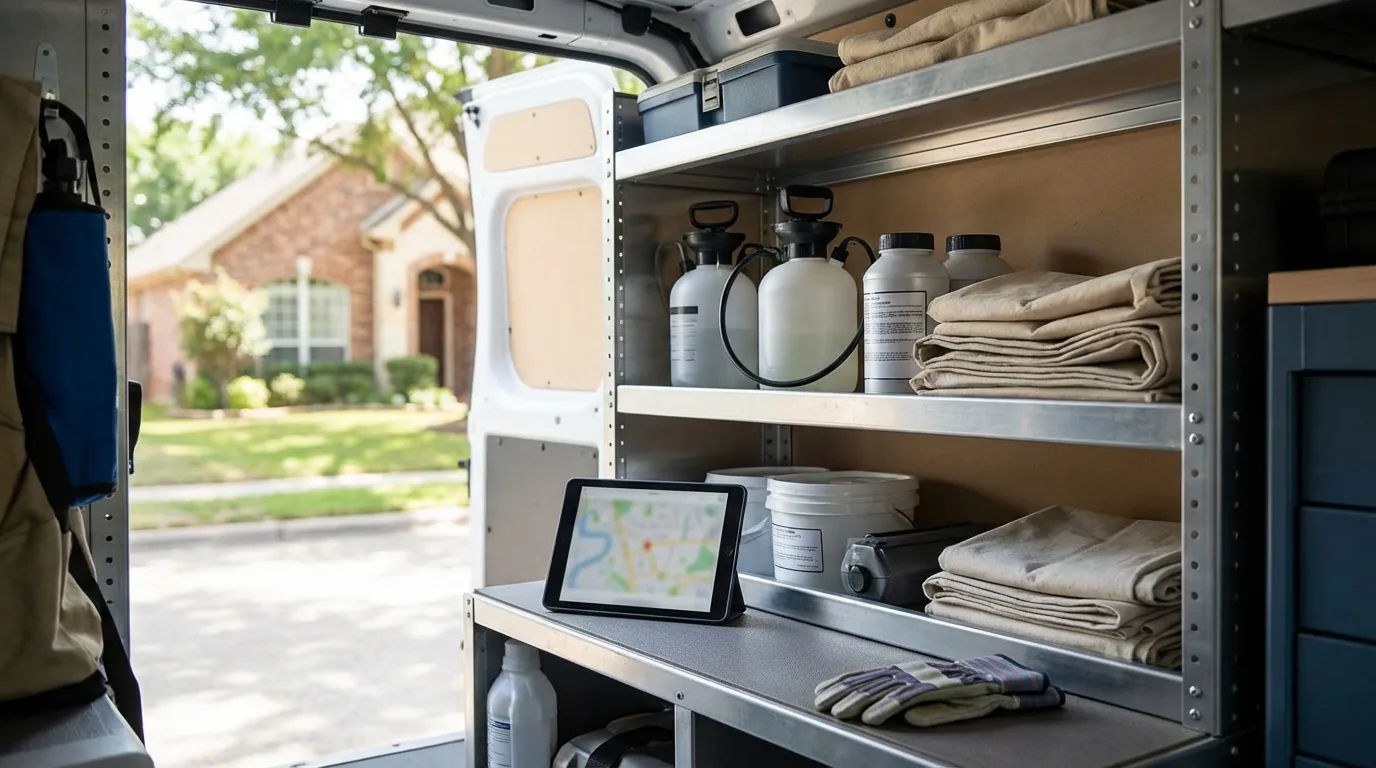
Dallas pest control PPC is a year-round competitive market with one defining seasonal spike: termite season. From mid-March through May, termite swarm activity across North Texas drives a concentrated demand wave that elevates search volume for termite-related keywords by 200–300% above their annual baseline. Companies that have surge campaigns ready for this window capture disproportionate annual revenue; companies running flat campaigns miss the window entirely and watch competitors build customer relationships that persist for years.
The National Franchise Dominance Problem
Terminix and Orkin are the central competitive challenge for every independent Dallas pest control operator running Google Ads. Both franchises have institutional PPC operations — unified national campaigns with Dallas-specific extensions, quality scores built on years of consistent investment, and brand recognition that converts uncertain customers who default to the name they know. On generic pest control searches ("pest control Dallas TX," "exterminator Dallas"), Terminix and Orkin regularly hold top ad positions through a combination of high bids and strong Quality Scores that independent companies can't match on broad terms.
Presto-X, with its entomologist-certified team, has built a strong local presence as a premium alternative to national franchises. Gecko Green competes on eco-friendly positioning, a meaningful differentiator for the Frisco and Allen homeowner demographic. Paragon Pest Control (Grand Prairie) and Termio Pest Control represent established independent operators with multi-city Texas coverage and their own PPC histories. Texas Mosquito Control holds a specialized position in misting systems — a premium service category with high install LTV. The independent field is well-populated and competitively active.
The national average CPCs for pest control (Consumer Services, WordStream) run $6.40/click — but Dallas market premium pushes actual CPCs to $15–$45/click for general pest keywords, with termite-specific keywords running $35–$65/click during peak swarm season. At $45–$65/click for termite keywords, a daily budget of $100 generates only 1–2 clicks — meaning campaigns that don't run with sufficient budget simply don't generate data fast enough to optimize, leaving termite season revenue on the table.
The Recurring Plan Math Problem
Most Dallas pest control operators approach PPC with the wrong mental model. They focus on cost-per-lead and compare it against the first-service revenue ($150–$250 for a general pest treatment), conclude the math doesn't work, and either underspend or abandon campaigns entirely. This is the wrong calculation. The correct LTV model for pest control is the recurring plan: a Dallas homeowner on a quarterly pest plan at $150–$200/quarter generates $600–$800/year in recurring revenue. Over a 3–5 year customer relationship, that's $1,800–$4,000 in LTV — a figure that justifies $80–$150 CPA on initial acquisition comfortably.
- General pest keywords: "Pest control Dallas TX," "exterminator Dallas" — $15–$35 CPC, year-round volume
- Termite keywords: "Termite treatment Dallas," "termite inspection Dallas TX" — $35–$65 CPC, peak March–May
- Mosquito keywords: "Mosquito control Dallas," "mosquito yard treatment Dallas" — $20–$40 CPC, peak May–September
- Specialty pest: "Fire ant control Dallas," "rodent control Dallas TX" — $18–$38 CPC, year-round
- Quarterly plan keywords: "Pest control plan Dallas," "year round pest control Dallas" — $12–$28 CPC, highest LTV conversion
Operators who understand the recurring plan economics invest confidently in pest control PPC because they're not buying one-time customers — they're buying multi-year revenue streams at acquisition costs that pencil clearly when the full LTV is in the denominator.
Winning Dallas pest control PPC requires three integrated strategy layers: termite season surge preparation, year-round recurring plan targeting, and the mosquito/specialty pest campaigns that serve Dallas's specific subtropical pest profile.
Termite Season Surge: The Annual Windfall Window
The Dallas termite swarm season (March–May) is the single highest-ROI PPC window in pest control. Swarmer termites emerge when soil temperatures rise above 70°F, typically in mid-March in the DFW area, and homeowners who discover swarmers search urgently — this is emergency-level intent on a $1,500–$3,500 treatment job. Campaigns built for termite season surge must be ready before the season opens, not built during it.
Termite surge campaign structure:
- Inspection keywords: "Termite inspection Dallas TX," "free termite inspection Dallas" — $20–$40 CPC; free inspection offer converts at high rates; treatment upsell follows naturally
- Treatment keywords: "Termite treatment Dallas," "termite exterminator Dallas" — $35–$65 CPC; direct purchase intent, high LTV
- Swarm emergency: "Termite swarm Dallas," "flying termites Dallas TX" — $25–$45 CPC; peak March–May; emergency intent converts same-day
Budget scaling for termite season: maintain a base $300–$500/month termite campaign allocation October–February, scaling to $1,200–$2,000/month March–May during peak swarm activity. The 3-month surge window generates a disproportionate share of annual termite treatment revenue — operators with pre-built campaigns capture it; flat-campaign operators miss it.
Year-Round Recurring Plan Targeting
The highest-LTV pest control conversions aren't single treatments — they're annual or quarterly service plans. Campaigns explicitly targeting recurring plan intent ("year round pest control Dallas," "quarterly pest plan Dallas TX," "monthly pest service Dallas") attract a customer who's already mentally committed to ongoing service rather than a one-time fix. These keywords run at lower CPCs ($12–$28) than emergency or treatment keywords, and they convert customers directly into recurring revenue without requiring a separate upsell conversation.
Landing pages for plan-targeting campaigns should lead with plan pricing, coverage details (what pests, how many visits, what's guaranteed), and customer reviews specifically mentioning long-term service. This landing page experience matches the search intent exactly — a customer searching "quarterly pest plan Dallas" doesn't need to be educated about pests; they need to understand your plan and sign up. Plan-to-call conversion on well-matched landing pages runs 8–12% — among the highest in Dallas pest control PPC.
Mosquito and Summer Specialty Campaigns
Dallas mosquito demand peaks May–September, driven by the subtropical climate and standing water from seasonal storms. Mosquito control is a premium service category — misting system installations run $1,500–$3,000 installed, and ongoing mosquito barrier treatments are $75–$150/visit. Dedicated mosquito campaigns separate this premium demand from general pest control, allowing premium positioning and preventing budget dilution from general pest terms.
Google Partner Agency
We're a certified Google Partner Agency, which means we don’t guess — we optimize withGoogle’s full toolkit and insider support.
Your campaigns get pro-level execution, backed by real expertise (not theory).

Three characteristics of the Dallas pest market create durable PPC opportunities that most operators haven't fully built into their campaign strategy.
Dallas's Year-Round Pest Activity Advantage
Dallas's subtropical climate with mild winters means pest activity never fully stops. While northern pest markets experience true winter dormancy periods that justify pausing campaigns, Dallas cockroach, rodent, and general pest searches remain consistent year-round. Winter in Dallas produces a distinct pest pressure: rodents seeking warmth drive increased rodent control searches December–February, and cockroach pressure in commercial and residential properties is perennial at Dallas temperatures.
The pest control operator who cuts PPC spend in January and February — treating Dallas like a seasonal northern market — is surrendering market share to the 1–2 competitors who correctly identified that Dallas pest demand has no true off-season. Year-round spend, optimized by season (heavier termite and mosquito focus April–September, heavier rodent and general pest focus October–March), produces a more consistent lead flow and maintains algorithm performance that pays dividends when spring surge arrives.
The Suburban Homeowner Concentration
Dallas city proper has a 42.4% homeownership rate — but the DFW suburbs where pest control demand is most concentrated run 60–75% homeownership. Plano, Frisco, Allen, McKinney, and Southlake represent the highest-density suburban homeowner markets in the metro, with newer housing stock, landscaped yards, and the tree canopy conditions that attract the pests most prevalent in North Texas (subterranean termites, fire ants, mosquitoes). These zip codes also have higher household incomes — customers who prioritize service quality over price and are more likely to commit to annual plans.
Geo-targeting pest control campaigns to specific suburban zip codes — with bid adjustments weighted toward high-homeownership, high-income areas — reduces wasted spend on rental-dense urban Dallas areas where the tenant calls the landlord for pest issues and produces a higher rate of recurring plan conversions among the homeowner demographic most likely to become long-term customers.
Key insight: Expertise.com reviewed 314 Dallas pest control companies and curated 195 as qualified providers. That density of competition makes market positioning critical. The independent operators consistently outperforming Terminix and Orkin in Dallas aren't competing on "best pest control" — they're competing on specialty positioning (eco-friendly like Gecko Green, entomologist-certified like Presto-X) or hyper-local coverage depth. PPC campaigns that lead with the differentiator — not generic "pest control near me" — convert at materially higher rates in this saturated market.
Dallas pest control PPC rewards operators who understand that this market has two modes: the year-round recurring service base and the annual termite season spike that concentrates high-LTV demand into a 90-day window. Managing both simultaneously — maintaining campaign continuity year-round while executing a surge strategy that captures termite and mosquito season demand — requires campaign architecture and seasonal budget management that generalist agencies consistently get wrong.
At MB Adv Agency, our Dallas pest control campaigns are built around recurring plan economics and seasonal surge execution. We build termite season campaigns on standby — pre-configured, pre-written, ready to activate when NPMA swarm forecasts confirm the Dallas season is opening — and we structure year-round campaigns around recurring plan keywords that acquire the highest-LTV customers first. Our Plastic-Brick methodology eliminates the generic "pest control near me" waste that inflates CPA without producing plan customers.
We work with Dallas pest control companies in the $1,500–$6,000/month ad spend range. Review our pricing tiers and see how our management approach targets the customer who converts to a recurring plan — not just the one who calls once and disappears.

Frequently Asked Questions
How do I calculate ROI on Dallas pest control Google Ads when my service is subscription-based?
The key shift: calculate CPA against customer LTV, not first-service revenue. A Dallas homeowner acquired through PPC for a $175 initial general pest treatment generates $600–$800/year on a quarterly plan — and stays an average 3–5 years. That customer is worth $1,800–$4,000 in LTV, not $175. At these LTV numbers, a $100–$150 CPA for a new plan customer is a strong investment with a payback period under 90 days.
The plan conversion rate on your campaign is the critical variable. If your PPC campaigns drive single-treatment calls and your team converts 30% of those to quarterly plans, your effective CPA on plan customers is $333–$500 — still positive against $1,800–$4,000 LTV. If you run campaigns specifically targeting recurring plan keywords ("quarterly pest service Dallas") and your landing pages lead with plan benefits, you convert a higher proportion of clicks directly to plan customers at lower effective CPA without needing the upsell conversation.
Seasonal adjustment for the ROI model: termite treatment customers have a different LTV profile — a $2,000 one-time treatment plus a potential wood repair contract and annual inspection renewal generates $2,500–$4,500 in customer lifetime value from a single acquisition. At $40–$60 CPC on termite keywords during peak season, a 4% conversion rate produces a $1,000–$1,500 CPA on termite treatment customers — justifiable math against $2,500–$4,500 LTV, particularly when treatment customers frequently add general pest plans after their termite experience.
When is the best time to run Dallas pest control Google Ads, and should I pause in winter?
Do not pause in winter — this is the most common and costly mistake Dallas pest control operators make with their PPC. Dallas winters are mild enough that cockroach, rodent, and general pest pressure continues, and winter rodent searches (December–February) represent a specific demand surge that competitors who've paused their campaigns miss entirely. A competitor-free period in January is a PPC opportunity, not a signal to cut spend.
The correct approach is seasonal reweighting, not pausing. October–February: maintain base spend ($800–$1,500/month) with keyword weight on rodent control, general pest, and indoor pest keywords. Build and pre-configure termite campaign infrastructure during this period so it's ready for March. March–May: scale termite campaigns to $1,200–$2,000/month, maintain general pest at base level. May–September: add mosquito campaign budget ($400–$800/month), reduce termite budget back to maintenance level, keep general pest active. Year-round overlay: recurring plan campaigns run at constant $300–$500/month regardless of season — these acquire the highest-LTV customers and their performance is non-seasonal.
Total annual budget recommendation for a competitive Dallas pest control operation: $18,000–$36,000/year ($1,500–$3,000/month blended). This generates 150–300 new customer contacts per year at a $60–$120 CPA. At a 50% plan conversion rate, that's 75–150 new recurring plan customers per year — adding $45,000–$120,000 in annual recurring revenue at a customer acquisition cost that compounds favorably as those relationships extend over multiple years.