Pest Control PPC Gilbert, AZ
In Gilbert, pest control isn't seasonal — it's survival. The Arizona bark scorpion, the most venomous scorpion in North America, is endemic to the East Valley, and Gilbert's proximity to desert preserve corridors makes scorpion intrusion a top homeowner anxiety year-round. Add year-round subterranean termite activity, an expanding roof rat population, and a homeowner base with $122K median income willing to pay premium for protection — and you have a PPC market where urgency never sleeps. <!-- stats-article-link --> <p><em>See how this city's Pest Control PPC costs compare nationally in our <a href="https://www.mbadv.agency/ppc-industry-statistics/pest-control-ppc-statistics">Pest Control PPC Statistics</a> report, featuring data from 40+ US cities.</em></p>
Pest control PPC in Gilbert operates at the intersection of fear and urgency — two emotional states that drive fast conversion when properly targeted, and wasted spend when the campaign doesn't speak directly to the local pest pressure profile. The primary challenge isn't finding searchers; it's convincing them that you are the specialist for their specific problem rather than a generic exterminator who treats cockroaches the same as scorpions.
National Chains: Budget Dominance With Generic Messaging
Gilbert's pest control PPC landscape is shaped by the heavy presence of national chains — Orkin, Terminix, Western Pest Services, and Truly Nolen run aggressive Google Ads campaigns across the Phoenix MSA with budgets that dwarf most local operators. These companies have the volume to maintain 8–10/10 Quality Scores on broad pest control terms and the remarketing infrastructure to follow searchers across the web after a first click.
However, national chains have a structural weakness in the Gilbert market: their messaging is built for the national average pest profile — cockroaches, ants, bed bugs — not for the East Valley's specific and deeply feared scorpion problem. A Gilbert homeowner who found a bark scorpion near their child's bedroom is not searching for "pest control service" — they're searching for "scorpion exterminator Gilbert" or "scorpion control near me." Local operators who build scorpion-specific campaigns with Arizona bark scorpion expertise messaging consistently outperform national chains on these high-conversion, fear-driven queries. The differentiation is real and measurable.
The Three-Pest Problem: Audience Fragmentation
Gilbert's pest profile creates three distinct search audiences with different psychology, different urgency, and different conversion paths:
- Scorpion searchers: High urgency, immediate fear trigger, fast conversion (same-day or next-day service). CPCs of $8–$18. Conversion rate 7–10% on scorpion-specific landing pages. This audience wants a specialist — not a generalist exterminator who "also does scorpions."
- Termite searchers: High urgency but slower conversion (termites require inspection + quote before treatment). CPCs of $10–$22. Conversion rate 4–6%. This audience is information-seeking — they want to understand the treatment process, cost, and guarantee before committing. FAQ-rich landing pages outperform pure call-to-action pages for termite queries.
- Roof rat searchers: Growing in volume as roof rats expand into East Valley suburbs. CPCs of $7–$15. Conversion rate 5–8%. This audience often doesn't know what they're dealing with — scratching in the attic, chewed electrical wires. Educational campaigns that identify the problem before offering the solution convert at higher rates than pure service ads.
Recurring vs. One-Time: The Revenue Model Disconnect
The most expensive mistake in Gilbert pest control PPC is optimizing campaigns for one-time treatment leads instead of recurring monthly service sign-ups. A one-time scorpion spray treatment generates $150–$300 in immediate revenue. A monthly recurring pest control plan at $80–$120/month generates $960–$1,440/year and compounds over the customer lifetime. The CPL math changes completely: paying $100 CPL for a one-time treatment is breakeven; paying $100 CPL for a monthly plan customer is a 10–14x first-year return. Yet most pest control campaigns are structured around the immediate transaction, not the recurring relationship. Gilbert's stable homeowner base (73.1% homeownership, low turnover) makes long-term pest plan customers unusually durable — exactly the economic environment where recurring-model CPL targets should be calculated against 3-year LTV, not single-visit revenue.
Effective Gilbert pest control PPC is built on three pillars: scorpion specialization as the primary hook, recurring plan conversion as the primary goal, and termite inspection as the highest-ticket conversion pathway. Each of these requires a dedicated campaign structure — not a single "pest control" campaign trying to serve all audiences.
Campaign Architecture: Pest-Specific Ad Groups
- Scorpion Control keywords: "scorpion exterminator Gilbert," "scorpion control near me," "bark scorpion treatment," "scorpion sealing Gilbert AZ" — $8–$18 CPC — landing pages leading with bark scorpion medical risk, same-day availability, and the monthly plan as the primary conversion offer
- Termite Treatment keywords: "termite inspection Gilbert AZ," "termite exterminator near me," "subterranean termite treatment," "Termidor certified Gilbert" — $10–$22 CPC — FAQ-style landing pages explaining treatment process, Termidor chemistry, and guarantee terms; free inspection as conversion hook
- Roof Rat keywords: "roof rat Gilbert AZ," "rodent removal near me," "rat in attic Gilbert," "rat exclusion service" — $7–$15 CPC — educational landing pages identifying roof rat signs + exclusion (sealing entry points) as the durable solution vs. trapping alone
- Monthly Plan keywords: "monthly pest control Gilbert," "pest control service plan," "year-round pest protection" — $6–$12 CPC — service plan pricing pages with per-month framing and money-back guarantee
- Emergency/General keywords: "pest control near me," "exterminator Gilbert AZ," "bug exterminator" — $6–$13 CPC — broader audience; use as a funnel entry point for education + plan conversion
The Scorpion Sealing Differentiator
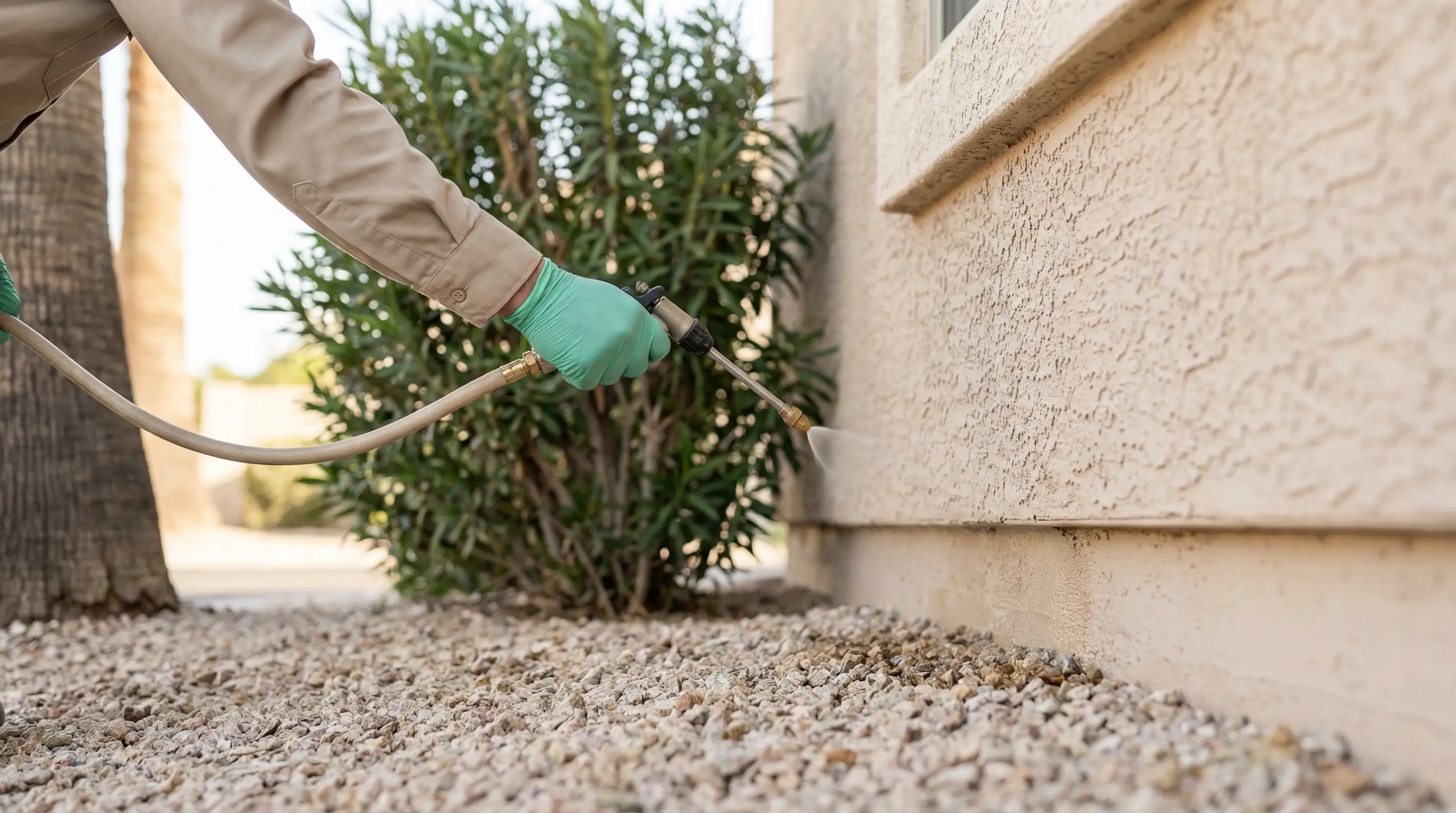
The single strongest conversion offer in Gilbert pest control PPC is scorpion home sealing — the physical inspection and sealing of entry points (gaps around pipes, cracks in stucco, garage door weatherstripping, AC penetrations) that scorpions use to enter structures. This service goes beyond chemical treatment and delivers a structural solution that many Gilbert homeowners have been seeking after repeated spray treatments failed to keep scorpions out.
Campaigns built around scorpion sealing language — "We seal your home against scorpion entry — guaranteed" — consistently outperform generic "scorpion control" campaigns in both CTR and average job value. The sealing service itself runs $400–$800 per property and creates a natural upsell to monthly maintenance treatment plans that protect the sealed home. This bundled offer — seal + monthly plan — represents the highest customer LTV path in Gilbert pest control, and it's a message national chains cannot credibly deliver at scale.
For operators ready to build this campaign structure, the MB Adv lead generation framework provides the landing page architecture and conversion tracking setup to measure plan sign-ups separately from one-time service calls — a critical distinction for ROI reporting in the recurring revenue model.
Google Partner Agency
We're a certified Google Partner Agency, which means we don’t guess — we optimize withGoogle’s full toolkit and insider support.
Your campaigns get pro-level execution, backed by real expertise (not theory).

Two data points about Gilbert's pest landscape change the campaign strategy for operators willing to act on them. Most local pest control companies know the scorpion problem — fewer understand the structural expansion of the roof rat market or the specific seasonality that drives termite search volume.
Roof Rat Expansion: The Silent Growth Category
Roof rats (Rattus rattus) began their significant expansion into the Phoenix East Valley in the late 2000s and have continued spreading through Gilbert, Queen Creek, and adjacent suburban corridors. Arizona Game and Fish data and urban pest control industry reports confirm sustained year-over-year growth in roof rat infestations throughout the Greater Phoenix area, with East Valley suburbs including Gilbert showing strong case growth from 2018–2025.
Gilbert's suburban environment is near-ideal roof rat habitat: mature citrus trees (fruit is a primary food source), Washingtonia palm trees (frond skirts provide nesting habitat), and dense oleander hedges and block walls that create protected travel corridors between properties. The typical Gilbert roof rat infestation pattern is property-to-property spread through adjacent landscaping — meaning a single infestation on a block frequently generates multiple neighboring searches within weeks.
For PPC purposes, the roof rat keyword category is meaningfully underserved by national chains — who treat rodent control generically — and represents a lower-CPC, lower-competition opportunity ($7–$15 CPC vs. $8–$18 for scorpion terms) that local operators can own with targeted messaging. Educational content about roof rat identification (vs. Norway rats), exclusion methodology, and the risk of chewed wiring in attic spaces converts this audience effectively because they're often in the early "what is this?" discovery phase of a problem they haven't named yet.
Termite Seasonality: The Spring Swarm Search Spike
Termite search volume in Gilbert follows a predictable annual pattern tied to swarm season. Desert subterranean termites in Arizona produce reproductive swarmers primarily in March through June, when winged termites emerge in large numbers, often inside or around structures, prompting immediate and urgent search activity from alarmed homeowners. "Termites in my house Gilbert," "termite swarm," and "termite inspection near me" see their highest volume during this window — and CPCs of $10–$22 are justified by the inspection-to-treatment conversion pipeline.
Drywood termite swarms occur in a separate late-summer window (August–October), creating a secondary spike. Operators who maintain termite campaigns year-round — not just during swarm peaks — build the Quality Score history that makes their campaigns perform better during peak periods than competitors who run seasonal campaigns and allow Quality Scores to decay in the off-season.
- March–June: Peak termite swarm search season — highest termite CPLs but highest job values ($500–$2,500 per treatment)
- July–September: Roof rat activity peaks — summer heat drives rats to seek cooler attic spaces; roof rat searches trend upward
- October–February: Scorpion control remains year-round priority; bark scorpions are active year-round in Gilbert's warm winters, entering structures seeking warmth
- Year-round: Monthly service plan renewals and sign-ups run continuously — 52-week demand is the structural advantage of Gilbert's warm climate vs. northern pest control markets with true off-seasons
Pest control PPC in Gilbert is a specialist's game. The bark scorpion knowledge, the termite biology, the roof rat expansion data — these aren't just marketing points. They're the content that turns a 3% CTR campaign into a 7%+ CTR campaign because the ad copy says something true and specific that a national chain ad doesn't say. Gilbert homeowners can tell the difference between a generic pest control ad and one written by someone who knows East Valley pest pressure.
MB Adv Agency builds pest control campaigns around the specific pest hierarchy of each market — not a national template. For Gilbert operators, that means scorpion specialization as the primary hook, monthly plan conversion as the primary goal, and termite inspection campaigns calibrated to Arizona's spring swarm season. Our lead generation framework tracks plan sign-ups and one-time treatment leads separately so you always know your true recurring revenue CPL — not a blended number that masks where the real ROI lives.
For Gilbert pest control operators ready to scale, our service plans are built for local operators with 3–15 technicians and a mix of recurring and on-demand service. Start with a Gilbert-specific strategy session to map your pest portfolio, service radius, and plan pricing to a campaign structure that maximizes the customer lifetime value you're actually delivering.

Frequently Asked Questions
Is scorpion PPC worth running year-round in Gilbert, AZ?
Yes — and this is one of the most important strategic distinctions between Gilbert and most pest control markets. Unlike northern markets where pest control search volume collapses in winter, Gilbert's bark scorpion population is active year-round. The Arizona bark scorpion does not go dormant in winter — it clusters in protected spaces (under bark, in wall voids, attic insulation) and continues to hunt nocturnally even in January when Gilbert lows are 45–55°F.
Scorpion search volume in Gilbert shows a clear seasonal pattern, but the floor is never zero: peak volume runs June–October (scorpions most active in summer heat, outdoor activity is highest), while November–March shows 40–60% of peak volume — still significant, and with CPCs 30–40% lower than summer peaks. Off-season scorpion campaigns ($8–$13 CPC in winter vs. $15–$18 in summer) are among the most cost-efficient lead generation opportunities in the Gilbert pest control market.
The compound benefit of year-round campaigns: Quality Score accumulation. Google's Quality Score algorithm rewards consistent historical performance. Campaigns that run year-round develop higher Quality Scores on scorpion terms, which translates to lower CPCs and higher ad positions during the high-competition summer peaks when it matters most. Operators who pause scorpion campaigns in winter and restart in May pay 20–30% more per click during their first six weeks back — exactly when competition is intensifying. Staying in the market year-round is an investment in peak-season efficiency.
What's a realistic CPL for pest control PPC in Gilbert, and how should I evaluate ROI?
The right question is not "what CPL can I achieve?" — it's "what CPL is profitable given my service model?" And in Gilbert, that calculation changes completely depending on whether you're acquiring one-time treatment customers or monthly plan customers.
For one-time treatment customers: Average job values of $150–$300 for general pest service, $400–$800 for scorpion sealing, $500–$2,500 for termite treatment. A CPL of $70–$120 is typical and profitable for scorpion and general pest one-time treatments. Termite inspection CPLs of $120–$180 convert to high-value treatment jobs that make even $200 CPL highly profitable when the treatment closes.
For monthly plan customers: At $80–$120/month, a new monthly plan customer generates $960–$1,440 in year-one revenue. A $100–$140 CPL for a monthly plan customer delivers a 7–10x first-year return — and in years two through five, that customer is essentially zero-CAC recurring revenue. Gilbert's stable homeowner base makes 4–6 year customer lifetimes realistic for quality service providers, pushing LTV to $4,000–$7,000 per acquired customer. At those lifetime numbers, a $140 CPL is a 30–50x return on investment over the customer lifecycle.
The tracking implication: measure your campaigns with separate conversion actions for plan sign-ups vs. one-time service calls. Most pest control operators track "leads" as a blended metric and then wonder why their CPL doesn't reflect their ROI. A $120 blended CPL that is 70% one-time treatments and 30% plan sign-ups looks different than a $120 CPL that is 70% plan sign-ups. Know the mix, and fund campaigns accordingly.