Pest Control PPC Port St. Lucie, FL
Port St. Lucie sits in the highest termite-risk zone in the United States — USDA Termite Zone D, "Very Heavy" infestation probability — while 84% homeownership creates one of Florida's most concentrated markets for recurring pest control contracts. In a city where no pest season ends and a single termite colony can cause $50,000 in structural damage, pest control is not a discretionary purchase. It's a necessity that homeowners search for the moment they see evidence — and that urgency is exactly what makes PPC the highest-ROI marketing channel in this category. <!-- stats-article-link --> <p><em>See how this city's Pest Control PPC costs compare nationally in our <a href="https://www.mbadv.agency/ppc-industry-statistics/pest-control-ppc-statistics">Pest Control PPC Statistics</a> report, featuring data from 40+ US cities.</em></p>
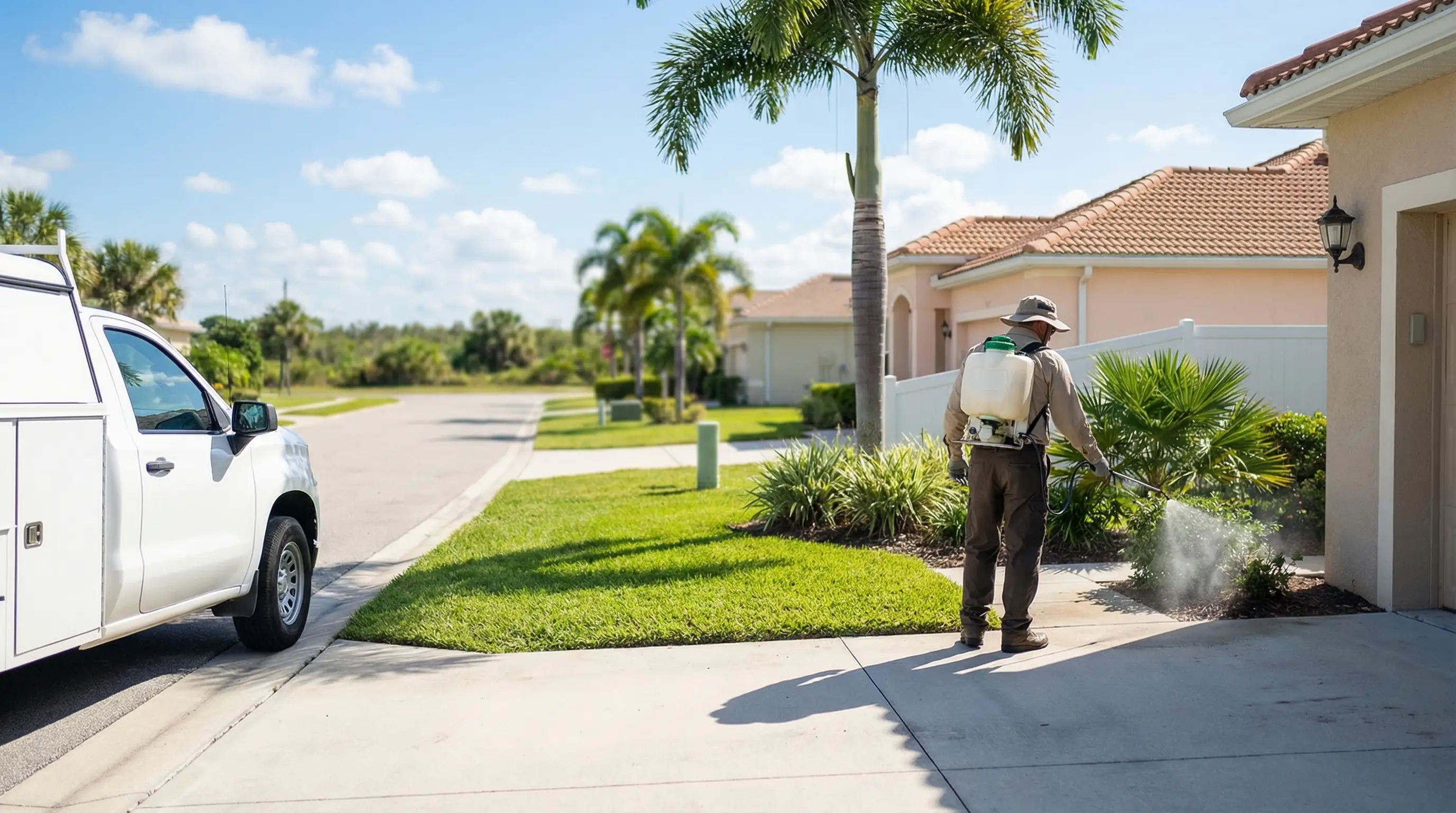
Pest control PPC in Port St. Lucie looks straightforward until you examine the actual search patterns. Demand is event-triggered — most homeowners don't search for pest control until they've seen a roach, found a termite tube, or noticed carpenter ant damage. That means your campaigns need to be perpetually ready, properly segmented, and structurally distinct across different pest categories that have very different commercial values.
The National Brand Competition Problem
Terminix, Orkin, Massey Services, and Hulett Environmental Services don't just have brand recognition in Port St. Lucie — they have dedicated PPC teams running automated campaigns against every meaningful keyword in the category. Bidding head-to-head against these brands on generic terms like "pest control Port St Lucie" ($6–$14 CPC) means you're in an auction with players who have 10x your budget and national data pools training their bidding algorithms. Local companies that fight this battle directly lose on volume and average CPL.
The solution is not to avoid competitive keywords entirely — it's to identify the segments where local companies have genuine structural advantages. Emergency wildlife removal ("snake in house Port St Lucie"), snowbird property protection ("pest control for vacation home PSL"), and Spanish-language pest keywords ("control de plagas Port St Lucie") are all categories where national brands either don't advertise specifically or have thin presence. Ben's Pest Solutions and The Pestop compete on local reputation, but they're not running the niche keyword categories that could drive leads at 30–50% lower CPL than generic pest control terms.
The Recurring vs. One-Time Conversion Mismatch
The second structural challenge in PSL pest control PPC is that most campaigns are optimized for one-time treatment leads — but the business model that drives actual profitability is the recurring monthly or bi-monthly contract. A homeowner who searches "pest control Port St Lucie" and converts to a one-time treatment generates $150–$400. The same homeowner on a recurring monthly plan generates $720–$1,440 per year with dramatically lower ongoing acquisition cost.
Landing pages that present recurring plans prominently — with subscription framing, monthly pricing, and a "cancel anytime" guarantee — convert at higher dollar-per-lead values than transactional pages. Yet most local pest control landing pages are built around the one-time service call, missing the opportunity to frame the initial purchase as the beginning of an ongoing protective relationship.
- General pest control: "pest control Port St Lucie," "exterminator PSL" — $6–$14 CPC
- Termite treatment: "termite inspection Port St Lucie," "termite treatment FL" — $10–$22 CPC
- Wildlife/critter removal: "wildlife removal Port St Lucie," "snake removal PSL" — $5–$12 CPC
- Mosquito control: "mosquito control Port St Lucie," "mosquito yard treatment PSL" — $4–$9 CPC
- Spanish-language: "control de plagas Port St Lucie," "exterminador PSL" — $3–$7 CPC (50%+ lower)
The wetland-adjacency factor creates a third challenge that many PSL pest companies haven't addressed in their campaigns. Port St. Lucie's residential development borders Florida scrub preserves and wetland conservation areas — meaning urban-wildlife interface pest problems (raccoons, opossums, armadillos, snakes, rats from preserve edges) are a consistent year-round reality. These wildlife removal searches are distinct from standard pest control, have different CPCs, and require separate ad groups and landing pages to convert at their actual potential.
Pest control PPC in Port St. Lucie works best when structured around three distinct customer intent states: immediate pest emergency, planned prevention (recurring), and specialty treatment (termites, wildlife). Each intent requires different ad copy, different landing pages, and different bidding logic.
Campaign Architecture: Emergency, Prevention, Specialty
Track 1 — Emergency Pest Response: Targeting high-urgency searches ("cockroaches in kitchen," "ants in house Port St Lucie," "rodents in attic PSL"). These convert at 8–14% CVR with minimal deliberation — the homeowner has seen the pest and wants someone out today. Call-only ads perform best here. Landing pages should feature same-day service availability, phone number prominence, and a "Book in 2 minutes" CTA. Budget 35–40% of total pest control spend on this campaign track — it drives the highest-volume, highest-converting initial appointments.
Track 2 — Recurring Prevention Plans: Targeting homeowners who search for ongoing protection ("monthly pest control Port St Lucie," "pest prevention plan PSL," "quarterly exterminator"). Landing pages for this track need subscription framing prominently: "$89/month, cancel anytime, covers all common Florida pests including ants, roaches, and outdoor perimeter." The 84% homeownership rate in PSL means most searchers own their property — recurring contracts make economic sense to them in a way that renter demographics resist. This track has the highest LTV per conversion.
Track 3 — Specialty Treatments (Termites + Wildlife): Termite keywords command higher CPCs ($10–$22) but convert at exceptional rates (10–16%) because termite fear — justified in PSL's Zone D termite risk area — drives fast, committed action. Wildlife removal campaigns capture the preserve-adjacency dynamic with lower CPCs ($5–$12) and surprisingly high conversion rates (searches like "snake in my yard PSL" convert in minutes, not days).
Keyword Groups with CPC Ranges
- Emergency general: "roaches Port St Lucie," "ants in house PSL," "pest control same day" — $6–$14 CPC
- Termite specialty: "termite inspection Port St Lucie," "termite treatment PSL FL" — $10–$22 CPC
- Wildlife removal: "wildlife removal Port St Lucie," "critter removal PSL," "snake removal" — $5–$12 CPC
- Recurring/prevention: "monthly pest control Port St Lucie," "pest prevention plan PSL" — $5–$11 CPC
- Spanish-language: "control de plagas Port St Lucie," "exterminador cerca de mi" — $3–$7 CPC
Spanish-language campaign ROI: This deserves specific emphasis. PSL's 24% Hispanic population (55,900 people) is overwhelmingly underserved by Spanish-language pest control advertising. "Control de plagas Port St Lucie" runs at $3–$7 CPC — 50–60% below equivalent English keywords — with near-zero local competition from other pest control advertisers. A dedicated Spanish-language ad group with Spanish landing pages ("¿Plagas en su hogar? Llamenos hoy") targeting PSL's Hispanic-dense zip codes generates leads at CPLs of $20–$45 vs. the English market average of $30–$90.
Seasonal budget allocation: March–May (termite swarming season): boost termite campaign budget 50%. June–August (peak mosquito + roach season): boost emergency campaign budget 40%. September–October (post-hurricane wildlife displacement): boost wildlife removal budget 60%. November–February (snowbird season): boost vacation-home protection and recurring plan campaigns.
Google Partner Agency
We're a certified Google Partner Agency, which means we don’t guess — we optimize withGoogle’s full toolkit and insider support.
Your campaigns get pro-level execution, backed by real expertise (not theory).

Port St. Lucie has a pest control market characteristic that makes it one of Florida's most attractive PPC environments for local operators: the national brands that dominate generic keywords are surprisingly weak on the specific sub-niches where PSL's unique environment creates outsized demand.
The Termite Market Reality
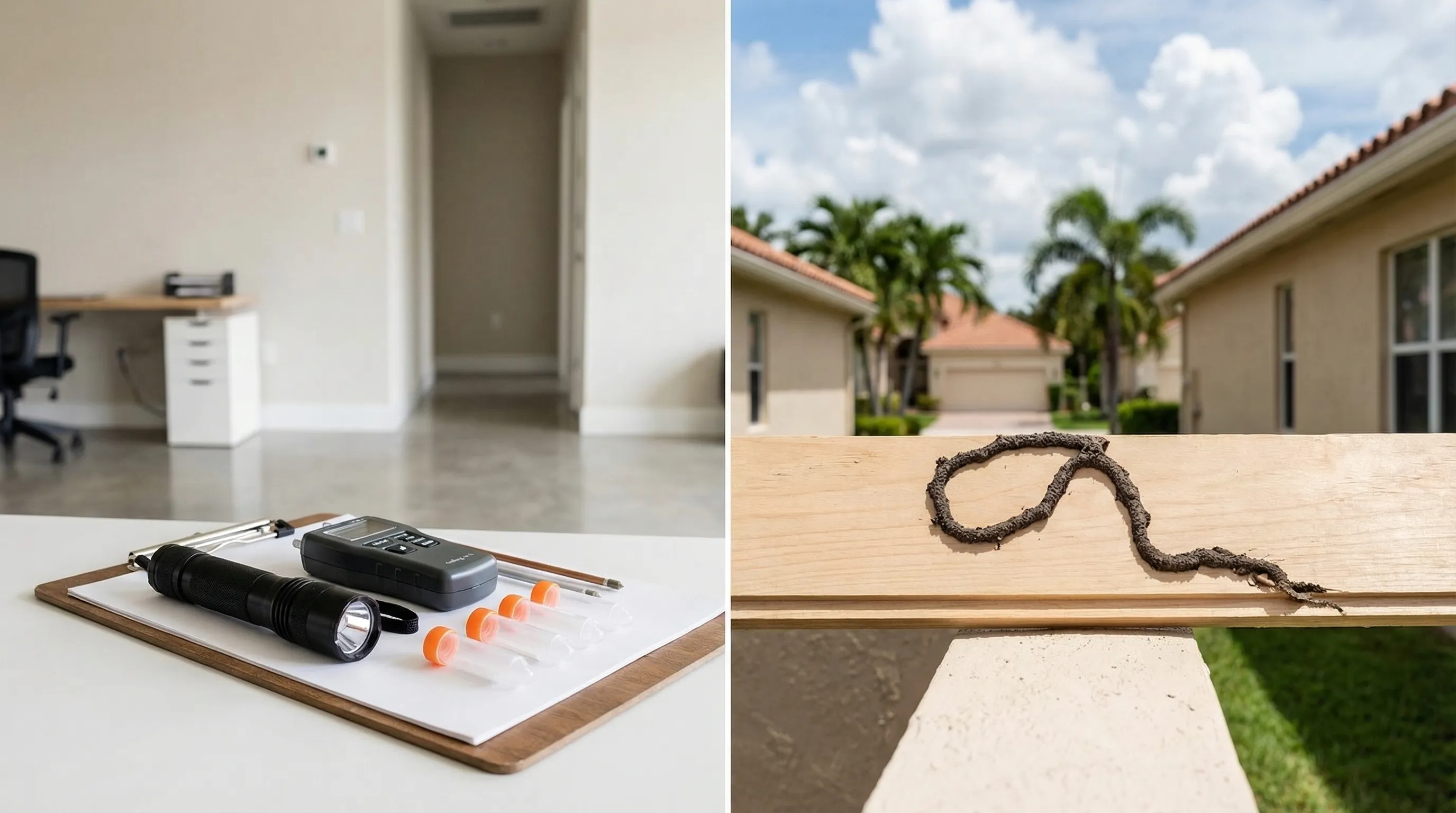
St. Lucie County's USDA Zone D "Very Heavy" termite designation is not a marketing exaggeration — it's a scientific classification based on soil temperature, moisture, and documented infestation rates. Subterranean termite colonies in PSL's climate can number in the millions, are active 12 months per year, and can inflict $5,000–$50,000 in structural damage before visible evidence appears. This creates a market where fear-based PPC messaging is not manipulative — it's factually accurate and genuinely useful to homeowners.
Swarming season in PSL runs March through May, when Formosan and Eastern Subterranean termite alates (winged reproductives) emerge to establish new colonies. Search volume for "termite swarm Port St Lucie," "termite inspection near me," and "termites in my home FL" spikes 200–400% during this window. Companies with termite campaigns already running at pre-season baseline — rather than frantically launching campaigns when swarm season starts — capture the early-season volume at pre-spike CPCs ($10–$14) before the category heats up to $18–$22 CPC by peak swarm weeks.
The Snowbird Property Protection Opportunity
Key insight: Port St. Lucie has a meaningful population of vacation and seasonal homes that sit unoccupied from May through September — precisely when Florida's pest pressure is at its absolute peak. Homeowners who are in Ohio, Michigan, or New York during the summer cannot visually monitor their PSL homes for pest activity. They search from a distance: "pest control for vacation home Port St Lucie," "property protection pest control PSL," "pest monitoring for unoccupied home FL."
These searches have very low CPC ($4–$9) because they're highly specific and national brands don't target them. The conversion intent is exceptionally high — a snowbird property owner who reaches a local pest company offering a "Seasonal Property Protection Plan" (monthly monitoring while they're away, full treatment upon return) is essentially already sold. This is a standalone campaign that costs almost nothing to run and generates some of the highest-LTV recurring customers in the pest control category.
The hurricane-wildlife displacement dynamic adds a third dimension unique to PSL. When a named storm affects St. Lucie County, the wetland preserves adjacent to residential neighborhoods experience flooding that drives rats, raccoons, armadillos, and snakes into suburban yards and attics. Post-hurricane wildlife removal searches spike 300–600% within 24–48 hours. Companies with pre-positioned wildlife removal campaigns activate into this surge automatically; everyone else is writing ads in the aftermath.
Pest control in Port St. Lucie is one of the most structurally favorable PPC categories in the city: year-round demand, recurring revenue model, high homeownership rate, Spanish-language gap, and a termite risk level that keeps replacement cycle demand permanently elevated. The average PSL pest control customer who signs a recurring monthly contract is worth $2,000–$4,500 over a three-year relationship — meaning a $55 CPL is not a cost, it's an investment with a documented 40:1 return over the customer lifetime.
MB Adv Agency builds pest control PPC campaigns with Port St. Lucie's specific dynamics built in: termite swarming season protocols, snowbird vacation-home campaigns, Spanish-language ad groups for the 24% Hispanic market, and wildlife removal campaigns that activate during post-hurricane periods. We structure recurring plan conversion pages that capture customers at higher LTV than transactional one-time treatment pages, and we segment emergency, prevention, and specialty campaigns so each intent category gets the ad copy, landing page, and bidding logic it requires.
If your pest control PPC is running a single generic campaign against Terminix and Orkin's national budgets, you're fighting the wrong battle. View our plans or schedule a free consultation — we'll show you exactly which PSL pest control segments your current campaign is leaving uncontested.
Frequently Asked Questions
What makes pest control PPC different in Port St. Lucie vs. other Florida cities?
Three things make Port St. Lucie's pest control PPC market structurally distinct. First, the termite risk level. PSL sits in USDA Zone D — "Very Heavy" — the highest termite infestation classification in the US. This isn't shared by most Florida cities north of Palm Beach County. The combination of subtropical heat, humidity, and sandy soil creates ideal conditions for both Subterranean and Formosan termite colonies year-round. Termite inspection campaigns in PSL convert at 10–16% CVR — among the highest in any pest control sub-category — because homeowner urgency is genuine and well-founded.
Second, the wildlife interface. PSL's residential development directly borders wetland preserves and Florida scrub conservation areas. Urban-wildlife conflicts (rats, raccoons, snakes, armadillos from preserve edges) are a recurring reality that doesn't exist at this frequency in more urban Florida markets like Boca Raton or Fort Lauderdale. This creates a wildlife removal PPC sub-market at low CPCs ($5–$12) with essentially no local competitor campaigns targeting it specifically.
Third, the snowbird property market. Seasonal homes sitting unoccupied May–September in Florida's peak pest season are a PSL-specific demand driver. The vacation-home protection campaign category barely exists as a defined PPC segment nationally, yet in Port St. Lucie it represents a genuine, high-converting niche that local operators can own at minimal cost.
What monthly budget do pest control companies need for Google Ads in Port St. Lucie?
The minimum effective budget for pest control PPC in Port St. Lucie is $1,500/month — lower than most home services categories because CPCs are genuinely lower ($4–$22 range vs. $25–$65 for roofing). At $1,500/month with a $55 average CPL, you generate roughly 27 leads. At a 30% close rate on inbound paid leads, that's 8 new customers per month. If 60% sign recurring plans ($99/month average), that's 5 new recurring accounts worth $1,188/year each in year-one revenue — from a $1,500 ad spend.
For aggressive growth including termite, wildlife, and Spanish-language campaigns running simultaneously, budget $2,500–$4,000/month. This covers all three intent tracks without budget cannibalization and allows smart bidding to optimize across sufficient daily conversion volume. The termite campaign specifically benefits from sustained budget — the algorithm needs 30–40 termite-specific conversions to optimize accurately, and termite leads are lower-volume than general pest queries.
Seasonally, March–May (termite swarming) and June–August (peak pest season) warrant 30–40% budget increases. The September–October post-hurricane wildlife period is worth pre-setting a $500–$1,000 emergency reserve that automatically activates when a named storm warning is issued for St. Lucie County. The ROI math on that reserve — capturing wildlife removal leads at $25–$40 CPL during a demand spike — makes it one of the most efficient periodic investments in the entire PSL pest control PPC calendar.