Real Estate PPC Fort Myers, FL
The Cape Coral–Fort Myers metro area added more new residents per capita than almost any other Florida market over the past decade, and that in-migration engine keeps real estate transaction volume elevated even as city-level prices have moderated. For agents and brokers investing in Google Ads, the opportunity is real — but the campaign structure that works in this market is specific to how Fort Myers buyers and sellers actually search. <!-- stats-article-link --> <p><em>See how this city's Real Estate PPC costs compare nationally in our <a href="https://www.mbadv.agency/ppc-industry-statistics/real-estate-ppc-statistics">Real Estate PPC Statistics</a> report, featuring data from 40+ US cities.</em></p>
Fort Myers real estate PPC looks straightforward on the surface — high search volume, clear commercial intent, broad SMB advertiser pool. The reality is more complex, and it trips up agents who haven't studied how this specific market searches. The Cape Coral–Fort Myers MSA generates search demand from four overlapping buyer/seller profiles that each require different messaging, different landing pages, and different keyword strategies. Running a single campaign for all of them wastes budget and converts poorly across every segment.
The Four Buyer/Seller Profiles and Why They Don't Mix
The relocation buyer is Fort Myers' most distinctive segment. Lee County is a primary destination for retirees and remote workers from Illinois, Ohio, Michigan, and New York — and their search behavior reflects it. They search for neighborhood comparisons ("Cape Coral vs. Fort Myers," "best neighborhoods Fort Myers for families"), lifestyle questions ("is Fort Myers a good place to retire"), and long-tail queries ("homes for sale Fort Myers under 400k waterfront"). These are research-stage searches that require educational landing pages and lead nurture sequences, not aggressive conversion CTAs. Running them through a standard "call now" campaign produces low conversion rates and misleading CPL data.
The local mover — someone already in Lee County trading up, downsizing, or relocating within the MSA — searches with more transactional intent: "3 bedroom homes Fort Myers," "Fort Myers homes with pool," "real estate agent Cape Coral." These convert faster and at lower CPL, but they compete with Zillow, Realtor.com, and Homes.com for every click. The national portals dominate organic search in this category; PPC is the mechanism local agents use to compete directly for these buyers without depending on SEO.
The investor and distressed buyer segment has been elevated by post-Ian dynamics. Lee County's elevated percentage of vacant properties (22.6% vacancy rate citywide), ongoing insurance-related distress sales, and general investor interest in Florida Gulf Coast assets create a specific keyword cluster that national portals don't serve well: "investment property Fort Myers," "off-market homes Lee County," "distressed property Cape Coral." Agents with investor networks and off-market inventory can dominate this segment with targeted PPC at lower CPCs than the mass-market buyer terms.
The seller segment operates on its own search logic entirely. "What's my Fort Myers home worth," "sell my home Fort Myers fast," "home value Cape Coral" — these are seller intent searches and they require a completely separate campaign with home valuation landing pages, not property listings. Seller campaigns in this market typically run at 20–30% lower CPL than buyer campaigns because the competition is less intense and the intent is highly specific.
Why National Portals Dominate and What That Means for PPC
Zillow, Realtor.com, and Homes.com effectively own organic real estate search in Fort Myers. No individual agent or boutique brokerage is going to outrank them for "homes for sale Fort Myers FL" in the near term. This reality shapes the PPC opportunity: Google Ads lets local agents appear above the organic results for queries where the portals would otherwise dominate, at a price that — when the campaign is structured correctly — produces leads at a lower cost than paying Zillow for leads through their portal programs. The average Zillow Premier Agent lead in a Florida coastal market costs $35–$80 per lead; a well-run Google Ads campaign for Fort Myers real estate should produce leads at $80–$150 CPL with full ownership of the relationship and no portal intermediary.
Fort Myers real estate PPC works when it's built around specific, segmented intent rather than broad market coverage. The agents who get the best CPL aren't bidding on the most keywords — they're bidding on the right keywords for each segment and sending traffic to landing pages designed for that specific searcher's mindset.
Campaign Structure by Segment
- Buyer — Local/Transactional (40% of budget): Keywords: "homes for sale Fort Myers FL," "Cape Coral homes for sale," "Fort Myers real estate agent," "Lehigh Acres homes under 300k," "waterfront homes Cape Coral" — CPC range $4–$10. Landing pages: active listing galleries with IDX integration, fast load speed, map search. Primary conversion: form fill for "See Available Listings." These leads are in the market now and want to see inventory.
- Seller Intent (30% of budget): Keywords: "sell my home Fort Myers," "what is my Fort Myers home worth," "Fort Myers home value estimate," "Fort Myers listing agent" — CPC range $3–$8. Landing page: instant home valuation tool or "Free CMA Request" form. Lower CPC and lower competition than buyer terms; seller leads are often the highest LTV because a listing converts at $7,000–$18,000+ in commission on a single transaction.
- Investor/Off-Market (20% of budget): Keywords: "investment property Fort Myers FL," "distressed property Cape Coral," "off-market homes Lee County," "Fort Myers rental property" — CPC range $3–$7. Very low competitive density — national portals don't serve this segment well. An agent with investor relationships can dominate this keyword group at low CPCs and convert at above-average rates because the searcher has a specific, non-portal-served need.
- Relocation/Research (10% of budget): Keywords: "moving to Fort Myers FL," "Cape Coral vs Fort Myers neighborhoods," "best areas to live Fort Myers" — CPC range $2–$5. Long consideration cycle. Landing pages: neighborhood guide, relocation FAQ, market data. Conversion goal is email capture, not immediate consult. Pairs with email drip sequence. CPL will be high initially but lead quality is strong — relocation buyers have $350,000–$600,000+ budgets.
Targeting Strategy for the MSA
The Cape Coral–Fort Myers MSA is geographically dispersed. Cape Coral is the largest city in the region at ~200,000+ residents and generates its own distinct search demand separate from Fort Myers city proper. Estero and Bonita Springs are high-income sub-markets that attract a different buyer demographic than Lehigh Acres (high density, price-sensitive) or Fort Myers Beach (vacation/investment-oriented). Geo-targeting to "Fort Myers metro" without distinguishing these sub-markets means your ad copy and landing pages can't be specific enough to convert optimally.
For agents who serve the full MSA, the solution is ad group–level geo customization: different ad copy for Cape Coral searches vs. Fort Myers city searches vs. Estero searches. "Cape Coral Waterfront Specialist" in a Cape Coral-targeted ad group outperforms "Fort Myers Real Estate Agent" for the same searcher — the specificity signals relevant expertise. This is a 15–25 minute campaign setup task that meaningfully lifts CTR and conversion rate across every geographic sub-market.
Google Partner Agency
We're a certified Google Partner Agency, which means we don’t guess — we optimize withGoogle’s full toolkit and insider support.
Your campaigns get pro-level execution, backed by real expertise (not theory).

The Fort Myers real estate market stat that most agents haven't internalized: homeownership in Fort Myers city is only 49.1% — meaning more than half the city rents. That number matters for PPC because it defines the buyer opportunity differently than agents assume. The homeownership rate in the broader MSA is higher (Lee County as a whole is closer to 65%), but the city core skews toward renters — many of whom are relocation candidates who've been renting while they decide whether to buy. Campaigns targeting "rent to own Fort Myers" or "first-time homebuyer Fort Myers FL" tap into this specific segment at CPCs ($3–$6) far below the competitive mass-market buyer terms.
The New Construction Opportunity
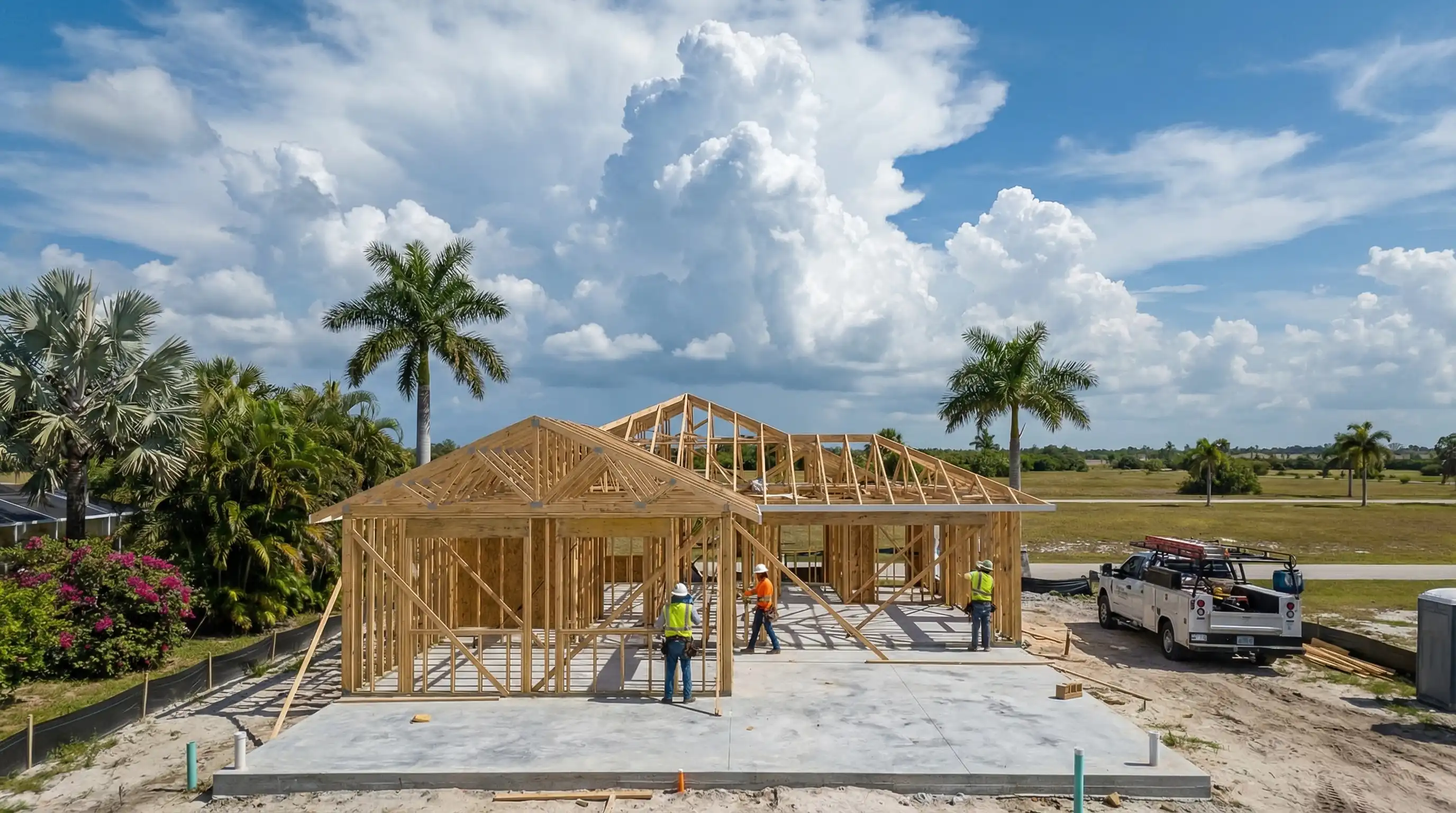
Fort Myers and the surrounding MSA have been among the most active new construction markets in Florida since 2020. Communities like Babcock Ranch (Punta Gorda/Charlotte County, adjacent to the MSA), various Cape Coral canal-front subdivisions, and multiple Lehigh Acres master-planned developments generate sustained search demand for "new construction homes Fort Myers FL" and "new build homes Cape Coral" — searches that portals serve poorly because their inventory lags builder listings. Agents with builder relationships and access to pre-market inventory can dominate this keyword group.
- New construction buyer keywords: "new construction homes Fort Myers," "new homes Cape Coral FL," "builder homes Lee County" — CPC: $4–$9
- Pre-construction and investor keywords: "pre-construction condos Fort Myers," "new development Cape Coral" — CPC: $3–$7
- Seasonal timing: New construction search peaks October–February (snowbirds and Northern relocators begin their annual Fort Myers research cycles as weather turns cold up north)
The in-migration engine is the underlying data point that makes Fort Myers real estate PPC viable at sustained investment levels. Lee County has recorded net population growth of 20,000–30,000 residents annually for the past five years. Each new household is a potential buyer within 1–3 years of arrival. The agent who captured them as a renter referral or a relocation guide reader becomes the listing agent when they're ready to sell their first Florida home. Real estate PPC in Fort Myers isn't just lead generation — it's market position building in one of the fastest-growing metros in the U.S.
Fort Myers real estate PPC requires a campaign architecture that most agents haven't built — segmented by buyer type, matched to the geographic sub-markets within the MSA, and calibrated for a market where 50.9% of residents rent and where relocation buyers from Northern states behave fundamentally differently from local movers. Generic "Fort Myers real estate" campaigns capture some of this market. Segmented, intent-matched campaigns capture all of it.
The MSA's geographic complexity alone — Cape Coral, Lehigh Acres, Estero, Bonita Springs, Fort Myers Beach, Sanibel, and the Fort Myers city core each carrying distinct buyer demographics and price points — means campaign localization isn't optional, it's the structural requirement for competitive CPL. An agent who runs a single campaign across the entire metro pays the blended CPC but converts at the blended rate — which is always worse than the rate achievable through sub-market targeting.
MB Adv Agency builds real estate PPC programs for agents and boutique brokerages who want to compete directly for buyer and seller leads without depending on portal programs. Our real estate clients in comparable Florida coastal markets run at $80–$130 CPL on buyer campaigns and $60–$100 CPL on seller valuation campaigns — consistently below what Zillow Premier Agent charges for the same lead in the same market, with full ownership of the client relationship from click one. See our PPC management services or pricing tiers to find the right fit for your Fort Myers real estate budget.

Frequently Asked Questions
Should a Fort Myers real estate agent use Google Ads or Zillow for leads?
Both have a role, but they're not substitutes — they serve different moments in the buyer journey. Zillow Premier Agent captures buyers who are already deep in the search process: they're on Zillow browsing listings, they see your ad, they click because they're ready to talk to an agent now. These leads convert fast but they're expensive ($35–$80 per lead in the Fort Myers market), you're competing with 3–5 other agents on the same lead, and Zillow owns the relationship history.
Google Ads captures buyers and sellers at an earlier, higher-intent moment — when they type "Fort Myers realtor" or "sell my home Fort Myers" into the search bar, they're actively looking for an agent, not browsing listings. You're the result they see first. They land on your page, not Zillow's. The relationship is yours from the first click.
CPL on well-structured Google Ads campaigns in Fort Myers runs $80–$150 for buyer leads and $60–$100 for seller leads — comparable to or below Zillow per lead, with full relationship ownership. The trade-off is that Google Ads requires more setup and management than a Zillow subscription. But agents who build a Google Ads program that works own their lead generation — they're not dependent on Zillow's pricing or rule changes. For Fort Myers agents who plan to be in the market for 5+ years, that independence is worth the management investment.
What budget does a Fort Myers realtor need to run Google Ads effectively?
The minimum effective budget for a Fort Myers real estate Google Ads campaign depends on which segment you're targeting. For a buyer lead campaign focused on local movers and relocation buyers, the floor is $1,500–$2,000/month in ad spend — enough to generate 12–20 leads per month at $80–$130 CPL. Below that threshold, impression share is too low to learn from and optimize; the algorithm needs volume to identify your best-converting keyword and audience combinations.
For agents who want to run both buyer and seller campaigns — the most cost-efficient combination, since seller leads cost 30–40% less per lead — a total budget of $2,500–$3,500/month covers both segments with meaningful volume in each. At this level, a well-managed campaign should produce 15–25 buyer leads and 8–15 seller leads per month in the Fort Myers market, depending on seasonality.
Seasonality matters: Fort Myers real estate search peaks October–February as Northern snowbirds and relocation buyers begin their annual research cycle. Budget should be 120–140% of annual average during this window. March–May is the transaction peak (deals close on properties researched in winter); June–September is the slowest period for relocation-driven search, though local movers stay active year-round. Adjusting budget seasonally rather than running flat spend is one of the highest-leverage optimizations available for this market — and it's a change most agents haven't made.