Roofing PPC Chattanooga, TN
Hamilton County averages 4–6 documented hail events per year, and Chattanooga sits at the intersection of two major interstates generating steady storm-damage claim traffic — but most roofing PPC campaigns here are built for generic nationwide markets, not the specific surge-and-recover rhythm that defines the Chattanooga roofing season. <!-- stats-article-link --> <p><em>See how this city's Roofing PPC costs compare nationally in our <a href="/resources/roofing-ppc-statistics">Roofing PPC Statistics</a> report, featuring data from 40+ US cities.</em></p>
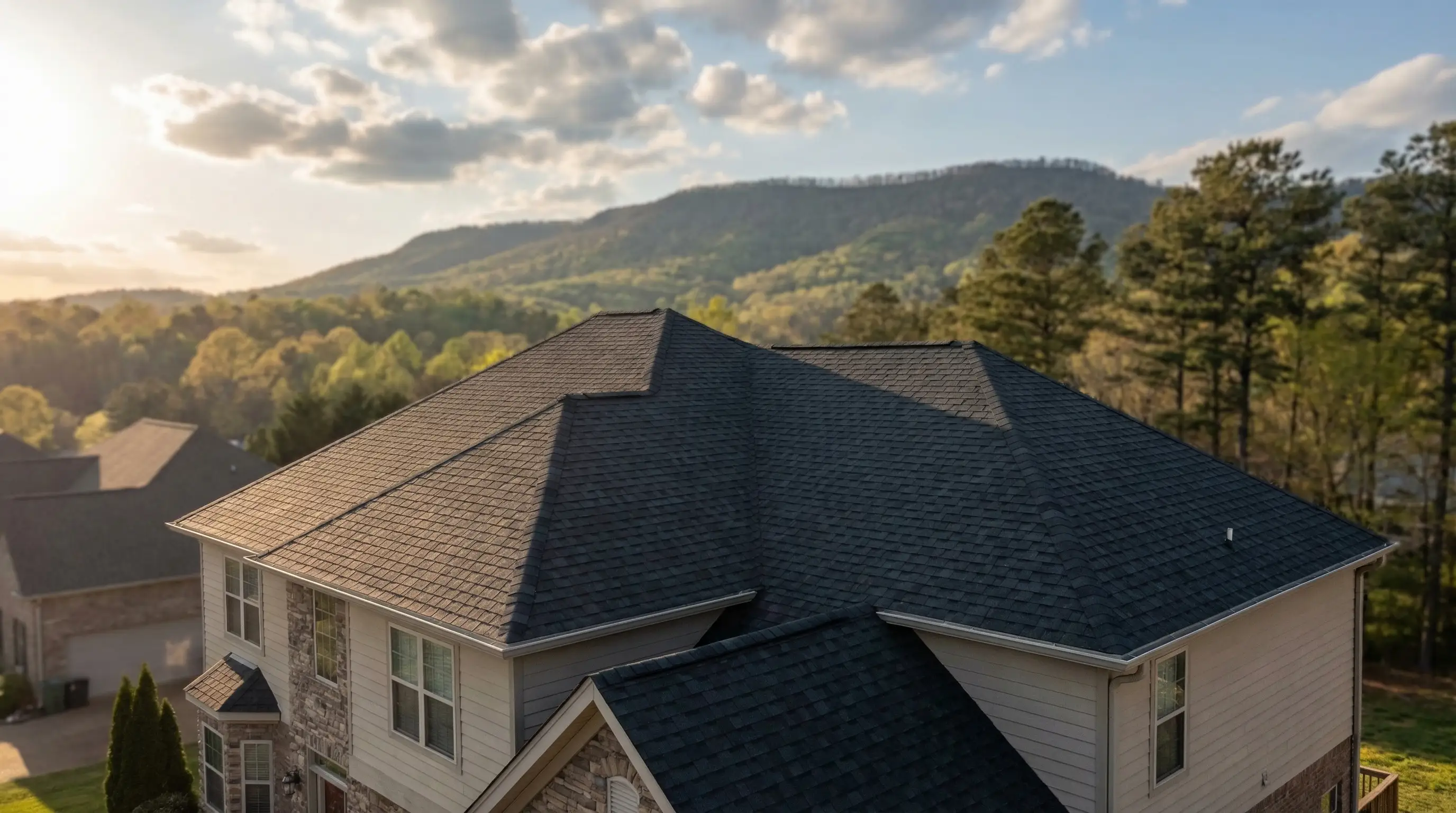
Chattanooga's roofing market has a characteristic that separates it from most mid-market US cities: it experiences two entirely different competitive environments within the same calendar year. During baseline periods — the majority of the year — an estimated 80–140 roofing contractors operate in Hamilton County, ranging from established local firms like Chattanooga Roofing Co. and Covenant Roofing to smaller owner-operated crews. Competition is real but manageable, CPCs run $22–$55, and campaigns structured around replacement research and property renovation keywords generate predictable lead flow at $90–$200 CPL.
Then a hail event hits. Within 48 hours, out-of-state storm-chasers — operators from Texas, Oklahoma, and Florida who track severe weather systems and deploy sales teams to affected markets — arrive in force. They have cash, they have crews, and they have established insurance claim playbooks. They also have Google Ads accounts that activate the moment a weather event is confirmed, driving CPCs for storm-damage keywords from $30 to $100+ within a single news cycle. Local contractors who aren't running active campaigns at the moment of the event don't just lose clicks — they lose the market to operators who will be gone in six weeks.
The Insurance Claim Gap
The single most expensive mistake Chattanooga roofing contractors make in their Google Ads campaigns is failing to capture insurance-funded replacement leads. Chattanooga's median property value of $283,000 (up 9.26% year-over-year) means that when a hailstorm damages a residential roof, the homeowner's first call is often to their insurance company, not a roofer. Their second call — after they've confirmed coverage — is to find a contractor who "works with insurance." Campaigns that don't include insurance claim keywords and landing pages that specifically address the insurance process miss this high-value traffic entirely.
Insurance-funded jobs in Chattanooga average $15,000–$35,000 per completed project — significantly above the out-of-pocket replacement average of $8,000–$20,000. A campaign that can't capture "does my insurance cover this" searches is leaving the highest-ticket jobs on the table. The keyword opportunities are concrete: "roof insurance claim Chattanooga," "hail damage roof repair insurance," "insurance adjuster roofing estimate Chattanooga" — these queries represent homeowners who are already pre-qualified for a high-ticket job.
Storm-Chaser Displacement
Local contractors have one structural advantage over storm-chasers that PPC can amplify: permanence. A homeowner who discovers the storm-chaser who replaced their roof has disappeared when they file a warranty claim has a cautionary tale — and that tale circulates on Nextdoor, Facebook neighborhood groups, and Google reviews. Ad copy and landing pages that lead with "Chattanooga-based contractor, warranty backed by a local business" directly counterprogram the storm-chaser model. In a post-storm market, this message converts at rates 20–35% above generic "fast service, free estimate" copy — but only if you've built the campaign infrastructure before the storm arrives.
Roofing PPC in Chattanooga requires two parallel campaign structures running simultaneously: a baseline campaign for standard replacement and renovation traffic, and a storm-response campaign that can activate at full budget within two hours of a confirmed hail event. These are not the same campaigns with different budgets — they have different keywords, different ad copy, different landing pages, and different bidding strategies.
Baseline Campaign Structure
The standard Chattanooga roofing campaign runs year-round, targeting replacement research, general roofing inquiries, and inspection-related keywords. This campaign maintains your Quality Score, builds account history, and generates consistent lead flow during non-storm periods. Keyword groups and CPC ranges:
- Standard replacement: "roof replacement Chattanooga TN," "roofing contractor Hamilton County," "new roof Chattanooga" — $22–$45 CPC
- Repair and inspection: "roof repair Chattanooga," "roof inspection Chattanooga TN," "leaking roof Chattanooga" — $18–$38 CPC
- Insurance claim (baseline): "roof insurance claim Chattanooga," "hail damage assessment Chattanooga" — $25–$55 CPC
- Hyper-local replacement: "roofing company Hixson TN," "roofer Ooltewah TN," "roof replacement Ringgold GA" — $15–$30 CPC (cross-state and suburban, less competition)
- Commercial roofing: "commercial roofing Chattanooga," "flat roof repair Chattanooga TN" — $20–$45 CPC
Storm-Response Campaign Activation Protocol
Pre-build this campaign structure before storm season (activate by March 1st). When a hail event of 0.75"+ is documented in Hamilton, Bradley, Walker, or Catoosa counties, activate within two hours with a 3–5x budget increase. Storm-response keyword groups:
- Storm damage urgent: "hail damage roof repair Chattanooga," "storm damage roofer Chattanooga TN," "roof damage after storm" — $30–$70 CPC baseline; $55–$100+ CPC during active surge
- Emergency repair: "emergency roofer Chattanooga TN," "roof leak emergency Hamilton County," "tarp roof Chattanooga" — $35–$70 CPC
- Insurance claim surge: "hail damage roof insurance Chattanooga," "insurance adjuster roof estimate," "file roof insurance claim TN" — $30–$60 CPC
Storm-response ad copy must lead with two critical claims: local contractor (not a storm-chaser) and same-day assessment availability. Homeowners have learned to be skeptical of out-of-state operators after Tennessee's 2021–2023 storm seasons left warranty claims unresolved. Your local permanence is the primary conversion advantage — make it the headline, not the fine print.
Geographic targeting expands during storm response: the same weather system that drops hail on Hamilton County typically affects Catoosa County GA and Walker County GA simultaneously. A cross-state campaign targeting Ringgold and Fort Oglethorpe during storm events captures market that Chattanooga-area contractors are positioned to serve but often miss because their targeting is set to Tennessee-only.
Google Partner Agency
We're a certified Google Partner Agency, which means we don’t guess — we optimize withGoogle’s full toolkit and insider support.
Your campaigns get pro-level execution, backed by real expertise (not theory).

Hamilton County's storm exposure profile is more concentrated than most Tennessee markets because of a geographic quirk: the Tennessee River valley acts as a channel for storm systems moving northeast from Alabama and Mississippi. NOAA Storm Events Database records show Hamilton County averaging 4–6 hail events per year with hailstone diameter of 0.75"+ — the threshold that triggers insurance claims and meaningful roofing demand. This isn't random severe weather. It's a documented annual pattern that creates predictable demand surges.
The Cross-State Opportunity
One of the most underexploited angles in Chattanooga roofing PPC is the cross-state service area. Walker County, Georgia (Rossville, LaFayette, Rock Spring) and Catoosa County, Georgia (Ringgold, Fort Oglethorpe) are geographically contiguous with Hamilton County — many Chattanooga roofing contractors already service these areas under Tennessee and Georgia contractor licenses. Google Ads CPC for roofing keywords in these Georgia ZIP codes runs 20–35% below Chattanooga proper because fewer contractors have built out Georgia-targeted campaigns. The storm events that hit Hamilton County hit these counties at the same time. The opportunity to dominate cross-state storm-damage lead volume at lower CPCs is there for contractors who build it out.
The second market insight is the real estate appreciation effect on replacement timing. Chattanooga's 9.26% year-over-year property value appreciation means homeowners' equity positions are strengthening. A homeowner sitting on $140,000 in equity is a different sales prospect than one underwater — they're more likely to choose premium materials, more likely to approve additional work discovered during the project, and more likely to finance upgrades through home equity. This shifts the optimal campaign message from "we're affordable" to "we protect your investment." Replacement campaigns targeting Ooltewah, East Brainerd, and Signal Mountain — Chattanooga's equity-rich suburban clusters — perform best with messaging around material quality, warranty terms, and property value protection.
Seasonal Lead Acquisition Windows
Beyond storm-surge periods, two annual windows generate high-quality leads at below-average CPCs:
- February–March (Pre-Season): Homeowners begin thinking about roofs they deferred through winter. Competition is lower, CPCs are 30–40% below summer rates, and campaigns built in this window have two months of Quality Score history before peak season. This is when you build the account strength that reduces per-click costs during the expensive June–September window.
- October–November (Post-Storm/Pre-Winter): Homeowners who sustained damage in summer storms but delayed repairs act before winter makes roof work impossible. Lower competition than storm-surge periods, but high-intent leads with real urgency. Fall campaigns focused on "before winter hits" messaging convert strongly in this window.
Contractors who understand and pre-fund these two pre-season windows consistently outperform competitors who only activate their campaigns reactively after a storm appears in the forecast.
Chattanooga roofing PPC requires a campaign manager who understands the Tennessee River basin storm pattern, the cross-state service area opportunity, and the insurance claim keyword landscape — not one who applies a generic "home services" template built for flat suburban markets in the Midwest. The difference shows up immediately in campaign structure: pre-built storm-response campaigns, Georgia-targeted ad groups, and insurance claim landing pages that are live before the first hail event hits.
MB Adv Agency builds roofing campaigns for contractors who want to win storm-damage leads before the out-of-state operators arrive. Our Chattanooga PPC management service includes pre-configured storm-response protocols and cross-state targeting built into every campaign. We also handle the ongoing negative keyword management that keeps budget off non-converting searches — the 15–25% budget waste that most roofing campaigns don't address until they've already burned through it.
See our pricing tiers — roofing contractors in active storm markets typically start at our Aggressive Push level to ensure budget flexibility for storm-surge periods. Our PPC lead generation service is the framework we use for every roofing client. If you're ready to stop losing storm-damage leads to out-of-state operators, start with our PPC services overview.

Frequently Asked Questions
How fast should a Chattanooga roofer activate Google Ads after a hail storm?
Within two hours. That is not a marketing guideline — it's a competitive reality. Storm-chasers operating in the Chattanooga market have activation protocols that go live the moment NOAA confirms a hail event. Their campaigns are running and capturing leads while most local contractors are still assessing the situation. If you're activating Google Ads for the first time 24 hours after a storm, you've already missed the highest-intent window: the hours immediately after a storm when homeowners are in their yards looking at damaged roofs and reaching for their phones.
The practical solution is to pre-build your storm-response campaign before storm season. By March 1st, have a paused campaign structure ready: storm-damage keywords loaded, ad copy written with "local contractor, immediate response" messaging, landing page live, and budget pre-allocated. When a storm hits, the activation is a single switch — not a campaign build from scratch. This approach means you're in the market within minutes of a confirmed event, not hours or days.
Storm-surge window duration: 72 hours post-storm is peak intent. By day four, assessment leads begin converting to signed contracts and urgency declines. By day seven, the market has normalized. Budget your storm-response campaign for 72-hour maximum spend, then transition back to your standard replacement campaign for the follow-up period where homeowners with identified damage are now securing multiple estimates. That follow-up period — days 7–21 post-storm — has lower CPCs and strong conversion rates for contractors who maintained consistent market presence.
What's the ROI on Google Ads for a Chattanooga roofing company?
The math is favorable in ways that surprise most contractors who haven't run Google Ads before. At a $2,500/month baseline campaign budget, a properly structured Chattanooga roofing campaign generates 12–22 leads per month at a CPL of $90–$200. At a 30% close rate — conservative for contractors with strong review profiles — that's 4–7 signed jobs per month. A single insurance-funded replacement at $20,000 covers the entire month's ad spend. The payback on a single signed job typically equals 60–90 days of campaign cost.
Storm-surge periods change the math dramatically. A $6,000–$12,000 budget deployed over a 72-hour storm window at $40 CPL can generate 150–300 leads at 8–10% conversion. Even at a 25% close rate, that's 30–75 signed jobs in a three-day window. The jobs are high-ticket insurance replacements. The math on storm-surge campaigns is the best single return on marketing spend in the Chattanooga home services sector — but only for contractors who have the campaign infrastructure built before the storm arrives.
Seasonally: budget for a lower-ROI spring maintenance period (lead costs are lower, job values are modest) to build account quality score, then deploy aggressively into summer storm season with the Quality Score benefit already compounding your per-click costs. Contractors who maintain year-round campaigns at reduced off-season budgets pay 15–25% less per click during peak season than those who start fresh each spring. Over a full year, the ROI on year-round campaign presence versus seasonal activation is not marginal — it's the difference between a cost-efficient summer and one where storm-surge CPCs erode margins on every lead.