Roofing PPC Lawrence, KS
Lawrence averages 3–4 significant hail events per year — and when golf-ball hail hits, 16,500 homeowner households search with replacement intent within hours. Roofing Google Ads in Lawrence means competing against KC metro storm chasers who arrive on-site the same day a hail event is documented. <!-- stats-article-link --> <p><em>See how this city's Roofing PPC costs compare nationally in our <a href="/resources/roofing-ppc-statistics">Roofing PPC Statistics</a> report, featuring data from 40+ US cities.</em></p>
Why Do Roofing PPC Campaigns Fail in Lawrence, KS?
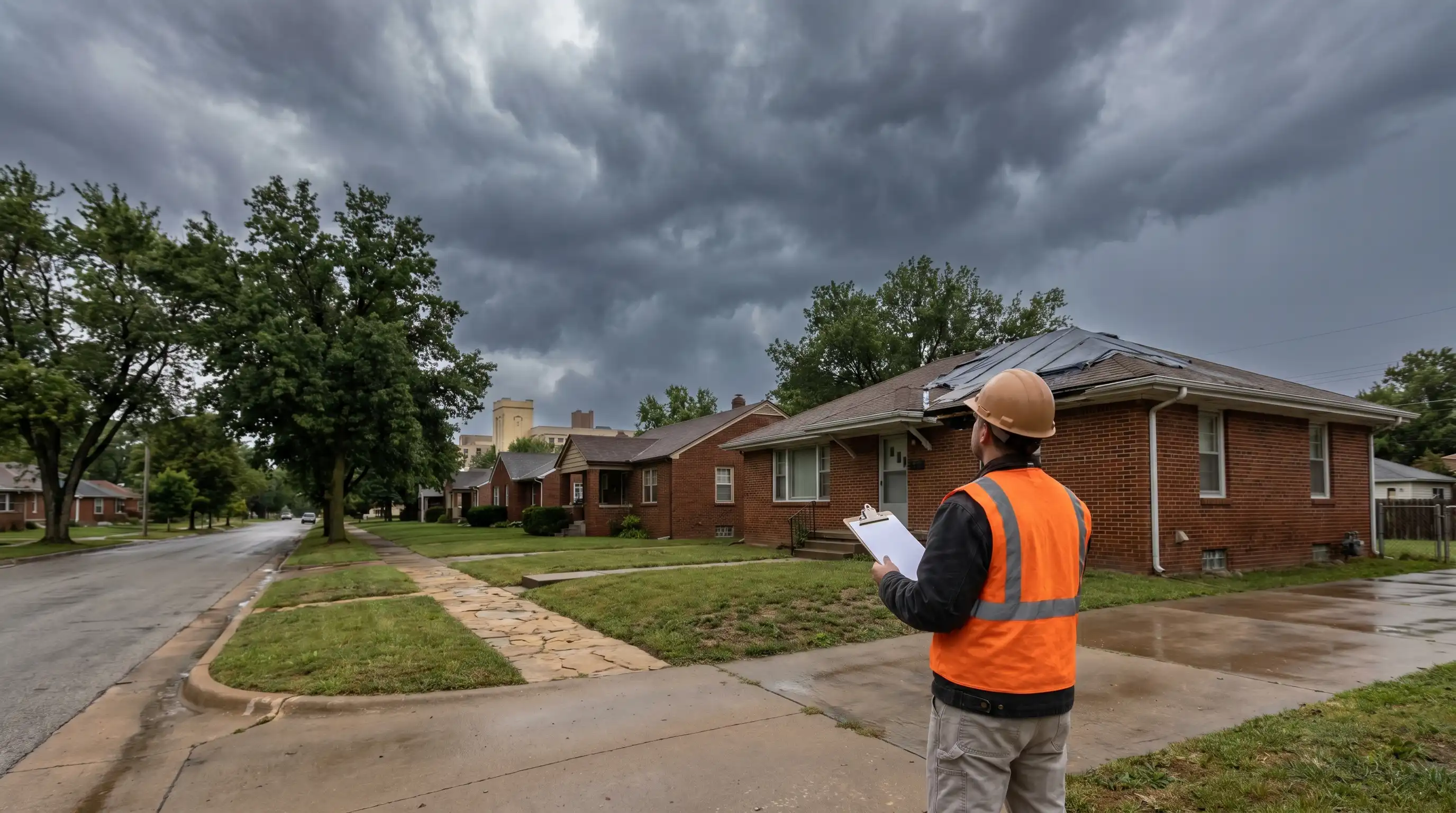
Lawrence's roofing market has a timing problem that generic campaigns can't solve. When a significant hail event strikes Douglas County, search volume for roofing terms spikes within hours — and the contractors who capture those leads aren't always the ones with the best reputation or the longest local track record. Storm chasers from Kansas City, Wichita, and beyond drive to Lawrence within the same day, outbid established local contractors on emergency keywords, and close jobs before homeowners have a chance to verify who they're working with. The Lawrence contractors who lose these post-storm windows have one thing in common: they weren't prepared in Google Ads before the storm hit.
The Hail Belt Reality
Lawrence and Douglas County sit in the geographic heart of the U.S. hail belt — the corridor running from Texas through Kansas and into the Dakotas where severe hail events are most frequent in North America. The local pattern is consistent: Lawrence averages 3–4 significant hail events per year, with golf-ball-size hail (2.75" diameter) events occurring every 2–3 years. Real estate agents in Lawrence cite visible roof damage as the number-one buyer objection in property transactions — a signal of how pervasive the problem is across Douglas County's housing stock. The city's profile reinforces the demand: approximately 16,500 owner-occupied households, many in older pre-1960 bungalows near KU campus whose asphalt shingles are at or past their 20–25-year lifecycle. Hail damage on an aging roof is frequently the trigger that converts a "needs inspection" situation into a full replacement job worth $8,000–$18,000.
The insurance-claim pathway dominates demand after storm events. Homeowners searching after hail impacts their roof are not price-shopping — they're looking for a contractor who understands the adjuster process, can document damage with timestamped photos, and communicate directly with the insurance company. Advertisers who lead with "insurance claim specialist" or "we handle the paperwork" messaging convert post-storm traffic at rates 50–70% higher than generic "roofing company Lawrence" ads. This is the most underexploited creative angle in the local market.
The Storm Chaser Problem
Lawrence's proximity to the KC metro creates a specific post-storm competitive dynamic. Within hours of a documented significant hail event in Douglas County, KC-based roofing contractors drive to Lawrence with crews, door-knockers, and ready-to-sign contracts. They know the insurance-claim window is time-sensitive — adjusters are booked weeks out — and they close jobs before homeowners verify credentials. These contractors actively bid on Lawrence roofing keywords post-storm, driving CPCs on terms like "hail damage roof Lawrence" to $35–$95 per click during peak-demand windows.
Established local firms — Cottonwood Roofing (since 1990, real estate referral network), Performance Roofing Services (since 2018, insurance-claim specialist positioning), and A&A Royal Contracting — have strong local reputations but haven't systematically built Google Ads infrastructure to compete in the post-storm window. The result: well-known local contractors lose post-storm jobs to storm chasers not because the storm chasers offer a better product, but because they're better prepared in paid search.
Year-round demand is also stronger than Lawrence businesses typically recognize. The 43% homeownership rate means real estate transactions are constant — and roof inspections before listing are a growing standard in the Douglas County market. Buyers, sellers, and their agents are all potential conversion points for a well-structured roofing campaign that targets real-estate-adjacent search terms year-round, not just post-storm emergency queries. KU processes 7,000–8,000 new arrivals each August — many engaging in real estate transactions — sustaining a constant underlying demand signal independent of storm activity.
The structural failure in most Lawrence roofing PPC campaigns is not budget — it's readiness. Storm chasers don't win because they spend more. They win because they're set up to activate while local contractors are still figuring out their post-storm strategy. The fix is pre-built infrastructure, not reactive spending.
Roofing PPC Strategies That Capture Lawrence's Storm-Driven Market
A Lawrence roofing campaign that only runs during calm weather misses the highest-intent, highest-converting window in the annual calendar. The campaigns that consistently produce $75–$124 CPL in this market share one structural characteristic: they're built in advance, segmented by demand trigger, and can activate storm-response mode within hours of a documented hail event — not days.
Campaign Structure: Three Demand Tiers
- Storm/Emergency Response: "hail damage roof Lawrence KS," "storm damaged roof repair Lawrence," "emergency roof tarping Lawrence," "insurance claim roof contractor" — $35–$95 CPC post-storm. These convert at 12%+ with urgency messaging and insurance-claim positioning. Pre-build ad groups, landing pages, and ad copy before storm season. Activate within 2 hours of a documented hail event within Douglas County.
- Year-Round Replacement & Repair: "roof replacement Lawrence KS," "roofing company Lawrence," "roof repair cost Lawrence," "new roof financing" — $10–$35 CPC. Target homeowners in pre-decision mode with free inspection CTAs. Counter storm-chaser messaging explicitly: "Licensed Douglas County contractor since [year]. We're not here for just one season."
- Real Estate Adjacent: "roof inspection before selling Lawrence," "pre-listing roof inspection," "buyer roof inspection Lawrence KS" — $8–$20 CPC. Target real estate agent audiences via display; use search audiences set to "buying or selling home." Low competition, steady year-round demand, high conversion when positioned as a fast-turnaround inspection service for transactions.
Insurance Claim Positioning — The Highest-Converting Ad Angle
In the Lawrence market, insurance-claim-positioned ads consistently outperform generic contractor ads by a significant margin. The specific creative formula: headline leads with "Hail Damage in Lawrence?" — extension lines include "We Work Directly with Your Adjuster," "Timestamped Damage Documentation," and "Local Contractor — Not a Storm Chaser." This messaging addresses the primary fear of the post-storm homeowner: being taken advantage of by an out-of-state contractor who disappears after the check clears. Conversion rates on this messaging run 12–15% vs. 5–8% for generic roofing ads. The contrast is measurable within the first two weeks of a storm-response campaign deployment.
- Free inspection offer: The lowest-barrier conversion in roofing PPC. A free inspection generates a qualified lead with a confirmed foot in the door — conversion from inspection to signed job averages 40–60% when damage is visible and the contractor is professional and timely.
- Financing for replacement: Full roof replacement on an older Lawrence home runs $8,000–$18,000. Finance messaging ("$0 down, 12 months same-as-cash") converts hesitant homeowners who have damage but aren't prepared for the total out-of-pocket cost.
Seasonal Budget Distribution
Weight budget toward April–September (storm season) at $4,000–$6,000/month during peak months. The off-season (November–March) offers a tactical opportunity: CPCs drop significantly, storm chasers leave the market, and homeowners with aging roofs are still searchable at $60–$90 CPL. Running a reduced off-season budget of $1,500–$2,000/month builds the review volume and Quality Score that makes spring campaign launches cheaper and faster to convert. Geographic targeting should exclude western Johnson County ZIP codes and focus tight radius on Lawrence, Eudora, Baldwin City, and rural Douglas County. Post-storm, deploy radius targeting centered on the documented hail impact area — National Weather Service data is available within hours of a significant event.
Google Partner Agency
We're a certified Google Partner Agency, which means we don’t guess — we optimize withGoogle’s full toolkit and insider support.
Your campaigns get pro-level execution, backed by real expertise (not theory).

What Market Trends Should Lawrence Roofing Businesses Know?
Lawrence's roofing market has three non-obvious demand drivers that well-positioned advertisers can turn into competitive advantages: the real estate transaction cycle driven by KU employee relocations and first-time buyers, the pre-storm-season inspection window among aging housing stock, and the financing demand that aging bungalow owners generate when replacement cost exceeds their immediate reserves.
Real Estate as a Year-Round Demand Channel
Lawrence's housing market sees consistent real estate transaction volume throughout the year — driven by KU faculty and staff relocations from out of state, first-time buyers priced out of the KC metro (where median home prices run $300K–$500K vs. Lawrence's $200K–$350K entry range), and investment property landlords repositioning student housing portfolios. In each transaction, roof condition is a critical inspection element. Real estate agents consistently cite visible roof damage as the number-one buyer objection in Douglas County transactions, which means every pending property sale is a potential roofing campaign conversion. A roofing company that positions as the "go-to inspection and repair service for Lawrence real estate transactions" captures steady volume completely independent of storm activity. KU processes 7,000–8,000 new arrivals each August, many entering the housing market for the first time — sustaining a transaction cycle with roofing implications year-round.
The Pre-Season Inspection Window
Lawrence homeowners with older roofs (20+ years, very common in KU-adjacent neighborhoods) often know their roof is approaching end-of-life but delay replacement until forced. The March–April window — before storm season, before competition intensifies, and before post-storm demand inflates lead costs — is the optimal time to capture these proactive homeowners at the lowest CPL of the annual calendar. CPL during off-season (November–March) drops to $60–$90 compared to $124+ during peak summer months. A campaign running "Free Roof Age & Condition Inspection — Book Before Storm Season" in March captures homeowners who will need replacement regardless of storm activity, at substantially lower acquisition cost than chasing them post-storm with 50 competitors bidding simultaneously. These pre-season appointments also build the review pipeline that supports Quality Score improvements before the high-competition April–June period begins.
Financing Demand Among Aging Housing Stock
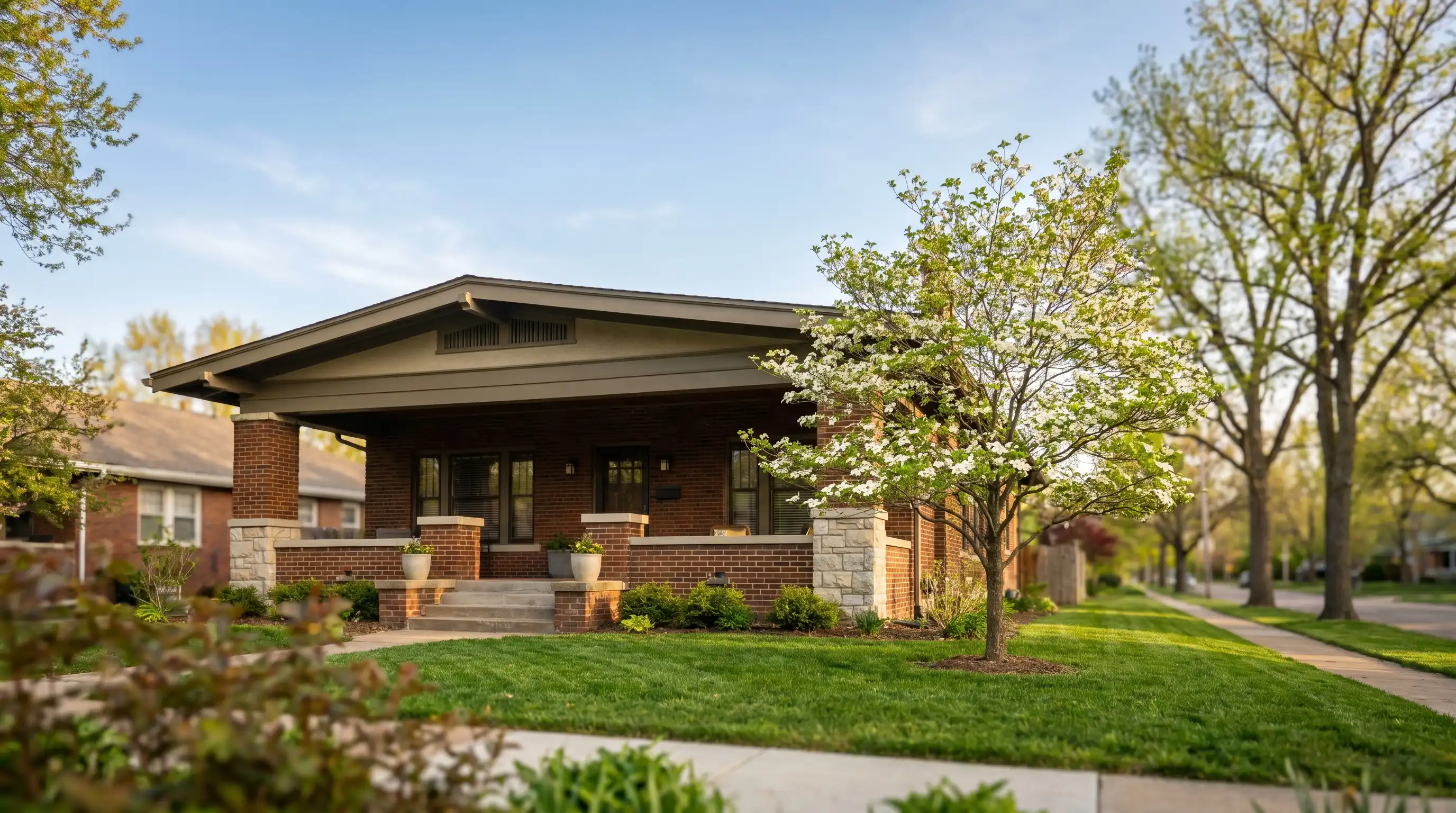
Lawrence's housing stock skews old — many bungalows and craftsman homes in the near-KU neighborhoods are pre-1960 construction with roofs that have been replaced once since original installation. When hail damage triggers an insurance payout that covers only partial replacement cost, or when a homeowner decides to replace a 22-year-old shingle roof proactively, the average job runs $8,000–$18,000. Many Lawrence homeowners — particularly in a market where the stated median household income is $47,200 — aren't prepared for that expense without financing. Roofing companies that prominently advertise financing options in their Google Ads and landing pages convert this segment at measurably higher rates. Key insight: Adding a financing callout extension to a replacement-focused ad group typically increases CVR by 15–25% in mid-income markets like Lawrence — the difference between a homeowner who books and one who says "I'll call back" and never does.
Lawrence Roofing PPC Management — Storm-Ready, Local-First
Roofing Google Ads in Lawrence requires two capabilities that most generic PPC agencies don't build: storm-response infrastructure ready to activate within hours of a hail event, and local differentiation messaging that positions established contractors against out-of-state storm chasers. Without both, Lawrence roofing businesses spend most of their annual budget on off-peak impressions and lose their highest-conversion windows to competitors who prepared better.
At MB Adv Agency, we build roofing PPC campaigns with storm-response activation built in from day one — not as an afterthought when hail is already in the forecast. Our lead generation PPC approach for home services uses Douglas County-specific geographic targeting, seasonal budget strategy calibrated to Lawrence's hail calendar, and insurance-claim-positioned creative that converts post-storm traffic at 12–15%. The Lawrence PPC services page explains what the full campaign structure looks like in practice.
For roofing companies currently spending on Google Ads without a storm-response plan or insurance-claim positioning, the opportunity cost is significant — every hail event is a high-conversion window that either gets captured or goes to a storm chaser. Our pricing starts at $497/month for the Growth tier. View our full PPC services to understand what Lawrence roofing campaign management includes.
Frequently Asked Questions
How Much Does Roofing Google Ads Cost in Lawrence, KS?
Roofing Google Ads in Lawrence costs between $2,500 and $4,000 per month as a baseline, scaling to $5,000–$6,000/month during peak storm season (April–September). At a $3,000/month budget, expect 12–20 leads per month at an average cost per lead ranging from $75 to $228 depending on campaign type and season. Branded campaigns produce CPL around $44. Performance Max campaigns around $64. Standard Google Search Ads average CPL around $124 outside of storm windows — but post-storm, intent is so concentrated that CVR climbs to 12%+ and effective CPL can drop significantly despite CPCs of $35–$95 per click. The economics are compelling: average roofing job value in Lawrence runs $8,000–$18,000 for replacement, meaning even a $200 CPL produces a 40:1 revenue-to-lead-cost ratio on a closed replacement job. Roofing's high job value makes it one of the most forgiving PPC verticals in terms of affordable CPL — the challenge is consistency of lead flow, not the individual CPL economics.
Off-season (November–March) offers the most favorable budget environment in Lawrence roofing PPC. CPCs drop to $10–$20, storm chasers leave the market, and homeowners with aging roofs are still searchable — they just search less urgently. A $1,500–$2,000/month off-season budget that targets free inspection CTAs captures proactive homeowners at $60–$90 CPL, building the appointment pipeline and review count that makes spring campaign launches cheaper and faster to convert. The Quality Score built during low-competition off-season months directly reduces CPCs when the high-competition season begins in April.
Budget should be concentrated April–September with a secondary spike immediately following any documented significant hail event in Douglas County. Pre-building the storm-response campaign — so it activates in hours, not days — is the structural difference between capturing and missing the post-storm demand spike that defines the Lawrence roofing calendar. A roofing company without a pre-built storm campaign is always in reactive mode — and reactive mode means losing the first 48 hours of peak-intent traffic to competitors who were ready.
How Do Lawrence Roofing Companies Compete Against KC Metro Storm Chasers in Google Ads?
Lawrence roofing companies compete against KC metro storm chasers in Google Ads by winning on three dimensions simultaneously: speed, local credibility, and insurance expertise. Speed: A storm chaser from Johnson County who arrives the day after a hail event may set up Google Ads within 48 hours — but a local Lawrence contractor with pre-built storm-response campaigns can activate within 2 hours of a documented hail event and capture the first surge of high-intent searches before competitors scale their spend. The first 6–12 hours after a significant hail event capture a disproportionate share of the convertible lead pool, since homeowners search immediately after discovering damage. Local credibility: Ad copy that signals genuine local presence — "35 years in Douglas County," "Licensed Kansas contractor — not a seasonal crew" — converts insurance-anxious homeowners at rates 30–50% higher than generic storm-chaser ads. Lawrence homeowners who've heard stories about contractors disappearing after collecting payment respond strongly to explicit local differentiation. Insurance expertise: Ads and landing pages that address the adjuster process directly — "We document damage for your insurance claim," "Direct adjuster communication included" — remove the most common friction point in the post-storm conversion funnel.
The structural advantage of a pre-built local campaign over a storm-chaser campaign is Quality Score. Google's Quality Score rewards relevance and landing page experience — a local Lawrence roofing company with a well-maintained, geographically specific landing page will see lower CPCs than a storm chaser running generic copy to a national template page. Over time, that Quality Score advantage compounds: the local contractor pays less per click at the same ad position, which directly reduces CPL while the storm chaser pays full auction rates for every click regardless of campaign quality.
The single most important action a Lawrence roofing company can take before storm season begins: have the storm-response campaign fully built, reviewed, and approved — waiting only for the activation signal. This preparation converts a reactive business into a proactive one when the hail event inevitably arrives. No budget increase in the world compensates for the 24–48 hour delay of building a campaign from scratch after the storm has already passed.