Roofing PPC Omaha, NE
Omaha sits in Hail Alley — one of the highest large-hail frequency zones in the United States — and that geography turns roofing into a market where a single June thunderstorm can generate more qualified search demand than an entire month of baseline volume. When the hail falls, out-of-state storm-chasers flood Douglas County within 48 hours, CPCs spike, and homeowners start searching with urgency they haven't felt since their last roof claim. The roofing companies that win these moments aren't the ones with the biggest total budget — they're the ones whose campaigns are already live, already optimized, and already trusted before the storm hits. <!-- stats-article-link --> <p><em>See how this city's Roofing PPC costs compare nationally in our <a href="/resources/roofing-ppc-statistics">Roofing PPC Statistics</a> report, featuring data from 40+ US cities.</em></p>
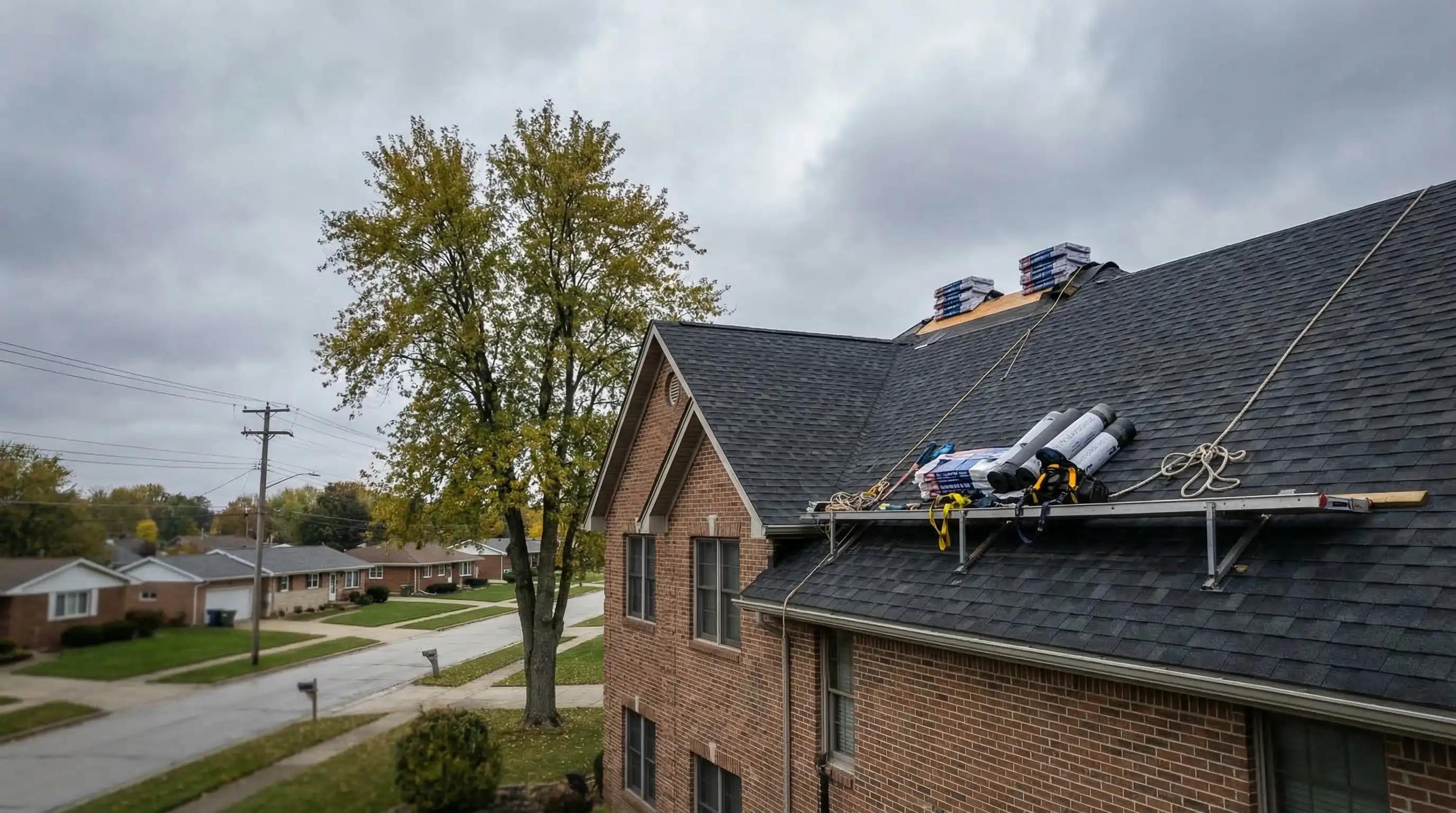
Omaha roofing PPC faces a dual-layer competition problem that makes it unlike almost any other home services category. The first layer is the baseline competitive market: Millard Roofing, Paramount Roofing, Weathertight Roofing, and Nebraska Roofing all maintain active Google Ads presence in the metro year-round. These are legitimate local competitors with established brand equity, review histories, and established relationships with local insurance adjusters. They've built audience familiarity over years of advertising and word-of-mouth. Competing against them on generic roofing keywords requires Quality Score advantage and campaign precision — outspending them outright is rarely the right strategy for a local SMB.
The second competition layer arrives without notice: out-of-state storm-chasers. Within 24–48 hours of a significant hail event in Douglas County, roofing companies from Kansas City, Denver, Oklahoma City, and beyond flood Omaha with door-to-door canvassers, yard sign installations, and aggressively bid Google Ads campaigns. Their CPC behavior is predatory — they know the storm event window is 2–4 weeks long and they'll spend whatever it takes to capture lead volume before homeowners sign with a local company. During storm surge periods, "hail damage roof Omaha" CPCs spike from $12–$15 baseline to $25–$45 within hours of an adjuster-confirming hail event.
The Storm-Chaser Credibility Gap
Storm-chasers have one structural weakness: they're not from Omaha, they don't have Douglas County contractor licenses, and Omaha homeowners have been burned before. The 2014, 2019, and 2022 hail seasons all produced significant post-storm contractor fraud cases in the metro — substandard work, insurance claim abandonment, contractors who collected advances and disappeared. This history creates a genuine trust deficit that local roofing companies can exploit directly. "Licensed Nebraska contractor," "local Omaha roofer since [year]," and "we're here after the storm is long gone" messaging consistently outperforms price-focused storm-chaser ads in CVR even when storm-chaser CPCs dominate ad position.
Nebraska Roofing Contractor licensing requirements add a legitimate compliance angle: Nebraska requires roofing contractors to register with the state. Most out-of-state storm-chasers don't bother registering for a 2–4 week surge market. Ad copy that references Nebraska contractor registration status — "fully licensed Nebraska roofing contractor" with a registration number — creates an immediate credibility differentiator that storm-chaser campaigns can't match authentically.
The Timing and Saturation Paradox
The deepest challenge in Omaha roofing PPC is the timing paradox: the moments when demand is highest (post-storm surge) are also when competition is most expensive and campaign quality matters most. A roofing company that launches its Google Ads campaign the day after a hail event starts with zero Quality Score history, zero conversion data, and no bid optimization — competing against established accounts from local competitors and storm-chaser campaigns with aggressive manual bidding. This is how roofing companies spend $5,000 on surge advertising and generate fewer leads than a competitor spending $2,000 on an account they built and optimized over the previous three months.
- Baseline local competitors: Millard Roofing, Paramount Roofing, Weathertight Roofing — established Quality Scores and review equity
- Storm surge CPC spike: $12–$15 baseline → $25–$45 within 48 hours of a verified hail event
- Storm-chaser vulnerability: no Nebraska license, no local history, no lasting accountability — exploitable trust gap
- Peak storm season: May–September, with June–July seeing highest hail frequency
- Post-storm decision window: 24–72 hours for homeowners who've confirmed damage before storm-chaser door-knocking closes alternatives
Insurance restoration complexity is the final challenge layer. An estimated 30–45% of Omaha roofing jobs in storm years involve insurance claims. Homeowners searching after a hail event often don't know whether their damage reaches the deductible threshold — they need a free inspection and an adjuster-familiar contractor who can document damage accurately. Campaigns that speak to the insurance claim process ("free hail damage inspection Omaha," "works with all Omaha insurance companies") convert significantly higher than generic "roof repair Omaha" campaigns during storm season, because they address the specific uncertainty the homeowner is experiencing. Practices that ignore the insurance angle during storm season leave a significant conversion rate on the table.
Omaha roofing campaigns should operate in two modes: baseline mode (non-storm, year-round) and surge mode (post-hail event). The infrastructure for both must be built before storm season — a surge mode campaign launched after a hail event is too late to be competitive. Baseline mode maintains position, builds Quality Score, and captures planned replacement traffic at lower CPCs. Surge mode activates automated bid increases, emergency landing pages, and storm-specific ad copy the moment a hail event is confirmed.
Keyword Groups by Campaign Mode
- Planned replacement — $7–$18 CPC (year-round): "roof replacement Omaha NE," "roofing contractor Omaha Nebraska," "new roof cost Omaha," "best roofing company Omaha" — high-ticket planned purchase, 1–4 week decision cycle
- Storm/emergency — $12–$30 CPC (surge season): "hail damage roof Omaha," "storm damage roofing Omaha," "roof damage from hail Omaha NE," "emergency roof repair Omaha" — urgent, high CVR, peak May–September
- Insurance claim — $15–$35 CPC (surge season): "roof insurance claim Omaha," "hail damage insurance roof Nebraska," "roofing insurance restoration Omaha" — highest-value leads, requires adjuster-experience messaging
- Inspection/assessment — $6–$14 CPC (pre-season and post-storm): "free roof inspection Omaha NE," "roof inspection after hail Omaha," "roof damage assessment Omaha" — lower intent but high post-storm volume
- Commercial roofing — $8–$20 CPC (year-round): "commercial roofing Omaha NE," "flat roof repair Omaha," "commercial roof replacement Omaha" — lower volume, high job value ($20,000–$100,000+)
The surge mode activation protocol is the most critical execution detail in Omaha roofing PPC. When the National Weather Service issues a severe thunderstorm warning for Douglas County containing hail at 1"+ diameter, bid multipliers on emergency and storm keywords should activate automatically via Google Ads automated rules — 50–100% bid increases on "hail damage," "storm damage," and "emergency roof" keyword groups. This automation should be configured before May 1st every year. Don't wait for confirmation that damage occurred; activate bids when the storm is incoming and hold them for 2 weeks post-event.
Geographic strategy in roofing differs from other home services. Roofing jobs are high-value ($8,000–$20,000 residential replacement), so a 30-mile radius is economically justified — you'll drive 45 minutes for a $15,000 job. However, post-storm targeted advertising should focus on the specific zip codes and neighborhoods confirmed to have received hail damage. Storm reports from NOAA and SPC (Storm Prediction Center) identify exact geographic hail paths. If a storm tracked from Council Bluffs through Bellevue and southwest Omaha, concentrate surge ads specifically in those areas — Papillion (68046), Bellevue (68005), and 68127/68128 — rather than broadcasting metro-wide at premium CPCs across areas that didn't sustain damage.
West Omaha premium neighborhoods — Elkhorn (68022), Millard (68137/68138), and Ralston (68127) — warrant permanent bid increases of 15–25% regardless of storm activity. These areas feature larger homes with higher replacement job values ($12,000–$22,000), higher homeownership rates, and homeowners who are more likely to pursue quality replacement over price-driven patch repair. A $22,000 Elkhorn re-roof justified a CPL of $280 — three times the baseline CPL target — and still delivers strong ROI. Don't flatten bid strategy across the metro; bid up in zip codes where the job value supports aggressive CPL targets.
Google Partner Agency
We're a certified Google Partner Agency, which means we don’t guess — we optimize withGoogle’s full toolkit and insider support.
Your campaigns get pro-level execution, backed by real expertise (not theory).

Nebraska's position in Hail Alley is quantifiable and it matters for PPC budget planning. The state receives an average of 3–5 significant hail events per year affecting the Omaha metro, with "significant" defined as hail at 1"+ diameter capable of causing roof damage. Not every event is a catastrophic loss year — but even a moderate event generates 2–3 weeks of elevated search volume that can deliver a quarter's worth of replacement pipeline in a single month.
The Insurance Restoration Opportunity Window
Insurance claim roofing jobs have a specific decision timeline that PPC campaigns must match. After a hail event, homeowners typically follow this sequence: (1) notice damage or receive door-knock from storm-chaser, (2) search Google for local inspection companies, (3) schedule free inspection within 3–7 days, (4) adjuster appointment within 7–14 days, (5) contractor selection within 21–30 days. The highest-value advertising window is days 2–10 post-storm — after homeowners have confirmed there was a storm event but before they've committed to the first door-knocking contractor who showed up uninvited.
The insurance claim process creates a specific keyword opportunity: "how to file a roof insurance claim Omaha," "does my insurance cover hail damage Nebraska," and "roof insurance claim process Omaha" are informational queries that convert at lower rates than direct service intent — but they capture homeowners at the research stage, before they've chosen a contractor. A landing page that answers these questions thoroughly (with a free inspection offer at the bottom) builds trust-first relationships with homeowners who ultimately choose local contractors over storm-chasers. This is the content marketing integration with PPC that most roofing companies ignore.
- 3–5 significant hail events per year in Omaha metro — each creates 2–3 weeks of elevated search demand
- Insurance jobs = 30–45% of storm-year Omaha roofing volume — high-value, claim-facilitated work
- Days 2–10 post-storm: optimal window for search lead capture before storm-chasers close the door-knock funnel
- 66.4% of homes pre-2000: structural replacement demand from aging stock independent of storm events
- Commercial roofing opportunity: Omaha's industrial corridors (near rail yards, I-80) have large flat-roof inventories approaching replacement cycle
The aging housing stock angle provides the counter-cyclical revenue source that smooths out storm-dependent revenue volatility. Omaha's 28.6% pre-1969 homes and 37.8% from the 1970–1999 era represent a large pool of homes with roofs on their second or third replacement cycle. These homeowners search "roof replacement cost Omaha" and "when should I replace my roof" in March and April — pre-season, before CPCs spike and before storm-chasers arrive. A dedicated pre-season campaign running February–April captures homeowners in the planning phase at $7–$12 CPC — significantly below the $20–$35 CPCs during peak storm season. Building replacement pipeline before storm season also reduces over-dependence on post-storm surge volume, which is unpredictable by nature.
Omaha roofing is a trust business amplified by PPC. Every storm-chaser who defrauds a homeowner makes the local contractor's reputation argument more credible. Every insurance claim abandoned mid-process reinforces why Omaha homeowners are increasingly skeptical of unfamiliar faces in trucks from out of state. The local contractor who has reviews from recognizable Omaha neighborhoods, who has a Nebraska contractor license number on their landing page, and who has been answering the same Omaha phone number for years is selling something the storm-chaser operation fundamentally cannot: accountability that outlasts the storm season.
MB Adv Agency manages roofing campaigns at the $2,500–$10,000/month ad spend range. Our roofing clients run pre-built surge campaigns that activate automatically when NOAA issues storm warnings for Douglas County. We structure baseline campaigns around the planned replacement and pre-season inspection markets, then shift budget allocation to storm/emergency keywords when the seasonal conditions justify it. No campaign management firm in Omaha should be manually adjusting bids the morning after a hailstorm — those automated rules should have been set in April.
Review our pricing tiers or learn how our PPC management approach works for Omaha roofing companies. If your current campaign isn't configured for storm surge automation, we'll show you exactly what that costs in missed leads every year.
Frequently Asked Questions
How do I use Google Ads to get roofing leads right after a hailstorm in Omaha?
The most effective post-storm PPC response starts before the storm. Here's the execution framework that produces the best results in the Omaha market:
Pre-storm (March–April setup): Build dedicated storm/emergency keyword campaigns with their own budgets and landing pages. Create automated bid rules that increase emergency keyword bids by 50–100% when triggered. Configure storm-specific ad copy: "Hail Damage in Omaha? Free Inspection — Licensed NE Contractor. Call Today." Set these rules to activate on a date condition or manually trigger them when an event occurs. The goal is zero manual intervention required during a storm surge.
Post-storm (within 24 hours): Activate your surge campaigns and increase daily budget caps to $200–$500/day from baseline $60–$80/day. Prioritize the specific zip codes in the storm's confirmed hail path (verify with NOAA SPC storm reports). Update your landing page with explicit storm-event language: "Serving Omaha Homeowners Affected by [Date] Hailstorm — Schedule Your Free Inspection Now." Make the phone number the single most prominent element on the page. Response time is everything: homeowners searching 24–48 hours post-storm are in peak decision mode.
Sustain for 2–3 weeks: Storm-chaser door-knocking creates homeowner fatigue around day 7–10. Local PPC that emphasizes "Omaha-based, licensed, accountable" messaging starts winning disproportionate share after the initial rush subsides and homeowners start researching alternatives to the storm-chaser who already knocked on their door. Maintain surge-level spend for 14–21 days before returning to baseline budgets.
What does roofing PPC cost in Omaha, and what ROI should I expect?
Baseline Omaha roofing PPC costs $1,500–$3,000/month in ad spend for year-round planned replacement and maintenance campaigns. During storm season (May–September), competitive campaigns require $3,500–$7,000/month. Post-hail surge campaigns can justifiably scale to $5,000–$12,000/month for 2–3 week windows given the job values involved.
The CPL benchmarks: planned replacement leads cost $120–$280 each at baseline campaign performance. Storm/emergency leads cost $60–$140 each during surge conditions (paradoxically lower CPL despite higher CPCs, because CVR spikes to 10–18% on emergency queries). At a $10,000 average residential replacement job, a $200 replacement lead CPL represents a 50:1 revenue return — and that's before accounting for the insurance supplement that frequently adds $1,500–$3,000 to the job value when hail damage is the trigger.
The most important ROI lever in Omaha roofing PPC isn't the CPC — it's the lead response time. Research consistently shows that roofing leads contacted within 5 minutes of form submission convert to inspections at 3–5x the rate of leads contacted after 30 minutes. A $150 CPL campaign that produces 20 leads but only contacts 8 of them quickly has an effective CPL of $375. The same campaign with a 5-minute response protocol converts all 20, making the effective CPL $150. Investing in answering your campaign's calls is as important as investing in generating them.