Roofing PPC Phoenix, AZ
Phoenix's monsoon season (July–August) spikes roofing demand 60–80% above baseline with predictable annual reliability, UV radiation accelerates roof degradation faster than any other major US market, and the post-monsoon influx of unlicensed storm-chasers creates a trust vacuum that locally licensed tile-roof specialists with pre-built surge campaigns exploit every single year. <!-- stats-article-link --> <p><em>See how this city's Roofing PPC costs compare nationally in our <a href="/resources/roofing-ppc-statistics">Roofing PPC Statistics</a> report, featuring data from 40+ US cities.</em></p>
Phoenix Roofing PPC: Monsoon Timing, Storm-Chaser Competition, and the Tile Roof Advantage
Phoenix roofing PPC runs on a predictable annual clock that separates prepared advertisers from reactive ones. Monsoon season (July–August) brings sustained winds of 40–70 mph, hail events, and haboob dust storms that damage tile roofs, blow off shingles, and puncture foam flat roofs across the metro simultaneously. Within 24–72 hours of a significant monsoon storm, homeowner searches for "roof repair Phoenix," "storm damage roofer near me," and "emergency roof leak Phoenix" spike dramatically. The contractors who win those searches have pre-staged monsoon campaigns ready to activate — with elevated budgets, storm-specific creative, and LSA profiles fully optimized — before the storm season begins on June 1.
The competitive challenge during these windows is the simultaneous arrival of storm-chasing contractors from out of state. Every significant Phoenix monsoon event attracts unlicensed or minimally licensed operators who flood the market with door-to-door canvassing and broad Google Ads bids. Arizona requires an ROC (Registrar of Contractors) license for roofing work, but enforcement during post-storm surges is imperfect — and homeowners making urgent repair decisions don't always verify credentials in the moment. The trust vacuum this creates is a genuine competitive advantage for established local contractors: a campaign emphasizing "Arizona ROC Licensed Since [year]," combined with 200+ Google reviews from recognizable Phoenix neighborhoods, differentiates from storm-chasers at the ad copy and landing page level in ways that directly drive conversion.
Phoenix Is a Tile-Roof Market — Not a Shingle Market
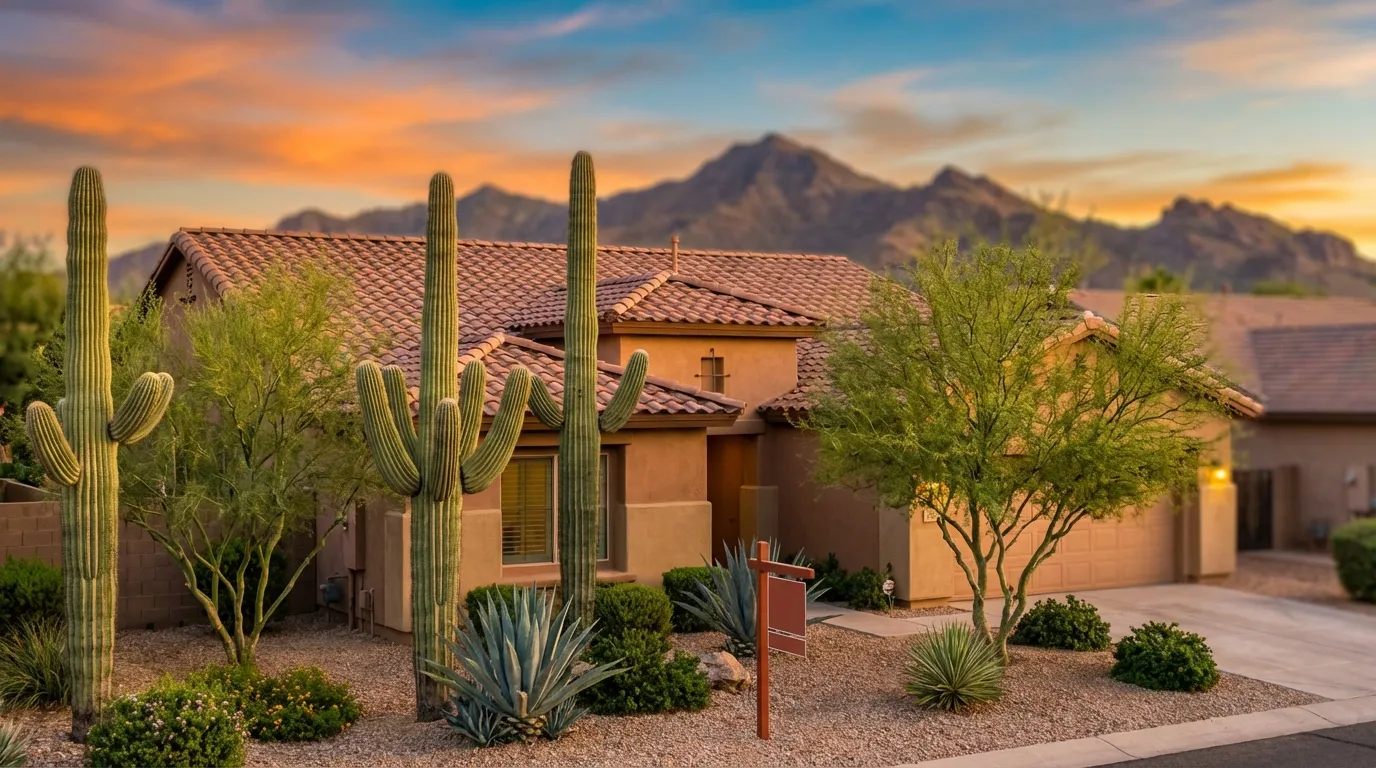
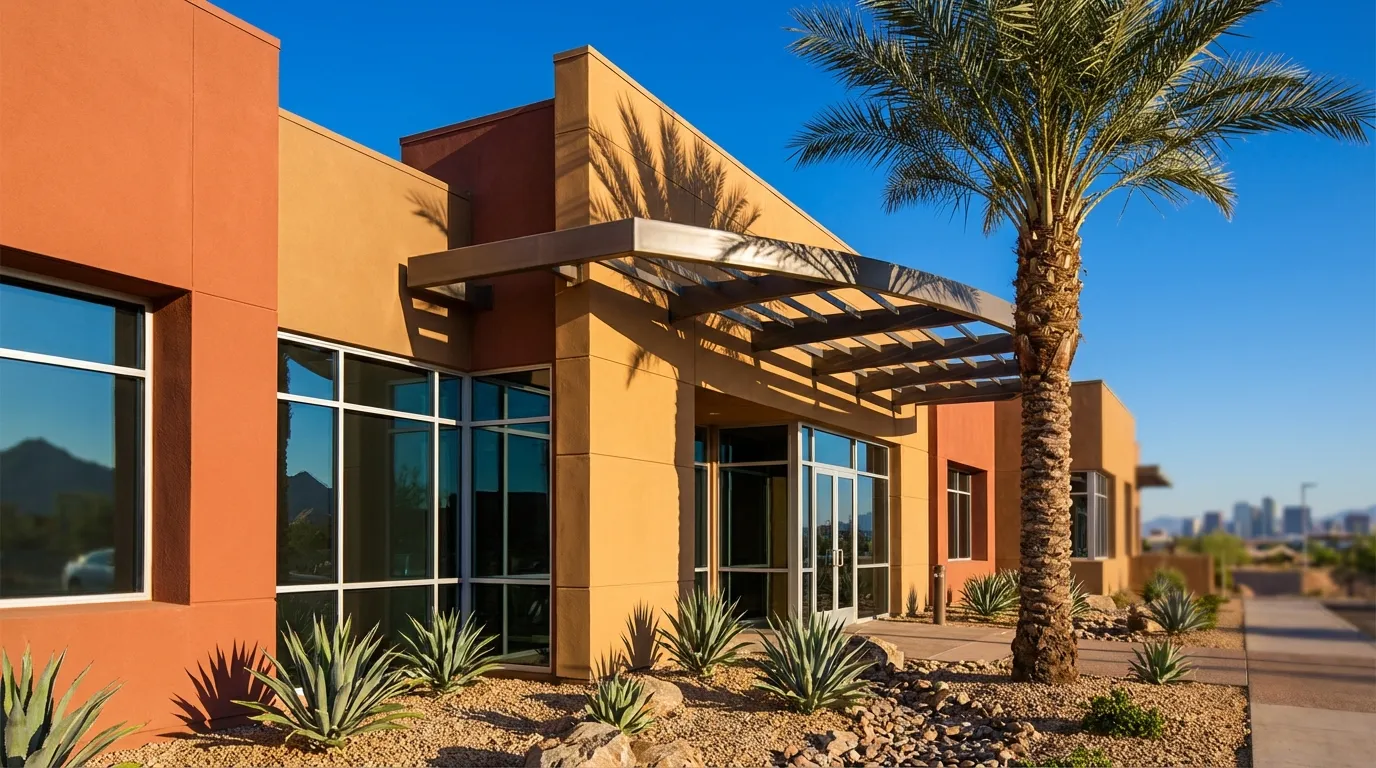
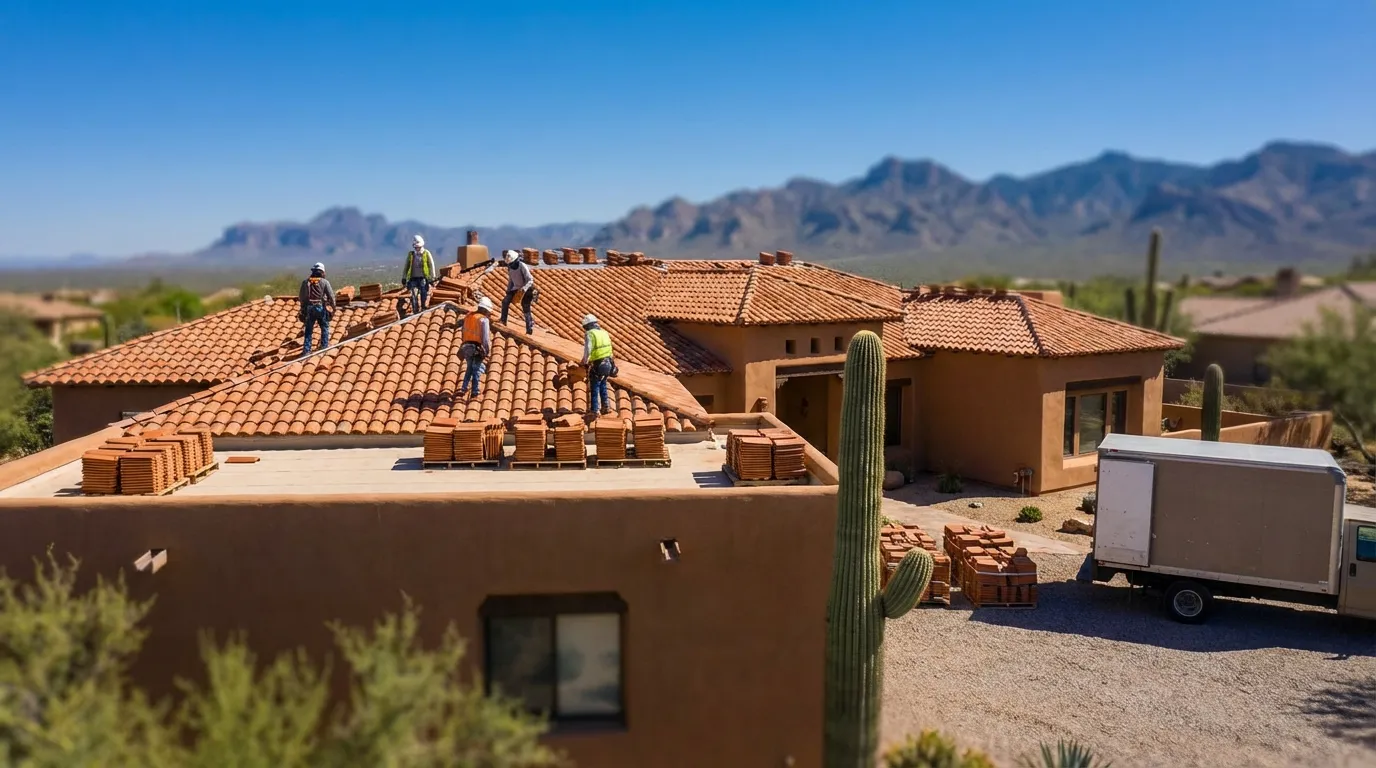
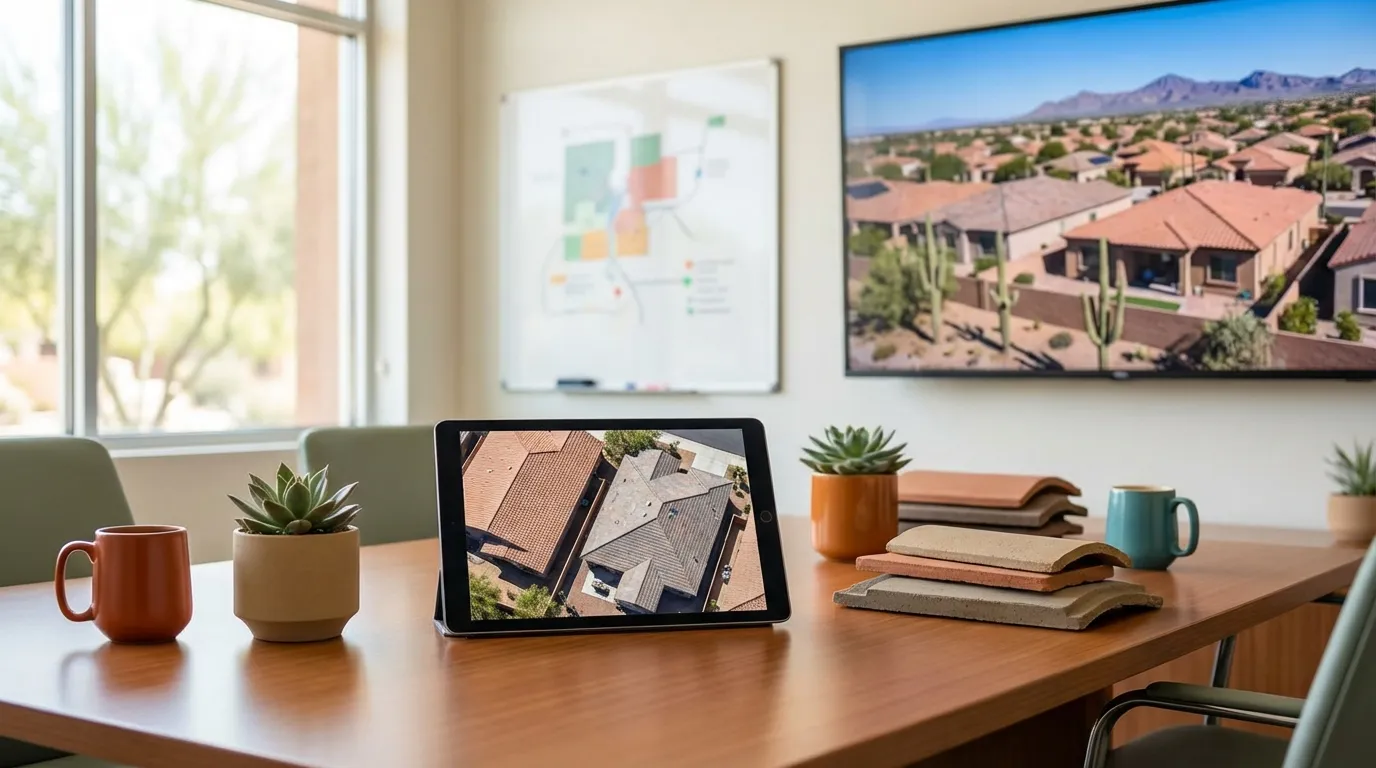
Phoenix's roofing market is structurally different from most of the US. Clay and concrete tile roofs dominate the Phoenix residential market — the aesthetic standard for the southwest architectural style that characterizes 60–70% of Phoenix-area homes. Tile roofs require specialized installation, repair, and restoration knowledge that general roofing contractors from out of state lack. A storm-chasing company from Ohio accustomed to asphalt shingle replacement cannot competently repair a cracked clay tile hip roof in Scottsdale. This creates a genuine service differentiation angle for local contractors: "Phoenix tile roof specialists" is not just a marketing claim — it reflects a technical capability that national operators structurally don't have. Campaigns and landing pages built around tile roof expertise consistently outconvert generic "roofing company Phoenix" messaging for the majority of the Phoenix residential market.
CPC Realities and the Monsoon Surge Economics
Standard Phoenix roofing CPCs run $15–$45 — among the highest home service categories in Google Ads. Post-monsoon surge periods see those CPCs escalate to $45–$80+ as every contractor in the market increases bids simultaneously. Despite the elevated CPC, the economics remain compelling: average Phoenix roof replacement runs $12,000–$20,000. At $120 CPL and a 15% close rate, one closed job covers 10+ months of a $3,000/month baseline budget. During post-monsoon surge, the demand-to-advertiser ratio shifts enough that CPL actually drops despite higher CPCs — the volume of motivated, insurance-claim-driven searchers increases faster than advertising competition can respond. Companies with pre-staged surge budgets of $12,000–$20,000 for August–September capture these economics; companies scrambling to react lose the peak window.
Phoenix Roofing PPC Architecture: Monsoon-Ready, Tile-Specialist, LSA-First
The strategic architecture has three non-negotiable elements: an LSA campaign with ROC license verification established before summer; a pre-built monsoon surge campaign (assembled and paused) ready to activate by June 1; and tile-specific keyword groups and landing pages that differentiate from out-of-state storm-chasers at the conversion level. Companies running all three consistently outperform the monsoon reactive competitors every year.
Platform Stack and Budget Architecture
Google LSA (Google Guaranteed with ROC verification) should be the first campaign element established — it appears above standard paid search results and provides the license-verified trust signal that directly counters storm-chaser credibility concerns. Google Search Ads capture the full intent spectrum from emergency repair to planned replacement to insurance claim assistance. Facebook and Instagram Ads serve a targeted post-storm role: geo-targeting affected Phoenix zip codes within 48 hours of a monsoon event with "Storm damage to your Phoenix roof? Free inspection today" messaging at CPCs well below Search because Facebook advertiser response to specific storm events lags 3–5 days.
Budget architecture: $4,000–$6,000/month baseline (October through June), scaling to $12,000–$20,000/month surge (July 15 through October 15 — the active monsoon and post-monsoon window). Baseline allocates: $2,200 Search, $1,200 LSA, $400 Facebook (retargeting + pre-storm awareness), $200 contingency. Surge pre-authorizes: full budget reallocation to storm-response creative and expanded geographic targeting in affected zip codes.
Keyword Groups by Intent and CPC Range
- Emergency/storm: "emergency roof repair Phoenix AZ," "monsoon roof damage Phoenix," "storm damage roofing contractor Phoenix," "hail damage roof Phoenix" — $25–$65 CPC normal; $50–$80 post-monsoon surge
- Tile roof specialist: "tile roof repair Phoenix AZ," "clay tile roof replacement Phoenix," "concrete tile roof Phoenix," "tile roof restoration Phoenix" — $18–$40 CPC; lower competition than generic "roof replacement"
- Planned replacement: "roof replacement cost Phoenix AZ," "roofing company Phoenix AZ," "roof replacement Phoenix" — $20–$45 CPC; planned-project buyers
- Insurance claim: "insurance claim roofing Phoenix AZ," "monsoon insurance claim roofing," "roof damage insurance Phoenix" — $22–$45 CPC; highly motivated buyers with pre-approved funding
- Spanish-language: "reparación de techo Phoenix AZ," "contratista de techos Phoenix," "daño de tormenta techo Phoenix" — $6–$15 CPC; minimal competition despite 41.8% Hispanic population
Monsoon Pre-Staging Protocol
Build and pause the monsoon campaign by May 15 — all creative written, all landing pages live, all keyword groups assembled. When the first significant monsoon event hits (typically mid-July), activate within 24 hours: increase budget to surge allocation, activate Facebook zip code targeting for storm-affected areas using NOAA radar overlays and local news coverage to identify affected neighborhoods, and launch "Monsoon damage? Free inspection today — ROC licensed since [year]" creative. The 24–72 hours after a significant monsoon event is when 40–60% of the season's post-storm inspection requests occur. Pre-staged companies capture this window; reactive companies spend the first 3 days building campaigns while the demand peak passes.
Google Partner Agency
We're a certified Google Partner Agency, which means we don’t guess — we optimize withGoogle’s full toolkit and insider support.
Your campaigns get pro-level execution, backed by real expertise (not theory).

Phoenix Roofing Market: The Climate and Trust Dynamics Behind the Demand
Phoenix's roofing market supports an estimated 350–500 licensed roofing contractors in Maricopa County, with a count that inflates significantly during and after monsoon season as out-of-state storm-chasers enter the market temporarily. The core competitive group — Arizona-licensed, locally rooted contractors with established review bases — is considerably smaller. Lyons Roofing (Phoenix, est. 1993) is the most recognized long-term local brand, with 30+ years, 500+ Google Reviews, and a multi-division operation that includes commercial and residential. Arizona Roofing Systems and Done Right Roofing maintain established local brands. Against this background, the opportunity for a properly structured PPC campaign is genuine: the market is large enough to support multiple well-run SMBs, and the storm-chaser saturation creates conditions where ROC license credentials and review depth produce above-average conversion rates.
UV Radiation: Phoenix's Year-Round Roof Degradation Accelerator
Phoenix receives among the highest UV radiation levels in North America — 299+ sunny days per year, with UV Index regularly hitting 10–11+ in summer. This UV exposure accelerates the degradation of all roofing materials faster than any comparable major US market. Phoenix asphalt shingle roofs may require replacement every 15–20 years versus the 25–30 year lifespan in moderate climates. Tile roofs last longer but require periodic sealing, mortar repair, and cracked tile replacement from UV-induced thermal expansion cycles. The result is a year-round replacement and maintenance demand market that doesn't depend solely on storm events. A roofing company with a proactive "Phoenix UV roof assessment" campaign running outside of monsoon season captures this baseline demand with CPCs 20–35% lower than storm-surge periods.
The solar panel installation boom adds a directly related demand layer. Phoenix leads the US in residential solar adoption — over 150,000 rooftop solar installations in Maricopa County. Every solar installation requires a roof assessment and often a pre-installation repair or reinforcement. Roofing contractors with "solar-ready roofing certification" or explicit solar partnership positioning capture a growing adjacent search category: "roofing contractor Phoenix solar ready," "roof repair before solar panels Phoenix AZ." This is currently a low-competition niche with high purchase intent and a large, growing addressable audience as Phoenix's solar adoption continues accelerating.
The Tile Roof Specialization Moat
Out-of-state storm-chasers predominantly work with asphalt shingles — the standard in most US markets. Phoenix's tile-dominant housing stock is their functional limitation. A local contractor whose landing page features tile-specific before/after photos, clay tile manufacturer certifications (Ludowici, Eagle, US Tile), and explicit "Phoenix tile roof specialists since [year]" messaging creates a differentiation that no national storm-chaser can fabricate credibly. This specialization moat compounds over time: contractors with 200+ Google Reviews mentioning "tile roof," "clay tile," and "concrete tile" by name rank for those specific searches and convert at higher rates than generic "roofing company Phoenix" queries.
A national roofing PPC agency activates a "monsoon surge budget" in August — two weeks after the peak demand window has already passed. Local knowledge understands that the first 24–72 hours after a Phoenix haboob or hail event are when the majority of the season's highest-urgency, least-competitive leads occur, and that only pre-staged campaigns can capture them. It knows that Arcadia and Paradise Valley homeowners with $400K–$1.5M homes and clay tile roofs are not calling the cheapest bidder from a door-to-door canvasser — they're calling the contractor whose Google Screened badge, 400 reviews, and explicit "Arcadia tile roof specialist" landing page signals that they know their specific home type. It knows that the Chandler and Gilbert subdivisions with 2010–2020 construction are entering their first major tile inspection cycle as 15+ years of UV exposure begins producing visible maintenance needs.
MB Adv Agency builds Phoenix roofing PPC campaigns with pre-staged monsoon surge infrastructure, tile-specialist keyword groups, and LSA setup for ROC license verification — capturing the full annual demand cycle from spring planned replacement through post-monsoon insurance claims. Our lead generation approach is built around Phoenix's specific storm calendar, not a generic national roofing template.
View transparent pricing for Phoenix roofing campaigns — no long-term contracts, no setup fees.
Frequently Asked Questions
What does roofing PPC cost in Phoenix?
A competitive Phoenix roofing baseline PPC campaign costs $3,000–$6,000/month from October through June, scaling to $12,000–$20,000/month during the July 15–October 15 monsoon and post-monsoon surge window. CPCs in baseline conditions run $15–$45; post-monsoon emergency terms spike to $50–$80. At a $4,000/month baseline, expect 20–35 qualified inspection requests per month at $85–$150 CPL. During surge, CPL often drops below baseline despite higher CPCs because the volume of motivated searchers increases faster than advertiser competition responds.
Google LSA (Google Guaranteed with ROC verification) produces Phoenix roofing leads at $40–$120 per verified contact on pay-per-lead pricing. LSA's Google Guaranteed badge is more important in Phoenix roofing than almost any other home service category — the post-storm trust deficit created by storm-chasers makes the badge the most effective single conversion signal available. Contractors without LSA are competing against ROC-verified badge holders for the same clicks, at a significant click-through disadvantage.
Annual budget planning note: the correct Phoenix roofing budget structure is not a flat monthly spend — it's a planned surge. A contractor budgeting $5,000/month flat year-round will consistently underperform one budgeting $4,000/month October–June and $15,000/month July–October, with the same annual total. The demand-concentration makes the surge allocation the highest-ROI spend in the entire roofing calendar, and the off-season allocation maintains Quality Score for the next cycle.
How do Phoenix roofers differentiate from out-of-state storm-chasers in Google Ads?
The trust gap between local licensed contractors and out-of-state storm-chasers is real and exploitable in ad copy, landing pages, and LSA profile — the challenge is making the differentiation visible before the click, not just after. Three tactics that consistently produce higher CTR and conversion for local Phoenix contractors against storm-chaser competition:
- Arizona ROC license number in ad copy: "ROC# [number] — Arizona Licensed Since [year]" in the headline or description is verifiable and signals permanence. Storm-chasers operating on temporary permits won't display a local license number because they don't have one. This single element is one of the highest-performing trust signals in Phoenix roofing ad copy specifically because of the market's storm-chaser history.
- Tile roof specialization messaging: "Phoenix Clay & Concrete Tile Roof Specialists" in headlines excludes the majority of out-of-state storm-chasers who work primarily with asphalt shingles. The homeowner with a tile roof immediately recognizes the relevance; the storm-chaser can't credibly copy that positioning without the portfolio to back it up.
- Google LSA presence above the ads: Storm-chasers operating temporarily in Phoenix rarely invest the time to set up LSA with background verification, licensing submission, and review accumulation. An established local contractor with an active Google Screened profile consistently appears above storm-chaser Search campaigns in post-storm searches — occupying the highest-trust SERP position without having to win the CPC auction against operators with unlimited storm-window budgets.