Roofing PPC Topeka, KS
Topeka sits squarely within the national hail corridor, recording 3–6 significant hail events per year in Shawnee County and ranking among the highest states nationally for hail frequency and severity. With 65–70% of residential roofs pre-1990 and 40–60% of replacement work driven by insurance claims following storm damage, Topeka's roofing market doesn't follow standard seasonal patterns—it follows the weather. Contractors who capture this demand run campaigns built for storm-event surges and pre-season brand positioning, not steady-state service advertising. <!-- stats-article-link --> <p><em>See how this city's Roofing PPC costs compare nationally in our <a href="/resources/roofing-ppc-statistics">Roofing PPC Statistics</a> report, featuring data from 40+ US cities.</em></p>
Why Do Roofing PPC Campaigns Struggle in Topeka?
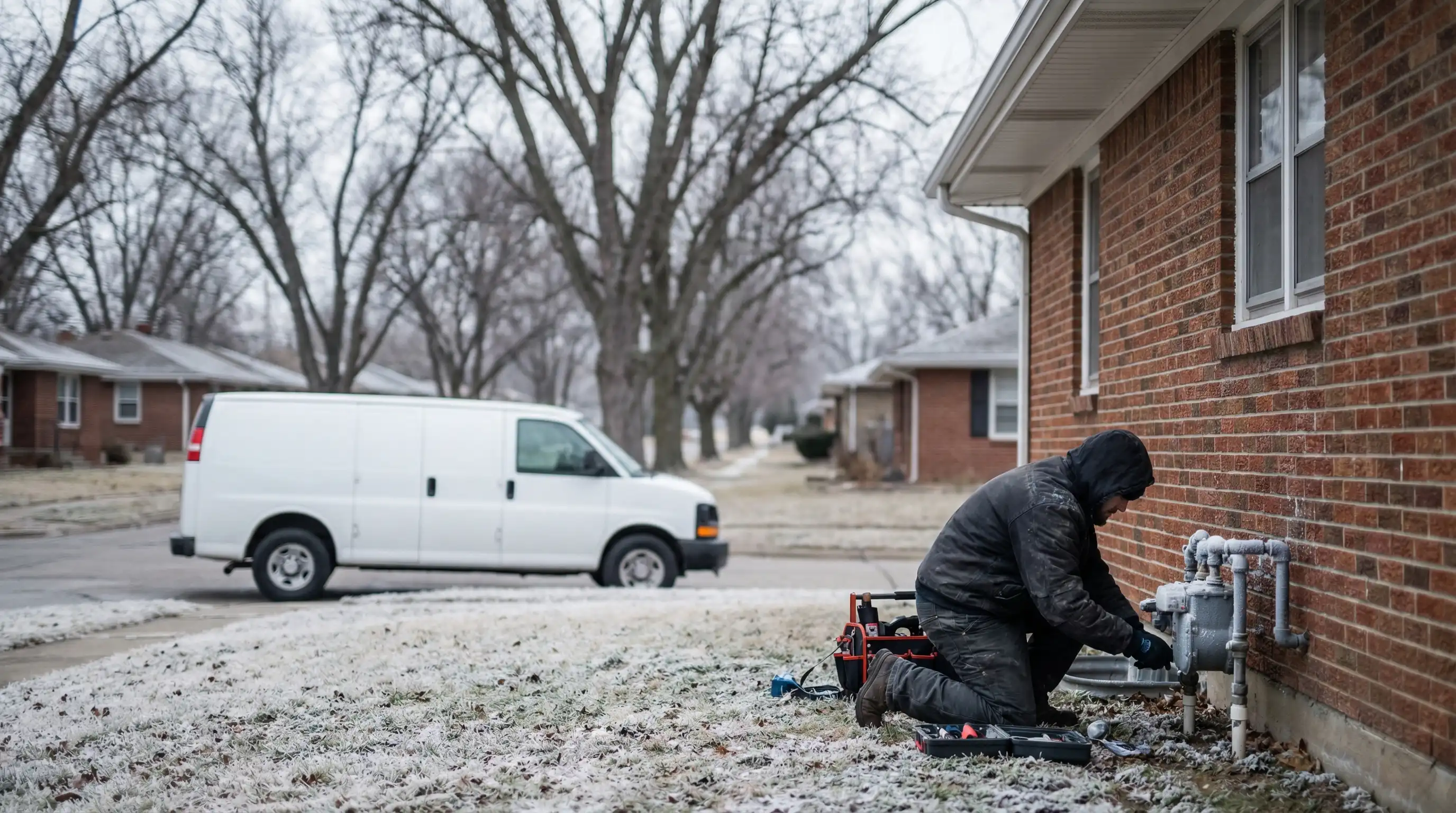
Topeka's roofing market is deceptively competitive. The Better Business Bureau shows 3,621 roofing-related results near Topeka, KS—the highest BBB count of any home services industry in the market and a reflection of the storm-chaser dynamic that defines Tornado Alley roofing. After every significant hail event, out-of-state contractors flood Shawnee County with door-to-door canvassing, temporary Google Ads accounts, and aggressive free inspection offers. Local roofing companies who haven't built pre-event brand visibility and campaign infrastructure are left competing at peak CPCs against transient operators who vanish three months later. The contractors who consistently win are the ones who don't wait for the storm to start advertising.
The fundamental PPC failure in Topeka roofing is campaign timing misalignment. Most local operators build their Google Ads presence reactively—in response to a major hail event—which means they're entering the auction at its most expensive point, competing against both established local operators and newly arrived storm chasers who are bidding aggressively on storm-specific keywords. CPCs that run $10–$25 per click at baseline can spike to $35–$50+ in the two to three weeks following a significant hail event. Entering the market during a CPC spike while lacking the Quality Scores, ad rank history, and negative keyword lists of established advertisers is a losing position.
The Storm Chaser Problem
Meridian Roofing Solutions and Eaton Roofing & Exteriors are the established local operators with A+ BBB ratings and proven Topeka-market reputations. Both have the brand credibility to survive storm season against national competitors. The real competitive threat isn't from established local operators—it's from mid-tier local advertisers who underfund pre-season campaigns, lose impression share during critical post-storm windows, and spend the rest of the year wondering why their cost per lead is higher than it should be. In a market driven by insurance-claim projects worth $7,000–$15,000 per job, even a small improvement in impression share during the peak two-week post-storm window can represent $30,000–$60,000 in additional annual revenue.
The secondary failure is ignoring the non-storm replacement market. Topeka's aging housing stock—with 65–70% of homes pre-1990 and asphalt shingles rated at 20–25-year lifespans—means a structural replacement demand that exists independent of weather events. Homes built in the 1970s and 1980s have roofs approaching or past end of life. Campaigns that only activate post-storm miss the homeowner who has been noticing granule loss, curling shingles, and minor leaks for two years and is actively researching replacement. That buyer converts at a lower CPL than a post-storm emergency searcher, because the decision is less chaotic.
Where Local Operators Lose Digital Ground
A third structural issue is the trust gap between local contractors and storm chasers in the digital environment. Topeka homeowners have collectively experienced the negative outcomes of storm-chaser work: contractors who complete a job and are unreachable six months later for warranty claims. A local roofing company with Topeka roots, Shawnee County licensing, and a verifiable physical address has a genuine differentiator—but that differentiator has to be visible in the ad copy, not buried on page three of a website. "Topeka-owned, Shawnee County licensed, 10-year local warranty" in ad headlines is a stronger hook than a price discount for the insurance-claim buyer who already knows the job is funded.
Roofing PPC Strategies That Capture Topeka Storm-Season Demand
Winning Topeka roofing PPC requires two parallel campaign tracks operating simultaneously: a pre-season brand foundation running February through April, and a storm-event activation protocol that can scale budget by 2–3x within 24 hours of a significant hail event. These aren't separate strategies—they're sequential. The pre-season work builds the Quality Scores, ad history, and negative keyword lists that make the storm-event activation profitable. Operators who skip pre-season and jump straight to storm campaigns are paying full price for secondhand infrastructure.
Pre-Season Brand Foundation Campaign — Runs February through April. Moderate budget ($800–$1,500/month), broad local brand awareness. Core keywords and Topeka CPCs:
- "Roofing contractor Topeka" / "roofing company Topeka KS" — $10–$16 CPC
- "Roof replacement Topeka" / "new roof Topeka" — $12–$18 CPC
- "Free roof inspection Topeka" / "roof inspection Shawnee County" — $9–$14 CPC
- "Topeka roofing estimates" / "local roofer Topeka" — $8–$13 CPC
Storm Event Activation Campaign — Dormant at low budget ($200–$400/month) as a standing campaign with pre-built ad copy, landing pages, and keyword lists. Activates to $2,500–$5,000/month within 24–48 hours of a hail event. Core storm-specific keywords:
- "Hail damage roof Topeka" / "hail damage repair Topeka" — $18–$30 CPC (post-storm)
- "Insurance claim roof Topeka" / "roof insurance claim Kansas" — $20–$35 CPC (post-storm)
- "Storm damage roof Topeka" / "wind damage roof repair" — $16–$28 CPC (post-storm)
- "Free hail inspection Topeka" / "hail inspection roofer" — $15–$25 CPC (post-storm)
The storm activation landing page must be purpose-built: a fast-loading page (under 2 seconds), prominent call-to-action for "Free Hail Damage Inspection," a simple form with name/phone/zip, and trust signals specific to Topeka—local license number, physical Topeka address, before/after photos from prior Shawnee County jobs. Generic roofing landing pages convert at 3–4% in storm conditions; purpose-built inspection offer pages convert at 7–11%.
Evergreen Replacement Campaign — Runs year-round at a steady base budget targeting non-storm replacement intent. "Roof replacement Topeka," "old roof replacement," "roof repair vs replacement." Targets homeowners in older zip codes (66603, 66604, 66606) who have pre-1990 housing stock approaching end-of-life. This campaign keeps lead flow consistent during the off-storm baseline months and builds the Quality Score foundation that lowers CPC costs during storm season activations.
The critical technical execution detail: negative keyword lists must be built aggressively for Topeka roofing campaigns. Exclude "commercial roofing Topeka" from residential campaigns (different landing page, different sales process), exclude competitor brand names from non-branded campaigns, and exclude "DIY," "materials," "shingles cost," and "how to" terms that signal non-buyer intent. In a 3,600+ advertiser market, impression waste on irrelevant clicks compounds fast.
Google Partner Agency
We're a certified Google Partner Agency, which means we don’t guess — we optimize withGoogle’s full toolkit and insider support.
Your campaigns get pro-level execution, backed by real expertise (not theory).

What Market Trends Should Topeka Roofing Businesses Know?
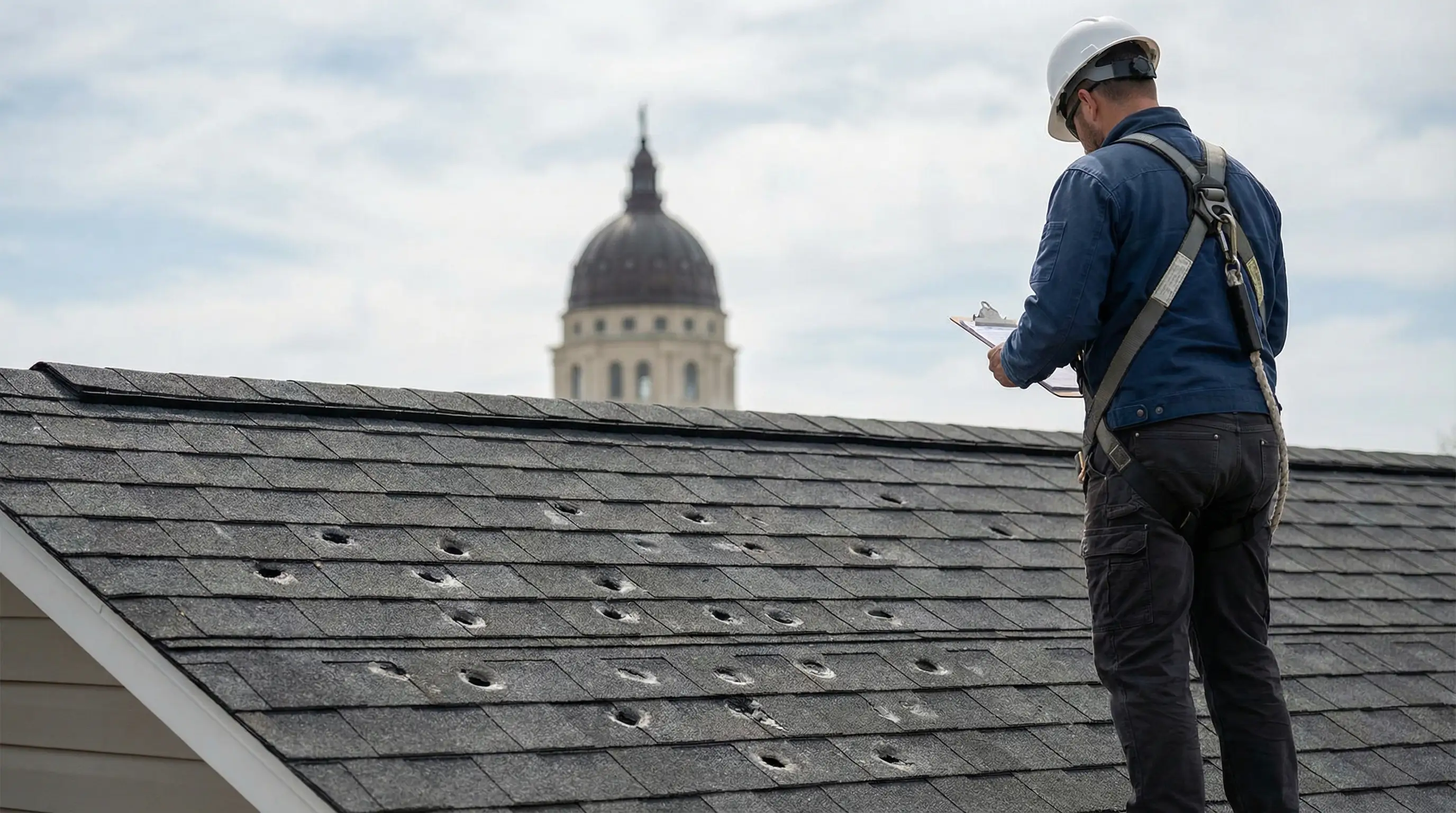
The central market reality for Topeka roofing: 40–60% of roofing projects in Tornado Alley markets are insurance-claim funded. This isn't a Topeka estimate—it's the industry standard for hail-corridor cities, validated by NOAA's historical storm event data showing Kansas consistently in the top five states nationally for hail incidents. For Shawnee County, the NOAA Storm Events Database shows 3–6 significant hail events per year, where "significant" means hail of 1-inch diameter or larger—the threshold at which modern asphalt shingles show measurable damage. This volume of weather activity means the insurance-claim roofing market is not episodic; it is chronic and structural.
The Aging Roof Inventory
The insurance-claim dynamic overlaps with a pre-existing replacement demand that would exist even without storm activity. Topeka's 65–70% pre-1990 housing stock means the majority of residential roofs are built with asphalt shingles that have a rated lifespan of 20–25 years. A roof installed during a 1985 home purchase has surpassed its design life by over a decade. Hail events accelerate replacement decisions for homeowners who were already watching for the right moment—the storm provides the insurance mechanism, but the underlying system failure was approaching anyway.
The commercial roofing segment adds a parallel revenue stream that most PPC campaigns never target. Topeka's state government campus (multiple large-footprint state office buildings), Stormont Vail Health (major hospital campus), and Washburn University all require ongoing commercial roofing maintenance and replacement contracts. Commercial jobs run $20,000–$150,000+—2 to 10 times the residential replacement ticket. A separate commercial campaign targeting "commercial roofing Topeka," "flat roof repair Topeka," and "commercial roof maintenance Kansas" captures this segment at lower search volume but dramatically higher LTV-per-lead.
Seasonal Patterns and Campaign Calibration
Topeka's hail season peaks in two windows: March through June (primary season, driven by spring supercell thunderstorms) and a secondary window in August through October (late-summer/early-fall convective activity). The March–June window is higher severity on average—Kansas spring storm systems produce larger hail and higher wind speeds than fall events. Pre-season campaign investment in February positions local contractors to capture the first wave of March and April inspection requests before storm chasers mobilize.
The off-season reality (November through February) is often overlooked: this is when year-end insurance claim processing generates a final burst of roofing contracts. Homeowners who documented storm damage in October but delayed action have insurance deadlines approaching. "Year-end roof insurance claim Topeka" and "roof replacement before winter Topeka" capture this segment at the lowest competition CPCs of the year, because most storm-season advertisers have reduced budgets by December. Running a moderate year-end campaign at $800–$1,200/month can generate 8–14 leads per month at CPLs 30–40% below storm-season averages.
Local Roofing PPC Expertise for Topeka's Storm-Driven Market
Topeka roofing PPC is not standard home services advertising. It requires storm-event activation protocols, insurance-claim-specific landing pages, pre-season brand positioning strategy, and the campaign history to compete effectively when storm-chaser advertisers flood the auction with fresh accounts. An agency without experience in Tornado Alley roofing markets will build a baseline campaign that performs adequately in January and gets outcompeted in May—when the revenue actually matters.
At MB Adv Agency, we build Topeka roofing campaigns with standing storm-event activation infrastructure: pre-built ad copy, purpose-built inspection offer landing pages, and escalation protocols that can triple ad spend within 24 hours of a NOAA-reported hail event. The campaigns don't start from scratch after every storm—they're already running, already accumulating Quality Score, already proving conversion rates that give us auction advantage when it counts.
The ROI case for roofing PPC in Topeka is among the strongest in any home services vertical. At a CPL of $80–$160 and a job ticket of $7,000–$15,000, a single conversion from a $2,500 monthly spend represents a 44–93x return on the cost of that lead. The math works—the execution is what most local operators get wrong.
Review our approach to high-ticket lead generation at MB Adv Lead Generation PPC, see our pricing tiers, or visit our Topeka PPC services page for a direct conversation.
Frequently Asked Questions
How Much Does Roofing PPC Cost in Topeka, KS?
Roofing PPC in Topeka costs $2,000–$3,500 per month in baseline ad spend, with storm-event budgets escalating to $4,500–$6,000+ in the weeks following a major hail event. At baseline, Topeka roofing CPCs run $10–$25 per click for primary service keywords, generating a CPL of $80–$160 on qualified leads at a conversion rate of 6–9%. At $2,500 per month, a well-structured campaign produces 12–18 qualified leads—a mix of inspection requests, replacement consultations, and insurance claim inquiries. Storm-event campaigns run at higher CPCs ($18–$35) but also at higher CVR (7–11% for dedicated inspection landing pages), keeping the CPL relatively stable even as click costs rise. The investment case in Topeka roofing PPC is unusually strong because a single closed job at $10,000 covers three to four months of baseline ad spend.
Budget allocation matters across the roofing campaign architecture. Pre-season brand building (February–April) requires $800–$1,500/month but produces the Quality Scores and ad history that lower storm-season CPCs by 15–25% versus entering the auction cold. Operators who skip pre-season and only activate during storm events spend more per click and convert at lower rates—the opposite of the intended efficiency.
The year-end window (November–February) offers the best CPL efficiency in the annual calendar. Insurance claim deadlines drive late-season demand at 30–40% lower CPCs than storm season, because out-of-state competitors have largely departed. Running a reduced-budget year-end campaign ($800–$1,200/month) is often the highest-ROI spend of the year on a cost-per-job basis.
How Should Topeka Roofing Companies Prepare Google Ads for Hail Season?
Topeka roofing companies should prepare Google Ads for hail season by building and activating a standing storm-event campaign infrastructure before March 1—not after the first hail event. This infrastructure includes purpose-built inspection offer landing pages (mobile-optimized, under 2-second load time, prominent phone number), pre-written storm-specific ad copy approved and stored in Google Ads as paused ads ready for activation, storm keyword lists with CPCs pre-bid at storm-season levels, and a negative keyword list covering irrelevant storm-chaser queries. The activation trigger is a NOAA Storm Events report or NWS severe weather alert for Shawnee County with hail of 1 inch or larger. Within 24 hours, campaign budgets escalate, storm ad groups activate, and bid modifiers adjust to maximize impression share in the first 48–72 hours—when homeowner search intent is highest and storm chasers haven't yet established full digital presence.
Pre-season brand investment is the most important preparation step that most local roofing advertisers skip. Campaigns running continuously from February accumulate Quality Scores—Google's measure of ad relevance and landing page quality—that translate directly to lower CPCs and higher ad positions at equivalent bids. An advertiser with six weeks of Quality Score history entering a storm-event auction will pay $18–$22 per click for the same position that a new campaign pays $28–$35 for. That difference compounds across hundreds of storm-season clicks.
After each hail event, track post-campaign performance by event date: which storm generated the highest lead volume, what CPL each event produced, and how long the search surge lasted (typically 10–18 days). This data calibrates future storm-season activation budgets and allows more precise spending decisions—investing more during high-severity events that produce larger insurance jobs and scaling back for smaller events that generate more price-shopper traffic.