Start
$590$990/month
1 platform · Google or MetaGoogle + Meta- Ad spend
- up to $3,000
- New creativesmade by us
- Google + Meta only4 a month
 By Matteo Braghetta, Founder · Google Ads
Montgomery's aging population, large veteran community at Maxwell AFB, and role as a healthcare hub for surrounding rural counties create a senior services demand profile that local agencies consistently underserve — while national franchise brands claim the easy search traffic with campaigns that can't match local specificity, trust signals, or VA benefit expertise.
See how this city's Senior Services PPC costs compare nationally in our Senior Services PPC Statistics report, featuring data from 40+ US cities.
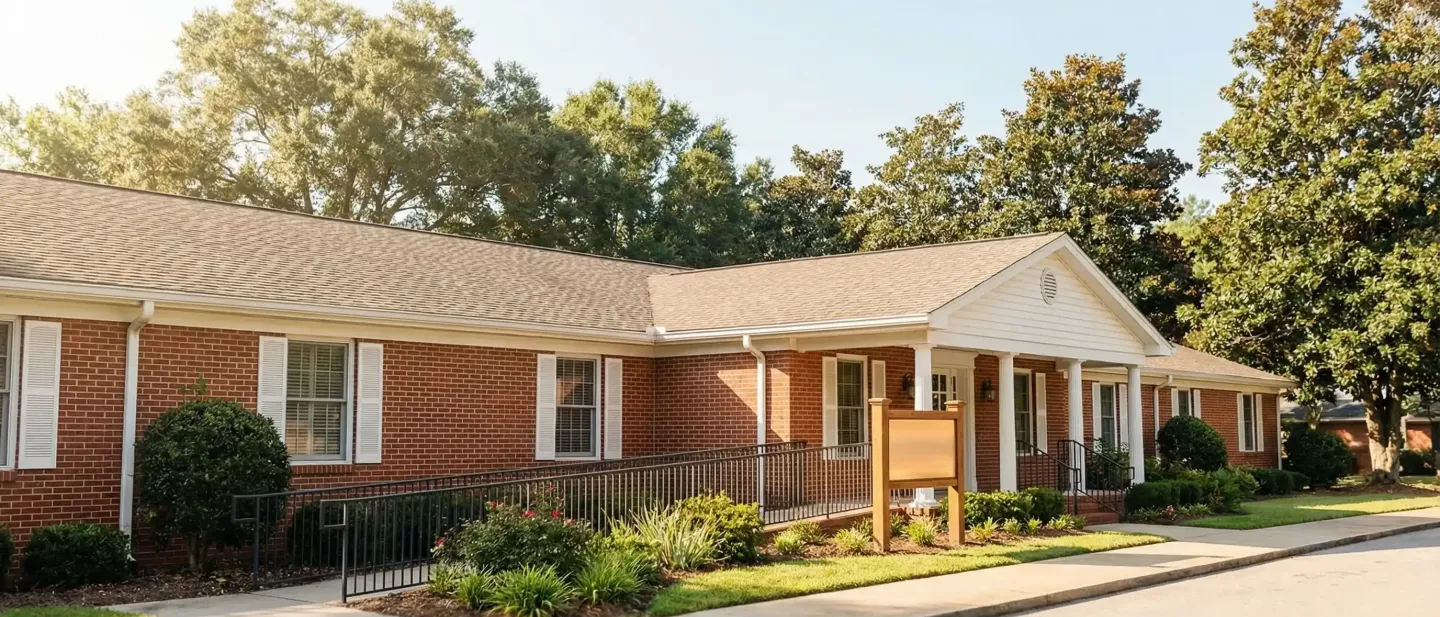
In Montgomery, AL, people search for senior services about 1,200 times a month on Google; a top-of-page click costs $3–$12, and demand peaks in October.
Google Keyword Planner · Oct 2025 – Sep 2026
| Search | Monthly searches | Top-of-page CPC |
|---|---|---|
| in home care | 110 | — |
| elderly care | 110 | — |
| respite care | 110 | $0.93–$3.56 |
| nursing homes near me | 110 | $1.18–$4.40 |
| home care | 90 | $3–$14 |
| home care services | 90 | $5–$12 |
| home health care | 90 | $4–$30 |
| nursing home | 90 | $2–$11 |
| senior home care | 70 | — |
| caregiver services | 50 | — |
US: $13
Google Keyword Planner · Oct 2025 – Sep 2026
Source: Google Keyword Planner (Google Ads), Google Search, English, Montgomery, AL, Oct 2025 – Sep 2026. Volumes are Google's monthly averages; CPC is the top-of-page bid range, weighted by search volume. How we collect these figures.
Senior services PPC has a unique psychology that most campaign managers don't account for: the person searching is almost never the person receiving care. Adult children — typically 35–55 years old — are the primary decision-makers for in-home care and assisted living placement. They're searching on behalf of a parent in distress, often under time pressure from a hospital discharge, a fall, or a sudden health decline. Their search behavior is emotionally driven and intent-rich. Campaigns that address the adult child decision-maker directly — "Worried about your aging parent?" — convert at dramatically higher rates than campaigns that speak to the senior directly. Most local senior care campaigns get this wrong at the copy level, then compound it with keyword strategy that doesn't match the decision-maker's actual search language.
The first structural challenge is national franchise competition. Comfort Keepers, Right at Home, Visiting Angels, and BrightSpring all operate in the Montgomery market and run nationally managed Google Ads campaigns. Like national chains in any service category, these campaigns bid aggressively on generic terms — "in-home care Montgomery AL," "senior care services," "home health care near me" — with budgets and Quality Score histories that local agencies can't match on broad terms. CPCs for these generic senior care terms run $3–$12 in Montgomery, driven by franchise competition that has intensified 32% year-over-year in the Assisted Living, Elder & Home Care subcategory.
The second challenge is keyword intent collapse. Senior care search queries range from early-stage research ("what is in-home care for seniors," "difference between home health and home care") to immediate placement urgency ("in-home caregiver Montgomery starting this week," "respite care available immediately"). Generic campaigns that don't separate research-intent from placement-intent spend equal budget on both — and only the placement-intent searches convert. A search for "in-home care Montgomery starting Monday" is 5× more likely to become a contracted client than a search for "what does in-home care cost" — but both searches trigger the same keywords in a poorly structured campaign.
Montgomery's Maxwell AFB and Gunter Annex create a large, aging veteran population with specific senior care needs and, critically, VA benefits that help fund care. This is one of the highest-value PPC segments in Montgomery's senior care market — and it is almost entirely unclaimed by local campaigns.
Veterans and their spouses who qualify for VA Aid & Attendance benefits can receive $1,200–$2,400/month in assistance for in-home care costs. Families who are aware of this benefit are actively searching for agencies that accept VA funding: "VA caregiver benefits Montgomery AL," "VA Aid & Attendance home care," "veteran in-home care VA benefits accepted." These searches face near-zero competition from other local advertisers, because most agencies haven't built dedicated VA campaigns. The conversion rate for VA-specific searches is high because the searcher has already qualified their ability to pay; they're evaluating providers, not prices.
The rural spillover factor expands the geographic opportunity beyond the city limits. Montgomery serves as the urban healthcare hub for a large surrounding rural area in central Alabama. Families in rural counties — Autauga, Elmore, Lowndes, Macon — regularly travel to Montgomery for healthcare services and actively search for Montgomery-based senior care agencies when rural options are unavailable. Geographic campaigns that include these surrounding county populations can increase total qualified lead volume 20–30% without meaningfully increasing CPCs, because rural-adjacent searchers have the same placement intent as in-city searchers but face less competition from other local advertisers targeting them specifically.
Finally, the Medicaid funding dimension shapes the lower end of the market. Alabama has high Medicaid rates, and many seniors qualify for state-funded in-home care programs. Families navigating Medicaid eligibility actively search for agencies that accept Medicaid and can help them through the qualification process. Campaigns that address Medicaid acceptance in ad copy — "Medicaid and VA accepted," "we help families navigate funding options" — capture a segment that purely private-pay campaigns miss entirely. The Medicaid segment has lower per-client revenue but high volume, and the referral network these clients generate (social workers, discharge planners, case managers) adds long-term pipeline value beyond the direct conversion.
The structural solution for Montgomery senior care PPC is a five-segment campaign built around the distinct buyer types, funding mechanisms, and urgency levels in this market. Running a single "senior care" campaign that blends all five segments produces mediocre results in every segment; building dedicated campaign tracks produces exceptional results in each one.
Segment 1 — Emergency & Urgent Placement (highest budget allocation):
Segment 2 — VA & Veteran-Specific (small allocation, exceptional ROI):
Segment 3 — Memory Care & Dementia Specialist (premium allocation):
Segment 4 — Respite Care (underserved, strong converter):
Segment 5 — General In-Home Care (foundational volume):
LocaliQ's 2025 Healthcare Search Ads Benchmarks report a 32% year-over-year CPC increase for the Assisted Living, Elder & Home Care Services subcategory. This is the largest annual CPC increase of any healthcare subcategory in the study. The signal is unambiguous: national and regional operators are recognizing the senior care growth opportunity and pouring PPC budget into the category. For Montgomery agencies, this creates a short-term window of competitive advantage before the market becomes fully crowded — and a medium-term imperative to establish campaign structure and Quality Score history now, before CPCs climb further.
Montgomery's specific demographic drivers amplify the national trend. Alabama's 65+ population is growing as the Baby Boomer cohort ages into senior status, and Montgomery County reflects this trend. The convergence of three factors — an aging population base, a high veteran concentration with VA benefit eligibility, and Montgomery's role as the healthcare hub for a large rural region — produces a demand density for senior services that exceeds what the city's population size alone would suggest. Per-capita senior services search volume in Montgomery is likely 15–25% above national average for comparable mid-size cities, because the rural spillover adds search demand from families who have no local alternative.
Senior care has the longest and most emotionally complex decision cycle in local service PPC. LocaliQ's benchmarks show a 5.51% CVR for the category — below the 8.09% healthcare average — reflecting a cycle where families research, delay, compare, and return multiple times before committing. This doesn't mean PPC leads are low quality; it means the campaigns supporting them must be built for a multi-touch journey.
The seasonal pattern in Montgomery senior care is driven by healthcare events rather than weather. Hospital discharge rates spike in December-January (cold-season illness and holiday-period medical events), creating an urgency surge in in-home care demand. VA enrollment and benefit qualification activity peaks in spring as veterans complete their annual benefits reviews. Budget should reflect these patterns: increase emergency and VA campaigns in January and March-April; maintain steady volume in summer; increase memory care and respite budgets in fall as family caregiver burnout accumulates through the year.
Senior services PPC is a category where generic campaigns consistently fail and segment-specific campaigns consistently win. The decision-maker is an adult child in crisis. The funding mechanisms are complex — private pay, VA benefits, Medicaid, long-term care insurance. The competitive landscape has national franchise brands dominating generic terms while specific veteran, memory care, and respite care niches sit largely unclaimed by local advertisers.
MB Adv Agency builds Google Ads campaigns for service businesses across the South. We understand that senior care conversions happen by phone, not by form — which means every campaign we build includes call tracking, response-time protocols, and bidding strategies optimized against actual phone call data rather than click volume. Our Plastic-Brick methodology identifies the structural waste in senior care campaigns — the broad-match keywords absorbing budget from research-intent searchers who will never become clients, the landing pages that address seniors instead of the adult children who are actually searching, the missing VA and respite care segments that your competitors haven't built.
For Montgomery senior care agencies, that means dedicated VA benefit campaigns your national competitors aren't running, memory care and dementia specialist campaigns targeting the highest-urgency segment in the category, and rural spillover geographic targeting that expands your qualified lead pool without meaningfully raising CPCs. The window to establish campaign authority in this market before the 32% annual CPC increase compounds further is now — not in 12 months.
Management is a fixed monthly fee set by your ad spend, with the tracking set up first: see the plans and prices. Account audit for agencies currently running Google Ads — we'll show you the segment gaps and the budget waste within 48 hours.

The most important targeting decision in senior care PPC isn't geographic or demographic — it's keyword intent. The goal is to capture searchers who are actively making a placement decision, not families at the start of a months-long research journey. The difference determines whether your campaign generates phone calls or generates clicks.
High-conversion intent keywords share three characteristics: they include urgency signals ("starting this week," "immediately," "same day"), they reference a specific care type rather than a general category ("memory care Montgomery" rather than "senior care"), and they often reference a triggering event ("care after hospital discharge," "mom fell and needs help"). These searches come from families who have already moved past research into decision mode. These terms convert at 2–3× the rate of generic terms and produce placement clients, not just leads.
The VA and veteran-specific segment is the most overlooked high-conversion target in Montgomery's senior care market. Families searching for VA Aid & Attendance home care have already qualified for benefits — they're searching for providers, not prices. These terms face minimal competition. For an agency that accepts VA benefits, a dedicated VA campaign is the single highest-ROI addition to any existing Google Ads account — the leads are qualified, the competition is minimal, and the Maxwell AFB population creates enough search volume to justify meaningful budget allocation.
Finally, geographic targeting for the rural spillover counties — Autauga, Elmore, Lowndes, Macon — adds meaningful lead volume without increasing CPCs, because these counties don't have the same local advertiser density as Montgomery proper. Families in rural central Alabama who are searching for Montgomery-based senior care agencies are geographically motivated to find a provider who will serve their area; emphasizing in-home service availability throughout central Alabama in ad copy converts this segment effectively.
Senior care CPCs average $6.30 nationally per LocaliQ's 2025 Healthcare benchmarks, with Montgomery running $3–$12 depending on keyword type. At these CPC levels, budget allocation is a meaningful strategic decision — the wrong allocation produces high volume of low-intent leads; the right allocation produces fewer but far more qualified placement prospects.
At $1,500/month, the most effective allocation for a Montgomery senior care agency is a two-segment campaign: emergency/urgent placement keywords (Segment 1) and general in-home care with aggressive negative keyword management (Segment 5). This generates 13–20 leads per month at a CPL of $75–$115. The critical differentiator at this budget tier is landing page and phone response quality — a $1,500/month campaign with a specific landing page and live-answer protocol converts at 2–3× the rate of the same budget sending traffic to a generic homepage with a contact form.
At $2,500/month, add the VA/veteran segment (Segment 2) and respite care (Segment 4). The VA segment adds high-quality leads with minimal competition; the respite care segment captures family caregivers in crisis who are fast-converting because they've reached their own limit. Total monthly leads climb to 22–35 at this budget level, with lead quality improving because each segment's ad copy and landing page speaks directly to the specific situation the searcher is facing. The VA segment typically produces the best cost-per-placement at this budget tier — leads are pre-qualified by VA eligibility, conversion to contracted care is faster, and the Maxwell AFB population provides enough volume for the campaign to generate meaningful data quickly.
At $4,000/month, all five segments run simultaneously, including memory care/dementia specialist (Segment 3), which is the highest-ticket and highest-urgency category in senior care. Memory care leads convert at above-average rates because the family situation has typically become critical before the search happens. The 32% annual CPC increase in this subcategory means that $4,000 buys meaningfully more lead volume today than it will in 12 months. Agencies that establish account history and Quality Score now will maintain cost advantages over later entrants when the market becomes more crowded.
How to read this Cost per click and monthly searches are measured with Google Keyword Planner (see above). Cost per lead, conversion rate, budget and leads are estimates compiled from public benchmarks such as WordStream, not measurements.
Sources LocaliQ 2025 Healthcare Search Ads Benchmarks (3,500+ campaigns) — Assisted Living, Elder & Home Care subcategory: CTR 6.35%, CPC $6.30, CVR 5.51%, CPL $74.44. CPC increased 32% YoY. Montgomery adjustment: $5.50–$8.50 local CPC range; VA-specific terms run 10-20% below general category average.
$590$990/month
1 platform · Google or MetaGoogle + Meta$790$1,290/month
1 platform · Google or MetaGoogle + Meta$1,140$1,940/month
1 platform · Google or MetaGoogle + MetaChatGPT Ads: a separate pilot, $250/month, added to a plan. See the pilot →

Matteo Braghetta founded MB Adv and runs its Google Ads accounts. He takes the first call with every new client, reads the accounts every week and writes the agency’s guides.
The other half of his job is measurement: GA4, Consent Mode and server-side tracking, so the platforms learn from real sales.
MB Adv is a Google Partner agency managing about $4.4M a year in ad spend for clients in the US, the UK and Europe.
Managed on numbers you can check.
Plans for the US