Solar Installation PPC Corona, CA
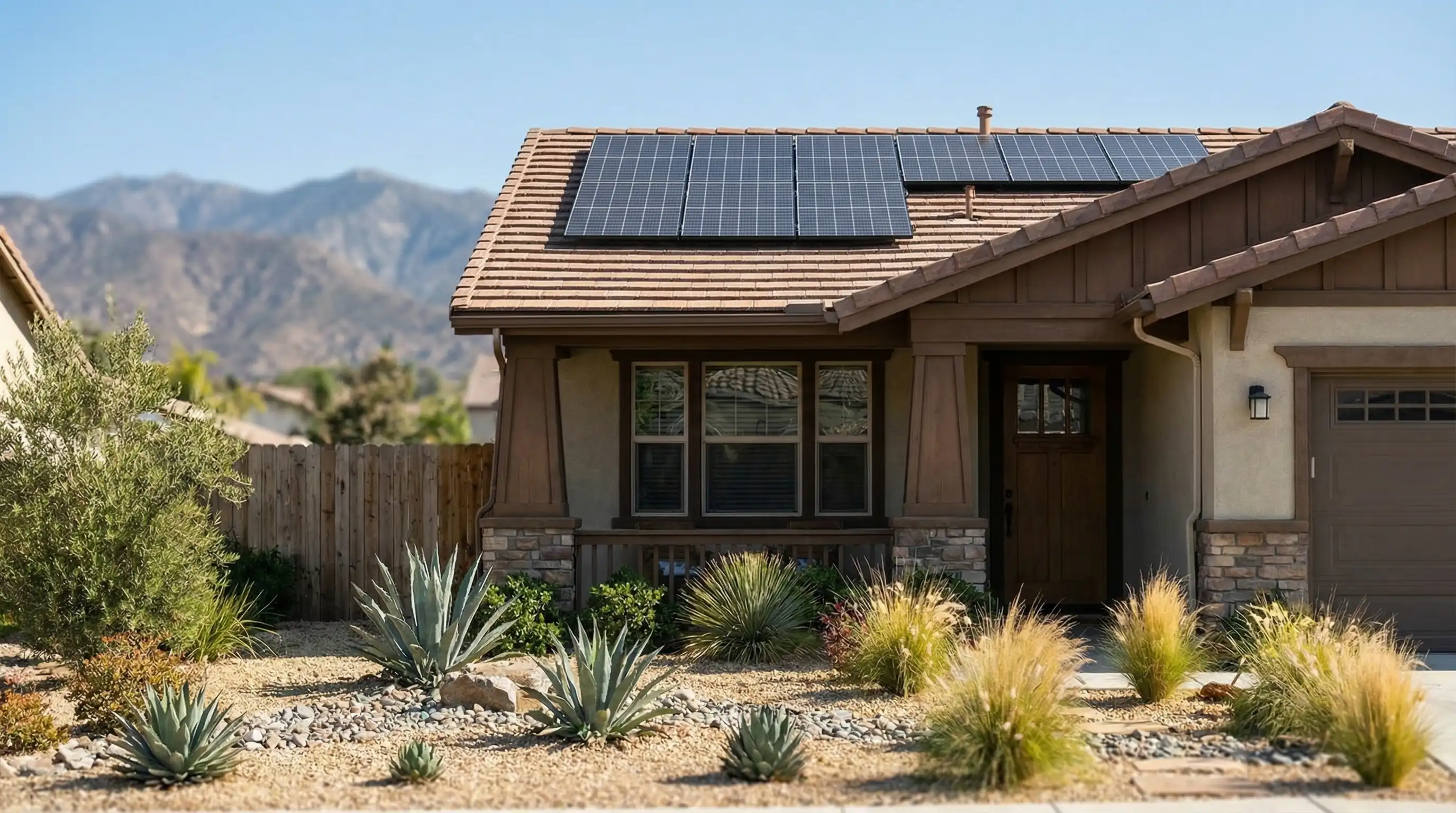
Corona homeowners on SCE are paying $200–$350 per month in summer electricity bills — the single most persuasive solar PPC ad copy in California. Add NEM 3.0's shifted economics favoring self-consumption and battery storage, and the independent solar installer who runs the right campaigns right now is competing in a re-education market that the big national installers haven't fully pivoted to address.
Why Do Solar Installation PPC Campaigns Fail in Corona, CA?
Solar PPC in California is structurally different from other home services categories: the competition isn't just other local installers — it's Sunrun, SunPower, Vivint, and Tesla, all running national PPC budgets and brand-recognition campaigns in the same Inland Empire market. Most independent solar installers attempt to compete on the same keyword terrain as these national operators, which is the first strategic mistake.
The National Competitor Problem
Sunrun is the largest residential solar and storage company in the United States. It runs Google Ads campaigns in every California market, including Riverside County, with programmatic bidding and brand-awareness budgets that small independents can't match on any general solar keyword. SunPower (Maxeon) operates through an active dealer network in the IE/OC corridor with the same dynamic. When an independent installer bids on "solar installation Corona CA" against these operators, they're entering an auction with a $2,000–$4,000/month budget against competitors spending $20,000–$100,000/month in the same region.
Local operators like Underline Energy Concepts (Lake Elsinore; 15+ years) and Solen Energy Construction (Eastvale; BBB A) have the expertise and local presence that national chains lack — but they need campaigns that leverage those advantages rather than competing head-to-head on Sunrun's terms.
NEM 3.0: The Misunderstood Market Shift
California's NEM 3.0 (effective April 2023) fundamentally changed residential solar economics — reducing export credits by approximately 75% and making self-consumption optimization the primary driver of solar ROI. Most solar PPC campaigns in the market are still running NEM 2.0-era messaging that leads with annual savings from grid export, which no longer reflects the economic reality for new buyers. Homeowners who investigated solar before April 2023 and didn't proceed have misconceptions about current economics — they need re-education, not the same pitch they declined 3 years ago.
Long Sales Cycles Without Attribution
The average solar purchase cycle in California runs 30–90 days from first click to signed contract. Most PPC campaigns optimize for form fills at the first visit and see low conversion rates as evidence the campaign is failing, when the reality is that the leads are in a consideration cycle that requires remarketing, follow-up, and CRM nurturing. Without offline conversion tracking — connecting signed contracts back to the original Google Ads keyword — operators can't see which campaigns are generating actual revenue versus which are generating tire-kickers.
- Competing on national keywords against Sunrun: Guaranteed auction loss at sustainable economics
- Outdated NEM 2.0 messaging: Repels homeowners who know the rules have changed
- No battery storage upsell campaign: The highest-value post-NEM 3.0 pitch is absent
- Single-visit conversion expectations: Misaligned with a 30–90 day purchase cycle
PPC Strategies for Solar Success in Corona, CA
The winning solar PPC strategy for an independent Corona installer doesn't try to out-bid Sunrun. It exploits three gaps that national operators systematically leave open: NEM 3.0 education, battery storage specificity, and local credibility signals that national chains can't replicate from a call center in another state.
Campaign Architecture: Bypass Brand Competition
Structure solar campaigns around intent categories where independent installers have competitive advantages:
- NEM 3.0 Re-Education Track: "solar panels worth it California 2024," "NEM 3.0 solar savings," "solar with battery storage California," "is solar still worth it after NEM 3.0" — $15–$30/click; educational landing pages that explain the new economics clearly; captures homeowners who dismissed solar in 2022 and are reconsidering
- Battery Storage Track: "Tesla Powerwall installer Riverside County," "solar battery backup Corona CA," "Enphase IQ battery installer IE," "solar storage system Inland Empire" — $25–$60/click; post-NEM 3.0 the highest-value sales category; Sunrun's lease model doesn't compete well here because storage requires ownership
- Local SCE Bill Angle: "reduce SCE bill Corona CA," "high electric bill Inland Empire solar," "solar installation quote Riverside County" — $20–$45/click; pain-point-led campaigns that convert better than generic "solar installation" keywords during summer when SCE bills are highest
- Commercial/Offset Hybrid: "commercial solar installation Riverside County," "solar for small business Corona CA" — $20–$40/click; lower competition, higher project LTV ($40,000–$150,000+)
Landing Pages: Lead with the New Math
Every solar landing page in 2025 must address NEM 3.0 directly. The homeowner landscape is full of people who priced solar under the old rules and didn't buy — they need to see that the new economics still work, explained clearly and without minimizing the change. Landing pages that open with "Here's what solar costs and saves in Corona under NEM 3.0" — with actual SCE rate data, a sample 9kW system ROI calculation, and payback timeline — outperform generic "Go Solar Today" pages by 2–3x in conversion rate.
Remarketing: The 60-Day Consideration Cycle
Solar buyers don't convert on one visit. A remarketing layer — Display and YouTube ads following visitors who visited the landing page but didn't submit — keeps the brand visible during the 30–60 day research cycle. This is where independent installers can punch above their weight: a well-produced local video testimonial in a remarketing ad ("I'm a Corona homeowner, and here's my system 2 years later") creates trust that a national brand's generic animated ads cannot match.
Seasonal Budget Alignment
January–April is the highest-ROI window: SCE winter bills arrive in January (post-holiday shock), tax refund season delivers down payment capital in February–March, and spring installs complete before summer heat delays. August–October is the secondary surge window — homeowners absorbing summer SCE bills of $250–$350+ become highly receptive to solar conversations. Budget 35% of annual spend in Q1 and 25% in Q3, with reduced presence in November–December.
Google Partner Agency
We're a certified Google Partner Agency, which means we don’t guess — we optimize withGoogle’s full toolkit and insider support.
Your campaigns get pro-level execution, backed by real expertise (not theory).

What Market Trends Should Corona Solar Businesses Know?
The post-NEM 3.0 market has created a segmented buyer landscape that rewards the installers who understand the new economics — and punishes those running the same pitch they used in 2021. Three trends are reshaping the opportunity for independent contractors in the Inland Empire right now.
Battery Storage Is the New Solar Sales Engine
Under NEM 3.0, a home solar system without battery storage earns dramatically reduced export credits for midday generation — the hours when a standard rooftop system produces most of its output. This has made battery storage (Tesla Powerwall, Enphase IQ, SunPower SunVault) the central product of any new installation conversation, not an optional add-on. The average Corona solar installation with battery storage runs $30,000–$45,000 — 35–50% higher LTV than a system-only sale. For independent installers who own the customer relationship (vs. Sunrun's lease model, where storage economics favor company ownership), this is the most financially impactful market shift in the last 5 years.
Keywords targeting battery storage have CPCs of $25–$60 — comparable to general installation terms — but attract a higher-intent buyer who has already decided to go solar and is now evaluating the storage component. This segment converts faster and at higher project value than pure panel installation searches.
SCE Rate Trajectory: The Long-Tail Case for Solar
SCE residential electricity rates have increased year-over-year consistently, and California's net energy metering structure shifts more of the rate burden to non-solar households over time. Key insight: The homeowner who pays $280/month for SCE electricity today will likely pay $350–$400/month in 5 years under current rate trajectory — which means the 25-year solar savings calculation improves every year the decision is delayed. PPC campaigns that include a simple "your SCE bill in 2030" projection alongside current solar pricing close at a higher rate than campaigns that show only current savings, because they convert the homeowner who is on the fence about timing into someone who understands that waiting costs money.
The Re-Investigation Segment
A significant portion of Southern California homeowners received solar quotes in 2021–2022 under NEM 2.0, didn't proceed, and have now received updated quotes under NEM 3.0 that look different. These homeowners are not "not interested in solar" — they are confused about whether it still makes sense. PPC targeting the query "is solar worth it in California 2024" and "NEM 3.0 vs NEM 2.0 solar savings" captures this high-intent segment at lower CPCs ($10–$20) than conversion-ready purchase terms, then converts them through educational nurturing rather than a direct sales page. This segment is systematically ignored by Sunrun-scale national campaigns but is ideally suited for local independent installers with the time and expertise to explain the new economics.
Why Solar PPC in the Inland Empire Requires Local Strategy
Sunrun doesn't know that Corona homeowners are paying $200–$350 in summer SCE bills. It doesn't know that NEM 3.0 re-education messaging converts better than generic savings claims. And it cannot credibly say, in a remarketing ad, that its technicians are local IE contractors who will be present for the inspection, the install, and the 25-year warranty period. Those advantages belong to local operators — but only if the campaigns are built to leverage them.
MB Adv Agency builds PPC campaigns for home services contractors competing in markets where trust and local knowledge are the differentiators. In the Corona solar market, that means NEM 3.0-accurate landing pages, battery storage upsell campaigns, SCE bill-driven ad copy, and 60-day remarketing sequences that keep local installers visible throughout the consideration cycle — without trying to out-bid national operators on their own keyword turf.
At $22,000–$45,000 per project, one converted customer covers 3–12 months of management fees at our Aggressive Push or Market Crusher tiers. Review our pricing and let's build a solar campaign calibrated to the Inland Empire market's current reality — not the pre-NEM 3.0 playbook.
Frequently Asked Questions
How does NEM 3.0 change solar PPC strategy in Corona, CA?
California's NEM 3.0 (effective April 2023) fundamentally changed residential solar economics in the Inland Empire, and those changes require a complete rethink of solar PPC campaign messaging. Under NEM 2.0, solar installers could lead with simple annual savings calculations based on grid export credits for excess midday generation. Under NEM 3.0, export credits dropped by approximately 75%, making grid export a poor strategy and self-consumption optimization — meaning pairing solar with battery storage — the primary driver of system ROI. For PPC strategy, this means two critical shifts: first, campaign messaging must address NEM 3.0 directly rather than running 2021-era savings claims that now produce skepticism from informed homeowners. Second, battery storage campaigns should become a core campaign track, not an optional add-on — because the combination system ($30,000–$45,000) is now the financially justified purchase for most Corona homeowners on SCE rates. Landing pages that explain NEM 3.0 clearly, show realistic current payback calculations, and introduce battery storage as the mechanism for maintaining solar ROI convert significantly better than pages that pretend the rule change didn't happen. The re-investigation segment — homeowners who declined solar quotes in 2022 and are now reconsidering — is particularly valuable: they have high intent and just need the new economics explained by someone they trust.
Campaign keywords reflecting the NEM 3.0 shift:
- "solar worth it California NEM 3.0" — $10–$20/click, very low competition
- "solar battery storage Corona CA" — $25–$55/click, growing volume
- "self-consumption solar Inland Empire" — $15–$30/click, niche but high intent
What's the realistic ROI for a solar installer running Google Ads in the Inland Empire?
For an independent solar installer in the Corona, CA market, a well-managed Google Ads campaign at $3,500–$5,000/month should generate 8–18 qualified leads per month, with a signed contract rate of 15–25% depending on sales process quality and financing availability. At $22,000 average project value and a 20% close rate on 12 leads per month, the campaign generates approximately 2–3 signed projects per month with a revenue contribution of $44,000–$66,000 against a management and ad spend cost of $5,000–$8,000 — an 8:1 to 12:1 return on investment when properly attributed. The lead-to-contract lag must be accounted for: expect a 30–90 day cycle between first click and signed contract, which means the first month of PPC data will appear to show low ROI until the pipeline matures. Battery storage upsell campaigns typically add $8,000–$23,000 in project value per converted lead — the single highest-value campaign optimization available to an IE solar installer. Offline conversion tracking (connecting Google Ads to the CRM or signed contract data) is required to measure actual solar PPC ROI accurately; form fill volume alone understates results by 40–60% because most serious solar buyers call rather than completing web forms. The IE market's structural advantage — 287 annual sun hours, SCE rates among California's highest, and NEM 3.0 re-investigation demand — makes the underlying demand durable regardless of seasonal fluctuations.