Solar Installation PPC Lancaster, CA
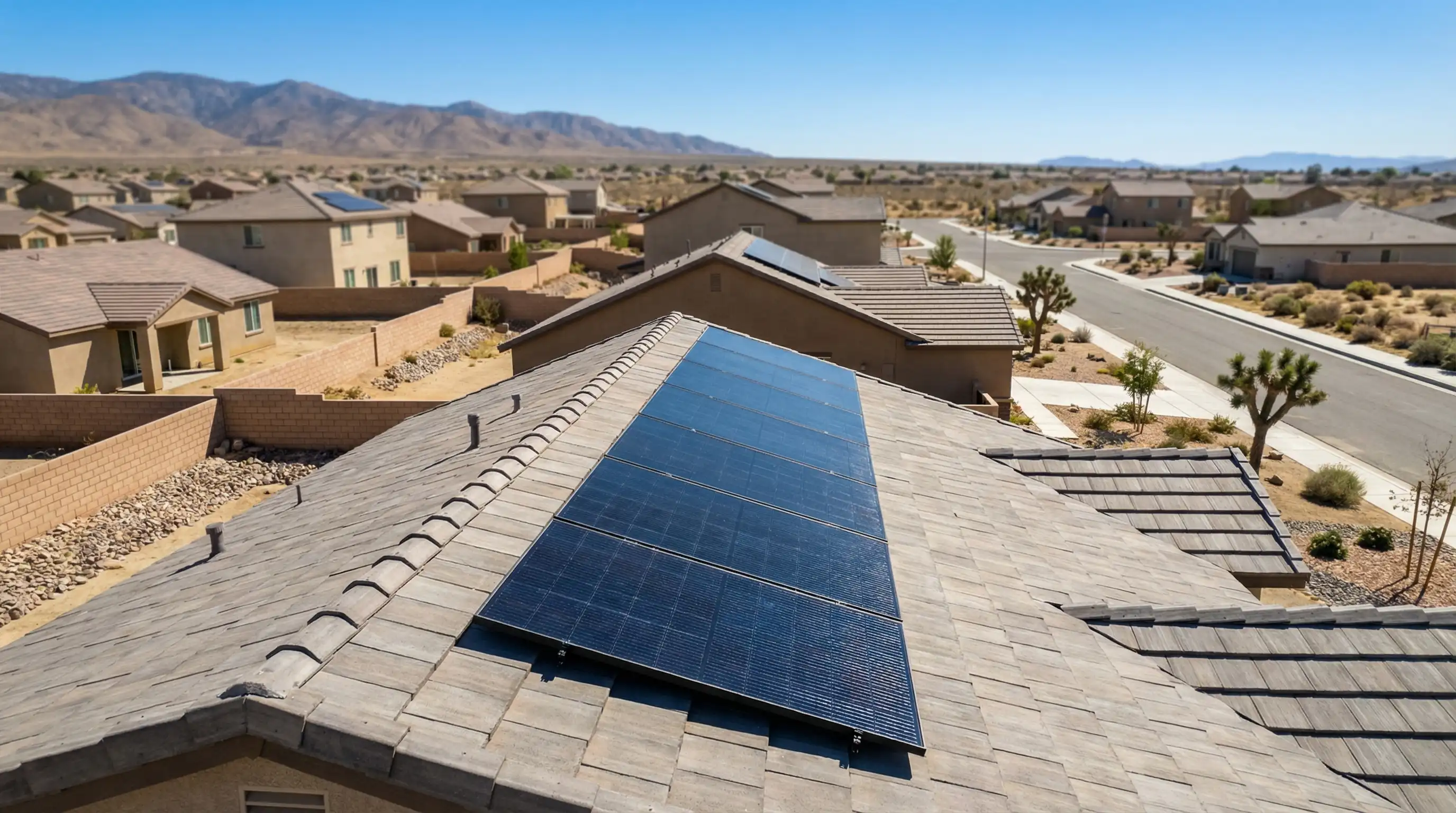
Lancaster averages 6.0–6.5 peak sun hours per day — among the highest in the continental US — and SoCal Edison rates exceed $0.30/kWh on upper tiers. The financial case for solar in the Antelope Valley is stronger than almost anywhere in California. The challenge isn't demand; it's cutting through national brands with local credibility and a campaign strategy that speaks to Lancaster homeowners specifically.
Why Do Solar PPC Campaigns Struggle in Lancaster, CA?
Solar installation PPC in Lancaster has a fundamental tension: the market has exceptional underlying demand, but national brands have deployed enormous advertising budgets to capture it. Sunrun, SunPower, Tesla Energy, and Sunnova all target Antelope Valley households, running sophisticated campaigns with broad match keywords, video pre-roll, and remarketing sequences that local installers can't match dollar-for-dollar. Trying to outspend national brands on generic solar keywords in Lancaster is a losing strategy for SMB installers — but competing on local specificity is winnable.
The NEM 3.0 Complexity Problem
California's net metering policy change (NEM 3.0, April 2023) fundamentally altered the solar value proposition and created confusion that most campaigns haven't adapted to address. Under NEM 3.0, export credits for excess solar power dropped by approximately 75% for new installations. This means the "send power back to the grid and eliminate your bill" messaging that dominated solar PPC for a decade is now misleading — or at minimum, incomplete. Homeowners who see legacy messaging and then learn the actual NEM 3.0 economics feel misled. Lead quality drops when campaigns use pre-NEM 3.0 messaging.
The adapted messaging strategy: lead with self-consumption, battery storage, and TOU optimization. Under NEM 3.0, the value of solar shifts from export to consumption — a battery-paired solar system that self-consumes 85-90% of production is still an excellent investment at SCE's $0.30+/kWh rates. But campaigns that don't explain this distinction attract leads who are expecting the old economics and convert poorly when they learn the new ones.
A second challenge: Lancaster has no Expertise.com solar top-picks page, which means there's no publicly curated list of local qualified installers. This is actually a campaign context problem — homeowners searching for solar in Lancaster see national brand ads and aggregator sites (EnergySage, Solar-Estimate) at the top of results, before local installers appear. Organic search presence is thin for Lancaster solar, making paid search the primary acquisition channel — and increasing the importance of campaign quality for local SMBs.
The National Brand Keyword Problem
National solar brands run broad match on generic terms like "solar panels Lancaster" or "solar installation CA." They have Quality Scores built over years of campaign history and can sustain top positions at CPCs that smaller local installers can't profitably match. The solution is not to compete on those terms — it's to own the specific terms that national brands don't optimize for: local service area keywords, SCE-specific rate keywords, battery storage add-on terms, and the NEM 3.0 education angle. These terms have meaningfully lower CPCs and attract leads who have self-selected with more specific intent.
Solar PPC Strategies That Work Against National Brands in Lancaster
Effective solar PPC in Lancaster requires a campaign architecture that deliberately avoids the keywords where national brands have dug in, while capturing the high-intent, locally specific searches that drive the best-converting leads. Here's the structure.
Campaign 1: High-Bill Pain Point (Primary)
- "High SCE electric bill Lancaster CA" — CPC: $8–$15. Pain-point angle, strong intent among TOU-tariff payers
- "Reduce electric bill Lancaster solar" — CPC: $10–$18. Self-consumption messaging, NEM 3.0 compliant
- "Solar savings calculator Antelope Valley" — CPC: $7–$14. Education-first leads — longer cycle but higher quality
Campaign 2: Battery Storage / NEM 3.0 Adaptation
- "Solar battery storage Lancaster CA" — CPC: $10–$20. Post-NEM 3.0 adaptation campaign — battery self-consumption angle
- "Solar plus battery Lancaster" — CPC: $12–$22. Captures homeowners who've already researched NEM 3.0
- "Powerwall installation Lancaster CA" / "Enphase battery Lancaster" — CPC: $8–$16. Product-specific searches from well-informed buyers
Campaign 3: Financing & ROI
- "Solar financing Lancaster CA" — CPC: $8–$15. Finance-hesitant homeowners — HELOC-funded, $0-down loan campaigns
- "Solar tax credit 2025 California" — CPC: $6–$12. IRA federal incentive searches — high intent, educational angle
- "Solar lease vs buy Lancaster" — CPC: $5–$10. Research phase, mid-funnel remarketing target
Audience Targeting Strategy
Layer customer match and affinity audiences on top of keyword targeting: homeowners, household income $75K+, ages 35-65. This filters out renters, who cannot install solar regardless of intent. In Lancaster, targeting aerospace workforce and Edwards AFB contractors — both homeowner-heavy demographics — improves lead-to-appointment rates. Exclude apartment and condo zip code clusters in Lancaster to avoid paying for clicks from renters who express interest but can't convert.
Geographic bid adjustments matter in the Antelope Valley: Lancaster and Palmdale share a combined market of ~340,000 residents. Run campaigns covering both cities — homeowners in Palmdale are equally viable solar customers for a Lancaster-based installer. Adding Quartz Hill, Lake Los Angeles, and Acton to the geo-targeting radius captures the outer Antelope Valley fringe where national brand coverage thins out and local installer advantage is strongest.
Recommended starter budget: $2,000–$3,500/month. Solar has a longer consideration cycle than emergency home services, so budget consistency over time matters more than aggressive spend spikes. Remarketing budget (30-40% of total) is essential — solar leads typically visit multiple installers' sites before converting. Set a 90-day remarketing window to capture the full solar consideration cycle.
Google Partner Agency
We're a certified Google Partner Agency, which means we don’t guess — we optimize withGoogle’s full toolkit and insider support.
Your campaigns get pro-level execution, backed by real expertise (not theory).

What Market Trends Should Lancaster Solar Businesses Know?
Lancaster sits at the intersection of three macro trends that are driving solar demand specifically in the Antelope Valley: peak sun resource, escalating utility rates, and California's policy-driven adoption mandate. But there's a fourth trend, specific to Lancaster, that most solar marketers have missed. Lancaster's average home equity has grown substantially — the 9.17% YoY appreciation that pushed median home values to $465,145 means the average Lancaster homeowner has added $38K-$43K in equity in the past year alone.
The Equity-Financed Solar Opportunity
Home equity creates a financing pathway that expands the addressable solar market beyond households that can absorb a $25K-$45K system cost from cash or personal loans. HELOC rates remain attractive relative to solar loan rates, and homeowners who have seen significant equity appreciation are increasingly willing to deploy it on home improvements. Solar — with measurable monthly utility savings and a decades-long asset life — is an especially compelling HELOC use case. Campaigns targeting "home equity solar financing Lancaster" or "HELOC solar Antelope Valley" attract a high-quality lead segment that national brands' generic campaigns miss.
The Edwards Air Force Base population creates a specific micro-market within Lancaster. Military and civilian contractor households at Edwards skew toward higher income (GS-12 through GS-15 civilian equivalents, O-4 through O-6 military) and higher STEM comfort with ROI analysis. These households are disproportionately likely to conduct a full solar ROI calculation before purchasing — they respond well to specific data: "At $0.31/kWh SCE summer TOU rates and 6.2 peak sun hours, a 8kW system in Lancaster offsets $2,800-$3,400 annually." This is the messaging that converts aerospace households that generic campaigns can't reach.
The NEM 3.0 Grandfathering Window Is Closed — Battery Add-On Is the New Pitch
April 2023 closed the NEM 2.0 grandfathering window for new installations. Homeowners who installed before that date export power at the old rates for 20 years. Post-NEM 3.0 installations need a different ROI story. Battery storage makes solar profitable again under NEM 3.0 by enabling self-consumption optimization — charge the battery during solar production hours, discharge during SCE's TOU peak rate periods (4 PM–9 PM). The pitch shifts from "send power back to the grid" to "never pay peak rates again." This is a better message for Lancaster's aerospace workforce demographic anyway — it's an engineering-grade optimization pitch, not a feel-good environmental one.
Why Lancaster Solar Installers Need Local PPC Expertise to Compete
National solar brands run campaigns in every California market with identical copy and targeting. Local installers win when they out-position the national brands on specificity — Lancaster-specific sun hours, SCE rate tiers, NEM 3.0 self-consumption strategy, and local homeowner equity data. That positioning doesn't happen by accident. It requires campaign management that knows the Lancaster market, not just the solar industry.
MB Adv Agency has built PPC systems for local and regional solar installers competing against national brands in California's inland suburban markets. We don't run the same campaign in Lancaster and San Diego — the SCE rate structure, the aerospace demographic, the NEM 3.0 battery storage angle, and the equity financing pathway are all specific to the Antelope Valley.
Our transparent pricing makes the investment clear from day one. The lead generation service is designed for high-consideration purchases like solar, where lead quality and nurturing sequences matter more than raw click volume. See the Lancaster approach — and how local expertise is the asset that national brands, ironically, can't replicate in your market.
Frequently Asked Questions
How Much Does Solar PPC Cost Per Lead in Lancaster, CA?
Solar PPC in Lancaster, CA typically generates leads at a cost of $90–$175 per lead, with average CPC running $10–$22 across the primary keyword categories. A starter monthly ad spend of $2,000–$3,500 typically produces 15–25 qualified leads, defined as homeowners who submit a form or call requesting a solar assessment. The CPL range reflects the solar category's longer consideration cycle — high-intent "battery storage Lancaster CA" searchers convert closer to $90 CPL, while educational and research-phase keywords produce leads at the higher end. These benchmarks are drawn from WordStream/LocaliQ 2025 data for the California residential solar category, adjusted for Lancaster's inland suburban competitive dynamics. National brand competition (Sunrun, Tesla Energy, Sunnova) inflates CPCs on generic terms like "solar panels Lancaster," making it important to build campaigns around the specific long-tail terms where local installers can compete on specificity rather than budget. The practical CPL advantage for local installers comes from better landing page relevance, local trust signals, and post-NEM 3.0 messaging that the national templates haven't fully adapted to address. A locally optimized solar campaign in Lancaster can realistically achieve a CPL 20-30% below national brand benchmarks on the same keyword categories.
One important variable: lead-to-appointment rate for solar is lower than emergency home services — typically 25-40% of form submissions schedule an in-home assessment. The best campaigns improve this ratio by pre-qualifying leads on the landing page with a utility bill estimator or eligibility checker, which filters casual browsers from serious buyers before they submit.
Is Solar PPC Worth It Under NEM 3.0 in California?
Yes — solar PPC in California remains highly effective under NEM 3.0, but the campaign strategy and messaging must be updated to reflect the changed economics. Under NEM 2.0, the pitch was simple: install solar, zero out your bill, earn credits for excess power. Under NEM 3.0, export credits dropped ~75% for new installations, which means the self-consumption model is now central to the ROI calculation. Homeowners in SCE territory paying $0.30+/kWh on upper tiers — the majority of Lancaster households with substantial loads — still achieve strong ROI from solar, particularly when paired with battery storage for TOU optimization. The math: a typical 8kW system in Lancaster produces 11,000-12,500 kWh annually at 6.2 peak sun hours. At $0.30/kWh average rate, that's $3,300-$3,750 in avoided utility costs per year. Payback period: 7-10 years on a $25K-$35K installed system cost (after IRA federal tax credit), with a 25-year system life. That ROI case is compelling — it just requires a campaign that explains it accurately rather than relying on the now-obsolete "zero-bill" narrative. Campaigns that lead with battery storage, SCE rate savings, and IRA incentive framing consistently outperform legacy solar messaging in post-NEM 3.0 California markets. Lancaster's exceptional solar resource (top-tier peak sun hours nationally) makes the math work even under the new export rules.