Solar Installation PPC Palmdale, CA
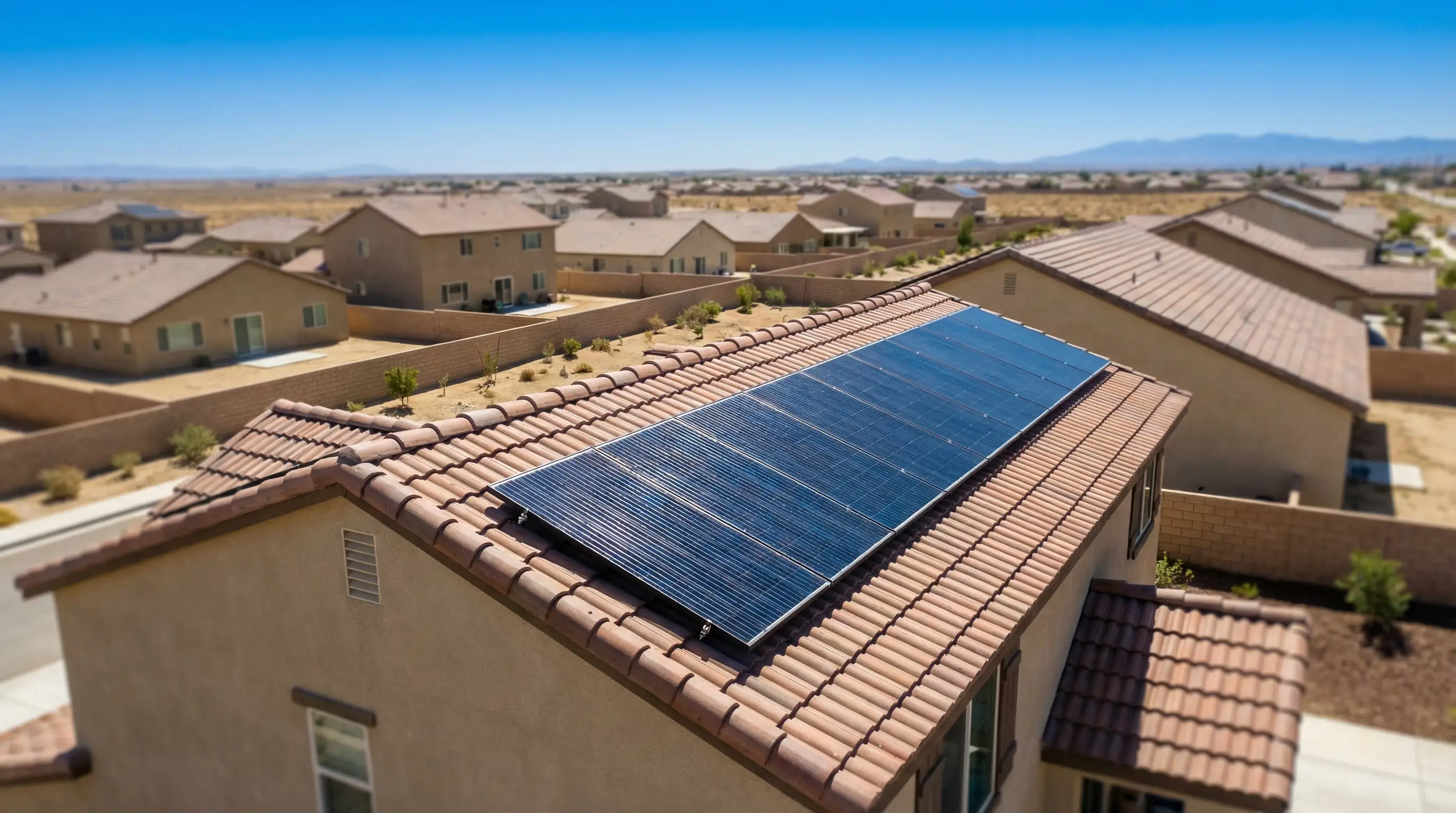
Palmdale averages 278 sunny days per year at 6.0–6.5 peak sun hours daily — the highest solar resource in LA County — while Southern California Edison TOU rates exceed $0.30/kWh under upper-tier billing, making the solar payback calculation for Antelope Valley homeowners one of the most compelling in the state.
Why Do Solar PPC Campaigns Fail in Palmdale?
Palmdale's solar market has all the fundamentals for explosive PPC performance — exceptional sunlight, high electricity costs, a state regulatory framework that mandates solar on new construction, and a tech-literate aerospace employment base that converts when the ROI math is presented clearly. But campaigns that enter this market without understanding the post-NEM 3.0 conversion landscape, the national franchise competitive dynamics, or the long sales cycle requirements routinely underperform by 40–60% against what the market is capable of delivering.
The NEM 3.0 Messaging Failure
California's updated net metering policy (NEM 3.0, effective April 2023) cut export credits for new solar installations by approximately 75%, fundamentally changing the ROI story for residential solar. Most national solar installer ad copy — and significant amounts of local installer copy — is still written for the pre-NEM 3.0 market, emphasizing grid export income that is now dramatically reduced. Homeowners who research solar in 2025 encounter the NEM 3.0 reality on every comparison site, solar calculator, and forum — if your ads and landing pages are still promising the old export economics, the credibility gap destroys conversion rates. The correct NEM 3.0 messaging pivots to self-consumption maximization (use your solar production directly rather than export) and battery storage add-ons (pair solar with a Powerwall or Enphase IQ Battery to store excess production for evening TOU peak rates). Installers who have updated their message are capturing the post-NEM 3.0 market; those who haven't are generating expensive clicks that land on stale content and leave without converting.
National brands complicate this further. Sunrun, SunPower, Tesla Energy, and Sunnova all have Palmdale coverage and run sophisticated programmatic Google Ads campaigns with large budgets. Local and regional competitors include Desert Sun Energy (Victorville, serving Antelope Valley), Antelope Valley Solar, and Pennies HVAC & Solar (Lancaster). National franchises win on brand awareness and financing product breadth; local installers win on responsiveness, custom system design, and post-installation service quality — but this advantage is invisible if local ad copy is generic and national franchises own the first three ad positions.
The Long Consideration Cycle Problem
Solar is Palmdale's highest-ticket home improvement transaction — average residential system cost runs $15,000–$35,000 before incentives. At that investment level, homeowners conduct 2–6 weeks of research and comparison before requesting a consultation. A solar PPC campaign without retargeting loses every homeowner who clicked and left during the research phase — which represents 85–92% of first-visit traffic for a high-consideration purchase. Without retargeting infrastructure, the cost-per-lead calculation massively underestimates the true value of each initial click, and campaign managers make incorrect budget allocation decisions based on incomplete attribution data.
A fourth challenge specific to Palmdale: lead quality filtering. Solar PPC generates a significant share of "tire kicker" clicks from renters (who cannot install rooftop solar) and homeowners with roofs that are too shaded, too old, or structurally inadequate for solar. Without pre-qualification language in ad copy and landing pages ("Homeowners Only — Roof Must Be 10 Years Old or Newer for Best Economics"), lead quality suffers and appointment set rates drop below the 30–40% target range for solar.
Solar PPC Strategy for Palmdale's High-Sun Market
Palmdale solar PPC requires a campaign architecture that addresses the full consideration cycle — not just first-touch acquisition. The market is too high-ticket and too research-intensive to convert on a single click. The campaigns that perform here build intent, pre-qualify prospects, and maintain visibility through the homeowner's 2–6 week research process before requesting a consultation call or form fill.
Campaign 1: Primary Solar Acquisition — Target homeowners actively researching solar installation for their property. Lead with NEM 3.0-aware messaging and SCE rate pain as the primary value frame. Pre-qualify in ad copy: "Homeowners Only — Palmdale, CA — See Your Custom Savings Estimate." Use lead form extensions to capture basic qualification data (address, average SCE bill) directly in the SERP before the landing page visit.
- Primary acquisition keywords: "solar panels Palmdale CA," "solar installation Palmdale," "residential solar Antelope Valley CA" — $12–$22 CPC
- SCE rate pain keywords: "lower SCE electric bill solar," "solar panels for high electricity bill Palmdale," "SCE TOU solar savings Palmdale" — $10–$18 CPC, high intent with lower competition than generic solar terms
- Competitor alternatives: "solar alternative to [national brand] Palmdale" — $8–$15 CPC, captures homeowners comparing multiple quotes
Campaign 2: Battery Storage and NEM 3.0 Specific — Post-NEM 3.0, battery storage (Powerwall, Enphase IQ) is no longer an optional add-on — it's the mechanism that makes solar economics work for homeowners who want to maximize self-consumption rather than export. Run dedicated battery + solar campaigns targeting homeowners who have already researched NEM 3.0 and understand they need storage.
- Battery storage keywords: "solar battery storage Palmdale CA," "Powerwall installation Palmdale," "Enphase IQ battery Antelope Valley," "solar + battery system California" — $12–$20 CPC
- NEM 3.0 specific: "NEM 3.0 solar California," "solar after NEM 3.0 worth it," "California solar storage incentives 2025" — $10–$18 CPC
Campaign 3: New Construction and Title 24 Compliance — Palmdale's active residential construction corridors (US-14 / SR-18 expansion areas) generate consistent demand from homebuilders, contractors, and new homeowners navigating California's Title 24 solar mandate. These keywords have lower competition and strong conversion intent (regulatory deadline drives decision).
- New construction solar: "solar install new home Palmdale CA," "Title 24 solar compliance contractor," "new construction solar Antelope Valley" — $10–$18 CPC
Campaign 4: Financing and HELOC Solar — Palmdale's $471K median home value and 66.2% homeownership rate means most target homeowners have substantial equity available for solar financing via HELOC or cash-out refinance. Solar ads that lead with financing ("$0 Down Solar — Finance with Your Home Equity — Starting at $99/month") dramatically expand the addressable audience beyond cash buyers and improve overall CTR.
- Financing keywords: "solar financing Palmdale CA," "zero down solar Antelope Valley," "solar HELOC California," "solar lease vs buy Palmdale" — $8–$16 CPC
Retargeting layer (mandatory for solar): Run display retargeting to all site visitors for 30 days. Solar's 2–6 week consideration cycle means retargeting is not a supplement — it's a core campaign component. Feature specific social proof in retargeting creatives: "47 Palmdale homeowners installed with us this year" or "Antelope Valley's average solar payback: 5.8 years." These data-specific messages convert consideration-phase traffic at 3–4× better rates than generic brand retargeting.
Google Partner Agency
We're a certified Google Partner Agency, which means we don’t guess — we optimize withGoogle’s full toolkit and insider support.
Your campaigns get pro-level execution, backed by real expertise (not theory).

What Makes Palmdale One of California's Best Solar Markets?
Palmdale's solar market advantages are not marginal — they are structural and compounding. The combination of exceptional solar resource, high electricity costs, a tech-literate homeowner base, and a Title 24-mandated new construction pipeline creates a demand environment that consistently outperforms statewide California solar benchmarks. Understanding these dynamics transforms campaign strategy from intuition to precision.
The Antelope Valley Solar Resource Advantage
Palmdale receives 6.0–6.5 peak sun hours per day — among the highest figures in the continental United States and significantly above the 4.5–5.0 hours typical of coastal Southern California (LA Basin, Orange County). This difference in solar resource directly impacts system output and financial payback. A 7 kW system in coastal LA generates approximately 9,800 kWh/year; the same system in Palmdale generates 11,200–11,800 kWh/year — a 15–20% output premium from geography alone. When Southern California Edison TOU rates are applied to that additional output, Palmdale's payback periods run 1.5–2 years shorter than equivalent systems in coastal markets. This is a campaign headline, not a footnote: "Palmdale Homes Earn More From Solar — 278+ Sunny Days vs. 175 on the Coast." Homeowners who understand this geography-based advantage convert at higher rates because the ROI math is more favorable than anything a national comparison site showed them for a "California average."
The Aerospace Homeowner Advantage
Palmdale's dominant employment sector — aerospace and defense, anchored by Northrop Grumman, USAF Plant 42, and associated contractors — produces a homeowner demographic with above-average STEM literacy, higher-than-average household income (plant workers and engineers), and comfort with ROI-based investment analysis. These are the homeowners who open a solar calculator, run the numbers, and make a data-informed purchase decision within 2 weeks of initial research — not the homeowners who need three months of nurturing to commit. Campaign messaging that includes specific kWh output estimates, payback period calculations, and SEER/performance data converts this demographic at significantly higher rates than lifestyle-appeal creative. A headline like "Northrop Employees: Your 7 kW System Pays Back in 5.8 Years in Palmdale" is not over-targeted — it's precision creative for the highest-converting segment in the market.
NEM 3.0 Creates Battery Storage Urgency
California's NEM 3.0 policy shift has created a secondary market that did not exist at scale before 2023: homeowners who installed solar before NEM 3.0 who are now interested in battery storage to maximize self-consumption value, and new solar buyers who understand from the beginning that battery storage is necessary to optimize their post-NEM 3.0 economics. The Palmdale battery storage market is genuinely underserved by local PPC campaigns — most local installers have not built dedicated battery storage ad groups or landing pages, leaving search volume for "solar battery Palmdale CA" and "Powerwall installation Antelope Valley" partially uncontested at CPCs below $20. This gap will close as national installers (Tesla Energy, Sunnova) build more granular local targeting, but currently represents a first-mover opportunity for Palmdale-based installers with Powerwall or Enphase dealer relationships.
Why Palmdale Solar Installers Need Market-Specific PPC
The post-NEM 3.0 solar PPC landscape requires campaign architects who understand the policy change, have updated their messaging frameworks accordingly, and can build retargeting infrastructure that handles the 2–6 week solar consideration cycle without losing prospects to national brand competitors during the research phase. This is not a generic PPC challenge — it's specific to the California solar regulatory environment and the Palmdale market's particular customer profile.
MB Adv Agency builds solar campaigns with NEM 3.0-aware messaging from day one, battery storage add-on funnels that capture the post-policy secondary market, and retargeting sequences designed for high-ticket consideration cycles. We understand that aerospace homeowners want data — and we build landing pages and ad copy that deliver it. We understand that pre-qualification in the ad copy (homeowners only, roof age, minimum SCE bill) reduces tire-kicker volume and improves appointment set rates significantly.
At $15,000–$35,000 average system value, the ROI math on solar PPC is straightforward: a $3,000/month campaign producing 20 leads at $150 CPL, with a 25–35% lead-to-consultation rate and a 40–50% close rate on consultations, generates 2–4 closed installations per month — $30,000–$140,000 in revenue from $3,000 in ad spend. See our pricing tiers or learn about our Palmdale PPC service to understand how we build campaigns for high-ticket solar conversion in the Antelope Valley.
Frequently Asked Questions
Is Solar PPC Worth It in Palmdale After NEM 3.0?
Solar PPC in Palmdale remains highly profitable after NEM 3.0 — but the campaign messaging and ROI story must be updated to reflect the policy change. Before NEM 3.0 (pre-April 2023), the primary solar value proposition was grid export income: install panels, feed excess power to the grid, earn credits that offset your bill near dollar-for-dollar. NEM 3.0 reduced those export credits by approximately 75%, which means campaigns still running pre-NEM 3.0 creative are generating leads from homeowners with incorrect ROI expectations — resulting in high consultation-to-cancellation rates when the updated economics are explained. The correct post-NEM 3.0 solar PPC strategy pivots to self-consumption maximization and battery storage: Palmdale homeowners who generate solar power and consume it directly (rather than export) still avoid paying $0.30+/kWh in SCE TOU rates, which delivers strong payback at Palmdale's 6.0–6.5 peak sun hours. Add a Powerwall or Enphase IQ Battery to store excess daytime production for evening peak-rate periods, and the economics remain compelling — particularly for the city's energy-intensive homes running central AC through 105°F summers.
Post-NEM 3.0 solar ROI by scenario (Palmdale, 7 kW system):
- Solar only (no battery): Payback 7–9 years — still economically sound given 25-year panel lifespan and rising SCE rates
- Solar + battery storage: Payback 8–11 years with full self-consumption optimization — better resilience, no grid dependence during outages
- $30/month Federal ITC financing: Monthly payments often below SCE bill reduction — positive cash flow from month 1
The lead quality improvement from NEM 3.0-aware messaging is significant: homeowners who have researched NEM 3.0 and still convert on your ad are pre-qualified for the updated economics — making consultation-to-installation close rates dramatically higher than campaigns attracting homeowners still expecting the old export model.
How Much Should a Palmdale Solar Installer Budget for Google Ads?
A Palmdale solar installer should budget $2,000–$3,500 per month for a starter Google Ads campaign, scaling to $5,000–$8,000 per month as the campaign builds conversion data and the lead pipeline matures. At $2,500/month and Palmdale's $10–$22 CPC range, expect 115–250 clicks and 5–12 qualified leads monthly (at 4–5% CVR, accounting for solar's higher consideration threshold). Lead-to-consultation rates of 30–40% on those form fills or calls produce 2–5 consultation appointments per month. At a 40–50% consultation-to-installation close rate and a $20,000 average system value, a $2,500 ad spend month produces 1–2 closed installations — delivering $20,000–$40,000 in revenue from a $2,500 investment, a 8:1–16:1 gross revenue ROAS before installation costs. Scaling to $5,000/month doubles lead volume without proportionally increasing CPL (Google Ads' auction efficiency scales favorably with budget in moderately competitive markets like Palmdale), producing 3–5 closed installations monthly.
Budget allocation by campaign tier:
- Primary solar acquisition (50%): Core keyword set, homeowner pre-qualification, NEM 3.0 messaging
- Battery storage and NEM 3.0 specific (20%): High-intent secondary market, lower competition, growing volume
- Retargeting display (15%): Essential for solar's 2–6 week consideration cycle — recovers first-click traffic in research phase
- Financing and HELOC campaigns (15%): Expands addressable audience beyond cash buyers; high equity market makes HELOC-financed solar viable for most Palmdale homeowners
Timeline: first qualified leads within 5–10 days of launch (solar intent is active daily in the Antelope Valley). CPL reaches steady-state optimization by day 45–60. Full seasonality insight available at 90 days. Budget scaling to $5,000+/month recommended once 30+ conversions are recorded and Target CPA bidding activates.