Solar Installation PPC San Jose, CA
San Jose is statistically the best residential solar market in the United States. EnergySage data from March 2026 shows the average San Jose homeowner saves $135,672 over 25 years on a $20,447 solar system — driven by PG&E's $0.30–$0.55/kWh electricity rates, among the highest in the country. That extraordinary ROI drives strong organic search demand, but the PPC landscape is dominated by Sunrun, SunPower, and Tesla Energy — national brands spending millions in Bay Area advertising. Local installers who understand how to position against these competitors, and which specific campaign angles the national brands consistently miss, can build a profitable paid search pipeline in a market with one of the highest average deal values in home services.
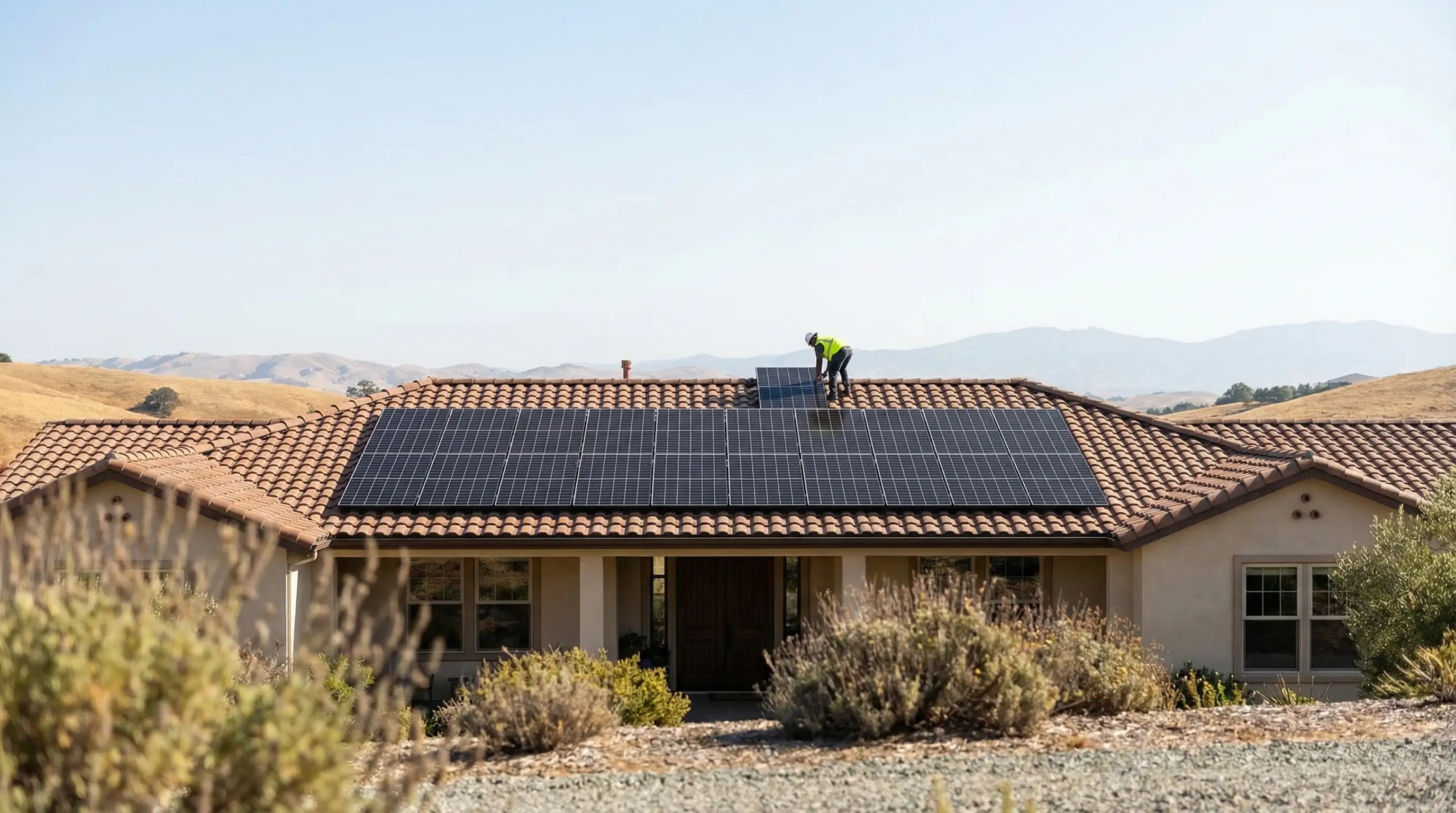
Solar PPC in San Jose is a high-ceiling, high-complexity market. The ceiling: a $20,447 average deal size with 25-year customer savings of $135,672 means a single converted lead can pay for months of ad spend. The complexity: you're competing against Sunrun — the largest US residential solar company — along with SunPower, Tesla Energy, and a national distribution of authorized dealers who collectively outspend any local installer in Google's auction by an order of magnitude.
NEM 3.0 Changed the Buyer Landscape
California's shift to NEM 3.0 (net metering 3.0) in April 2023 fundamentally changed the San Jose solar buyer's calculation. Under NEM 2.0, homeowners exported solar electricity to the grid at near-retail rates — solar-only systems had excellent payback periods. Under NEM 3.0, export credits dropped by 75% for most periods, meaning solar-only systems have a longer payback and require battery storage to approach NEM 2.0-level economics. The 2023 market shakeout eliminated many undercapitalized installers; the companies still active in San Jose's market are generally better at explaining the NEM 3.0 economics to informed buyers.
But the buyer landscape shifted too: San Jose homeowners are now more skeptical, more educated about rate structures, and more likely to request quotes from 2–4 companies before deciding. The average consideration cycle runs 30–90 days — longer than almost any other PPC category. This means campaigns that only capture late-funnel "get a solar quote" intent are missing the earlier research phase where the decision is actually forming. Sunrun and SunPower dominate brand-name search. Local installers who haven't built content for mid-funnel research queries ("is solar worth it after NEM 3.0 San Jose," "PG&E solar ROI calculator") are invisible during the period when buyer decisions are most malleable.
The National Brand PPC Squeeze
Sunrun's Bay Area PPC operation runs across Search, Display, YouTube, and Performance Max with enough budget to dominate brand awareness and maintain strong Quality Scores on the highest-intent conversion queries. SunPower (and its authorized dealers) follows a similar pattern. Tesla Energy captures a premium segment through brand recognition alone — "Tesla solar San Jose" and "Powerwall installation San Jose" searches heavily favor the Tesla brand even when local installers can deliver equivalent or superior products faster and at lower per-watt cost.
- Sunrun — Largest US residential solar company; dominant Bay Area PPC spend; brand + comparison keyword coverage
- SunPower / Freedom Forever — Premium product positioning; authorized dealer network in Bay Area; strong landing page quality
- Tesla Energy — Brand search dominance; Powerwall + Solar Roof both drive significant organic and paid traffic
- Next Solar / Sunergy — Local/regional competitors; EnergySage Elite+ status; 10,000+ installs; active PPC advertisers
- EnergySage Marketplace — Not a PPC competitor per se, but a lead aggregator that captures quote-ready buyers and sells them to multiple installers simultaneously
The challenge for local San Jose installers: competing head-to-head with Sunrun on "solar installation San Jose" branded queries burns budget without sufficient Quality Score history to reduce CPCs. The more effective strategy is flanking — winning on the specific campaign angles that national brands consistently underinvest in because their audiences are too broad to optimize for San Jose-specific PGE rate scenarios, battery-first messaging, and neighborhood-level installer trust signals.
The Consideration Cycle Mismatch
Most solar PPC campaigns are built for emergency-style conversion — "Get a free quote today" as the call to action, direct conversion as the goal. Solar doesn't work that way. A homeowner comparing solar quotes is also reviewing PG&E bill history, researching financing options, watching YouTube explainers, and reading Reddit discussions about NEM 3.0. A campaign with a 30-day consideration window needs retargeting, educational content, and middle-funnel messaging — not just "Get a Quote" as the only ask. Local installers running single-offer conversion campaigns against buyers in a 90-day research cycle will consistently underperform their CPL potential.
Winning solar PPC in San Jose means separating campaigns by buyer intent stage, running battery storage as a distinct campaign (not just a section of a solar ad), and building mid-funnel content that captures the research phase where national brands' one-size-fits-all landing pages fail.
Campaign Structure: Intent Stages
Three distinct campaign tiers, not one generic "solar San Jose" campaign:
Tier 1 — Install Intent (55% of budget): "Solar installation San Jose CA," "solar quote San Jose," "solar company San Jose" — late-funnel buyers ready to request a quote. These are the highest CPCs ($25–$50) and the most competitive, but they're the buyers who convert. Landing pages need specific NEM 3.0 content, a savings calculator, and financing options above the fold.
Tier 2 — Solar + Battery (25% of budget): "Solar battery San Jose," "Powerwall installation San Jose," "solar storage system San Jose CA" — this segment grew dramatically post-NEM 3.0 because battery changes the economics of solar ownership. National brands' solar+battery landing pages are often generic; a local installer page that shows specific PG&E TOU rate savings for a solar+Enphase or solar+Powerwall system in San Jose will convert at significantly higher rates.
Tier 3 — Commercial (15%) + Battery-Only Retrofit (5%): Commercial solar for San Jose SMBs (warehouses, light industrial in East San Jose) is dramatically less competitive than residential PPC — CPCs run $15–$30 vs. $25–$50 for residential. Battery-only retrofits (adding storage to existing pre-NEM 3.0 systems) are a growing category with near-zero dedicated competition.
Keyword Groups with CPC Ranges
- Install intent: "solar installation San Jose CA," "solar panels San Jose," "solar company San Jose" — $25–$50 CPC
- Research/comparison: "solar panel cost San Jose," "best solar company San Jose," "is solar worth it San Jose" — $18–$40 CPC
- Battery + storage: "Powerwall installation San Jose," "solar battery San Jose," "Enphase battery San Jose" — $22–$45 CPC
- PG&E specific: "PG&E solar San Jose," "solar to reduce PG&E bill," "PG&E TOU rate solar" — $15–$30 CPC (lower competition, high local relevance)
- Commercial: "commercial solar San Jose," "solar for business San Jose CA" — $15–$30 CPC
The PG&E Bill Shock Angle
This is the most powerful conversion angle in San Jose solar PPC and the one that Sunrun's national campaigns consistently miss. PG&E's residential rates hit $0.30–$0.55/kWh under TOU pricing — the highest in most of the US. San Jose homeowners know their bills are high; what they need is a credible local source connecting their specific PG&E bill amount to a concrete solar ROI calculation.
Ad copy that references the actual savings figure — "The average San Jose homeowner saves $135,672 over 25 years. See what your home saves." — outperforms generic "Go Green, Save Money" messaging because it's quantified, local, and credibly specific. National brands use blended national savings figures that feel generic to a San Jose homeowner paying a $400–$800 monthly PG&E bill. Local specificity converts.
Retargeting Architecture
Given the 30–90 day consideration cycle, retargeting is not optional — it's where much of solar PPC's ROI is made. A visitor who clicked a solar ad but didn't convert should enter a retargeting sequence: Day 1–7: battery storage value, Day 8–30: financing options and tax credit expiration (the 30% ITC runs through 2032), Day 31–90: social proof content (San Jose homeowner testimonials with specific savings numbers). This sequence addresses the objection at each stage of the consideration cycle without the high CPCs of initial acquisition.
Google Partner Agency
We're a certified Google Partner Agency, which means we don’t guess — we optimize withGoogle’s full toolkit and insider support.
Your campaigns get pro-level execution, backed by real expertise (not theory).

The San Jose solar market has three specific demand patterns that create sustainable competitive advantage for local installers willing to build campaigns around them — all three are largely ignored by the national brands' broad-reach advertising strategies.
The Post-NEM 3.0 Battery Retrofit Opportunity
Between 2018 and 2022, San Jose saw a surge in residential solar installations under NEM 2.0's favorable export rates. Tens of thousands of homeowners in Almaden Valley, Willow Glen, Cambrian, and East San Jose installed solar-only systems during this period. Under NEM 3.0, those systems now export at reduced rates — their owners are seeing diminished bill savings compared to expectations and are actively researching battery storage additions.
The search query "add battery to existing solar San Jose" and "Powerwall existing solar system San Jose" captures homeowners who are already sold on solar and already invested — they need a targeted recommendation, not an education. CPC on these queries runs $20–$35, well below the $30–$50 for new solar installation intent. Conversion rates are higher because the buyer has shorter consideration cycles (they already trust solar; they're just choosing a battery installer). This segment is almost completely ignored by Sunrun's prospecting campaigns, which are focused on new-to-solar buyers.
The PSPS Outage Market
PG&E's Public Safety Power Shutoff (PSPS) program — cutting power during high wildfire risk conditions — has fundamentally changed San Jose's energy security calculus. Between 2019 and 2024, several Santa Clara County areas experienced PSPS events lasting 12–48 hours. The anxiety this created around power reliability has made battery storage a mainstream residential purchase consideration, not a green-energy niche add-on.
Key insight: "Backup power San Jose," "home battery backup PG&E outage," and "solar battery outage protection San Jose" capture a specific anxiety-driven buying motivation that has nothing to do with monthly bill savings. These buyers are willing to pay premium prices for energy security; they're making a different calculation than ROI-focused buyers. CPCs on these outage-protection queries run $18–$35 — significantly less than install-intent queries — with conversion rates that are surprisingly high (7–12%) because the buying motivation is fear-based and acute.
San Jose's Commercial Solar Blind Spot
East San Jose contains a substantial light industrial corridor: warehouses, manufacturing facilities, food processing operations, and commercial buildings along Story Road, Monterey Highway, and the Brokaw Road corridor. These facilities have large roof surfaces, high electricity consumption, and owners who qualify for 26–30% federal ITC on commercial solar installations plus accelerated depreciation under MACRS.
- Commercial solar CPC: $15–$30 (60–70% below residential)
- Average commercial system size: 50–200kW ($100,000–$400,000 deal value)
- Competition level: Low — national brands focus on residential; local commercial solar installers running PPC are rare
- Conversion cycle: 60–180 days (longer than residential); requires consistent retargeting
A local San Jose solar installer running a dedicated commercial solar campaign — with landing pages built for business owners, ROI calculators showing utility cost reduction and depreciation benefits, and case studies from comparable San Jose commercial facilities — is competing in a near-empty auction for deal sizes that dwarf residential installations.
Solar PPC in San Jose requires more campaign sophistication than most other home services categories. The long consideration cycle, multiple buyer profiles (new install, battery retrofit, commercial, PSPS anxiety buyers), and NEM 3.0 complexity make generic "get a quote" campaigns structurally insufficient for profitable lead acquisition against national brands. Running solar PPC well here means knowing when to increase budgets ahead of summer PG&E bill shock, how to position battery storage as a primary offer rather than an upsell, and which campaign angles Sunrun and SunPower consistently skip because their audience targeting is too broad for San Jose-specific electricity rate arguments.
MB Adv Agency builds solar PPC campaigns that separate intent stages, run battery storage as a distinct offer, and use San Jose-specific PG&E rate data in ad copy that converts against national brand messaging. We understand the NEM 3.0 economics, the PSPS anxiety market, and the commercial solar opportunity on the East San Jose industrial corridor — all three are campaign-ready insights that a national brand's Bay Area campaign won't be optimizing for. View our solar PPC packages — designed for local Bay Area installers competing in one of the most valuable residential solar markets in the country.
The $135,672 average 25-year savings figure is the most compelling lead magnet in San Jose's market. The question is whether your campaign is structured to deliver it to buyers who are ready to act — or whether your ad budget is funding Sunrun's Quality Score while you wait for referrals. Talk to MB Adv Agency about building the campaign that closes the gap.

Frequently Asked Questions
How does NEM 3.0 affect solar PPC strategy in San Jose?
NEM 3.0 doesn't reduce the value of San Jose solar — it shifts the value proposition from "export credits" to "self-consumption" and makes battery storage far more important for a compelling financial case. For PPC strategy, the change has three concrete implications.
First, ad copy and landing pages that use pre-NEM 3.0 savings calculations will mislead informed buyers and hurt conversion rates. San Jose homeowners who researched solar in 2024–2025 are aware of NEM 3.0; an installer whose ad copy references payback periods that assumed NEM 2.0 export rates will be immediately distrusted. Updated NEM 3.0 financial models — showing the 6.86-year payback and $135,672 25-year savings (EnergySage March 2026 data, which incorporates current export credit structures) — are not just more accurate but more conversion-effective because they're credibly current.
Second, battery storage is now a core part of the solar value proposition, not an optional upgrade. PPC campaigns that present solar-only systems at NEM 3.0 export rates will generate leads from buyers who experience sticker shock when they understand the revised economics. Campaigns structured around solar+battery as the primary offer, with standalone solar as the secondary option, align better with buyer expectations and reduce the drop-off between lead and closed deal.
Third, the PSPS angle (backup power during wildfire-season outages) has become a primary buying motivation that exists entirely independent of the financial ROI calculation. Building a separate campaign for outage-protection buyers — with messaging focused on energy independence and reliability, not bill savings — captures a segment that converts on emotional motivation and is largely unserved by national brand campaigns focused on savings ROI.
What budget does a San Jose solar installer need to run effective Google Ads?
Solar PPC requires more budget patience than most home services categories because the consideration cycle is 30–90 days, not same-day. The functional minimum for a San Jose solar installer: $3,500–$6,000/month — enough to generate 8–16 qualified quote requests per month at steady-state CPL of $300–$500.
Why the CPL is higher than other home services: solar keywords in San Jose run $18–$55/click, and the conversion rate from click to quote request is 3–6% (lower than emergency HVAC or plumbing because buyers are in research mode, not crisis mode). At a $35 average CPC and 4% CVR, that's $875 per conversion before optimization. Good campaign management, NEM 3.0-specific landing pages, and retargeting reduce that to $300–$500 at steady state — but month 1 will be at the higher end of the range.
The financial justification: at $20,447 average deal value, even a $500 CPL produces a 40:1 ROAS on closed deals. A 20% close rate on 12 monthly leads = 2–3 deals per month from a $5,000 ad spend = $40,000–$60,000 in monthly revenue. No other marketing channel in San Jose delivers comparable customer acquisition economics at this deal size. The key constraint isn't the CPL — it's the close rate, which depends on how quickly the installer follows up on leads and how clearly the sales process addresses NEM 3.0 questions that buyers are actively researching.
The seasonal budget strategy: increase budgets in April–June (peak solar planning season) and October–November (year-end tax credit urgency). Pull back slightly in winter but don't go dark — the 30-day consideration cycle means a buyer who discovers your campaign in December may not convert until February. Consistent year-round presence with seasonal budget peaks outperforms bursty spend that disappears for months at a time.