Solar Installation PPC Sunnyvale, CA
Sunnyvale homeowners pay some of the highest utility rates in the US -- PG&E on-peak rates of $0.35-$0.47/kWh -- and carry a $1.8M median home value that supports $45,000-$70,000 solar-plus-battery system investments. The 30% federal Investment Tax Credit runs through 2032. The market for solar in Sunnyvale is structurally excellent; the PPC challenge is building a campaign that wins against Sunrun and Tesla Solar without matching their national ad budgets.
Why Do Solar Company PPC Campaigns Fail in Sunnyvale?
Solar installation PPC in Sunnyvale has the most favorable underlying economics of almost any home service category -- PG&E rates that make solar ROI calculators produce dramatic savings numbers, homeowners with the income to invest in premium systems, and a federal tax credit that returns $9,000-$18,000 to the average Sunnyvale installer's customer. But local solar SMBs consistently hemorrhage ad spend on campaigns that can't compete with national brands. The failure modes are structural, not cosmetic -- and they persist until the fundamental campaign architecture is rebuilt around Sunnyvale's specific competitive dynamics.
Sunrun and Tesla Solar Dominate Broad Terms With Untouchable Budgets
The broad solar search terms -- "solar panels Sunnyvale," "solar installation near me," "go solar California" -- are owned by Sunrun, Tesla Energy, SunPower, and Sunnova. Sunrun is the largest US residential solar company; it runs always-on California SEM campaigns with CPCs it can sustain because its national portfolio, dealer network, and financing products give it an LTV model that local installers cannot match on a per-customer basis. Tesla Energy has enormous brand recognition and appears in every "solar Sunnyvale" query by default. SunPower has historically dominated the premium solar position in California with dealer networks across Santa Clara County.
A local solar installer bidding $22 per click on "solar panels Sunnyvale" is paying to appear next to Sunrun, Tesla, and SunPower -- three companies with brand recognition, national financing options, and online quote tools that have been A/B tested for years. The local installer's generic "Get a free solar quote" CTA loses this comparison every time. At $22 CPC, 3% CVR on generic solar terms, and a 15% close rate on leads, the cost to acquire a new solar customer runs $4,800+ -- an unsustainable number for a company doing $45,000 installed jobs, before accounting for field labor, equipment cost, and permitting time.
NEM 3.0 Changed the Market -- and Most Campaigns Haven't Caught Up
California's NEM 3.0 rule (effective April 2023) dramatically reduced the export rate for excess solar power sent back to the grid, fundamentally changing the financial case for solar without battery storage. Homeowners who researched solar before 2023 and decided "not yet" now need a new conversation -- but most solar PPC campaigns are still running pre-NEM 3.0 messaging about energy bill elimination. The reality in Sunnyvale post-NEM 3.0 is that solar plus battery storage is the product that delivers the ROI solar used to promise. Campaigns that educate on this shift and position battery storage as the solution to NEM 3.0's export rate reduction outperform campaigns running stale "eliminate your PG&E bill" messaging by 2-3x on conversion rate.
The third failure is geographic over-targeting. Sunnyvale's solar market is concentrated in homeowner-dense ZIP codes -- 94087 has the highest homeownership rate in Sunnyvale. Running broad geographic campaigns that include apartment-dense ZIP codes like parts of 94085 wastes 20-30% of budget on renters who cannot install solar. ZIP-level homeownership filtering reduces wasted impressions and improves CPL by 15-25% on an otherwise identical campaign, with no additional creative investment required.
Solar PPC Campaign Architecture for Sunnyvale Installers
A competitive Sunnyvale solar PPC campaign is organized around four tracks that avoid the high-competition broad terms and own the service-specific, incentive-specific, and persona-specific terms where national brands have structural blind spots. The core insight: Sunrun and Tesla Solar run national campaigns; they cannot credibly speak to SGIP battery rebate specifics, PG&E tier-rate calculations for 94087 homeowners, or Powerwall-only retrofit installations. Local installers who build campaigns around these specific angles compete in an entirely different auction.
Track 1 -- Solar Plus Battery Storage Campaign. This is the post-NEM 3.0 product. Target: homeowners who have researched solar, understand NEM 3.0's impact, and are now specifically searching for battery-equipped systems. These are the most educated, highest-intent solar buyers in the market. NEM 3.0 education in ad copy ("Solar without battery has changed -- here's why") outperforms generic solar messaging for this segment because it demonstrates market knowledge that national chain campaigns don't demonstrate.
- Solar+battery keywords: "solar battery storage Sunnyvale" ($16-$48 CPC), "solar panel installation with battery Sunnyvale" ($18-$42 CPC), "Powerwall installer Sunnyvale" ($12-$38 CPC), "home battery backup Sunnyvale" ($14-$36 CPC)
- NEM 3.0 education keywords: "solar after NEM 3.0 Sunnyvale" ($8-$20 CPC), "is solar still worth it Sunnyvale" ($6-$18 CPC) -- lower competition; educational intent converts at high rates for battery-bundle positioning
Track 2 -- Incentive-Led Campaigns. Sunnyvale's financially literate homeowner responds to specific dollar amounts, not generic "save money" claims. Campaigns leading with "30% federal tax credit -- $10,000+ back on your Sunnyvale system" and "SGIP battery rebate available" convert significantly above benchmark. The SGIP (Self-Generation Incentive Program) is California-specific and material ($2,500-$8,000 per battery system); local installers who advertise SGIP expertise compete in a nearly uncontested niche against national brands that deprioritize state-specific rebate complexity.
- Incentive keywords: "solar tax credit Sunnyvale" ($12-$30 CPC), "SGIP battery rebate Sunnyvale" ($8-$22 CPC), "solar incentives California 2026" ($10-$28 CPC), "PG&E solar savings Sunnyvale" ($10-$26 CPC)
Track 3 -- EV and Retrofit Campaigns. Two high-LTV underserved segments: (1) EV owners seeking solar to offset charging costs -- Sunnyvale's above-average Tesla, Rivian, and Hyundai Ioniq ownership makes "solar for EV charging Sunnyvale" a high-intent, low-competition keyword cluster; (2) homeowners with existing pre-NEM 3.0 solar who need Powerwall retrofit -- "add battery to existing solar Sunnyvale" has essentially zero national chain competition because Sunrun and Tesla want to sell new systems, not retrofit old ones.
- EV solar keywords: "solar for EV charging Sunnyvale" ($10-$30 CPC), "solar EV charger bundle Sunnyvale" ($10-$26 CPC), "solar panel EV owner Sunnyvale" ($8-$22 CPC)
- Retrofit keywords: "add battery to existing solar Sunnyvale" ($8-$20 CPC), "Powerwall retrofit Sunnyvale" ($10-$28 CPC), "solar battery add-on Sunnyvale" ($8-$18 CPC)
Track 4 -- Local Hyper-Specific Campaign. Homeowner-dense ZIP targeting (94087 primary), "no-pressure consultation" positioning (directly addresses Sunrun door-to-door complaint pattern), and CSLB license number in ad copy. Google LSA for solar installers where available: $40-$90 per verified lead at Google Guaranteed badge visibility that national brands don't automatically hold on LSA.
Negative keywords: solar energy jobs, solar installer training, solar certification, solar for RV, portable solar, solar farm, solar panel cleaning, solar investment fund, solar panel repair.
Google Partner Agency
We're a certified Google Partner Agency, which means we don’t guess — we optimize withGoogle’s full toolkit and insider support.
Your campaigns get pro-level execution, backed by real expertise (not theory).

What Market Trends Define Sunnyvale's Solar Opportunity in 2026?
Sunnyvale's solar market in 2026 is defined by three structural forces operating simultaneously: the highest utility rates in continental California, a post-NEM 3.0 market that has recalibrated to solar-plus-battery as the standard product, and a homeowner demographic with the income and analytical sophistication to make large energy infrastructure investments confidently. PG&E on-peak rates of $0.35-$0.47/kWh are among the top five highest electricity rates in the US -- a Sunnyvale homeowner with two EVs and central air conditioning often carries an annual PG&E bill of $6,000-$9,000+. At those bill levels, the financial case for solar-plus-battery writes itself, and a calculator-based landing page that shows the homeowner's specific PG&E savings converts at 2-3x the rate of generic "go solar" CTAs.
The SGIP Battery Rebate Is a Competitive Moat for Local Installers
California's Self-Generation Incentive Program (SGIP) provides battery storage rebates of $150-$1,000/kWh depending on customer income and system type -- translating to $2,500-$8,000 in direct rebates on a typical 10-13.5 kWh Powerwall 3 or Enphase IQ Battery 10T system. Sunrun and Tesla Energy deprioritize SGIP because their national business models favor direct-install revenue over state rebate complexity. Local Sunnyvale installers who advertise "we handle your SGIP application" and demonstrate rebate expertise convert the premium battery buyer -- a segment that Sunrun is actively losing through rebate indifference -- at measurably higher rates. The SGIP Step and budget availability varies monthly; installers who stay current on SGIP Step pricing and communicate it in ad copy ("SGIP Step 2 rebate available now -- limited budget") create urgency that generic competitors cannot match.
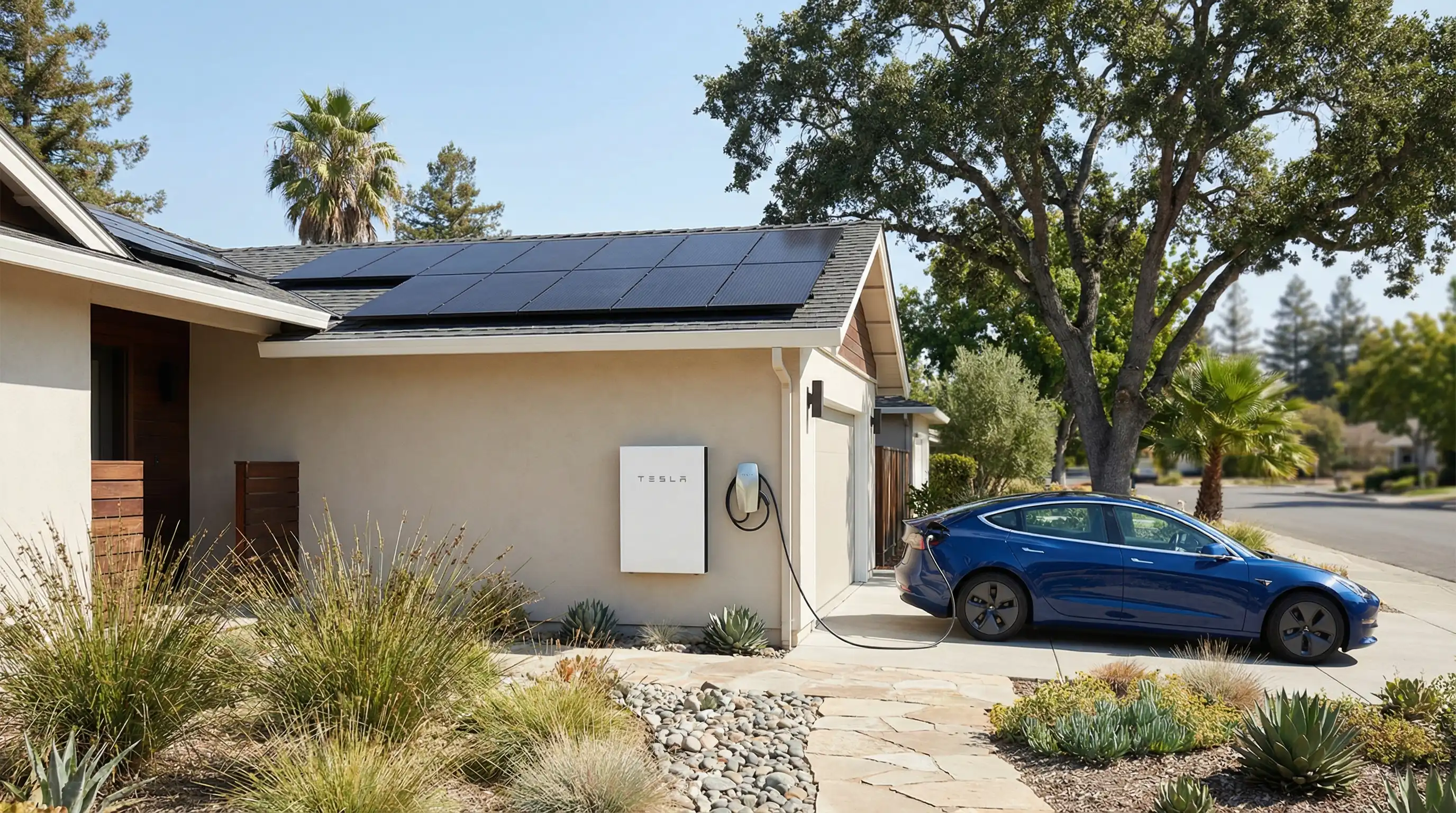
The EV-solar bundling opportunity is uniquely strong in Sunnyvale. Santa Clara County has the highest EV ownership rate in California -- Tesla Model 3, Model Y, Rivian R1S, and BMW i4 are common in Sunnyvale driveways. An EV owner with a 50-65 kWh battery spending $800-$1,500 per year on home charging has a direct, calculable financial case for adding solar: the payback period on a solar system sized to cover home plus EV charging is 6-8 years at PG&E rates, often less with SGIP and ITC combined. No local installer is running dedicated "solar for EV owners" campaigns in Sunnyvale -- this is a ready-made audience with above-average system size (EV charging adds 2-4 kW to system sizing) and above-average close rates (EV owners have already made one large clean-energy investment decision; the second is easier).
The Powerwall Retrofit Market Is Completely Unaddressed
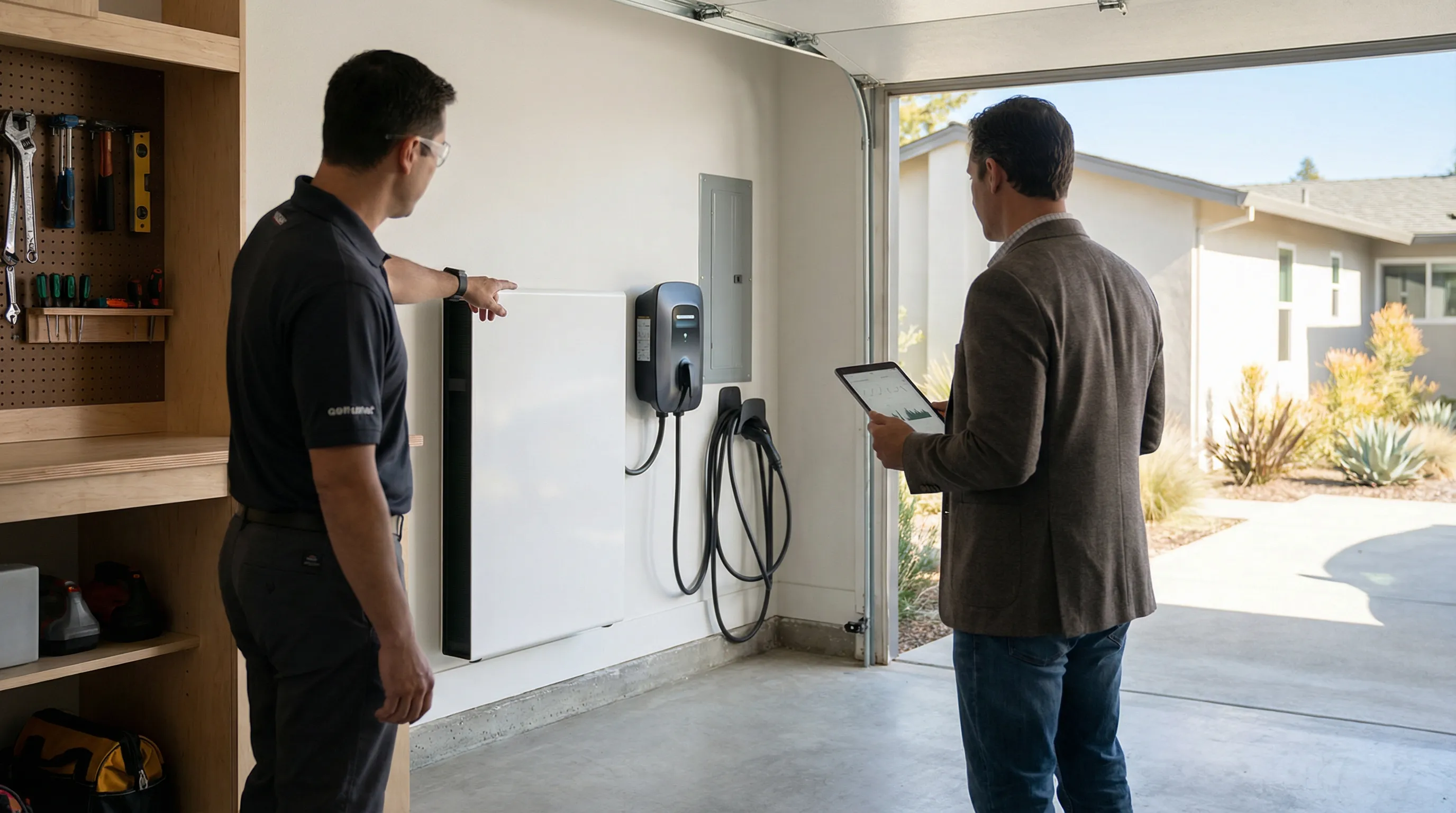
Thousands of Sunnyvale homeowners installed solar between 2019-2022 under the old NEM 2.0 export rate structure, when solar-only made strong financial sense. Post-NEM 3.0, those homeowners are experiencing reduced export credit and increased self-consumption incentive -- they want batteries retrofitted to their existing solar systems, not a full system replacement. "Add battery to existing solar Sunnyvale" and "Powerwall retrofit existing solar system" are keyword terms with near-zero national chain competition (Sunrun and Tesla want to sell new systems), moderate search volume, and a buyer who has already demonstrated willingness to invest in solar technology. The average Powerwall retrofit install runs $12,000-$18,000 -- a meaningful ticket at significantly lower acquisition cost than a full solar system sale.
Why Sunnyvale Solar Companies Need a PPC Partner Who Knows the CA Market
Sunnyvale's solar PPC market requires California-specific knowledge that generic national PPC providers simply don't have: NEM 3.0 implications for campaign messaging, SGIP step pricing and availability, PG&E rate tier calculations for specific ZIP codes, Santa Clara County permitting timelines, and the competitive dynamics of a market where Sunrun operates with a national SEM budget and a local presence. A campaign built on national solar PPC templates produces CPLs of $250-$400 in Sunnyvale because it's fighting the wrong battles. A campaign built on SGIP expertise, NEM 3.0 education, Powerwall retrofits, and EV bundling captures buyers where national chains have left a gap -- at CPLs of $100-$200.
At MB Adv Agency, we build solar campaigns in California markets with the technical specificity that converts Sunnyvale's research-intensive homeowner demographic. Our lead generation approach is built around incentive-led messaging and service-specific segmentation, and our Sunnyvale PPC service covers the full competitive landscape of Santa Clara County's solar market. Review our pricing or explore our PPC services to start the conversation about building a Sunnyvale solar campaign that wins where Sunrun can't.
Frequently Asked Questions
How Much Should a Sunnyvale Solar Company Budget for Google Ads?
A Sunnyvale solar installation company should budget $2,500-$4,500 per month minimum to run competitive Google Ads campaigns across solar-plus-battery, incentive-led, and EV-bundling tracks. At that investment with a well-structured campaign, expect 10-25 qualified solar quote requests per month at a CPL of $100-$300 -- with battery-specific and retrofit-specific terms producing the lower CPLs ($100-$180) and broad residential solar terms producing higher CPLs ($200-$300) due to increased competition. The blended average CPC across a Sunnyvale solar campaign runs approximately $28, meaning a $3,500 monthly budget delivers roughly 125 clicks. At a 7% consultation-request conversion rate, that's 8-9 quote requests per month from cold Google Search traffic alone, before YouTube, Facebook retargeting, or EnergySage listings are added. The project LTV math in Sunnyvale is extraordinary: an average installed solar-plus-battery system runs $45,000-$70,000 at an installed gross margin of 20-30%, meaning a single closed customer generates $9,000-$21,000 in gross profit. At $200 CPL and a 20% lead-to-sale close rate, the cost to acquire a new solar customer is $1,000 -- a 9:1 to 21:1 ROAS depending on system size. This math makes Sunnyvale one of the most financially justified solar PPC markets in the US.
Seasonal note: The January-April window carries natural ITC urgency (homeowners planning to claim the credit in the next tax year), and June-September carries PG&E peak bill urgency. Running elevated budget in both windows -- rather than maintaining a flat monthly spend -- captures the two highest-intent seasonal peaks without overspending in the low-urgency November-December period. Year-round always-on budget for Powerwall retrofit and SGIP campaigns maintains consistent pipeline from the retrofit and battery-add-on segments.
Google LSA (Local Services Ads) for solar installers deliver verified leads at an estimated $40-$90 each in Sunnyvale -- consistently the lowest CPL channel for qualifying installers -- and should be the first channel activated before scaling Google Search spend.
How Can a Local Sunnyvale Solar Installer Compete Against Sunrun and Tesla Solar?
A local Sunnyvale solar installer beats Sunrun and Tesla Solar not by matching their broad-term SEM budgets, but by owning the six specific categories where national brands have documented structural gaps. First: SGIP battery rebate expertise. Sunrun and Tesla deprioritize SGIP because their national models favor direct-install revenue. A local installer advertising "We handle your SGIP battery rebate application -- $2,500-$8,000 back on your battery" positions themselves as a specialist that national chains cannot credibly claim to be. Second: NEM 3.0 education. National brand campaigns run generic pre-NEM 3.0 messaging. A local installer explaining "why battery storage is now essential to your solar ROI under NEM 3.0" in their ad copy and landing page positions as a trusted advisor while Sunrun's team explains rates as an afterthought. Third: Powerwall retrofit. Sunrun and Tesla want to sell new systems; they don't run campaigns targeting homeowners with existing solar who need battery add-ons. "Add battery to your existing solar -- we retrofit any system" captures this segment entirely uncontested.
Fourth: EV bundling. "Solar sized for your Tesla or Rivian" speaks directly to Sunnyvale's above-average EV ownership in a way that Sunrun's generic campaigns don't address. Fifth: No-pressure consultation messaging. Sunrun's door-to-door and telemarketing tactics generate consistent negative reviews in Bay Area markets; a local installer advertising "no-pressure quote, no door-to-door sales" directly converts the backlash from national brand tactics -- a surprisingly effective positioning angle in Sunnyvale's review-reading homeowner demographic. Sixth: PG&E rate specificity. "Your PG&E on-peak rate is $0.44/kWh -- your solar payback is 6.2 years with the ITC" is a level of local calculation that Sunrun cannot produce at national campaign scale. Local specificity in financial modeling is the single most conversion-impactful differentiator available to Sunnyvale's independent installers.