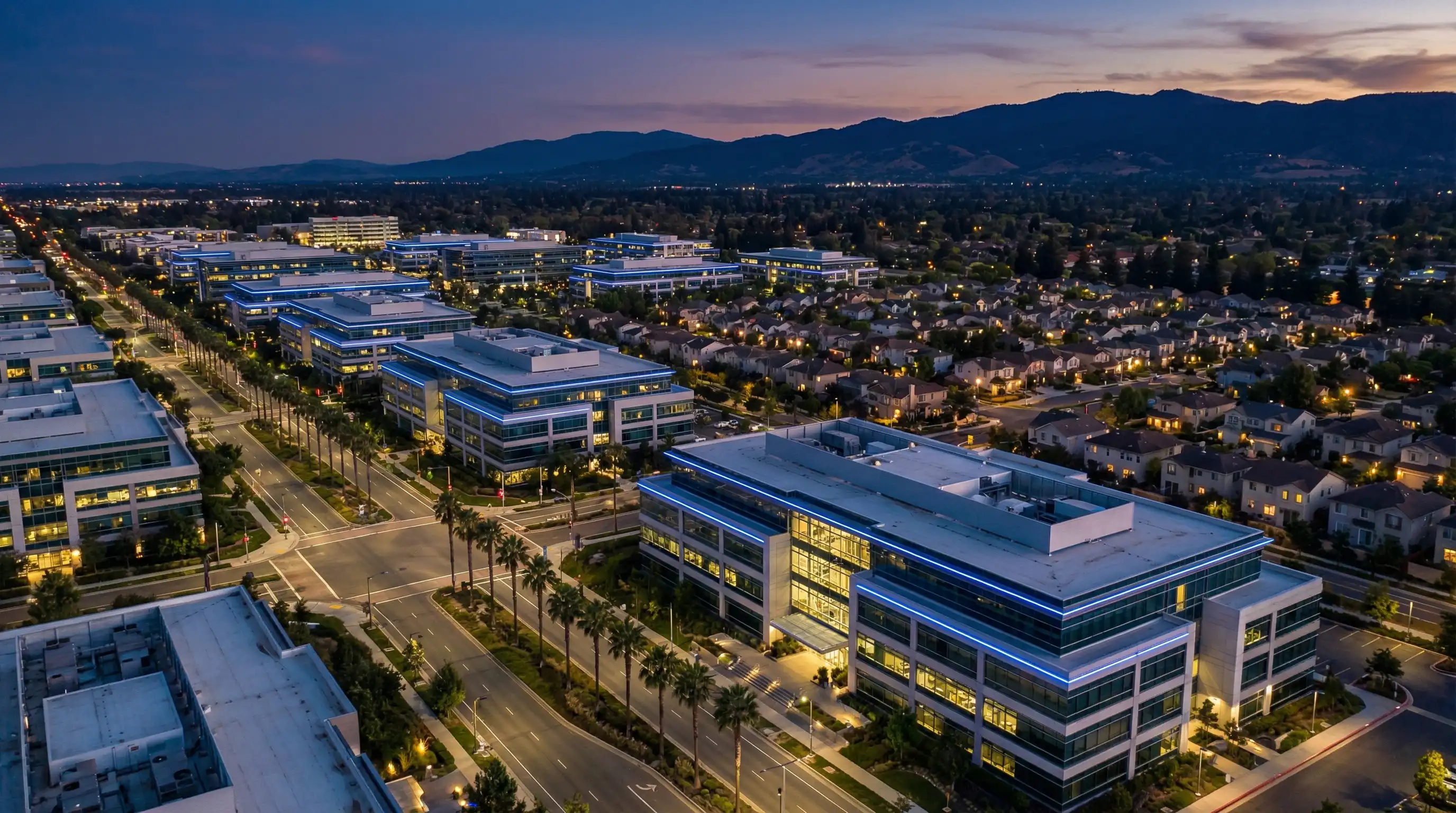
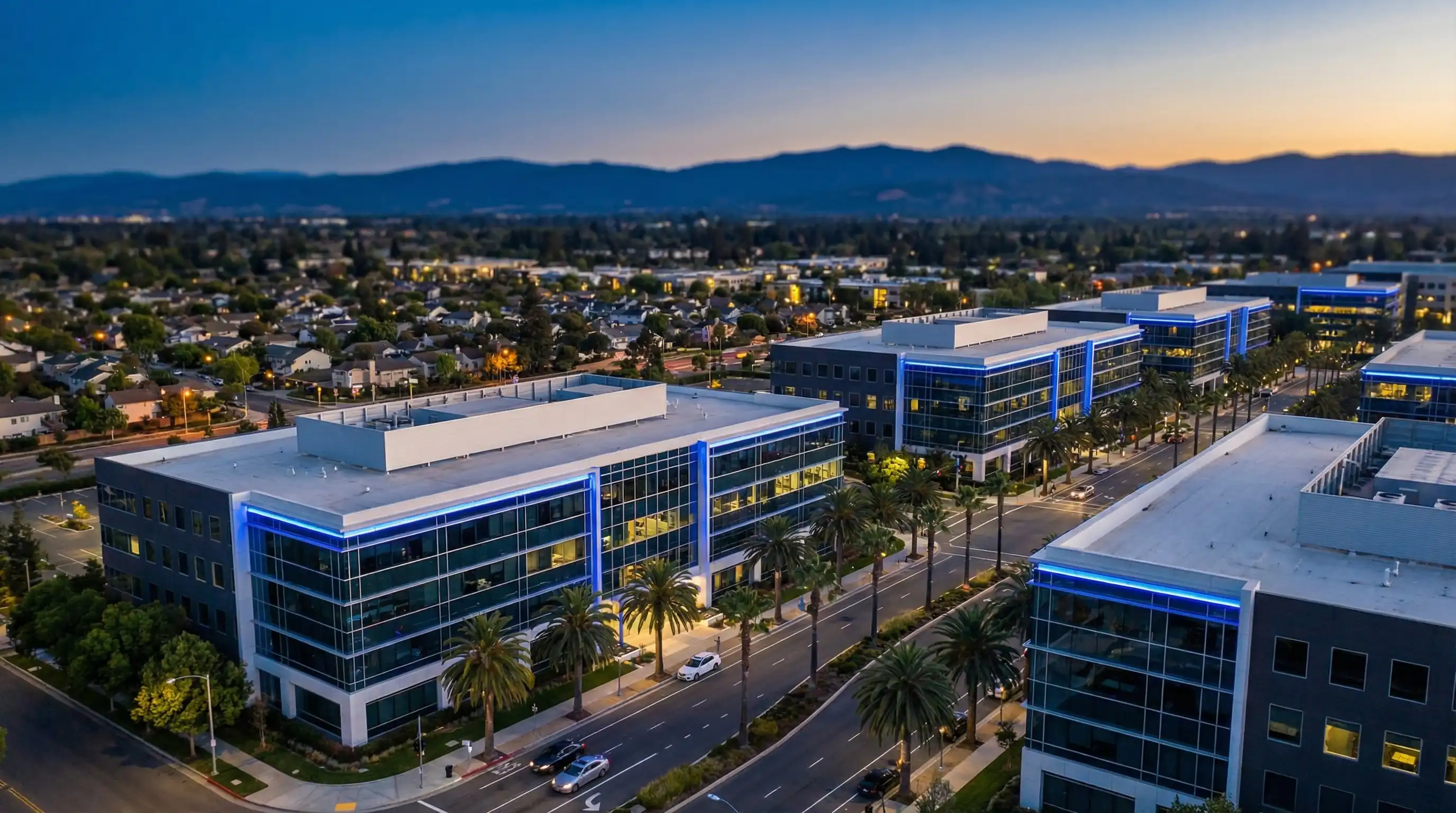
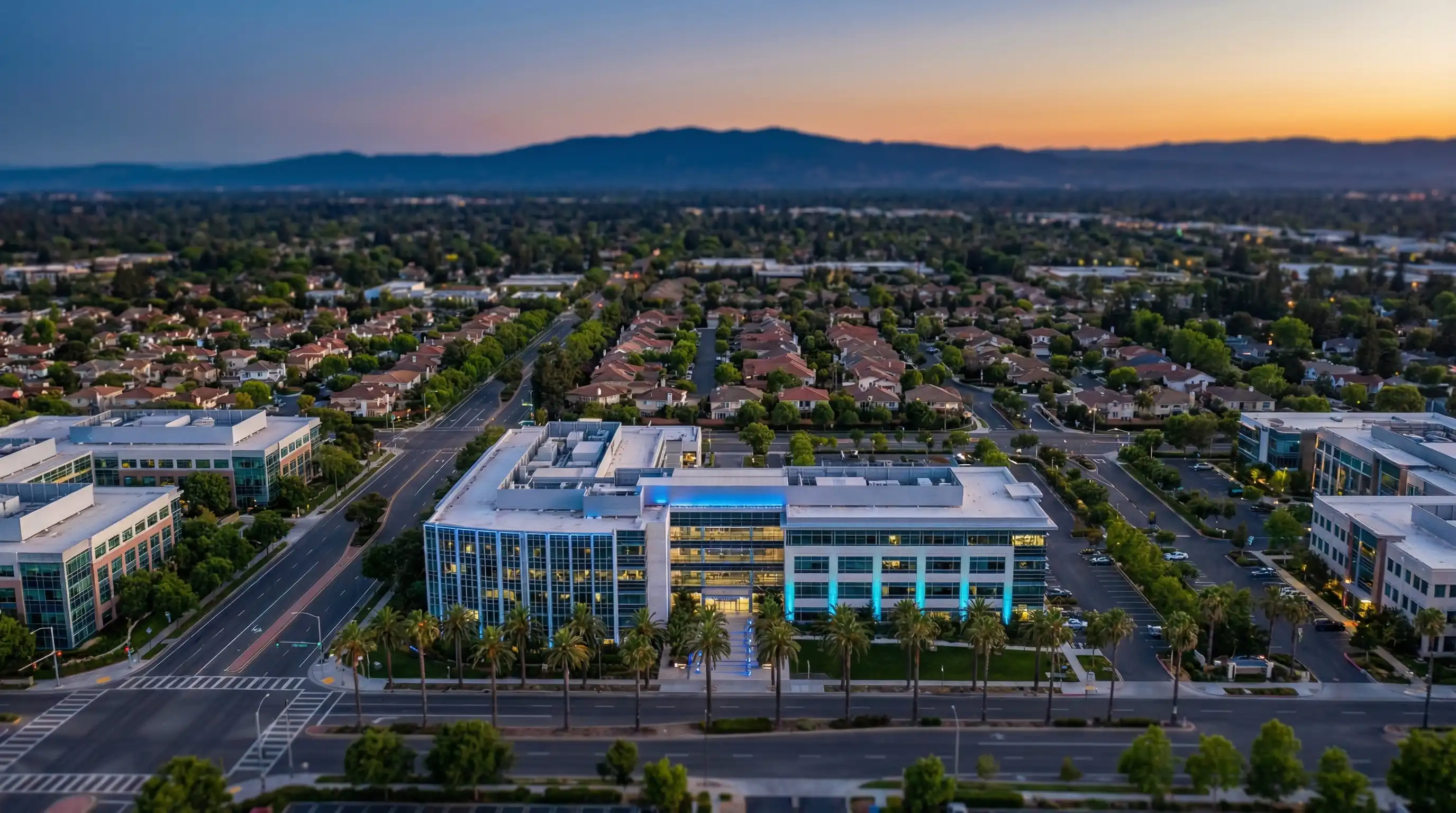
Technology & Software PPC Santa Clara, CA
Santa Clara is home to Intel, AMD, Nvidia, and Applied Materials — four of the world's largest semiconductor and technology companies, all headquartered within 5 miles of each other. That concentration makes the city's B2B technology services PPC market simultaneously the most opportunity-rich and most easily mismanaged in the United States.
Why Do Technology & Software PPC Campaigns Fail in Santa Clara?
Santa Clara's technology landscape creates a PPC paradox: the same ecosystem that generates extraordinary demand also makes it easy to burn through budget without generating a single qualified lead. The city's 9,400+ registered businesses include global semiconductor giants like Intel, AMD, Nvidia, and Applied Materials — alongside thousands of small IT consultants, SaaS startups, and supply-chain vendors who actually need managed IT support. Running a campaign without surgical audience segmentation means your ads appear in front of enterprise procurement teams who will never convert on a $3,500/month MSP proposal, while your real buyers — the 5-40 employee startups — scroll right past.
The core problem is keyword ambiguity. In Santa Clara, "IT support" attracts clicks from job seekers, university students researching careers, and enterprise buyers with $200K annual IT contracts. None of these convert for SMB IT consultants. National managed service campaigns average a 3.04% conversion rate — Santa Clara campaigns built without tight negative keyword lists often land below 1.5%, meaning every lead costs nearly double the national benchmark of $200-$400 CPL.
The Competitive Landscape and the Enterprise Blind Spot
The competitive field in Santa Clara's B2B IT services space is shaped by national giants. Rackspace, NTT, and Accenture all maintain significant Silicon Valley presences and bid aggressively on broad technology keywords. Most small MSPs mistake this for a signal to avoid paid search entirely — but that's the wrong lesson. These enterprise firms target $500K+ annual contracts. They don't write ads that say "We support 10-person startups" or "Same-day IT response for Series A companies." That positioning gap is exactly where precisely targeted PPC campaigns win.
The Great America Parkway corridor and Old Ironsides Drive tech park represent the densest concentration of SMB IT buyers in Santa Clara. Companies clustered at 5001 Great America Pkwy, 4633 Old Ironsides Dr, and the Levi's Stadium office corridor are precisely the right audience — but they require hyper-local targeting at the campaign level, not simply a geographic radius around Santa Clara city center. Zip-code targeting (95050, 95051, 95054) combined with business-size audience signals in Performance Max produces dramatically cleaner traffic than metro-level targeting.
Conversion Friction in a High-Information Market
Santa Clara buyers are sophisticated. The typical decision maker at an SMB technology firm here is a VP Engineering, CTO, or technically-literate CEO who evaluates vendors the same way they evaluate software products — with comparison spreadsheets, reference checks, and SLA scrutiny. Generic ads that lead to a generic contact form convert at a fraction of the rate of ads that lead to a specific deliverable: "Get your IT infrastructure audit in 5 business days." Specificity drives conversion in this market. Vague promises about "comprehensive IT solutions" produce bounces, not bookings.
- Negative keyword gaps — "IT jobs," "IT internship," "Intel careers," "AMD salary" eat 15-25% of budgets in campaigns without proper exclusions
- Landing page mismatches — sending "startup IT support" traffic to a generic homepage eliminates 40-60% of potential conversions before they ever see a CTA
- Bid strategy errors — maximize clicks bidding on high-CPC tech terms ($8-$14 in Santa Clara) without conversion tracking burns budget at maximum velocity with zero accountability
- Audience mismatch — failing to layer in B2B audience segments (in-market for business tech, company size signals) means residential IT searches dilute the commercial buyer pool
The Santa Clara MSP market doesn't reward broad campaigns — it rewards precision. Firms running tightly-segmented campaigns with SMB-specific messaging, negative keyword libraries of 200+ terms, and dedicated landing pages for each service line generate CPLs of $200-$350. The rest pay $450+ per lead for identical clicks. That gap, in a market where a single new MSP client is worth $30,000-$96,000 in first-year revenue, is the difference between a profitable channel and a sunk cost.
PPC Strategies for Technology & Software Companies in Santa Clara
Santa Clara's technology market rewards campaigns built on intent segmentation, not keyword volume. The MSPs and IT consultants that win here don't bid on "IT support" — they bid on the specific events that trigger IT purchases: company growth past 20 employees, SOC 2 certification requirements, M&A due diligence audits, and post-breach emergency recovery. Each of these intent signals requires a separate campaign with dedicated messaging and a purpose-built landing page.
Start with a three-track campaign structure that maps directly to Santa Clara's primary buyer segments:
- Track 1 — MSP Retainer (core volume): "managed IT services Santa Clara," "IT support for startups Silicon Valley," "outsourced IT 10-50 employees" — average $9-$12 CPC; highest click volume, most competitive, 2-6 week sales cycles
- Track 2 — Project-Based (fast conversion): "cloud migration consultant Santa Clara," "IT audit Silicon Valley," "network setup for office Santa Clara," "server migration help" — average $8-$11 CPC; shorter decision timelines, immediate budget triggers
- Track 3 — Compliance-Driven (highest LTV): "SOC 2 readiness consultant," "HIPAA IT compliance Silicon Valley," "semiconductor supply chain IT security," "ISO 27001 IT help" — average $12-$14 CPC; longest sales cycle but contract values of $60K-$120K/year
Keyword Architecture and Bid Strategy
In Santa Clara's tech market, exact match and phrase match keywords outperform broad match by 2-3x in conversion rate. Broad match in a tech-dense market surfaces research queries, competitor brand lookups, and student career searches — not buying queries. Use Performance Max campaigns only after accumulating 50+ conversions in search campaigns to give the algorithm meaningful optimization signal.
- Startup stack keywords: "IT support startup Santa Clara," "managed IT startup Silicon Valley," "fractional CTO services Bay Area" — $8-$12 CPC, 3-4% CVR
- Semiconductor corridor keywords: "IT services semiconductor company Santa Clara," "manufacturing IT support Silicon Valley," "ERP consulting Santa Clara" — $10-$14 CPC, 2.5-3.5% CVR
- Emergency/urgency keywords: "IT emergency Santa Clara," "network down fix today," "IT support same-day response" — $10-$13 CPC but converts at 6-9%, double the account average
- AI infrastructure keywords: "AI infrastructure support Silicon Valley," "GPU server management Santa Clara," "ML ops consulting Bay Area" — $10-$14 CPC with minimal competition from traditional MSPs — a current market gap
Bidding approach: target CPA bidding once you reach 30 conversions per month; switch to maximize conversion value for accounts with variable-size contracts. For new campaigns with no conversion history, start at manual CPC capped at $12 to control spend while building Quality Score. A strong Quality Score (7+) in the Santa Clara tech market cuts effective CPCs by $2-$3 and improves ad position — compounding returns over the account's lifetime.
Ad copy must do one thing above all else: qualify the click. "We support 5-50 employee tech companies in Santa Clara" eliminates enterprise researchers and job seekers before they click. A 2-hour SLA guarantee in the headline is the single highest-impact differentiator in Santa Clara's MSP market — downtime for companies supplying Intel and AMD production lines is genuinely existential. Remarketing to pricing-page visitors with a specific case study or 30-day audit offer captures the 68% of buyers who research on day 1 and decide on day 14-30.
Google Partner Agency
We're a certified Google Partner Agency, which means we don’t guess — we optimize withGoogle’s full toolkit and insider support.
Your campaigns get pro-level execution, backed by real expertise (not theory).

What Market Trends Should Santa Clara Technology Businesses Know About PPC in 2025?
Santa Clara's tech services market is moving through a structural expansion cycle that creates a genuine PPC arbitrage window right now. The semiconductor industry's 2024-2026 growth wave — driven by AI chip demand, CHIPS Act manufacturing investment, and the ripple-effect hiring surge across the Intel and Nvidia supply chains — is generating a new cohort of SMB technology buyers. Startups and mid-market vendors serving the semiconductor corridor are scaling from 10 to 40+ employees, and at that inflection point, every company suddenly needs managed IT infrastructure they didn't previously require.
This growth wave hits PPC in a specific, predictable pattern. The trigger for IT procurement is almost always one of three events: a Series A funding round, a new enterprise contract with a compliance requirement, or a headcount doubling that breaks informal IT arrangements. All three trigger urgent search behavior — buyers move from zero to active in a single week. Google Trends data for "managed IT services" in Santa Clara County shows consistent upward trajectory through 2024-2025, with pronounced spikes in January-March (budget season) and September-October (post-summer growth cycles).
The AI Infrastructure Gap and New Keyword Opportunities
Santa Clara's AI-adjacent ecosystem is creating an entirely new IT services category: AI infrastructure management. Companies implementing Nvidia CUDA-based workloads, GPU clusters for model training, and AI API integrations need IT support that understands machine learning infrastructure — not just traditional Windows networks. This creates keyword opportunities at $10-$14 CPC with almost no direct competition from traditional MSPs: "AI infrastructure support Silicon Valley," "GPU server management Santa Clara," and "ML ops consulting Bay Area" generate high-intent clicks from exactly the buyers with the largest contracts.
Key market insight: Santa Clara's 9,400 registered businesses are growing. The city issued new business licenses at an above-average rate through 2024 — each new entity a potential MSP prospect. Q1 is the peak conversion window: businesses formed in January-February are actively setting up IT infrastructure in March-April. Running a "new business IT setup" campaign specifically in Q1 captures this segment at below-average CPCs before spring competition peaks.
- Q1 (Jan-Mar): Budget planning season — highest demand for new MSP contracts, IT audits, and annual strategic reviews; CPCs rise 15-25% but volume and intent peak simultaneously
- Q3 (Jul-Sep): Cloud migration projects typically launch here; companies plan infrastructure changes before Q4 budget freeze; AI infrastructure demand highest in summer
- Q4 (Oct-Dec): Year-end IT budget flush; compliance deadline pressure; highest urgency for fast-start MSP onboarding and SOC 2 readiness programs
Remote and hybrid workforce management remains a persistent, compounding demand driver. The majority of Santa Clara tech employees work hybrid schedules, creating ongoing need for endpoint security, VPN management, zero-trust architecture, and device procurement services that didn't exist at scale before 2020. MSPs that built hybrid-workforce expertise in 2021-2022 are now market leaders in this niche — and the PPC keyword space for "hybrid IT support Silicon Valley" and "remote workforce security Santa Clara" remains less competitive than generic MSP terms, despite higher buyer intent and LTV.
MB Adv Agency: Santa Clara Technology PPC Specialists
Santa Clara's B2B technology market doesn't respond to generic agency positioning. The decision makers here — CTOs, VPs of Engineering, technically-literate founders — evaluate vendors the same way they evaluate software: with comparative analysis and SLA scrutiny. Local market knowledge is a conversion driver, not a differentiator. An agency that doesn't know the difference between MSP retainer buying cycles and project-based IT procurement will burn your budget before the first qualified lead lands.
MB Adv Agency manages PPC campaigns specifically for SMB technology companies in Silicon Valley. Our campaigns are built around the actual buying triggers in this market: quarterly RSU vesting cycles that fund IT investments, SOC 2 compliance deadlines that create urgent service procurement, and semiconductor supply chain contracts that trigger rapid scaling. We build Santa Clara-specific campaigns with Santa Clara-specific messaging — not the same template that runs across 50 unrelated industries.
Our results in the technology vertical: clients in the Santa Clara tech corridor running our segmented three-track structure achieve CPLs of $200-$350 versus the $450+ average for generic managed IT campaigns. That efficiency compounds: a single additional closed MSP client per quarter at $4,500/month fully funds the next 12 months of campaign investment.
Learn more at our PPC services page, or see our transparent pricing starting at $497/month for SMB technology clients in Silicon Valley.

Frequently Asked Questions
How much does PPC advertising cost for IT and technology companies in Santa Clara?
Technology and software PPC campaigns in Santa Clara run at an average CPC of $8-$14 for core managed IT and MSP keywords — roughly 40-60% above the national average due to the high density of tech advertisers competing across Silicon Valley. A starter budget of $3,500-$6,000 per month in ad spend generates an estimated 12-25 qualified leads per month depending on service type and targeting precision. Managed service provider retainer campaigns targeting 10-50 employee companies perform at the lower CPC end ($8-$11); compliance-driven keywords push toward $12-$14 CPC for terms like "SOC 2 consultant Silicon Valley" or "HIPAA IT compliance." For most Santa Clara IT companies, a total monthly investment of $5,000-$8,000 (ad spend plus management) delivers a positive ROI within 90 days, given average MSP contract values of $2,500-$8,000 per month per client. A single closed client justifies two to four months of full campaign investment — making the math straightforward.
Cost varies meaningfully by campaign track. Three primary tracks perform at different price points: MSP retainer terms average $9-$12 CPC with 2.5-3.5% CVR; project-based triggers (cloud migration, IT audit) run $8-$11 CPC at 3.5-5% CVR due to higher urgency signals; compliance keywords reach $12-$14 CPC but attract the highest-LTV clients with multi-year contract potential. Allocating 60% of budget to core retainer terms, 25% to project triggers, and 15% to compliance keywords reflects the actual conversion curve in Santa Clara's MSP market.
Seasonal timing affects spend efficiency significantly. Q1 (January-March) is the peak competition window — CPCs rise 15-25% as annual IT budgets unlock. Advertisers who maintain always-on campaigns through Q3-Q4 build Quality Scores that offset Q1 CPC increases by 20-30%, making year-round campaign maintenance a net cost saver.
How long does it take for a technology PPC campaign to generate leads in Santa Clara?
Most technology and IT services PPC campaigns in Santa Clara generate their first qualified leads within 7-14 days of launch, with statistically significant cost-per-lead data available at 30 days. The initial phase runs through three stages: impression share capture and initial quality scoring (days 1-7), click-through rate optimization based on early ad performance (days 7-21), and conversion rate refinement through landing page testing (days 21-60). By 60 days, a well-structured campaign should generate 10-20 qualified leads per month at a CPL of $250-$400, with clear signals on which keyword groups and ad variations are driving the best-quality inquiries. The 90-day mark is when campaigns reach peak efficiency — enough conversion data for target CPA bidding, enough Quality Score history to reduce average CPCs by 15-25% from launch levels. Campaigns with a specific offer — "Free IT infrastructure audit in 5 business days" — reach first-conversion 2-3x faster than campaigns ending at a generic contact form.
Launch timing matters in this market. Q1 campaigns ramp fastest because January budget decisions create immediate active-search behavior. Q3 launches face a slower ramp due to summer decision delays, but they compound into Q4 and the following Q1 surge — building Quality Score history that cuts effective CPCs by $2-$3 when competition is highest. Skipping Q3 entirely to save budget often costs more in Q1 premium CPCs than the Q3 investment would have.
One accelerator unique to Santa Clara: the semiconductor hiring cycle. When Intel or AMD announces a major hiring round (publicly visible on LinkedIn and their careers pages), IT service demand spikes 2-3 weeks later as new employees trigger infrastructure scaling decisions at their former small-company employers. Monitoring these cycles and running time-limited ads during hiring surges captures demand at below-average CPCs — buyers are searching but the ad auction hasn't yet responded to the volume spike.