Start
$590$990/month
1 platform · Google or MetaGoogle + Meta- Ad spend
- up to $3,000
- New creativesmade by us
- Google + Meta only4 a month
 By Matteo Braghetta, Founder · Google Ads
Eugene calls itself Track Town USA — and means it. University of Oregon track and field produces Olympic athletes, the city's cycling infrastructure ranks among Oregon's best, Spencer Butte draws thousands of trail runners and hikers, and recreational sports participation rates run well above national averages. That athletic culture translates directly into chiropractic demand: back pain, sports injuries, overuse conditions, and performance care are not seasonal concerns in Eugene — they're year-round, driven by a city that treats physical activity as a core identity. With CPCs of $1.92–$18.79 and 12–20% conversion rates, chiropractic is a cost-efficient PPC vertical in the Eugene healthcare market.
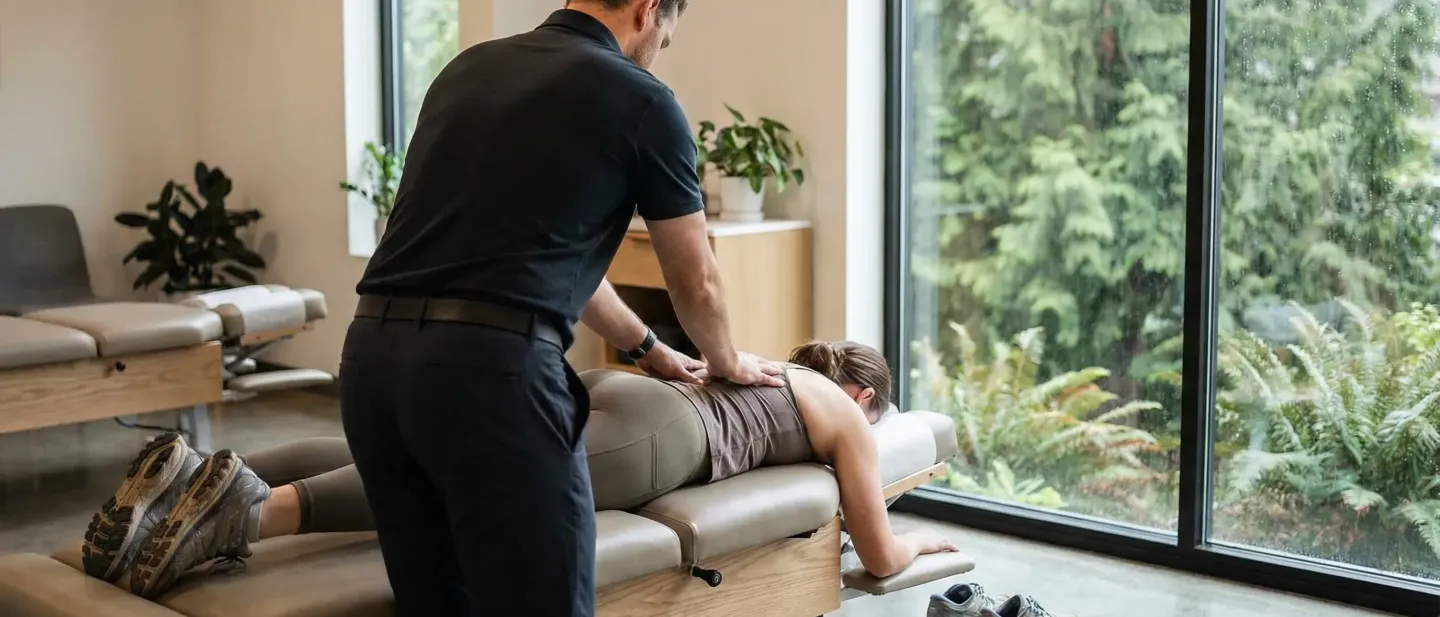
In the Eugene metro area, people search for chiropractor services about 1,200 times a month on Google; a top-of-page click costs $2–$19, and demand peaks in March.
Search volumes for Eugene, OR alone are too thin to report; the figures are for the Eugene, OR,Oregon,United States metro area.
Google Keyword Planner · Oct 2025 – Sep 2026
| Search | Monthly searches | Top-of-page CPC |
|---|---|---|
| chiropractor near me | 1,000 | $2–$19 |
| neck pain treatment | 40 | — |
| chiropractor for back pain | 40 | — |
| spinal decompression | 30 | — |
| best chiropractor near me | 20 | $2–$26 |
| massage and chiropractic | 20 | $0.72–$7.57 |
| chiropractic clinic | 10 | — |
| spinal adjustment | 10 | — |
| sports chiropractor | 10 | — |
| chiropractic office | 10 | — |
Source: Google Keyword Planner (Google Ads), Google Search, English, the Eugene metro area, Oct 2025 – Sep 2026. Volumes are Google's monthly averages; CPC is the top-of-page bid range, weighted by search volume. How we collect these figures.
Chiropractic PPC in Eugene, OR has an unusual problem: the economics are genuinely excellent — low CPCs, strong conversion rates, good patient LTV — but most Eugene chiropractic practices don't take full advantage because their PPC setup doesn't match the market's specific demand profile. Eugene is not a generic chiropractic market; it's an athletic, outdoor-recreation market with a distinct patient identity that generic "back pain relief" PPC campaigns fail to capture at peak efficiency.
The majority of Eugene chiropractic practices running Google Ads default to generic pain-relief messaging: "Back Pain Relief — Eugene Chiropractor," "Neck Pain Treatment — Call Today." This messaging is not wrong — back pain is the top chiropractic search intent nationally. But in Eugene's Track Town context, it's incomplete. A significant share of Eugene chiropractic searches come from athletes, runners, cyclists, and hikers with specific sports injury intent — "sports chiropractor Eugene OR," "running injury chiropractor Eugene," "bike fit injury chiropractor Eugene Oregon." These searches have lower volume than generic back pain terms but higher conversion rates because the searcher has specific intent and is looking for a practitioner who understands their activity context.
Practices that run only generic campaigns miss this higher-CVR athletic segment entirely. Practices that run both generic and athletic-specific campaigns — with separate ad groups and landing pages for each — capture the full demand spectrum at its highest conversion efficiency. Eugene Chiropractic (a local practitioner with strong local search presence) and Sports Chiropractic Eugene (practice positioned specifically for athletic patients) represent the two positioning poles in the Eugene market. Generic-positioned practices compete against the former; athletic-positioned practices own a segment the latter doesn't fully serve.
Eugene's chiropractic PPC landscape has a conversion gap caused by insurance uncertainty. Many potential chiropractic patients in Eugene — particularly the 19% in poverty and the uninsured UO student segment — assume chiropractic care is expensive and out-of-pocket. This assumption creates search hesitation and abandonment before the click. When practices don't address insurance acceptance explicitly in their ad copy and landing pages, they lose clicks from the most price-sensitive but still actionable segment of the market.
Oregon insurance plans — MODA, OHP/Oregon Health Plan/Medicaid, and Providence plans — generally cover chiropractic at reasonable patient copay levels. A practice that accepts OHP has access to a significant uninsured/Medicaid population that is completely underserved in Eugene chiropractic PPC — most chiropractic ad campaigns don't mention OHP acceptance at all, leaving this audience searching without a clear provider signal. Explicitly stating "We accept OHP, MODA, and most Oregon insurance plans" in ad headlines reduces pre-click abandonment and improves CTR on insurance-sensitive searches by a measurable margin.
Chiropractic PPC has among the highest intent-to-click ratios in healthcare — but that intent dissipates rapidly if the post-click experience introduces friction. A searcher with acute back pain who clicks an ad and lands on a page requiring a phone call during business hours to schedule an appointment loses motivation to convert. Online booking is the single highest-impact conversion improvement available to most Eugene chiropractic PPC campaigns. Practices with same-day online booking on their landing pages convert at 15–20% CVR. Practices that require phone calls to schedule convert at 8–12% CVR. That 40–60% conversion rate difference is entirely attributable to booking friction, not to ad quality, CPCs, or keyword strategy.
Eugene chiropractic PPC performs best with a three-tier campaign structure: athletic and sports injury targeting, general back/neck pain and new patient acquisition, and insurance-access campaigns for OHP and uninsured segments.
A "$49 new patient exam + first adjustment" offer is the most consistent conversion driver in Eugene chiropractic PPC. The offer reduces financial friction for first-time patients, creates a clear reason to choose this practice over the next Google result, and sets the stage for a treatment plan presentation during the first visit. Practices with new patient offers in their ad headlines achieve 30–50% higher CTR than practices running generic "back pain treatment" headlines on equivalent keyword buys. The offer needs to appear in the headline — not buried in the description line — to capture the attention of comparison-shopping searchers who are scanning multiple ads simultaneously. Online booking integration amplifies the new patient offer further: when a patient sees "$49 new patient special" in the ad, clicks, and can book the appointment in 30 seconds without calling, the conversion chain is complete before hesitation has time to set in.
Two Eugene-specific dynamics shape chiropractic demand in ways that national healthcare benchmarks don't reflect: the Track Town athletic culture and the OHP-eligible population segment.
Eugene's identity as Track Town USA is not marketing language — it's a lived cultural reality that shapes the city's recreational and sports participation patterns. The University of Oregon's track and field program is nationally elite (producing multiple Olympic medalists), and the training culture spills into the broader community. Spencer Butte Trail sees an estimated 150,000+ visits per year. Eugene's bicycle infrastructure (protected lanes, safe routes to campus) makes cycling one of the most common commuting and recreation modes. The result: Eugene has above-average per-capita rates of overuse injuries, sports-related back and joint issues, and performance-focused chiropractic demand.
The seasonal pattern for athletic chiropractic in Eugene differs meaningfully from national trends. Track season (March–June) and cross-country season (August–November) drive UO-adjacent sports injury searches. Summer outdoor recreation (hiking, cycling, trail running June–September) sustains general athletic chiropractic volume through the warm months. Key insight: Chiropractic demand in Eugene does not drop significantly in summer the way it does in sedentary-lifestyle markets — Eugene's outdoor culture keeps the injury and wellness pipeline active year-round, meaning chiropractic PPC should never go fully dark or drop to minimal budgets, even in traditionally slow healthcare months.
Oregon Health Plan (OHP) — Oregon's Medicaid program — covers chiropractic services for eligible members, and enrollment in OHP is high in Lane County given Eugene's 19% poverty rate. A meaningful segment of Eugene residents who would benefit from chiropractic care assume they can't afford it because they're on Medicaid or uninsured. Practices that accept OHP and advertise that acceptance explicitly are accessing a segment of the market that is essentially uncontested in Eugene chiropractic PPC. Searches like "chiropractor that takes OHP Eugene" and "chiropractic covered by Oregon Medicaid" have near-zero competing advertisers, modest CPCs, and conversion intent from patients with a real, specific need. This is not a charity segment — OHP-reimbursed chiropractic visits generate real revenue at standard billing rates, and OHP patients who find a reliable provider demonstrate strong retention rates.
Chiropractic PPC in Eugene works when the campaign speaks to who Eugene patients actually are — athletes, outdoor enthusiasts, trail runners, cyclists, and an active-lifestyle community that treats physical performance as a priority, not an afterthought. Generic back pain campaigns leave the most differentiated and highest-converting Eugene chiropractic segments on the table.
At MB Adv Agency, we build chiropractic PPC accounts with dedicated athletic and sports injury campaigns, insurance-access ad groups for OHP and coverage-sensitive searchers, and new patient offer structures that reduce booking friction at the landing page level. We also integrate online booking with Google Ads conversion tracking — so every appointment booked through the campaign is attributed, measured, and used to optimize bid strategy toward the keywords generating real patients, not just clicks.
Chiropractic PPC has the lowest cost-per-lead of any healthcare vertical we manage in Eugene — $30–$80 per new patient contact at a well-optimized campaign. With patient LTV of $500–$2,000+, the acquisition math is among the strongest in local healthcare. See how we structure these campaigns on our services page or review our pricing tiers for healthcare practices.
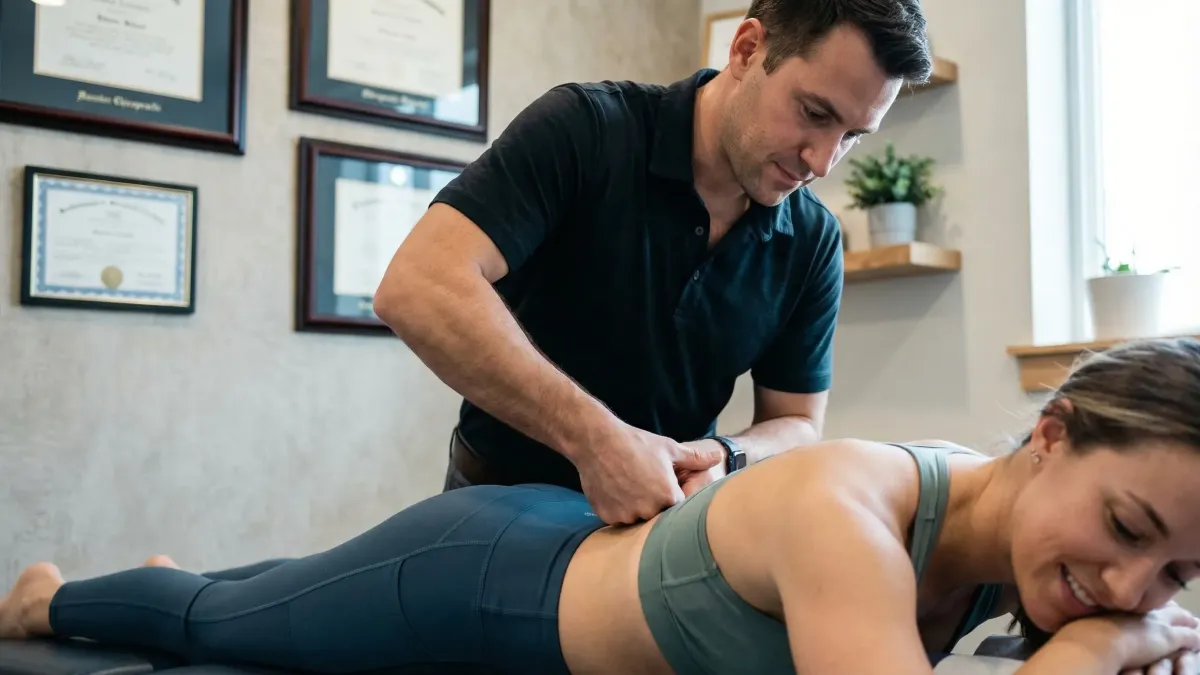
Eugene chiropractic PPC generates new patient contacts at some of the lowest cost-per-lead figures in local healthcare — which means the budget entry point is accessible even for practices that are new to paid advertising. Here's what different budget levels deliver:
$800–$1,200/month: Starter tier. Covers core back/neck pain keywords and one athletic segment (e.g., running injuries).
$1,500–$2,000/month: Growth tier. Adds insurance-access campaigns, OHP targeting, and full athletic segment coverage. Generates 35–50 new patient contacts per month. At this level, Smart Bidding (Target CPA) has enough conversion data to optimize aggressively — expect CPL to improve 20–30% from the starter tier as the algorithm learns the highest-converting keyword and user patterns.
Seasonal note: Budget should increase 20–30% in January–February (new year health goals drive peak chiropractic search volume nationally and in Eugene) and in August–September (UO semester start + fall athletic season onset). These two windows represent the highest organic demand periods for Eugene chiropractic and justify above-baseline PPC investment.
Google My Business (GMB — now Google Business Profile) and Google Ads serve different stages of the patient acquisition funnel and perform best as complements, not competitors, in the Eugene chiropractic market. Understanding what each does — and where each fails alone — clarifies why practices need both.
Google Business Profile strengths: Near-me searches ("chiropractor near me," "chiropractor Eugene OR" on mobile map results), review credibility, and brand reinforcement for patients who've already heard of your practice. GBP listings appear in the Local Pack (the map results at the top of Google search) and are free — but competitive. In Eugene, 60–90 licensed chiropractic practitioners means strong GBP competition for top-3 map spots. GBP ranking requires review volume, NAP consistency, and local citation building — a 6–12 month optimization effort to break into the top 3 for competitive terms.
Google Ads strengths: Immediate top-of-page visibility on any keyword regardless of organic ranking, precise control over which searches trigger your ad, audience targeting by demographics and in-market behavior, and measurable conversion tracking at the keyword level. PPC generates new patient contacts within days of campaign launch — GBP alone cannot do this. For a practice launching in Eugene, new after a rebrand, or targeting a new patient type (e.g., expanding into sports injury from a general practice), PPC is the immediate acquisition channel. GBP is the long-term organic foundation. Running both together — with GBP reinforcing the brand trust that PPC drives traffic to — consistently outperforms either channel in isolation in the Eugene chiropractic market.
How to read this Cost per click and monthly searches are measured with Google Keyword Planner (see above). Cost per lead, conversion rate, budget and leads are estimates compiled from public benchmarks such as WordStream, not measurements.
Sources Chiropractic healthcare benchmarks; Track Town USA athletic demand uplift; Eugene secondary OR market; OHP segment noted as underserved
$590$990/month
1 platform · Google or MetaGoogle + Meta$790$1,290/month
1 platform · Google or MetaGoogle + Meta$1,140$1,940/month
1 platform · Google or MetaGoogle + MetaChatGPT Ads: a separate pilot, $250/month, added to a plan. See the pilot →

Matteo Braghetta founded MB Adv and runs its Google Ads accounts. He takes the first call with every new client, reads the accounts every week and writes the agency’s guides.
The other half of his job is measurement: GA4, Consent Mode and server-side tracking, so the platforms learn from real sales.
MB Adv is a Google Partner agency managing about $4.4M a year in ad spend for clients in the US, the UK and Europe.
Managed on numbers you can check.
Plans for the US