Start
$590$990/month
1 platform · Google or MetaGoogle + Meta- Ad spend
- up to $3,000
- New creativesmade by us
- Google + Meta only4 a month
 By Matteo Braghetta, Founder · Google Ads
Los Angeles County has 8,500 licensed dentists — one of the highest concentrations per capita in the United States — competing in a market where dental implants fetch $3,500–$6,000 per tooth and Invisalign cases close at $4,500–$8,000. The practices winning the LA dental PPC market have built campaigns that separate high-value elective services from emergency intakes, capture Spanish-language patients at CPCs half the English-language rate, and counter the Tijuana dental tourism pressure with messaging that converts cost-sensitive patients back to LA-based practices.
See how this city's Dental PPC costs compare nationally in our Dental PPC Statistics report, featuring data from 40+ US cities.
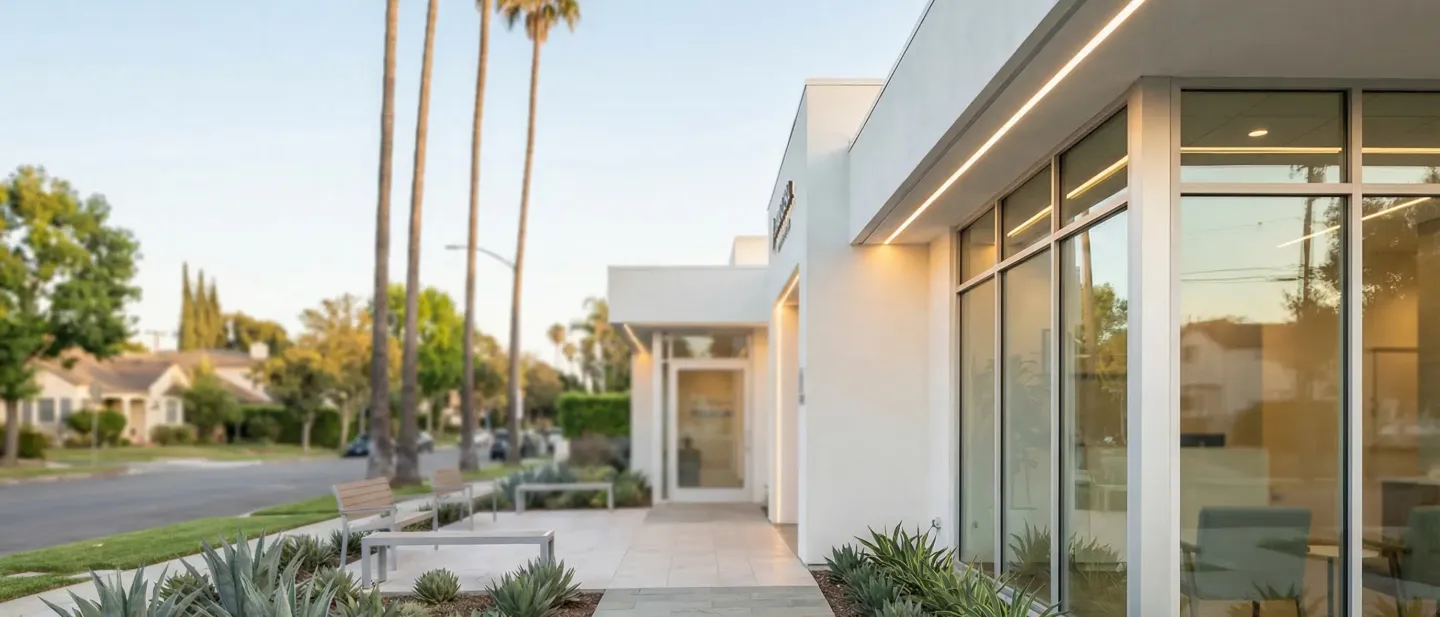
In Los Angeles, CA, people search for dental services about 80,510 times a month on Google; a top-of-page click costs $7–$27, and demand peaks in July.
Google Keyword Planner · Oct 2025 – Sep 2026
| Search | Monthly searches | Top-of-page CPC |
|---|---|---|
| dentist near me | 27,100 | $9–$31 |
| dentist | 18,100 | $8–$30 |
| invisalign | 6,600 | $2–$14 |
| orthodontist | 4,400 | $8–$28 |
| veneers | 3,600 | $4–$17 |
| dental implants | 2,900 | $11–$37 |
| dental clinic | 2,900 | $5–$20 |
| teeth whitening | 2,400 | $2–$12 |
| cosmetic dentist | 1,900 | $10–$35 |
| pediatric dentist | 1,900 | $8–$31 |
US: $21
Google Keyword Planner · Oct 2025 – Sep 2026
Source: Google Keyword Planner (Google Ads), Google Search, English, Los Angeles, CA, Oct 2025 – Sep 2026. Volumes are Google's monthly averages; CPC is the top-of-page bid range, weighted by search volume. How we collect these figures.
Dental PPC in Los Angeles operates at the intersection of the country's most image-conscious market and its highest dentist-per-capita density. There are 8,500 licensed dentists in LA County (California Dental Board, 2024) — a number that creates auction competition not just from other independent practices but from Dental Service Organizations (DSOs), branded cosmetic practices backed by celebrity social proof, and telehealth-adjacent companies offering clear aligner subscriptions. The result is a market where "dental implants Beverly Hills" and "full arch implants Los Angeles" are among the priciest clicks in the market — CPCs that make every non-converting click a painful expense.
Aspen Dental, Pacific Dental Services, and Western Dental operate dozens of locations across the LA metro with media budgets that dwarf most independent practice marketing spend. Their advantage is scale: they can run brand campaigns, awareness campaigns, and promotional campaigns (often featuring heavily discounted new patient offers) simultaneously. Their weakness is standardization — DSO campaigns can't surface the specific differentiators of an individual practice: a particular dentist's cosmetic specialization, a practice's extended evening hours, or a specific neighborhood's patient demographics.
Independent practices that compete head-to-head with DSOs on broad "dentist near me Los Angeles" or "family dentist Los Angeles" terms are fighting the budget battle at a disadvantage. The winning strategy is category specificity and neighborhood precision. A practice in Silver Lake running "cosmetic dentist Silver Lake" and "veneers consultation Silver Lake" is operating in an entirely different — and more favorable — auction than one competing for metro-wide new patient terms. DSOs don't build location-specific cosmetic campaigns. They run metro-wide, procedure-generic campaigns. The gap between those two approaches is where independent practices generate profitable new patient flow.
Los Angeles is close enough to Tijuana that a meaningful share of dental patients — particularly for high-cost procedures like implants, full-arch cases, and cosmetic work — actively consider cross-border options. Tijuana dental practices have become sophisticated marketers, running Google Ads targeting LA-area searches for high-value dental procedures with messaging that leads on price. "Dental implants Los Angeles" searches will surface Tijuana practices in some ad positions.
LA practices can't out-price Tijuana. They can out-trust it. Ad copy and landing page messaging built around patient safety, local recourse, warranty availability, and the hidden cost of dental complications abroad converts cost-sensitive patients who are genuinely weighing both options. Specific copy that performs: "Same Day Implants — LA-Based Practice, 5-Year Warranty," "Why Patients Return to LA Dentists After Tijuana Complications," and "ABOI-Certified Implants — No Cross-Border Risk." This is not a fear campaign — it's an honest value comparison that wins back patients who have done their research.
Emergency dental represents the highest-CVR, lowest-competition opportunity in LA dental PPC. Emergency dental searches — "emergency dentist near me," "dentist open Saturday Los Angeles," "toothache dentist open now" — happen under acute pain and urgency. The search-to-call conversion rate for emergency dental keywords in LA is 8–15% — substantially above the national dental average of 3–6%. And emergency patients, once treated, convert to ongoing care patients at high rates. That makes emergency dental PPC one of the highest-ROI segments available for any LA practice with same-day or next-morning availability.
The practices generating consistent profitable new patient intake from PPC in LA have done the hard architectural work: separated high-value elective campaigns from emergency campaigns, built trust signals into ad copy and landing pages for implant/cosmetic procedures, and capitalized on the Spanish-language gap. Everything else is optimization around a solid foundation.
LA dental PPC campaign architecture must reflect one non-negotiable principle: implant patients, Invisalign patients, emergency patients, and general new patients are not the same buyer and cannot share a campaign. Each has a different CPC ceiling, a different consideration cycle, a different trust threshold, and a different average patient lifetime value. Running them together means Smart Bidding optimizes for clicks rather than patient value — and the most expensive keywords (implants) steal budget from the most cost-efficient ones (emergency dental).
Implant and cosmetic procedure campaigns in LA require trust-first landing page architecture because the typical patient is comparing 3–5 providers, has likely researched Tijuana pricing, and is making a $3,500–$40,000 decision. The landing page must earn the consultation request — not assume it.
What works in LA dental implant landing pages: before/after photo galleries with case details (tooth count, timeline, outcome), board certification and relevant credentials displayed (ABOI for implants, AAO for orthodontics), Google review count and rating above the fold, financing options with monthly payment calculator, and a clear process description ("Step 1: Free consultation. Step 2: Imaging and treatment plan. Step 3: Implant placement."). Practices that surface financing options on the landing page — CareCreditdisplay, "$350/month for 24 months" — see 25–40% higher consultation conversion rates from implant campaigns in cost-sensitive LA submarkets.
Ad scheduling for dental PPC: emergency dental runs 24/7 (urgency peaks overnight and weekends — "dentist open Sunday near me" is a high-conversion query). Implant and cosmetic campaigns peak Tuesday–Thursday midday when patients are in decision-making mode. Invisalign queries peak January (New Year's resolution timing) and in pre-summer weeks as patients want results before photo-heavy summer events — increase Invisalign budgets 20–25% in December–January and April–May.
The most underpriced opportunity in LA dental PPC is the Spanish-language new patient segment — particularly for practices that accept Medi-Cal/Denti-Cal. Los Angeles has 1.82 million Hispanic residents with limited access to dental care. Denti-Cal (California's Medicaid dental program) covers basic and preventive dental services for qualifying patients, but the network of accepting practices is limited and often fails to surface well in digital search. "Dentista acepta Denti-Cal Los Angeles" is a niche search with patients who have genuine, appointment-ready need. Practices equipped to accept Denti-Cal can build a consistent new patient pipeline from this segment at CPLs of $40–$80.
Los Angeles' proximity to Tijuana creates a PPC competitive dynamic unique to Southern California. Tijuana dental practices run Google Ads in English targeting LA-area patient searches — particularly for implants and full-arch cases where the price differential ($800–$1,500 per implant in Tijuana vs. $3,500–$6,000 in LA) is most compelling. LA practices that attempt to compete purely on price lose this battle. The winning counter-strategy targets patients who have already researched Tijuana and are now looking for reassurance about local alternatives.
Search terms like "dental implants near me vs Tijuana" and "dental implants Los Angeles quality" signal a prospect in the final comparison phase — they've seen the Tijuana option and aren't fully committed. Ad copy that leads with "LA-Based Practice — 5-Year Implant Warranty" and landing pages that address complications, recourse, and after-care availability outperform generic implant ad copy with this audience by 30–50% in conversion rate testing. This is not a broad audience, but it's the audience on the verge of booking.
Emergency dental is LA's most consistently high-intent search category because dental pain does not respect business hours. Toothache and dental emergency searches peak on Saturday afternoon and Sunday morning — precisely when most dental offices are closed. Practices that run PPC with extended-hours callouts ("Open Saturdays Until 5PM," "Same-Day Emergency Appointments") and maintain staffing to answer calls capture a patient population with zero alternative local options and extreme willingness to book immediately.
The compound value: emergency patients who have a positive experience convert to long-term patients at 60–70% retention rates (American Dental Association retention data). A $120–$180 CPL for an emergency patient who generates $3,000–$8,000 in lifetime dental revenue makes emergency PPC the highest-LTV segment per dollar in LA dental advertising — better than implant campaigns on a lifetime value basis, despite the implant's higher individual procedure value.
Los Angeles dental PPC is not a set-and-forget channel in a market with 8,500 competing dentists, DSO expansion, and Tijuana pressure on the high-value end. Implant CPCs shift when DSOs launch new location campaigns. Emergency dental gets disrupted whenever a new urgent care dental chain opens in your service radius. Invisalign campaigns require seasonal budget management or you'll miss the January and April peaks. The practices that grow their patient volume through PPC have someone actively managing — adjusting bids, testing ad copy, monitoring competitor activity, and refining landing pages against real conversion data.
MB Adv Agency manages Google Ads exclusively for service businesses, including dental practices in competitive metro markets. We build dental campaigns with the service-type segmentation and trust architecture that LA's market requires — not a generic healthcare template applied to a dental account. Our dental clients consistently reduce CPL by 30–50% within the first 90 days by separating campaign types that were previously consolidated and building landing pages that convert at the rate the campaign's CPC justifies.
If you're a Los Angeles practice spending $3,000–$8,000/month on Google Ads and seeing fewer than 20–35 qualified new patient inquiries per month, the problem is structural and fixable. The architecture — segmented service campaigns, trust-forward landing pages, Tijuana counter-positioning for implants, emergency dental on extended scheduling — produces dramatically different results than a single general-practice campaign competing at the metro level.
Learn more about our approach at Google Ads management for dental practices or review our pricing options to find the right fit for your patient acquisition goals.
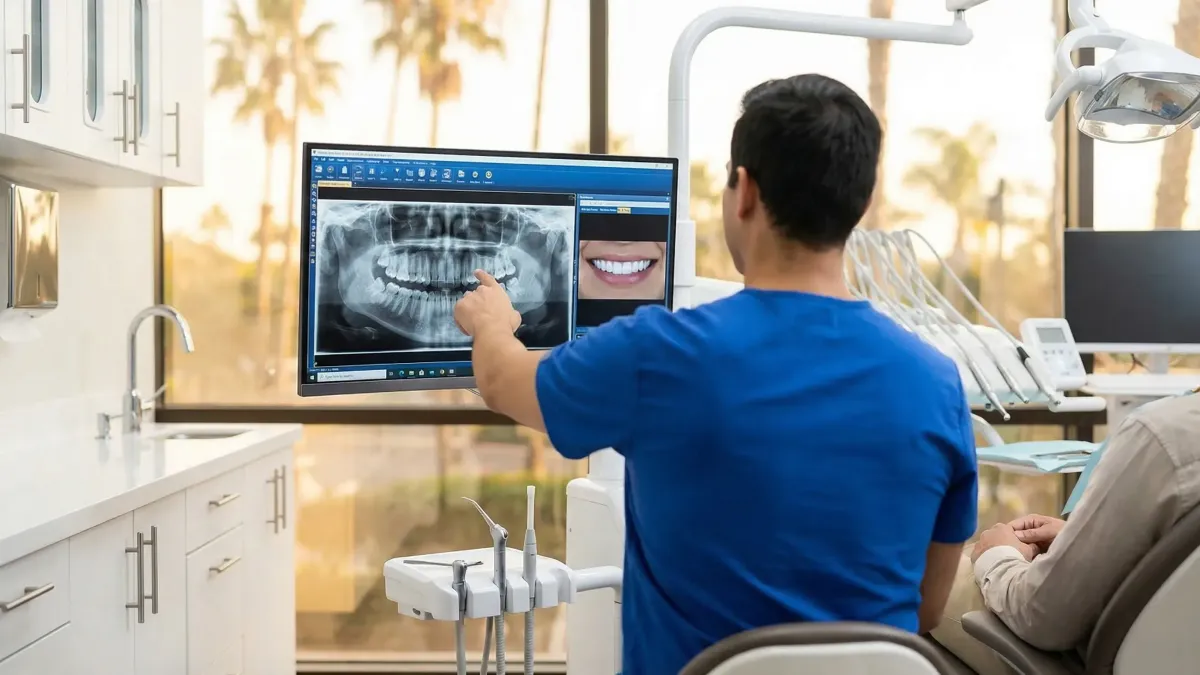
For a general and family dental practice targeting new patients in a specific LA neighborhood, a starting budget of $2,500–$4,000/month provides enough spend to generate meaningful weekly lead volume and sufficient data for campaign optimization within 60 days. At this level, properly structured campaigns targeting 3–5 mile radius neighborhoods should produce 20–35 new patient inquiries per month depending on competitive density (Beverly Hills and West Hollywood are harder; Silver Lake, Highland Park, and the San Fernando Valley are more accessible).
For implant-focused practices or cosmetic dentistry with $3,500+ average case values, budget requirements are higher because CPCs are higher — $11–$37/click means a $3,000/month budget, at a typical click of about $24, generates approximately 125 clicks. If the campaign converts at 5%, that's about 6 implant consultations per month. The math still works at $45,000+ average case value, but the campaign needs to run 90+ days to generate enough data for Smart Bidding to optimize. Recommended implant campaign budget: $4,000–$8,000/month, at which point the booked case rate determines the true ROI.
Emergency dental is the exception: $1,500–$2,500/month in emergency campaigns targeting extended-hours and weekend terms can generate 20–40 emergency calls per month at $40–$80 CPL — the best cost-per-acquisition in the entire LA dental market. For practices with the capacity to see emergency patients 6 days a week, this is the highest-return starting point in dental PPC before scaling to elective service campaigns.
Competing against Tijuana in LA dental PPC requires counter-positioning, not price matching. Tijuana dental practices run ads that lead with price — full arch implants for $8,000–$12,000 vs. $30,000–$50,000 in LA. You cannot win that comparison on price. What you can win on is the decision a patient makes after they've seen the price differential and started asking "but what if something goes wrong?"
The keywords that signal this comparison-stage search intent: "dental implants Los Angeles quality," "best dental implants near me," "dental implants reviews Los Angeles," and longer-tail searches like "dental implants vs Tijuana safety." Campaigns targeting these terms reach patients in the final evaluation phase — they've seen Tijuana prices and are now looking for a reason to stay local. Ad copy that leads with "5-Year Implant Warranty — LA Board-Certified Practice" and landing pages that address complication management, insurance filing support, and same-week follow-up availability outperform generic implant ads with this audience by a significant margin.
An additional counter-positioning angle that works in LA: "LA prices have come down." Many patients assume LA implants are all Beverly Hills-priced. Showing actual transparent pricing ranges on landing pages ($3,500–$5,500 per implant for specific case types) and explaining the cost factors removes the assumption that Tijuana is the only affordable option. Practices that surface competitive, honest pricing alongside quality and warranty messaging capture the patient who wants local quality but thought they couldn't afford it — a substantial segment in LA's mid-market demographics.
How to read this Cost per click and monthly searches are measured with Google Keyword Planner (see above). Cost per lead, conversion rate, budget and leads are estimates compiled from public benchmarks such as WordStream, not measurements.
Sources WordStream Healthcare/Dental benchmarks (2024) + LA market premium. Implant and cosmetic CPCs based on Beverly Hills/West Hollywood market observations. Emergency dental CPCs from LA market research. Tijuana dental tourism counter-positioning based on LA-specific competitive landscape.
$590$990/month
1 platform · Google or MetaGoogle + Meta$790$1,290/month
1 platform · Google or MetaGoogle + Meta$1,140$1,940/month
1 platform · Google or MetaGoogle + MetaChatGPT Ads: a separate pilot, $250/month, added to a plan. See the pilot →

Matteo Braghetta founded MB Adv and runs its Google Ads accounts. He takes the first call with every new client, reads the accounts every week and writes the agency’s guides.
The other half of his job is measurement: GA4, Consent Mode and server-side tracking, so the platforms learn from real sales.
MB Adv is a Google Partner agency managing about $4.4M a year in ad spend for clients in the US, the UK and Europe.
Managed on numbers you can check.
Plans for the US