HVAC PPC Los Angeles, CA
Los Angeles averages 58 days per year above 90°F in the San Fernando Valley — and the 2025 wildfire seasons turned air quality from a comfort issue into a public health emergency for millions of residents. For HVAC contractors, that combination of extreme heat demand and wildfire-driven filtration urgency means Google Ads isn't optional: it's the primary channel between a homeowner with a broken AC in August and the contractor who gets the call. <!-- stats-article-link --> <p><em>See how this city's Hvac PPC costs compare nationally in our <a href="/resources/hvac-ppc-statistics">Hvac PPC Statistics</a> report, featuring data from 40+ US cities.</em></p>
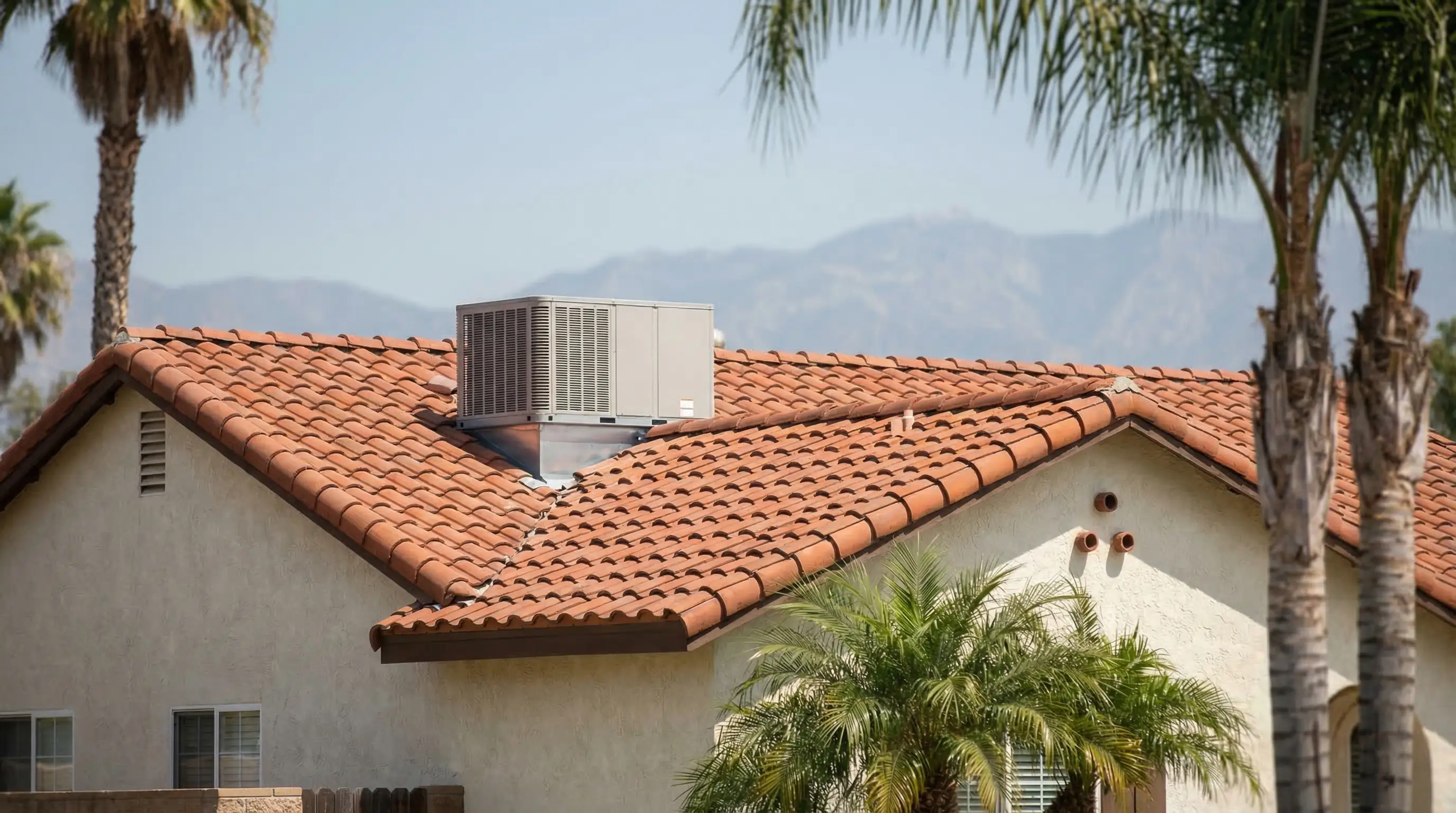
HVAC PPC in Los Angeles is deceptive. The click costs look manageable — $14–$28 for repair keywords, $18–$35 for replacement terms — until you account for what happens on the other end of the click. Most HVAC contractors in LA are running campaigns built on default Google Ads settings: broad match keywords, generic ad copy, and landing pages that route to a homepage phone number. In a market where every click costs $20+, every unqualified click is a $20+ waste. The problem isn't the click cost — it's the conversion rate on every page those clicks reach.
Emergency vs. Planned Services — Two Completely Different Campaigns
The most common structural mistake in LA HVAC PPC is treating emergency repair and planned replacement as the same campaign. They are not the same service, the same customer psychology, or the same decision timeline — and running them under unified targeting produces mediocre conversion rates for both. Emergency AC repair searchers (AC not working at 2pm on a 102°F San Fernando Valley day) need a phone number, a service area confirmation, and a same-day availability signal. They do not need to read about your company history, browse your gallery, or fill out a quote form. Planned replacement customers (researching a new system 2-3 months before peak season) need technical specifications, brand comparisons, CA energy efficiency information, and a consultation booking process.
Campaigns that serve both audiences with the same landing page convert both poorly. Emergency callers see too much friction; replacement shoppers don't get enough information. The fix is campaign separation: emergency repair campaigns with click-to-call as the sole conversion action, and replacement campaigns with consultation scheduling as the CTA. This single structural change typically lifts conversion rates 35–55% for contractors switching from a unified campaign.
The Large Competitor Problem
LA's HVAC market includes significant franchise and regional chain presence. ARS/Rescue Rooter, One Hour Air, and Service Champions run brand campaigns supplemented with aggressive local geo-targeting across the metro. These operators have Quality Scores built over years of campaign history, call center infrastructure that converts every lead, and enough budget to hold top-3 positions on major repair keywords. An independent HVAC contractor bidding on "AC repair Los Angeles" at $3,000/month is not winning that auction against operators spending $30,000–$80,000/month.
The independent contractor's competitive advantage is local trust and responsiveness — neither of which shows up in a generic ad. "Family-owned AC repair Woodland Hills — same-day service" outperforms "AC Repair Los Angeles" for a San Fernando Valley operator because it filters for the right audience (local homeowners who value responsive, non-franchise service) and filters out the rest (commercial inquiries, out-of-service-area calls, renters without authority to approve repairs). Hyper-local copy is not a consolation prize — it's the competitive differentiator that makes $3,000/month viable against $30,000/month operators.
- Emergency repair (high season): "AC not working Los Angeles," "emergency AC repair same day" — $25–$45 CPC in July-September; click-to-call only
- Planned replacement: "AC unit replacement Los Angeles," "new AC system installation" — $18–$32 CPC; consultation landing page with brand/unit info
- Air quality / filtration: "HEPA air purifier installation LA," "whole home air filtration wildfire" — $12–$22 CPC; emerging category with minimal competition
- Mini-split / ductless: "ductless AC installation Los Angeles," "mini split for ADU" — $15–$28 CPC; growing segment tied to ADU market
- Spanish-language: "reparación AC Los Angeles," "aire acondicionado roto" — $8–$18 CPC; significant underserved market in East LA and South LA
Home warranty lead quality is another persistent challenge for LA HVAC contractors. Home warranty companies generate enormous call volume from homeowners whose warranty covers AC repair — but the contractor pays a dispatch fee, works at warranty-negotiated rates, and often upsells additional work that the warranty doesn't cover. These leads are not Google Ads leads. Contractors running PPC campaigns who confuse their warranty call volume with their PPC conversion performance are making budget decisions based on bad data. PPC tracking must separate direct-inquiry leads from warranty dispatches before any meaningful optimization can occur.
Profitable HVAC PPC in Los Angeles is built around seasonal budget scaling, hyper-local geo-targeting, and conversion architecture that matches the urgency level of each query type. The contractors generating the best ROI aren't the ones with the biggest annual budget — they're the ones who time their spend to match demand curves and build their campaigns around the specific conditions of the LA HVAC market.
Seasonal Budget Management: The LA Demand Curve
LA's HVAC demand curve is distinctly different from most US metros. There is virtually no winter heating spike (mild temperatures November–March), a modest spring tune-up window (April–June), and an extremely concentrated summer emergency peak (July–September, with San Fernando Valley temperatures regularly exceeding 100°F). This means the annual budget allocation should be dramatically front-weighted toward summer rather than distributed evenly across months.
- November–March: Minimal demand. Reduce to maintenance budget ($800–$1,500/mo). Focus on planned replacement campaigns only.
- April–June: Pre-season tune-up and system check demand. Increase to $2,000–$3,500/mo. Target proactive homeowners before peak heat.
- July–September: Peak emergency season. Maximum budget: $5,000–$12,000/mo depending on capacity. Emergency repair campaigns at maximum impression share.
- October: Post-season cleanup and air quality (Santa Ana winds/wildfire smoke). $2,000–$4,000/mo with filtration campaign emphasis.
Geographic Targeting: Inland vs. Coastal LA
Los Angeles's climate varies dramatically by geography — a fact that has direct implications for HVAC PPC targeting. Coastal communities (Santa Monica, Manhattan Beach, Venice) average 7–10 fewer extreme heat days per year than inland San Fernando Valley communities (Woodland Hills, Chatsworth, Reseda) because of the marine layer effect. Contractors serving the Valley should allocate higher summer budgets and target emergency repair terms more aggressively than coastal operators. Contractors serving the Westside can build more of their summer revenue around planned replacement and efficiency upgrades rather than purely emergency calls.
CA energy efficiency rebates are a powerful ad copy differentiator for replacement campaigns across the metro. Southern California Edison's Home Energy Upgrade Program and SoCalGas rebates for high-efficiency HVAC systems (SEER 16+) provide homeowners with $500–$1,500 in rebates per installation. Ads and landing pages that feature these rebates prominently — "New AC System + Up to $1,500 in SCE Rebates — San Fernando Valley" — convert at measurably higher rates than ads without incentive messaging. The rebate angle also filters for homeowners replacing systems (high-ticket, high-margin) rather than requesting minor repairs.
The post-wildfire air quality angle deserves its own dedicated campaign. The 2025 Palisades and Eaton fires covered wide swaths of the LA metro in smoke for weeks. HEPA whole-home filtration systems, UV air purifiers, and duct cleaning services are now being searched at volumes that didn't exist before the 2024-2025 wildfire seasons. This is a low-competition, high-intent category with CPCs of $12–$22 and virtually no established competitors running dedicated campaigns. The first HVAC contractors to build out this category in PPC will establish Quality Scores and conversion history that will be difficult to displace once competitors follow.
Google Partner Agency
We're a certified Google Partner Agency, which means we don’t guess — we optimize withGoogle’s full toolkit and insider support.
Your campaigns get pro-level execution, backed by real expertise (not theory).

The most counterintuitive insight in LA HVAC PPC is that the summer emergency peak — when every contractor wants to run ads — is not necessarily the most profitable time to acquire customers. CPCs spike 40–60% in July and August as every HVAC company in the metro floods the auction with emergency budgets. Click costs that ran $15–$20 in May hit $30–$45 in August, compressing margins on emergency calls that are already lower-ticket than replacement jobs.
The Pre-Season Window: April–June
The highest-ROI HVAC PPC window in Los Angeles is April through June — the pre-season months when homeowners with aging AC systems are thinking about replacement before the heat arrives, CPCs are 30–40% below summer peak, and the competitive field is thinner because most contractors are still running winter-level budgets. A replacement campaign launched in April against a homeowner who knows their 12-year-old system might not make it through another San Fernando Valley summer converts into a high-ticket $5,000–$9,000 installation job at 40–55% lower customer acquisition cost than the same conversion in August.
The math: at $20 CPC (April) vs. $38 CPC (August) and equivalent 10% CVR, April generates leads at $200 vs. $380 in August. For a contractor doing 3 replacement jobs per month from PPC, the pre-season vs. peak-season difference is $540/month in acquisition cost savings on identical revenue — nearly $6,500 annually on just three replacement units. Scaling this across a 10-replacement-job summer baseline reveals why the April window matters far more than most contractors realize.
The ADU Mini-Split Opportunity
Los Angeles's ADU boom has created a specific HVAC PPC niche: ductless mini-split systems for newly constructed accessory dwelling units. ADUs — backyard cottages, garage conversions, above-garage units — typically lack the ductwork of the primary residence and cannot connect to an existing central air system. Mini-split systems ($3,500–$8,000 installed per unit) are the standard solution, and the homeowners building or completing ADUs are highly motivated buyers who have already committed to the project.
Keywords like "mini split installation ADU Los Angeles" and "ductless AC for garage conversion" run at $15–$25 CPC with very limited competition — most HVAC PPC campaigns don't segment for ADU-specific intent. Given that LA issued 20,000+ ADU permits in 2023, the addressable market for mini-split installations is substantial and growing. An HVAC contractor who builds out ADU-focused landing pages and ad copy can own this category while competitors compete for $40/click emergency repair terms in August.
- Pre-season replacement (Apr–Jun): $18–$25 CPC vs. $30–$45 in peak — 40-55% lower CPL on highest-margin work
- ADU mini-split: $15–$25 CPC; low competition, 20,000+ annual permits = large addressable market
- Post-wildfire filtration: $12–$22 CPC; near-zero competition; new demand category from 2025 fires
- Spanish-language emergency: $8–$18 CPC; significant East LA/South LA population with high demand and underserved PPC
HVAC PPC in Los Angeles rewards contractors who understand the market's specific seasonality, geographic variation, and the post-wildfire air quality dimension that is rewriting demand patterns for this industry. Generic campaigns built for a generic market leave the best opportunities — pre-season replacement, ADU mini-splits, filtration upgrades — sitting on the table while competitors bid each other up on summer emergency keywords.
MB Adv Agency builds HVAC campaigns around LA's specific demand curve, not national benchmarks. We separate emergency and replacement campaigns, time budget scaling to the San Fernando Valley heat cycle, and build out the niche categories — ADU, filtration, bilingual emergency — that most HVAC PPC accounts ignore. Our clients in the home services space see CPLs that reflect real conversion optimization, not campaign-wide averages inflated by unqualified clicks.
If your summer campaign spent $8,000 and generated 35 calls but only 12 were qualified leads, that's a campaign structure problem, not a channel problem. Visit our Google Ads management page to see how we approach it differently, or review our pricing options for HVAC and home services clients.

Frequently Asked Questions
How much should an LA HVAC contractor spend on Google Ads per month?
Budget for HVAC PPC in Los Angeles should be structured seasonally, not as a flat monthly commitment. The baseline recommendation for an independent contractor or small HVAC company is $3,000–$5,000/month during the summer peak (July–September), reduced to $1,000–$2,000/month in winter, and stepped up to $2,500–$4,000/month in the April–June pre-season window. A flat $3,000/month year-round misallocates budget — spending at peak rates in January (minimal demand) while being underfunded in August (maximum demand).
At $3,500/month in July at an average $30 CPC and 10% conversion rate, a contractor generates roughly 117 clicks and 12 leads. Of those, assuming 60% call-to-appointment rate and 70% appointment-to-job rate, that's 5 booked jobs from PPC. At an average emergency repair ticket of $400 and replacement rate of 20% (generating $7,000 average replacement jobs), the blended revenue per lead is ~$900–$1,100. Five jobs at that blended rate = $4,500–$5,500 in revenue against $3,500 in ad spend — a 1.3–1.6x ROAS before accounting for lifetime customer value and referrals from first-time emergency callers who become replacement customers 2–3 years later.
The minimum viable budget for any meaningful optimization: $2,000/month. Below that threshold, monthly click volume is too low (60-80 clicks) to differentiate conversion rates between ad variations or keyword groups. If budget constraints require starting below $2,000, focus the entire budget on emergency repair during a single peak month to generate enough data, then use that data to optimize before scaling.
What types of HVAC services get the best ROI from Google Ads in Los Angeles?
AC replacement and mini-split installation deliver the best ROI from Google Ads in LA — not emergency repair, despite having the highest call volume. Here's why: replacement jobs average $5,000–$9,500 installed, while emergency repair averages $250–$600. The click cost to acquire each type of lead is similar ($20–$35), but the revenue difference is 10–20x. A campaign generating 5 replacement leads and 15 emergency repair leads at $25 CPL each spends the same budget on both categories but generates radically different revenue from each.
Filtration and air quality services are the fastest-growing emerging ROI category in LA HVAC PPC. Whole-home HEPA filtration systems ($2,000–$5,000 installed) and UV air purifier installations ($800–$1,500) are now searched at volumes driven by wildfire smoke exposure that didn't exist before 2024-2025. These are cash-pay, elective upgrades with no insurance complexity — customers call, schedule, and pay. Campaign keywords in this category run $12–$22/click with conversion rates comparable to emergency repair and minimal competitive pressure.
Mini-split installation for ADUs is the third high-ROI category: $3,500–$8,000 per installation, highly motivated buyers (they've already committed to the ADU project), and keywords that cost $15–$25/click against near-zero competition. The seasonal pattern for ADU work is also more favorable — permits and construction timelines mean ADU completion calls are distributed across the full year rather than concentrated in summer, providing revenue smoothing during the HVAC off-season. Contractors who build PPC coverage for replacement, filtration, and ADU mini-splits are building a year-round revenue profile instead of one dependent on summer emergency call volume.