Food & Beverage PPC New Orleans, LA
New Orleans receives 19 million visitors annually — and the overwhelming majority name food as a primary reason for their trip. With 1,400+ restaurant operators competing in one of the most food-saturated markets in the United States, Google Ads is how individual restaurants, caterers, and event venues capture tourist attention before they land and convert local searchers before they choose a competitor. The opportunity is real: most NOLA F&B operators don't run Google Ads at all, leaving the search results wide open for the few who do.
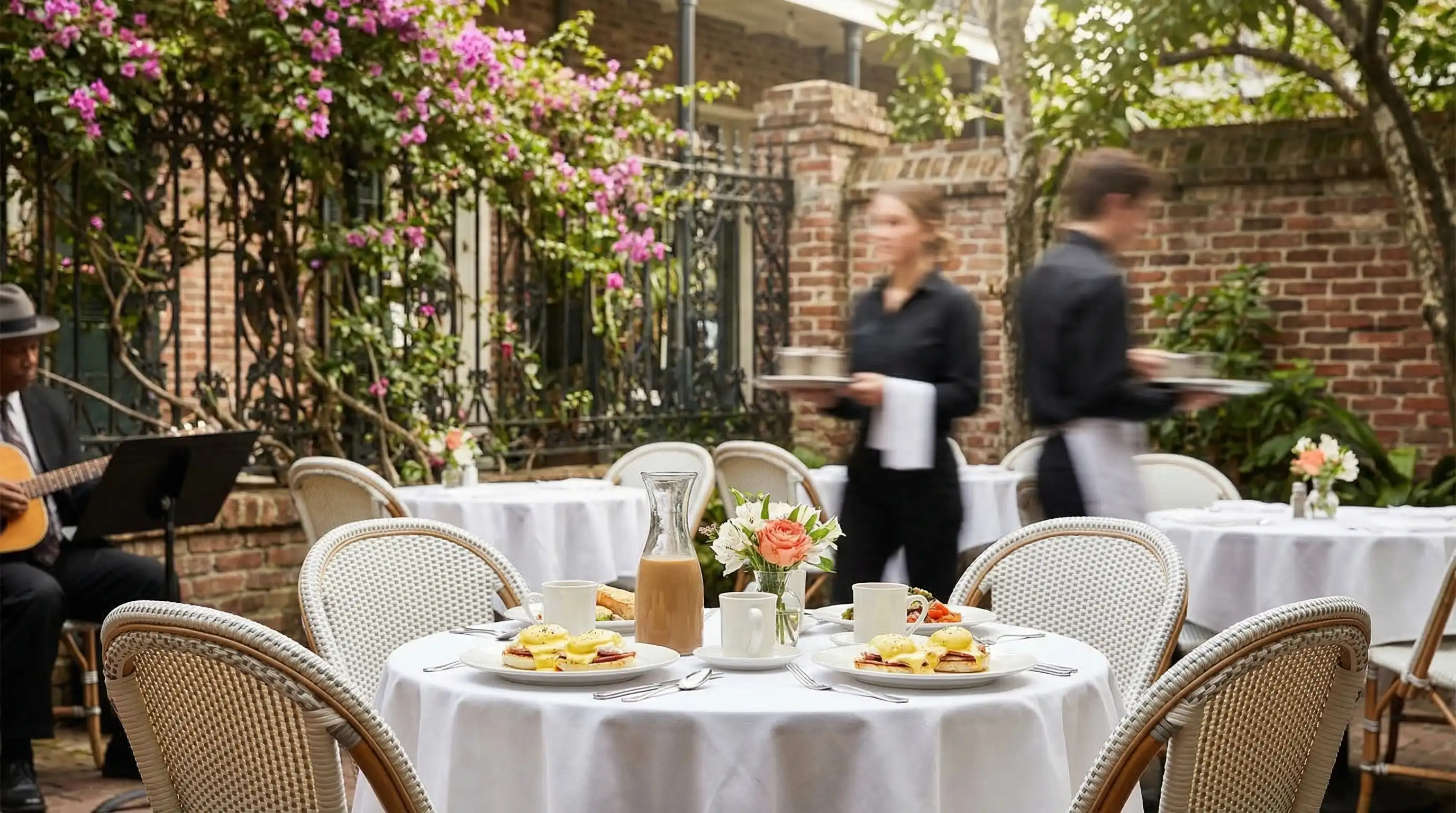
New Orleans' food scene is globally famous — and that's exactly what makes PPC challenging for individual operators. When Anthony Bourdain, James Beard, and the New York Times have already written about your city's restaurants, the organic narrative is set. The iconic tier — Commander's Palace, Brennan's, Antoine's, Dooky Chase's — doesn't need Google Ads. But for the 1,400+ SMB operators who are not institutions, the competitive dynamic is acute: tourist intent exists in abundance, yet most of that intent never reaches individual operators through search because the operators aren't there.
The Aggregator Capture Problem
The first structural challenge is that tourist restaurant searches in NOLA are dominated by Yelp, TripAdvisor, and Eater. A visitor searching "best Creole restaurants New Orleans" lands on a listicle, not an individual operator's site. The organic journey ends before a direct booking or reservation happens. This aggregator dominance is not unique to NOLA — but it's particularly acute in a city whose food reputation drives national editorial attention.
For local operators who understand this dynamic, Google Ads bypasses the aggregator layer entirely. A well-structured search campaign for "Creole restaurant New Orleans reservation" or "private dining New Orleans" captures intent directly, before Yelp or TripAdvisor presents the comparison view. The operator who is advertising controls the narrative; the operator relying on organic placement cedes the decision to an algorithm that rewards reviews and paid listings on aggregator platforms.
The Commission Drain
The second challenge is platform dependency. DoorDash, UberEats, and GrubHub charge 25–30% commissions on every order. For a $45 average ticket, that's $11–$13.50 paid to a delivery platform per order — before food cost, labor, or overhead. Catering operators using Thumbtack or The Knot pay 15–25% referral fees on bookings. These platforms are not growth strategies; they are tolls that compound. Google Ads, at $2–$8 CPC and a $15–$60 cost per reservation or lead, delivers the same or better customer acquisition at a fraction of the platform take. The case for owning your own lead channel is mathematically decisive for any F&B operator doing meaningful volume.
The third challenge is seasonality without strategy. New Orleans' event calendar — Mardi Gras, Jazz Fest, French Quarter Festival, Essence Fest, Voodoo Fest, and a year-round convention cycle — creates massive demand spikes that reward operators who plan their PPC around the calendar. Operators who run flat-rate monthly campaigns miss the compounding value of budget concentration during the highest-intent windows. A catering company that spends $800/month year-round will be consistently outbid during Jazz Fest by a competitor who concentrates $3,000 into the two-week window. The event calendar is not a nice-to-have in NOLA F&B marketing — it is the primary strategic variable.
Finally, the catering and private events segment is dramatically underserved on PPC. Corporate event planners, wedding coordinators, and Mardi Gras party organizers are actively searching Google — and the competition for these high-value terms is thin. A corporate catering booking for a Jazz Fest client event can represent $15,000–$50,000 in a single engagement. The CPL to capture that lead via Google Ads is $80–$250. The math is obvious, yet most NOLA catering operators are not running campaigns against these terms.
New Orleans F&B PPC operates across four distinct audiences with different search patterns and different conversion economics. Structuring campaigns to match these audiences — rather than running a single "restaurant" campaign — is what separates operators who generate ROI from those who don't.
Keyword Groups and CPC Ranges
- Tourist discovery terms: "best Creole restaurant New Orleans," "seafood restaurant French Quarter," "jazz brunch New Orleans," "best beignets NOLA," "authentic New Orleans food" — $2–$6 CPC; high intent from pre-trip planners; desktop-dominant 2–3 weeks pre-visit, shifts to mobile during visit
- Catering / event booking terms: "catering New Orleans corporate," "wedding catering New Orleans," "food catering Jazz Fest event," "catering for large group New Orleans," "Mardi Gras party catering" — $6–$18 CPC; high job value ($5K–$50K per event); low competition relative to value
- Private dining / venue terms: "private dining room New Orleans," "restaurant private event space New Orleans," "rehearsal dinner venue NOLA," "birthday dinner private room" — $4–$12 CPC; event-driven conversion, seasonal peaks around holiday season and spring weddings
- Direct ordering / delivery terms: "New Orleans food delivery direct," "order online [restaurant name]," "local restaurant delivery NOLA" — $2–$5 CPC; used to drive direct orders and bypass DoorDash commissions; ROI case strongest for restaurants with their own online ordering
- Local dining / discovery: "brunch New Orleans Magazine Street," "date night restaurant Uptown NOLA," "new restaurant New Orleans 2025," "happy hour New Orleans" — $2–$5 CPC; local resident audience; lower intent than tourist terms but builds recurring customer base
Campaign structure: Separate tourist acquisition (pre-trip search), event/catering (high-value), and local dining (recurring) into independent campaigns. Tourist campaigns should deploy Display Network targeting alongside Search — placing banner ads on NOLA travel content and event sites as visitors research their trip. Catering campaigns should use lead form extensions to capture inquiries directly in the ad.
Mardi Gras / Jazz Fest campaign protocol: Begin catering and event booking campaigns 8–12 weeks before each major festival. Mardi Gras catering bookings are made in November–December for the February event; Jazz Fest catering inquiries begin in February–March for the late April event. Late-start campaigns — activated in the week before the event — capture last-minute tourists but miss the high-value corporate catering segment entirely.
Direct ordering ROI case: At a $45 average ticket and 28% DoorDash commission, each order via third-party platform costs $12.60 in platform fees. A Google Ads campaign driving direct online ordering at $3 CPC and 7% CVR generates orders at approximately $43 customer acquisition cost — which includes the full customer value, not a recurring per-order tax. After 4–5 orders from a returning direct customer, the PPC acquisition cost is amortized entirely. The direct-ordering angle is the highest LTV argument in F&B PPC.
Google Partner Agency
We're a certified Google Partner Agency, which means we don’t guess — we optimize withGoogle’s full toolkit and insider support.
Your campaigns get pro-level execution, backed by real expertise (not theory).

The most underutilized opportunity in New Orleans F&B PPC is the catering segment — and the event calendar makes the timing deterministic.
New Orleans hosts a year-round event cycle that creates predictable, schedulable catering demand: Mardi Gras (January–Fat Tuesday), Jazz Fest (late April–early May), French Quarter Festival (April), Essence Fest (July), Voodoo Fest (October), Sugar Bowl (January 1), and a major convention season peaking October–November. Each event drives a distinct catering demand window — corporate entertainment, private parties, team events — with booking cycles that start 6–12 weeks in advance. A catering operator who maps their PPC budget to this calendar runs their highest-spend weeks when corporate event planners are most actively searching, and runs reduced spend in June–August when convention activity dips.
The Tourist Pre-Trip Search Window
Restaurant tourism research has a specific digital pattern. Visitors begin their NOLA dining research 2–3 weeks before departure on desktop — reading guides, saving lists, bookmarking restaurants. In the 72 hours before and during the visit, search shifts entirely to mobile — "restaurant near French Quarter open now," "best seafood NOLA walking distance from hotel." Both windows require different campaign strategies: pre-trip desktop campaigns should capture intent and drive reservation bookings; in-visit mobile campaigns should capture "near me" and "open now" searches and convert to walk-in traffic or same-day reservations.
Key insight: The French Quarter Festival draws 750,000 attendees over 4 days in April. Jazz Fest draws 500,000+ over two weekends. These events concentrate a tourist audience that is food-first and time-pressured — they want to find a restaurant, make a decision quickly, and go. An operator who appears at the top of relevant searches during these events and has a mobile-optimized landing page with hours, location, and reservation CTA converts at 6–9%. The same operator invisible in search during the festival relies on foot traffic and Yelp stars.
Direct ordering economics:
- DoorDash / UberEats commission: 25–30% per order — on a $45 average ticket, $11–$13.50 paid per transaction
- Annual delivery volume of 500 orders/month at 28% commission = $75,600/year in platform fees
- Google Ads direct ordering campaign at $3 CPC, 7% CVR = $43 customer acquisition cost — paid once per customer, not per order
- Breakeven: 3–4 orders from a returning direct customer eliminate the acquisition cost entirely
James Beard Award density elevates consumer expectations across the entire NOLA F&B market. Visitors arrive expecting exceptional food — which means they're actively seeking it out via search before they land. Any operator who serves elevated Creole, Cajun, or New Orleans-specific cuisine and is not appearing in tourist discovery searches is not competing on a level field. The demand exists. The question is whether your restaurant appears when it's being searched.
New Orleans F&B PPC is not about running a generic restaurant campaign — it's about building a campaign architecture that maps to the city's specific demand patterns: the event calendar, the tourist pre-trip search cycle, the catering opportunity, and the direct-ordering economics that make DoorDash commission a choice rather than a necessity. Generic food service templates miss all of these variables entirely.
MB Adv Agency builds campaigns that are scheduled to the event calendar, structured by audience segment, and optimized for the actual conversion actions that matter — reservation bookings, catering inquiry forms, direct online orders. We know when NOLA catering demand peaks, what terms tourist visitors use in the 48 hours before they arrive, and how to position a local operator above Yelp and TripAdvisor for decision-stage searches. The campaigns we build work because they're built from the market up, not applied from a template down.
If you're a New Orleans restaurant owner, caterer, or event venue and you're currently paying DoorDash 28% of every order or relying exclusively on Yelp for discovery — the Google Ads alternative is worth understanding. View our management plans or request a free audit to see what a properly structured F&B campaign would look like for your specific business model.
Frequently Asked Questions
How much should a New Orleans restaurant or caterer spend on Google Ads?
The right budget depends entirely on your business model — but here are concrete frameworks for the two highest-opportunity F&B segments in NOLA:
Catering / event operator ($1,500–$3,500/month): At $8–$18 CPC for corporate and wedding catering terms, a $2,000/month budget generates 111–250 clicks. At a 4–6% lead form CVR, that's 4–15 qualified catering inquiries per month. A 20–30% close rate produces 1–4 booked events. At an average catering event value of $8,000–$25,000, one additional booked event per month covers the entire annual campaign cost. The seasonal reality: concentrate budget in November–December (Mardi Gras catering advance bookings), February–March (Jazz Fest advance bookings), and September–October (holiday event season). Spread the remaining budget across the year to maintain pipeline.
Restaurant (tourist + local dining, $1,000–$2,500/month): At $2–$6 CPC for discovery terms, $1,500/month generates 250–750 clicks. At 5–8% CVR for reservation or direct order conversions, that's 12–60 conversions per month. If each conversion represents a $45 average check with 2–3 covers, the monthly PPC revenue attribution is $1,080–$8,100. At the midpoint, the campaign pays for itself within the first month. The compounding value is repeat customers — locals who discover you via Google and return regularly represent $200–$600/year in lifetime dining value each.
Event calendar budget spike protocol: Mardi Gras, Jazz Fest, and French Quarter Festival each warrant a 2–3× budget increase in the 2–3 weeks surrounding the event. A restaurant that normally spends $1,500/month should allocate $3,000–$4,500 for Mardi Gras season — when tourist intent is at peak density and every competitor restaurant is fighting for the same 750,000+ additional visitors in the city.
Can a New Orleans restaurant really compete with TripAdvisor and Yelp on Google Search?
On organic discovery, no — but on paid search for specific intent terms, absolutely yes.
Where aggregators dominate: Informational searches — "best restaurants New Orleans," "top seafood NOLA," "Michelin restaurants New Orleans" — return Yelp, TripAdvisor, and Eater listicles at positions 1–4. These platforms have built their organic rankings over decades and spend aggressively on SEO. An individual restaurant cannot organically outrank them for generic discovery terms.
Where individual restaurants win: Decision-stage and transactional searches. "Restaurant with private dining room French Quarter," "book jazz brunch New Orleans reservation," and "catering for corporate event New Orleans 2025" are specific enough that aggregators serve generic landing pages. An individual restaurant with a dedicated private dining page, real availability info, and a clear booking CTA outperforms the aggregator's generic listing because the specificity match is better. Specific intent + matching landing page = decisive conversion advantage.
The practical PPC advantage:
- Google Ads appear above all organic results, including Yelp and TripAdvisor — paid placements bypass the aggregator dominance entirely for searches you're bidding on
- Tourism intent during peak events (Jazz Fest, Mardi Gras) shifts from "best of" discovery to "available now" transactional search — where individual restaurant ads convert at 6–9%
- Remarketing campaigns can re-engage visitors who landed on your site from any source (Yelp referral, organic search, social) and showed interest but didn't book — converting them via Google Display ads at $0.30–$0.80 per click
The summary: don't try to beat Yelp at being Yelp. Use Google Ads to bypass the aggregator layer for specific intent searches, convert tourist visitors in the decision window, and build a direct ordering channel that eliminates per-order platform fees. That's the PPC strategy that actually changes the economics for NOLA F&B operators.