Roofing PPC New Orleans, LA
New Orleans roofing contractors operate in one of the most demanding PPC environments in the country — where Hurricane Ida alone caused $75+ billion in insured losses across Louisiana, where the housing stock is old enough that roofs fail without any storm event at all, and where out-of-state storm chasers flood the market after every named weather event and undermine trust in every contractor advertising online. <!-- stats-article-link --> <p><em>See how this city's Roofing PPC costs compare nationally in our <a href="/resources/roofing-ppc-statistics">Roofing PPC Statistics</a> report, featuring data from 40+ US cities.</em></p>
New Orleans roofing PPC is defined by a paradox: the demand is enormous and persistent, but the trust environment is badly damaged. Understanding both sides of this equation is the starting point for any campaign strategy.
The Storm-Chaser Trust Problem
After Hurricane Ida in 2021, Louisiana's contractor market was inundated with out-of-state roofing companies — "storm chasers" who drove down from Tennessee, Georgia, and the Midwest to capitalize on the $75+ billion in insured damage. Some of these operators produced quality work. Many took deposits, completed substandard repairs, and were unreachable 6 months later when leaks reappeared. The Louisiana State Licensing Board for Contractors fielded a surge of complaints, and consumer trust in contractors advertising immediately after storms dropped significantly.
This trust collapse is a PPC challenge because it means generic storm-response ad copy ("Storm damage? Call us!") now triggers skepticism rather than clicks. New Orleans homeowners have been burned often enough to be suspicious of any contractor who ramps up advertising post-storm. Established local firms — those with verifiable addresses, years of operation in the New Orleans market, and recognizable local references — need to lead with proof, not just offers.
Garcia Roofing and Sheet Metal (founded 1987, Owens Corning Platinum Preferred) and similar long-tenured local operators have a genuine competitive advantage here — but only if their PPC campaigns communicate that longevity and credential specificity in ad copy and landing pages. "Family-owned since 1987, licensed in Louisiana, Owens Corning Platinum Preferred" is not generic ad copy — it's a direct counter to the storm-chaser problem.
The Ida Hangover and Ongoing Structural Demand
Hurricane Ida (August 2021) was a Category 4 storm that made direct landfall near Port Fourchon, Louisiana. Wind gusts in New Orleans exceeded 90 mph — enough to damage or destroy roofing systems across tens of thousands of homes. Insurance claim processing, contractor scheduling backlogs, and supply chain delays meant that some Ida-related roofing replacements were still being completed in 2023 and 2024. This is not unusual: post-major-storm roofing demand has a 3–5 year tail in high-damage markets.
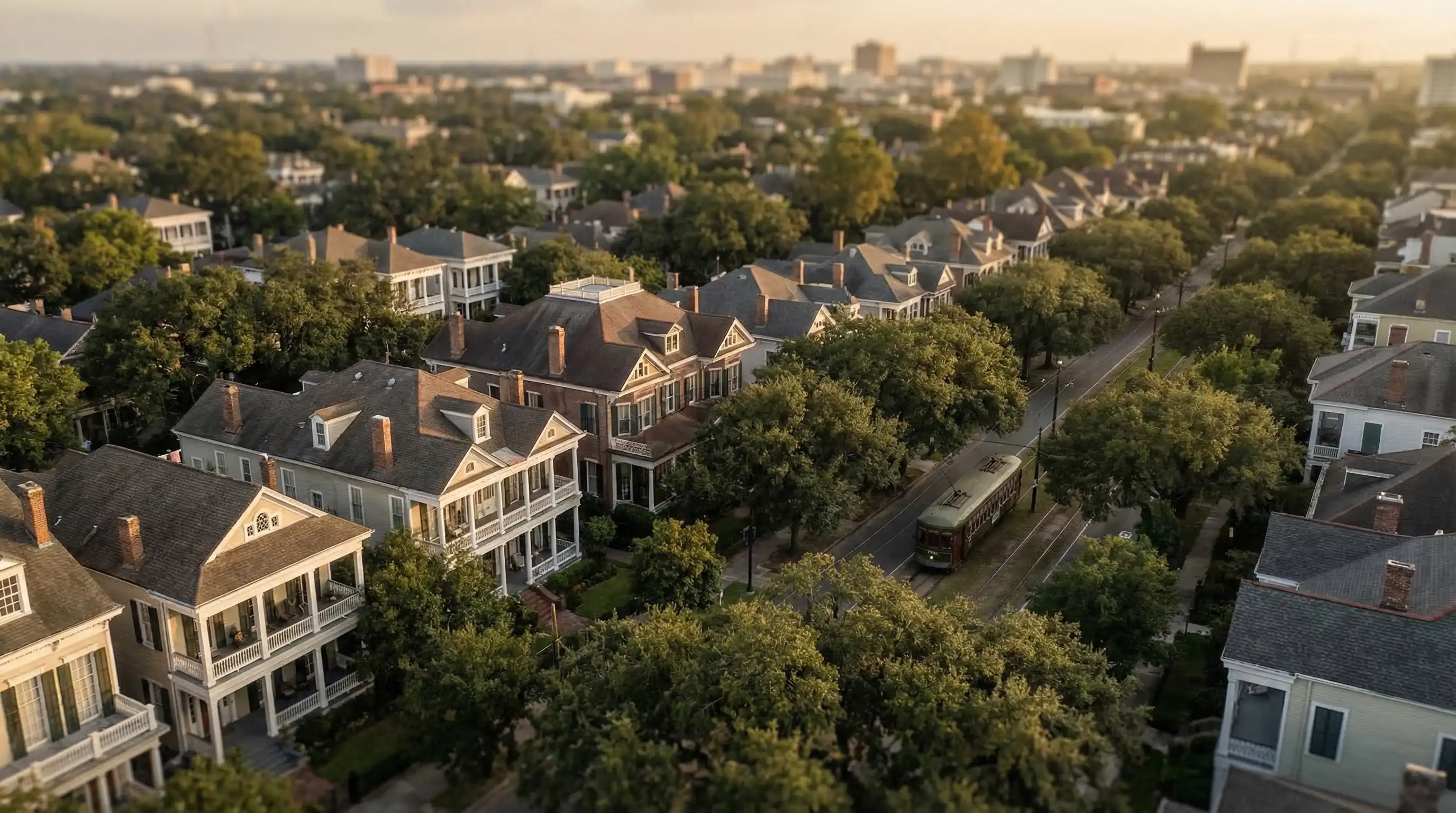
But the structural demand is not entirely storm-dependent. New Orleans has an exceptionally old housing stock — a significant share of homes in Uptown, Lakeview, Gentilly, and Mid-City were built before 1960. Original or early-replacement roofing systems from the 1980s and 1990s are now 30–40 years old. The useful life of an asphalt shingle roof in New Orleans' high-heat, high-humidity, high-UV environment is 15–20 years — less than the national average due to climate stress. This means a large inventory of aging roofs will fail independent of storm events, generating steady non-emergency demand that well-structured PPC campaigns can capture year-round.
The competitive landscape includes 16 top-pick contractors identified by Expertise.com (March 2026) in a city where roofing demand is structurally elevated. Competition is meaningful but not as consolidated as HVAC — no single dominant local brand controls search visibility. The fragmented market creates opportunity for well-positioned advertisers.
A winning New Orleans roofing campaign operates in three modes simultaneously — and the transition between modes happens based on weather events, not a calendar schedule.
Campaign Modes: Evergreen, Pre-Season, and Storm Response
- Evergreen campaign (year-round) — Target aging-roof replacement and general storm damage. Keywords: "roof replacement New Orleans," "roofing contractor New Orleans," "old roof replacement NOLA," "metal roofing New Orleans," "roof inspection New Orleans." CPCs: $10–$20. Monthly budget: $1,500–$2,500. Landing page: credentials + photos of completed local projects + Owens Corning or CertainTeed certification.
- Pre-season campaign (March–May) — "Is your roof ready for hurricane season?" positioning. Target: "hurricane season roof inspection New Orleans," "roof inspection before storm," "roof repair before hurricane season Louisiana." CPCs: $8–$15 (less competitive than post-storm window). Monthly budget: $1,500–$2,000. This window delivers lower CPLs than post-storm advertising because storm-chaser competition hasn't ramped up yet.
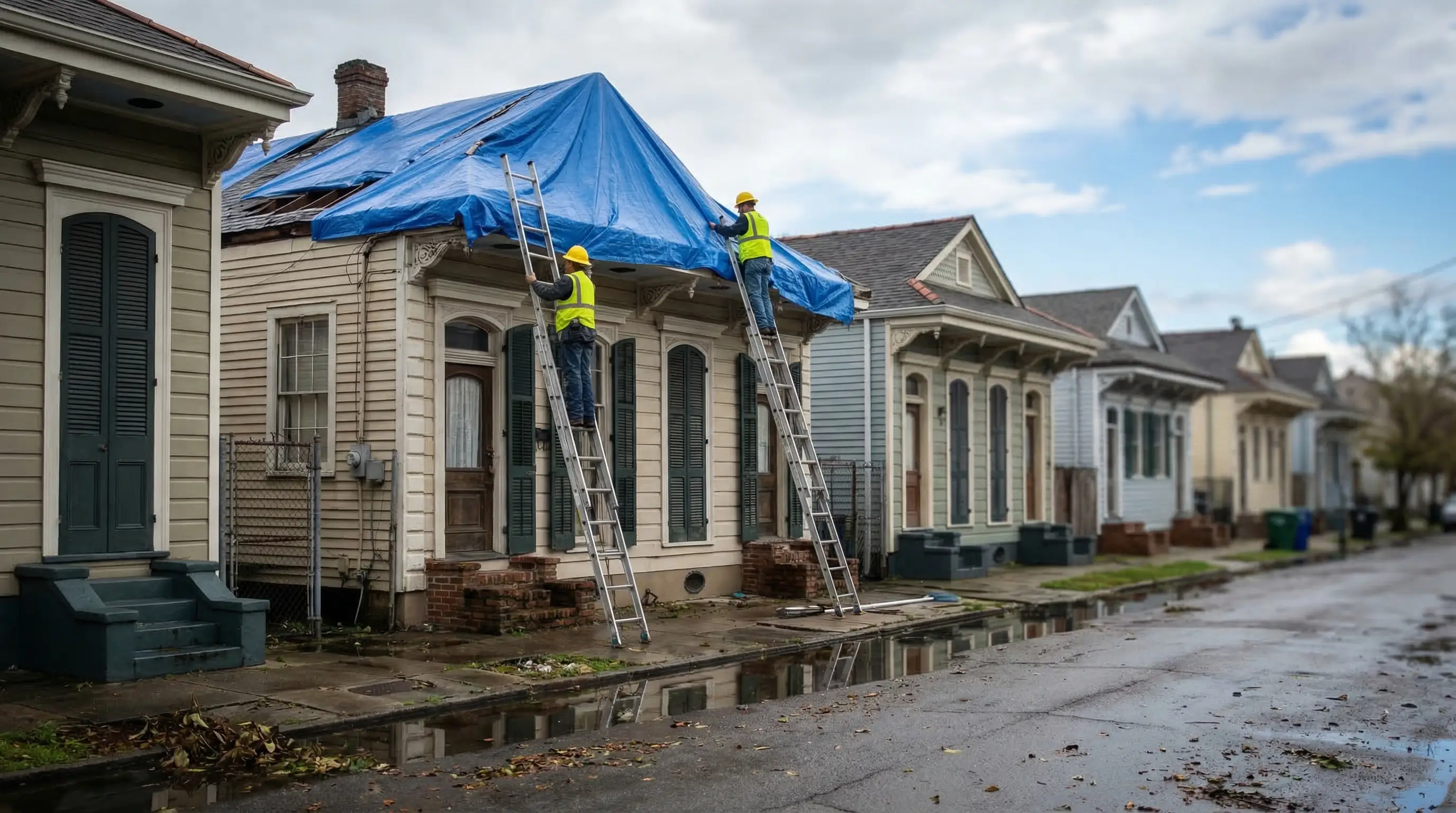
- Storm-response campaign (activate within 6–24 hours of any named storm) — Pre-built and paused. Activate immediately when a named storm makes landfall or a tropical storm warning covers Orleans/Jefferson/St. Bernard parishes. Keywords: "storm damage roof repair New Orleans," "hurricane roof damage Louisiana," "emergency roof repair NOLA," "roof tarp New Orleans," "insurance claim roofing contractor." CPCs surge to $18–$35 during storm windows but so does conversion intent. Budget: $3,000–$5,000 for the 2–4 week post-storm surge period.
Insurance Claim Workflow: The Decisive Differentiator
In the storm-response phase, homeowners aren't just searching for roofers — they're navigating insurance claims simultaneously. The most effective NOLA roofing ads directly address this dual need:
- Use ad copy that explicitly references insurance: "We work directly with your insurance adjuster — no out-of-pocket surprise."
- Create a dedicated landing page for insurance claim roofing that explains the claims process, your documentation workflow, and your experience with Louisiana insurers specifically
- Include a "Free Insurance Inspection" offer — the conversion point that fits exactly where storm-damaged homeowners are in their decision process (they need documentation for their claim, not a commitment to a contractor yet)
Metal roofing is a growing niche worth a dedicated campaign. Wind-resistant standing-seam metal roofing is increasingly preferred in hurricane-corridor markets after Ida. Average metal roof installation is $15,000–$40,000 — a 3–5× higher ticket than asphalt shingle replacement. Target "metal roofing New Orleans," "wind-resistant roofing Louisiana," and "standing seam metal roof cost New Orleans" with separate ad groups and a calculator-based landing page showing lifetime cost comparison versus asphalt.
Google Partner Agency
We're a certified Google Partner Agency, which means we don’t guess — we optimize withGoogle’s full toolkit and insider support.
Your campaigns get pro-level execution, backed by real expertise (not theory).

Two structural realities define the New Orleans roofing market — and both create opportunities that most campaigns don't exploit.
The Insurance Claim Cycle: A Multi-Year Revenue Window
Louisiana homeowners carry some of the highest homeowners insurance rates in the nation — a direct result of the state's hurricane exposure. After Ida, many insurers raised rates, reduced coverage, or exited the Louisiana market entirely, driving the state to create Citizens Property Insurance Corporation as a state-backed insurer of last resort. This created a paradox: homeowners who most need to file storm damage claims are navigating a more complex, sometimes adversarial insurance market than before Ida.
Key insight: Contractors who position themselves as experts in insurance claim navigation — not just roofing installation — capture a higher share of storm-related leads. "We've helped 200+ New Orleans homeowners navigate hurricane insurance claims" is a stronger conversion message than any technical roofing credential. This positioning works in both pre-season ("prepare your documentation") and post-storm ("file your claim correctly") contexts.
The Metal Roofing Demand Shift
Post-Ida, metal roofing installations in southeast Louisiana increased significantly as homeowners prioritized wind resistance over cost. Owens Corning's research consistently shows that post-major-storm periods shift 15–25% of roofing buyers toward premium wind-resistant materials. For New Orleans contractors, this means:
- The average replacement ticket has grown — from $8,000–$12,000 (asphalt) to $15,000–$40,000 (metal) for the segment upgrading
- Metal roofing buyers do more research before deciding — they search "best roofing material hurricane zone," "metal vs shingle New Orleans cost," and "how long does metal roof last" — longer keyword queries that indicate a more deliberate purchase journey
- This segment responds better to educational landing pages, comparison content, and video testimonials than to "call now" emergency-style ads
The pre-season window (March–May) is the highest-value time to run metal roofing campaigns. Homeowners who are proactively thinking about hurricane preparedness are the most receptive to a premium roofing conversation. CPC competition is lower than post-storm windows, and conversion intent is high because these buyers are in active research mode — not emergency reaction mode.
Geo-targeting matters significantly in roofing. East New Orleans, Lakeview, and Gentilly were among the hardest-hit areas in Ida and have the oldest concentration of damage-vulnerable housing stock. These ZIP codes should carry positive bid modifiers of 20–35% for both evergreen and storm-response campaigns. Newer construction areas (like parts of the West Bank and Metairie's Causeway Boulevard corridor) have lower structural roofing demand and can be bid-reduced accordingly.
Roofing PPC in New Orleans requires a campaign framework that no generic contractor marketing template addresses: the ability to switch between three operating modes — evergreen demand capture, pre-season preparation, and immediate post-storm response — based on real-time weather conditions rather than a marketing calendar.
At MB Adv Agency, we build roofing campaigns with pre-staged storm-response variants ready to activate within hours of any named storm making landfall near New Orleans. We track National Hurricane Center advisories and have activation protocols that get storm campaigns live before most contractors are even briefing their marketing teams. We also structure campaigns to lead with insurance claim navigation messaging — the specific trust signal that separates established local contractors from the storm chasers that flood the market after every weather event.
Our campaigns include pre-season inspection positioning in March–May (when CPCs are lower and homeowner receptivity to hurricane prep conversations is highest), evergreen aging-roof targeting for the year-round structural demand, and metal roofing sub-campaigns for the premium segment that represents the highest average ticket value in the market.
Ready to build a New Orleans roofing campaign that's ready for whatever the next storm brings? View our PPC management plans or request a free campaign audit — we'll identify the storm-response gaps in your current advertising and show you how to close them before the season starts.
Frequently Asked Questions
How do I use Google Ads to capture storm damage roofing leads in New Orleans without looking like a storm chaser?
This is the most important strategic question for any established New Orleans roofing contractor. The good news: it's answerable, and the answer differentiates you from every out-of-state opportunist flooding the market post-storm.
Lead with provenance, not urgency. Storm chasers use generic urgency copy: "Storm damage? Call now!" Established local contractors lead with proof: years in business, Louisiana contractor license number, local project photos, manufacturer certification status. Ad copy like "Garcia Roofing — Licensed in Louisiana Since 1987 | Owens Corning Platinum Preferred" is not just marketing — it's a trust signal that directly addresses the storm-chaser fatigue New Orleans homeowners have developed over years of post-storm contractor horror stories.
Use landing pages built for the claim process. Storm-damaged homeowners have two immediate needs: find a contractor and navigate their insurance claim. Your landing page should address both. Include a clear explanation of how you document storm damage for insurance purposes, what to expect during the inspection, and how you coordinate with adjusters. This level of detail signals competence and builds trust before the first call.
Activate immediately — but target the right keywords. Post-storm, the window between a storm passing and the peak of consumer searching is 12–36 hours. Contractors who activate storm-response campaigns within hours of landfall get lower CPCs and higher impression share before competitor budgets ramp up. Target specific damage terms: "roof tarping New Orleans," "storm damage inspection Louisiana," "wind damage roof repair" — not just "roofing contractor," which is too generic and costly in the post-storm surge window.
What's the ROI on Google Ads for a New Orleans roofing company, and how long does it take to see results?
Roofing PPC delivers some of the highest absolute ROI of any home services category — when the campaign is structured for New Orleans' unique storm-market dynamics.
The numbers: A well-structured New Orleans roofing campaign spending $2,500–$3,500/month should generate 10–20 qualified leads per month in the evergreen (non-storm) period. At a closing rate of 30–40% (industry average for roofing), that's 3–8 jobs per month. At an average ticket of $10,000–$18,000 for asphalt replacement (and $20,000–$35,000 for metal), one month's campaign spend generates $30,000–$140,000 in contracted revenue at standard closing rates.
Storm-period ROI is dramatically higher. A $3,500 storm-response campaign activated in the 2–4 weeks following a major storm event in New Orleans can generate 40–80 leads. Even at a conservative 25% closing rate with an average ticket of $12,000, that's $120,000–$240,000 in revenue from one storm window. The contractors who have storm-response campaigns pre-built and ready to activate are capturing this; those who try to build campaigns after the storm passes miss the first and most critical 2 weeks.
Timeline to results: Unlike some Google Ads categories, roofing generates conversion data quickly when campaigns are well-targeted. Expect meaningful lead volume within the first 2 weeks of campaign launch if there's active demand. The first 60 days are primarily about calibrating which keywords and targeting combinations generate the lowest CPL — by month 3, a properly structured campaign should be operating efficiently with CPA data informing budget allocation decisions. Pre-season campaigns (March–May) typically show the clearest ROI because lower CPC competition means faster payback on the campaign build investment.