Healthcare PPC Lakeland, FL
Lakeland hosts a Level II Trauma Center, Watson Clinic's 200+ provider multi-specialty group, and a growing roster of independent specialist practices — a healthcare infrastructure that exceeds what a city of 120,000 would normally support. But the real patient acquisition opportunity is the one the systems can't easily capture: the retiree who just moved from New Jersey, the Polk County resident who needs a specialist appointment in two weeks rather than four months, and the patient who'd rather see an independent provider than navigate a hospital system's scheduling labyrinth. <!-- stats-article-link --> <p><em>See how this city's Healthcare PPC costs compare nationally in our <a href="https://www.mbadv.agency/ppc-industry-statistics/healthcare-ppc-statistics">Healthcare PPC Statistics</a> report, featuring data from 40+ US cities.</em></p>
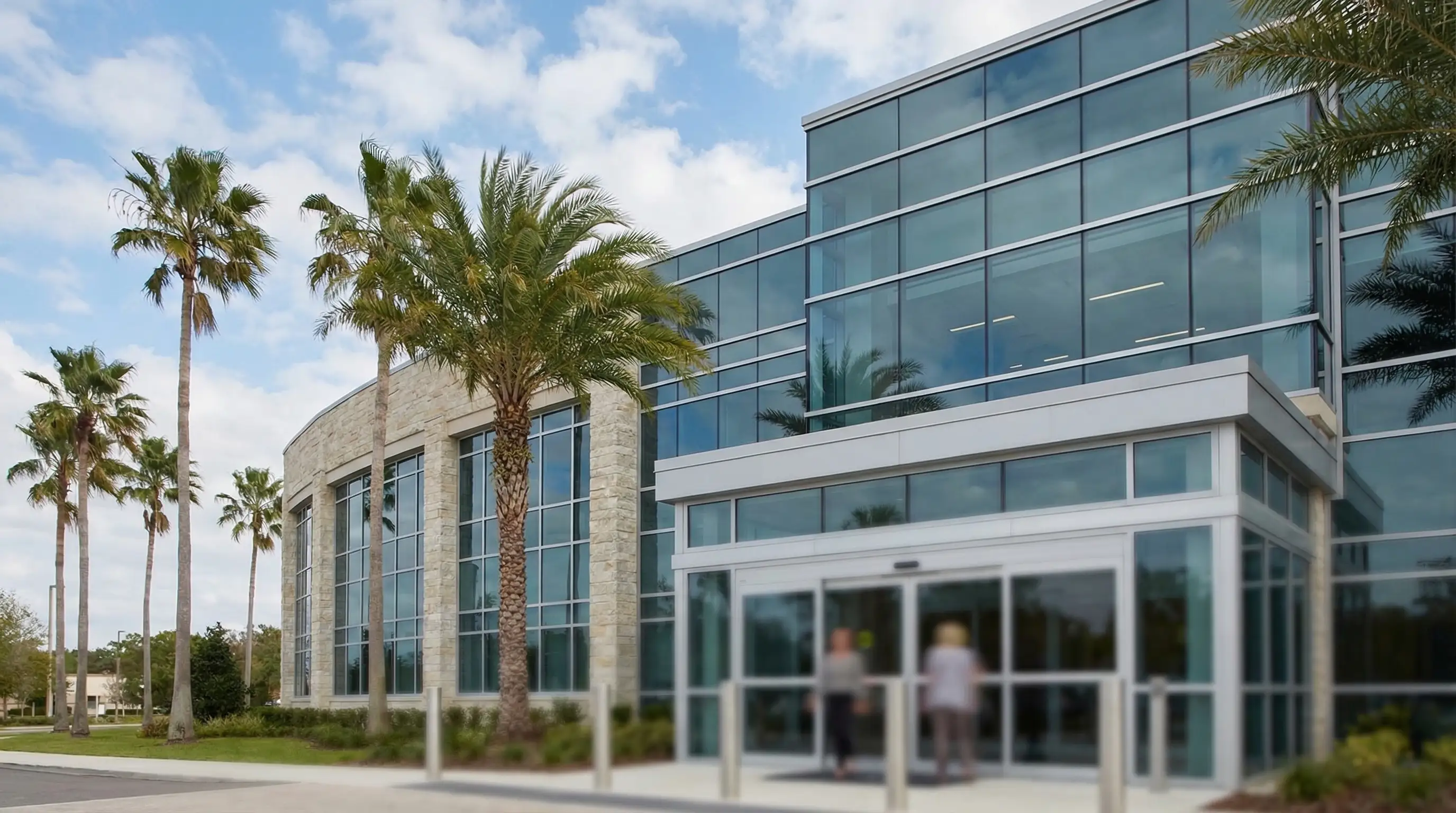
Lakeland healthcare PPC has a scale asymmetry that looks overwhelming on the surface. Watson Clinic — 200+ providers across 40+ specialties — runs institutional marketing with budgets that dwarf any independent practice. Lakeland Regional Health, BayCare Medical Group (expanding from Tampa), and AdventHealth (reaching from Orlando) add system-level advertising pressure across the Polk County market. Competing dollar-for-dollar on "Lakeland doctor" or "Lakeland clinic" terms is not viable for a 2-physician internal medicine practice.
Where the Gap Actually Is
The structural opening for independent practices is not on broad institutional terms — it's on the conversion gap that large systems create. Watson Clinic's scale is simultaneously its marketing brand and its patient experience liability. New patients at Watson face documented wait times of 3–6 weeks for new patient appointments, complex referral routing, and call center scheduling that can require multiple calls to reach the right department. For patients who've just relocated and need care established within 60–90 days — or patients experiencing symptoms who need to be seen within two weeks — Watson's scheduling reality is a barrier, not a feature.
Independent practices that explicitly address this in PPC copy — "New patients seen within 2 weeks — no referral required, Lakeland FL" — consistently outperform Watson Clinic's institutional messaging on conversion rate for condition-specific and new-patient-acquisition searches. The differentiation angle is speed and access, not credentials. The 55-year-old New Jersey transplant who just moved to Lakeland needs a primary care physician by March 1st because they're transferring a prescription and need a refill authorization. Watson's March appointment availability doesn't solve that problem. An independent practice that can say "same-week new patient visits" does.
The Inbound Migration Patient Pool
Lakeland's inbound retiree migration from Northeast and Midwest metros creates a specific, high-value patient acquisition opportunity that is systematically uncaptured in local healthcare PPC. New Polk County residents from New York, New Jersey, Ohio, and Michigan need to establish care relationships within 60–90 days for practical reasons: Medicare and commercial insurance enrollment timelines, prescription transfer requirements, and specialist referral chains that require an established PCP on record. This population arrives with high urgency and high LTV — they need a physician, they need one quickly, and once established, they typically remain with that practice for years.
The keyword cluster targeting this audience — "moving to Lakeland Florida doctor," "new resident primary care Lakeland FL," "Medicare doctor accepting new patients Lakeland FL," "transferring care to Lakeland FL" — has virtually zero dedicated PPC competition in the local market. Most Lakeland healthcare practices run "primary care Lakeland FL" campaigns that are invisible to a family researching Lakeland before they relocate. A practice that shows up at the pre-move research stage — when the family is still in New Jersey and searching for healthcare options in their new city — builds brand recognition 3–6 months before competing practices appear on the patient's radar.
Behavioral health presents a separate structural opportunity. Polk County has documented service access gaps in mental health provider supply relative to demand — the Florida Department of Health's published data identifies Polk County as a high-need area. Independent therapists, licensed clinical social workers, and psychiatric nurse practitioners running $1,000–$1,500/month campaigns in this market face limited dedicated competition at the keyword level. "Therapist Lakeland FL," "anxiety treatment Lakeland FL," and "telehealth therapy Polk County" are low-to-moderate CPC queries with consistent volume and a patient population that has high conversion urgency because care access barriers are already high.
Healthcare PPC requires specialty-specific campaign architecture — not a single "medical services Lakeland FL" campaign. Each specialty has its own CPC range, patient decision timeline, and conversion trigger. A combined campaign averaging primary care CPCs with orthopedic surgery CPCs overpays for low-intent general queries while under-investing in the procedure-specific terms that produce the highest-value appointments. The structural logic follows the patient: someone searching "back pain doctor Lakeland FL" is further along the decision path than someone searching "Lakeland doctor," and the campaign should reflect that difference in budget allocation and landing page depth.
Keyword Architecture by Specialty
- Primary care / new patient (CPC $5–$12): "primary care doctor Lakeland FL," "new patient family doctor Lakeland," "internal medicine Lakeland FL," "moving to Lakeland Florida doctor," "accepting new patients Lakeland FL," "Medicare doctor Lakeland FL" — moderate volume, high LTV. Landing page must address availability, insurance acceptance, and new-patient onboarding process explicitly.
- Orthopedic / pain management (CPC $8–$18): "back pain doctor Lakeland FL," "orthopedic surgeon Lakeland FL," "knee pain specialist Polk County," "pain management Lakeland FL," "joint replacement Lakeland FL" — highest CPC in healthcare PPC for this market. Procedure-specific intent: these patients have a defined problem and are actively seeking a specialist. Landing pages should include procedure descriptions, recovery expectations, and a fast booking CTA.
- Mental health / behavioral (CPC $6–$14): "therapist Lakeland FL," "anxiety treatment Lakeland FL," "psychiatrist Polk County FL," "mental health counseling Lakeland," "telehealth therapy Lakeland FL" — growing demand, Polk County service gap creates consistent volume. Telehealth variants have above-average CVR. Stigma-sensitive ad copy required.
- Dermatology (CPC $5–$11): "dermatologist Lakeland FL," "skin cancer screening Lakeland FL," "cosmetic dermatology Polk County," "mole removal Lakeland FL," "suspicious mole check Lakeland" — Florida sun exposure angle has strong preventive intent. Annual screening campaigns convert well with the "one in five Americans develops skin cancer" statistic in ad copy.
- Weight management / GLP-1 (CPC $8–$16): "weight loss doctor Lakeland FL," "medical weight loss Lakeland FL," "GLP-1 treatment Lakeland FL," "semaglutide Lakeland FL" — emerging high-CPC category post-Ozempic/Wegovy mainstream adoption. High patient urgency, low supply of qualified prescribers in secondary markets. Very low competition in Lakeland relative to demand.
Bidding strategy: Target CPA for primary care (high volume, predictable appointment value); manual CPC for orthopedic and pain management (fewer leads, high procedure value — lead quality matters more than volume). Mental health campaigns should emphasize confidentiality in ad copy and use responsive search ads to test stigma-sensitive messaging variations. Healthcare HIPAA compliance requirements mean remarketing campaigns require careful audience exclusion setup — always confirm with a qualified healthcare marketing compliance advisor before running healthcare remarketing campaigns.
Google Partner Agency
We're a certified Google Partner Agency, which means we don’t guess — we optimize withGoogle’s full toolkit and insider support.
Your campaigns get pro-level execution, backed by real expertise (not theory).

Lakeland healthcare PPC contains three patient acquisition opportunities that large system marketing cannot effectively target: the inbound retiree who needs care before the move is complete, Florida's dermatology demand driven by documented skin cancer incidence, and the GLP-1 prescriber gap that has emerged as semaglutide and tirzepatide entered mainstream demand with supply still catching up in secondary markets.
The Pre-Move Care Establishment Window
The highest-LTV patient a Lakeland practice can acquire is one who was found before they relocated. A family from New Jersey that discovers a Lakeland primary care practice during their pre-move research — 3–6 months before the move — and books a new patient appointment for their arrival date is essentially pre-acquired. They have no existing Lakeland provider to stay with, no Watson Clinic relationship to override, and high urgency to establish care quickly. Lifetime patient value for an established primary care patient in Lakeland runs $800–$2,000+ per year in practice revenue from recurring appointments, referrals, and ancillary services.
PPC campaigns targeting pre-move researchers — "best primary care doctor in Lakeland FL," "moving to Lakeland Florida healthcare options," "Medicare doctors Lakeland FL accepting new patients" — target an audience at the exact moment they are making provider decisions, before they arrive and before competitors establish any relationship. The keyword cluster has CPCs of $5–$12 with conversion rates above market average because the intent is highly specific. A practice that establishes this campaign and maintains it as a consistent channel acquires new patients from every inbound migration cohort at a predictable acquisition cost.
Florida's Skin Cancer Imperative
Florida consistently ranks in the top 5 states for skin cancer incidence and diagnosis rates — the CDC's published melanoma data places Florida among the highest-risk states annually. In Lakeland specifically, outdoor lifestyle factors compound the baseline: Circle B Bar Reserve, Lakeland Linder Regional Airport events, the Lakeland Little League sports complex, and the year-round warm climate mean Lakeland residents spend more cumulative outdoor time than northern-state averages. The practical result is that skin cancer screening has a larger addressable patient market in Lakeland than comparable-size cities in other states.
Key insight: "Annual skin cancer screening Lakeland FL" and "suspicious mole check Polk County" are preventive-intent keywords — the searcher is not yet a patient but is already risk-aware. Preventive-intent healthcare PPC converts at above-average rates because the patient has self-selected for the service. A dermatology practice running a $500–$800/month screening campaign in Lakeland targeting these keywords at $5–$11 CPC generates 6–10 new patient screenings monthly — and skin cancer screening patients frequently return for cosmetic dermatology services once the provider relationship is established. The lifetime patient value from a screening acquisition is 2–4x the initial appointment value within 24 months.
Lakeland healthcare PPC rewards practices that understand the patient acquisition dynamics that large systems structurally cannot address. Watson Clinic cannot deploy a campaign targeting inbound New Jersey retirees who need a primary care physician before they arrive. Lakeland Regional Health cannot run a "same-week new patient visits" ad without triggering scheduling capacity problems. Independent practices can do both — and the conversion rates on those specific angles consistently exceed generic "Lakeland doctor" campaign performance.
MB Adv Agency builds Lakeland healthcare campaigns with specialty-specific tracks, HIPAA-compliant audience targeting, and landing pages that explicitly address the Watson Clinic speed gap, the new-resident care establishment timeline, and the Florida-specific clinical context (skin cancer screening, GLP-1 prescriber access) that converts pre-qualified patients. We configure appropriate negative keywords to exclude workers' compensation and emergency care terms that waste medical practice PPC budget on non-appointable intent.
At $1,500–$2,500/month, most Lakeland specialist practices generate 13–25 qualified new patient leads per month at CPL of $60–$120 depending on specialty. Orthopedic and pain management campaigns at the higher end of that range produce procedure-level inquiries at average patient values of $3,000–$15,000+. See the full picture on our PPC pricing page, or review how we build patient acquisition campaigns for independent practices.
If your Lakeland practice is running a generic "new patients welcome" campaign against Watson Clinic's institutional budget — you're fighting on their terms. The path forward is specialty-specific campaigns that Watson's scale prevents them from deploying. See how we structure Lakeland healthcare campaigns or review our full services.

Frequently Asked Questions
What does healthcare PPC cost in Lakeland, FL — and how does it differ by specialty?
Lakeland healthcare PPC runs $4–$10 CPC for general medical queries, with meaningful variation by specialty. Primary care and new-patient acquisition terms run $5–$12 CPC. Orthopedic, pain management, and weight management queries hit $8–$18 CPC — the highest in healthcare PPC, justified by procedure values that often exceed $5,000. Mental health CPCs range $6–$14; dermatology runs $5–$11. GLP-1 and medical weight loss terms are the emerging high-CPC growth category at $8–$16 as prescriber supply in secondary markets hasn't caught up to mainstream demand post-2023.
CPL expectations at a $1,500–$2,000/month budget:
- Primary care (new patient): $60–$95 CPL — high LTV ($800–$2,000/year per established patient)
- Orthopedic / pain management: $80–$150 CPL — procedure-level value ($3,000–$15,000+ per patient course)
- Mental health: $55–$100 CPL — recurring appointment model, high retention once established
- Dermatology (screening focus): $45–$80 CPL — lower ticket but high upsell to cosmetic services
- Weight management / GLP-1: $70–$120 CPL — long-term treatment relationship, recurring prescriptions
The ROI calculation for healthcare PPC is driven by lifetime patient value, not single appointment value. A primary care practice acquiring a new established patient at $80 CPL is buying a $800–$2,000/year revenue relationship — payback period of 6–8 weeks on a well-retained patient. Specialty practices with higher procedure values (orthopedic, pain management) achieve ROI within the first or second appointment. The only healthcare segment where CPL math is tight is dermatology screening — where the initial appointment value ($150–$300) requires upsell conversion to cosmetic services to justify the campaign long-term.
Can independent Lakeland practices realistically compete with Watson Clinic and hospital systems on Google Ads?
Yes — on specific keyword clusters that large systems cannot effectively optimize for. Watson Clinic's institutional PPC is built for brand reinforcement and broad service-line awareness, not for condition-specific conversion or new-resident acquisition. Their landing pages are institutional, their CTAs lead to complex scheduling portals, and their ad copy is built for a healthcare system, not for a patient trying to book an appointment in the next two weeks. An independent practice with a focused specialty campaign can beat Watson's institutional messaging on conversion rate even when Watson wins on impression share.
The specific keywords where independent practices can outperform: specialty-specific condition terms ("back pain specialist Lakeland FL" vs. Watson's "Lakeland orthopedics"), new-resident targeting ("accepting new Medicare patients Lakeland FL"), mental health access gap terms ("therapist Lakeland FL same week"), and GLP-1 prescriber search terms. On all of these, Watson competes either with generic ad copy, slow conversion funnels, or not at all. An independent practice with a landing page that says "New patients seen within 2 weeks — call (863) [number] to schedule" converts at 2–3x Watson's institutional conversion rate on these specific intent queries.
The budget asymmetry matters at the broad awareness level but not at the specialty conversion level. Watson's total monthly PPC spend may be 20–50x an independent practice's budget — but that spend is spread across every Lakeland health query. An independent orthopedic practice spending $1,500/month exclusively on "back pain," "knee pain," and "orthopedic surgeon" Lakeland queries competes with Watson's orthopedics allocation, not their total budget. Specialty focus converts the asymmetry from a budget disadvantage into an optimization advantage. The specialists who understand their patient acquisition mathematics — and build campaigns around them — consistently generate ROI that justifies the spend regardless of what Watson is spending.