HVAC PPC Buffalo, NY
Buffalo's lake-effect winters average 90–100 inches of annual snowfall and January lows that regularly hit single digits — but the deeper story is the housing stock: 60.9% of homes in Buffalo predate 1939, making this one of the oldest urban housing concentrations in the United States. For HVAC contractors, that combination of extreme climate and aging infrastructure creates year-round replacement and emergency demand that most markets can't match. <!-- stats-article-link --> <p><em>See how this city's Hvac PPC costs compare nationally in our <a href="/resources/hvac-ppc-statistics">Hvac PPC Statistics</a> report, featuring data from 40+ US cities.</em></p>
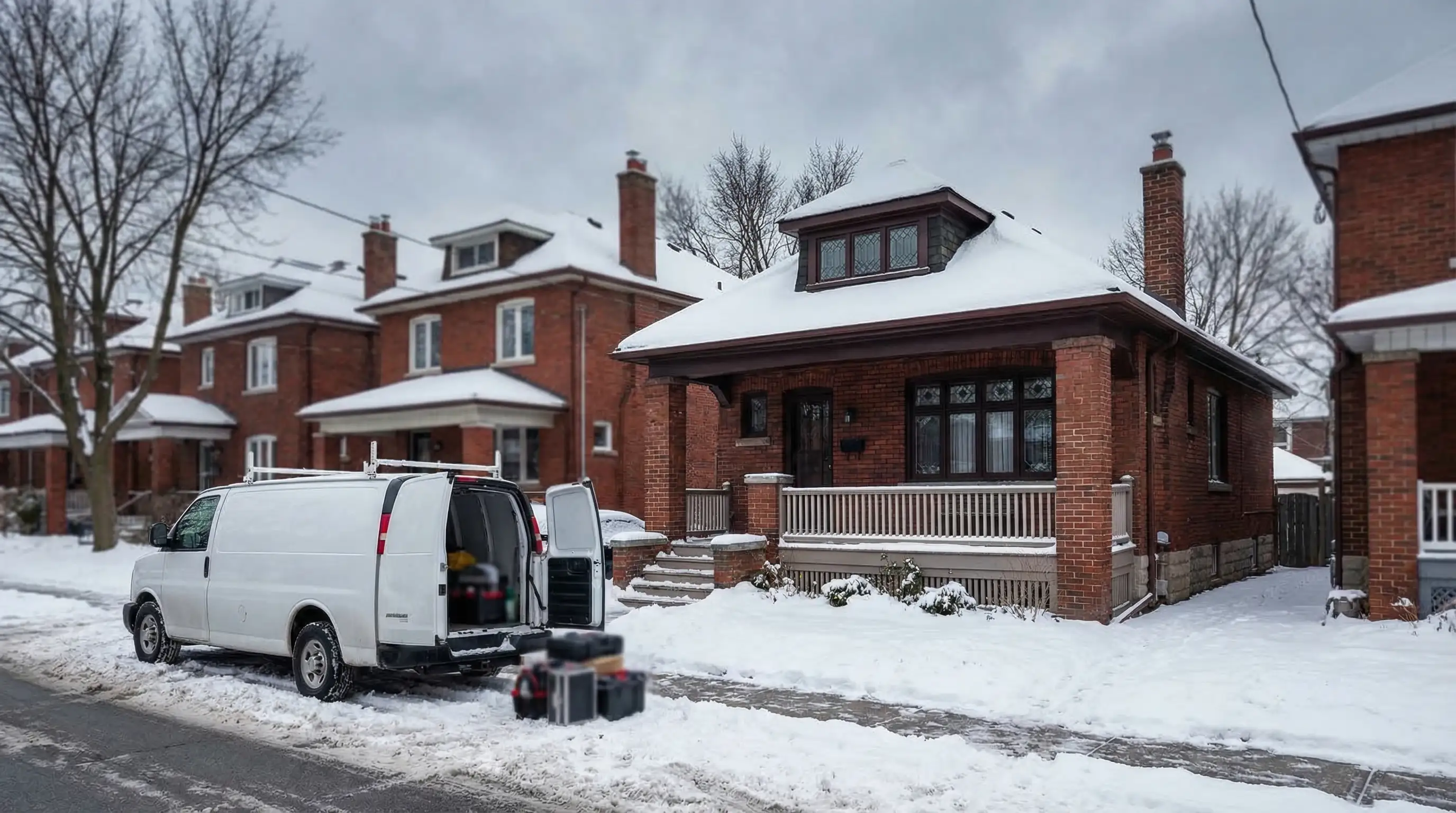
Running HVAC PPC in Buffalo without understanding its housing stock is like running beach umbrella ads in a blizzard — structurally misaligned. The city's defining characteristic isn't just cold winters. It's that 60.9% of Buffalo homes predate 1939 (NeighborhoodScout 2025), placing them at or well beyond the 25–30 year useful life threshold for most furnace, boiler, and air conditioning systems. The consequence: this market isn't seasonal. It's a perpetual replacement cycle, layered over genuine climate extremes that generate emergency demand on both ends of the year.
The Lake-Effect HVAC Pressure Cooker
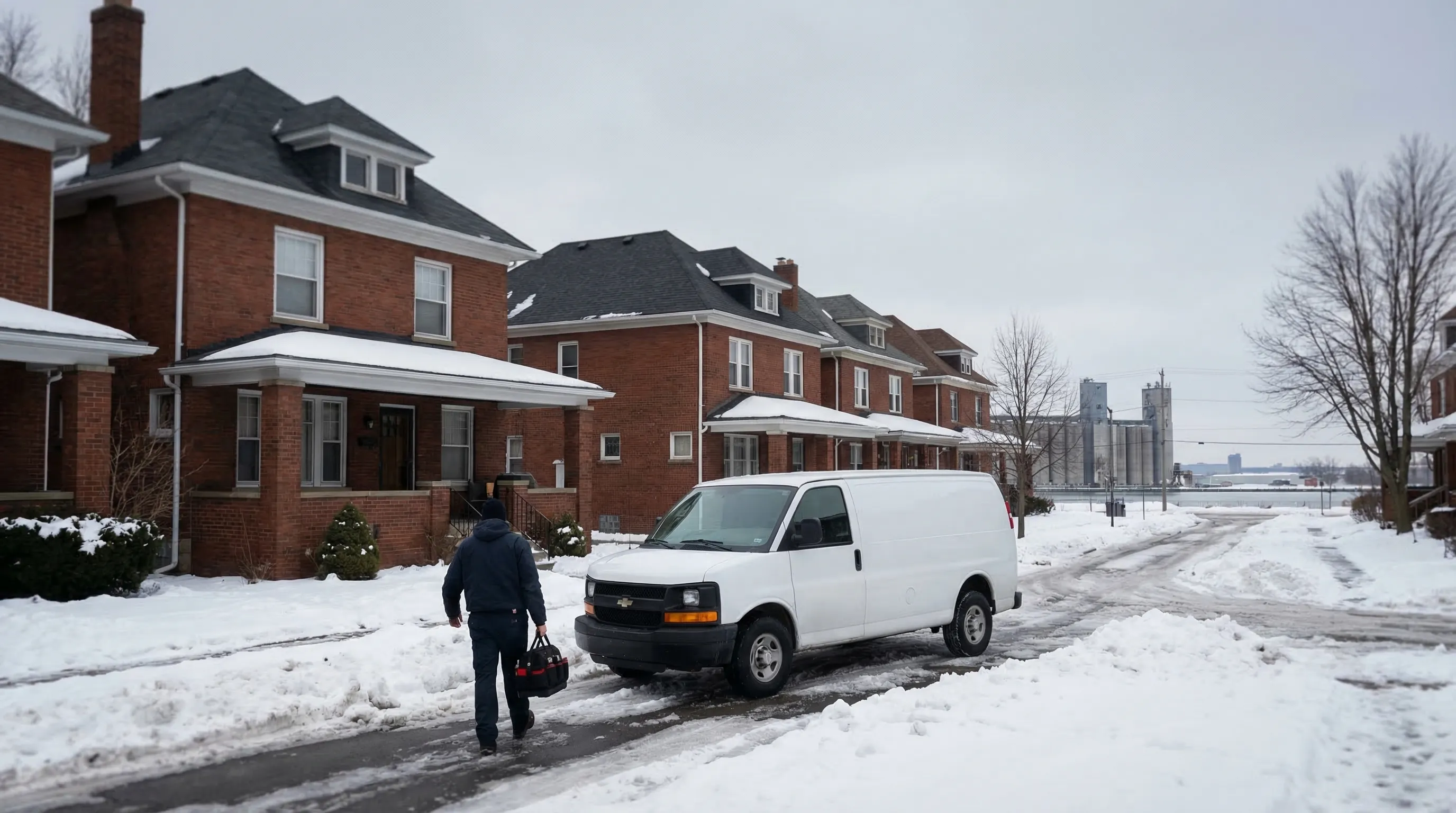
Buffalo receives 90–100+ inches of lake-effect snow per year from Lake Erie — one of the highest snowfall totals of any major US city. January average lows hit 17–20°F, with deep-freeze events in January and February pushing wind chills to -15°F or colder. Furnace failures during these events aren't just inconvenient — they're dangerous, and homeowners call within minutes. Conversely, July average highs reach 82–84°F with heat index values regularly touching 88–92°F, generating genuine AC emergency demand across the same neighborhoods. No other major metro runs this kind of HVAC demand pressure year-round at this intensity.
The competitive field reflects that demand. Expertise.com reviewed 81 Buffalo HVAC companies, curated 56, and listed 20 top picks — a meaningful filter but still a crowded market. Legacy brands dominate the awareness layer: Armor Heating & Cooling (est. 1958, 60+ years), O'Donnell Heating & Cooling (est. 1961), and Belknap Heating & Cooling (est. 1967) carry brand recognition built over decades in Western New York. Franchise operations like Sunbeam Service Experts add corporate marketing budgets. Multi-service companies like Cellino Plumbing & HVAC bundle HVAC with adjacent services to increase touchpoints per customer.
Where Generic HVAC Campaigns Break Down
Most Buffalo HVAC campaigns fail for the same reasons. They target broad seasonal keywords ("air conditioning Buffalo," "heating company Buffalo") while legacy brands absorb brand-aware searches with decades of reputation equity. They run the same copy in February as in July. And critically, they ignore the most uniquely Buffalo PPC opportunity: the boiler and radiator replacement market. Pre-1939 homes overwhelmingly use steam or hot-water radiator systems — cast iron boilers burning gas or oil, original 1920s and 1930s infrastructure still heating homes in Elmwood Village, North Buffalo, and South Buffalo. These systems are not merely aging; many are physically obsolete, discontinued in their parts availability, and running on the R-22 refrigerant phased out of US manufacturing in 2020.
Competitors from newer markets — even within New York State — don't build campaigns around boiler expertise because their housing stock doesn't demand it. In Buffalo, boiler repair and replacement is a primary search intent with lower competition, higher close rates, and average job values that far exceed furnace tune-up work. Campaigns targeting "boiler repair Buffalo NY," "steam boiler replacement Buffalo," and "old boiler conversion Buffalo" hit a buyer segment that's already decided to spend — the only question is which company shows up first.
R-22 phaseout creates an additional evergreen campaign angle. Any homeowner with a pre-2010 central AC unit is running a system that relies on a refrigerant now illegal to manufacture in the US. Supply is shrinking. Recharge costs are rising. These homeowners don't know it yet — but "Your AC Refrigerant Is Being Discontinued: Here's What Buffalo Homeowners Need to Know" is a high-conversion education-to-purchase bridge that virtually no competitor is running.
HVAC PPC in Buffalo requires three structurally distinct campaign tracks — each targeting a different demand moment, keyword class, and conversion timeline.
Campaign Track 1: Emergency Intent (Year-Round Priority)
Emergency searches are Buffalo's highest-converting HVAC intent. These searches happen in real time, convert at 7–10%, and require same-day response promises in headline position 1. Structure emergency campaigns with tightly themed ad groups:
- Furnace emergency keywords: "emergency furnace repair Buffalo NY," "furnace not working Buffalo," "no heat Buffalo" — CPC range $10–$18 in peak winter. Highest volume: January–February lake-effect cold snaps.
- AC emergency keywords: "AC not cooling Buffalo NY," "emergency AC repair Buffalo," "air conditioning broke Buffalo" — CPC range $8–$14. Peak: July–August heat index events.
- Boiler emergency keywords: "boiler repair Buffalo NY," "steam heat not working Buffalo," "boiler no heat Buffalo" — CPC range $9–$16. Lower competition than furnace terms; higher average job value.
Emergency campaigns must include call extensions with business hours clearly specified. Buffalo homeowners in a freeze event are calling within seconds of clicking — if the phone isn't answered or the extension shows "closed," the click is wasted. Allocate 30–40% of total monthly budget to emergency intent year-round.
Campaign Track 2: Replacement Intent (Seasonal Peaks)
Replacement searches are higher-ticket and longer-funnel. These are homeowners who've had a system fail, gotten a repair estimate, and decided replacement makes more sense. Target replacement intent campaigns during shoulder seasons:
- Furnace/boiler replacement: "furnace replacement Buffalo NY," "new boiler Buffalo," "old furnace replacement Buffalo" — CPC range $12–$22. Peak: October–November (pre-winter) and March–April (post-winter evaluation).
- AC installation/replacement: "AC installation Buffalo NY," "central air installation Buffalo," "replace AC unit Buffalo" — CPC range $10–$18. Peak: April–June pre-season.
- R-22 system upgrade: "R-22 refrigerant phase out Buffalo," "old AC refrigerant replacement Buffalo" — CPC range $6–$12. Low competition, evergreen. High average job value.
Campaign Track 3: Maintenance & Pre-Season (Quality Score Builders)
- Tune-up/maintenance: "furnace tune-up Buffalo NY," "AC maintenance Buffalo," "HVAC inspection Buffalo" — CPC range $6–$10. Low urgency, lower conversion, but builds service relationships.
- Neighborhood-specific keywords: "HVAC Elmwood Village," "furnace repair North Buffalo," "Cheektowaga HVAC contractor" — CPC range $5–$9. Higher quality scores, lower competition than metro-wide terms.
Bidding strategy: Use Target CPA bidding for emergency campaigns once you have 30+ conversions. Use Manual CPC for replacement and maintenance campaigns while building conversion data. Increase bids by 20–35% in January–February and June–August to capture peak demand without missing the top position when competitors are most aggressive.
Google Partner Agency
We're a certified Google Partner Agency, which means we don’t guess — we optimize withGoogle’s full toolkit and insider support.
Your campaigns get pro-level execution, backed by real expertise (not theory).

Buffalo's HVAC market has a structural insight most contractors — and their agencies — miss entirely: this city generates dual-season emergency demand at equivalent intensity, making it one of the only US markets where HVAC PPC is efficient year-round rather than concentrated in two seasonal windows.
The Dual-Season Efficiency Advantage
In Sun Belt markets (Phoenix, Dallas, Tampa), HVAC PPC is almost entirely a summer AC play. In northern Midwest markets (Chicago, Detroit), winter furnace demand dominates. Buffalo uniquely runs both: brutal lake-effect winters generate furnace and boiler emergencies from November through March, then hot, humid Great Lakes summers generate AC emergencies from June through August. The "dead months" of April, May, September, and October are not dead at all — they're pre-season replacement windows where homeowners, prompted by the recent season's close calls, make planned replacements before the next extreme. In practice, a well-structured Buffalo HVAC PPC account runs profitably in every month of the year.
The financial implications are significant. A Dallas HVAC contractor running PPC gets efficient use of ad spend for roughly 4–5 months. A Buffalo HVAC contractor running PPC efficiently extracts value from 10–12 months. At equivalent CPL ($110–$145), that's more than double the annual lead volume from the same monthly budget.
The Boiler Market: Buffalo's Hidden PPC Category
Steam and hot-water radiator systems are not niche in Buffalo — they're the majority of pre-WWII home heating. 60.9% of Buffalo homes predate 1939, and most were built with cast iron radiator systems that, when original, are now 80–90 years old. These systems require specialized technicians. Most regional HVAC companies don't stock parts for original boiler systems or offer the conversion expertise to transition homes from steam heat to forced air or modern hydronic systems.
This creates a market gap: homeowners searching "old boiler repair Buffalo" or "steam radiator not working" are actively filtered to contractors with genuine boiler expertise. The keyword competition is lower (fewer contractors bid on these terms), the conversion rate is higher (intent is already high), and the average job value is substantially above furnace repair — boiler replacements average $4,500–$9,000 installed versus $2,000–$4,000 for a comparable forced-air furnace. A dedicated boiler campaign is one of the highest-ROI investments in Buffalo HVAC PPC.
Seasonal Budget Calibration
- January–February: Furnace/boiler emergency surge. Increase budgets +30–35%. Highest CVR of the year.
- April–May: Pre-season AC tune-up and replacement. Moderate CPCs. Build quality score ahead of summer.
- June–August: AC emergency peak. Increase budgets +25–30%. Second-highest CVR window.
- October–November: Pre-winter furnace replacement surge. Moderate CPCs, high average job value.
HVAC PPC in Buffalo is a year-round campaign — but only if it's built by someone who knows the market. The boiler segment, the R-22 phaseout angle, the dual-season budget calibration, and the neighborhood-level keyword targeting don't happen by default. They require a PPC strategy designed for a city where 60% of the homes were built before World War II and winter temperatures can hit dangerous lows within hours.
At MB Adv Agency, we build Buffalo-specific HVAC campaigns that separate emergency intent from replacement intent, target boiler and radiator searches that generic agencies ignore, and calibrate budgets month-by-month to the actual demand cycle — not a national template. Our clients don't run the same campaign in February as they do in May. They run campaigns designed for the moment the phone rings.
The result is more leads per dollar, higher close rates on emergency calls, and a pipeline that doesn't dry up during the months competitors go quiet.
→ See how MB Adv Agency manages HVAC PPC campaigns
→ View our pricing for Buffalo HVAC contractors
→ Buffalo PPC services — local landing page

Frequently Asked Questions
How much should a Buffalo HVAC company spend on Google Ads per month?
Most Buffalo HVAC SMBs see strong ROI starting at $2,000–$3,500 per month — lower than comparable markets in larger metros because Buffalo's CPCs run slightly below the national home services average. At $2,000/month with an average CPC of $10 and a 7% CVR, expect 14–20 leads per month in off-peak periods. In January–February or June–August, the same budget generates fewer clicks (CPCs spike 20–35%) but higher-converting leads — the homeowner whose furnace failed at 4 AM in a lake-effect storm isn't comparison shopping.
The more important variable is budget allocation by season. A flat $2,000/month budget performs poorly if it doesn't flex upward during peak emergency months. The optimal structure: set a floor of $1,800/month for maintenance campaigns in shoulder seasons, escalate to $2,500–$3,500 in January–February and June–August. The incremental spend during peak periods generates disproportionate returns — emergency leads convert at 2–3× the rate of non-emergency intent.
For contractors specializing in boiler work, the economics are even more favorable. Boiler replacement keywords have lower CPCs ($9–$16 vs. $10–$18 for furnace terms) and higher average job values ($4,500–$9,000 per replacement). A $500/month boiler-specific campaign can generate 2–3 replacement jobs per month — each worth more than the entire month's ad spend.
What keywords drive the best ROI for HVAC contractors in Buffalo, NY?
The highest-ROI keywords in Buffalo HVAC PPC are emergency-intent terms with local qualifiers. "Emergency HVAC Buffalo NY," "furnace not working Buffalo," and "boiler repair Buffalo NY" consistently deliver the shortest lead-to-booking cycle and the highest close rates. These searches happen in real-time distress — conversion happens the moment the contractor answers the phone with availability. CPC ranges: $10–$18 for furnace emergency terms, $9–$16 for boiler-specific keywords.
Second tier: replacement intent keywords. "Furnace replacement Buffalo NY," "new AC unit Buffalo," "boiler replacement Western NY" convert more slowly (homeowner gets 2–3 estimates) but generate higher average job values. These keywords perform best in October–November (pre-winter replacement) and April–May (pre-summer replacement). CPC range: $12–$22 for furnace/boiler replacement; $10–$18 for AC installation.
Seasonally, R-22 refrigerant keywords are underexploited. Any homeowner with a pre-2010 AC system is running discontinued refrigerant — but most don't know it yet. "R-22 refrigerant phase out Buffalo" and "old AC refrigerant replacement" have low competition, low CPCs ($6–$12), and capture a segment already facing a mandatory upgrade. These aren't emergency searches, but they generate high-value replacement jobs from informed buyers. Running a small ($200–$400/month) always-on R-22 campaign builds a consistent pipeline of planned replacement inquiries that don't compete with emergency budget during peak season.