Start
$590$990/month
1 platform · Google or MetaGoogle + Meta- Ad spend
- up to $3,000
- New creativesmade by us
- Google + Meta only4 a month
 By Matteo Braghetta, Founder · Google Ads
Expertise.com reviewed 175 plumbing companies in Buffalo and selected just 3 as top picks — a 1.7% selection rate that exposes one of the most fragmented service markets in Western New York. For a well-run plumbing SMB, that gap between volume and quality is the PPC opportunity: a city where 60.9% of homes predate 1939, where pipes routinely freeze at −15°F wind chills, and where Lake Erie hard water silently destroys water heaters — and where almost no competitor is running campaigns built for any of it.
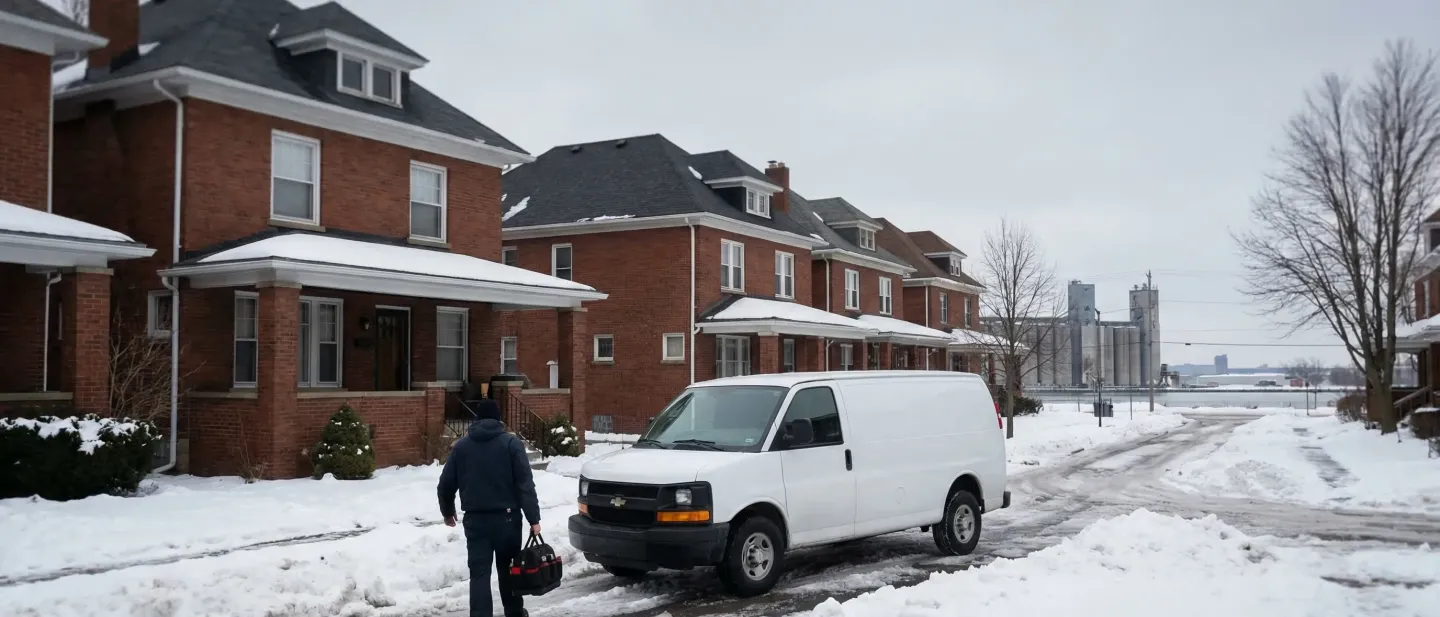
In Buffalo, NY, people search for plumbing services about 9,020 times a month on Google; a top-of-page click costs $27–$110, and demand peaks in July.
Google Keyword Planner · Oct 2025 – Sep 2026
| Search | Monthly searches | Top-of-page CPC |
|---|---|---|
| plumber | 2,400 | $30–$130 |
| plumber near me | 2,400 | $36–$130 |
| water heater repair | 1,000 | — |
| water heater installation | 720 | $18–$65 |
| emergency plumber | 590 | $25–$81 |
| drain cleaning | 590 | $2–$55 |
| plumbing services | 210 | $14–$100 |
| plumbing company | 170 | $25–$130 |
| toilet repair | 140 | — |
| tankless water heater installation | 110 | — |
US: $81
Google Keyword Planner · Oct 2025 – Sep 2026
Source: Google Keyword Planner (Google Ads), Google Search, English, Buffalo, NY, Oct 2025 – Sep 2026. Volumes are Google's monthly averages; CPC is the top-of-page bid range, weighted by search volume. How we collect these figures.
Plumbing PPC in Buffalo fails for a specific reason most campaigns never diagnose: they treat Buffalo like a generic mid-size market and miss the three structural demand engines that define this city. 60.9% of Buffalo homes predate 1939 — placing them at or beyond the useful life threshold for original galvanized steel pipes, clay sewer lines, and cast iron drain systems. The infrastructure isn't just aging; much of it is already past failure-expected service life. That creates constant baseline demand that doesn't exist in Sun Belt markets or newer housing stock cities.
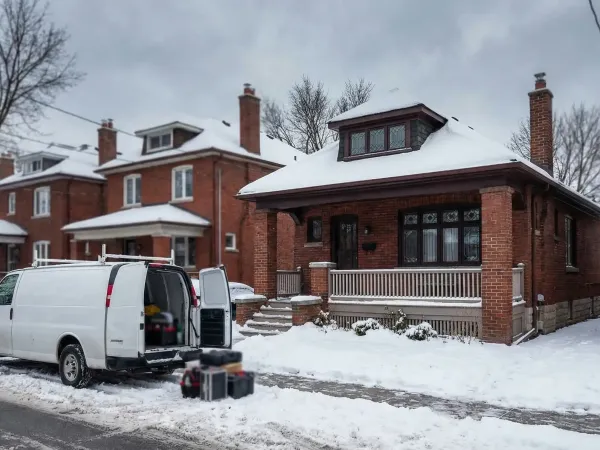
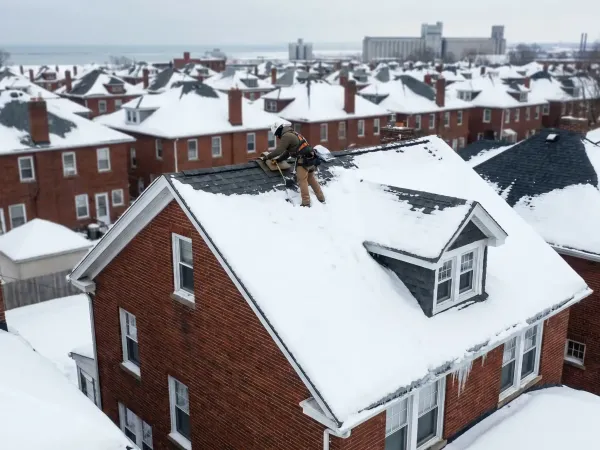
Buffalo's January and February conditions are genuinely dangerous for residential plumbing. Wind chill values regularly hit −10°F to −15°F during lake-effect cold snap events — conditions where water in inadequately insulated pipes freezes and bursts within hours. The city averages 90–100+ inches of lake-effect snow annually, and the narrow, dense residential streets of North Buffalo, South Buffalo, Elmwood Village, and Kenmore mean older homes with minimal insulation are exposed to extreme cold on multiple exterior walls simultaneously. Pipe freeze and burst events are not occasional emergencies in Buffalo — they are recurring annual events that happen across hundreds of homes in the same 48-hour window.
The competitive landscape during these events is thin. Roy's Plumbing, Heating & Cooling (est. 1974, Tonawanda) holds the strongest legacy position in Western NY as a multi-service operator, but their capacity during peak freeze events is limited like any physical service company. Jon the Plumber (1572 Main Street, Buffalo) holds 24/7 emergency positioning in the core city. Simon Plumbing has excellent review quality (5.0 Google) but lower volume reach. Beyond these three, the market is genuinely unstructured — 175 reviewed plumbers and only 3 verified quality operators. Campaigns targeting "pipe burst Buffalo NY" and "emergency plumber Buffalo NY" at 2 AM during a cold snap face almost no competition from well-funded, conversion-optimized campaigns.
Most Buffalo plumbing campaigns target the obvious keywords — "plumber near me Buffalo," "plumbing services Buffalo NY" — and run year-round at flat budgets. They miss three high-value campaign angles that are uniquely Buffalo:
The result is a market where the three largest quality-verified competitors are running campaigns that do not actively exploit these angles — leaving emergency pipe freeze, lead replacement, and hard water education campaigns essentially uncontested for any plumber willing to build them.
Buffalo plumbing PPC requires three campaign tracks that map to the city's three primary demand moments: emergency intent, scheduled replacement, and preventive awareness. Each requires distinct keyword clusters, ad copy, and budget timing.
Emergency plumbing in Buffalo converts at 6–9% — among the highest rates in home services. These searches happen in real time, often late at night or during weather events, and require immediate-response copy in headline position 1. Structure emergency campaigns around:
Emergency campaigns must display call extensions with 24/7 availability prominently. A campaign promising "Emergency Plumber — We Answer at 2 AM" that routes to voicemail loses the job. Schedule call extensions correctly and ensure live answering during peak freeze event windows (January–February overnight hours).
Allocate 40–50% of monthly budget to emergency intent campaigns year-round. During January–February lake-effect freeze events, shift emergency campaign bids up 30–40% — these are the highest-converting windows in the annual calendar. Use Target CPA bidding for replacement campaigns once sufficient conversion data exists (minimum 30 conversions/month). Enable weather-based bid adjustments if available: increase bids 20–30% when temperature forecast drops below 15°F.
Three structural demand drivers make Buffalo's plumbing market unlike most comparable mid-size US cities — and none of them are seasonal in the traditional sense. They're permanent infrastructure characteristics that create recurring demand year after year.
60.9% of Buffalo homes predate 1939 (NeighborhoodScout 2025) — placing Buffalo in a category of housing stock concentration that only a handful of Northeastern cities match. Original galvanized steel pipes from 1920s–1940s construction typically last 50–70 years under normal conditions. Under Buffalo conditions — freeze cycles, hard water mineral load, and the mechanical stress of a hundred winters — many of these systems are already past expected failure life. The demand isn't "will these pipes fail?" It's "when this pipe fails, which plumber shows up first?"
For PPC, this is a structural advantage. Unlike markets dominated by new construction (where plumbing demand is installation-focused), Buffalo's replacement and emergency demand is driven by inevitable failure curves in old stock. Campaigns don't need to convince homeowners to upgrade — they need to be visible when the upgrade becomes unavoidable. 43% homeownership rate in Buffalo means over 100,000 owner-occupied housing units, the majority in pre-WWII stock, making decisions about plumbing repairs and replacements.
Buffalo's municipal water supply draws from Lake Erie at hardness levels of 120–170 mg/L calcium carbonate — classified as "hard" to "very hard" on standard water quality scales. The mechanical consequence is straightforward: mineral scale deposits build up inside tank water heaters at rates 30–50% higher than in soft-water markets. A standard 40-gallon tank water heater rated for 10–12 years in a soft-water city typically lasts 7–9 years in Buffalo. A 50-gallon unit rated for 12–15 years may need replacement at 9–11. Buffalo homeowners are replacing water heaters earlier than they expect to and faster than national average data would suggest.
This creates a genuine PPC angle that competitors aren't running. Most plumbing campaigns target the symptom ("no hot water") without addressing the cause ("Buffalo's hard water accelerates your water heater failure"). An education-first campaign — landing page explaining hard water impact, solution as tankless water heater installation — converts at a higher rate because it creates urgency the homeowner didn't already have. Tankless water heater installation averages $1,800–$3,500 in the Buffalo market — a higher-ticket transaction that justifies meaningful PPC investment per job.
The Expertise.com data tells a specific story: 175 Buffalo plumbers reviewed, 106 curated for basic standards, and only 3 selected as top picks. That's a 1.7% selection rate — the lowest of any home service category in Buffalo and among the lowest of any Expertise.com review for a comparable city. The practical implication: the vast majority of active Buffalo plumbers lack the verified review depth, licensing documentation, and service quality indicators that third-party directories require. For a plumbing business with genuine quality operations and Google review investment, PPC creates immediate first-page visibility in a market where most competitors can't pass basic quality verification. The competitive advantage isn't just bidding — it's being the credible option in a market of unverifiable alternatives.
Buffalo plumbing PPC isn't a campaign you can run from a national template. The pipe freeze calendar, the Lake Erie hard water profile, the lead pipe replacement angle, the pre-WWII housing stock context — these are Western New York specifics that require campaigns built with local market knowledge, not generic home services playbooks.
At MB Adv Agency, we build PPC campaigns that convert Buffalo plumbing calls — not awareness ads, not general brand campaigns, but intent-based structures that capture homeowners in the moment they're searching for emergency help or planning a replacement. We know when Buffalo pipes freeze. We know what "boiler street" in North Buffalo means for plumbing emergency density. And we build campaign timing, bid adjustments, and copy that reflects it.
Our Google Ads management for home services clients covers full campaign architecture, ongoing bid management, and conversion tracking — so you're measuring real booked jobs, not just clicks. Management is a fixed monthly fee set by your ad spend, with the tracking set up first: see the plans and prices.
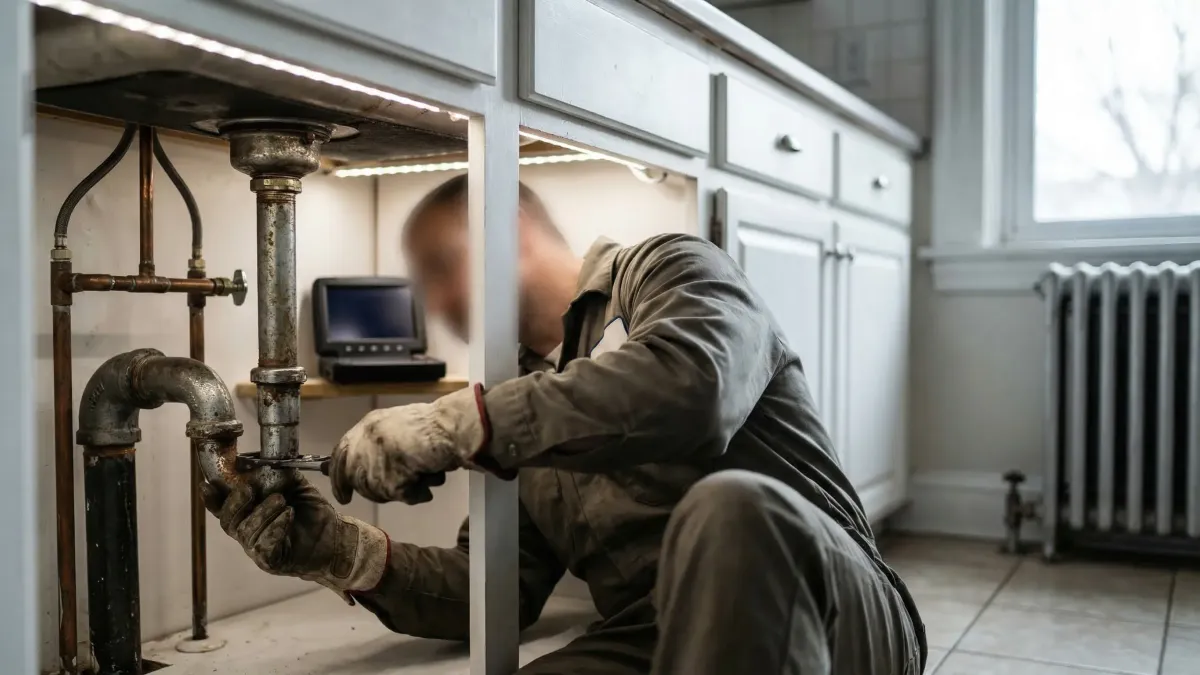
The effective starter range for Buffalo plumbing PPC is $1,500–$2,500/month in ad spend, plus management. That budget gives you meaningful emergency intent coverage (pipe freeze, burst pipe, sewer backup) plus a baseline replacement campaign (water heater, lead pipe). Here's how to think about the math: Buffalo emergency plumbing CPCs run $25–$81, converting at 6–9%. At 7.5% CVR, at a typical click of about $53 you're generating roughly 1 lead per $710 spent. A $1,500/month budget generates approximately 2 booked calls per month at those CPCs.
Where plumbers underinvest: January and February. These are Buffalo's highest-converting months — pipe freeze events during lake-effect cold snaps compress search volume into 24–48 hour windows with near-zero competitor coverage. A $500 emergency budget increase during freeze event windows (weather-triggered bid increases, extended hours, call-only campaigns) routinely captures 5–8 additional emergency jobs at CPLs that fall well below normal rates because competition evaporates when it matters most.
The upper range — $4,000–$6,000/month — applies to plumbers running full-service campaigns across emergency, replacement, lead pipe, and hard water education angles simultaneously. At that level, expected call volume runs 30–50+ leads/month. Start at the $1,500 floor, establish your emergency campaigns, and scale based on measured CPL once conversion data exists.
The highest-performing keyword clusters for Buffalo plumbing PPC map directly to the city's structural demand drivers — not generic plumbing intent. Emergency keywords convert first: "pipe burst Buffalo NY," "emergency plumber Buffalo," "frozen pipe repair Buffalo NY" run 6–9% CVR and generate calls within minutes of the search. CPCs for "emergency plumber" run $25–$81 — a premium for same-day emergency intent. These are the anchor of any Buffalo plumbing campaign.
Replacement and installation keywords have longer funnels but higher job values: "water heater replacement Buffalo NY", "tankless water heater Buffalo", "lead pipe replacement Buffalo", "whole home repiping Buffalo NY". These searches represent homeowners who've decided to spend — they need a credible contractor to show up with a clear offer. Landing pages that address the Buffalo-specific context (hard water scale, pre-war pipe age) outperform generic "we replace water heaters" pages.
Long-tail local keywords round out the strategy: "plumber [neighborhood] Buffalo" — Elmwood Village, South Buffalo, North Buffalo, Kenmore, Tonawanda. These hyper-local terms carry higher conversion intent because the searcher has already decided they want a local provider. Map these to location-specific landing pages or at minimum location-mentioned ad copy. Seasonally, shift budget emphasis to pipe freeze terms in January–February and water heater replacement terms in March–May post-freeze assessment season.
How to read this Cost per click and monthly searches are measured with Google Keyword Planner (see above). Cost per lead, conversion rate, budget and leads are estimates compiled from public benchmarks such as WordStream, not measurements.
Sources WordStream 2025 Home Services national benchmarks + Buffalo mid-size metro calibration; Expertise.com March 2026 competitive data
$590$990/month
1 platform · Google or MetaGoogle + Meta$790$1,290/month
1 platform · Google or MetaGoogle + Meta$1,140$1,940/month
1 platform · Google or MetaGoogle + MetaChatGPT Ads: a separate pilot, $250/month, added to a plan. See the pilot →

Matteo Braghetta founded MB Adv and runs its Google Ads accounts. He takes the first call with every new client, reads the accounts every week and writes the agency’s guides.
The other half of his job is measurement: GA4, Consent Mode and server-side tracking, so the platforms learn from real sales.
MB Adv is a Google Partner agency managing about $4.4M a year in ad spend for clients in the US, the UK and Europe.
Managed on numbers you can check.
Plans for the US