HVAC PPC Charleston, SC
Charleston's coastal climate is merciless on HVAC systems — daily highs above 90°F, humidity locked at 75-85%, and salt air that corrodes condenser coils faster than in any inland market. HVAC companies here don't compete for seasonal work; they compete year-round for a customer base that cannot function without reliable cooling and heating. <!-- stats-article-link --> <p><em>See how this city's Hvac PPC costs compare nationally in our <a href="/resources/hvac-ppc-statistics">Hvac PPC Statistics</a> report, featuring data from 40+ US cities.</em></p>
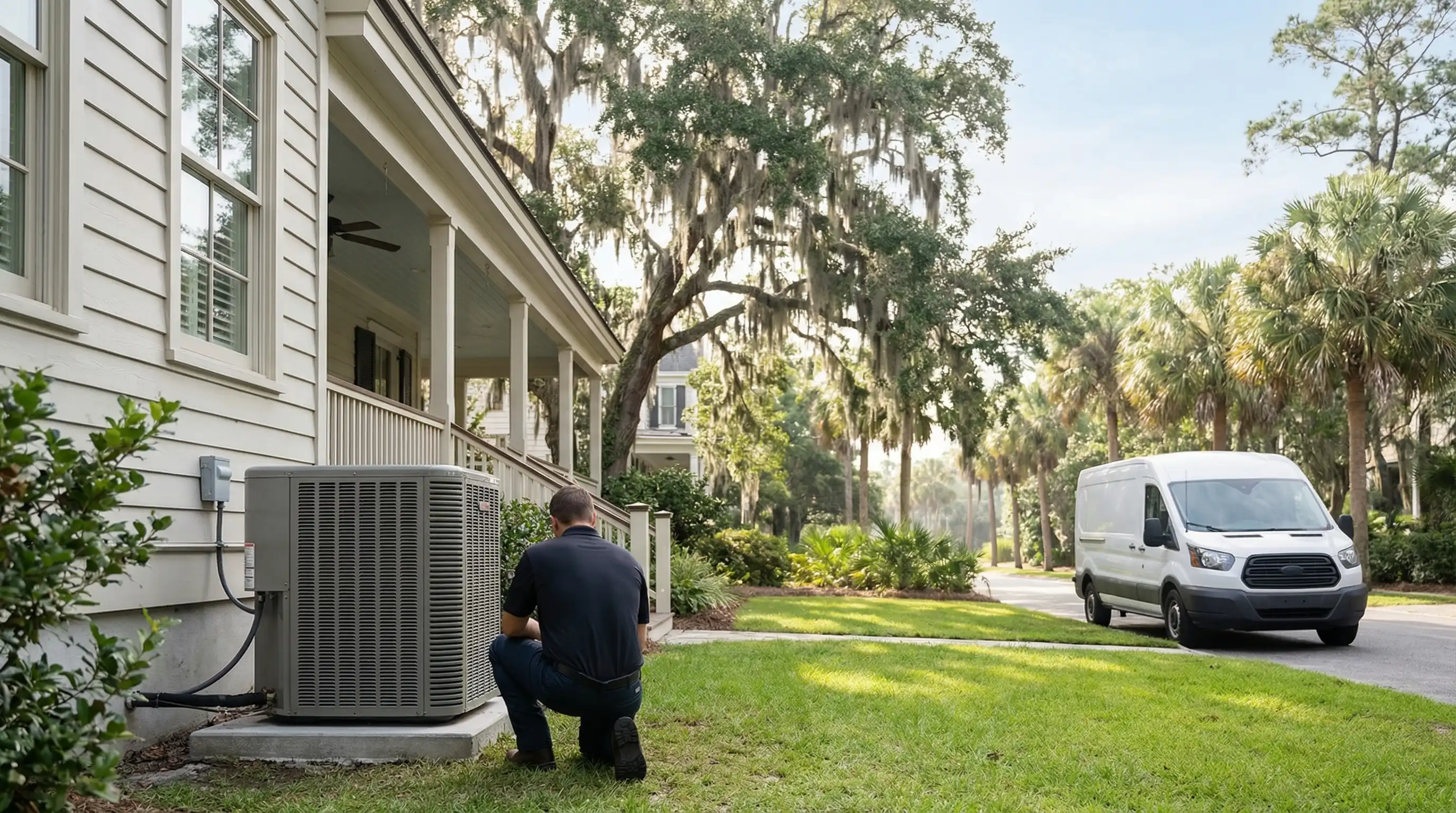
Running HVAC PPC in Charleston is not like running it in Charlotte or Atlanta. The coastal climate creates a fundamentally different demand curve — and a fundamentally different competitive landscape. Most HVAC contractors in this market understand the heat. Far fewer understand how to win in paid search when everyone is running the same ads at the same time.
The Year-Round Demand Problem
Charleston's HVAC market has no true off-season. Average daily highs exceed 90°F from June through September, with relative humidity consistently at 75-85% — but that's only half the picture. Spring maintenance demand ramps up in March. Fall shoulder-season tune-ups keep the phones busy through November. Mild coastal winters still drive heat pump maintenance and emergency heating calls. What looks like a seasonal market from the outside is actually a year-round service economy — which means your PPC budget needs to be on 12 months a year, not just during summer spikes.
The competitive pressure reflects this reality. National private-equity-backed brands like ARS / Rescue Rooter and One Hour Air Conditioning & Heating maintain consistent ad spend year-round. Regional operators — Carolina Cool, Total Comfort Cooling & Heating, Smoak's Comfort Control, and Air Comfort Solutions — are well-established with strong local brand recognition. Independent HVAC companies with 5-15 technicians are entering the PPC arena later and fighting for the same keywords these operators have been buying for years.
Salt Air, Corrosion, and the Replacement Cycle
Charleston's coastal geography creates an HVAC failure pattern that doesn't exist 50 miles inland: salt air corrosion. Condenser coils, electrical components, and refrigerant lines on homes within two to five miles of the coast degrade significantly faster than the manufacturer's rated lifespan suggests. This means the replacement cycle in coastal zip codes (29401, 29403, 29405, Sullivan's Island, Isle of Palms, Folly Beach) runs 10-13 years versus the national 15-20 year average. HVAC companies that understand and speak to this reality in their ad copy convert better — homeowners who've already had a system fail prematurely are primed for this message.
The challenge in PPC is that generic ad copy fails to capture this specificity. "Fast AC repair" works everywhere. "Coastal-ready HVAC systems built for Charleston's salt air" works here, and only here. Companies running templated national ad copy consistently underperform their local-messaging competitors in CTR and post-click conversion. That gap is where the opportunity lives.
Average CPCs in the Charleston HVAC market run $10-$14 — above the national benchmark of $9.68 — driven by the combination of strong demand, the presence of national competitors, and a high-income consumer base ($92,414 median household income) that spends premium dollars on quality HVAC service. At those CPCs with a 6-8% conversion rate, the CPL math lands at $150-$200 — competitive for a market where a full system replacement runs $6,500-$14,000 and a service agreement is worth $300-$600 per year in recurring revenue.
The other challenge: emergency-intent searches spike dramatically during heat events. When a system fails at 2 PM on a July afternoon with a heat index of 105°F, the homeowner is not comparison shopping. They are clicking the first ad that says "available now." HVAC companies without call extensions, "same-day service" copy, and responsive landing pages lose those calls to competitors who do — and those are the highest-converting, highest-value calls of the year.
Winning HVAC PPC in Charleston requires a campaign structure built around three distinct demand types: emergency response, seasonal maintenance, and new-install or system replacement. Each has different keyword intent, different bid requirements, and different landing page needs. Running them together in a single campaign guarantees mediocre results across all three.
Campaign Structure: Three Tracks
The highest-performing Charleston HVAC accounts separate campaigns by intent tier:
- Emergency/Repair Intent: "AC not cooling," "AC broke," "HVAC repair emergency," "no air conditioning Charleston SC" — these keywords convert at 8-12% and justify aggressive bids of $14-$20 CPC. Use call-only campaigns or responsive search ads with call extensions. Landing pages need a phone number above the fold and a single CTA. No pricing pages, no service menus.
- Maintenance/Tune-Up Intent: "AC tune up Charleston SC," "HVAC service contract," "air conditioning maintenance," "annual HVAC inspection" — CPCs run $8-$12 with CVR of 5-7%. These campaigns feed your service agreement pipeline, which is where long-term revenue lives. Emphasize the annual contract value: "One visit pays for itself the first time we catch a problem."
- Replacement/New Install Intent: "AC replacement cost Charleston SC," "new HVAC system Charleston," "heat pump installation," "air conditioning unit cost" — CPCs range $10-$16 with CVR of 4-6%. These are your highest-ticket conversions. Landing pages should lead with financing options, rebate availability, and brand-specific system benefits.
Keyword Groups and CPC Ranges
- Emergency repair keywords: "AC repair Charleston SC" ($12-$18), "HVAC emergency Charleston" ($14-$20), "air conditioning repair North Charleston" ($10-$15), "AC not working Charleston" ($12-$18)
- Maintenance keywords: "AC tune up Charleston SC" ($8-$11), "HVAC service Charleston SC" ($9-$13), "furnace maintenance Charleston" ($7-$10), "air handler service Charleston" ($8-$12)
- Replacement keywords: "air conditioning replacement Charleston SC" ($11-$16), "new AC unit Charleston" ($10-$15), "heat pump installation Charleston SC" ($12-$17), "HVAC system cost Charleston" ($10-$14)
- Geographic modifiers: Add Mount Pleasant, Summerville, Goose Creek, North Charleston, James Island, and West Ashley as location modifiers. Each suburb has its own search volume and competitive dynamic — Summerville and Goose Creek are newer construction corridors where replacement demand is lower but new-install is high.
Bidding strategy: use Target CPA bidding once campaigns have 30+ conversions per month. Below that threshold, use Enhanced CPC with manual bids by intent tier. Do not use Maximize Conversions without a conversion value assigned — it will optimize for form fills from the lowest-CPC, lowest-value queries and ignore the emergency calls that drive real revenue.
Ad scheduling matters in this market. Clicks between 7 AM and 9 AM represent homeowners discovering a system failure in the morning. Clicks between 11 AM and 3 PM on weekdays during summer represent peak-heat emergency searches. Increase bids by 20-30% during these windows. Reduce bids by 40% between midnight and 6 AM unless you offer 24/7 emergency service.
One underused tactic in this market: Dominion Energy SC and Berkeley Electric Cooperative rebate campaigns. Both utilities offer cash rebates on qualifying ENERGY STAR HVAC equipment. HVAC companies that mention "SC utility rebates available" in their ad copy consistently see higher CTR and lower bounce rates — homeowners researching system replacement are actively looking for ways to reduce the upfront cost, and an ad that answers that question before they ask it earns outsized attention.
Google Partner Agency
We're a certified Google Partner Agency, which means we don’t guess — we optimize withGoogle’s full toolkit and insider support.
Your campaigns get pro-level execution, backed by real expertise (not theory).

Charleston's HVAC market has one dynamic that doesn't show up in any national benchmark report: the military rotation effect. Joint Base Charleston cycles 10,000-12,000 military personnel and their families through the metro annually on Permanent Change of Station (PCS) orders. A significant portion of these families are buying or renting homes — and those homes frequently need HVAC service from a provider they've never used before.
The PCS Cycle and HVAC Demand
The PCS season peaks April through August — which overlaps exactly with Charleston's peak cooling demand period. Newly arrived military families, unfamiliar with local contractors and unable to rely on word-of-mouth referrals from their home base, search for HVAC companies the same way they search for everything: Google. Military families who find an HVAC company during their first year in Charleston become 3-5 year customers — the average JBCHARLESTON tour of duty. That's multiple service visits, potential system replacements, and strong referral potential within the base housing and off-base rental communities.
HVAC companies that build trust with the military community — through TRICARE-adjacent language ("we serve military families"), mention of base-adjacent service areas (Ladson, Hanahan, Goose Creek), or explicit "military discount" offer copy — capture this segment at acquisition rates that compound across the PCS cycle. The competitor who got there first keeps the account for the length of the tour.
New Construction Corridor Opportunity
Berkeley County and Dorchester County are among the fastest-growing residential corridors in the Southeast. Master-planned communities like Carnes Crossroads (Goose Creek), Nexton (Summerville), and the Cane Bay Plantation development are adding thousands of new homes annually. These homes have new HVAC systems — but they also have builder-grade equipment on 5-7 year maintenance cycles and homeowners with no established contractor relationships.
PPC campaigns targeting zip codes in these corridors (29486, 29483, 29445) for "HVAC maintenance near me" and "air conditioning service" queries face 30-40% lower CPCs than Charleston peninsula campaigns. Homeowners here are younger (median age 32-35), own recently purchased homes, and have the HHI ($80K-$100K+ in Nexton and Carnes Crossroads) to pay for quality service agreements. The first contractor to build a relationship in these corridors wins a customer for the 15-20 year life of the system.
Seasonal budget allocation insight: Charleston HVAC data suggests that April and May represent the highest ROAS months of the year — not July. The reason: May searches for tune-ups and inspections convert at higher rates than July emergency calls because the homeowner is still in decision-making mode (not panic mode), the competition for emergency keywords hasn't fully ramped, and the service agreement sale is still achievable. Companies that front-load their budget in April-May and sustain it through September consistently outperform those who wait until the summer heat drives emergency volume.
The salt air corrosion dynamic also creates an opportunity in coastal zip codes that most HVAC marketers miss: proactive replacement campaigns targeting homes 10+ years old within 3 miles of the coast. A direct mail-PPC combination targeting these homeowners — "Your coastal home's HVAC is entering its high-risk window. Get a free assessment before it fails." — consistently generates replacement consultations at CPLs well below emergency repair campaigns.
Charleston's HVAC market rewards local expertise in ways that national brands can't replicate. Understanding the salt air corrosion curve, the JBCHARLESTON rotation calendar, and the specific performance demands of coastal humidity isn't something you learn from a national training manual — it's what separates contractors who build 20-year businesses here from those who cycle through the market in three.
At MB Adv Agency, we've built PPC campaigns for HVAC companies in coastal Southern markets — and the data is clear: generic campaigns lose to locally-informed campaigns every time. The companies that win in Charleston PPC are the ones whose ads speak the local language: coastal systems, utility rebates, military family discounts, Lowcountry heat. We build campaigns around that specificity from day one.
Our approach for Charleston HVAC:
- Three-track campaign structure (emergency / maintenance / replacement) with intent-matched landing pages
- Seasonal bid scheduling calibrated to Charleston's demand curve — not national averages
- Military-specific ad copy and targeting for JBCHARLESTON-adjacent zip codes
- Rebate-mention copy for Dominion Energy SC and Berkeley Electric eligible equipment campaigns
See how we structure HVAC lead generation campaigns at mbadv.agency/services/ppc-lead-generation-agency, or review our transparent pricing at mbadv.agency/ppc-pricing. The first call is a free strategy session — no pitch, just data.
Frequently Asked Questions
What does it cost to run Google Ads for an HVAC company in Charleston, SC?
Charleston HVAC PPC runs at $10-$14 average CPC, above the national HVAC average of $9.68. At a 6-8% conversion rate, expect a cost-per-lead of $150-$200 for a well-structured campaign. A starter budget of $2,500-$4,000 per month generates approximately 15-25 qualified leads monthly at the mid-range CPL.
Three factors push Charleston CPCs above the national average. First, strong demand driven by year-round coastal heat — Charleston competes for HVAC search volume in every month of the year, not just summer. Second, the presence of national competitors (ARS, One Hour) maintaining consistent spend keeps floor CPCs elevated. Third, Charleston's high median HHI ($92,414) means advertisers are willing to pay more per click because the average ticket is higher — full system replacements at $6,500-$14,000 make a $200 CPL look very efficient.
Budget allocation matters: front-load spend in April-May for pre-season maintenance campaigns, sustain through September for peak cooling demand, and maintain a reduced floor budget of $800-$1,200/month in October-March for winter maintenance and early spring planning. Companies that go dark in the shoulder seasons cede brand awareness to competitors who maintain presence — and lose the tune-up customer who would have called them in spring.
How long does it take for HVAC Google Ads to start generating leads in Charleston?
A well-structured Charleston HVAC campaign generates its first leads within 48-72 hours of launch. Google's smart bidding and audience signals move quickly in high-intent local service categories — HVAC is one of the fastest to produce results because the search intent is specific and the conversion action (phone call or form fill) is immediate.
However, the first 30-60 days are a learning and optimization period, not a steady-state. Initial CPLs typically run 20-35% above the eventual target as the algorithm optimizes for your specific conversion signals. During this window, the most important thing is tracking quality: call tracking installed, form submissions firing to Google Ads, and conversion values assigned so the algorithm knows which leads are valuable.
Seasonal timing affects launch results significantly. Launching in April or May — before peak summer demand — gives campaigns time to accumulate the 30+ conversions needed for smart bidding to engage properly, so they're running efficiently by the time July volume hits. A campaign launched in July cold is fighting on both fronts: building data while competing at peak CPCs. The practical recommendation: if you're planning to run HVAC PPC in Charleston, launch in March or April, accept a slightly higher CPL in the learning phase, and arrive at peak season with an optimized campaign that your competitors are only just starting to build.