Start
$590$990/month
1 platform · Google or MetaGoogle + Meta- Ad spend
- up to $3,000
- New creativesmade by us
- Google + Meta only4 a month
 By Matteo Braghetta, Founder · Google Ads
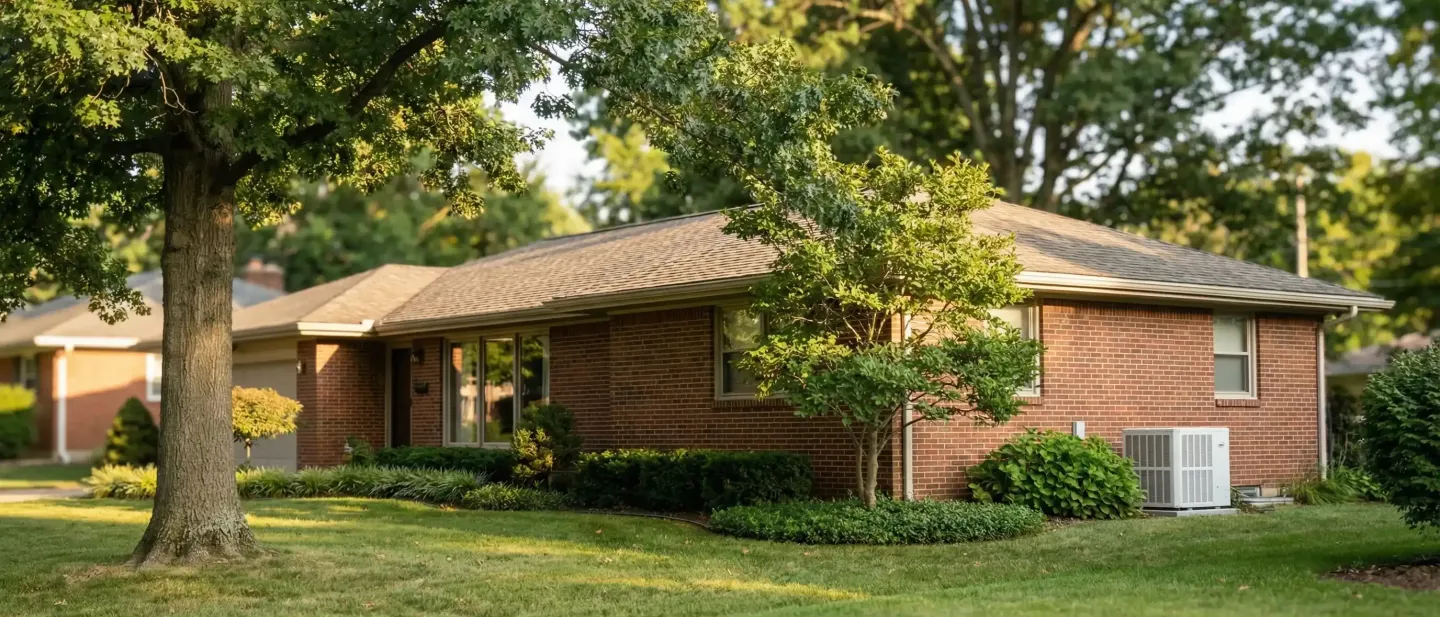
Evansville's median home was built in 1967 — aging HVAC systems meet a climate that pushes them to failure twice a year, with July highs hitting 90°F on the Ohio River and January lows dropping to 24°F. HVAC businesses that run structured Google Ads campaigns here operate in a market where digital competition is thin and the demand is relentless.
In the Evansville metro area, people search for HVAC services about 3,730 times a month on Google; a top-of-page click costs $6–$43, and demand peaks in July.
Search volumes for Evansville, IN alone are too thin to report; the figures are for the Evansville, IN,United States metro area.
Google Keyword Planner · Oct 2025 – Sep 2026
| Search | Monthly searches | Top-of-page CPC |
|---|---|---|
| ac repair | 720 | $7–$54 |
| air conditioning repair | 720 | $7–$54 |
| furnace repair | 590 | — |
| air conditioner repair near me | 390 | $6–$40 |
| hvac near me | 390 | $6–$31 |
| hvac repair | 110 | $4–$26 |
| duct cleaning | 110 | $3–$15 |
| hvac contractor | 90 | — |
| heat pump repair | 90 | — |
| hvac maintenance | 90 | $2–$15 |
US: $83
Google Keyword Planner · Oct 2025 – Sep 2026
Source: Google Keyword Planner (Google Ads), Google Search, English, the Evansville metro area, Oct 2025 – Sep 2026. Volumes are Google's monthly averages; CPC is the top-of-page bid range, weighted by search volume. How we collect these figures.
Evansville's climate punishes HVAC systems twice a year, and most local HVAC advertisers structure their Google Ads campaigns to capitalize on only one of those moments. July highs average 90°F with the thick humidity that rolls off the Ohio River, and January lows drop to 24°F — conditions that push aging systems past their breaking point in both directions. The city's older housing stock makes this worse: the median Evansville home was built around 1967, meaning most residential HVAC systems are either approaching end-of-life or were recently replaced. Both groups are searching. The problem isn't demand — it's that most campaigns are built around the emergency call alone, missing the maintenance, replacement, and financing searches that run year-round.
The typical Evansville HVAC campaign collapses its entire strategy into emergency replacement keywords — "AC repair Evansville" and "emergency furnace repair" — then wonders why CPCs spike in peak season while leads are still inconsistent. Emergency keywords are real and necessary, but they represent only one of three distinct buyer journeys. Seasonal tune-up customers search in April and September. Replacement shoppers research for weeks before calling. Maintenance plan buyers are triggered by a single email or a well-timed ad. Running all three buyer types through the same ad group produces click costs that don't reflect actual intent, quality scores that don't reflect actual relevance, and conversion rates that mask where the real profitability lies.
Evansville's HVAC paid search landscape is thinner than the market warrants. Beard's Heating & Cooling and Gough Heating & Air are established local operators with strong reputations built on word-of-mouth and truck visibility — neither runs meaningful Google Ads campaigns. National franchise One Hour Air Conditioning & Heating is active in paid search but relies on national ad templates: generic CTAs, no Evansville neighborhood references, no acknowledgment of the Ohio River valley humidity factor that drives local demand. ARS/Rescue Rooter has a presence but identical positioning problems. This creates a specific opening: the well-structured local advertiser that speaks to Evansville's housing stock, references the East Side or the older neighborhoods along Lincoln Avenue, and segments its campaign by service type will outperform these competitors on quality score and click-through rate — lowering effective CPC while increasing conversion rate.
Most Evansville HVAC advertisers overinvest in the peak emergency windows — July and January — while completely abandoning the shoulder seasons that determine whether they win or lose the following emergency season. A homeowner who searches "AC tune up Evansville" in April, when summer humidity is already building, is 60–90 days ahead of an emergency replacement decision. Capture that touchpoint and you own the relationship before the crisis arrives. Miss it, and you're competing for their business in July against a technician who already has their unit's service history. The spring maintenance window (April–May) and fall furnace prep window (September–October) are dramatically undercontested in Evansville's paid search market — advertiser density is sparse. Businesses that invest consistently through these shoulder periods build the search authority and customer relationships that reduce their emergency-season cost per acquisition by 30–40%.
The structural failure isn't targeting — it's architecture. Emergency service, seasonal maintenance, and system replacement require separate campaigns, separate landing pages, and separate bid strategies calibrated to the conversion timeline of each buyer type. Collapsing them into one campaign produces metrics that look acceptable in aggregate while hiding which segments are profitable and which are burning budget. In an Evansville HVAC market where the average repair ticket runs $400–$600 and system replacement runs $6,000–$14,000, the difference between a well-structured campaign and a default one can be measured in six figures annually.
The foundation of a profitable HVAC PPC campaign in Evansville is campaign segmentation by buyer journey. Emergency calls, scheduled maintenance, system replacement, and financing inquiries require distinct ad groups, distinct landing pages, and distinct bidding logic. Emergency searches happen on mobile in crisis mode — they need speed, phone number prominence, and same-day availability. Replacement searches happen on desktop over multiple sessions — they need detailed comparison content, financing terms, and brand trust signals. Building one campaign to serve both produces irrelevant ads and inflated CPCs. Building three targeted campaigns produces qualified leads at $65–$130 each, well below the replacement-job value.
Campaign 1: Emergency HVAC (Always-on, bid-adjusted by temperature)
Target high-urgency keywords with phone call extensions and "Same-Day Service" headlines. Increase bids by 30–50% on days when the Evansville temperature forecast exceeds 88°F or drops below 28°F — these are system failure days, and being in position 1 when a unit fails is worth the bid premium.
Keyword groups with Evansville CPCs:
Campaign 2: Seasonal Maintenance (April–May, September–October)
The spring and fall windows are Evansville's most undercontested HVAC advertising periods. Run branded maintenance plan offers — "$89 Spring AC Tune-Up" or "Furnace Safety Check Before Winter" — with landing pages that capture contact information for follow-up. The goal isn't just the tune-up revenue; it's enrolling customers in recurring maintenance plans worth $200–$400 annually before the competition does.
Campaign 3: System Replacement (Year-round, budget-stable)
Replacement shoppers research across multiple sessions and respond to educational content. Target "how long does an HVAC system last" and "when to replace AC unit" alongside direct replacement keywords. Use extended ads with callout extensions that feature financing options — Evansville's below-median income ($46,200 household) makes 0% financing messaging a strong differentiator, especially against national competitors who bury financing in the footer.
For ad copy, the formula that outperforms in Evansville is specificity over generics. "Serving East Side Evansville Since 2008" outperforms "Local HVAC Experts" every time. Reference the humidity, the river, the older homes. A headline like "Built for Indiana Heat & Ohio River Humidity" creates immediate local relevance that national franchises cannot match, and quality score improvements from higher CTR directly reduce your average CPC.
Conversion tracking is non-negotiable. Track phone calls from ads (minimum 60 seconds), form completions, and chat initiations separately by campaign. HVAC in Evansville converts primarily via phone — if you're optimizing for form fills only, you're missing 60–70% of your lead signal and training the algorithm on incomplete data.
Evansville's HVAC market has three structural dynamics that most local advertisers haven't priced into their strategy — and each one creates a meaningful opportunity for the business that does. Understanding these trends doesn't just help you write better ads; it changes how you allocate budget across the year and which services you lead with in your messaging.
The median Evansville home was built around 1967 — 59 years ago. The typical HVAC system lifespan is 15–20 years for a central air unit and 15–30 years for a furnace. What this means practically: Evansville is deep into a multi-decade replacement cycle that won't end anytime soon. Even homes that had their original systems replaced in the 1990s are now on their second replacement. The demand for system replacement in Evansville is structural, not cyclical — it doesn't depend on a strong economy or a bad winter. It's baked into the age of the housing stock. PPC campaigns that treat replacement as a secondary priority are leaving their highest-ticket revenue category underinvested.
The Inflation Reduction Act created federal tax credits for qualifying heat pump installations — up to $2,000 per unit — and Indiana's utility programs have begun layering on additional incentives. Evansville homeowners who need system replacement are increasingly researching heat pumps as an alternative to traditional split systems, driven by the financial incentives. Search volume for "heat pump installation Evansville" is growing at above-average rates relative to general HVAC replacement searches. Local HVAC operators who've added heat pump installation to their Google Ads campaigns and included IRA rebate messaging in their ad copy are capturing this segment — before the market gets crowded. This window won't stay open indefinitely as national HVAC chains standardize their heat pump advertising.
Evansville's University of Southern Indiana (10,000 students) and University of Evansville (2,200 students) generate a meaningful rental property market. Landlords managing 10–50 unit portfolios search for HVAC services differently than individual homeowners — they need responsive service, potential service contracts, and multi-unit pricing. Property management HVAC keywords like "HVAC service contract Evansville" and "commercial HVAC maintenance Evansville" are virtually uncontested in local paid search. A campaign targeting property managers and landlords in the Evansville market can run with minimal competitive friction, serving a customer whose lifetime value is significantly higher than a single-home replacement job.
The broader takeaway: Evansville's HVAC market rewards specificity. The businesses winning in 2026 aren't running the same campaign they ran in 2019 — they're segmenting by housing age, service type, and buyer profile, and they're capturing the heat pump transition before their competitors realize it's happening. The market is still early enough that a structured, locally-specific campaign can claim dominant share-of-voice in multiple HVAC segments simultaneously — a competitive position that becomes significantly harder and more expensive to build as digital adoption rises in this market.
Running Google Ads for an HVAC business in Evansville isn't the same as running them in Indianapolis or Chicago. The budget levels are different. The seasonal patterns are different. The homeowner demographics — older homes, below-median income, high price sensitivity, strong response to local brand signals — require messaging and campaign structures calibrated to this specific market. A national PPC template applied to Evansville wastes 30–40% of budget on irrelevant match types and overpriced keywords that don't reflect local competition density.
At MB Adv Agency, we specialize in PPC lead generation for home services businesses in Midwest markets. We understand Evansville's housing stock cycles, the seasonal demand patterns driven by the Ohio River climate, and the competitive gap that exists right now in this market. Our campaigns segment by buyer journey, track revenue by service type, and adjust bids to Evansville's weather-driven demand patterns — not a national template.
Evansville HVAC businesses ready to stop guessing and start scaling can review our PPC management pricing and our full PPC services. We also maintain a dedicated Evansville PPC page with market-specific campaign frameworks. The competitive window in Evansville HVAC paid search is open now — most advertisers are either absent or running generic campaigns. That advantage is finite, and the businesses that move first capture it at the lowest cost.
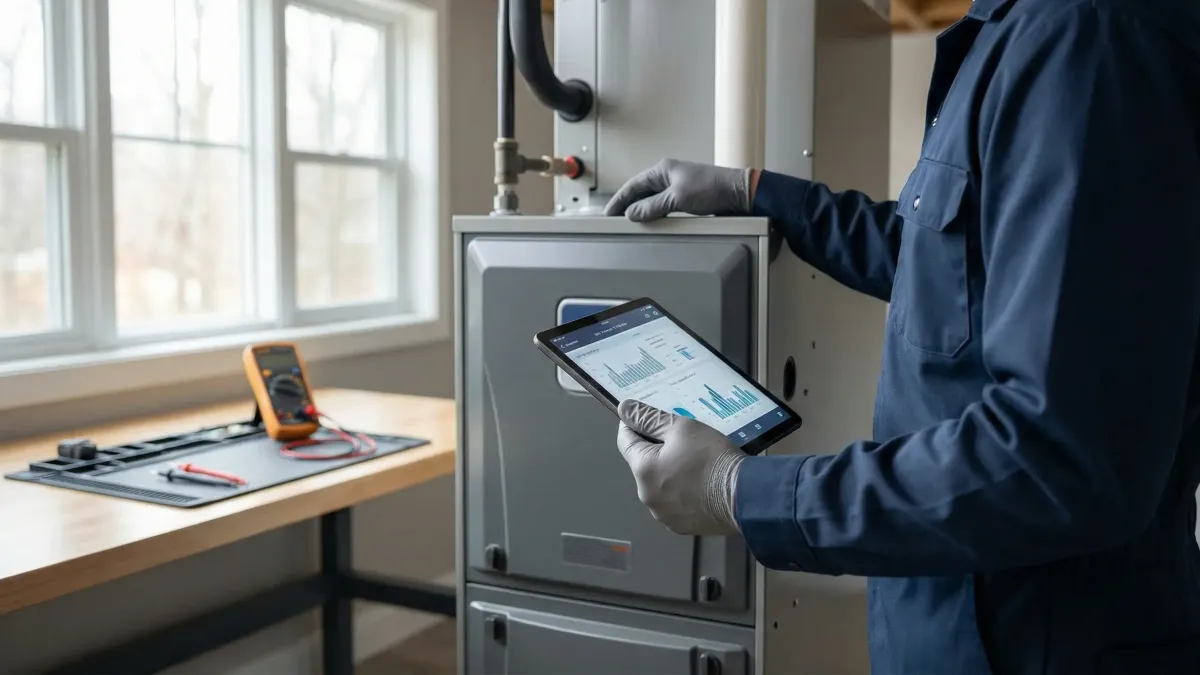
HVAC businesses in Evansville can generate qualified local leads on a starter budget of $2,000–$3,500 per month. At Evansville's typical 9–13% conversion rate, that budget is enough to produce a steady flow of qualified leads each month. The lower end of this range targets seasonal maintenance and tune-up keywords where competition is thin; the upper end adds emergency and replacement campaigns. Businesses ready to compete across the full service spectrum — emergency calls, maintenance, system replacement, and financing inquiries — should plan for $3,500–$6,000 per month. This budget supports full keyword coverage and allows for bid increases during Evansville's peak demand seasons: the July heat emergency window and the January furnace failure period. At $65–$130 cost per lead, against an average repair ticket of $400–$600 and a replacement ticket of $6,000–$14,000, the economics of Evansville HVAC PPC are strongly favorable for structured campaigns.
Budget allocation by campaign type:
One nuance for Evansville: the shoulder seasons (April–May, September–October) offer the best cost-per-lead ratio in the market. advertiser density thins significantly, and customers acquired during tune-up campaigns are far more likely to book replacement jobs with the same company when their system eventually fails. Businesses that cut budget during these periods to "save money" are typically paying for it in July trying to re-acquire customers they could have locked in at a fraction of the cost.
HVAC Google Ads campaigns in Evansville typically generate their first leads within 48–72 hours of launch for emergency and repair keywords, where search intent is immediate and conversion happens the same day. The timeline extends for other campaign types: seasonal maintenance campaigns produce consistent lead flow within 7–14 days as ad relevance and quality scores improve; system replacement campaigns typically take 3–4 weeks to optimize because the buyer journey spans multiple search sessions before a call is made. Overall, most Evansville HVAC businesses see a fully optimized campaign producing consistent, predictable lead volume by the end of the first 60–90 days. The first 30 days are primarily a data-collection and optimization period — match types get refined, search term reports identify irrelevant queries to exclude, and landing pages are adjusted based on actual conversion patterns from Evansville users specifically, not national benchmarks.
Optimization milestones by month:
One Evansville-specific timing note: campaigns launched in March or April are positioned to capture the full spring maintenance window (April–May) before competing for emergency keywords in July. Campaigns launched in November can dominate the winter furnace market with minimal competition. The worst time to launch a new HVAC campaign is in the middle of a demand spike — July and January — when CPCs are at their highest and there's no runway to optimize before the budget pressure peaks. Businesses that plan their campaign launch timing around Evansville's seasonal calendar consistently outperform those that launch reactively after their first bad month.
How to read this Cost per click and monthly searches are measured with Google Keyword Planner (see above). Cost per lead, conversion rate, budget and leads are estimates compiled from public benchmarks such as WordStream, not measurements.
Sources WordStream Home Services benchmarks + Hook Agency HVAC data; Evansville -30% Tier 3 market adjustment applied
$590$990/month
1 platform · Google or MetaGoogle + Meta$790$1,290/month
1 platform · Google or MetaGoogle + Meta$1,140$1,940/month
1 platform · Google or MetaGoogle + MetaChatGPT Ads: a separate pilot, $250/month, added to a plan. See the pilot →

Matteo Braghetta founded MB Adv and runs its Google Ads accounts. He takes the first call with every new client, reads the accounts every week and writes the agency’s guides.
The other half of his job is measurement: GA4, Consent Mode and server-side tracking, so the platforms learn from real sales.
MB Adv is a Google Partner agency managing about $4.4M a year in ad spend for clients in the US, the UK and Europe.
Managed on numbers you can check.
Plans for the US