HVAC PPC Green Bay, WI
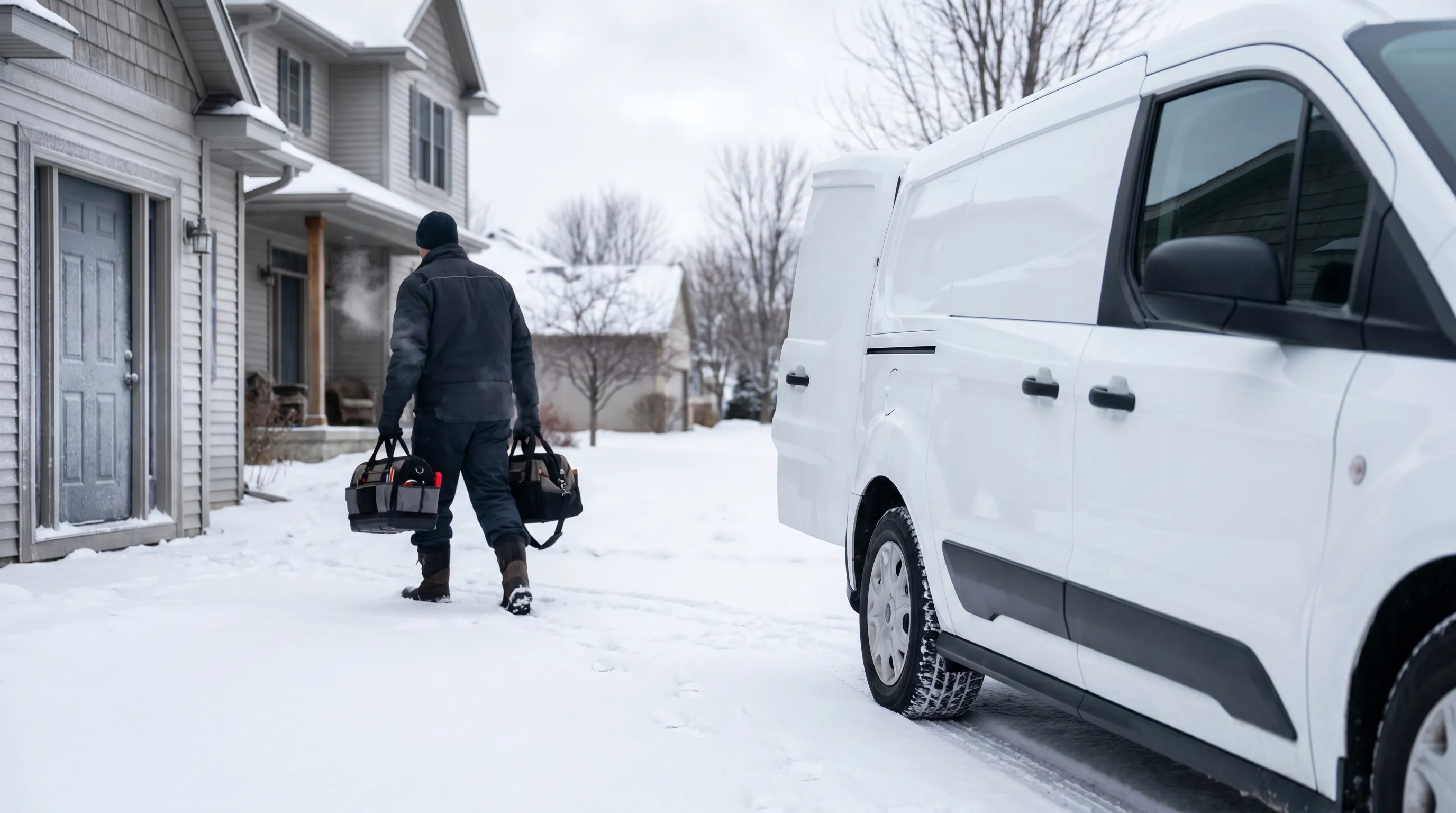
Green Bay's HVAC market is defined by some of Wisconsin's harshest winters — 47+ inches of annual snowfall, sub-zero wind chills, and a competitive field where companies like Engebos Heating (founded 1936) and Wesley Heating & Cooling (since 1951) carry decades of brand trust. To win here, campaigns must be built for extreme seasonal swings, not national averages.
Why Do HVAC PPC Campaigns Fail in Green Bay, WI?
The HVAC market in Green Bay is defined by legacy trust. Engebos Heating and Cooling has operated since 1936. Wesley Heating & Cooling has served the metro since 1951. Bay Area Services has been at 1801 Velp Ave since 1981. Healthy Home Heating & Cooling earned Best of the Bay awards in back-to-back years. When a homeowner's furnace fails at midnight in January, these names trigger immediate brand recall — and generic PPC campaigns with flat budgets and broad keyword matching cannot compete on ad copy alone against decades of built trust.
The first and most common campaign failure is flat monthly budget allocation. Green Bay averages 47+ inches of annual snowfall, with heating system failures heavily concentrated between October and March. Advertisers who distribute their HVAC budget evenly across twelve months are systematically underspending during the peak emergency window. When wind chills drop to -20°F, CPCs on emergency HVAC terms spike 40–60% above baseline — campaigns without pre-loaded seasonal budgets hit their daily cap before noon and hand leads to competitors with more headroom.
The Emergency Search Window
Emergency HVAC searches operate on a compressed timeline. A homeowner whose furnace dies at 10 PM on a Thursday in February is not doing research — they're calling the first number at the top of their mobile screen. Over 73% of emergency HVAC searches happen on mobile devices, and click-to-call conversion rates dominate this segment. Campaigns without call extensions, call-only ad formats, and mobile bid increases miss the highest-urgency, highest-converting HVAC leads entirely. Google Local Services Ads — showing a "Google Guaranteed" badge above standard paid results — are capturing first-call priority in Green Bay, yet several legacy companies have been slow to participate in this newer format.
The second structural failure is over-broad keyword targeting. "HVAC service" and "heating and cooling" campaigns in Green Bay attract property managers conducting budget reviews, commercial facilities coordinators, and DIY researchers comparing furnace brands — none of whom convert at the same rate as a residential homeowner with no heat in February. Without segmented campaigns separating emergency and high-intent queries from maintenance and informational traffic, cost-per-lead climbs past profitability while traffic volume looks strong on the surface.
Competing Against Established Brand Equity
Green Bay's legacy HVAC companies have Google Business Profile review bases built over decades — hundreds of reviews accumulated when competitors had none. Bidding on branded terms like "Engebos HVAC" or "Wesley Heating" is expensive and produces poor conversion rates for challengers. The competitive strategy that works is targeting service-category keywords — "emergency furnace repair Green Bay," "boiler service Green Bay WI," "heat pump replacement" — where legacy operators have weaker landing page quality and less focused ad copy. Winning here requires relevance at the moment of search, not brand recognition.
Green Bay's HVAC market punishes campaigns built for average conditions. The heating season is longer, harsher, and more valuable than national benchmarks suggest. Campaigns that don't reflect this structure lose the weeks that matter most.
HVAC PPC Strategies Built for Green Bay's Extreme Winters
The most critical structural decision in a Green Bay HVAC campaign is seasonal campaign separation. Emergency furnace repair and air conditioning installation target different intent signals at different CPCs — running them in a single campaign creates budget competition that consistently underfunds whichever segment is in peak demand. Structure by season, then by intent level within each season.
Recommended four-pillar campaign structure:
- Emergency heating (Oct 15–Mar 15) — 60% of budget: Call-only ads, mobile-first landing pages, click-to-call above the fold, 24/7 availability messaging
- AC installation and repair (Jun–Aug) — 25% of budget: Lead with replacement financing, cooling comfort, and pre-summer urgency
- Preventive maintenance (Apr–May, Sep) — 10% of budget: Tune-up offers and annual maintenance plan sign-ups; converts to recurring contract revenue
- Google LSA (always-on) — separate budget: "Google Guaranteed" badge above standard PPC; verified cost-per-lead model rather than cost-per-click
Keyword Groups with CPC Ranges
- Emergency heating: "furnace repair Green Bay," "no heat emergency Green Bay WI," "24 hour HVAC Green Bay," "furnace not working" — $15–$30 CPC during cold snaps; highest intent and highest close rate in HVAC PPC
- System replacement: "furnace replacement Green Bay," "new HVAC system Green Bay WI," "heat pump installation Wisconsin" — $10–$18 CPC; longer consideration but $6,000–$14,000 job values justify premium bids
- AC and cooling: "AC repair Green Bay," "air conditioner installation Green Bay WI," "central air service" — $8–$15 CPC during June–August peak
- Maintenance and tune-up: "HVAC tune-up Green Bay," "furnace maintenance," "AC service near me" — $7–$12 CPC; lower-cost leads that convert into annual maintenance contracts
- LSA verified leads: Google Guaranteed program — $25–$75 per verified lead; appears above standard paid results with badge
Bid adjustments: Increase bids 30–50% from October 15 through March 15. Add evening and weekend modifiers of +20–40% — residential HVAC emergencies cluster between 5 PM and 11 PM and spike on Saturday and Sunday mornings. Mobile bid increases of +20–30% for emergency campaigns. These searches close on the first call.
Landing page requirements for emergency campaigns: Phone number visible without scrolling on mobile. Response time guarantee within two hours. Google Guaranteed or equivalent trust badge. Years-in-service statement. A/B test call-only ad formats against standard text ads — in emergency HVAC, call-only consistently outperforms on qualified call volume by 30–40%.
Bid strategy: Use Target CPA once campaigns accumulate 30+ conversions per month. For new campaigns, start with Maximize Conversions to build history. Emergency campaigns with tight traffic requirements can use manual CPC with aggressive bid caps — missing top position during a cold-snap demand spike costs more than overbidding.
Google Partner Agency
We're a certified Google Partner Agency, which means we don’t guess — we optimize withGoogle’s full toolkit and insider support.
Your campaigns get pro-level execution, backed by real expertise (not theory).

What Market Trends Should Green Bay HVAC Businesses Know?
Three market dynamics shape competitive opportunity in Green Bay HVAC right now: an uneven LSA adoption rate among legacy companies, an aging equipment replacement wave tied to Green Bay's older housing stock, and a Wisconsin utility rebate cycle that concentrates high-intent replacement demand in predictable seasonal windows.
The LSA Adoption Gap
Several of Green Bay's longest-established HVAC companies built their businesses before digital advertising existed. The Google Guaranteed verification process — requiring background checks, license confirmation, and insurance documentation — is one that newer-oriented operators complete faster. The "Google Guaranteed" badge occupies premium placement above standard PPC results, and in Green Bay's HVAC market, that real estate remains less contested than it should be. LSA home services leads average $25–$75 each under the verified cost-per-lead model — often cheaper than standard search clicks during peak winter bidding, with premium above-PPC placement as an additional benefit.
Aging Equipment and the Replacement Wave
Green Bay's housing stock has significant pre-1990 construction, and residential furnaces carry typical lifespans of 15–20 years. Systems installed during the high-activity construction period of the 1990s and early 2000s are entering end-of-life. Homeowners beginning to research "how long do furnaces last," "repair or replace furnace," and "old furnace keeps breaking" are pre-emergency buyers — they haven't yet experienced system failure, so CPCs are lower, but average job values are higher than repair calls. Full HVAC system replacement averages $6,000–$14,000 in the Green Bay market. Campaigns targeting pre-replacement intent before emergency forces the decision deliver better margins than purely reactive repair campaigns.
Wisconsin's Focus on Energy rebate program adds a deadline-driven motivator to replacement decisions. High-efficiency furnace and heat pump installations qualify for utility rebates in capped annual pools — homeowners aware of deadlines search in late summer and early fall, creating a pre-season demand window before the competitive winter bidding window opens. Building dedicated rebate-focused campaigns for August through October captures motivated buyers at lower CPCs.
Key takeaway: Green Bay's HVAC PPC opportunity is not limited to emergency repair. Pre-replacement, rebate-motivated, and seasonal maintenance searches create three distinct demand patterns requiring different campaign structures, keyword strategies, and landing page approaches. Treating all three as one "HVAC campaign" misses most of the addressable market.
Why Green Bay HVAC Companies Choose MB Adv Agency
Running profitable HVAC PPC in Green Bay requires understanding market mechanics that national benchmarks don't capture — why emergency CPCs spike 40–60% during cold snaps, why legacy brand names dominate certain keyword categories, and why campaigns tuned for mild-climate markets systematically underperform here. That knowledge doesn't come from a Google Ads dashboard. It comes from managing local service campaigns through multiple Wisconsin winters.
MB Adv Agency builds HVAC campaigns around what drives revenue in this market: emergency call volume, seasonal budget scaling, LSA qualification, and competitor gap analysis. When a February cold snap triggers a demand surge, our clients' campaigns have the budget headroom and bid structure to capture leads while competitors exhaust their daily limits before the afternoon.
Our PPC lead generation approach for HVAC businesses is built around qualified call volume — not clicks and impressions. We track what converts, optimize what doesn't, and scale with the seasons.
Green Bay HVAC businesses ready to stop leaving emergency leads behind can review pricing at mbadv.agency/ppc-pricing or visit our Green Bay PPC services page for local campaign details.
Frequently Asked Questions
How Much Does HVAC PPC Cost in Green Bay, WI?
HVAC PPC in Green Bay costs between $2,000 and $4,000 per month in ad spend for a starter campaign generating 14–35 qualified leads monthly. Average CPC runs $9.68–$15.00 under normal market conditions, rising to $15–$30 during winter emergency peaks when heating failure searches spike demand. Cost-per-lead benchmarks for Green Bay mid-market HVAC run approximately $115–$145. These figures represent ad spend only — management fees are separate. A $3,000/month campaign producing 20–25 leads per month at a 30–40% lead-to-booking rate generates 6–10 new jobs monthly. At average Green Bay HVAC job values of $350–$500 for service calls and $6,000–$14,000 for replacements, the economics support sustained PPC investment above $2,500/month. Emergency keyword CPCs spike 40–60% during cold snaps — pre-funded campaigns maintain top placement during these surges, while budget-capped campaigns lose access to traffic precisely when conversion rates are highest.
LSA comparison: Google Local Services Ads for HVAC average $25–$75 per verified lead — a flat cost-per-lead model that often delivers lower CPL than standard search ads during competitive winter windows, plus premium above-results placement. Both channels together outperform either alone.
Seasonality note: Budget the October–March campaign at 1.5–2x your off-peak monthly spend to protect against CPC spikes during cold-snap demand surges. Campaigns that run flat year-round lose the weeks that generate the highest return.
When Should HVAC Companies Run Google Ads in Green Bay?
The highest-ROI window for Green Bay HVAC Google Ads runs from October 15 through March 15 — the core heating season when emergency furnace repair, boiler service, and system replacement searches generate peak conversion rates. CVR on emergency HVAC landing pages reaches 6–8% during winter peaks versus a 4–6% baseline in moderate months. The most concentrated demand spikes occur during the first major cold snap of the season (typically mid-October to mid-November) and during the coldest February weeks when overnight temperatures regularly reach -10°F to -20°F in Green Bay. Campaigns that are funded, active, and bid at competitive levels when these events occur capture calls within hours of the temperature drop. Campaigns that are paused for winter, running on flat budgets, or not scaled for emergency bid levels miss the most valuable lead-generation weeks of the calendar year. Year-round campaigns are defensible for maintenance and replacement goals, but the emergency heating window is where HVAC PPC delivers its strongest returns in this market.
Shoulder season (April–May, September): Lower CPCs during these months support maintenance plan and tune-up campaigns. Build recurring contract relationships before next winter's emergency window opens.
Summer AC window (June–August): Green Bay summers peak near 83°F with humidity — sufficient to drive air conditioning installation and repair demand. Budget approximately 25% of annual PPC investment in this secondary peak, focusing on replacement and central air installation.