HVAC PPC Hampton, VA
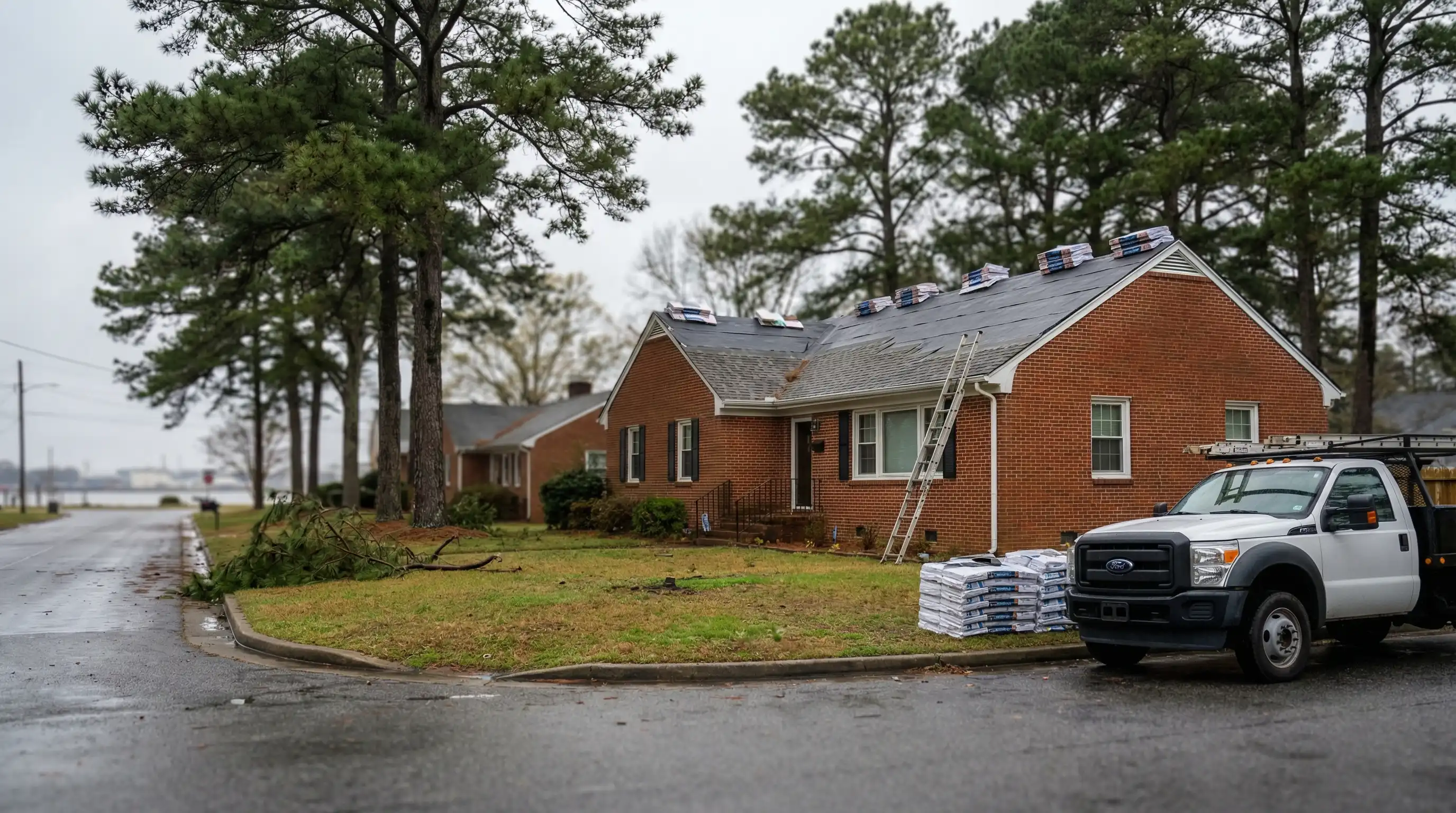
Hampton's coastal climate delivers heat indices above 100°F every summer and a housing stock where the average heat pump is already past its 15-year replacement threshold — yet fewer than one in eight local HVAC advertisers runs a campaign structure built to capture the full emergency-repair surge. That gap is exactly where Peninsula operators grow.
Why Do HVAC PPC Campaigns Fail in Hampton, VA?
Hampton's HVAC advertising market is one of the most competitive on the Virginia Peninsula, with more than 4,600 BBB-listed HVAC results near the city. That number includes every level of competitor: small Peninsula owner-operators, Newport News-based mid-size companies that routinely extend service into Hampton, and metro-wide franchise machines — ARS/Rescue Rooter, One Hour Heating & Air — with regional ad budgets that dwarf what most local shops spend in a year. Running a generic "HVAC Hampton VA" broad-match campaign in this environment means paying premium CPCs to compete head-to-head with operators who outspend you by a factor of ten.
The first failure mode is geography. Hampton sits inside the Virginia Beach-Norfolk-Newport News metro area (population 1.8 million), and most HVAC advertisers default to metro-wide targeting. The result: a Buckroe Beach homeowner sees an ad from a Virginia Beach contractor who has never serviced a Peninsula job. Conversion rates on metro-wide geo-targeting typically run 3–5% in the HVAC vertical. Hampton-specific geo-targeted campaigns, by contrast, routinely convert at 10–12% because the ad matches the searcher's actual intent — someone looking for a local technician who can arrive within two hours, not a dispatch center that routes through Norfolk.
The Coastal Corrosion Problem Competitors Ignore
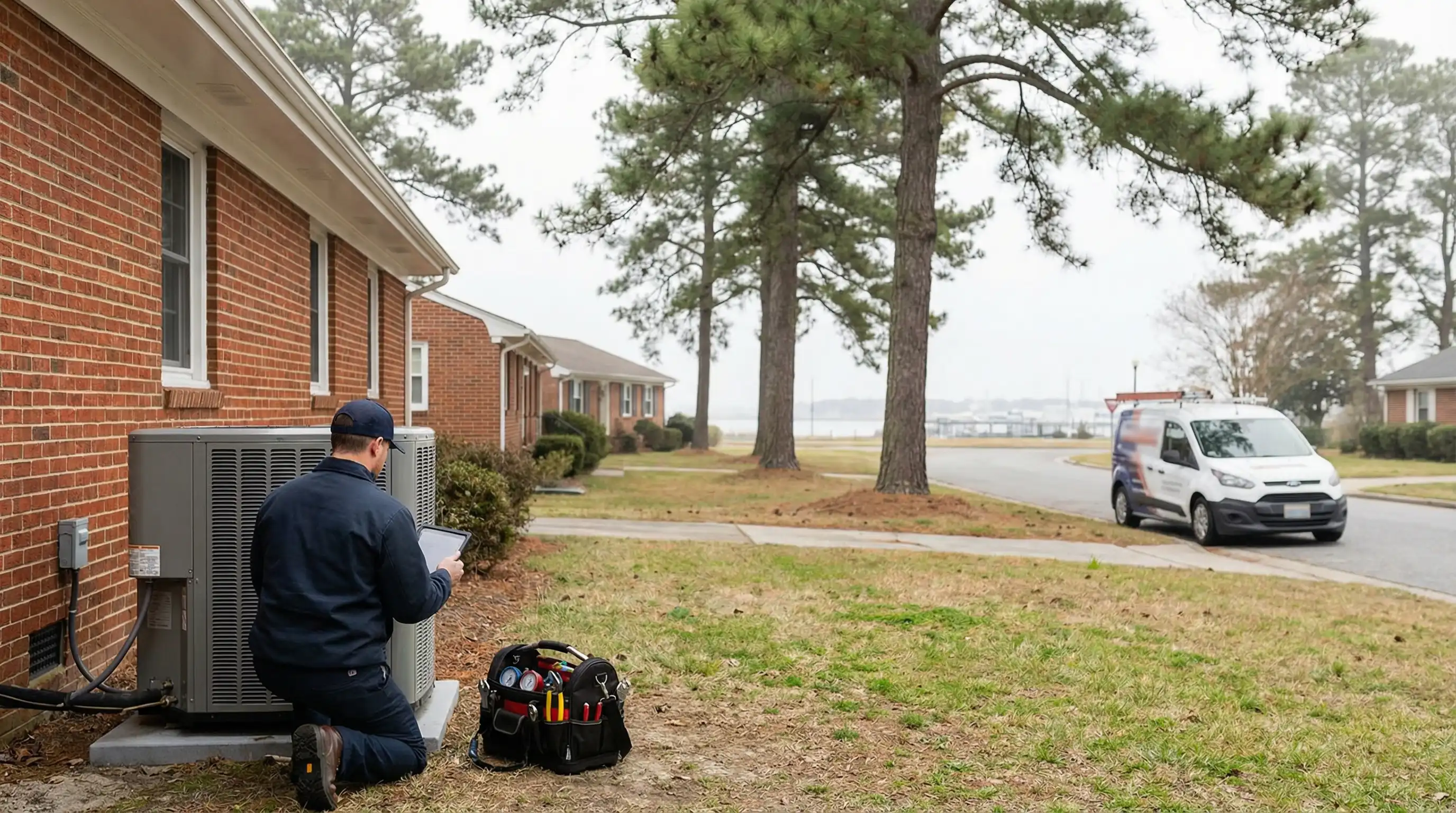
Hampton's two most credible local competitors — Lighthouse Mechanical Heating and Cooling (A+, 45 Voyager Dr) and Service Mechanical of Tidewater Inc. (A+, 26 Town Center Way) — both run broad-match campaigns that capture generic replacement and repair intent. Neither consistently runs copy addressing Hampton's most distinctive HVAC failure driver: coastal saltwater corrosion. Hampton Roads' marine air accelerates outdoor condenser coil corrosion at rates measured in years, not decades. A heat pump installed in Wythe or Chesapeake Hills 12 years ago is already experiencing coil degradation that manifests as reduced efficiency before total failure. Operators who build specific ad copy around coastal inspection and coil health tap demand that their competitors simply do not address — and they pay $1–$2 less per click doing it because the competition for those long-tail terms is thin.
The Military Household Demand Floor
The second structural advantage Hampton HVAC operators can leverage is the Joint Base Langley-Eustis (JBLE) military community. Military renters defer maintenance until systems fail — then they need immediate resolution because lease terms put them on the hook for damages. Military homeowners on PCS departure orders accelerate replacement timelines to months or weeks rather than the typical 6-month consideration cycle. This creates a structural demand floor that does not exist in comparable non-military markets: even in January, when Hampton's mild coastal winter suppresses the heating-failure spike that inland Virginia markets experience, the JBLE community sustains consistent HVAC call volume. Most HVAC advertisers ignore this audience entirely. Campaigns structured around military-household keywords — "HVAC near Langley AFB," "AC service JBLE Hampton" — face 60–70% lower CPC competition than standard emergency repair terms while converting at comparable rates.
The third failure mode is budget timing. Hampton's emergency AC demand spikes sharply in June–August when heat indices exceed 100°F and AC failure becomes a genuine health risk. The naive response is to max budgets in those peak months. The sophisticated response is to recognize that competition spikes simultaneously — CPCs climb from $7–$8 to $10–$15 during the first heat wave of the year. The operators who pre-position in May with lower bids, build quality score over 45–60 days, and then ride their established positions into the summer spike outperform late-entry high-bidders every time.
HVAC PPC Strategy That Wins in Hampton
An effective Hampton HVAC campaign runs five parallel ad groups, each targeting a distinct demand type with its own keyword set, match type mix, and bid logic. The foundation is a separation between emergency-intent and planned-purchase keywords — these audiences require completely different ad copy, landing pages, and conversion actions. Mixing them into a single campaign is the most common structural error in the HVAC vertical, and it drives down Quality Score, raises CPCs, and dilutes conversion tracking.
Emergency AC Repair is the highest-priority group. These keywords signal immediate decision intent; the searcher has no heat, it's 95°F outside, and they are clicking the first result that promises same-day service. Call-only ads with daytime bid boosts (125% June–August, 7AM–8PM) are non-negotiable here. Landing pages should load in under two seconds, lead with a phone number, and include a "we service Hampton" statement in the headline.
- Emergency repair keywords: "AC repair Hampton VA," "emergency HVAC Hampton VA," "AC not working near me Hampton," "air conditioner broke Hampton" — $8–$12/click peak season
- Heat pump emergency: "heat pump not working Hampton VA," "HVAC emergency Hampton Roads" — $7–$10/click
- Call-only format: Mobile devices only, 7AM–9PM, bid +50% on mobile during heat wave days (use automated rules tied to 90°F+ forecast)
Heat Pump Replacement is the highest-ticket planned-purchase campaign. Hampton's housing stock is dominated by heat pumps — the prevalent system type for the Mid-Atlantic coastal climate — and a large inventory of 1990s–2000s systems is at or past the 15–20 year replacement threshold. This is a considered purchase ($6,000–$12,000) with a 2–6 week decision cycle. Bidding strategy: Target CPA at $90 (slightly above benchmark to capture volume), with ad scheduling weighted to weekday mornings when homeowners research before work.
- Replacement keywords: "heat pump replacement Hampton VA," "new HVAC system Hampton VA," "replace heat pump Hampton Roads," "HVAC installation cost Hampton" — $7–$10/click
- Pre-sale upgrade: "HVAC upgrade before selling Hampton VA," "replace AC before home sale Hampton" — $6–$9/click, 15–20% higher CVR than standard replacement (PCS urgency drives fast decisions)
Coastal Corrosion & Maintenance Inspection is Hampton's highest-differentiation campaign — the one that competitors are not running. Ad copy referencing "saltwater air," "coastal heat pump corrosion," and "Hampton Roads coil inspection" reaches homeowners who have noticed declining performance and are researching before failure, not after. These keywords cost $4–$7/click with minimal bid competition and convert at 8–11%.
- Niche inspection keywords: "HVAC inspection Hampton VA," "coastal heat pump maintenance Hampton Roads," "outdoor unit corrosion check Hampton," "AC tune-up near Langley AFB" — $4–$7/click
- Military maintenance plan: "HVAC service plan Hampton VA," "AC maintenance contract Peninsula VA" — lower CPC entry point for recurring-revenue upsell
Negative keyword discipline is where most Hampton HVAC campaigns bleed 30–35% of their budget. Non-converting terms to exclude immediately: "HVAC jobs," "HVAC school," "HVAC parts," "commercial HVAC," "HVAC certification," "HVAC tools," "DIY HVAC," "HVAC supply house." Running a search terms audit in the first 30 days of a new Hampton campaign typically reveals $400–$800/month in budget waste from these terms before exclusions are added.
Starter budget: $2,500–$4,500/month allocates $1,500–$2,500 to emergency repair (June–August priority), $700–$1,200 to heat pump replacement, and $300–$800 to coastal inspection. This structure sustains 15–28 qualified leads per month at the $85 Hampton CPL benchmark.
Google Partner Agency
We're a certified Google Partner Agency, which means we don’t guess — we optimize withGoogle’s full toolkit and insider support.
Your campaigns get pro-level execution, backed by real expertise (not theory).

What Market Trends Should Hampton HVAC Businesses Know?
Hampton's HVAC market has three structural characteristics that fundamentally change campaign performance relative to comparable Virginia markets. Understanding them is the difference between a campaign that loses to Norfolk and Virginia Beach franchise operators and one that consistently outconverts them on Peninsula-specific searches.
The Heat Pump Replacement Wave Is Cresting Now
Hampton's residential HVAC market entered the 2020s with a massive inventory of heat pumps installed during the 1990s and 2000s construction and renovation cycle. The average heat pump lifespan in a coastal Virginia climate — where marine humidity and salt air accelerate component wear — is 13–17 years, significantly below the 15–20 year inland benchmark. A system installed in 2004 in a Wythe neighborhood brick colonial is now at or past its functional end of life. The replacement demand wave this creates is not cyclical — it is structural and will sustain elevated volume through at least 2030. Hampton HVAC operators who invest in replacement-intent PPC campaigns now are positioning for the market's highest-value demand segment at the peak of its natural replacement cycle.
Property value appreciation (+4.96% YoY to $245,700 median) amplifies this trend. Homeowners with rising equity are more willing to invest in $8,000–$12,000 replacement projects; the payback calculation shifts favorably when home value growth exceeds the cost of system upgrade. Pre-sale HVAC replacement is a particularly strong signal: a Hampton homeowner listing a $245,000 home will spend $6,000–$8,000 on a new heat pump if it removes a buyer objection and supports full asking price. These leads convert 15–20% faster than standard replacement intent.
Military Demand Creates a Year-Round Floor
Most Virginia Peninsula HVAC markets experience a pronounced winter trough — heating failure volume in Hampton's mild coastal climate is simply lower than in Richmond or Northern Virginia. JBLE changes this equation. The base's 100,000+ personnel and civilian workforce generate maintenance, replacement, and emergency repair demand across all seasons because military lease and homeownership patterns do not track civilian seasonality. PCS orders arrive in any month; pre-departure home preparation happens year-round; renter-occupied military housing generates consistent emergency call volume. HVAC operators who advertise year-round (even at reduced December–February budgets) capture this demand while competitors who pause campaigns in winter cede the market entirely.
The targeting angle: Military households near JBLE (zip codes 23665, 23666, 23681) show 18–25% higher emergency call rates than Hampton's civilian neighborhoods. Geo-bid modifiers of +15–20% on these zip codes, combined with ad copy referencing "near Langley AFB" or "serving JBLE families," outperforms generic Hampton-wide targeting in both CTR and CVR.
Seasonal budget allocation: Invest 45% of annual HVAC budget in June–August, 20% in September–November (shoulder season pre-sale prep), 15% in December–February (military demand floor + heating events), 20% in March–May (pre-season maintenance push). This structure outperforms even-spread annual budgets by capturing the emergency peak while sustaining year-round lead flow.
Why Hampton HVAC Campaigns Need Local PPC Expertise
Running HVAC Google Ads in Hampton without Peninsula-specific knowledge produces predictable results: budget absorbed by metro-wide competitors with larger spend, Quality Scores suppressed by irrelevant geographic targeting, and CPLs 40–60% above market because the account structure was built for a generic city, not for a coastal military market with a distinct demand calendar.
MB Adv Agency manages HVAC PPC campaigns in Hampton Roads and across the Virginia Peninsula with an account architecture built for exactly this market: call-only emergency formats with heat-wave day bid automation, heat pump replacement campaigns timed to Hampton's replacement cycle, coastal inspection ad groups that competitors have not discovered, and JBLE-adjacent geo-targeting that captures military household demand without wasting budget on Norfolk and Virginia Beach searchers who won't convert on a Hampton number.
Our PPC management process includes a full Hampton market audit in the first 30 days — identifying negative keyword gaps, geographic targeting inefficiencies, and ad scheduling errors that typically reveal $400–$900/month in recoverable budget on existing accounts. For operators starting from zero, our Hampton HVAC campaign build delivers the full five-campaign structure with conversion tracking, call recording, and monthly performance reporting.
Hampton's HVAC market rewards operators who invest in campaign quality early and sustain it through the seasonal cycle. The penalty for poor structure is not just higher CPL — it is ceding market share to Lighthouse Mechanical and metro franchise operators who have already optimized their accounts. See our pricing tiers and request a free Hampton HVAC account audit.
Frequently Asked Questions
How Much Does HVAC PPC Cost in Hampton, VA?
Hampton HVAC Google Ads campaigns typically run at an average CPC of $8–$10 for emergency repair keywords and $7–$10 for heat pump replacement terms, with coastal inspection and maintenance keywords running lower at $4–$7/click. The average cost per lead (CPL) in Hampton's HVAC market is $70–$100, depending on campaign focus and season. Emergency AC repair campaigns convert at 10–12% CVR, which means a $90 average CPL on a $9 CPC — competitive with any Hampton service market. Heat pump replacement campaigns run slightly higher CPL ($95–$120) because the decision cycle is 2–6 weeks rather than same-day, but the average job value of $6,000–$12,000 produces a strong return. A starter budget of $2,500–$4,500/month sustains 15–28 qualified Hampton HVAC leads per month at these benchmarks.
Peak-season CPC spikes are real and predictable. During the first heat wave of each summer (June, when temperatures exceed 95°F and heat indices push above 100°F), emergency repair CPCs climb to $10–$15/click as franchise operators and regional chains temporarily increase bids. Hampton operators who pre-build their Quality Score in April–May — before the competition spike — maintain lower effective CPCs through the summer because Google rewards established, high-Quality-Score accounts over late-entry high-bidders. This Quality Score investment effect is worth $1.50–$3.00/click saved during peak season, which compounds across hundreds of summer clicks.
Budget phasing advice: Don't distribute your annual HVAC ad budget evenly. Concentrate 45% of annual spend in June–August, 20% in March–May (pre-season maintenance push and Quality Score build), 20% in September–November (pre-sale upgrade leads and shoulder-season replacements), and 15% in December–February to sustain the JBLE military demand floor. This allocation produces better CPL averages than even-spread budgets because it concentrates spend where conversion rates are highest and CPCs are still manageable.
When Should Hampton HVAC Companies Start Running Google Ads?
The optimal time to launch a Hampton HVAC Google Ads campaign is April 1–May 15 — six to eight weeks before the summer emergency surge peaks. This window allows 45–60 days of Quality Score accumulation before the June heat-wave CPCs spike, which means your ads enter summer with the account history and relevance signals that Google rewards with lower CPCs and higher ad positions. Hampton HVAC operators who launch in June — when it feels most urgent — are paying a 30–40% CPC premium to compete against established accounts with six months of campaign history. Launching in spring means you're paying $7/click in June instead of $12/click, and your ads are in positions 1–2 instead of 3–4.
For operators who missed the spring window, mid-July through August is still viable — emergency demand is high enough that even expensive clicks convert efficiently — but the full-year ROI projection is meaningfully lower than a spring-launched account. The worst time to launch is October through December, when emergency demand drops and campaign learning takes place during low-volume months with minimal data signal. The exception: if your goal is heat pump replacement leads (not emergency repair), fall is actually productive — homeowners begin researching replacements after the summer AC failure season reveals aging systems, and CPCs are 20–30% lower than peak.
Ongoing timing considerations for established Hampton HVAC accounts: use automated bid rules to increase bids 20–30% on days when the National Weather Service forecast for Hampton reaches 90°F+; reduce bids 15–20% on days with forecasted rain (emergency call rates drop). Military household JBLE campaigns can run year-round at baseline budget — the military community's demand is calendar-independent. Pause broad maintenance campaigns December 15 – January 15 unless you have documented winter call history that justifies the spend.