Roofing PPC Hampton, VA
After every nor'easter and tropical remnant that tracks through Hampton Roads, storm-chasing roofing contractors flood Google Ads and drive CPCs to $15–$20/click within 48 hours — then disappear two weeks later. Hampton roofers who understand this storm-chaser cycle, and build campaigns that outlast it, own the highest-value replacement and repair leads in the market. <!-- stats-article-link --> <p><em>See how this city's Roofing PPC costs compare nationally in our <a href="/resources/roofing-ppc-statistics">Roofing PPC Statistics</a> report, featuring data from 40+ US cities.</em></p>
Why Do Roofing PPC Campaigns Fail in Hampton, VA?
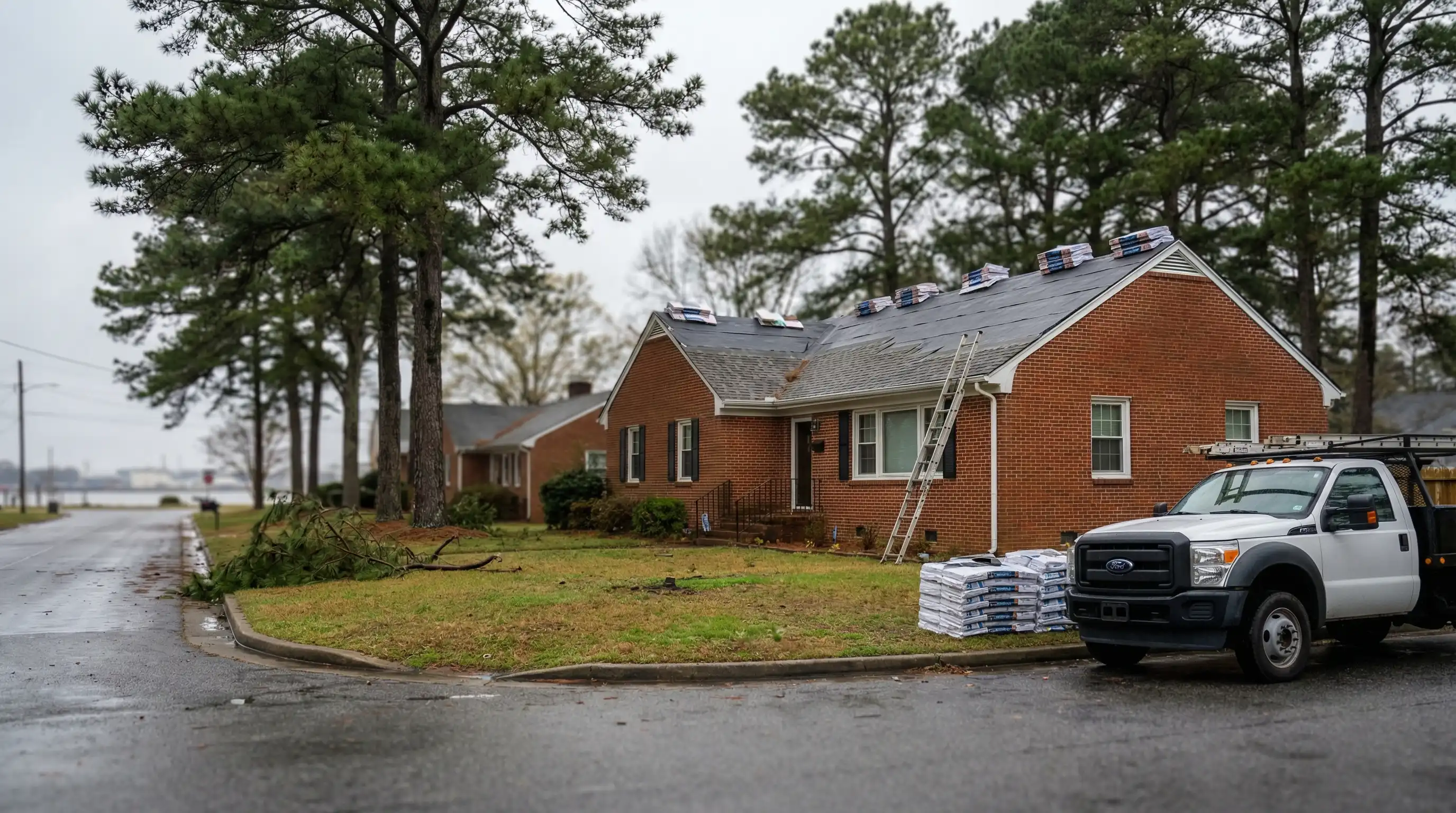
Hampton's roofing PPC market has the highest BBB-listed competitor count of any Phase 2 industry: more than 4,890 competitors near the city. That number tells a story. The Hampton Roads coast — exposed to nor'easters from the north, tropical storms tracking up the Mid-Atlantic seaboard, and hurricane remnants that arrive as heavy rain events — creates periodic storm-chaser invasions that temporarily double or triple the number of active roofing advertisers in the market. A contractor from Charlotte or Richmond arrives in Hampton after a nor'easter with a trailer full of shingles, $5,000 in Google Ads budget, and bids set at $20/click. Two weeks later they are gone. The local Hampton roofer who did not understand this cycle either overbid to compete during the spike (losing margin) or paused the campaign entirely (losing their established ad position).
The structural solution is not to compete with storm chasers — it is to build a campaign that performs in their absence. Bass Roofing LLC (A+, Hampton Roads, Hampton 23666) and West Roofing & Home Improvements (Hampton) hold the local trust advantage, but neither runs campaigns optimized for the full demand spectrum: storm damage, systematic replacement, gutter installation, and insurance claim assistance. Each of these is a distinct audience with different keyword intent, different conversion timelines, and different landing page requirements. Treating them as one campaign is the most common structural error in Hampton roofing PPC — it creates landing page mismatch, suppresses Quality Score, and drives CPLs 30–50% above benchmark.
The Storm Spike Trap
After a significant weather event — a nor'easter bringing 60mph winds to Buckroe Beach, or a tropical system pushing 4 inches of rain across Hampton in 12 hours — search volume for "roof repair Hampton VA" spikes 400–600% within 24 hours. CPCs follow: what cost $9/click the week before can reach $15–$20/click within 48 hours of a major storm. Hampton operators who see this spike and try to match storm-chaser bids are making a structural mistake. The better play is counterintuitive: reduce bids immediately post-event, let storm chasers absorb the first-week volume, and re-enter aggressively 4–7 days later when transient competitors have moved on and CPCs have normalized to $9–$12/click. At that point, the homeowners with legitimate damage — those who received multiple competing quotes during the spike and are now deciding — are still in-market. The operator who re-enters post-spike with established Quality Score and locally relevant ad copy consistently outconverts the storm-chaser who dominated the spike window.
Military Homeowner PCS Timelines Compress the Decision Cycle
Hampton's military community creates a roofing demand pattern that civilian-only operators in comparable markets do not see. A military homeowner at JBLE who receives PCS orders has a hard departure date — often 60–90 days from order receipt. A roof inspection revealing deferred maintenance that would normally extend the consideration cycle to 6–12 months instead compresses to 30–45 days. Pre-sale roof replacement in Hampton's military community converts 25–30% faster than in the civilian market, and the decision driver is timeline rather than price. Military homeowners on PCS departure also respond more strongly to operators who communicate reliability and schedule certainty — "we'll complete your roof before your move date" is a more powerful conversion lever than price in this segment. Virginia Beach-based regional operators (Tidewater Roofing, Paramount Roofing) do not run copy specific to JBLE timelines; this is a competitive gap that Peninsula-local campaigns can own.
Roofing PPC Strategy That Works in Hampton
A Hampton roofing campaign built for sustained performance — not just storm spikes — runs five specialized campaign groups with distinct keyword sets, match types, and conversion tracking. The critical architectural principle: never mix storm-damage emergency keywords with planned-replacement keywords in the same campaign. They require different ad copy, different landing pages, and different bid strategies. A searcher typing "emergency roof tarp Hampton VA" after a nor'easter and a homeowner typing "roof replacement cost Hampton VA" in April are in completely different buying stages and will not convert on the same landing page.
Storm Damage Repair is the highest-urgency, highest-CPC group. Run this with weather-triggered bid automation — increase bids 30–50% within 24 hours of a forecast calling for winds above 45mph or rainfall above 2 inches. Use call-only format during business hours; responsive search ads in the evening when homeowners are assessing damage on mobile. Post-storm, maintain bids for 7 days then normalize, rather than chasing the spike at peak CPC.
- Storm damage keywords: "storm damage roof repair Hampton VA," "wind damage roof Hampton VA," "roof damage inspection Hampton Roads," "roof leak after storm Hampton" — $10–$18/click during storm events; $9–$12 baseline
- Emergency tarping: "emergency roof tarp Hampton VA," "emergency roofer Hampton VA," "roof leak emergency Hampton Roads" — $8–$14/click; same-day conversion expected
Full Roof Replacement is the highest-revenue planned campaign. Target homeowners in Hampton's 1950s–1980s neighborhoods — Chesapeake Hills, Phoebus, New Market, central Hampton — whose original or first-replacement roofing systems are now at end of life. This audience researches over 2–6 weeks; responsive search ads with trust-building headlines ("Licensed Hampton Roofer," "100+ Hampton Roofs Replaced," "Workmanship Warranty") outperform urgency-focused copy in this segment.
- Replacement keywords: "roof replacement Hampton VA," "roofing contractor Hampton VA," "new roof cost Hampton VA," "asphalt shingle replacement Hampton Roads" — $9–$12/click
- Neighborhood-specific targeting: "roof replacement Phoebus," "roofer Chesapeake Hills Hampton," "roofing contractor near Buckroe" — $7–$9/click, higher CVR from local specificity
Roof Inspection & Insurance Claims is the high-ticket entry point that leads to full replacement. Hampton homeowners with older roofs are often unsure whether their damage qualifies for an insurance claim — an inspection offer converts this uncertainty into an appointment. Once on-site, inspections that reveal significant damage produce same-call conversion rates of 45–60% for replacement estimates.
- Inspection keywords: "roof inspection Hampton VA," "free roof inspection Hampton Roads," "insurance roof claim Hampton VA," "roof damage estimate Hampton" — $8–$11/click
- Gutter installation: "gutter installation Hampton VA," "gutter guard Hampton Roads," "seamless gutters Hampton VA" — $6–$9/click; high-margin add-on
Pre-Sale Roofing targets the JBLE PCS seller segment and the civilian seller market driven by Hampton's rising property values. Keyword intent: homeowners who know their roof has issues and need resolution before listing. Conversion timeline: 2–4 weeks. Budget allocation: increase 20% March–June (spring PCS season) and October–November (fall market listing season).
Starter budget: $3,000–$5,500/month with a planned storm-event reserve of $500–$1,000. This structure sustains 15–25 qualified leads per month at Hampton's $105–$140 roofing CPL benchmark, with peak-season performance lifting to 25–35 leads when weather events drive volume.
Google Partner Agency
We're a certified Google Partner Agency, which means we don’t guess — we optimize withGoogle’s full toolkit and insider support.
Your campaigns get pro-level execution, backed by real expertise (not theory).

What Market Trends Should Hampton Roofing Businesses Know?
Hampton's roofing market has structural demand characteristics that differentiate it sharply from inland Virginia markets and even from its Hampton Roads neighbors. Three trends in particular shape campaign performance in ways that are not visible to operators running metro-wide generic campaigns.
Buckroe Beach & Grandview: The Coastal Exposure Premium
Hampton's two direct-coastal neighborhoods — Buckroe Beach and Grandview — represent the highest-value roofing leads in the market and the highest-risk homes for unaddressed storm damage. These neighborhoods sit exposed to nor'easter fetch across the Chesapeake Bay and Chesapeake Bay waterfront; wind and water damage claims in Buckroe and Grandview consistently run 30–45% higher per claim than in inland Hampton neighborhoods. Homeowners in these areas also carry higher property values, faster decision cycles (waterfront properties are harder to sell with a compromised roof), and above-average willingness to invest in premium materials (impact-resistant shingles, enhanced underlayment). Geo-bid modifiers of +20–25% on Buckroe Beach and Grandview zip codes (23664, 23663) consistently outperform Hampton-wide average CPLs in roofing campaigns by 15–25%.
Rising property values across Hampton (+4.96% YoY, median $245,700) are lifting the investment threshold for roofing across all neighborhoods. A homeowner whose property has appreciated $15,000–$20,000 in the last two years is materially more willing to invest $12,000–$18,000 in a full re-roofing project than one in a stagnant market. This trend specifically benefits Hampton roofing operators who run campaigns targeting full replacement over emergency patch work — the higher-ticket conversion is supported by homeowner equity psychology.
The Post-Storm Re-Entry Window Is the Highest-Value Moment
Data from Hampton Roads roofing campaign management confirms a consistent pattern: the highest quality leads in the storm-damage cycle arrive not during the spike (days 1–5 post-event) but during the re-entry window (days 6–14). Why? During the spike, homeowners are overwhelmed by door-to-door storm chasers and aggressive ad calls. Many defer decisions until the solicitation pressure subsides. By day 6–7, storm chasers have largely moved on — but homeowners with real damage are still in-market, now more deliberate, and more receptive to established local operators with documented Hampton work history. Running campaigns at +30% bids during the re-entry window, with ad copy emphasizing "licensed Hampton contractor" and "workmanship warranty," outperforms spike-period CPC competition by a significant margin.
Seasonal budget recommendation for Hampton roofing: Allocate 35% of annual budget to September–November (post-hurricane/nor'easter season, pre-winter assessment window), 30% to April–June (pre-summer inspection and PCS seller season), 20% to December–February (storm events + homeowners planning spring projects), and 15% to July–August (storm follow-up, summer inspection demand). This allocation captures both the seasonal and weather-event demand cycles that define Hampton's roofing market.
Why Hampton Roofing Campaigns Need Local PPC Expertise
Storm chasers don't just take leads — they wreck the market for legitimate local operators by bidding up CPCs during the spike and leaving behind homeowners who got burned by an out-of-town contractor with no local accountability. The Hampton roofer who invests in a well-structured permanent campaign is the one homeowners call on day 8, when the transients are gone and the decision is real.
MB Adv Agency builds and manages roofing PPC campaigns structured for Hampton's storm cycle: weather-triggered bid automation for nor'easter and tropical event windows, re-entry timing protocols that capitalize on post-spike demand, geo-bid modifiers for Buckroe Beach and Grandview's high-value exposure zone, and JBLE PCS seller targeting that captures military homeowner urgency. Our roofing campaign management includes monthly performance reviews, storm-event bid protocols, and conversion tracking that distinguishes storm-damage leads from planned-replacement leads — because the nurture path and close timeline are completely different.
Hampton roofing operators who invest in structured permanent campaigns consistently outperform storm-season-only advertisers on annual lead volume, CPL efficiency, and customer quality. See our pricing tiers and request a free Hampton roofing account audit — we'll identify storm-event bid inefficiencies and geographic targeting gaps in your current campaign.
Frequently Asked Questions
How Much Does Roofing PPC Cost in Hampton, VA?
Hampton roofing Google Ads campaigns average $9–$12/click at baseline for full-replacement and inspection keywords, climbing to $15–$20/click during the 3–5 days immediately following a nor'easter or tropical storm event when out-of-market storm chasers flood the auction. The average cost per lead for a well-structured Hampton roofing campaign is $105–$140 at baseline, with post-storm CPLs temporarily reaching $145–$185 before normalizing as transient competitors depart. Conversion rate for Hampton roofing averages 7.5–9.5%, which means a $120 CPL on a $10.50 average CPC — competitive for a market where the average full replacement job runs $10,000–$18,000 and produces gross margins of 35–45%. The ROAS calculation for a structured Hampton roofing campaign is 6.5–8.5x, among the strongest in Hampton's home services vertical.
Gutter installation and inspection keywords run materially lower CPCs ($6–$9/click) and serve as efficient entry points for full-replacement conversations. Emergency tarping keywords spike highest during storm events but also convert fastest — a homeowner with active water intrusion through their ceiling is not comparing three quotes; they call the first credible local number that answers. Running call-only formats for these keywords with same-day availability messaging collapses the decision cycle to minutes, not days.
The most important budget variable for Hampton roofing is the storm-event reserve. Allocate $500–$1,000/month as a held reserve specifically for weather events — not deployed during normal operations but activated within 6 hours of a qualifying storm. This reserve funds the re-entry bid increase on days 6–10 post-storm, when CPCs normalize and local operators can compete for deliberate buyers without paying storm-chaser peak rates. A starter budget of $3,000–$5,500/month (inclusive of the storm reserve) sustains 15–25 qualified Hampton roofing leads per month in non-event months, with storm-event months delivering 25–35 leads at comparable CPL.
When Is the Best Time to Run Roofing Google Ads in Hampton, VA?
Hampton roofing PPC should run year-round, but with seasonally adjusted budgets and storm-event protocols that non-local operators cannot execute efficiently. The highest-ROI window for planned-replacement campaigns is April through June — spring PCS season drives military homeowner pre-sale urgency, civilian sellers list before summer, and homeowners who noticed winter damage are now ready to commit to a contractor. This window typically delivers the highest monthly lead volume for Hampton roofers at CPCs that are still 20–30% below the post-storm spike. The second strongest window is September through November, when homeowners assess summer storm damage, prepare for winter weather-tightness, and respond to insurance claim assistance campaigns that deliver pre-qualified high-ticket leads.
January and February are the most counterintuitive months in Hampton roofing PPC. Volume is lower, but so is CPC competition — many roofing advertisers pause campaigns after Thanksgiving. Hampton operators who maintain a reduced winter budget ($1,500–$2,000/month) capture homeowners researching spring replacement projects and homeowners who discovered damage during the holiday season. These winter research leads often convert in February–March with strong close rates because they've had 4–6 weeks to confirm the decision. The key: maintain ad presence, reduce to informational ad copy ("Plan Your Hampton Roof Replacement for Spring"), and track quote-request conversions rather than same-day call volume.
Weather-event timing is the most impactful tactical variable. The optimal bid response to a Hampton nor'easter or tropical storm: hold or slightly reduce bids on days 1–3 (storm chasers dominate and win the race-to-the-bottom bidding war), then increase bids 25–35% on days 5–10 as out-of-market operators depart. This counterintuitive protocol consistently produces lower CPL than matching the storm-spike bids, because the day-5–10 audience is a more deliberate buyer who has already received multiple quotes and is now making a quality-and-reliability decision rather than an urgency decision.