HVAC PPC Lowell, MA
Lowell HVAC contractors compete in one of the most demanding climate markets in New England — single-digit January lows, triple-deckers with aging boilers, and MassSave rebates that buyers now expect you to know about. CPCs on emergency heating terms hit $18–$24 in-season, and Boston-area franchise campaigns bleed into Lowell ZIP codes all winter. The contractors who win here build campaigns around Lowell's specific demand patterns, not generic HVAC templates.
Why Do HVAC PPC Campaigns Fail in Lowell, MA?
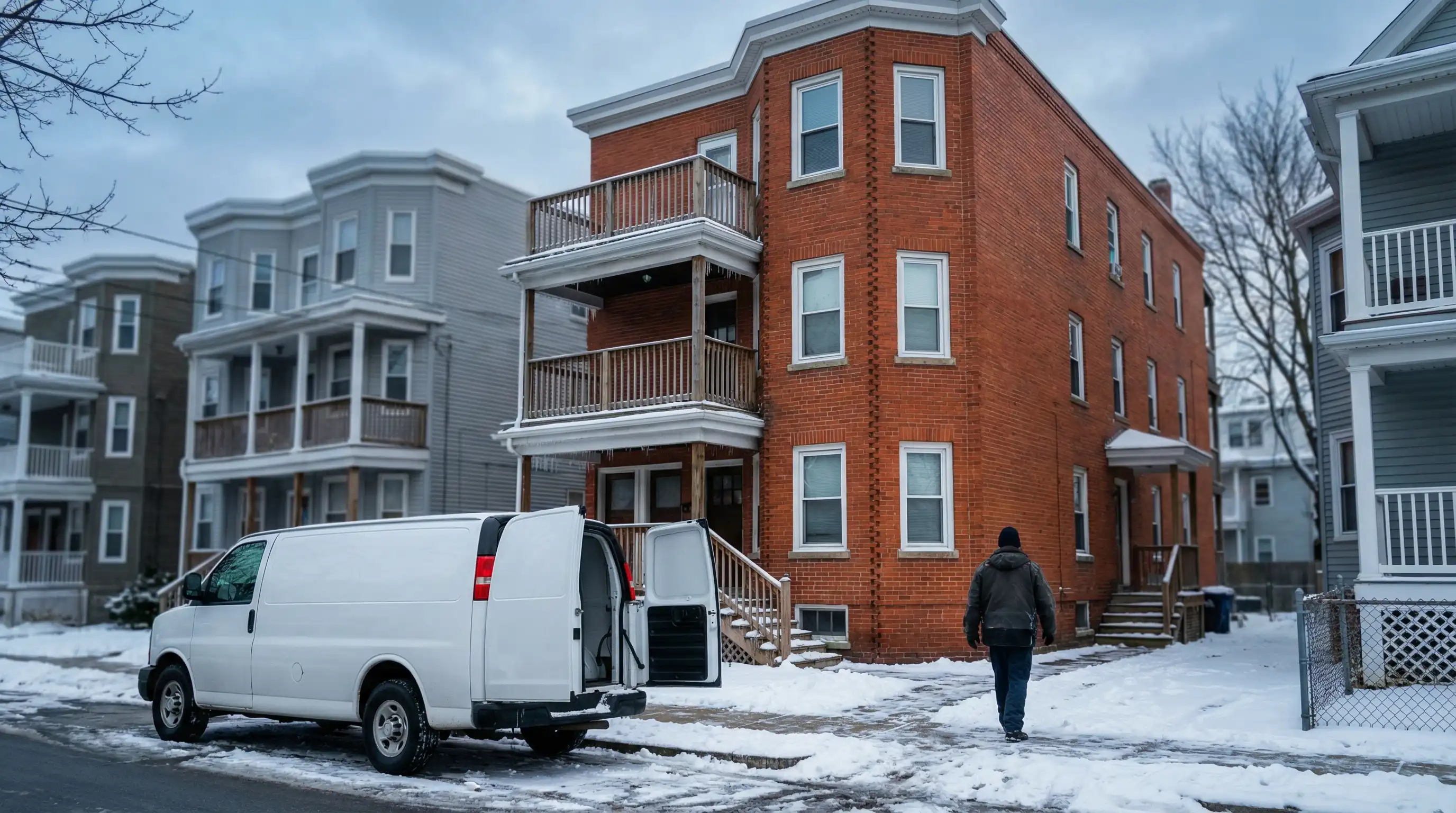
Most HVAC campaigns in Lowell fail before the first week of January ends. The failure pattern is predictable: a contractor sets up a generic "HVAC services" campaign with broad match keywords, watches CPCs spike to $18–$24 the moment a cold front drops temperatures below 15°F, and burns through the monthly budget in 72 hours with nothing to show for it. The problem isn't the market — it's the mismatch between generic campaign structure and Lowell's specific demand environment.
Lowell's climate runs more extreme than most Massachusetts campaigns account for. The city averages 10–15 days per year below 10°F, with each cold snap triggering concentrated search surges that compress weeks of normal demand into 48-hour windows. That's not a seasonal curve — it's a series of spikes. A campaign built for steady weekly volume will overspend during emergencies and underspend during the shoulder months when pre-season maintenance and system replacement searches drive the highest-quality leads.
The Housing Stock Trap
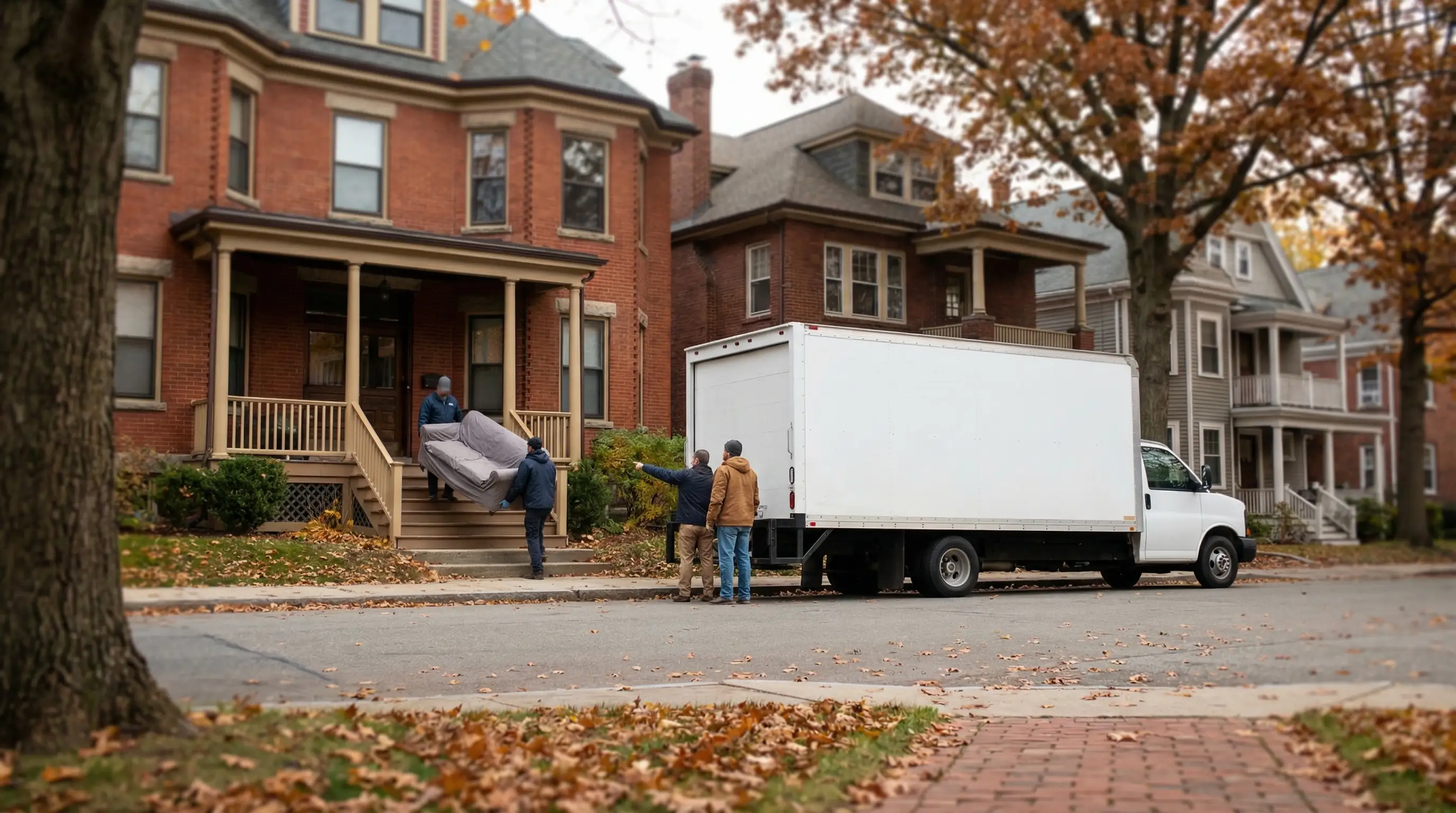
The second failure point is Lowell's housing stock. Triple-deckers dominate the city's residential footprint, and they come with a specific HVAC reality: aging boilers installed in the 1980s, gas furnaces running past their 20-year lifespan, and oil-heated units in older buildings that have never been converted. This is a replacement-driven market — not a new-construction market. Campaigns that use installation keywords without layering in replacement and conversion terms miss the majority of high-intent buyers.
The competitive landscape adds another layer of pressure. Rodenhiser Home Services, N.E.T.R. Inc., and Autumn Air — along with Lennox and Carrier-authorized dealers from Boston's western suburbs — all extend their campaign targeting into Lowell ZIP codes during peak season. These competitors have larger budgets, verified Google LSA badges, and years of performance history. A local HVAC contractor entering the market with a modest $1,000/month budget competing on the same "HVAC Lowell MA" keyword is bidding in the most expensive auction slot — and losing it to companies spending $8,000–$15,000/month in the same area.
The MassSave Gap
One of the most exploitable gaps in the Lowell HVAC market is MassSave. Massachusetts' MassSave program offers rebates up to $10,000 for cold-climate heat pump installations — a conversion lever that directly overcomes the #1 objection Lowell homeowners have: upfront cost. Yet most local HVAC campaigns don't mention MassSave in their ad copy or landing pages. Competitors who lead with rebate messaging are capturing a high-intent segment of cost-sensitive buyers with minimal additional ad spend. The oil-to-heat-pump conversion market in Lowell's triple-decker stock is substantial — these are $10,000–$18,000 jobs, and the rebate often makes the decision.
Google LSA dominates the top SERP positions for HVAC searches in Lowell — a verified badge is table stakes before standard PPC ads even appear. Contractors without LSA verification are starting every auction from a structural disadvantage, regardless of their bid or ad quality score. Managing the interplay between LSA and standard search campaigns — budget allocation, keyword exclusions to prevent cannibalization, bid adjustments by device and time-of-day — is the operational complexity that separates profitable HVAC campaigns from ones that look active but don't convert.
HVAC PPC Strategies That Work in Lowell's Market
A profitable Lowell HVAC campaign starts with one structural decision: separate emergency keywords from maintenance and replacement keywords, and manage them with different bid strategies and budgets. Emergency intent ("furnace not working Lowell MA," "emergency heat Lowell") justifies CPCs of $20–$28 because the job is already sold — the homeowner is in crisis and will hire whoever calls back first. Maintenance and replacement keywords ("HVAC tune-up Lowell," "heat pump installation Lowell MA") run lower CPCs but require a longer follow-up cycle. Mixing them in the same ad group destroys performance optimization for both segments.
The campaign structure that consistently outperforms in competitive Greater Boston markets uses four core ad groups:
- Emergency heating: "furnace out Lowell MA," "no heat Lowell," "emergency HVAC Lowell MA" — $16–$24 CPC, maximize bid strategy, call-only ads prioritized, 24/7 campaign scheduling
- System replacement: "furnace replacement Lowell MA," "new HVAC system Lowell," "HVAC installation Lowell MA" — $12–$16 CPC, target CPA bidding at $165 CPL, landing page focused on free estimate CTA
- MassSave / heat pump: "heat pump installation Lowell MA," "MassSave rebate Lowell," "oil to heat pump conversion MA" — $10–$14 CPC, lower competition, highest ticket value ($12,000–$18,000 per job), rebate-forward landing page
- Maintenance / tune-up: "HVAC maintenance Lowell MA," "furnace tune-up Lowell," "AC service Lowell MA" — $9–$12 CPC, lower bid cap, used to fill off-peak months (April–May, September–October) and generate service contract leads
Seasonal bid adjustments are non-negotiable. Increase bids by 40–60% from October through January for heating-related ad groups; pull back on AC and cooling terms during this window to conserve budget for the January spike. Reverse the pattern in May–June for AC installation season. Most Lowell HVAC contractors run flat bids year-round and either overspend in low-season or underspend when competition peaks.
Landing page specificity is what drives CPL from $200+ down to the $140–$175 range. A generic "Contact Us" page loses; a page that says "Lowell MA Heat Pump Installation — MassSave Eligible Up to $10,000" with a form above the fold, a phone number in the header, and three trust signals (license number, years in business, Google rating) converts at 2–3x the rate of a generic homepage redirect. Every ad group needs its own dedicated landing page.
Call extensions and call-only ads during peak hours (7am–9pm in winter) consistently outperform form-based campaigns for emergency HVAC. The best-performing Lowell HVAC campaigns drive 60–70% of conversions via phone call, not web form. Enabling call recording and tracking per keyword lets you identify which keywords drive completed jobs — not just calls.
Google Partner Agency
We're a certified Google Partner Agency, which means we don’t guess — we optimize withGoogle’s full toolkit and insider support.
Your campaigns get pro-level execution, backed by real expertise (not theory).

What Market Trends Should Lowell HVAC Businesses Know in 2025?
The single most significant market shift in Lowell's HVAC landscape over the next 24 months is the accelerating transition from oil heat to heat pump systems. Massachusetts has committed over $1.1 billion to MassSave through 2025, and Lowell's housing stock — particularly older triple-deckers still running oil-fired boilers — represents a major conversion opportunity. Homeowners who have been heating with oil at $3.50–$4.20/gallon are facing $3,000–$5,000 annual heating bills. A cold-climate heat pump at $14,000 installed, offset by $10,000 in MassSave rebates plus federal IRA credits, becomes a $4,000–$6,000 net cost decision that pays back in 2–3 heating seasons.
The Landlord Segment Is Underserved
Lowell's 56.8% renter rate drives a landlord/property manager segment that most HVAC campaigns completely ignore. A property manager with three triple-deckers in the Highlands or Centralville neighborhoods oversees 9–12 units of HVAC systems — they are not price shopping, they are reliability shopping. One emergency call at 2am in January costs them more in renter complaints and potential lease breaks than the service bill itself. Landlord-targeted campaigns using terms like "multi-family HVAC Lowell MA" and "property manager HVAC service" run $9–$13 CPC — well below emergency consumer terms — with above-average CVR because the buyer already understands the value proposition. This segment consistently generates service contract conversions, the highest-LTV account type for any HVAC company.
Seasonal demand patterns in Lowell deviate slightly from statewide MA data. The proximity to the Merrimack River creates localized wind chill conditions that extend the emergency heating window by 2–3 weeks compared to inland Middlesex County communities. October through mid-April is effectively the heating season, not October–March. Campaigns that throttle back too early in March lose the late-season emergency volume that represents some of the highest-converting, lowest-competition days of the year.
Key insight: The week after a major storm event — ice, heavy snow, extended cold snap — generates 3–5x normal emergency HVAC search volume in Lowell. Contractors who pre-fund their campaigns heading into storm forecasts, rather than scrambling to increase budgets mid-event, capture the first 48 hours of surge demand when CVR peaks and competitor budgets haven't been adjusted yet.
The strongest seasonal opportunities for Lowell HVAC PPC — ranked by CPL efficiency:
- October–November pre-season: Furnace tune-up and replacement searches before emergency prices spike — lower CPC, motivated decision-makers
- December–January emergency surge: Highest urgency, highest CVR, highest justified CPL — protect budget and stay active 24/7
- May–June AC season: Pre-summer installation window — heat pump angles particularly effective in post-winter market
- Year-round oil-to-heat-pump: Low competition, MassSave messaging, highest average ticket — consistent demand across all seasons
Digital adoption among Lowell HVAC SMBs remains lower than the Boston core. Many contractors in the $1M–$3M revenue range are still running one-campaign accounts with no negative keyword lists, no bid automation, and no separate landing pages. This creates an exploitable gap for well-managed campaigns: the market isn't won on budget alone, it's won on execution quality. A $4,000/month campaign managed correctly outperforms a $9,000/month campaign on autopilot.
Why Lowell HVAC Companies Trust Local PPC Expertise
Running profitable HVAC PPC in Lowell requires knowing more than Google Ads. It requires knowing that Lowell winters run harder than central MA benchmarks predict, that MassSave messaging converts differently here than in suburban Boston, and that the landlord segment uses completely different search behavior than homeowners.
At MB Adv Agency, we manage PPC campaigns for HVAC contractors in New England markets where the climate, housing stock, and competitive landscape all demand local-specific strategy. We don't apply national HVAC templates to Lowell ZIP codes — we build campaign structures from the ground up using market data specific to Middlesex County and the Greater Lowell area.
Our clients typically see CPL targets in the $140–$175 range within 60–90 days of launch, with strong ROI on system replacement and heat pump conversion jobs. We handle campaign structure, keyword development, bid strategy, landing page coordination, and monthly performance reporting — so your team focuses on closing jobs, not managing ad accounts.
If you're an HVAC contractor in Lowell spending money on Google Ads without a clear CPL target and a seasonal bidding strategy, you're likely overpaying by 30–50% per lead. See our HVAC PPC pricing or learn how we structure lead generation campaigns for home service businesses like yours.
Frequently Asked Questions
How Much Should a Lowell HVAC Company Budget for Google Ads?
A Lowell HVAC company should budget between $3,000 and $5,000 per month for a well-structured Google Ads campaign that covers both emergency and replacement demand. The Boston MSA competitive premium pushes CPCs to $12–$16 for standard search terms and $18–$24 for emergency heating keywords — meaning a campaign needs sufficient daily budget to stay active during the critical morning and evening hours when heating emergencies peak. Campaigns running below $2,500/month in this market typically exhaust their daily budget before noon during peak winter months, handing the afternoon search volume to competitors. At $3,500–$4,500/month with proper campaign structure — separate ad groups for emergency, replacement, and MassSave — you can expect to generate 20–30 qualified leads per month, with CPL in the $140–$175 range when campaigns are well-optimized.
Budget allocation across seasons matters as much as total spend. October through January should receive 40–50% of the annual budget, driven by emergency heating demand. May–June handles AC season. The shoulder months — February–March and September–October — are for maintenance, tune-up, and pre-season campaigns at lower CPCs. Spreading budget evenly across all 12 months means overspending during low-competition periods and underspending when CPLs are highest.
For heat pump and MassSave campaigns specifically, the math changes: CPCs run lower ($10–$14), but the sales cycle is longer. Budget at least $1,000–$1,500/month dedicated to this ad group year-round. The average heat pump job in Lowell runs $12,000–$18,000 — even a single closed job per month from this campaign produces strong ROI at $120–$150 CPL.
What Conversion Rate Should Lowell HVAC PPC Campaigns Target?
Lowell HVAC PPC campaigns should target a 6–8% conversion rate for standard search campaigns and 9–12% for emergency call-only campaigns. Emergency plumbing and HVAC are the highest-converting categories in home services PPC because the search intent is pre-qualified — someone searching "no heat Lowell MA" at 11pm in January is not researching options, they are hiring right now. The conversion rate gap between emergency and non-emergency campaigns in this market is significant: a well-structured emergency ad group can convert at 10–14%, while a general "HVAC company Lowell" campaign running to a generic homepage converts at 3–5%. The difference is mostly landing page relevance and call flow, not bid level or keyword targeting.
The primary lever for improving conversion rate is landing page alignment. Each keyword group needs a dedicated landing page that mirrors the ad copy exactly. A searcher who clicks "heat pump installation Lowell MA MassSave" and lands on a page that leads with "HVAC Services — Call Today" will bounce at 70–80%. The same visitor landing on a page that says "Lowell Heat Pump Installation — Up to $10,000 in MassSave Rebates Available" with a clear form and phone number converts at 8–12%.
Seasonal CVR patterns in Lowell peak during the first 48 hours of each major cold snap — when homeowners are most distressed and least price-sensitive. Running a higher target CPA bid strategy during these windows, rather than capping bids during peak demand, captures the highest-intent conversions of the entire year. The January CVR spike in Lowell consistently outperforms statewide MA HVAC averages by 15–20%.