HVAC PPC St. Petersburg, FL
St. Petersburg HVAC contractors compete in a market where air conditioning runs 10–11 months per year, salt air corrodes condenser coils faster than anywhere else in the country, and two back-to-back hurricanes in fall 2024 left thousands of Pinellas County units damaged or destroyed. That combination of non-stop demand and post-storm replacement urgency makes St. Pete one of the highest-value HVAC PPC markets in Florida — but only for campaigns built to handle it. <!-- stats-article-link --> <p><em>See how this city's HVAC PPC costs compare nationally in our <a href="/resources/hvac-ppc-statistics">HVAC PPC Statistics</a> report, featuring data from 40+ US cities.</em></p>
Why Do HVAC PPC Campaigns Fail in St. Petersburg?
Most HVAC PPC campaigns in St. Petersburg fail for one of three reasons: they use national ad templates that ignore the coastal market, they treat St. Pete as a seasonal market when it isn't, or they enter the post-hurricane period without a storm-response campaign ready to activate. Any one of these mistakes burns budget. All three together means a campaign that consistently underperforms against the competition.
The Coastal Problem No One Talks About
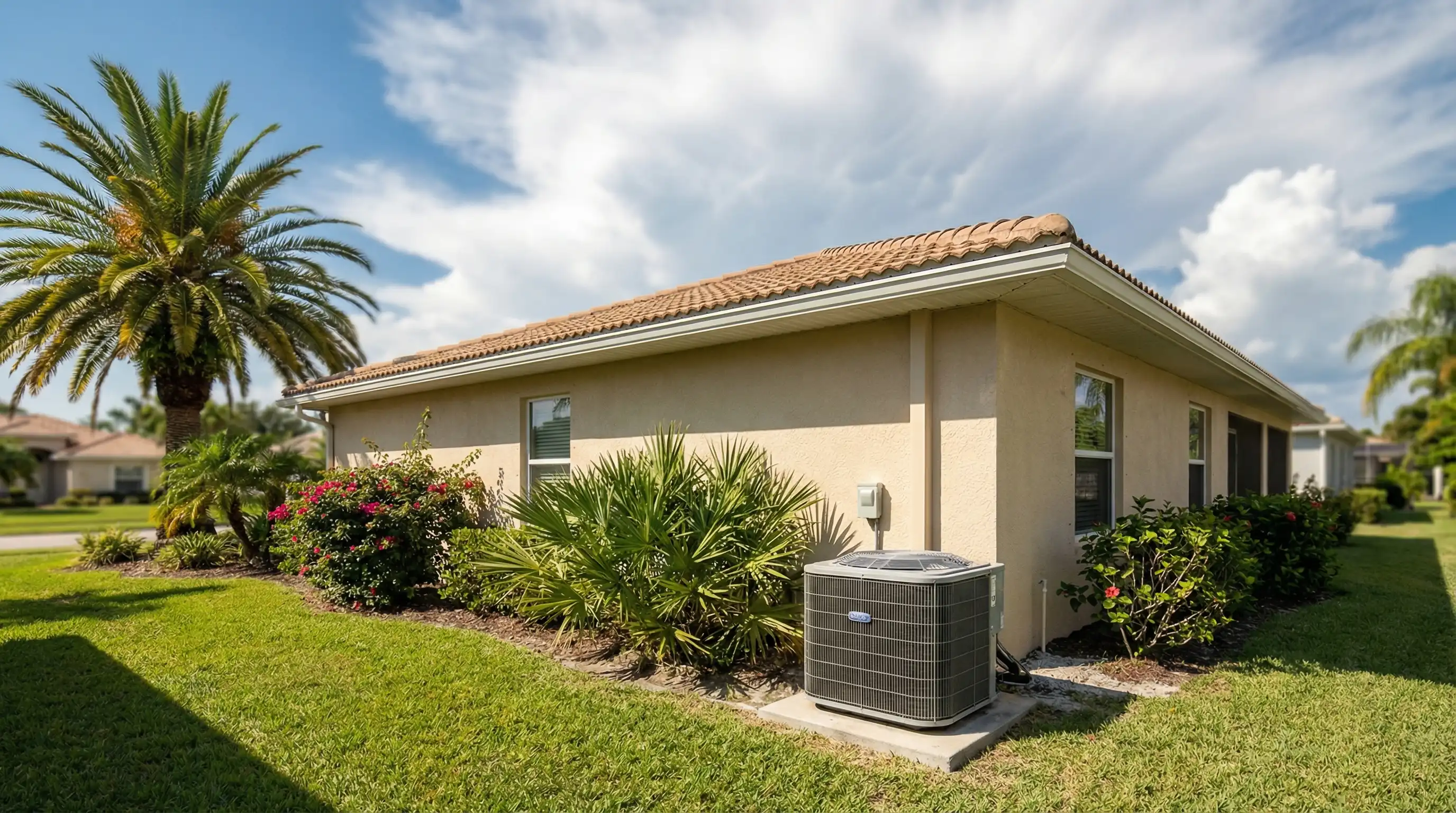
St. Petersburg sits on a peninsula bordered by Tampa Bay and the Gulf of Mexico. The majority of residential properties sit within 3–8 miles of saltwater. Salt-laden sea air accelerates condenser coil corrosion at a rate significantly higher than inland Florida markets — equipment lifespans are routinely 5–8 years shorter than the national average. Homeowners here replace systems more frequently, call for coil cleaning and refrigerant leak repairs more often, and are motivated by a concern — coastal HVAC degradation — that national ad templates never mention.
The HVAC contractors who dominate St. Pete's Google Ads landscape — One Hour Air Conditioning & Heating, Bay Area Air Conditioning, and Conditioned Air Company — all run high-volume campaigns with large branded and generic footprints. But their ad copy is generic: "fast service," "24/7 availability," "free estimates." None of them address the salt-air corrosion concern specifically. That's a competitive gap available to local SMBs willing to speak directly to how St. Pete's geography affects HVAC equipment.
The Post-Hurricane Campaign Window
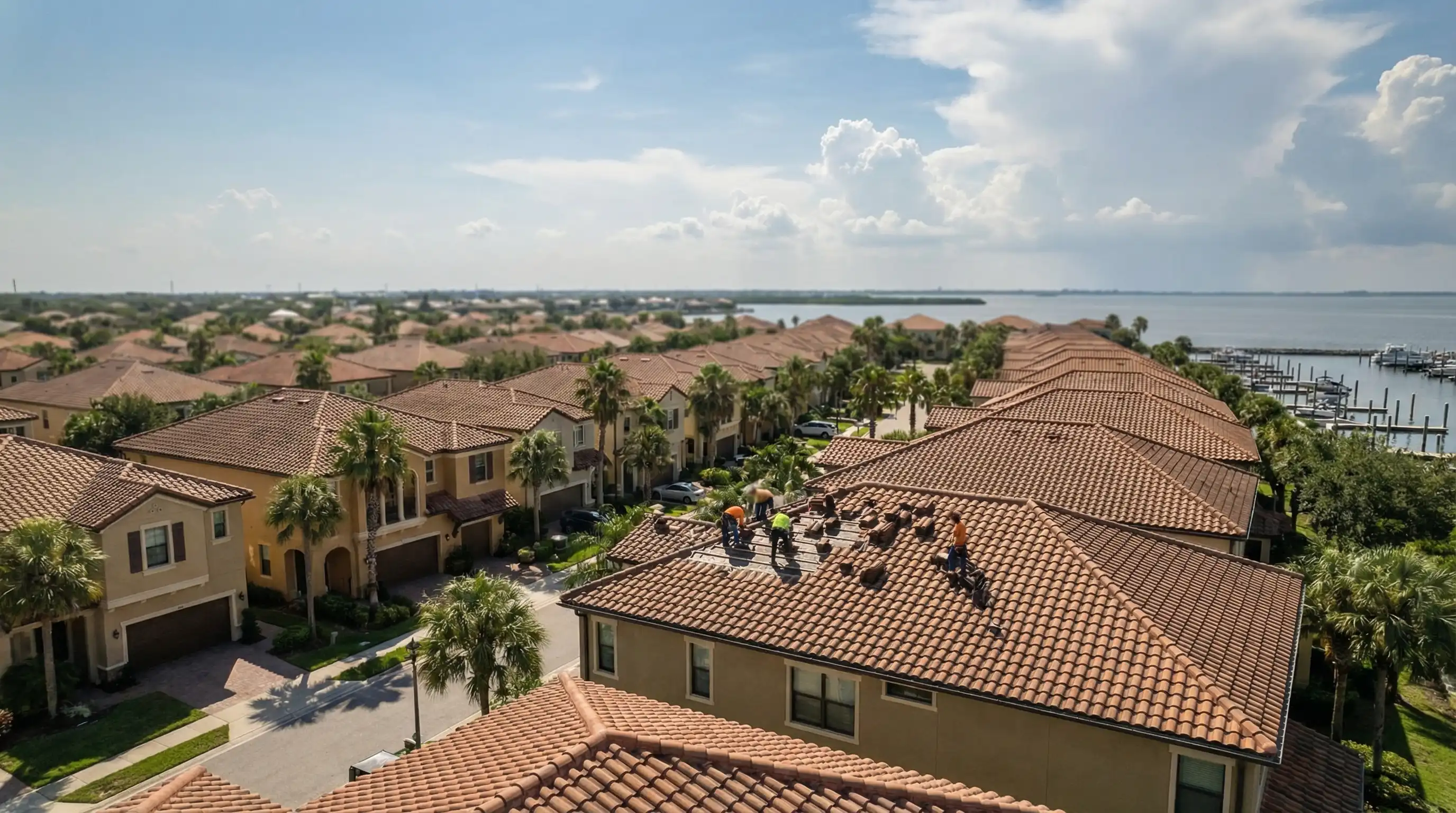
Hurricanes Helene and Milton both struck the Tampa Bay region in fall 2024 — within six weeks of each other. Helene brought historic storm surge across Pinellas County coastlines. Milton made landfall south of Tampa and drove wind damage across the peninsula. The result: thousands of HVAC condenser units, air handlers, and duct systems damaged or destroyed. Post-storm HVAC replacement demand ran elevated from October 2024 through early 2025.
In competitive PPC markets, post-storm search volume spikes dramatically — and most HVAC contractors aren't ready for it. Emergency CPCs spike to $20–$38 during storm response windows, but CPLs can drop to $40–$90 because conversion intent is at its highest. The advertisers who capture this window are the ones with storm-specific campaigns, dedicated landing pages, and escalated budgets pre-positioned for a named storm event. Contractors without this infrastructure watch the most conversion-rich window of the year pass them by.
Year-round demand is another mismanaged reality. Unlike HVAC markets in Atlanta, Charlotte, or even Orlando, St. Petersburg has no functional heating season. Average lows rarely dip below 55°F in January. Air conditioning runs continuously. The "shoulder season" slowdown that HVAC contractors in northern markets use to cut ad spend doesn't apply here. A campaign optimized for a seasonal pattern will systematically underinvest in St. Pete's year-round pull demand.
- Salt-air corrosion: Condenser coils, refrigerant lines, and air handlers degrade faster in coastal environments — driving repeat service and earlier replacement cycles
- Aging housing stock: Historic neighborhoods like Old Northeast, Kenwood, and Euclid St. Paul's have homes built 1950–1990 with outdated duct systems and original or aging air handlers
- Post-storm demand spikes: Named storm events create emergency replacement surges that reward pre-positioned campaigns and punish unprepared ones
- Franchise competition: One Hour Air and Bay Area AC run heavy generic bidding — local SMBs must compete on specificity, not volume
The bottom line: HVAC PPC in St. Pete rewards campaigns with local specificity, coastal market awareness, and storm-response infrastructure. Generic campaigns competing on "fast" and "affordable" against franchise brands rarely win.
HVAC PPC Strategies Built for St. Petersburg's Coastal Market
Effective HVAC PPC in St. Petersburg requires a campaign architecture that separates four distinct demand types: year-round general service, coastal maintenance and corrosion repair, emergency/storm response, and snowbird reactivation. Each segment has different CPCs, different conversion triggers, and different optimal ad schedules. Running them in a single campaign guarantees performance dilution.
The keyword strategy starts with geographic precision. "AC repair St Petersburg" and "HVAC company St Pete FL" are your baseline — CPCs of $14–$22 with moderate competition. The franchise brands are bidding here, so Quality Score and ad relevance matter. But the real leverage comes from the segments below the baseline.
Keyword Groups and CPC Ranges
- General AC repair/service: "AC repair St Petersburg FL," "HVAC company Pinellas County," "air conditioning service St Pete" — $14–$22 CPC, 5–9% CVR
- Emergency/same-day: "emergency AC repair St Pete," "AC not working St Petersburg," "same-day HVAC St Pete FL" — $20–$38 CPC, 10–15% CVR, lower CPL despite higher CPC
- AC replacement/new unit: "AC replacement St Petersburg FL," "new AC unit Pinellas County," "HVAC installation St Pete" — $10–$18 CPC, motivated by high-cost replacement decision
- Coastal/salt-air maintenance: "coastal AC maintenance St Pete," "salt air AC protection Pinellas," "condenser coil cleaning St Petersburg" — $7–$14 CPC, low competition, highly local-specific
- Snowbird/vacation home: "vacation home AC service St Pete," "seasonal home HVAC Pinellas County," "snowbird AC reactivation" — $6–$12 CPC, few active bidders, high-intent niche
The coastal maintenance cluster is the campaign's hidden value. Few local competitors address salt-air corrosion in their ad copy. An ad headline reading "St. Pete Coastal HVAC Specialists — Salt-Air Condenser Protection" immediately differentiates from franchise generic copy. The searcher who types "salt air AC maintenance" already knows exactly what their problem is — that's pre-qualified intent at a fraction of the CPC for emergency keywords.
Campaign Structure and Bidding
Structure the campaign into four ad groups minimum: general service, emergency response, replacement/new install, and the coastal niche. The emergency ad group should run all day, seven days per week — emergency HVAC failures happen at 11pm on Saturday, and your competitors' budgets often exhaust by late afternoon on high-volume days. After-hours bidding adjustments of +25–40% are standard practice for emergency HVAC and are often the difference between a captured call and a lost one.
For the storm-response layer, build a dedicated campaign and landing page before hurricane season begins (April). The campaign sits paused. The moment a named storm enters the Gulf, activate it. This pre-positioned infrastructure means you're live within hours of a storm event, not scrambling to build a campaign while your competitors are already capturing surging search volume.
Target ad scheduling to capture the highest-converting windows. St. Pete's retiree demographic is most active in morning searches (7am–11am). The emergency and replacement segments show elevated conversion from 4pm–8pm as homeowners return from work and make service calls. Matching bid modifiers to these windows improves CPL without increasing overall budget.
Maintenance plan campaigns should run year-round — not just in spring. St. Pete's non-seasonal market means a homeowner who needs a maintenance plan in October is just as valuable as one searching in May. Recurring service agreement revenue is the financial backbone of any successful HVAC business; PPC should be actively building that pipeline in every month of the year.
Google Partner Agency
We're a certified Google Partner Agency, which means we don’t guess — we optimize withGoogle’s full toolkit and insider support.
Your campaigns get pro-level execution, backed by real expertise (not theory).

What Market Trends Should St. Petersburg HVAC Businesses Know?
The 2024 hurricane season reshaped St. Pete's HVAC market in ways that will continue to play out through 2025 and beyond. Hurricanes Helene and Milton — arriving within six weeks of each other — created what is effectively a multi-year replacement cycle for Pinellas County HVAC systems. Storm surge from Helene was historic on Pinellas County's coastal shores; flooded outdoor condenser units are largely unsalvageable. Milton added wind damage to the mix. Conservative estimates suggest 8,000–15,000 residential HVAC systems in Pinellas County were damaged or destroyed in those two events.
That replacement pipeline doesn't convert instantly. Insurance claims, contractor backlogs, and homeowner decision timing mean the demand stretches over 18–24 months post-storm. HVAC contractors actively marketing in St. Pete in 2025 are still capturing storm-related replacement demand — but only if their campaigns are visible when those homeowners finally move forward.
The Snowbird Reactivation Opportunity
Pinellas County hosts one of the highest snowbird concentrations in Florida. Seasonal residents arrive September–October and often find their vacation homes have developed HVAC issues during the vacant summer months. Vacancy-period HVAC failures — refrigerant leaks, capacitor failures, condenser coil corrosion — are common in Florida's summer heat and humidity. The snowbird returning in October who finds their AC not working is among the highest-urgency leads in the market: they need service immediately, they're not shopping around, and they have a high household income that correlates with faster decisions on premium services.
"Vacation home AC service St Pete" and "seasonal home HVAC Pinellas County" are keyword clusters with minimal active competition. A targeted campaign for this segment — running September through November — captures high-intent leads at CPCs of $6–$12, a fraction of the general market.
The retiree segment drives a separate but equally important trend: energy efficiency upgrades. Fixed-income households in Pinellas County are acutely aware of Florida Power & Light billing cycles. Cooling bills that run $250–$400/month in summer are a significant household expense. Campaigns targeting "energy-efficient AC Pinellas County" or "cooling bill reduction St Petersburg" address a pain point that isn't served by the franchise competitors running generic efficiency messaging. Pair this with financing offers and the conversion argument closes fast.
- New development pipeline: The Skyway Marina District, Grand Central mixed-use corridor, and Midtown St. Pete are seeing active residential and commercial development — new construction HVAC install demand is a growing segment distinct from the replacement market
- Multifamily property managers: St. Pete's growing apartment stock creates B2B HVAC opportunity — property management companies that control 20–100 units are high-LTV clients for HVAC contractors with commercial capabilities
- ARK Innovation Center / tech corridor: Downtown St. Pete's growing tech presence means more Class A office space with commercial HVAC maintenance needs — a distinct B2B market from residential SMB campaigns
The single most underserved marketing angle in St. Pete HVAC PPC remains coastal specificity. No franchise brand addresses salt-air corrosion in their local campaigns. The first HVAC contractor to own "coastal HVAC specialists" as a brand positioning — backed by PPC campaigns that speak directly to that experience — captures a differentiated audience that franchise copy simply can't reach.
Why St. Petersburg HVAC PPC Requires Local Expertise
Running HVAC PPC in St. Pete is fundamentally different from running it in Dallas or Chicago. The coastal geography, the hurricane exposure cycle, the snowbird reactivation pattern, the salt-air corrosion concern — none of these are addressed by national agency templates. A campaign that performs in an inland market will structurally underperform in a coastal Florida market without these adjustments.
At MB Adv Agency, we build HVAC campaigns for markets like St. Pete from the ground up — not from templates. That means storm-response infrastructure built before hurricane season, coastal niche campaigns targeting the keywords your competitors miss, and bid strategies calibrated to St. Pete's year-round demand cycle rather than a seasonal model that doesn't apply here.
Our St. Petersburg PPC management service is built on the same Plastic-Brick methodology that drives 98% client retention: we eliminate every dollar of wasted spend before scaling what works. For HVAC contractors in Pinellas County, that means a campaign where every click has a purpose — emergency response, maintenance plan sign-up, or replacement consultation — and no budget goes toward generic impressions that don't convert.
Ready to build an HVAC campaign designed for St. Pete's coastal market? See our pricing and management tiers — starting at $497/month for businesses under $3K in monthly ad spend.
Frequently Asked Questions
How much does HVAC PPC cost in St. Petersburg, FL?
HVAC PPC in St. Petersburg runs $14–$22 CPC for general service keywords and $20–$38 CPC for emergency terms like "AC not working" or "same-day HVAC St Pete." A starter budget of $2,500/month generates approximately 20–45 leads depending on campaign mix and season — more during post-storm periods when emergency CVR climbs to 10–15%, fewer during slower spring months when general service is the primary driver. Monthly management fees typically add $497–$997 on top of ad spend, depending on the agency and tier.
What makes St. Pete HVAC costs different from comparable markets is the coastal niche opportunity. Targeting salt-air corrosion maintenance keywords — "coastal AC service," "condenser coil cleaning St Petersburg" — runs at $7–$14 CPC, roughly half the general market rate, with a highly qualified audience that already understands their problem. This niche lowers overall CPL while maintaining conversion quality. Snowbird reactivation keywords (September–November) run even lower at $6–$12 CPC with virtually no competition.
Seasonal dynamics matter too: post-hurricane search volume spikes can temporarily drive emergency CPCs above the $38 ceiling, but those same storms compress CPL significantly because conversion intent is at its peak. A campaign with storm-response infrastructure pre-built captures that window efficiently. Without it, you're paying premium CPCs while your landing page and call-to-action infrastructure can't handle the volume.
What budget should an HVAC contractor start with for Google Ads in St. Pete?
For an HVAC contractor new to Google Ads in St. Petersburg, a $2,500/month starting budget provides full Pinellas County coverage across the core keyword segments: general AC repair, emergency service, and AC replacement. At this budget level, expect 20–45 leads per month depending on the season and campaign structure — more during post-storm windows, fewer during slower spring periods before hurricane season ramps. Contractors targeting both residential and commercial segments should plan for $3,500–$5,000/month to maintain adequate coverage across both buyer types without cannibalizing residential budget.
Budget allocation matters as much as total spend. Emergency campaigns should receive a dedicated portion — typically 30–40% of total budget — because the CPL on emergency conversions is lower than general service despite higher CPCs. The coastal niche campaigns (salt-air maintenance, snowbird reactivation) can run on smaller sub-budgets of $300–$500/month and deliver outsized ROI relative to their spend because competition is minimal.
Seasonality adjustments are real but smaller than in northern markets. St. Pete's year-round demand means budget floors should never drop below $1,500/month even in the slowest periods — there's always a homeowner whose AC just failed. During active hurricane season (June–November), scaling to $4,000–$6,000/month with storm-response budget reserved captures the highest-volume, highest-intent search periods of the year.