Roofing PPC St. Petersburg, FL
Pinellas County homeowners are navigating a two-front crisis: a housing stock heavily damaged by two back-to-back hurricanes in fall 2024, and a Florida insurance market that's non-renewing policies on roofs older than 15 years at a pace that forces replacement regardless of visible damage. Those dual drivers make St. Petersburg one of the most structurally elevated roofing PPC markets in the southeastern United States — and one of the most competitive. <!-- stats-article-link --> <p><em>See how this city's Roofing PPC costs compare nationally in our <a href="/resources/roofing-ppc-statistics">Roofing PPC Statistics</a> report, featuring data from 40+ US cities.</em></p>
Why Do Roofing PPC Campaigns Fail in St. Petersburg?
Roofing PPC in St. Pete is crowded at the top and fragmented at the bottom. The dominant competitors — Nations Roofing, Latite Roofing & Sheet Metal, and St. Pete Roofing — run high-budget campaigns with heavy generic bidding on "roofing company St Petersburg" and "roof replacement Pinellas County." Below that tier, dozens of smaller local contractors bid sporadically without clear campaign structure. The market isn't won at the generic keyword layer. It's won in the gaps: insurance campaigns, tile roof niches, flat-roof commercial, and pre-storm inspection angles that the large operators ignore.
The Insurance Non-Renewal Crisis as a Market Driver
Florida's property insurance market has been in crisis for several years. Insurers across the state — Citizens Property Insurance, Universal Property & Casualty, and a wave of smaller carriers — have been aggressively non-renewing homeowners whose roofs exceed 15–20 years old. In Pinellas County, where a significant share of the housing stock dates from 1960–1990, this is a mass-replacement cycle that runs independently of storm events. A homeowner receiving an insurance non-renewal notice is not shopping around for the best price. They have a deadline and a mandate: replace the roof or lose coverage.
"Roof replacement for insurance renewal" and "insurance non-renewal roof St Pete" are keyword clusters that run at $8–$16 CPC — below the general roofing baseline — with exceptionally high conversion intent. A homeowner searching these terms has already received a letter from their insurer. The buying decision is made. The only question is which contractor gets the call. Yet few Pinellas County roofing PPC campaigns are built to capture this segment specifically.
Post-Hurricane Demand and the Campaign Timing Gap
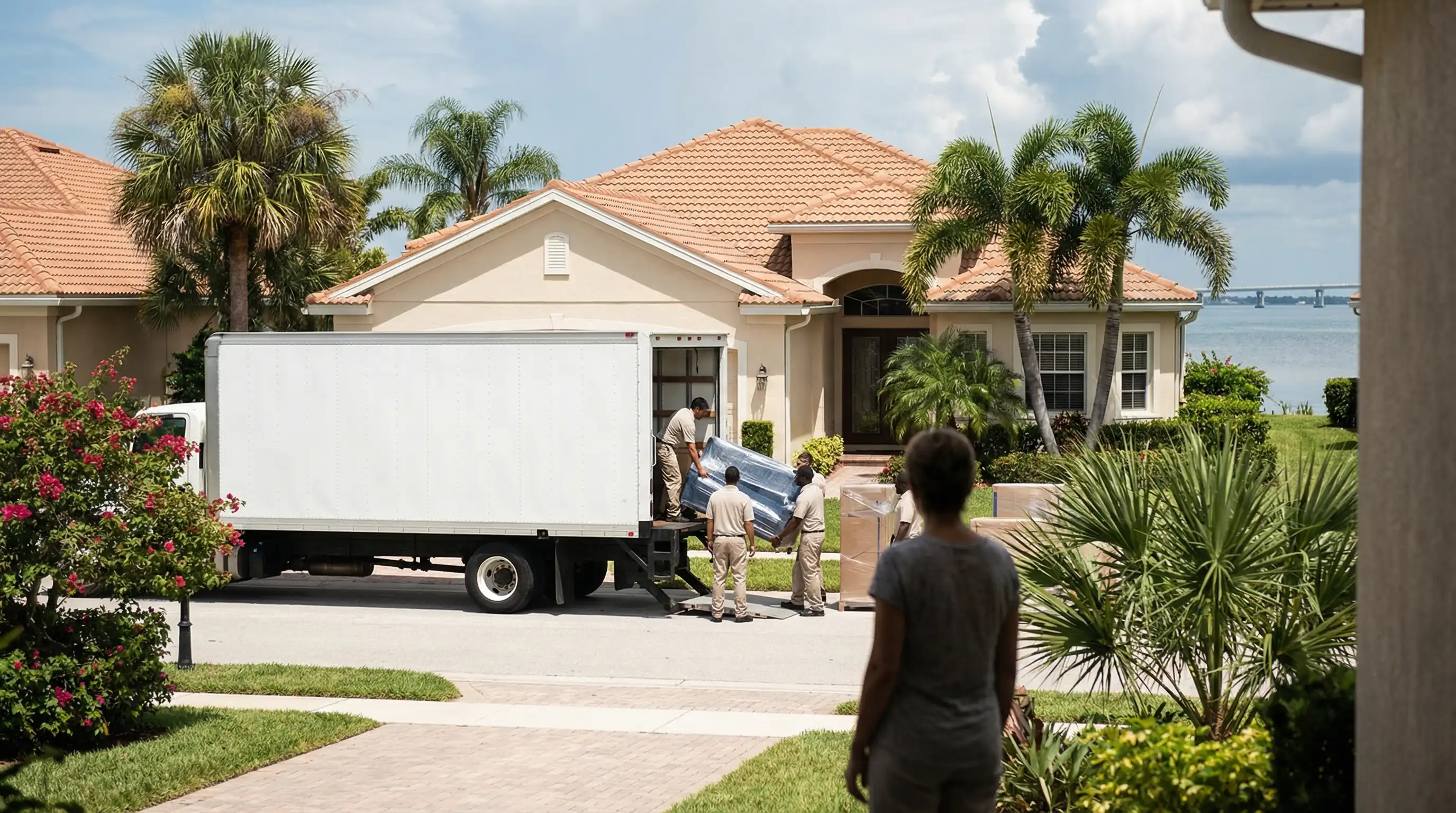
Hurricanes Helene and Milton struck the Tampa Bay region in September and October 2024 respectively. Helene brought historic storm surge to Pinellas County coastal areas — some of the worst flooding the region had seen in recorded history. Milton added wind damage across the peninsula. The resulting roofing demand stretched from fall 2024 into early 2025 and is still being converted through active insurance claims and delayed replacement decisions in mid-2025.
The post-storm PPC window is the highest-ROAS window in roofing. Emergency CPCs spike to $18–$40 after named storm events — but CVR climbs to 14–20% as homeowners move urgently to protect damaged property. ROAS in these windows frequently reaches 25:1–40:1 for contractors with storm-response campaigns pre-built. The mistake most local roofing contractors make is trying to build campaigns reactively, after the storm. By the time their ads are live, competitors with pre-positioned campaigns have already captured the early-surge leads.
Beyond the storm window, the market presents two structural challenges:
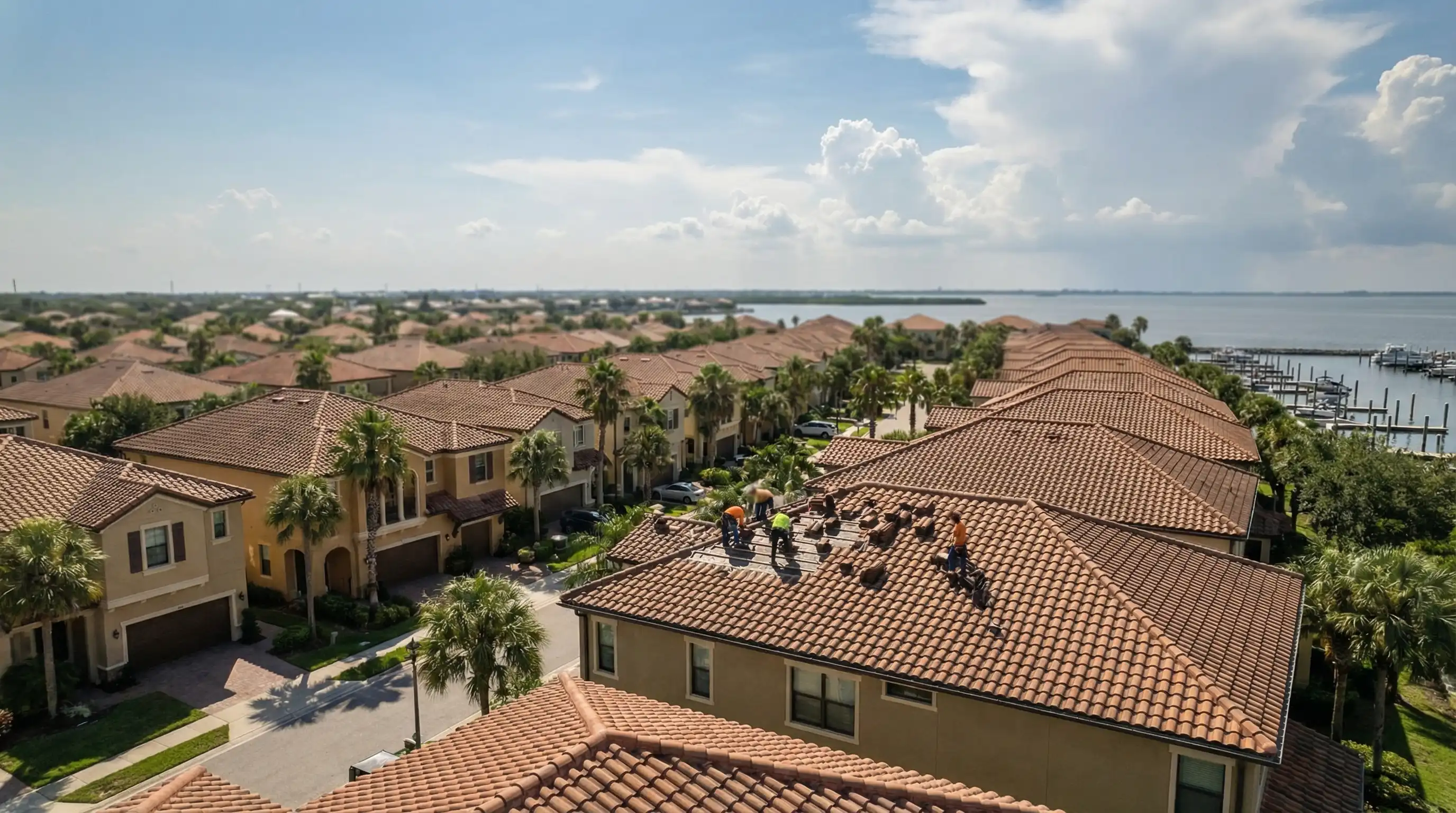
- Tile roof segment: St. Pete's Spanish Mediterranean and mission-style architecture creates a significant tile roof population. Tile repair, tile replacement, and re-roofing are technically distinct from shingle work — and less competitive in PPC. Campaigns targeting "tile roof repair St Petersburg" run at $8–$16 CPC with few active bidders.
- Flat roof / commercial niche: Downtown St. Pete, Grand Central, and the Skyway Marina District have commercial flat-roof properties (TPO, EPDM, modified bitumen) with a distinct buyer profile. "Commercial roofing St Petersburg" and "flat roof repair Pinellas" run at $6–$14 CPC with minimal competition from residential roofing contractors.
The roofing contractors who win PPC in St. Pete are not the ones outspending everyone on generic terms. They're the ones who understand the insurance driver, have storm-response infrastructure pre-built, and own the niches (tile, flat-roof, commercial) that the dominant players leave uncontested.
Roofing PPC Strategies for St. Petersburg's Insurance and Storm Market
A winning roofing PPC strategy in St. Petersburg requires at minimum three distinct campaign tracks: general replacement/repair, insurance mandate response, and storm-damage emergency. Optional fourth and fifth tracks — tile roof niche and flat-roof/commercial — add efficiency by targeting lower-CPC segments with high local specificity. Running all of these in a single ad group destroys Quality Score, dilutes messaging relevance, and misallocates budget toward the highest-CPC terms at the expense of high-CVR niches.
Keyword Groups and CPC Ranges
- General residential roofing: "roofing company St Petersburg FL," "roof replacement Pinellas County," "roofer St Pete FL" — $10–$20 CPC, 6–10% CVR
- Post-storm/emergency: "roof damage St Petersburg," "storm roof repair Pinellas County," "emergency roofer St Pete" — $18–$40 CPC, 14–20% CVR, best seasonal ROAS
- Insurance non-renewal/mandate: "roof replacement insurance renewal," "insurance roof replacement St Pete," "roof age insurance Pinellas" — $8–$16 CPC, high conversion intent, deadline-driven
- Tile roof repair/replacement: "tile roof repair St Petersburg FL," "clay tile roofer Pinellas County," "Spanish tile roof replacement" — $8–$16 CPC, architectural niche, few bidders
- Flat roof/commercial: "commercial roofing St Petersburg," "flat roof repair Pinellas," "TPO roofing St Pete FL" — $6–$14 CPC, B2B buyer, minimal competition
- Pre-storm inspection: "free roof inspection St Petersburg," "roof inspection before hurricane season," "roof check St Pete FL" — $5–$12 CPC, lead generation at low cost, builds pipeline ahead of storm season
The insurance mandate campaign is the highest-leverage addition for most local roofing contractors. Build a dedicated landing page with copy centered on the insurance non-renewal scenario — "Did your insurer refuse to renew your policy? We can help." The conversion message writes itself: homeowners on this search path already know they need to act. Your ad confirms you understand their situation and can solve it quickly.
Campaign Structure and Storm Readiness
Storm-response infrastructure should be built in April, before hurricane season begins. Create the campaign, write the ads, build the landing page, set the budget. Then pause it. When a named storm enters the Gulf, activate within hours. This pre-positioned approach means your campaign is live and capturing traffic before competitors who are scrambling to build from scratch. Set budget escalation rules to automatically increase storm-campaign daily limits when activation occurs — surge demand can exhaust standard daily budgets by 10am on the first post-storm morning.
For the general campaign, geographic bid modifiers should reflect Pinellas County's density distribution. Zip codes in the highest-homeownership areas — 33704 (Old Northeast), 33705 (Childs Park / Old Southeast), 33710 (Disston Heights) — carry older housing stock with higher replacement probability. Elevate bids by 10–20% in these zip codes and monitor conversion rates to validate the adjustment.
Ad copy should always include a trust signal specific to the insurance crisis. "Licensed Florida Roofing Contractor — Insurance Claims Accepted" or "We Handle Insurance Documentation" in ad extensions adds a conversion-relevant differentiator that matters to the large share of Pinellas County homeowners whose replacement is insurance-driven rather than damage-driven.
Google Partner Agency
We're a certified Google Partner Agency, which means we don’t guess — we optimize withGoogle’s full toolkit and insider support.
Your campaigns get pro-level execution, backed by real expertise (not theory).

What Market Trends Should St. Petersburg Roofing Businesses Know?
The 2024 hurricane season created a replacement demand pipeline in Pinellas County that will run through at least 2026. Helene's historic storm surge damaged or destroyed roofing systems on thousands of coastal-adjacent properties. Milton added wind damage across the peninsula. Combined, the two storms represent one of the largest single-season roofing demand events in the region's history. But that demand doesn't convert in a single month — insurance claim processes, contractor scheduling backlogs, and homeowner decision timelines mean the pipeline extends across 18–24 months post-storm. Roofing contractors actively marketing in mid-2025 are still capturing Helene/Milton replacement leads.
The Insurance Non-Renewal Curve
Florida's property insurance non-renewal wave is accelerating. Industry data from the Florida Office of Insurance Regulation shows that more than 400,000 homeowners have lost coverage or faced non-renewal in recent years, with Pinellas County disproportionately impacted due to its coastal exposure and older housing stock. An estimated 30–40% of single-family homes in Pinellas County have roofs that exceed 20 years old — precisely the threshold at which most remaining Florida carriers mandate replacement as a condition of coverage.
This insurance-driven demand is structurally independent of weather. Even in a quiet hurricane season, thousands of Pinellas County homeowners will receive non-renewal notices and face a replacement decision. That's a baseline demand floor that doesn't exist in most other roofing markets. PPC campaigns that explicitly address the insurance mandate scenario — not just storm damage or general wear — tap into this persistent pipeline.
- New construction in south St. Pete: The Skyway Marina District and Grand Central corridor are seeing new residential and mixed-use development — flat-roof and commercial roofing installs on new builds are a growing contract pipeline for contractors with commercial capabilities
- Spanish-language market: St. Pete's Hispanic population (~10% of residents, approximately 26,000 people) is significantly underserved by local roofing PPC. Spanish-language roofing keywords run 25–35% below English CPCs while reaching a qualified homeowner audience
- Tile market volume: St. Pete's architectural legacy means a higher-than-average proportion of tile roofs relative to standard asphalt markets. As this housing stock ages and storm-damaged tile systems require full replacement, the tile niche will continue to grow as a PPC opportunity distinct from the general asphalt shingle market
The broader macro trend is migration. Florida continues to attract in-migration from cold-weather states, and Pinellas County is a primary destination for retirees and remote workers from the Northeast and Midwest. New homeowners frequently discover deferred maintenance — including aging or damaged roofs — during the purchase process. First-year homeowner replacement is a consistent lead category that can be targeted with "new homeowner roof inspection St Petersburg" keyword clusters.
Why St. Petersburg Roofing PPC Requires Local Market Knowledge
Roofing PPC in Pinellas County is not a plug-and-play campaign. The dual demand drivers — hurricane replacement cycles and insurance non-renewal mandates — require campaign messaging and structure that national templates never provide. A contractor running a generic "roof replacement" campaign in St. Pete is competing on price against Latite and Nations Roofing. A contractor running insurance-mandate and storm-response campaigns is competing in a different market entirely — one where demand is urgent, decision timelines are compressed, and conversion rates are significantly higher.
MB Adv Agency builds roofing PPC campaigns in St. Pete from the research up — storm-response infrastructure, insurance mandate landing pages, tile and flat-roof niche campaigns, and geographic targeting calibrated to Pinellas County's highest-replacement-probability zip codes. Our St. Petersburg PPC management service runs on the Plastic-Brick methodology: eliminate waste first, then scale what converts.
See our pricing tiers — management starts at $497/month for contractors under $3K in monthly ad spend, scaling to $997/month for the full Market Crusher tier. The first campaign we build is the storm-response layer, because that's where the highest ROAS lives.
Frequently Asked Questions
How much does roofing PPC cost in St. Petersburg, FL?
Roofing PPC in St. Petersburg runs $10–$20 CPC for general residential keywords and $18–$40 CPC during post-storm emergency windows. A starter monthly budget of $3,000/month covers general replacement, insurance mandate, and tile roof campaigns across Pinellas County, generating approximately 20–35 leads per month under normal conditions. Budget requirements climb to $5,000–$7,000/month during active hurricane season (June–November) when both CPCs and conversion volume increase simultaneously. The insurance non-renewal segment is the most cost-efficient: $8–$16 CPC with high conversion intent produces CPLs of $75–$150 for a motivated, deadline-driven audience.
Post-storm campaign economics are different from baseline. Emergency keyword CPCs spike above the normal range, but CPL drops because CVR climbs to 14–20%. Estimated CPL during active post-storm windows is $55–$120 — below the general baseline — making storm-period budget increases an aggressive positive-ROI decision. ROAS estimates for storm-response roofing campaigns in comparable Florida markets run 25:1–40:1, with some contractors reporting their highest single-month revenue during post-hurricane periods.
Niche campaigns (tile roof, flat-roof commercial, pre-storm inspection) run at CPCs of $5–$16 with minimal competition. Adding these as sub-budget allocations ($300–$500/month each) diversifies lead sources and generates lower-CPL conversions that offset higher spending in the general segment.
What's the best time of year to run roofing PPC in St. Pete?
Roofing PPC should run continuously in St. Pete — but budget allocation should shift dramatically across the year. The most critical period is April through November, which covers both pre-season inspection (April–May) and the full Atlantic hurricane season (June–November). During this window, maintain your general and insurance-mandate campaigns at full budget, activate the pre-season inspection campaign in April, and have storm-response campaigns ready to activate immediately when named storms form. Post-storm windows are the highest-ROAS periods in the roofing PPC calendar — budget increases during active storm events generate the most efficient lead cost of the year.
December through March represents the insurance mandate off-season but not a full lull. Florida's insurance non-renewal cycle continues year-round — homeowners receiving non-renewal notices in January have the same urgency as those receiving them in August. Budget can scale down to $1,500–$2,000/month in January–March while maintaining coverage of the insurance and general replacement campaigns. This winter floor captures ongoing demand without over-investing in the off-peak period.
The snowbird arrival window (September–November) also deserves attention: new Florida homeowners purchasing through the winter buying season frequently discover roof issues in their inspection period. A "new homeowner roof inspection St Pete" campaign running October–February captures this buyer at a decision point before they've chosen a contractor.